English with Vietnamese subtitle (10 episodes)
Tiếng Anh, phụ đề Việt ngữ (trọn bộ 10 tập)
* THE VIETNAM WAR – 1: Déjà Vu – Bóng ma quá khứ (1858-1961)
Tiếp tục đọc “The Vietnam War – Cuộc Chiến Việt Nam (Ken Burns and Lynn Novick, PBS 2017)”
Conversations on Vietnam Development

English with Vietnamese subtitle (10 episodes)
Tiếng Anh, phụ đề Việt ngữ (trọn bộ 10 tập)
* THE VIETNAM WAR – 1: Déjà Vu – Bóng ma quá khứ (1858-1961)
Tiếp tục đọc “The Vietnam War – Cuộc Chiến Việt Nam (Ken Burns and Lynn Novick, PBS 2017)”

The legacy of Agent Orange/dioxin continues to impact our veterans and the Vietnamese. Since 1991, scientists at the United States Institute of Medicine have shown dioxin to be a risk factor in a growing number of illnesses and birth defects, and their research is corroborated by the work of Vietnamese scientists. Tiếp tục đọc “Remembering Agent Orange this Earth Day”

Vietnam’s central province of Quang Tri has received $10 million from a Norwegian organization to help clear unexploded ordnance.
The deal with Norwegian People’s Aid (NPA) was signed on Wednesday and will sponsor a project expected to run until 2022, Vietnam News Agency reported.
Vietnam is one of the most heavily contaminated countries in the world when it comes to explosives. Between 1945 and 1975, during two wars with French and American invaders, more than 15 million tons of explosives were dropped on Vietnam; four times higher than the amount unleashed during World War II.
Tiếp tục đọc “War-ravaged Vietnamese province receives $10 mil from Norway for mine clearance”
Statements by Pres. Donald Trump and U.S. government (and British and French) officials to justify American military actions in Syria are painful reminders not only of lies we were told about Viet Nam a half century ago. We heard echoes of those same lies regarding Afghanistan, Iraq, Libya, Syria, and many other places in the world that are now much worse off after our military actions — actions that were illegal, no matter how we try to parse the meanings of the documents and international agreements that we signed. Tiếp tục đọc “Rev. James Swarts: Remarks at Spring Action 2018”
HO CHI MINH CITY (Reuters) – The United States is seeking to send thousands of immigrants from Vietnam back to the communist-ruled country despite a bilateral agreement that should protect most from deportation, according to Washington’s former ambassador to Hanoi.
A “small number” of people protected by the agreement have already been sent back, the former ambassador, Ted Osius, told Reuters in an interview.
Osius said that many of the targeted immigrants were supporters of the now defunct U.S.-backed state of South Vietnam, and Hanoi would see them as destabilizing elements. Tiếp tục đọc “U.S. seeks to deport thousands of Vietnamese protected by treaty: former ambassador”
scmp
Ho Chi Minh City exhibition recalls how American GIs organised protests, published underground newspapers and served jail time in their efforts to bring peace to Southeast Asia
By Gary Jones
The stereotypical image of the Vietnam war veteran, returning to the United States after an arduous tour of duty, only to be spat upon and cursed as a murderer by sneering, long-haired peace protesters, is seared into the American psyche like a scar from a white-hot burst of napalm. The accepted belief is that weary veterans trudged home to be condemned, cold-shouldered, even physically assaulted – simply for doing their duty to their country. Tiếp tục đọc “Why American soldiers were on front lines of anti-Vietnam-war movement”
 Note: The following article was published in The Indochina Newsletter, a newsletter I edited at the time, October-November 1982. Much has changed in the 16 years since this article was written. So far as is known all of the former South Vietnam government officials and officers have been released from the re-education camps and many have been allowed to emigrate to the U.S. under a special program, called Humanitarian Operation. But many of former prisoners have experienced various problems resulting from their long term incarceration under difficult conditions. I hope this article might be of historical interest in understanding what these prisoners have experienced; and also in understanding conditions of imprisonment endured by those dissidents and others still detained in Vietnam. – Steve Denney [1998]
THE INDOCHINA NEWSLETTER
October-November 1982
Re-education in Unliberated Vietnam: Loneliness, Suffering and Death
by Ginetta Sagan and Stephen Denney
(Editor’s Note: The following article is part of a preliminary draft of a report that will be issued later this year on human rights in Vietnam. The report is prepared for the Aurora Foundation, of which Ginetta Sagan is the Executive Director. Mrs. Sagan is a well-known human rights activist who interviewed over 200 former prisoners from Vietnam in preparation for this report. Details of the interviews will be brought out in fuller detail when the report is issued.)
Ten years ago, demonstrations were held around the world to protest political repression and imprisonment in South Vietnam. Seven years ago, Communist forces completed their conquest of South Vietnam. In June of 1975, the new regime ordered hundreds of thousands of Vietnamese to report to authorities for « re-education ». Many are still held in the camps today, but the world is mostly silent on their plight.
« Re-education » means different things to different people. To the Hanoi regime and its more vocal defenders abroad, re-education is seen as a very positive way to integrate the former enemy into the new society. It is, according to Communist leaders of Vietnam, an act of mercy, since those in the camps deserve the death penalty or life imprisonment.(1). The former prisoners, on the other hand, see re-education from quite a different perspective. Tiếp tục đọc “Re-education in Unliberated Vietnam: Loneliness, Suffering and Death”
Nguyễn Tiến Hưng (sinh 1935) là một tiến sĩ kinh tế, nguyên là Tổng trưởng Kế hoạch của Chính phủ Việt Nam Cộng hòa kiêm cố vấn của tổng thống Nguyễn Văn Thiệu, hiện là giáo sư về hưu của Đại học Howard (Washington, D.C., Hoa Kỳ).
00: http://www.mediafire.com/?85lhy04r6qqn722
01: http://www.mediafire.com/?vr9di4h2v9eqcb5
02: http://www.mediafire.com/?gc3hocswxnbe1eh
03: http://www.mediafire.com/?454cuy90mzcg3tb
04: http://www.mediafire.com/?jsw89zn09f6weo9
05: http://www.mediafire.com/?xnrip34l844497e
06: http://www.mediafire.com/?i82i2i0cvth82vz
07: http://www.mediafire.com/?u4h7qmga7z1unk9
08: http://www.mediafire.com/?7lzxjf0ka783dlb
09: http://www.mediafire.com/?2hskmn0zrxoagw6
10: http://www.mediafire.com/?imbe43rq66o1y4m
11: http://www.mediafire.com/?1dhzeavxq3637vl
12: http://www.mediafire.com/?l5hqaidh2oknedv
13: http://www.mediafire.com/?611bfu5kr3hf4df
14: http://www.mediafire.com/?i0ff3z6q9wm5y3i
15: http://www.mediafire.com/?2eomt1p34binp96
16: http://www.mediafire.com/?pbr3fxbm9dg9ikk
17: http://www.mediafire.com/?6791zvvz9ges2fp
18: http://www.mediafire.com/?lh56hak6yv4a6ky
19: http://www.mediafire.com/?3yc8rvn2mgvfaoe
20: http://www.mediafire.com/?dwtbo7eph8ieo9f
21: http://www.mediafire.com/?jc3oigb8if669ra
22: http://www.mediafire.com/?z9we79c36eayj7z
23: http://www.mediafire.com/?r7v4rz2bk6k19ck
Six years after the stunning communist Tet Offensive of 1968, one of the enduring myths of the Second Indochina War remains essentially unchallenged: the communist “massacre” at Hue. The official version of what happened in Hue has been that the National Liberation Front (NLF) and the North Vietnamese deliberately and systematically murdered not only responsible officials but religious figures, the educated elite and ordinary people, and that burial sites later found yielded some 3,000 bodies, the largest portion of the total of more than 4,700 victims of communist execution.
Although there is still much that is not known about what happened in Hue, there is sufficient evidence to conclude that the story conveyed to the American public by the South Vietnamese and American propaganda agencies bore little resemblance to the truth, but was, on the contrary, the result of a political warfare campaign by the Saigon government, embellished by the U.S. government and accepted uncritically by the U.S. press. A careful study of the official story of the Hue “massacre” on the one hand, and of the evidence from independent or anti-communist sources on the other, provides a revealing glimpse into efforts by the U.S. press to keep alive fears of a massive “bloodbath.”1 It is a myth which has served the U.S. administration interests well in the past, and continues to influence public attitudes deeply today. Tiếp tục đọc “The 1968 “Hue Massacre””
Battlefield: Vietnam (Part 1/12) – Dien Bien Phu – The Legacy
Chiến trường Việt Nam: Phần 1: Điện Biên Phủ – Sự kế thừa
Tiếp tục đọc “Battlefield Vietnam – Chiến trường VN – PBS series (1994)”
Part I: Early Years and Escalation
Part II: Losses and Withdrawal
Part III: Hands of a Nation
The Atlantic, Alan Taylor, Apr 1, 2015
26 Photos
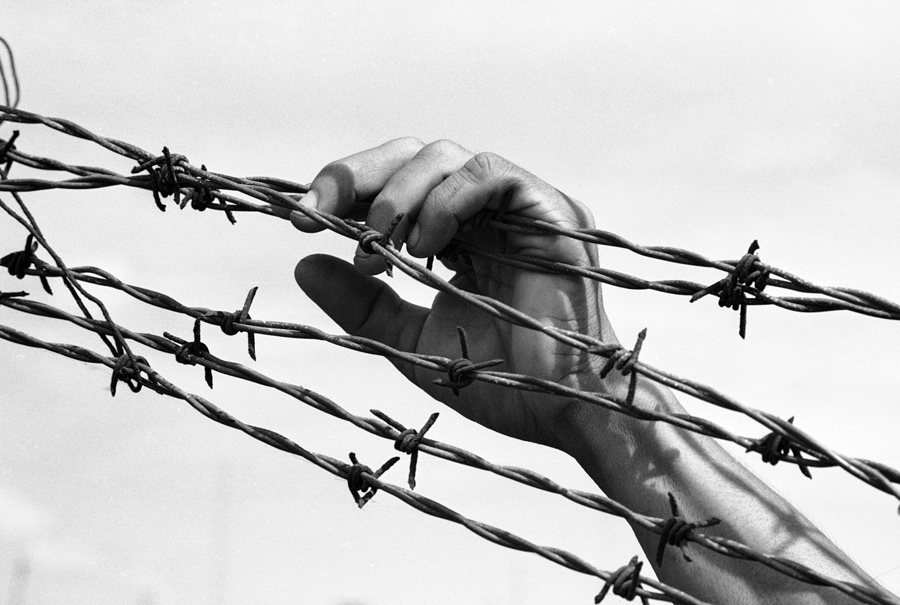
The loneliness and desperation of a refugee in Vietnam in August 1968#
Tiếp tục đọc “Vietnam War in photos, Part III: Hands of a Nation”
Part I: Early Years and Escalation
Part II: Losses and Withdrawal
Part III: Hands of a Nation
The Attlantic, Alan Taylor, Mar 31, 2015.
50 Photos
Early in 1968, North Vietnamese troops and the Viet Cong launched the largest battle of the Vietnam War, attacking more than 100 cities simultaneously with more than 80,000 fighters. After brief losses, U.S. and South Vietnamese forces regained lost territory, and dealt heavy losses to the North. Tactically, the offensive was a huge loss for the North, but it marked a significant turning point in public opinion and political support, leading to a drawdown of U.S. troop involvement, and eventual withdrawal in 1973. This photo essay, part two of a three-part series, covers the war years between 1968 and 1975.
Warning: Several of these photographs are graphic in nature.
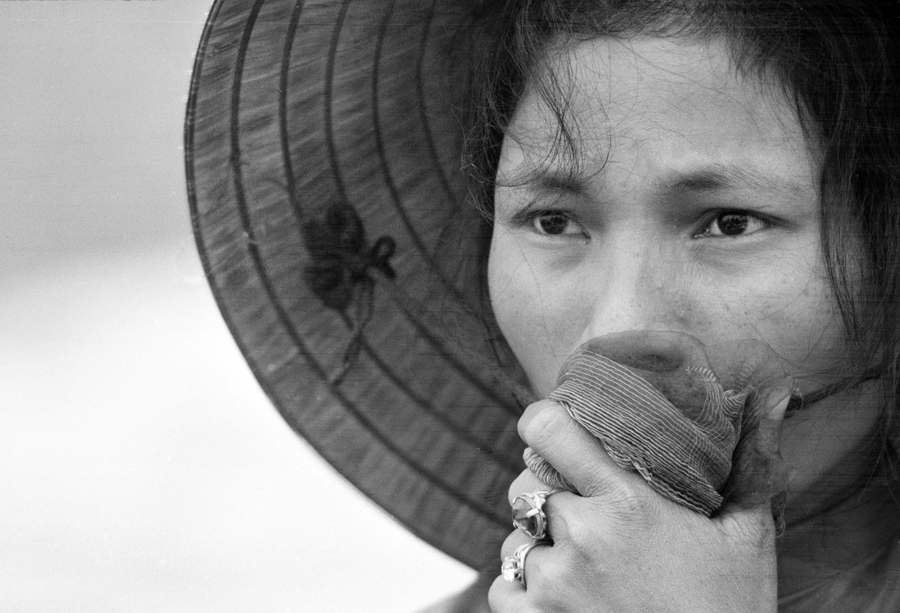
A young South Vietnamese woman covers her mouth as she stares into a mass grave where victims of a reported Viet Cong massacre were being exhumed near Dien Bai village, east of Hue, in April of 1969. The woman’s husband, father, and brother had been missing since the Tet Offensive, and were feared to be among those killed by Communist forces.#
Tiếp tục đọc “Vietnam War in photos, Part II: Losses and Withdrawal”
Part I: Early Years and Escalation
Part II: Losses and Withdrawal
Part III: Hands of a Nation
The Atlantic, Alan Taylor, Mar 30, 2015.
46 Photos
Fifty years ago, in March 1965, 3,500 U.S. Marines landed in South Vietnam. They were the first American combat troops on the ground in a conflict that had been building for decades. The communist government of North Vietnam (backed by the Soviet Union and China) was locked in a battle with South Vietnam (supported by the United States) in a Cold War proxy fight. The U.S. had been providing aid and advisors to the South since the 1950s, slowly escalating operations to include bombing runs and ground troops. By 1968, more than 500,000 U.S. troops were in the country, fighting alongside South Vietnamese soldiers as they faced both a conventional army and a guerrilla force in unforgiving terrain. Each side suffered and inflicted huge losses, with the civilian populace suffering horribly. Based on widely varying estimates, between 1.5 and 3.6 million people were killed in the war. This photo essay, part one of a three-part series, looks at the earlier stages of U.S. involvement in the Vietnam War, as well as the growing protest movement, between the years 1962 and 1967.
Warning: Several of these photographs are graphic in nature.
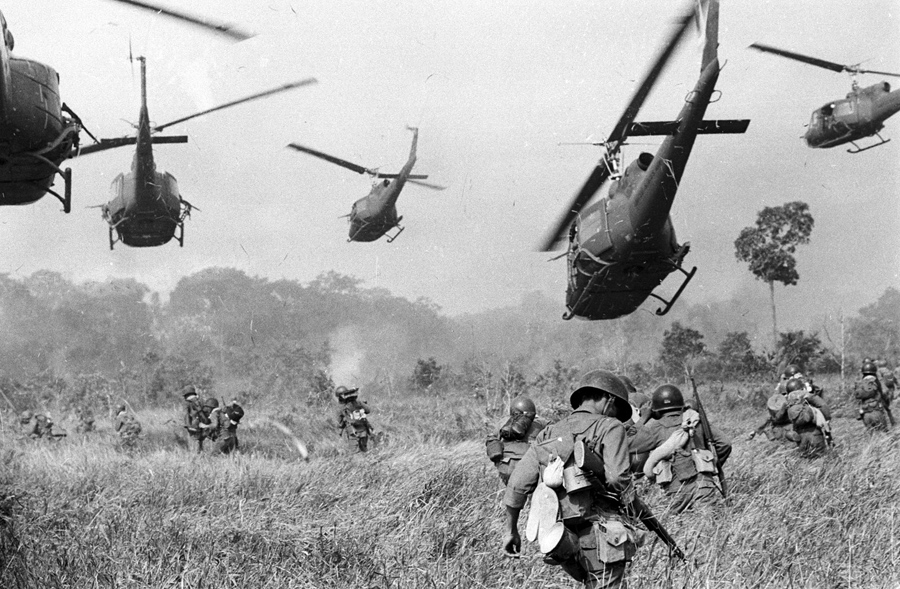
Hovering U.S. Army helicopters pour machine gun fire into a tree line to cover the advance of South Vietnamese ground troops in an attack on a Viet Cong camp 18 miles north of Tay Ninh, near the Cambodian border, in March of 1965.#
Tiếp tục đọc “Vietnam War in photos, Part I: Early Years and Escalation”
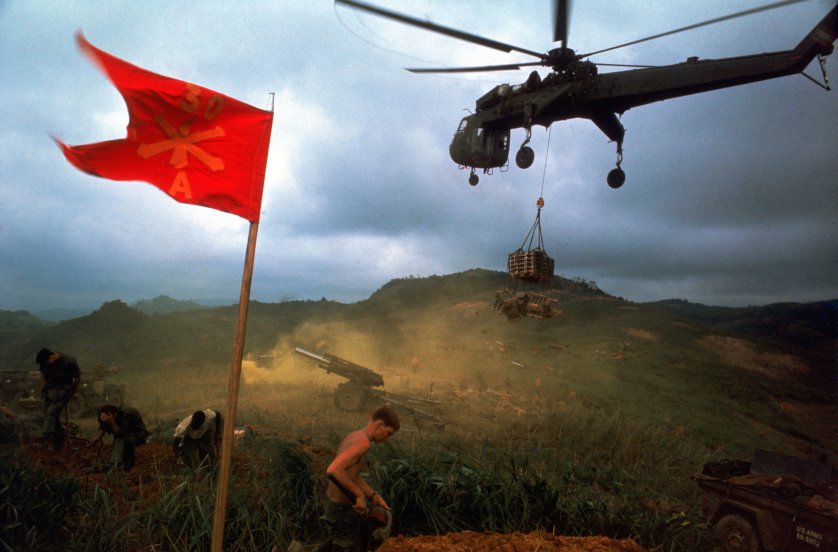
TIME Photo
Apr 30, 2015
It has been 40 years since the spring day when the last U.S. helicopters lifted up and, shortly after, the North Vietnamese army entered Saigon, deciding a conflict that had raged for years. News photographs from the time showed the world what was going on, from a country full of death in all its gruesome forms to peaceful protests across the ocean. Despite their age, those images have not lost their impact. Tiếp tục đọc “21 Iconic Photos of the Vietnam War”
 CVD
CVD 