The lost tribe: The CIA’s secret army in Laos

The lost tribe: The CIA’s secret army in Laos | REWIND

Al Jazeera English – 24-8-2019

We trace a forgotten Hmong community in the jungles of northern Laos who helped the US during the Vietnam War.

Half a century ago, as war raged in Vietnam, an isolated community in the jungles of northern Laos was recruited by the CIA to help fight the Pathet Lao – the Laotian equivalent of Vietnam’s Viet Cong.

Over 50,000 of the Hmong tribe became part of the United States’s secret army, helping disrupt Communist supply lines along the Ho Chi Minh trail.

Tiếp tục đọc “The lost tribe: The CIA’s secret army in Laos”

Indonesia: Thế trung lập của nước mạnh

DANH ĐỨC 22/08/2022 06:45 GMT+7

TTCTMuốn trung lập thật sự phải ở vị thế của kẻ mạnh. Indonesia là ví dụ điển hình ở khu vực Đông Nam Á.

Indonesia: Thế trung lập của nước mạnh - Ảnh 1.

Cho tới nay, có thể nói là ông Jokowi đã lèo lái thành công con thuyền Indonesia trong một thế giới đầy bất trắc. Ảnh: Nikkei Asia Review

Tờ Kompass của Indonesia hôm 12-8 đăng tin: “Binh sĩ Indonesia và Hoa Kỳ diễn tập bắn đạn thật khi căng thẳng Trung Quốc lên cao”. Còn hôm 1-8, Hãng tin News 18 (Ấn Độ) chạy tít: “Tập Cận Bình gặp Widodo của Indonesia: Trung Quốc cần đồng minh giữa cuộc chiến Ukraine và cuộc khủng hoảng Đài Loan”. Vậy thì Indonesia đang đứng về phe nào trong cuộc cạnh tranh toàn cầu mới?

Việc hàng ngàn binh sĩ Indonesia, Mỹ và các đồng minh khác diễn tập bắn đạn thật vào hôm 12-8 được tư lệnh Bộ tư lệnh Ấn Độ Dương – Thái Bình Dương của Mỹ, đô đốc John Aquilino, gọi là nỗ lực của Washington nhằm ngăn chặn một cuộc xung đột khu vực sau “các hành động gây bất ổn” của Trung Quốc xung quanh Đài Loan. 

Kèm theo bản tin là tấm hình chụp ông Aquilino và Tổng tư lệnh Lực lượng vũ trang Indonesia Andika Perkasa thị sát cuộc tập trận mang tên Siêu lá chắn Garuda 2022, diễn ra ở Baturaja, nam Sumatra.

Tiếp tục đọc “Indonesia: Thế trung lập của nước mạnh”

Between two superpowers: Indonesia’s position in the US-China rivalry

Between two superpowers: Indonesia’s position in the US-China rivalry

South China Morning Post – 25-7-2022

Indonesia is the largest developing economy in Southeast Asia, with a gross domestic product of over US$1 trillion. The country’s size and location have made it Indonesia an attractive strategic partner for China and the United States to influence the Asean region. Indonesia has attempted to remain neutral in the China-U.S rivalry, but if tensions between the two continue to rise, will Indonesia be forced to take sides or adopt a foreign policy that doesn’t align with either superpower?

What’s the fallout from Nancy Pelosi’s visit to Taiwan?

What’s the fallout from Nancy Pelosi’s visit to Taiwan? | Inside Story

Al Jazeera English – 4-8-2022

U.S. House Speaker Nancy Pelosi has ended her controversial tour of Taiwan.

Despite warnings from China, the most senior American politician to visit in 25 years pledged an ‘iron-clad’ commitment to the self-ruled Island’s democracy.

Beijing is responding with live-fire military drills and import bans.

So how will Taipei and Washington deal with the consequences?

Presenter: Kim Vinnell

Guests:

Vincent Chao – Former Director of the Political Division, Taipei Economic and Cultural Representative Office in the United States.

June Teufel Dreyer – Professor of Political Science, University of Miami.

Henry Huiyao Wang- Founder and President, Center for China and Globalization.

Vietnam war journalists’ hub: Caravelle Saigon

Al Jazeera English – 23-6-2021

The Vietnam War has been called the first truly televised war – and the Caravelle Hotel in old Saigon was one of its most vital media hubs.

As American involvement in the Vietnam War increased in the 1960s, so did the world’s media attention. International news crews, reporters and photojournalists descended on Saigon, the capital of then-South Vietnam, to beam war stories to the world.

They set up camp in the city’s hotels, especially those on the strategically located Lam Son Square. Media, military and intelligence personnel rubbed shoulders as war stories were sniffed out in the bars and restaurants.

Tiếp tục đọc “Vietnam war journalists’ hub: Caravelle Saigon”

Civilians killed as Russia intensifies attacks across Ukraine

Aljazeera.com

Russian forces fire missiles and shells across Ukraine after military announces it is stepping up its onslaught.

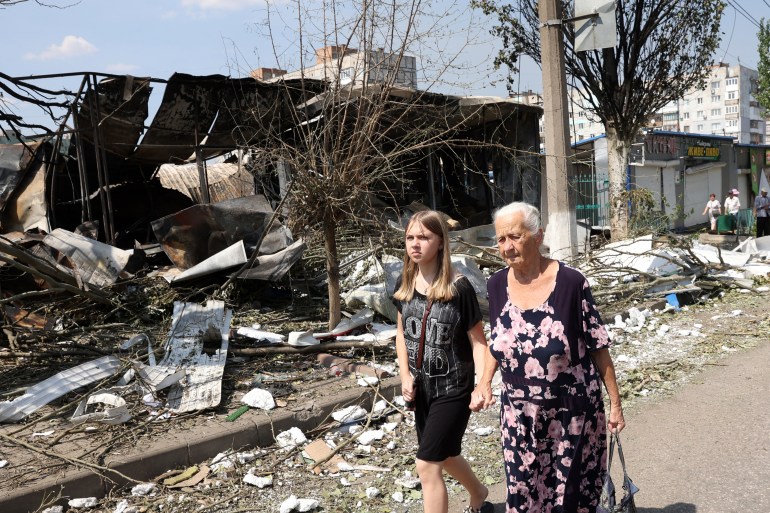
A girl and an elderly lady walk among the debris of a destroyed local market after a Russian missile strike in the town of Bakhmut, Donetsk region on July 16, 2022
People walk by debris of a destroyed local market after a Russian missile attack in the town of Bakhmut, Donetsk region, Ukraine [Anatolii Stepanov/AFP]

Published On 16 Jul 202216 Jul 2022

Russian forces have fired missiles and shells at cities and towns across Ukraine after Russia’s military announced it was stepping up its onslaught against its neighbour, with Ukrainian officials reporting that at least 17 more civilians had been killed.

Russian Defence Minister Sergei Shoigu gave “instructions to further intensify the actions of units in all operational areas, in order to exclude the possibility of the Kyiv regime launching massive rocket and artillery attacks on civilian infrastructure and residents of settlements in the Donbas and other regions,” his ministry said on Saturday.

Tiếp tục đọc “Civilians killed as Russia intensifies attacks across Ukraine”

The semiconductor problem

The military relies on advanced semiconductors. The U.S. doesn’t make any.

Chips on display in Taiwan.
Chips on display in Taiwan.Credit…Ann Wang/Reuters
David Leonhardt

By David Leonhardt

NYTimes – July 14, 2022

The most advanced category of mass-produced semiconductors — used in smartphones, military technology and much more — is known as 5 nm. A single company in Taiwan, known as TSMC, makes about 90 percent of them. U.S. factories make none.

The U.S.’s struggles to keep pace in semiconductor manufacturing have already had economic downsides: Many jobs in the industry pay more than $100,000 a year, and the U.S. has lost out on them. Longer term, the situation also has the potential to cause a national security crisis: If China were to invade Taiwan and cut off exports of semiconductors, the American military would be at risk of being overmatched by its main rival for global supremacy.

Tiếp tục đọc “The semiconductor problem”

Marcos takes office

FP – June 30, 2020

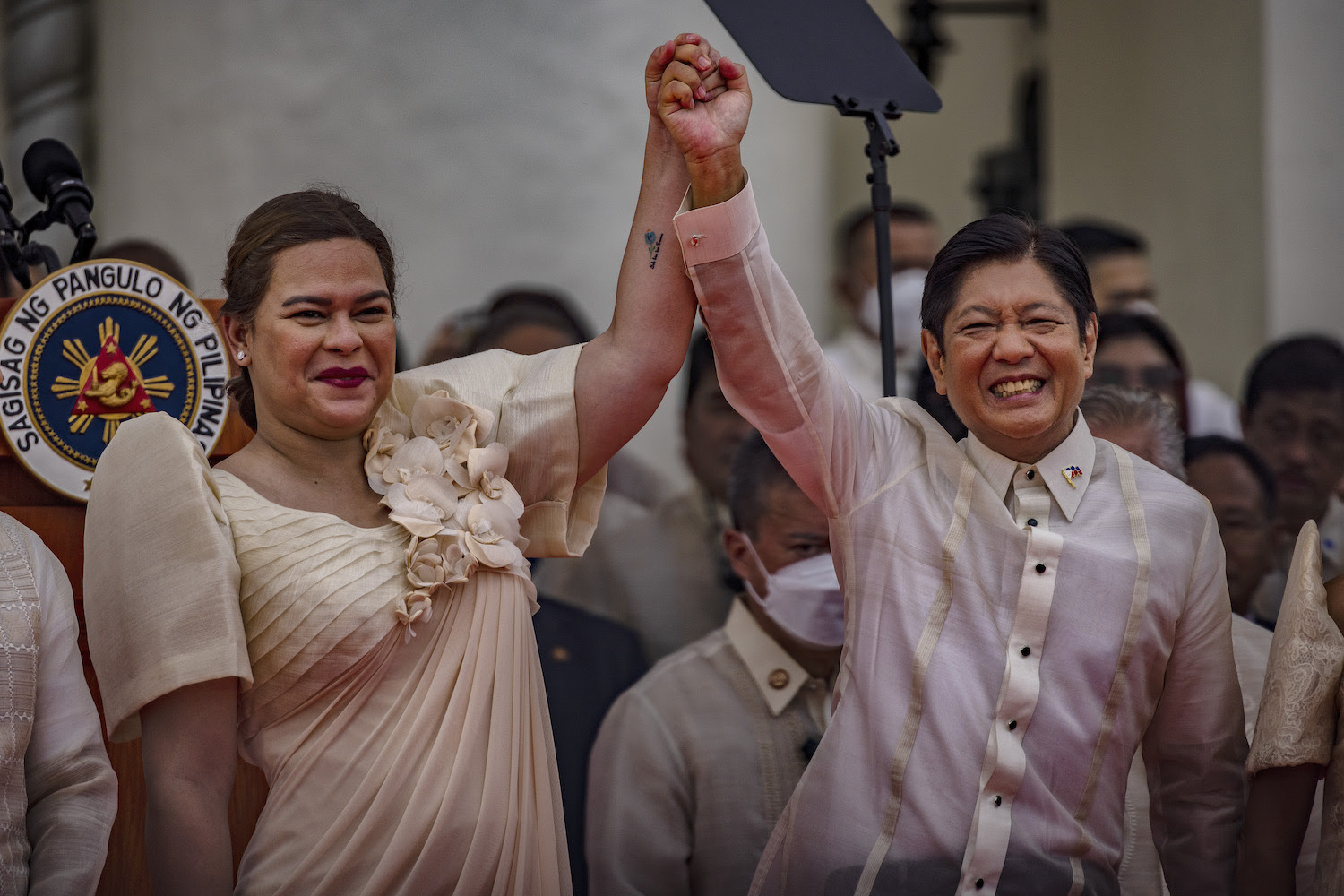
Ferdinand Marcos Jr. is now the president of the Philippines, 36 years after he fled the country along with his dictator father. Marcos took the oath of office today at a muted ceremony in Manila, urging citizens to look ahead to the future, as his mother, Imelda, looked on.

Marcos, known in the Philippines by his nickname Bongbong, has risen to the country’s highest office after a social media-driven campaign helped to rehabilitate his family’s image, transforming memories of the bloody days of martial law, when thousands were tortured and killed, to a nostalgic golden era.

Tiếp tục đọc “Marcos takes office”

PODCAST – Asia Stream: The Philippine Election — Dynasty and Disinformation

nikkeiNearly 50 years after Ferdinand Marcos Sr. declared brutal martial law, the Philippines is poised to elect his son. Has history been forgotten?

Nikkei staff writersMay 7, 2022 03:26 JST

NEW YORK — Welcome to Nikkei Asia’s podcast: Asia Stream.

Every week, Asia Stream tracks and analyzes the Indo-Pacific with a mix of expert interviews and original reporting by our correspondents from across the globe.

New episodes are recorded biweekly and available on Apple PodcastsSpotify and all other major platforms, and on our YouTube channel.

This week, we focus on one of Asia’s most dynamic but flawed democracies: the Philippines. With the election just days away, we get under the hood of the electoral system and investigate the powerful role that dynasties play in the country, with a special focus on Ferdinand Marcos Jr., the front-runner on the cusp of taking power. We then take into account that other essential, if dangerous, tenet of modern Philippine democracy: disinformation, and how it is being used to gain support among the country’s most vulnerable populations.

Tiếp tục đọc “PODCAST – Asia Stream: The Philippine Election — Dynasty and Disinformation”

U.S.-Vietnam Cooperation under Biden’s Indo-Pacific Strategy

March 2, 2022 Bich T. Tran, Adjunct Fellow, CSIS

On February 11, 2022, the Biden administration released its Indo-Pacific Strategy. The document covers a vast geographic area including many nations and touches on a wide range of issues. What does the new strategy mean for U.S.-Vietnam cooperation?

Diplomatic Cooperation

The strategy names Vietnam as one of the United States’ leading regional partners. Keen observers have anticipated the U.S.-Vietnam Comprehensive Partnership signed in 2013 to be upgraded to a strategic partnership. Although some U.S. and Vietnamese officials have said that the name does not matter, formally upgrading to a strategic partnership with a written joint statement will assure both sides’ commitments.

Economic Cooperation

Vietnam’s digital economy is rapidly expanding. In 2011, only 35 percent of the Vietnamese population used the internet, which doubled to 70 percent by 2020. According to the e-Conomy SEA 2021 report, 71 percent of Vietnamese internet users have made at least one purchase online. The report projected Vietnam’s gross merchandise value (GMV) to reach a total value of $21 billion in 2021, when all sectors, except online travel, experienced double-digit growth. E-commerce is leading the pack, with a 53 percent increase from $8 billion to $13 billion. Vietnam’s GMV is expected to grow from $21 billion in 2021 to $57 billion in 2025.

Tiếp tục đọc “U.S.-Vietnam Cooperation under Biden’s Indo-Pacific Strategy”

WHITE HOUSE FACT SHEET: U.S.-ASEAN Special Summit in Washington, DC 

MAY 12, 2022•STATEMENTS AND RELEASES

President Biden will welcome the leaders of the Association of Southeast Nations (ASEAN) for a historic U.S.-ASEAN Special Summit, held for the first time in Washington D.C. and at the White House, to re-affirm the United States’ enduring commitment to Southeast Asia and underscore the importance of U.S.-ASEAN cooperation in ensuring security, prosperity, and respect for human rights.  

Over many years, the United States has steadily deepened our partnership with Southeast Asia. The United States has provided over $12.1 billion in development, economic, health, and security assistance to Southeast Asian allies and partners since 2002 and over that same period of time, the United States has provided over $1.4 billion in humanitarian assistance, including life-saving disaster assistance, emergency food aid, and support to refugees throughout Southeast Asia. Building on our long-standing commitment to this critical region, the Biden-Harris Administration’s FY 2023 Budget Request included over $800 million in bilateral assistance for ASEAN partners and over $25 million to deepen relations with ASEAN and enhance ASEAN’s capacity to tackle pressing regional challenges. 

The United States and Southeast Asia also benefit from our far-reaching commercial and trade ties. ASEAN represents the world’s fourth largest market and the United States is ASEAN’s largest source of foreign direct investment, while our two-way trade amounted to over $360 billion in 2020. 

U.S.-ASEAN relations are ultimately anchored in the special friendship shared by our combined one billion people. Our ongoing commitment to deepening people-to-people ties is marked by 7000 programs at 83 American Spaces in ASEAN countries, the Young Southeast Asian Leaders Initiative’s 155,000 alumni, and the connections forged through nearly 6 million U.S. visas, including student visas, granted to Southeast Asian travelers since 2010.

At the annual U.S.-ASEAN Summit in October 2021, President Biden announced an unprecedented investment of up to $102 million in U.S.-ASEAN relations, significantly expanding our cooperation on health, climate, science and innovation, trade facilitation, education, and more. Today, the United States and ASEAN will inaugurate a new era of partnership, guided by the complementary objectives of the Indo-Pacific Strategy of the United States and the ASEAN Outlook on the Indo-Pacific. In that spirit, President Biden is announcing over $150 million in initiatives which we expect will mobilize billions more in private financing that will deepen U.S.-ASEAN relations, strengthen ASEAN centrality, and expand our common capacity to achieve our shared objectives.

ACCELERATING CLIMATE ACTION, SUSTAINABLE DEVELOPMENT, AND INCLUSIVE PROSPERITY

In support of U.S.-ASEAN Climate Futures and U.S.-ASEAN Economic Futures, the United States and ASEAN will raise our collective climate ambition while working together to support implementation of the Master Plan on ASEAN Connectivity 2025.  We will help meet the region’s enormous infrastructure needs in a sustainable manner that accelerates the clean energy transition, helps the region to achieve a path to net zero emissions by mid-century, and drives inclusive, broad-based prosperity.

Tiếp tục đọc “WHITE HOUSE FACT SHEET: U.S.-ASEAN Special Summit in Washington, DC “

Prime Minister Pham Minh Chinh ahead of U.S.-ASEAN Summit – Toàn văn bài phát biểu của Thủ tướng Phạm Minh Chính tại CSIS Hoa Kỳ

May 11, 2022 CSIS

John J. Hamre: My name is John Hamre and I want to welcome all of you. This is a largest group we’ve had at CSIS in two years. And it’s great to have you here. I want to say a special thank you to the Prime Minister. We are honored to have him here. We have been privileged to have hosted several very important previous leaders in Vietnam. Back in 2015, we had the secretary general of the Communist Party. That was Nguyen Phu Trong. That was in 2015. In 2013, we had President Truong who was here with us. And so today it’s a real privilege to have Prime Minister Pham.

You know, it was just very interesting because today I had a meeting with my Board of Trustees and we spent much of the morning talking about the remarkable changes that are going on in the world today, especially in Asia. You know, the aftershocks of COVID, the kind of difficulties with supply chains, companies wanting to see more reliability in supply chains, and in almost every part of the conversation one country came up. And it was Vietnam. Everybody said, Vietnam is an important new partner here. But there was also an additional sentence, which is: Vietnam is being held back because it doesn’t have the infrastructure that it needs to become this leading partner in global supply chains. And so I think there’s an agenda that America and Vietnam could be working on.

Tiếp tục đọc “Prime Minister Pham Minh Chinh ahead of U.S.-ASEAN Summit – Toàn văn bài phát biểu của Thủ tướng Phạm Minh Chính tại CSIS Hoa Kỳ”

The Ukraine War, China, and Taiwan   


What lessons will Xi Jinping learn from the war in Ukraine?

Blog Post by Elliott Abrams

May 3, 2022 7:05 am (EST), Council on Foreign Relations

What lessons is Xi Jinping learning from the war in Ukraine?

The optimistic answer is that the lessons he is learning make an invasion of Taiwan less likely. First, Xi may be wondering how well his untested military would perform if told to invade. Surely the abysmal performance of Russian troops must make Xi, and every other high official in China, wonder what happens if stiff resistance is met. Like the Russian army, but unlike the U.S. military and our allies who fought in Iraq or Afghanistan, the People’s Liberation Army or PLA is simply untried. And Xi must fear that a military defeat could threaten his own hold on power.

Tiếp tục đọc “The Ukraine War, China, and Taiwan   “

The U.S.-Vietnam Partnership in a Complex World

May 5, 2022 CSIS

The special summit between the United States and the Association of Southeast Asian Nations (ASEAN) is set to take place on May 12–13 in Washington, D.C. But even as the Biden administration aims to advance its foreign policy goals related to the 10-nation bloc, it will also want to take advantage of the opportunity to make progress bilaterally with strategically important partners, including Vietnam. Prime Minister Pham Minh Chinh will make his first trip to the United States for the summit and will give public remarks at CSIS. Judging by his recent visit to Japan, Chinh is likely to address a wide range of issues with U.S. counterparts, including trade, security, and Covid-19 recovery. The two partners have a chance to make important progress in these areas, as well as on people-to-people and historical issues specific to the U.S.-Vietnam relationship.

Tiếp tục đọc “The U.S.-Vietnam Partnership in a Complex World”