Secretary of State Mike Pompeo speaks during a news briefing at the State Department in Washington, DC. Pompeo announced new US sanctions against Iran on Wednesday [File: Nicholas Kamm/AP Photo]
The United States on Wednesday imposed sanctions on five Iranian ship captains who had delivered oil to Venezuela, and US Secretary of State Mike Pompeo reaffirmed the Trump administration’s backing for Venezuelan opposition leader, Juan Guaido.
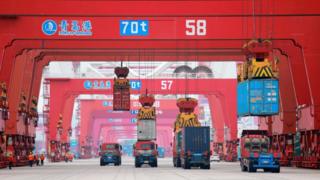
Beijing hit back with tariffs ranging from 5% to 25% on US goods.
What’s next?
Under the so-called “phase one” deal signed in January, China pledged to boost US imports by $200bn above 2017 levels and strengthen intellectual property rules.
The US agreed to halve some of the new tariffs it had imposed on China.
The White House said it will tackle additional issues in a second, “phase two” deal but analysts said they didn’t expect anything concrete anytime soon
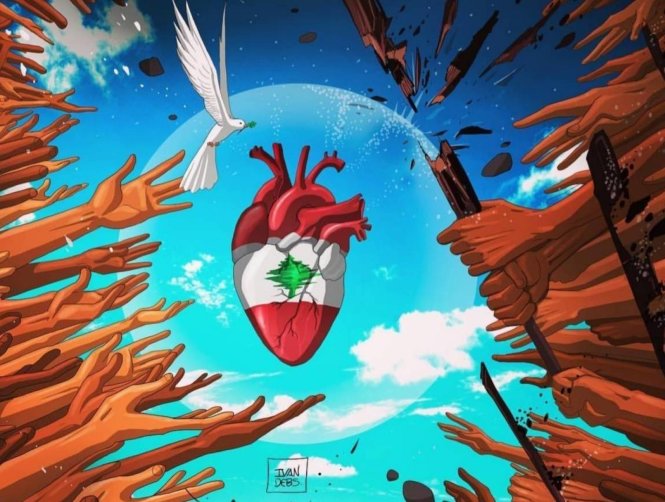
TTCT – Xứ sở đã có 5.000 năm lịch sử Lebanon vừa trải qua một biến cố chấn động. Vụ nổ ở cảng Beirut cướp đi sinh mạng 157 người ngày 4-8 như một thảm kịch thu nhỏ hình ảnh đất nước kỳ lạ của khu vực Trung Đông này.
Ảnh: annahar.com
Buổi chiều Địa Trung Hải thì rất đẹp. Chỉ tiếc là quang cảnh tuy nhìn ra biển nhưng bị các kho hàng của cảng Beirut che mất phần nào. Beirut là thành phố hai mặt biển, căn hộ của Lina và Imad đang ở 50 năm trước là thuộc khu bình dân và tạp nham ở phía đông thành phố, dân cư lúc đó chủ yếu là người lao động Kitô giáo. Bên phải là khu vực Karantina (Cách ly) cũ của cảng, khi Israel thành lập (1948) thì trở thành một trong các trại chứa nửa triệu người Palestine bồng con, cõng mẹ chạy sang tị nạn. Tiếp tục đọc “Thảm kịch vụ nổ Beirut: Nghìn lẻ một chuyện Lebanon”→
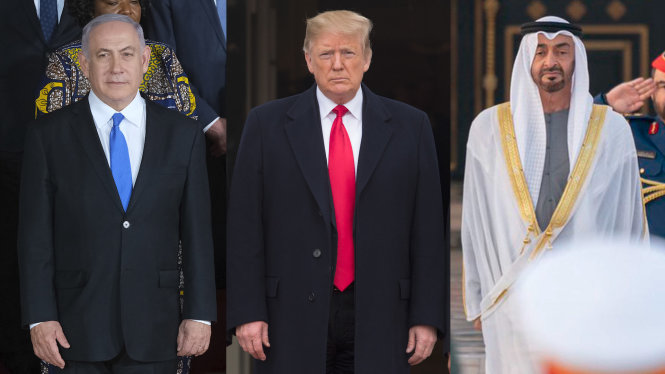
TTCT – Tha thuận giữa Israel và Các Tiểu vương quốc Ả Rập thống nhất (UAE) ngày 13-8 vừa qua quả là “lịch sử” với tên gọi Hiệp ước Abraham, trong ý nghĩa muốn hàn gắn các con cháu của tổ phụ Abraham, nhưng tất nhiên, quan trọng nhất vẫn là chính trị thực dụng.
Bộ ba hoàn cảnh Israel, Mỹ, UAE. Ảnh: The Wall Street Journal
Có một thực tế oái oăm là cả ba tôn giáo “đâm chém” nhau suốt bao thế kỷ qua các cuộc thánh chiến, rồi sau này là bắn giết trong thời hiện đại ở Trung Đông: Do Thái, Kitô, và Hồi giáo, đều có chung một ông tổ là Abraham, được cho là sinh trưởng tại thành phố Ur thuộc đế quốc Babylon (nay ở nam Iraq, gần giáp Kuwait) vào thế kỷ 20 trước Công nguyên.
Sau này phân nhánh, do những khác biệt tầm nhìn về Đấng Tối cao, họ dần xa nhau, thậm chí phủ định nhau. Với thời gian và sau vô vàn những thương đau, chỉ ở thời hiện đại, hi vọng về sự xích lại gần nhau lâu dài mới được nhen nhóm. Sự hòa giải giữa Israel và UAE cũng phải đặt trong xu hướng đó. Tiếp tục đọc “Cùng một tổ phụ Abraham…”→
TĐH: See notes verbales by Malaysia, UK & Northern Ireland, France, Germany, and China to United Nations Commission on the Limits of the Continental Shelfhere >>
20/09/2020 17:30 GMT+7 vietnamnet
France, the United Kingdom and Germany has submitted a joint note verbale expressing their views against the seven notes the Chinese mission had proposed for circulation at the United Nations.
VietNamNet introduces an article by Ambassador Nguyen Hong Thao on this issue:
This joint note verbale shows the view against the seven diplomatic notes China proposed for circulation at the United Nations relating to Malaysia’s submission on continental expansion submitted to the UN Commission on the Limits of the Continental Shelf (CLCS).
This was the first time that these three powerful countries had submitted a joint note verbale related to the East Sea and the 1982 UN Convention on the Law of the Sea (UNCLOS) to the UN Secretary-General.
The consistency of the three major European countries
The joint note verbale expresses the consistency of the three countries with the biggest economic and legal political influence in Europe in rejecting China’s unilateral interpretation of a series of related issues, which cause instability, and affect peace and legal order in the East Sea.
Tiếp tục đọc “Joint Note Verbale of France, UK, Germany and the legal war in the East Sea”→
Washington (CNN)The Trump administration is expected to soon approve another major weapons sale including drones to Taiwan, according to congressional and administration sources. The move comes as the US and Taiwan are strengthening ties and amid mounting tensions between Washington and Beijing.The US is preparing to sell seven packages of weapons systems to Taiwan, a congressional aide told CNN, saying it was unclear when the Congress would be formally notified about the sales, as is required by law.A US official said that the administration will soon formally approve a large sale of MQ-9B Reaper drones. The value of the drones and associated equipment and program support is estimated to be about $600 million.
The trip by Undersecretary of State Keith Krach reportedly to discuss new weapons sales comes amid heightened tensions between Taiwan and the much larger military on the mainland.
By Paul D. Shinkman, Senior Writer, National SecuritySept. 17, 2020, at 10:27 a.m.
China Threatens U.S. Over Taiwan Visit
Undersecretary of State Keith Krach exits a plane upon arrival at the air force base airport on Thursday, Sept. 17, 2020, in Taipei, Taiwan.(CENTRAL NEWS AGENCY POOL/AP)
File photo of Keith Krach, Under Secretary of State For Economic Growth, Energy and the Environment, and the latest high-ranking US official to visit Taiwan. (Photo: AFP/Riccardo Savi)
US military forces fire a High Mobility Artillery Rocket System (HIMARS) rocket during the annual Philippines-US live fire amphibious landing exercise (PHIBLEX) at Crow Valley in Capas, Tarlac province, north of Manila, Philippines Oct 10, 2016. (Photo: REUTERS/Romeo Ranoco)
WASHINGTON: The United States plans to sell as many as seven major weapons systems, including mines, cruise missiles and drones to Taiwan, four people familiar with the discussions said, as the Trump administration ramps up pressure on China.
WASHINGTON: Secretary of Defense Mark Esper announced on Wednesday (Sep 16) an ambitious plan to expand the US Navy with a range of unmanned and autonomous ships, submarines and aircraft to confront the growing maritime challenge from China.
File photo of a H-6 bomber of the Chinese People’s Liberation Army Air Force flying near a Taiwan F-16 in this Feb 10, 2020 handout photo. (Photo: Reuters)
The measure is unlikely to have much of an immediate effect because of the city’s coronavirus restrictions, but it could worsen fraying U.S.-China ties.
Police officers confronting protesters in Hong Kong this month. Dozens of people in the city have been arrested under a new security law.Credit…Lam Yik Fei for The New York Times
The State Department advisory warned that the security law, which came into force in June, could subject Americans who have been publicly critical of China “to a heightened risk of arrest, detention, expulsion, or prosecution.”
The security law targets what it deems acts of secession, subversion, terrorism and collusion with foreign elements, but critics say the broad wording also gives the authorities wide-ranging powers to target voices of dissent. Dozens of people in Hong Kong have already been arrested under the law, including Jimmy Lai, a prominent pro-democracy media tycoon.
The State Department has previously warned about the risk of arbitrary detention in mainland China and about the use of exit bans that cannot be readily challenged in court to keep Americans in the country.
Hong Kong, a semiautonomous territory of China, has its own legal system that is more independent and transparent than the Communist Party-controlled courts in the mainland. But the U.S. travel advisory suggests the risk of arbitrary enforcement is increasing in Hong Kong as well.
Americans traveling in mainland China or Hong Kong “may be detained without access to U.S. consular services or information about their alleged crime,” the advisory said. “U.S. citizens may be subjected to prolonged interrogations and extended detention without due process of law.”
Wang Wenbin, a spokesman for the Chinese Ministry of Foreign Affairs, criticized the new travel warning on Tuesday, saying China was one of the safest places on earth and the mainland had recorded no local transmission of the coronavirus for a month.
Last year, the State Department warned of the risk of “confrontational” demonstrations in Hong Kong, as mass pro-democracy rallies evolved into an increasingly violent push against Chinese rule. Several other countries issued similar warnings.
The United States has penalized Hong Kong and Chinese officials, and Beijing has responded with similar measures against American lawmakers and heads of nongovernmental organizations.
The warning on Hong Kong came as the United States improved its assessment of the coronavirus risk in China, where the spread of the virus is largely controlled, by changing its advisory level to “reconsider travel” from “do not travel.”
Austin Ramzy is a Hong Kong reporter, focusing on coverage of the city and also of regional and breaking news. He previously covered major events around Asia from Taipei and Beijing. @austinramzy
Donald Trump is making rivalry with China a key platform in his re-election campaign as relations between the two countries continue to deteriorate. Photo composite: AFP

![Secretary of State Mike Pompeo speaks during a news briefing at the State Department in Washington, DC. Pompeo announced new US sanctions against Iran on Wednesday [File: Nicholas Kamm/AP Photo]](https://www.aljazeera.com/mritems/imagecache/mbdxxlarge/mritems/Images/2020/4/23/10643c13caab4a4cab319e7726067be0_18.jpg "US slaps new sanctions on Iranians for Venezuela trade")




 CVD
CVD 