The United States of America (the United States) and the Socialist Republic of Viet Nam (Viet Nam) have agreed to a Framework for an Agreement on Reciprocal, Fair, and Balanced Trade to strengthen our bilateral economic relationship, which will provide both countries’ exporters unprecedented access to each other’s markets. The Agreement on Reciprocal, Fair, and Balanced Trade will build upon our longstanding economic relationship, including the U.S.-Viet Nam Bilateral Trade Agreement signed in 2000 that entered into force in 2001.
A groundbreaking new report, “Resilience, Readiness, and Response,” from Project CASA (Climate and Security Action through Civil-Military Cooperation in Climate-Related Emergencies) highlights the increasing and essential role of national militaries in addressing the escalating global climate crisis.
The report is the result of a comprehensive two-year study which provides the first cross-national dataset on military involvement in climate disasters. Edited by Ronald A. Kingham and Dr. Ashley McIlvain Moran and published by the Environment & Development Resource Centre (EDRC), the report serves as both a critical resource and a call to action for policymakers and practitioners grappling with climate-worsened disasters.
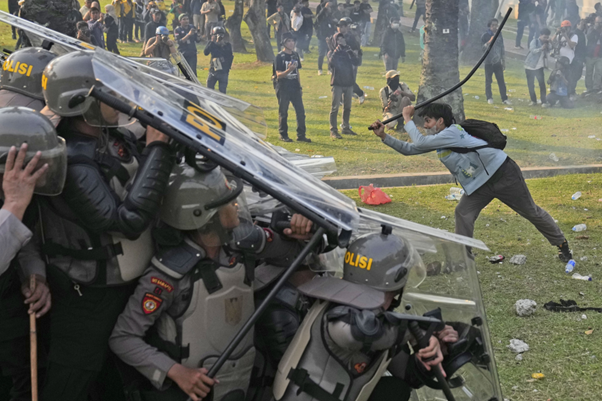
Cuối tháng 8/2025, Indonesia chứng kiến làn sóng biểu tình dữ dội bùng nổ sau sự việc của một tài xế xe công nghệ trong vụ va chạm với xe bọc thép cảnh sát. Từ một sự cố mang tính bộc phát, phong trào nhanh chóng lan rộng khắp các đô thị lớn, tập hợp hàng chục nghìn sinh viên, tài xế và các tầng lớp lao động trẻ xuống đường. Các cuộc đụng độ với cảnh sát đã khiến nhiều người thiệt mạng và hàng trăm người bị bắt giữ, làm dấy lên lo ngại về một cuộc khủng hoảng chính trị sâu sắc. Sự kiện này diễn ra trong bối cảnh Indonesia vừa giữ vai trò trung tâm của ASEAN vừa phải cân bằng giữa cạnh tranh Mỹ–Trung ở khu vực Ấn Độ Dương – Thái Bình Dương. Bởi vậy, sự kiện khủng hoảng này không chỉ đặt ra vấn đề nội bộ của riêng Indonesia mà còn gợi mở nhiều tín hiệu đáng lưu ý với các quốc gia lân cận trong đó có Việt Nam.
TTCT – Hình ảnh Iran trong mắt phương Tây đã bị bóp méo rất nhiều, và cuộc chiến vừa diễn ra không chỉ có nguyên nhân địa chính trị…
Phụ nữ Iran ở Tehran. Ảnh: Reuters
Trong thập niên 1970, do phải tiêu pha cho chiến tranh Việt Nam và chiến tranh lạnh với Liên Xô, đồng thời với sự lớn mạnh kinh tế của Nhật Bản và Đức, Hoa Kỳ mất vị trí đứng đầu.
Tổng thống Nixon, dưới áp lực của chính các đồng minh Đức, Anh, Pháp, phải ngưng việc hoán đổi USD sang vàng như ấn định bởi hiệp ước Bretton Woods sau Thế chiến II.
Lý do nước Mỹ không đảm bảo được đồng USD bằng vàng nữa là vì họ đã in ra quá nhiều USD so với lượng vàng đang giữ. Mà vàng lại không phải của Hoa Kỳ, mà là ký thác của Anh, Pháp trong thời Thế chiến, giờ họ đòi về. Đồng USD đành thả nổi và sụt giá.
50 years after the Vietnam War ended, some veterans are still on duty – not as fighters, but as volunteer guardians of their hometowns. We go on night patrol in Canh Thuy Ward.
50th Anniversary Ceremony of the end of the Vietnam WarEconomic development progressing in Bac Giang ProvinceVeteran watching over children on their way homeVeteran paying respects at a comrade’s grave
Generation Z is coming of age at a particularly difficult time. Zoomers, as they’re known, are aged between 13 and 28 and have already lived through a global financial crisis, a historic pandemic, and several wars. Now, many of them confront an entry-level job market muddled by advances in AI.
China has set its sights on the Global South, and on ASEAN – the Association of Southeast Asia Nations – one of the fastest growing regions in the world.
ASEAN’s fastest growing economy is now facing serious headwinds from Trump tariffs. As Vietnam sent a team to Washington to negotiate, China stepped up its diplomatic efforts here. Trade and investment between the 2 countries had been steadily growing despite differences in the South China Sea. Is this a new chapter in complex Vietnam-China relations? Tiếp tục đọc “Will Vietnam deepen ties with China because of Trump tariffs?”→
Agent Orange was a chemical herbicide used during the Vietnam War that had a devastating impact long after the conflict ended.
Vietnam says 400,000 killed by Agent Orange; cleanup halted after US aid cuts
The US military sprayed millions of hectares of Vietnamese land with Agent Orange, a defoliant containing dioxin — a chemical linked to cancer, birth defects, and long-term environmental damage. Vietnam estimates 400,000 people were killed by the toxin. Although the US had been helping with the cleanup, efforts stopped following aid cuts by the Trump administration.
Al Jazeera’s Tony Cheng reports from Bien Hoa in Vietnam. A warning: this report contains disturbing images.
Trong cuộc Chiến tranh Việt Nam, Mỹ đã rải hàng triệu lít thuốc diệt cỏ độc hại, còn gọi là chất độc da cam (Agent Orange), xuống những cánh rừng rậm để phá hủy những tán lá dày mà các chiến binh Việt Cộng dùng làm nơi ẩn nấp.
Từ những năm 1960, bác sĩ Nguyễn Thị Ngọc Phượng bắt đầu nhận thấy các trường hợp dị tật bẩm sinh, ung thư và các căn bệnh liên quan đến việc tiếp xúc với chất độc da cam. Hơn nửa thế kỷ sau, nhiều người ở Việt Nam vẫn tiếp tục bị ảnh hưởng.
BBC News Tiếng Việt phỏng vấn giáo sư, bác sĩ Ngọc Phượng về hành trình hơn 40 năm đi tìm công lý cho các nạn nhân chất độc ca cam.
Năm 2024, bác sĩ Ngọc Phượng đã được trao giải thưởng Ramon Magsaysay (được mệnh danh là Giải Nobel châu Á) vì những đóng góp cho những nạn nhân chất độc da cam tại Việt Nam.
CAO LANH CITY, Vietnam, March 29 (Reuters) – On her trusty motorcycle, Vietnamese artist Dang Ai Viet travels around the Southeast Asian country in a quest to ensure that the thousands of women who suffered the loss of two or more loved ones during the Vietnam War are not forgotten.
The 75-year-old has painted the portraits of 2,765 of the women, who are part of a group known in Vietnam as “heroic mothers”, in recognition of their sacrifice during the war that ended in 1975.
The Reuters Tariff Watch newsletter is your daily guide to the latest global trade and tariff news. Sign up here.
We mark 50 years since the end of the U.S. war on Vietnam with the acclaimed Vietnamese American writer Viet Thanh Nguyen. On April 30, 1975, North Vietnamese troops took control of the South Vietnamese capital of Saigon as video of U.S. personnel being airlifted out of the city were broadcast around the world. Some 3 million Vietnamese people were killed in the U.S. war, along with about 58,000 U.S. soldiers. Hundreds of thousands of Lao, Hmong and Cambodians also died, and the impact of the war is still being felt in Vietnam and the region.
Nguyen says while the Vietnam War was deeply divisive in the United States during the 1960s and ’70s, American interference in Southeast Asia goes back to President Woodrow Wilson in 1919, when he rejected Vietnamese demands for independence from France. “And from that mistake, we’ve had a series of mistakes over the past century, mostly revolving around the fact that the United States did not recognize Vietnamese self-determination,” says Nguyen.
We Are Here Because You Are There”: Viet Thanh Nguyen on How U.S. Foreign Policy Creates Refugees
Pulitzer Prize-winning Vietnamese American writer Viet Thanh Nguyen discusses why he chooses to use the term “refugee” in his books, and speaks about his own experience as a refugee. His new novel tells the story of a man who arrives in France as a refugee from Vietnam, and explores the main character’s questioning of ideology and different visions of liberation. Titled “The Committed,” the book is a sequel to “The Sympathizer,” which won the Pulitzer Prize for Fiction in 2016. Nguyen says his protagonist is “a man of two faces and two minds” whose ability to see beyond Cold War divisions makes him the perfect figure to satirize the facile stories people tell themselves about the world. “He’s always going beyond the surface binaries to look underneath.” Nguyen is the chair of English and professor of English and American studies and ethnicity at the University of Southern California. His other books include “The Refugees” and the edited collection “The Displaced: Refugee Writers on Refugee Lives.”
Viet Thanh Nguyen Interview: The Vietnam War Refugee Experience Behind The Sympathizer
Pulitzer Prize-winning author Viet Thanh Nguyen reflects on his childhood as a refugee in America, his writing career, and family: from the trauma of displacement to the healing found in fatherhood and literature. Nguyen shares how these experiences have shaped his life and work, from his novel The Sympathizer to his commentary on war, cultural identity, and American life.
00:00 Introduction to Viet Thanh Nguyen and The Sympathizer
00:49 Refugee journey, family separation, and overcoming trauma
03:43 Humor, cultural expectations, and Vietnamese Catholic roots 05:29 Cultural identity, rebellion, and hidden writing career
07:14 Family relationships, cultural silence, and lessons in parenting 09:35 Impact of fatherhood, learning from children, and rediscovering play
12:13 Art, personal identity, and American cultural values 14:49 Vietnamese American identity, racism, and vision for the future
17:27 Teaching about war, challenges of digital information overload
20:31 Apocalypse Now, self identity struggles, and power of storytelling
24:41 Vietnam War legacy, draft-era resistance vs. modern volunteer military
26:47 Family history, generational trauma, and refugee story from Vietnam
The documentary, Vietnam: 50 Years of Forgetting, follows Vietnamese filmmaker Mai Huyen Chi as she sets out to trace the life and death of her grandfather, a war hero lost to history. What begins as a personal journey soon becomes a meditation on the burden of memory, the silence of survivors, and the complex legacies of war.
As she travels across Vietnam, collecting testimonies and fragments of remembrance, Chi is confronted with what has been left unspoken – in her family and in the fabric of a nation still shaped by conflict.
The film explores what it means to inherit a war you did not live through, and what is remembered when so much has been forgotten.
Dưới đây mình chép lại một lá thư của liệt sĩ Đồng Thế Thức, gửi từ chiến trường (miền Nam) cho cha mẹ và gia đình ở miền Bắc trong thời gian kháng chiến chống Mỹ những năm 1970s.
Liệt sĩ Đồng Thế Thức là bác ruột của mình, bác là anh trai của mẹ. Bác Thức sinh năm 1942, lớn hơn mẹ 14 tuổi. Bác học xong cấp 3 là nhập ngũ. Theo mẹ kể lại, bác Thức hy sinh vào khoảng năm 1974 tại Tây Ninh. Bức thư này không ghi rõ ngày tháng, nhưng theo mẹ kể có lẽ bác viết tầm năm 1973. Trong thư bác nói về niềm tin ngày thống nhất đang rất gần rồi, “con sẽ trở về trên chuyến tàu Sài Gòn – Hà Nội”. Thêm nữa thời chiến, liên lạc rất khó khăn, cho nên có khi gửi thư cả vài năm mới đến được tay người nhà nên không biết chính xác thư viết khi nào. Đây là một bức thư hiếm hoi bác gửi về được tới gia đình trong những năm chiến đấu ở chiến trường miền Nam.
Lá thư này có đề địa chỉ là hòm thư. 86558YK – B11. Thời đó khi nói đến đi Bê (B) tức là đi vào chiến trường miền Nam. Từ năm 1960, các khu vực tác chiến quân sự có tên gọi quy ước A là miền Bắc, B là miền Nam, C là Lào và Đ là Cam pu chia (sau đổi thành K). Tất cả cán bộ từ Bắc đi B đều phải đi theo những con đường tuyệt bí mật, không ai biết đường đi của ai. Hơn nữa, bác Thức đóng quân tại Tây Ninh, là nơi căn cứ của Trung Ương Cục Kháng Chiến Miền Nam, phải cực kỳ bí mật không thể biên thư tuỳ tiện để lộ tung tích. Những ai đi B là dù không nói, là biết không hẹn ngày trở về.
Trong thư có một số chữ bị mờ nhìn không còn rõ. Mình cố gắng chép lại để nguyên văn từng dấu chấm, phẩy, dấu cảm thán. Có một số câu đọc nghe có vẻ không hoàn chỉnh. Điều này có lẽ là do, như trong như bác nói, lá thư phải viết trong hoàn cảnh nhanh và rất vội để gửi cho người quen mang ra ngoài Bắc. Vì cơ hội này không hề dễ dàng gặp được trong chiến trường. Cho nên phải viết thật nhanh và vội, vì vậy có lẽ cũng rất nhiều hồi hộp và cảm xúc.
Linggong Kong does not work for, consult, own shares in or receive funding from any company or organisation that would benefit from this article, and has disclosed no relevant affiliations beyond their academic appointment.
Partners
Auburn University provides funding as a member of The Conversation US.
The move, in Trump’s telling, was prompted by Beijing’s “lack of respect for global markets.” But the U.S. president may well have been smarting from Beijing’s apparent willingness to confront U.S. tariffs head on.
Trung Quốc hôm nay cho biết nước này sẵn sàng đàm phán với Mỹ, nhưng cũng không sợ hãi nếu Mỹ tiếp tục đe dọa áp thuế.
Cờ Mỹ và Trung Quốc. Ảnh: Reuters
Ngày 10/4, khi được hỏi về việc liệu Mỹ và Trung Quốc đã bắt đầu đàm phán thuế nhập khẩu hay chưa, người phát ngôn Bộ Thương mại Trung Quốc He Yongqian cho biết nước này sẵn sàng đàm phán với Mỹ, nhưng phải trên cơ sở bình đẳng và tôn trọng lẫn nhau. Ông khẳng định “việc gây sức ép, đe dọa, bắt nạt” không phải là cách hành xử đúng với Trung Quốc.


 Cờ Mỹ và Trung Quốc. Ảnh: Reuters
 CVD
CVD