
Tội lỗi của Mỹ với nạn nhân chất độc da cam Việt Nam là rất rõ ràng.
VN cần kiện Mỹ, và nên kiện Mỹ trước Tòa án Hình sự Quốc tế (ICC) và Tòa án Công lý Quốc tế (ICJ). Tiếp tục đọc “Mỹ phải chịu trách nhiệm cho nạn nhân chất độc da cam Việt Nam”
Conversations on Vietnam Development

Tội lỗi của Mỹ với nạn nhân chất độc da cam Việt Nam là rất rõ ràng.
VN cần kiện Mỹ, và nên kiện Mỹ trước Tòa án Hình sự Quốc tế (ICC) và Tòa án Công lý Quốc tế (ICJ). Tiếp tục đọc “Mỹ phải chịu trách nhiệm cho nạn nhân chất độc da cam Việt Nam”

THE KNOWLEDGE! · posted by Neeraj TiwariMar 10
In history, Iran has often been considered culturally connected with India. Both share a similar ancient past, and both regions experienced attempts of religious conversion during the spread of Islam. Iran eventually became fully Islamic, while India remained religiously diverse. The word “Iran” itself is believed to be derived from “Aryan.” Iran’s territory is about half the size of India’s. People living in hot, desert, and mountainous regions are often considered resilient, and Iran has a long history of wars.
Tiếp tục đọc “Is Iran strong enough to fight the United States along with Israel and the Gulf countries?”Footage of an interview of Lee Kuan Yew, the Prime Minister of Singapore, conducted by Australian and British journalists.
Quote: “If the British withdraw, I am prepared to go on with the Austrialians and the New Zealanders. But, I am not prepared to go on with Americans. ….I think they are highly intelligent, often well-meaning, people, and some of their leaders like Mr. Kennedy, the late President, had signs, of growing greatness, depth. But, by and large, the administration lacks depth. But, by and wisdom which comes out of an accumulation of knowledge of human beings and human situations over a long period of time. That is lacking, and it is not their fault what have they got? Three, four hundred years of history, and they have become a nations just recently. I will tell you this. I have had three experiences, only three experiences, with the Americans. And, they did not intend any harm in each one of them. But, the tragedy was; they did real harm.”
Lee Kuan Yew was 44 at the time. He revealed an attempt in 1960 by an agent of the American Central Intelligence Agency (CIA) to bribe an official of the Singaporean Special Branch to report on the activities of the Singaporean state. He also revealed that the American agent was arrested and threatened with prosecution. But the case did not come to open court. He told the journalists that he sent a message to the American government, which he accused of “lacking finesse”, to give Singapore $100 million dollars for economic development. However, the Americans responded by offering Lee and his political Party $10 Million. He refused.
Read full interview: National Archive of Singapore TRANSCRIPT OF AN INTERVIEW BY FOREIGN CORRESPONDENTS WITH THE PRIME MINISTER OF SINGAPORE, MR. LEE KUAN YEW, HELD AT TV SINGAPURA AT 1130 HOURS ON 30TH AUGUST
13 March 2026, London: Military tensions in West Asia are beginning to disrupt maritime traffic through the Strait of Hormuz, raising serious concerns for global energy markets, fertilizer supplies and vulnerable economies. In a rapid assessment titled “Strait of Hormuz disruptions: Implications for global trade and development,” UN Trade and Development (UNCTAD) has highlighted the potential risks posed by interruptions in one of the world’s most critical trade corridors.

The Strait of Hormuz carries nearly one quarter of global seaborne oil trade, along with large volumes of liquefied natural gas and fertilizers. Any disruption in this narrow passage therefore has immediate consequences for global energy prices, maritime transport costs and agricultural input supply chains.

Paul DenlingerSun Lived and worked in China for > 20 years Sun
While there is a tremendous distrust and hostility to China in the US, and here on Quora, there is one fact worth pointing out.
While China supports Iran in the conflict, it has held back on releasing satellite images showing damage to US air and logistics bases, and on US Navy ships in the region. China has private-sector and government reconnaissance satellites with high resolution which can show the damage to the US bases and Israeli bases, but it has held back.
Tiếp tục đọc “China holds back satellite images on the Iran war”
Weston Blaine · Former Infantryman, So. Vietnam April 1966 – March 1967. at U.S. Army (1965–1968)1y
China has attempted to make Vietnam part of China for hundreds of years and failed every time. Vietnam just will not cooperate. It`s not so much that they hate each other, although they may, but that the Vietnamese People are proud of their nation, as well they should be, and they refuse to ever give that up. No matter how many times the Chinese come in and try to tame them into becoming Chinese too. I used to know how many times that was, but it`s been too long. At least several. The Vietnamese will never give up their Country.
Tiếp tục đọc “China ruled Vietnam for over 1,000 years, why is Vietnam not an “ancient, inseparable part of China” like Taiwan is? (2)”
Posted by RAYUpdated Wed
Iran dramatically revamped its missile strategy after the June 2025 war. The past 24 hours have shown how:
➡️ Immediate retaliation:
Instead of waiting days or even hours, the IRGC began reciprocal strikes immediately. Initial US-Israeli attacks: 9:27-9:45 am. Iranian retaliation by 10 am.
Tiếp tục đọc “Iran’s New Missile Tactics Throw US, Israeli War Planning into Disarray”chatthamhouse.org Research paper Published 20 April 2020 ISBN: 978 1 78413 391 7

Royal Navy Vanguard Class submarine HMS Vigilant returning to HMNB Clyde after extended deployment. The four Vanguard-class submarines form the UK’s strategic nuclear deterrent force. Photo: Ministry of Defence.21st century. Researchers at Chatham House have worked with eight experts to produce this collection of essays examining four contested themes in contemporary policymaking on deterrence.
9-10-2025 – Nguyễn Đình Đức
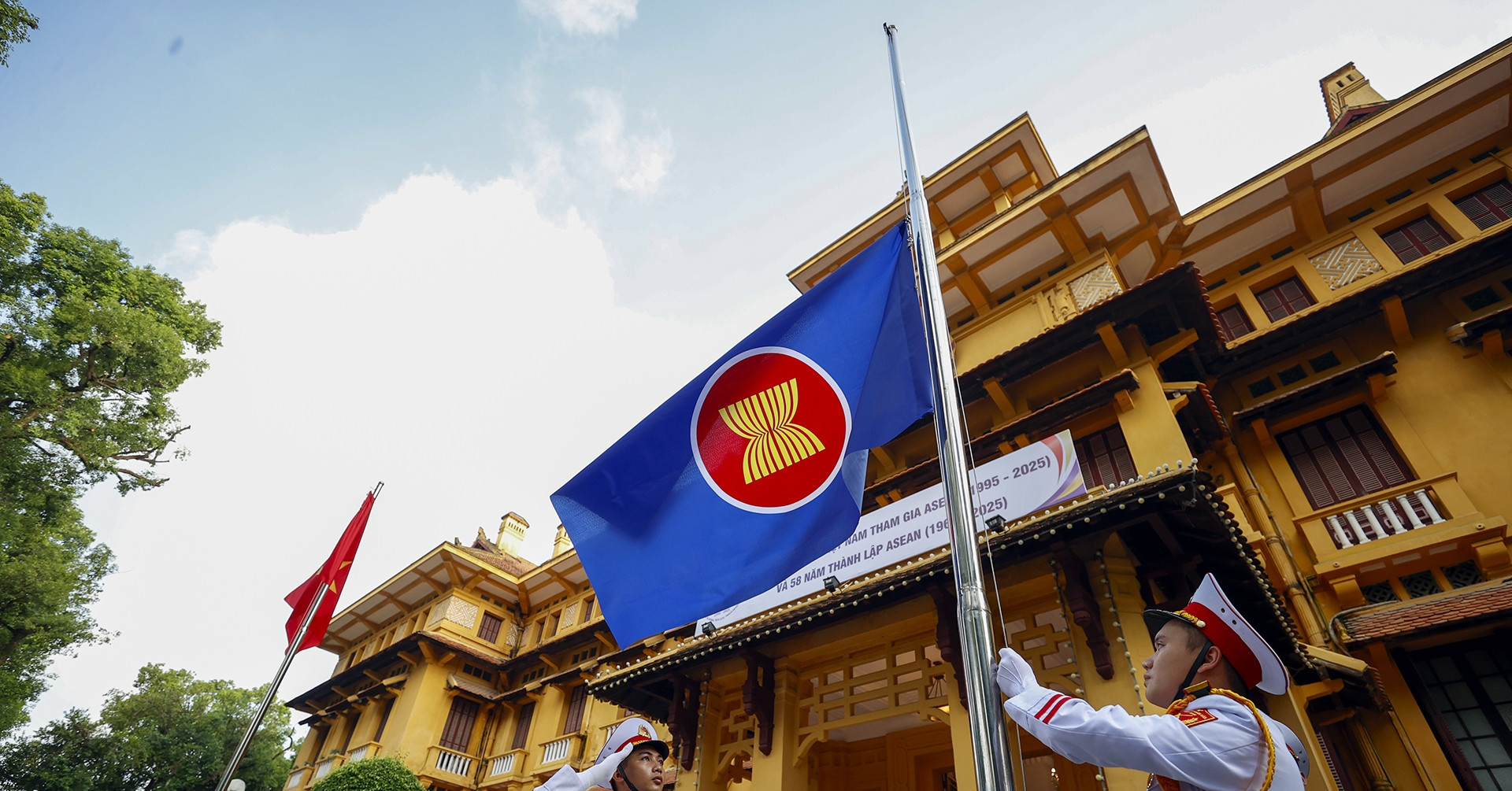
Tiasang – Năm 2025 đánh dấu 30 năm Việt Nam tham dự ASEAN và năm năm tới, Việt Nam dự kiến sẽ trở thành chủ tịch tổ chức khu vực này. Việt Nam có thể làm gì để đưa sự gắn kết trong khu vực lên một nấc thang mới?
Posted by Reahana Dec 16, 2025
On December 8 local time, the U.S. Department of Defense—now renamed the “War Department”—posted a commemorative poster on its official social media account marking the 84th anniversary of the attack on Pearl Harbor, accompanied by the caption: “We will never forget!”
Tiếp tục đọc “Having caused trouble everywhere, Japan has now been abandoned by its allies and finds itself surrounded on all sides。”
Alexander Risøy · World traveler. 1y
I suggest you visit China. It reversed my preconception. I am from Norway, North Europe. A rather modern and advanced society.
On my first visit to the US over 20 years ago, I was surprised at how backward and old fashioned it was. Movies had let me to believe it was the epitome of modern society. I visited several states on the East/South-East. Very backwards digitally. Terrible infrastructure. Unwalkable. Dirty. Hard to find quality restaurants outside of big cities. Dead city centres in medium sized cities.
Tiếp tục đọc “If China is full of the smartest people, why is the US so much more advanced?”Al Jazeera English – 13-12-2025
Sang is one of hundreds of thousands of unwanted and discriminated children left behind by the US soldiers after the Vietnam War. When his lifelong dream of finding his father comes true, Sang’s only mission is to race against time to meet his ailing dad and break the cycle of war trauma that has plagued generations. Tiếp tục đọc “A man’s 50-year search for his father after the Vietnam War”
Nguyên Nga– ngngathanhnien@gmail.com
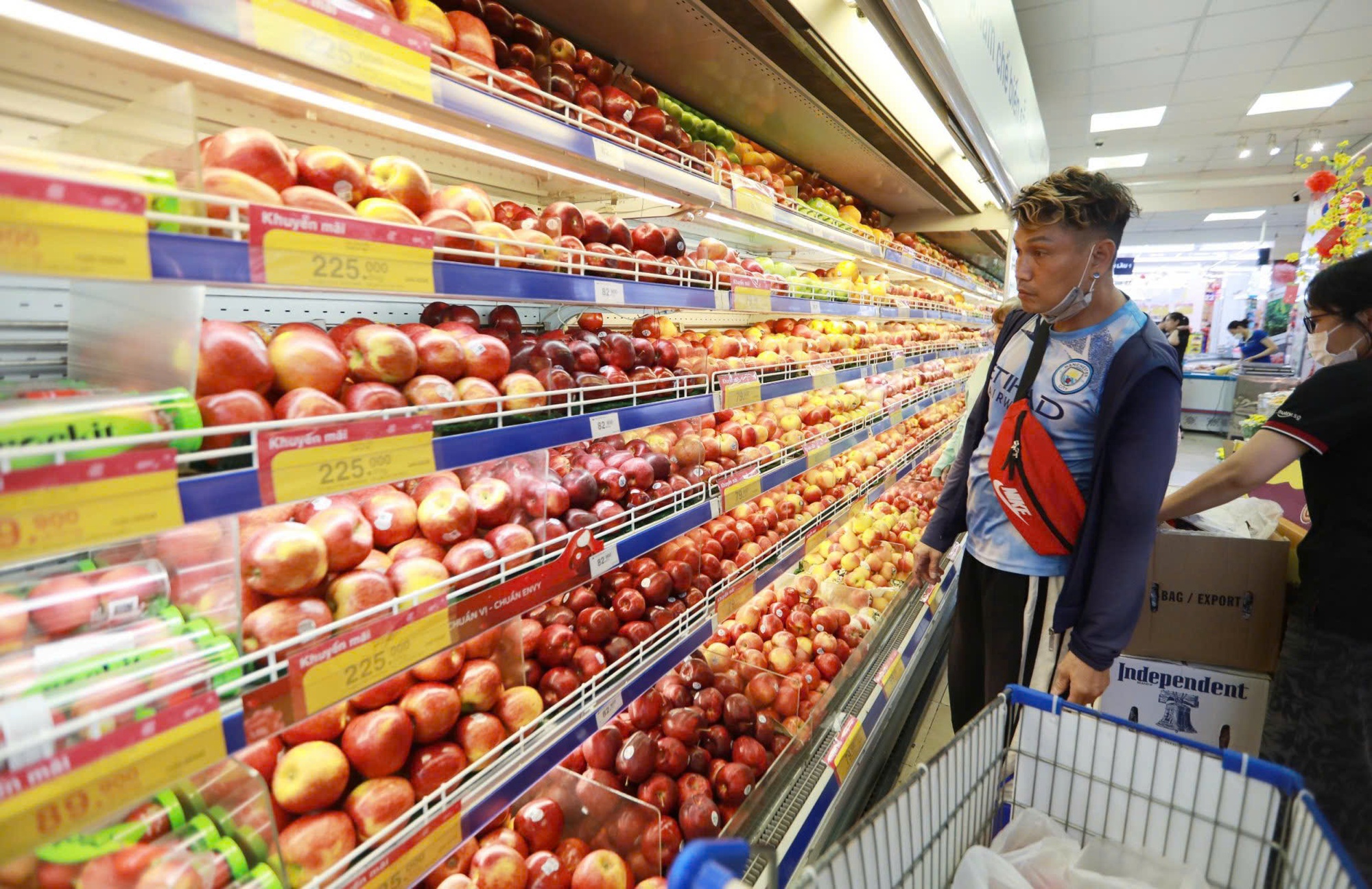
Nhập khẩu hàng hóa từ Mỹ về Việt Nam tăng mạnh gần 24% trong 3 quý đầu năm. Các nhà nhập khẩu dự báo, nhập khẩu hoa quả, nguyên liệu sản xuất sẽ tăng mạnh trong quý cuối năm.
Bà Đàm Thu Vân, nhà nhập khẩu trái cây tại TP.HCM, cho hay các loại trái cây nhập khẩu phổ biến từ Mỹ như táo, nho, cherry, cam ruột đỏ… vẫn tăng đều đặn từ đầu năm đến nay. Đặc biệt khi vào mùa vụ táo, cam ở Mỹ, chi nhập khẩu các mặt hàng này của công ty tăng đến 50% dù nhập rau quả nói chung giảm đến 18%. “Rau quả, nông sản Mỹ nói chung luôn hấp dẫn người tiêu dùng Việt nhờ chất lượng và giá cả. Từ nay đến cuối năm Mỹ bước vào mùa nho không hạt, nhập khẩu của công ty tôi chắc chắn lại sẽ tăng mạnh”, bà Vân cho hay.
 CVD
CVD 