Lessons from the UN’s first resolution on AI in nuclear command and control

thebulletin.org By Alice Saltini | December 22, 2025

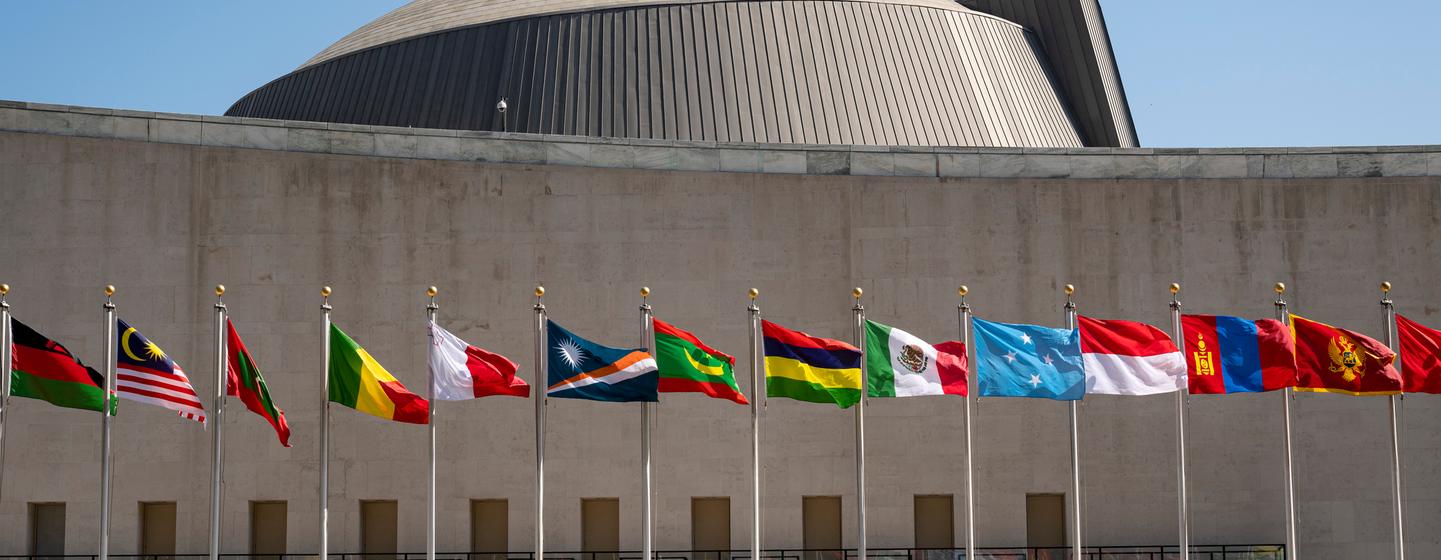
Flags of nations in front of the UN headquarters in New York against a blue sky.In November, 115 states voted in favor, eight voted against, and 44 abstained from voting on a resolution adopted by the General Assembly’s First Committee that examines the possible risks of integrating AI into nuclear weapons systems. Image: depositphotos

The United Nations rarely moves fast on disarmament. This year, though, it did something unusual. On November 6, the General Assembly’s First Committee, where states debate over questions of disarmament and international security, adopted a resolution that directly looks at the possible risks of integrating artificial intelligence into nuclear weapons systems, especially in nuclear command, control, and communications, known as NC3. Austria, El Salvador, Kazakhstan, Kiribati, Malta, and Mexico pushed the text, bringing into a formal setting a problem that has mostly lived in expert circles and informal dialogues.

With 115 states voting in favor, eight voting against, and 44 abstaining, support was broad. Nuclear-armed states and many of their allies voted against the resolution or chose to abstain. In contrast, the Global South and most non-nuclear-weapon states expressed strong support. This split reflects how each group views threats and what policies they prioritize. It also reveals how early and unsettled global thinking on AI in the nuclear field still is. Rather than seeing the outcome of the vote as a clear-cut failure or success, it may be best read as an initial test case. In other words, the resolution was an early attempt to translate a fast-moving technical debate into diplomatic language.

Tiếp tục đọc “Lessons from the UN’s first resolution on AI in nuclear command and control”
African leaders take bold stand for sustainable development at UN Assembly

UN.org

A view of the flags outside the General Assembly building during the general debate.

UN Photo/Rick Bajornas

A view of the flags outside the General Assembly building during the general debate.

UN Affairs

Addressing the UN General Assembly on Wednesday, leaders from African nations voiced their commitment to achieving sustainable development and called for a more equitable and prosperous world.

A recurring theme in speeches delivered by the Presidents of Seychelles, Namibia, Ghana, Angola, Sierra Leone and Liberia was the urgent need to rebuild trust and rekindle global solidarity in the face of complex changes.

Tiếp tục đọc “African leaders take bold stand for sustainable development at UN Assembly”

In Hindsight: The Long and Winding Road to UN Security Council Reform 

securitycouncilreport.org

The current war in Ukraine, which has shown the impotence of the UN Security Council when one of its permanent members goes to war in violation of the UN Charter, has brought renewed energy to the debate over reforming the Council. Security Council reform has been an ongoing topic of discussion in the UN General Assembly since the early post-Cold War period, with reform pressures tending to intensify in response to an international crisis that exposes the structural weaknesses of the Security Council.   

The new momentum for changing the status quo took off on 27 February, when the Security Council referred the situation in Ukraine to the General Assembly following its own failure to adopt a draft resolution deploring Russia’s aggression against Ukraine. This was the Security Council’s first use of a “Uniting for Peace” resolution in 40 years. Two months later, through an initiative led by Liechtenstein, the General Assembly decided by consensus (A/RES/76/262, adopted on 26 April) that it would meet whenever a veto is cast in the Security Council. It has now convened twice in accordance with this new procedure: following vetoes by China and Russia on the Democratic People’s Republic of Korea in May, and after a Russian veto on Syria in July.   

Security Council Reform: What Does It Mean, What Would It Require? 

Tiếp tục đọc “In Hindsight: The Long and Winding Road to UN Security Council Reform “

US pulls out of UN’s Global Compact on Migration

Update: December, 04/2017 – 11:40

In September 2016 the UN General Assembly unanimously adopted a non-binding political declaration pledging to uphold the rights of refugees, help them resettle and ensure access to education and jobs. — AFP/VNA Photo
Viet Nam News UNITED NATIONS — The United States has withdrawn from a United Nations pact to improve the handling of migrant and refugee situations, deeming it “inconsistent” with its policies.

“The US Mission to the United Nations informed the UN Secretary-General that the United States is ending its participation in the Global Compact on Migration,” the US said in its statement on Saturday. Tiếp tục đọc “US pulls out of UN’s Global Compact on Migration”

ASEAN reps endorse VN East Sea code proposal

vietnamnews

Update: September, 24/2017 – 19:00

Deputy Prime Minister and Foreign Minister Phạm Bình Minh addresses the 72nd Session of the UN General Assembly (GA) in New York.VNA/VNS photo Hữu Hoàng
Viet Nam News NEW YORK — ASEAN foreign ministers have endoresed a proposal by Deputy Prime Minister and Foreign Minister Phạm Bình Minh for the ASEAN-China Summit in November to issue an official statement on the start of negotiations over a Code of Conduct for the East Sea. Tiếp tục đọc “ASEAN reps endorse VN East Sea code proposal”