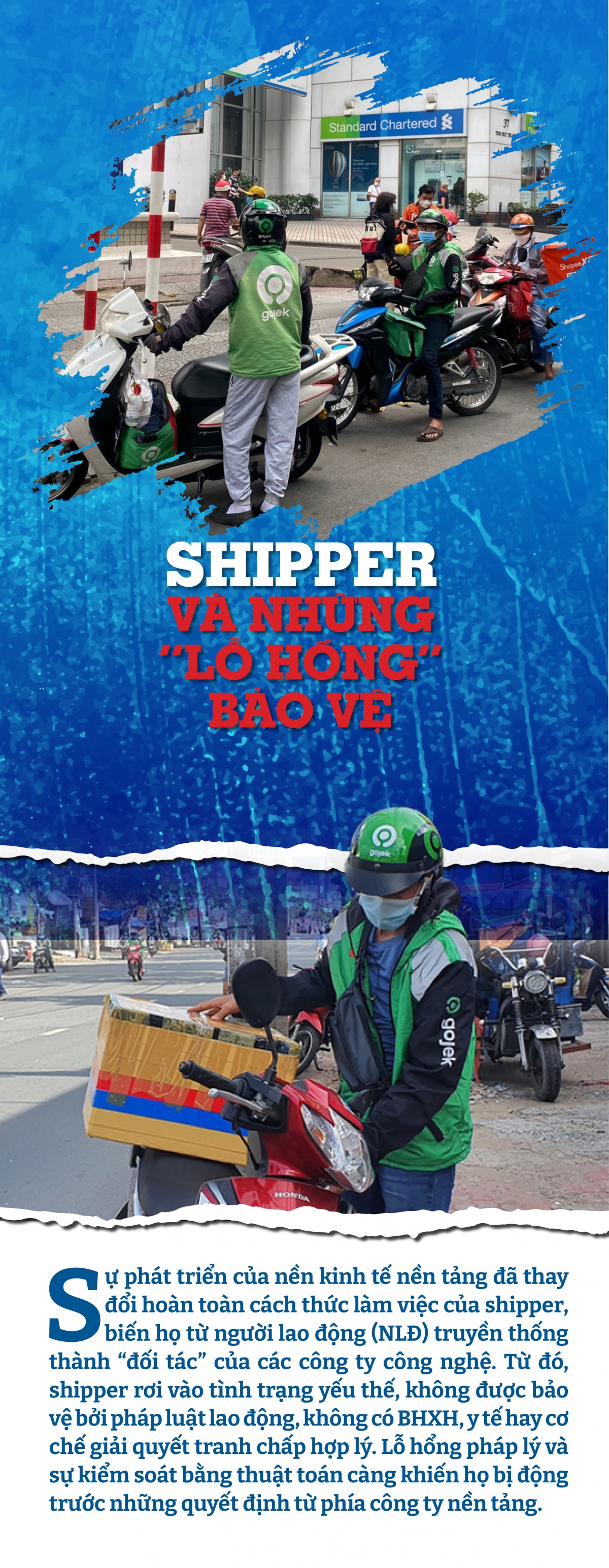
Sự phát triển công nghệ góp phần tạo công ăn việc làm cho lao động tự do, tạo ra các nghề mới như tài xế công nghệ và shipper. Tuy nhiên, nhóm lao động này đang ở thế yếu khi phải đối mặt với nhiều rủi ro an toàn mà không được hưởng quyền lao động chính đáng.
Trước thực trạng trên, Nhà nước cần ban hành quy định nhằm bảo vệ quyền lợi cho tài xế công nghệ và shipper. Đồng thời, cần xác định rõ vai trò trách nhiệm của các công ty nền tảng khi hoạt động tại VN, để người lao động tự do trong nước được hưởng phúc lợi lao động hợp pháp.
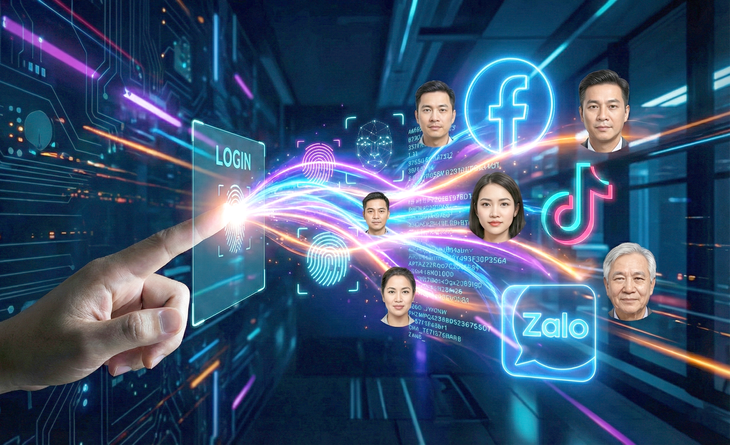
Tuoitre – Chỉ thị 57 mới đây của Ban Bí thư và nghị định 147 trước đây của Chính phủ xác định tất cả người dùng tham gia mạng xã hội đều phải được định danh và xác thực, không còn tài khoản ảo trên không gian mạng Việt Nam.
Ảnh minh họa sử dụng công nghệ AI – Thực hiện: T.ĐẠT
Theo các chuyên gia, khi thế giới ảo và thực ngày càng giống nhau, việc xác thực một cá nhân trong thế giới ảo cũng quan trọng như trong thế giới thực. Định danh cá nhân trên mạng là một trong những việc phải làm nhanh, làm sớm để giảm, tránh nhiều thiệt hại về kinh tế, an ninh, an toàn cho cả cá nhân và quốc gia.
Phụ huynh, giáo viên nhà trường, và người lớn trong xã hội ảnh hưởng lớn đến thông tin trẻ nhận được và cách trẻ đón nhận và đánh giá thông tin.
Báo cáo tổng hợp các xu hướng chính, thống kê và nghiên cứu về hành vi tiêu thụ tin tức của Gen Alpha, tập trung vào: nền tảng và thiết bị sử dụng, đặc điểm tâm lý – hành vi, so sánh khu vực (Bắc Mỹ, châu Âu, châu Á, Việt Nam), ảnh hưởng của gia đình – giáo dục – mạng xã hội, khác biệt so với Gen Z/Millennials, và bối cảnh hậu COVID-19 cùng sự phát triển của AI.
Generation Alpha (Gen Alpha) được định nghĩa là thế hệ sinh từ khoảng năm 2010 đến giữa thập niên 2020 – nhóm đầu tiên sinh ra hoàn toàn trong thế kỷ 21. Khác với các thế hệ trước, Gen Alpha lớn lên cùng công nghệ kỹ thuật số ngay từ tấm bé, với 96% trẻ 5-14 tuổi ở các nước phát triển sử dụng thiết bị thông minh trong gia đình. Báo cáo năm 2025 cho thấy Gen Alpha dự kiến đạt quy mô 2 tỷ người, trở thành thế hệ đông đảo nhất lịch sử. Bối cảnh này tạo nên những đặc trưng độc đáo trong cách Gen Alpha tiếp cận và tương tác với tin tức trên phạm vi toàn cầu, cũng như tại Việt Nam.
Các quý vị báo chí thân mến, đừng gán ghép phụ nữ với bông hồng và xinh đẹp nữa. Gán ghép kiểu đó là đã xưa cả ngàn năm nay rồi. Và đó là phong cách coi thường phụ nữ như là “phái yếu”. Bây giờ là 2025, hãy tôn trọng trí tuệ của phụ nữ chúng tôi, và xem chúng tôi ngang hàng hay có thể cao hơn nhiều người nam về trí tuệ.
Thành thật cảm ơn các bạn nam về tôn trọng phụ nữ.
Mẹ của các bạn đều là phụ nữ.
Dưới đây là vài tiêu đề báo chí viết về phụ nữ, mình dẫn links cho các bạn đến đó:
Chị đẹp – là từ ngữ nâng phụ nữ lên hay hạ phụ nữ xuống?
Hãy xem xét ví dụ sau:
Ngày 18-1-2023, sau khi Quốc hội miễn nhiệm Chủ tịch nước Nguyễn Xuân Phúc, phó chủ tịch nước Võ Thị Ánh Xuân được giữ Quyền Chủ tịch nước. Bà được đánh giá đã “hội tụ đủ 5 chữ T gồm ‘trí tuệ, tự tin, trẻ đẹp, tiến bộ và thành công’” (*).
Such a simple query might seem trivial, but making it possible across billions of sessions requires immense scale. While OpenAI reveals little information about its operations, we’ve used the scraps we do have to estimate the impact of ChatGPT—and of the generative AI industry in general.
OpenAI’s actions also provide hints. As part of the United States’ Stargate Project, OpenAI will collaborate with other AI titans to build the largest data centers yet. And AI companies expect to need dozens of “Stargate-class” data centers to meet user demand.
Estimates of ChatGPT’s per-query energy consumption vary wildly. We used the figure of 0.34 watt-hours that OpenAI’s Sam Altman stated in a blog post without supporting evidence. It’s worth noting that some researchers say the smartest models can consume over 20 Wh for a complex query. We derived the number of queries per day from OpenAI’s usage statistics below. illustrations: Optics Lab
OpenAI says ChatGPT has 700 million weekly users and serves more than 2.5 billion queries per day. If an average query uses 0.34 Wh, that’s 850 megawatt-hours; enough to charge thousands of electric vehicles every day.
2.5 billion queries per day adds up to nearly 1 trillion queries each year—and ChatGPT could easily exceed that in 2025 if its user base continues to grow. One year’s energy consumption is roughly equivalent to powering 29,000 U.S homes for a year, nearly as many as in Jonesboro, Ark.
Though massive, ChatGPT is just a slice of generative AI. Many companies use OpenAI models through the API, and competitors like Google’s Gemini and Anthropic’s Claude are growing. A report from Schneider Electric Sustainability Research Institute puts the overall power draw at 15 terawatt-hours. Using the report’s per-query energy consumption figure of 2.9 Wh, we arrive at 5.1 trillion queries per year.
AI optimists expect the average queries per day to jump dramatically in the next five years. Based on a Schneider Electric estimate of overall energy use in 2030, the world could then see as many as 329 billion prompts per day—that’s about 38 queries per day per person alive on planet Earth. (That’s assuming a global population of 8.6 billion in 2030, which is the latest estimate from the United Nations.) As unrealistic as that may sound, it’s made plausible by plans to build AI agents that work independently and interact with other AI agents.
The Schneider Electric report estimates that all generative AI queries consume 15 TWh in 2025 and will use 347 TWh by 2030; that leaves 332 TWh of energy—and compute power—that will need to come online to support AI growth. That implies the construction of dozens of data centers along the lines of the Stargate Project, which plans to build the first ever 1-gigawatt facilities. Each of these facilities will theoretically consume 8.76 TWh per year—so 38 of these new campuses will account for the 332 TWh of new energy required.
While estimates for AI energy use in 2030 vary, most predict a dramatic jump in consumption. The gain in energy consumption will be driven mostly by AI inference (the power used when interacting with a model) instead of AI training. This number could be much lower or much higher than the Schneider Electric estimate used here, depending on the success of AI agents that can work together—and consume energy—independent of human input.
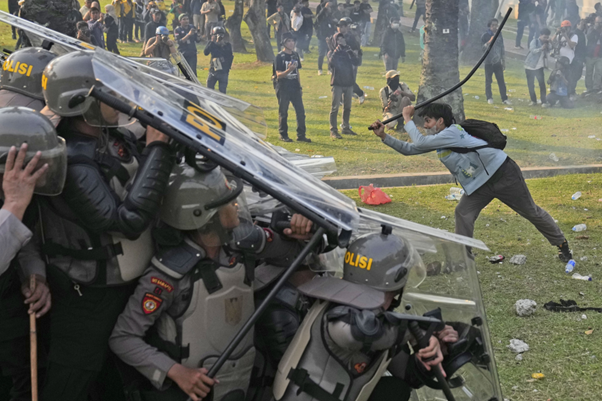
Cuối tháng 8/2025, Indonesia chứng kiến làn sóng biểu tình dữ dội bùng nổ sau sự việc của một tài xế xe công nghệ trong vụ va chạm với xe bọc thép cảnh sát. Từ một sự cố mang tính bộc phát, phong trào nhanh chóng lan rộng khắp các đô thị lớn, tập hợp hàng chục nghìn sinh viên, tài xế và các tầng lớp lao động trẻ xuống đường. Các cuộc đụng độ với cảnh sát đã khiến nhiều người thiệt mạng và hàng trăm người bị bắt giữ, làm dấy lên lo ngại về một cuộc khủng hoảng chính trị sâu sắc. Sự kiện này diễn ra trong bối cảnh Indonesia vừa giữ vai trò trung tâm của ASEAN vừa phải cân bằng giữa cạnh tranh Mỹ–Trung ở khu vực Ấn Độ Dương – Thái Bình Dương. Bởi vậy, sự kiện khủng hoảng này không chỉ đặt ra vấn đề nội bộ của riêng Indonesia mà còn gợi mở nhiều tín hiệu đáng lưu ý với các quốc gia lân cận trong đó có Việt Nam.
Tuyên Quang – 9h sáng, thống nhất xong kịch bản với người em họ được giao quay phim, Trúc Thị Mụi cùng chồng Hà Tòn Chài vác dụng cụ ra đồng.
Trúc Thị Mụi (áo xanh), 31 tuổi, ở bản Khau Cau, xã Phúc Yên, huyện Lâm Bình, tỉnh Tuyên Quang cùng chồng Hà Tòn Chài (áo sọc đen) làm YouTube về cuộc sống vùng cao, tháng 1/2024. Ảnh: Nga Thanh
Cặp vợ chồng 31 tuổi ở bản Khau Cau, xã Phúc Yên, huyện Lâm Bình là chủ kênh YouTube với 108.000 người theo dõi. Nội dung tập phim hôm nay quay cảnh vợ chồng Mụi bắt cua trong khe suối để bán ở chợ phiên, lên rừng hái rau củ và nấu cơm trưa.
Khi người quay phim giơ tay đếm “3,2,1” và bấm máy, vợ chồng Mụi bắt đầu hoạt động. Hai người cố gắng không trò chuyện để thu được rõ cả tiếng chim chóc, suối chảy. Quen với ống kính và biết cách diễn họ chỉ tốn vài phút cho một cảnh quay. Các động tác dùng vợt bắt cua, rửa sạch, đổ vào thúng được làm nhanh gọn.
Ruth Thalía’s truth would cost her everything. On national television in Peru, the nineteen-year-old revealed her darkest secrets for a prize, only to be found dead just two months later. A game show called ‘The Value of the Truth’ launched in South America in 2012. In it, contestants must reveal the most shocking and intimate details about their own lives in front of their loved ones in exchange for a prize jackpot.
Từ 0h, khi truy cập các kênh này trên một số nền tảng truyền hình số, người dùng nhận được thông báo “gián đoạn”, tự động chuyển sang kênh khác, hoặc chỉ còn màn hình đen.
“Theo thông báo của Đài Truyền hình Kỹ thuật số VTC, đơn vị sẽ chấm dứt toàn bộ hoạt động từ 15/1. Vì vậy, các kênh thuộc VTC sẽ ngừng sản xuất, phát sóng trên tất cả hạ tầng tiếp phát sóng”, website của nhà cung cấp dịch vụ FPT Play nêu.
Last November, the World Health Organisation declared loneliness a ‘Global Public Health Concern’. Meanwhile, Gen Zs are emerging as the loneliest generation ever. Filipino youths are the loneliest in Southeast Asia. About 6 in 10 Filipinos say they are lonely, more than double the global average, and much higher than neighbouring countries in ASEAN. For a country known for their friendliness, why do young Filipinos struggle with social alienation? From the stigma around mental health, to the overuse of social media, to poverty, Insight explores why young pinoys feel increasingly alone.
Has antisemitism been rampant across U.S. college campuses since October 2023, or has that narrative been manufactured in service of shielding Israel from criticism for its genocide in Gaza? In this episode of “Backspace,” Sana Saeed looks at the roots of the “antisemitism on campus” media narrative and its role in crushing condemnation of a U.S-supported policy of genocide.
VNE – By Luu Quy November 13, 2023 | 10:49 am GMT+7
A person uses a pay TV service in Vietnam. Photo by VnExpress/Luu Quy
Several foreign television channels and platforms have exited Vietnam after changing their business models or failing to meet new regulations, according to the Ministry of Information and Communications.
In early November Amazon’s Prime Video OTT television platform pulled out after a seven-year run in the country.
Since October National Geographic, Nat Geo Wild, Baby TV, and Mezzo Live channels have stopped broadcasting in some markets, including Vietnam.
Paramount Network and Baby First have also exited the Vietnamese market.
Internet freedom remained restricted in Vietnam, as the government enforced stringent controls over the country’s online environment. Though the government did not disrupt connectivity or throttle Facebook servers as it had done previously, the state continued mandating that companies remove content and imposed draconian criminal sentences for online expression. A COVID-19 surge in late 2021 propelled government surveillance, and authorities have also sought to expand control over content on social media platforms.
Vietnam is a one-party state, dominated for decades by the ruling Communist Party of Vietnam (CPV). Although some independent candidates are technically allowed to run in legislative elections, most are banned in practice. Freedom of expression, religious freedom, and civil society activism are tightly restricted. Judicial independence is absent.
Key Developments, June 1, 2021 – May 31, 2022
Government officials ordered international social media companies to remove thousands of pieces of content, particularly targeting criticism of the authorities (see B2).
New regulations tightened content restrictions on websites that host advertisements and increased administrative fines on companies found to be hosting online speech that authorities deem illegal (see B3, B6, and C2).
Authorities imposed prison sentences on human rights defenders and everyday internet users for their online activities, including a ten-year sentence issued to activist Trịnh Bá Phương (see C3).
The expansion of government-run COVID-19 apps and the creation of a central database for new identification cards have raised privacy concerns (see C5).
A Obstacles to Access
A1 0-6 pts
Do infrastructural limitations restrict access to the internet or the speed and quality of internet connections?
4 6
The internet penetration rate was 71 percent by the end of 2021, according to data from the Ministry of Infomation and Communications (MIC).1 Mobile broadband has played a significant role in increasing access to faster internet service. As of May 2022, the median mobile download speed stood at 35.29 megabits per second (Mbps) while the upload speed stood at 16.89 Mbps according to Ookla’s Speedtest Global Index. The median fixed broadband download speed was 71.79 Mbps and upload speed was 67.20 Mbps.2 Market data aggregator Statista estimated smartphone penetration at 61.37 percent as of May 2021.3 Fixed broadband remains a relatively small market segment.
As of December 2021, 4G signal covered 99.8 percent of Vietnam’s territory, while 5G had been tested in 16 provinces, according to the MIC.4
Disruptions to international internet cables took place repeatedly during the coverage period when the country was in full or partial lockdowns due to COVID-19 outbreaks.5 In February 2022, three undersea cables—the Intra-Asia, Asia-America Gateway, and Asia-Pacific Gateway cables—were disrupted at the same time, seriously affecting internet users nationwide.6 The cables are pivotal for connectivity to the international internet.
A2 0-3 pts
Is access to the internet prohibitively expensive or beyond the reach of certain segments of the population for geographical, social, or other reasons?
TTCT – Hai vụ đắm tàu cách nhau 4 ngày và vài nghìn cây số cho thấy thế giới đã trở thành một nơi đáng buồn ra sao.
Mục đích của những người tị nạn này không phải là thám hiểm biển khơi. Ảnh: Daryo.uz
Gần 3h sáng 14-6 trên Địa Trung Hải gần Hy Lạp, thủy thủ đoàn của chiếc Mayan Queen IV nhận tin có tàu gặp nạn ở gần đó, cách có 4 hải lý. Theo luật hàng hải quốc tế, và luật bất thành văn của dân đi biển, các tàu thuyền có bổn phận giúp đỡ và cưu mang nhau.
Tàu Mayan Queen IV là đại du thuyền tư nhân dài 90m và trị giá 175 triệu đô la, thuộc sở hữu một tỉ phú Mexico, có sức chứa thủy thủ đoàn 24 người và 26 khách, nhưng lúc đó chỉ có thủy thủ đoàn 4 người.
Đêm không trăng và đen như mực, nhưng trong vòng 20 phút tàu đến hiện trường. Theo thuyền trưởng Richard Kirkby thì tàu duyên phòng của Hy Lạp đang có mặt và chiếu đèn trên biển.
Ông cho hạ ghe xuống vớt nạn nhân đắm tàu đang bám vào vật nổi lềnh bềnh trên sóng, không ai có áo phao. Theo tiếng kêu yếu ớt của họ trong đêm, Mayan Queen lần dò và vớt lên 104 người Syria, Pakistan, Palestine và Ai Cập. Toàn bộ người được cứu sống là nam.
Tàu đánh cá Adriana dài khoảng 30m, chở 750 người tị nạn vượt biên từ bờ biển Libya sang Âu châu bị lật và chìm chỉ trong vòng 10-15 phút. Khoảng 100 trẻ em và phụ nữ trong hầm tàu không thoát kịp. 80 thi thể sau đó được tìm thấy, số người thiệt mạng như vậy được đoán định khoảng 650.
Ở trường tôi có em Cháng T.G 14 tuổi là một học sinh năng động, học tập tốt, ngoan và được các bạn trong trường bầu làm liên đội trưởng.
12 tập phim hoạt hình “Hành trình của Mỷ” được đông đảo các em chờ đón theo dõi.
“Ở trường tôi có em Cháng T.G 14 tuổi là một học sinh năng động, học tập tốt, ngoan và được các bạn trong trường bầu làm liên đội trưởng. Vậy mà chỉ sau dịp nghỉ tết Nguyên Đán, em G đã bỏ học để lấy chồng, một thanh niên cùng xóm. Nhà trường đã báo cáo chính quyền xã can thiệp nhưng em nhất quyết không đi học nữa để ở nhà lấy chồng. Một buổi chiều đầu năm, chúng tôi đến vận động em G đi học. Trước mái nhà em nhỏ bé, sân vườn ướt không có nổi một chỗ khô ráo để bước chân vào… Tôi hỏi ‘sao em không đi học’, em đáp ‘em cũng muốn học nhưng gia đình em bắt em lấy chồng’ vì con gái học nhiều làm gì, vì học thì cũng ăn ngô, không học cũng ăn ngô’”…
“Lấy chồng từ thuở mười ba”, câu chuyện của giáo viên trong một xã của huyện Yên Minh, tỉnh Hà Giang kể lại cho chúng ta thấy, kết hôn trẻ em là một thực tế phổ biến ở nhiều tỉnh miền núi trong cả nước. Thậm chí, tỉ lệ tảo hôn ở một số tộc người như người H’mông, Cơ Lao, Mảng… vẫn lên tới 50%, các em đều rời bỏ ghế nhà trường sau khi kết hôn.



 CVD
CVD