Điện hạt nhân, liệu có hồi sinh?

Nguyễn Vũ18/07/2022 09:14 GMT+7

TTCTVới giá thành ngày càng cao, sự thiếu hụt tay nghề chuyên môn chưa khắc phục được, điện hạt nhân khó lòng một sớm một chiều hồi sinh như mong muốn.
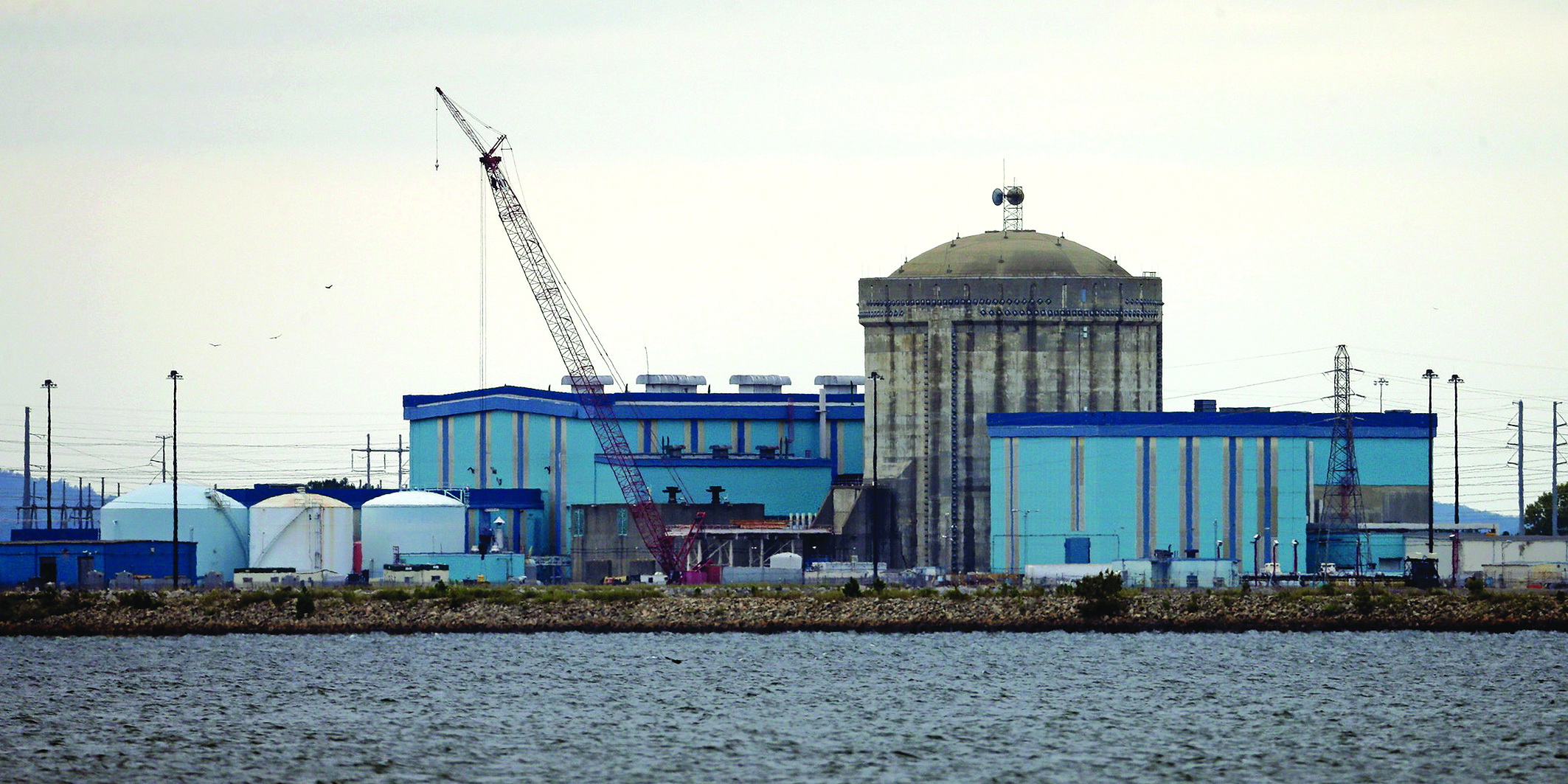
Điện hạt nhân, liệu có hồi sinh? - Ảnh 1.

Nhà máy hạt nhân V.C. Summer ở South Carolia, nơi kế hoạch xây lò phản ứng hạt nhân để thay thế nhà máy điện chạy than năm 2008 đã thất bại. Ảnh chụp tháng 9-2016 của AP

Sau nhiều năm dài bị đóng băng, các nước phương Tây đang khởi động lại nhiều dự án điện hạt nhân trong bối cảnh nhiên liệu hóa thạch đắt đỏ, gây ô nhiễm, là thủ phạm làm trầm trọng hơn tình trạng biến đổi khí hậu toàn cầu. Tuy nhiên, các dự án này đang gặp nhiều trở ngại, trong số đó việc thiếu nhân lực có chuyên môn là trở ngại có nhiều tiền bạc cũng không giải quyết được.

Điện hạt nhân từng được xem là giải pháp lý tưởng của loài người nhằm chấm dứt sự phụ thuộc vào dầu mỏ; hàng loạt nhà máy điện hạt nhân được xây dựng từ thập niên 1950 đến 1970 ở Mỹ và châu Âu. Nguồn nguyên liệu cho các nhà máy này là uranium được làm giàu ở mức độ thấp, nhằm tạo ra phản ứng dây chuyền có kiểm soát và sản sinh ra nhiệt. Nhiệt được dùng để đun nóng nước biến thành hơi nước chạy các turbine khí để phát điện. Mấu chốt của công nghệ là làm sao kiểm soát được phản ứng dây chuyền không để lò hạt nhân quá nóng gây sự cố có thể dẫn tới thảm họa.
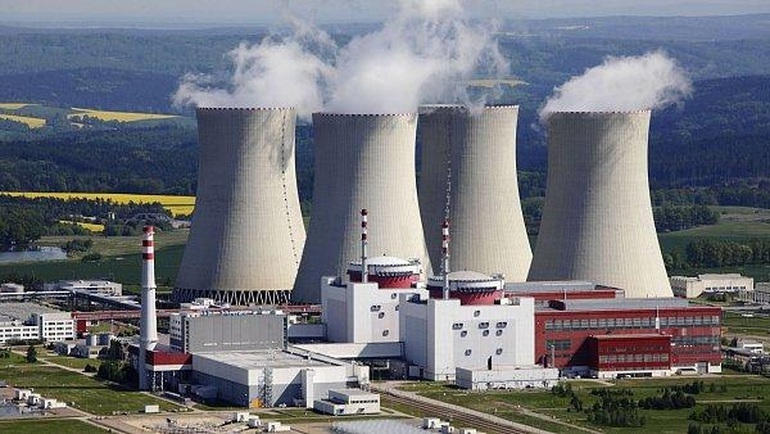
Tiếp tục đọc “Điện hạt nhân, liệu có hồi sinh?”

‘We were all wrong’: how Germany got hooked on Russian energy – podcast

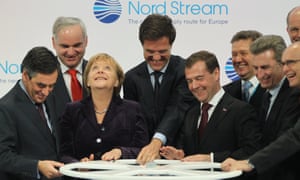
LUBMIN, GERMANY - NOVEMBER 08:  (From L to R, first row) French Prime Minister Francois Fillon, German Chancellor Angela Merkel, Dutch Prime Minister Mark Rutte, Russian President Dmitry Medvedev and European Union Energy Commissioner Guenther Oettinger turn a wheel to symbolically start the flow of gas through the Nord Stream Baltic Sea gas pipeline at a cemerony on November 8, 2011 in Lubmin, Germany.
 Photograph: Sean Gallup/Getty Images

the guardian – Mon 20 Jun 2022 

Germany has been forced to admit it was a terrible mistake to become so dependent on Russian oil and gas. So why did it happen?

Written by Patrick Wintour, read by Andrew McGregor and produced by Tony Onuchukwu. Executive producers: Max Sanderson and Isabelle Roughol

Tiếp tục đọc “‘We were all wrong’: how Germany got hooked on Russian energy – podcast”

Điện hạt nhân ở Việt Nam – tiến hay lùi?

Điện hạt nhân ở Việt Nam - tiến hay lùi? - 1
Điện hạt nhân đang đóng góp trên 10% sản lượng điện toàn cầu (Ảnh minh họa: IT)

Vương Hữu Tấn

DT – Thứ ba, 21/06/2022 – 12:00

Vấn đề điện hạt nhân tiếp tục được đề cập tại kỳ họp Quốc hội vừa qua. Theo Ủy ban Kinh tế, với lộ trình giảm phát thải tiến tới đạt mức phát thải ròng bằng 0 vào năm 2050, đây là lĩnh vực cần được nghiên cứu, xem xét trong quá trình phát triển giai đoạn tiếp theo.

Quốc hội nước ta đã phê duyệt chủ trương xây dựng nhà máy điện hạt nhân Ninh Thuận năm 2009 và Thủ tướng đã phê duyệt quy hoạch 8 địa điểm xây dựng các nhà máy. Năm 2016 vì các lý do khách quan, Quốc hội ban hành nghị quyết dừng thực hiện dự án này. 8 địa điểm đã được quy hoạch trong quyết định của Thủ tướng, trong đó có 2 địa điểm ưu tiên tại Ninh Thuận (Phước Dinh và Vĩnh Hải) được sử dụng cho nhà máy điện hạt nhân đầu tiên, đến nay về nguyên tắc đang được bảo lưu, chờ quyết định mới của Thủ tướng.

Tại nghị trường vừa qua, một đại biểu đề nghị xóa bỏ quy hoạch các địa điểm này, số khác muốn duy trì để sử dụng khi tái khởi động dự án điện hạt nhân Ninh Thuận trong tương lai. Bộ trưởng Bộ Công Thương thì khẳng định việc dừng thực hiện chủ trương đầu tư dự án điện hạt nhân Ninh Thuận không có nghĩa là “hủy bỏ”. Như vậy đây là vấn đề còn bỏ ngỏ, chờ quyết định cuối cùng của cấp có thẩm quyền.

Tiếp tục đọc “Điện hạt nhân ở Việt Nam – tiến hay lùi?”

As biomass burning surges in Japan and South Korea, where will Asia get its wood?

by Annelise Giseburt on 19 May 2022

news.mongabay.com

  • In 2021, Japan and South Korea imported a combined 6 million metric tons of wood pellets for what proponents claim is carbon-neutral energy.
  • Large subsidies for biomass have led Japan to import massive amounts of wood pellets from Vietnam and Canada; two pellet giants, Drax and Enviva, are now eyeing Japan for growth, even as the country may be cooling to the industry.
  • South Korea imports most of its pellets from Vietnamese acacia plantations, which environmentalists fear may eventually pressure natural forests; South Korea wants to grow its native production tenfold, including logging areas with high conservation value.
  • Vietnam may soon follow Japan and South Korea’s path as it phases out coal, and experts fear all this could add massive pressure on Southeast Asian forests, which are already among the most endangered in the world.

This is part two of a two part series on the Asian biomass expansion. Part one can be found here.

Under the guise of “carbon neutral” energy, Japan and South Korea’s appetite for woody biomass for electricity generation has increased exponentially over the past decade and continues to grow. The two nations’ biomass subsidies are spurring an increase in the production of wood for burning in Southeast Asia and North America, putting pressure on forests in those regions.

Tiếp tục đọc “As biomass burning surges in Japan and South Korea, where will Asia get its wood?”

How treaties protecting fossil fuel investors could jeopardize global efforts to save the climate – and cost countries billions

theconversation.com

Fossil fuel companies have access to an obscure legal tool that could jeopardize worldwide efforts to protect the climate, and they’re starting to use it. The result could cost countries that press ahead with those efforts billions of dollars.

Over the past 50 years, countries have signed thousands of treaties that protect foreign investors from government actions. These treaties are like contracts between national governments, meant to entice investors to bring in projects with the promise of local jobs and access to new technologies.

Tiếp tục đọc “How treaties protecting fossil fuel investors could jeopardize global efforts to save the climate – and cost countries billions”

IEEFA experts trace the fallout from Russia’s invasion of Ukraine on global liquefied natural gas markets

IEEFA

Prices expected to continue to be high, but LNG may be pricing itself out of global markets

May 20, 2022 (IEEFA)—The fallout from the Russian invasion of Ukraine has disrupted the world’s liquefied natural gas (LNG) market, driving prices to record levels while likely positioning the industry for a significant downturn as emerging Asian markets are priced out of the market, according to a panel of IEEFA experts.

IEEFA’s analysts find that the disruption in the LNG markets has been truly global. Russia, which faces a series of international sanctions, is the world’s second-largest natural gas producer, its third-largest oil producer, and its sixth-largest coal producer. In addition, Russia provides Europe with more than one-third of its gas supply.

Tiếp tục đọc “IEEFA experts trace the fallout from Russia’s invasion of Ukraine on global liquefied natural gas markets”

United Nations chief lays out plan to jumpstart renewables transition

IEEFA

The UN secretary-general, António Guterres, has issued a stark warning concerning the “dismal litany of humanity’s failure to tackle climate disruption” in a speech in which he set out “five critical actions to jumpstart the renewable energy transition”.

Speaking at the launch of the World Meteorological Organisation’s State of the Global Climate 2021 Report, Guterres described the global energy system as “broken” and “bringing us ever closer to climate catastrophe”. He called on the world to “end fossil fuel pollution and accelerate the renewable energy transition, before we incinerate our only home”.

Tiếp tục đọc “United Nations chief lays out plan to jumpstart renewables transition”

Does the world need hydrogen to solve climate change?

carbonbrief.org

Hydrogen gas has long been recognised as an alternative to fossil fuels and a potentially valuable tool for tackling climate change.

Now, as nations come forward with net-zero strategies to align with their international climate targets, hydrogen has once again risen up the agenda from Australia and the UK through to Germany and Japan.

In the most optimistic outlooks, hydrogen could soon power trucks, planes and ships. It could heat homes, balance electricity grids and help heavy industry to make everything from steel to cement.

But doing all these things with hydrogen would require staggering quantities of the fuel, which is only as clean as the methods used to produce it. Moreover, for every potentially transformative application of hydrogen, there are unique challenges that must be overcome.

In this in-depth Q&A – which includes a range of infographics, maps and interactive charts, as well as the views of dozens of experts – Carbon Brief examines the big questions around the “hydrogen economy” and looks at the extent to which it could help the world avoid dangerous climate change.

What is hydrogen and how could it help tackle climate change?

Hydrogen is the lightest and most abundant element in the universe. It is also an explosive and clean-burning gas that contains more energy per unit of weight than fossil fuels.

Tiếp tục đọc “Does the world need hydrogen to solve climate change?”

We need to get serious about the renewable energy revolution—by including nuclear power

thebulletin.org

By Michael Edesess | May 5, 2022

One of my favorite quotes is from Sherlock Holmes: “Once you have eliminated the impossible, whatever remains, however implausible, must be the truth.”[1] This motto implicitly guides the ambitious plan to decarbonize all energy envisioned by most renewable energy enthusiasts. The only problem is that, not only is the alternative they dismiss not impossible, it could be much less implausible than the one they advocate.

The renewables army. A huge number of extremely earnest and bright people are working on trying to make the renewable energy future come true. They work at, or have passed through, the most elite institutions of our time, the top universities, the top financial firms, the most innovative corporations and startups. At the center of much of their effort is the Rocky Mountain Institute, the nonprofit research think-tank whose board I chaired more than 20 years ago. (They call it a “think-and-do” tank, which is more fitting.) RMI coordinates meetings (recently mostly Zoom meetings) with very smart participants from some of the foremost companies working on decarbonizing their businesses, companies like Google, Apple, Microsoft. It’s a pleasure to watch them think, discuss, and work out problems. It was an enormous pleasure to be on RMI’s board, especially to interact intellectually with the most brilliant individual I have ever met, RMI’s co-founder Amory Lovins.

Tiếp tục đọc “We need to get serious about the renewable energy revolution—by including nuclear power”

Russia’s War Is Turbocharging the World’s Addiction to Coal

bloomberg.com

The first phase of the global energy crunch was driven by the natural gas shortage, now comes the coal crisis.

Russia’s invasion of Ukraine set off a chain reaction in the global energy markets that further thrusts coal into the spotlight. 
Russia’s invasion of Ukraine set off a chain reaction in the global energy markets that further thrusts coal into the spotlight. Photographer: Bartek Sadowski/Bloomberg

By Will Wade and Stephen Stapczynski

25 April 2022, 11:01 GMT+7

In Germany and Italy, coal-fired power plants that were once decommissioned are now being considered for a second life. In South Africa, more coal-laden ships are embarking on what’s typically a quiet route around the Cape of Good Hope toward Europe. Coal burning in the U.S. is in the midst of its biggest revival in a decade, while China is reopening shuttered mines and planning new ones

Tiếp tục đọc “Russia’s War Is Turbocharging the World’s Addiction to Coal”

Probe threatens Southeast Asia’s role as U.S.’s top solar supplier

wsj The U.S. is investigating whether solar panels shipped from Malaysia, Thailand, Vietnam and Cambodia dodge decade-old China tariffs

Why Small Towns Are Fighting Renewable Energy Development
Property owners in the windy and sunny parts of the U.S. are pushing back against large-scale renewable energy development, opposition that researchers say could slow the transition to a cleaner economy. Photo: Aaron Yoder/WSJ

By Niharika MandhanaFollow

Apr. 15, 2022 10:00 am ETPRINTTEXT

SINGAPORE—For the past five years, Southeast Asia has ranked as America’s top source of solar panels from abroad, driven in large part by Chinese manufacturers who expanded into the region after the U.S. in 2012 imposed duties on exports from China. A new U.S. probe has cast a shadow over that growth run.

Washington wants to know how much China-made material is used in solar panels shipped from Malaysia, Vietnam, Thailand and Cambodia—countries that accounted for 85% of American imports last year. It is investigating whether producers do small-time processing in these countries to skirt tariffs while reaching back into China-based supply chains for critical components. 

Tiếp tục đọc “Probe threatens Southeast Asia’s role as U.S.’s top solar supplier”

Hệ lụy kéo dài của một dự án thủy điện

Hoàng Thanh/nld.com.vn – 22/04/2022

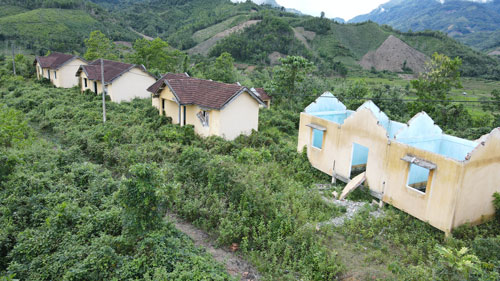
Sau 9 năm thu hồi đất để làm thủy điện Đắk Đrinh là tình trạng dân làng đánh nhau vì tranh giành đất, là khu tái định cư bỏ hoang, mục nát vì dân không ở.

Những ngôi nhà tái định cư bỏ hoang, không có người ở

Thủy điện Đắk Đrinh nằm trên địa bàn 2 tỉnh Kon Tum và Quảng Ngãi với công suất 125 MW. Năm 2013, để thực hiện dự án này, hàng trăm hộ dân của xã Đắk Nên, huyện Kon Plong, tỉnh Kon Tum đã phải nhường toàn bộ nhà cửa, đất đai của mình. Đến nay, sau 8 năm kể từ khi thủy điện hoàn thành, chi phí bồi thường vẫn chưa được giải quyết dứt điểm. Theo ông Trần Thanh Minh, Chủ tịch UBND xã Đắk Nên, huyện Kon Plông, chỉ riêng ở xã này thì chủ đầu tư vẫn còn nợ hơn 33 tỉ đồng tiền bồi thường, hỗ trợ các hộ bị ảnh hưởng.

Tiếp tục đọc “Hệ lụy kéo dài của một dự án thủy điện”

Collective action to release oil stocks in response to Russia’s invasion of Ukraine: IEA confirms member country contributions

IEA.org

7 April 2022

Following an agreement on 1 April by IEA member countries for a new emergency release of oil stocks, the IEA Governing Board confirmed today that the total amount committed to date stands at 120 million barrels, making it the largest stock release in IEA history.

The unanimous agreement among IEA member countries on 1 April for a second collective action this year came in response to the significant strains in oil markets resulting from Russia’s invasion of Ukraine. In the days since the decision, each IEA member country has been considering how much it could contribute to the announced response plan, given its domestic circumstances.

The commitments submitted by members reached 120 million barrels to be released over a six month period, demonstrating strong unity. The United States will contribute about 60 million barrels, which are part of the larger drawdown from its Strategic Petroleum Reserve (SPR) that was announced on 31 March.

Tiếp tục đọc “Collective action to release oil stocks in response to Russia’s invasion of Ukraine: IEA confirms member country contributions”

Dự thảo quy hoạch điện VIII mới nhất giảm quy mô đầu tư gần 2 triệu tỉ đồng

VƯƠNG TRẦN  –  Thứ sáu, 15/04/2022 21:30 (GMT+7) Lao Động

Theo dự thảo Quy hoạch điện VIII mới nhất, quy mô đầu tư sẽ giảm gần 2 triệu tỉ đồng. Trong đó giảm đầu tư công suất nguồn khoảng 35.000MW, giảm đầu tư hệ thống truyền tải gần 300.000 tỉ đồng.

Dự thảo quy hoạch điện VIII mới nhất giảm quy mô đầu tư gần 2 triệu tỉ đồng
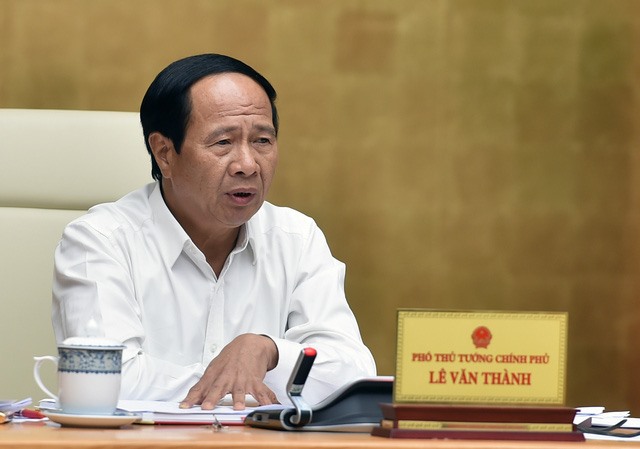
Phó Thủ tướng Chính phủ Lê Văn Thành chủ trì cuộc họp. Ảnh: Đức Tuân

Tiết kiệm đầu tư đường dây khoảng 13 tỉ USD

Hôm nay (15.4), Phó Thủ tướng Lê Văn Thành chủ trì hội nghị trực tuyến với các địa phương về hoàn thiện Quy hoạch phát triển điện lực quốc gia thời kỳ 2021-2030, tầm nhìn đến năm 2045 (Quy hoạch điện VIII).

Quy hoạch điện VIII là quy hoạch ngành quốc gia đặc biệt quan trọng, có độ phức tạp cao và được nhiều cơ quan, đơn vị, chuyên gia, nhà khoa học cũng như các địa phương trong cả nước đặc biệt quan tâm. 

Tiếp tục đọc “Dự thảo quy hoạch điện VIII mới nhất giảm quy mô đầu tư gần 2 triệu tỉ đồng”