Hệ thống phòng lũ của Đăk Lăk mong manh thế nào

VNE – 24-11-2025

Đăk Lăk hứng chịu lũ lịch sử 50 năm, nhưng hệ thống 5 hồ chứa điều tiết lũ dọc lưu vực sông Ba chỉ “giải cứu” được 26% lượng lũ cho hạ du khiến Phú Yên cũ chìm trong biển nước.

“Nước lên rất nhanh, nhiều lúc tôi lo chết tới nơi. Năm 1993, lũ lịch sử mà nước mới vô sân, nhưng lần này lũ nhà tôi lên tới giáp mái”, cụ Chín (70 tuổi, xã Hòa Thịnh) kể lại những ngày dầm mình trong lũ lịch sử tháng 11 tại Đăk Lăk. Nhiều lần, cụ nghĩ sẽ không kịp nhìn mặt con cháu lần cuối.

Đăk Lăk bắt đầu mưa từ ngày 15/11 và kéo dài, nhưng cụ Chín không thấy lũ lên. Khu vực này thường xuyên ngập nhưng mực nước thấp nên tối 19/11, cụ đi ngủ sớm như mọi hôm.

19h, nước lớn bất ngờ đổ về thôn Phú Hữu và lên nhanh. Hai tiếng trước đó, thuỷ điện Sông Ba Hạ xả lũ vượt mức lịch sử, kéo dài đến 19h, nước dồn dập đổ xuống hạ du. Tối nửa chừng thức giấc, cụ Chín giật mình thấy nước đã lên tới chân giường, vội vàng sang nhà hàng xóm chạy lũ.

“Không ai nghĩ nước sẽ cao như lần này, vượt mức tưởng tượng”, cụ Chín nói.

Theo Cục Khí tượng Thủy văn (Bộ Nông nghiệp và Môi trường), hàng loạt sông ở Nam Trung Bộ cùng vượt đỉnh lũ lịch sử các ngày 15-21/11, nhiều nhất tại Đăk Lăk, gồm sông Kỳ Lộ vượt kỷ lục 2009 và sông Ba vượt 1993. Đỉnh lũ trên sông Ba tại trạm Phú Lâm có chu kỳ lặp lại ước tính 50 năm (tần suất hiếm).

Đăk Lăk là nơi mất mát lớn nhất với 63 người thiệt mạng, chiếm 70% cả nước (91 người), tính đến 23/11. Trong đợt lũ lịch sử năm 2009, Phú Yên cũ (nay thuộc Đăk Lăk) cũng là nơi hứng chịu thiệt hại nặng nề nhất với 72 người thiệt mạng, chiếm 67% toàn miền Trung.

Không có đê, hệ thống phòng lũ cơ bản của Đăk Lăk phụ thuộc vào các hồ chứa lũ dọc lưu vực sông Ba. Thế nhưng, lớp phòng thủ vốn mong manh gần như “bất lực” trước lũ lịch sử.

Hàng trăm hộ dân ở thôn Phú Thuận, xã Hoà Thịnh vẫn bị lũ cô lập. Ảnh: Đình Văn
Tiếp tục đọc “Hệ thống phòng lũ của Đăk Lăk mong manh thế nào”

China’s Three Gorges Dam: This Dam affected Earth’s Rotation

The Three Gorges Dam is a hydroelectric gravity dam that spans the Yangtze River, in Central China. It is the world’s largest hydroelectric power station, but all that power comes with great responsibility. According to NASA, the dam delays the rotation of the Earth by 0.06 microseconds. This happens when the dam raises trillions of pounds of water 574 feet (175 m) above sea level increasing the Earth’s moment of inertia and thus slowing its rotation. Will the dam cause major consequences in our future or will the very minor delay not be noticeable for thousands of years?

China’s plan for the ‘world’s riskiest’ mega dam high in the Himalayas

As China seeks to meet its targets of becoming carbon neutral by 2060, it is turning its sights to some of the wildest reaches of the Tibetan Plateau where it plans to build a hydropower plant so ambitious that it could produce three times as much power as Three Gorges.

Experts believe it could be the riskiest mega structure ever built. Not only is the location prone to massive landslides and some of the most powerful earthquakes ever recorded, it’s also precariously close to the disputed border between India and China. Meaning any major project could further escalate discontent in a tense territorial dispute between the world’s two most populous countries.

Aging dams and missed warnings: A lethal mix of factors caused Africa’s deadliest flood disaster in Libya

cnn.com

By Nadeen Ebrahim and Laura Paddison, CNN Updated 12:08 PM EDT, Fri September 15, 2023

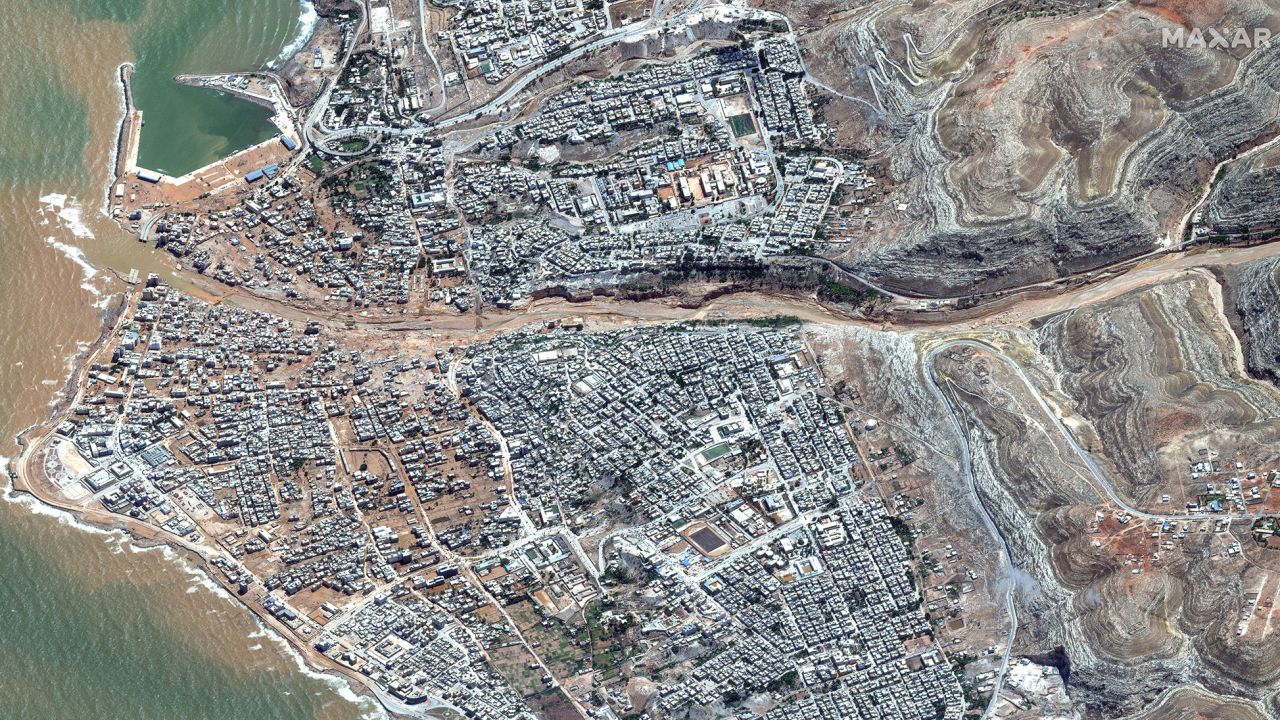
A satellite image shows the town of Derna in the aftermath of the floods in eastern Libya on Wednesday.

A satellite image shows the town of Derna in the aftermath of the floods in eastern Libya on Wednesday.Maxar Technologies/ReutersCNN — 

It started with a bang at 3 a.m. Monday as the residents of Derna were sleeping. One dam burst, then a second, sending a huge wave of water gushing down through the mountains towards the coastal Libyan city, killing thousands as entire neighborhoods were swept into the sea.

More than 5,000 people are believed to have been killed with thousands more missing, though estimates from different Libyan officials and aid groups have varied and the toll is expected to rise.

The eastern Libyan city of Derna, the epicenter of the disaster, had a population of around 100,000 before the tragedy. Authorities say that at least 10,000 remain missing. CNN could not independently verify the figures.

Buildings, homes and infrastructure were “wiped out” when a 7-meter (23-foot) wave hit the city, according to the International Committee of the Red Cross (ICRC), which said Thursday that dead bodies were now washing back up on shore.

But with thousands killed and many more still missing, there are questions as to why the storm that also hit Greece and other countries caused so much more devastation in Libya.

Experts say that apart from the strong storm itself, Libya’s catastrophe was greatly exacerbated by a lethal confluence of factors including aging, crumbling infrastructure, inadequate warnings and the impacts of the accelerating climate crisis.

Tiếp tục đọc “Aging dams and missed warnings: A lethal mix of factors caused Africa’s deadliest flood disaster in Libya”

“The Mekong is Dying”: How China’s River Diplomacy Neglects Locals, Exacerbates Climate Change

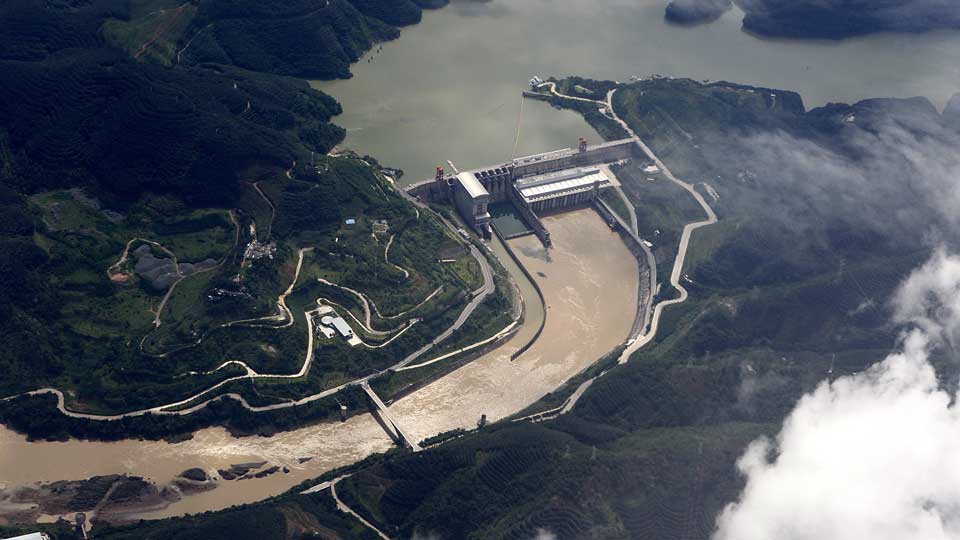
File image of the aerial view of the Jinghong Hydropower Station on the Lancang River, the Chinese part of the Mekong River, in Jinghong city, Xishuangbanna Dai Autonomous Prefecture, southwest China’s Yunnan province. Imaginechina Limited / Alamy Stock Photo

Chinaglobalsouth.com

The rainy season would usually start in May, but this was late June and it was still not raining much. Niwat Roykaew, who grew up on the bank of the Mekong River in Thailand’s northern Chiang Rai province, noticed. 

Born and raised in the Chiang Khong district, Roykaew, 63, was taught to observe the Mekong River to tell the season. But, in the past two decades, the river has become unpredictable like it has “pulsated out of tune”.

Niwat Roykaew is a Thai activist who campaigns for China to share data about water restrictions by its dams upstream.

“The water would get high for two days, then on the third day it would suddenly drop, even during the rainy season,” said Roykaew. 

Local residents like him knew that this delay could mean another year of drought. Since at least 2019, that’s what has happened: the monsoon rain is late, and when it comes, it departs early.

The Mekong River’s water levels in the lower basin, including in Thailand, are now very unstable, being heavily affected both by climate change and hydropower dams upstream that are mostly powered by China, according to local residents, activists, and experts.

Tiếp tục đọc ““The Mekong is Dying”: How China’s River Diplomacy Neglects Locals, Exacerbates Climate Change”

Nhiều thủy điện ồ ạt xả lũ, dân trở tay không kịp

Plo.vn

Thứ Tư, ngày 1/12/2021 – 06:30

(PLO)- Nhiều thủy điện ở Tây Nguyên thuộc lưu vực sông Ba bất ngờ xả lũ xuống hạ du, gây ngập nặng nhiều vùng ở Phú Yên, người dân không kịp ứng phó.

Thông tin với Pháp Luật TP.HCM, ông Trần Hữu Thế, Chủ tịch UBND tỉnh Phú Yên, cho hay đến tối 30-11, nhiều vùng ven sông Ba thuộc TP Tuy Hòa, các huyện Phú Hòa, Sơn Hòa, Tây Hòa, Đông Hòa đã bị ngập nặng. Hàng ngàn căn nhà bị ngập sâu trong nước, hàng loạt xã, khu dân cư bị lũ cô lập. Quốc lộ 25, quốc lộ 29 từ TP Tuy Hòa đi Tây Nguyên, phần lớn các tuyến giao thông trọng yếu đã bị tê liệt, ách tắc do ngập sâu trong nước, sạt lở.

Tiếp tục đọc “Nhiều thủy điện ồ ạt xả lũ, dân trở tay không kịp”

Minister warns about development of small-scale hydropower

29/10/2020    18:10 GMT+7 vietnamnet

Answering the local press on the sidelines of the National Assembly session, Minister of Natural Resources and the Environment Tran Hong Ha said the principle of his ministry is ‘not to develop small-scale hydropower at any cost’.

Many experts believe that the historic floods in the central region some days ago were the results of climate change. How does the draft of the amended law on environmental protection address the issue?

Minister warns about development of small-scale hydropower

Minister of Natural Resources and the Environment Tran Hong Ha

The issues related to climate change, natural disasters and floods are mentioned in many laws. The reason behind recent floods is extreme climate change. All the indicators exceed the indicators of the floods in history.

Tiếp tục đọc “Minister warns about development of small-scale hydropower”

13 Facts About the Controversial Massive Chinese Dam That Slowed the Earth’s Rotation

interestingengineering.com

The Three Gorges Dam is one of the most ambitious and equally controversial projects on the planet.

How much do you know about the Three Gorges Dam? You have probably come across dams through your travels, or there may even be a dam near your home town.

SEE ALSO: 12 OF THE WORLD’S MOST FASCINATING DAMS

Dams can be awe-inspiring, human-made feats of engineering, powering the lives of the surrounding communities.

Yet, in the same breath dams are the subject of notable and significant national, regional or international controversy. And, no dam has garnered as much notoriety as the 3 Gorges Dam; a dam that is so massive in scale that it has actually slowed down the earth’s rotation.

For the uninitiated, a dam is a large barrier built across rivers and streams to confine and utilize the flow of water for human purposes such as irrigation and the generation of hydroelectricity.

So, if you have always wanted to hear the story behind the Three Gorges Dam and what makes it so controversial, it is your lucky day. An efficient man-made monument to innovation, or a destructive monstrosity? Today you will decide. Here are thirteen facts about Three Gorges Dam.

The Dam Was Originally Sun Yat-Sen’s Idea

Often considered the father of modern China, Sun Yat-sen originally proposed the idea of the Three Gorges Dam all the way back in early 1919. Overthrowing China’s Manchu dynasty in 1922,  Sun Yat-sen sparked the revolution that would plant the seeds of what would eventually become the Republic of China.

In an article titled, “A Plan to Development Industry”, Sun Yat-Sen proposed the idea of constructing a dam that not only would help control the flooding of the Yangtze River, but also embody China’s “new might.”  However, it would be a while before the project would come into fruition.

Three Gorges Is Massive

Though some claim the Three Gorges Dam is viewable from space, this is not true. Nevertheless, the dam is massive.  Made of steel and concrete, the steel dam is 7,661 feet long, almost 600 feet high.

Engineers needed 510,000 tons of steel to construct the massive dam. To put that in perspective, with the same resources you could build sixty different Eiffel Towers.

Tiếp tục đọc “13 Facts About the Controversial Massive Chinese Dam That Slowed the Earth’s Rotation”

Các con đập hủy hoại Mê Kông như thế nào?

02/11/2019 – BVR&MT 

Khi người Trung Quốc đến làng Lat Thahae – ngôi làng tọa lạc trên một khúc cong đục ngầu của một nhánh sông Mê Kông, họ vẽ nguệch ngoạc mấy chữ tiếng Trung lên các bức tường nhà cửa, trường học và chùa chiền.

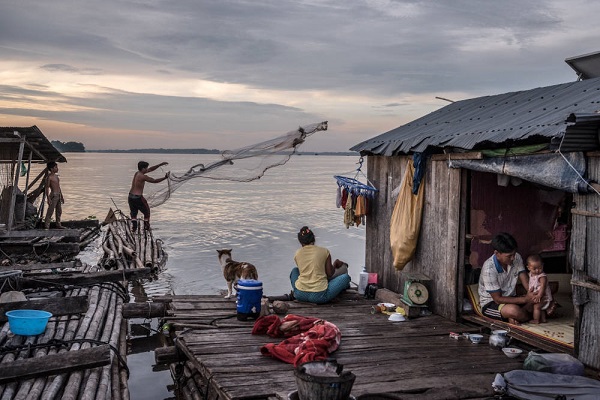
Một gia đình sống trôi nổi trên sông Mê Kông ở Campuchia vào tháng 12, gần khu vực con đập được đề xuất. Các quan chức và công ty Trung Quốc hy vọng rằng việc xây dựng các đập mới trong khu vực sẽ bù đắp cho sự tăng trưởng chậm lại ở quê nhà. (Ảnh: Sergey Ponomarev/The New York Times).
Không ai trong ngôi làng biệt lập ở miền bắc Lào này hiểu những chữ đó có nghĩa là gì. Nhưng chữ có nghĩa là “phá bỏ” ấy ảnh hưởng đến số phận của hàng trăm cộng đồng dọc theo dòng sông lớn châu Á.

Tiếp tục đọc “Các con đập hủy hoại Mê Kông như thế nào?”

“Canh bạc” khắc nghiệt bên dòng sông Đà mắc cạn

NZ – Mực nước sông Đà đoạn chảy qua địa phận xã Xuân Lộc (Thanh Thủy, Phú Thọ) thấp kỷ lục trong 4 năm trở lại đây khiến người nuôi cá lồng lao đao, nhiều hộ có nguy cơ mất trắng.

'Canh bac' khac nghiet ben dong song Da mua nuoc can hinh anh 1

Chiếc lồng cá mắc cạn

Những chiếc lồng trơ trọi vươn mình nghễu nghện trên bãi cát. Không giọt nước, không con cá. Những chiếc thùng phao vốn dùng để giữ nổi những chiếc lồng giờ được “nhấc bổng” trên không gắn với các khung sắt hoen gỉ cùng những mảnh lưới rách tươm. Đây là bãi của những chiếc lồng mắc cạn – khung cảnh mới xuất hiện dọc sông Đà thuộc xã Xuân Lộc (Thanh Thủy, Phú Thọ). Tiếp tục đọc ““Canh bạc” khắc nghiệt bên dòng sông Đà mắc cạn”

Two-thirds of Earth’s longest rivers no longer free-flowing

Lũ lịch sử: Hà Giang xây dựng ồ ạt thủy điện nhỏ, gây thiệt hại lớn?

VOV.VNTrong những ngày qua, trên địa bàn tỉnh Hà Giang có mưa to đến rất to khiến nhiều nơi bị ngập sâu, nhà cửa, tài sản của người dân trôi theo nước lũ.

Bất ngờ và bàng hoàng là cảm xúc của hơn 400 hộ dân ở TP Hà Giang sau hai ngày phải chạy lũ, bỏ lại nhà cửa. Nhiều tài sản giá trị bị nhấn chìm trong biển nước.

Theo số liệu quan sát của trạm khí tượng thủy văn, lúc 13h ngày 24/6, mực lũ sông Lô tại TP Hà Giang đã đạt 104m, trên mức báo động 3. Nước từ sông tràn thẳng vào khu dân cư nằm hai bên bờ, nhiều đường phố ngập sâu kéo dài hàng trăm mét, gây ách tắc giao thông.
lu lich su mua lu lon tai tp ha giang la do xay thuy dien o at hinh 1
Thủy điện ở Hà Giang xả lũ.

Tiếp tục đọc “Lũ lịch sử: Hà Giang xây dựng ồ ạt thủy điện nhỏ, gây thiệt hại lớn?”

Lives Behind Hydropower Dams

PanNature Mekong-cuuLong Blog
Published on Oct 19, 2017

There are more than 3,000 rivers in Vietnam, provide resources to feed millions of people and bring livelihoods to hundreds of communities. When the rivers change, fishermen and farmers are the first to be affected. By September 2013, more than 800 hydropower projects were planned, more than 250 hydropower projects operated, and more than 200 hydropower projects under construction. By 2013, due to only 21 hydropower projects in 12 provinces, more than 300,000 people were displaced and resettled. How are their lives now…? Tiếp tục đọc “Lives Behind Hydropower Dams”

Công trình thủy điện – ‘Đặc sản’ du lịch của Hòa Bình

Thứ năm, 25/12/2014 | 09:02 GMT+7

Ngoài việc tham quan nhà máy, du khách còn có thể ngồi thuyền lướt trên mặt hồ rộng lớn, ghé thăm động thác Bờ, đền thờ Long Vương, đền Bà Chúa Thượng Ngàn hay các bản làng dân tộc gần đó.

“Ngư trường đặc biệt” trên lòng hồ thủy điện Sơn La

Ghé thăm mô hình nuôi cá lồng trên lòng hồ thủy điện Sơn La | VTC16
https://youtu.be/EyeaVbcRsBk

“Ngư trường đặc biệt” trên lòng hồ thủy điện Sơn La

Sau một thời gian tích nước để phục vụ vận hành 6 tổ máy của nhà máy thủy điện Sơn La, hồ tích nước trên thượng nguồn sông Đà đã trở thành “biển hồ” lớn nhất Tây Bắc, giáp ranh ba tỉnh Lai Châu, Điện Biên, Sơn La. Tiếp tục đọc ““Ngư trường đặc biệt” trên lòng hồ thủy điện Sơn La”