Vietnam’s forests have been cleared to supply the world’s timber industry (2 parts)

pulitzercenter.org – APRIL 4, 2023

Vietnam’s Forests Have Been Cleared To Supply the World’s Timber Industry

author image

In Central Vietnam’s factory, wood chips are accumulated in the rear of a three-wheel vehicle used to transport acacia wood to the processing machine. Image by Thanh Nguyen.

Vietnam is ranked the fifth-largest country in the world, second in Asia, and the largest in Southeast Asia in furniture exports. Vietnamese furniture has been directly exported to 120 countries and territories.

However, behind this impressive figure is that series of natural forests that have been cut down and quickly. These forest land areas have been occupied for growing short-term timber trees.

Deforestation makes natural disasters in Vietnam more severe, local people suffer the most from the consequences.

An investigation will be published on Mekong Eye.

Tiếp tục đọc “Vietnam’s forests have been cleared to supply the world’s timber industry (2 parts)”

Financing the Coal Transition

Rocky Mountain Institute

This report aims to contribute to growing conversations about coal finance mechanisms, particularly as they move from concept to reality. RMI believes that financial mechanisms can be a transformational tool in coal transition efforts—but only if implemented well. Ultimately, the devil will be in the detail as to how financial mechanisms are designed and governed to meet the critical needs of all stakeholders and help deliver a rapid and smooth pathway to a climate-safe future.

RMI’s report, Financing the Coal Transition, shows how financial mechanisms can complement policy and regulation to help achieve a rapid, equitable, and smooth coal transition.

The economics of power generation are shifting rapidly in favor of clean energy, challenging coal’s long history as a mainstay of economic development throughout the world. However, much more work needs to be done to transition the existing coal fleet in line with climate and development goals.

The privileged place coal has occupied in power generation for over a century has entrenched complex barriers—from the way that grids have been built to the incentive structures within electricity systems—that prevent markets from catching up to the economic trend toward clean energy. In the absence of solutions to address these barriers, the costs of uneconomic coal will fall largely on local communities through direct costs and unpriced impacts on local health and the environment.

The global community needs new solutions to address the social and economic complexities of the coal transition while responding to the urgency of the climate challenge. One set of solutions currently under development are the innovative financial mechanisms designed to support the transition from coal to clean energy.

This report helps make sense of the various financial mechanisms proposed to date, and models the impacts of using different financial mechanisms to transition existing coal power plants. While it finds that financial mechanisms have the potential to generate wins for both the climate and communities, it also recognizes the risks of using finance to support the coal transition. To manage these risks, RMI proposes five key principles to guide the design of credible financial mechanisms.
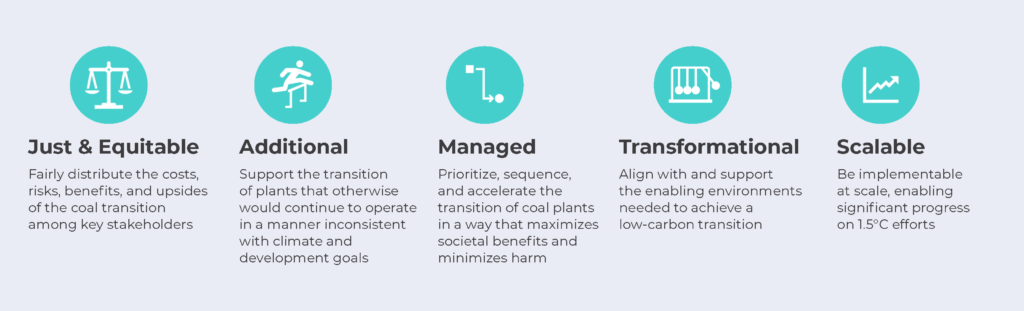
five key principles to guide the design of financial mechanisms for coal transitionFive key principles to guide the design of financial mechanisms for coal transition

Download report here

ASEAN Taxonomy for Sustainable Finance – Version 2

asean.org

ASEAN FINANCE SECTORAL BODIES RELEASE ASEAN TAXONOMY FOR SUSTAINABLE FINANCE
VERSION 2
The ASEAN Taxonomy Board (ATB), representing ASEAN finance sectoral bodies, today took the next
step towards meeting the Paris Agreement commitments, with the release of the ASEAN Taxonomy
for Sustainable Finance Version 2 (Version 2). While the first version laid out the broad framework of
the ASEAN Taxonomy, Version 2 consists of the (a) complete Foundation Framework comprising
detailed methodologies for assessing economic activities; and (b) Technical Screening Criteria (TSC)
for the first focus sector ie Electricity, Gas, Steam and Air Conditioning Supply sector (Energy sector)
under the Plus Standard. TSCs for other focus sectors will be published in the subsequent versions of
the ASEAN Taxonomy. Version 2 builds on the conceptual thinking of the multi-tiered framework
outlined in Version 1. The multi-tiered framework is intended to facilitate transition of ASEAN Member
States (AMS) recognising the diversity in economic development, financial sector, and infrastructure
maturity.
Through the Foundation Framework which adopts a principles-based approach, users are now able to
qualitatively assess economic activities using guiding questions, decision trees and use cases for all
the four environmental objectives(EOs) and three essential criteria (EC). The environmental objectives
and essential criteria, as well as guiding questions that make up the Foundation Framework are
designed to be readily applicable to all AMS as well as stakeholders in the financial sector and business
enterprises. Using the guiding questions, activities are classified as Green, Amber or Red.
The Plus Standard adopts a more advanced assessment and methodology that is based on specific TSC
and science-based thresholds in classifying activities. To further encourage and recognise transition
efforts by businesses, the Plus Standard contains Amber Tier 2 and Amber Tier 3 classifications which
will be retired over time. This is in addition to the Green tier that is aligned with other relevant
international taxonomies and benchmarked to the 1.50C Paris Agreement target.
.
Version 2 also highlights the importance of social aspects in the Taxonomy, by incorporating it as the
ASEAN Taxonomy’s third EC, alongside “Do No Significant Harm” (DNSH) and “Remedial Measures to
Transition” (RMT). In combination with other features such as the expansion of the “Do No Significant
Harm” criteria, common building blocks are established to enable an orderly and just transition and
foster sustainable finance adoption by ASEAN countries.
In considering ASEAN’s specific circumstances, the Taxonomy recognises efforts to the early
retirement of coal-fired power plants. A global first for a regional taxonomy, the ATB has thoroughly
considered how and where coal phase-outs (CPOs) can play a role in decarbonisation in support of the
Paris Agreement goals and when approached correctly, provides a powerful tool for transition.

The ASEAN Taxonomy Version 2 can be found at the following websites: • Association of Southeast Asian Nations – https://asean.org/wpcontent/uploads/2023/03/ASEAN-Taxonomy-Version-2.pdf

Hợp tác cấp vùng về thương mại điện năng

IUCN – 06 Th12, 2022

Trong lúc việc phát triển và mở rộng năng lượng mặt trời và gió sẽ là yếu tố quan trọng giúp Việt Nam giảm tiêu thụ than và đáp ứng yêu cầu trong lộ trình thực hiện các cam kết tại COP26, thì việc tăng cường nhập khẩu điện từ các nước láng giềng là một giải pháp bổ sung. Trong Kế hoạch Phát triển Điện lực 8 của Việt Nam (PDP 8) ban hành tháng 4 năm 2022 đã đưa ra dự đoán lượng điện nhập khẩu sẽ tăng từ 572 MW vào năm 2020 lên khoảng 4.000 MW vào năm 2025.

content hero image

Photo: A solar project invested by Trung Nam Group © Trung Nam Group

Tương lai thì nguồn điện nhập khẩu vào Việt Nam phần lớn sẽ đến từ CHDCND Lào và có thể từ Campuchia. Tuy nhiên, cách thức Việt Nam tham gia thương mại điện năng với các nước láng giềng này sẽ có ảnh hưởng trực tiếp đến việc phát triển các dự án phát điện ở các quốc gia này. Phần lớn nguồn điện năng mà Việt Nam nhập khẩu từ CHDCND Lào đến từ các đập thủy điện và các đập này có thể có tác động tiêu cực đáng kể cho Việt Nam.

Tiếp tục đọc “Hợp tác cấp vùng về thương mại điện năng”

Political declaration on establishing the Just Energy Transition Partnership with Viet Nam

GOV.UK

Published 14 December 2022

  1. The Governments of the Socialist Republic of Viet Nam, together with the International Partners Group, consisting of the European Union, the United Kingdom of Great Britain and Northern Ireland, the United States of America, Japan, the Federal Republic of Germany, the Republic of France, the Italian Republic, Canada, the Kingdom of Denmark and the Kingdom of Norway;
  2. Recognising the need to accelerate action towards the objectives and long-term goals of the United Nations Framework Convention on Climate Change (UNFCCC) and the Paris Agreement, including through the implementation of the Glasgow Climate Pact, to minimise the worst adverse impacts of climate change for countries, people and the environment;
  3. Noting that limiting global warming to 1.5°C to mitigate the worst adverse impacts of climate change requires rapid, deep and sustained reductions in global greenhouse gas emissions, including reducing global carbon dioxide emissions by 45% by 2030 relative to the 2010 level and to net zero around mid-century as well as deep reductions in other greenhouse gas emissions, emphasising climate change adaptation and achieving net zero emissions as an opportunity for sustainable development;
  4. Recognising that for Viet Nam, as an independent, sovereign and fast developing lower middle income country heavily affected by the impacts of climate change, it will be key to embrace the opportunities brought about by the fast decreasing cost of renewable energies as an opportunity for sustainable development and to tackle related challenges such as poverty, inequality and unemployment, which are exacerbated by the impact of the COVID-19 pandemic and climate change, and that vulnerable groups and some important economic sectors may be impacted by the energy transition, including thermal electricity generation, coal mining, heavy industry and transport;
  5. Recognising the need for new, predictable, long-term and sustainable support from partner countries, multilateral organisations and investors in finance, technology and capacity building for Viet Nam to exploit fully the opportunities of the transition in accordance with the national framework of public debt and external debt management to contribute significantly to the implementation of the NDC of Viet Nam, its commitment to reach to net zero greenhouse gas emissions by 2050 and its development orientation to become a high-income developed country by 2045;
  6. Tiếp tục đọc “Political declaration on establishing the Just Energy Transition Partnership with Viet Nam”

EU and international partners launch ground-breaking partnership on just energy transition with Indonesia

ec.europe.eu

Today, the President of Indonesia, Joko Widodo, the President of the European Commission, Ursula von der Leyen , on behalf of the EU, and the leaders of the International Partners Group (IPG), which is jointly led by the United States and Japan and includes Canada, Denmark, France, Germany, Italy, Norway and the United Kingdom, launched a Just Energy Transition Partnership (JETP) with Indonesia . The launch takes place in connection with an event within the framework of the Partnership for Global Infrastructure and Investment (PGII) at the G20 summit, which takes place on 15-16 November 2022 in Bali.

In a joint statement , Indonesia and international partners have announced their commitment to meeting ground-breaking climate targets and related financing. This is done to support the Asian country in an ambitious and fair energy transition, which is in line with the goals of the Paris Agreement and which contributes to keeping the global warming limit of 1.5 °C within reach.

Tiếp tục đọc “EU and international partners launch ground-breaking partnership on just energy transition with Indonesia”

Early retirement for Indonesian coal plants could cut CO2, boost jobs, analysis says

by Hans Nicholas Jong on 20 October 2022

news.mongabay.com

At a cost of $37 billion, Indonesia could retire its coal power plants as early as 2040 and reap economic, social and environmental benefits from the shift, a new analysis by nonprofit TransitionZero shows.

Replacing coal with renewables will create a windfall of new jobs, which would outweigh coal closure job losses by six to one, according to the analysis.

The analysis has also identified three coal plants in Indonesia that are the most suitable for early retirement, as they have lower abatement costs and are the most polluting.

JAKARTA — Indonesia’s plan to retire its coal-fired power plants and replace them with renewable energy by 2050 is not only feasible, but, when environmental costs are considered, will be less costly than relying on coal to power the Indonesian economy, according to a new analysis.

Indonesia is often dubbed as the last bastion for coal, as its power sector remains heavily reliant on the fossil fuel — about 70% of its generated electricity came from coal in 2021. Indonesia is also the world’s biggest thermal coal exporter.

Tiếp tục đọc “Early retirement for Indonesian coal plants could cut CO2, boost jobs, analysis says”

Vietnam to increase coal imports in 2025-2035 period: Ministry

Vietnam’s coal imports are forecast to rise to meet domestic production demand, according to a draft strategy for developing the coal industry in Vietnam recently introduced by the Ministry of Industry and Trade (MoIT).

vietnamplus.vn

Hanoi (VNA) – Vietnam’s coal imports are forecast to rise to meet domestic production demand, according to a draft strategy for developing the coal industry in Vietnam recently introduced by the Ministry of Industry and Trade (MoIT).

Accordingly, Vietnam will import about 50-83 million tonnes of coal per year during the period from 2025 to 2035, with the volume gradually falling to about 32-35 million tonnes by 2045.

The data from the MoIT shows domestic coal consumption increased rapidly from 27.8 million tonnes in 2011 to 38.77 million tonnes in 2015, and about 53.52 million tonnes in 2021.

The volume of coal consumed at present has more than doubled compared to 2011, mainly for electricity production.

The demand for primary energy, including coal, will continue to increase, possibly peaking in the 2030-2035 period, the ministry said.

Vietnam’s coal demand will be around 94-97 million tonnes in 2025, and peak at 125-127 million tonnes in 2030, mainly due to the increase in demand for power generation, and the cement, metallurgy and chemical industries.

The ministry also predicted that the demand for energy after 2040 will decline due to the energy transition process to meet emission reduction targets.

Tiếp tục đọc “Vietnam to increase coal imports in 2025-2035 period: Ministry”

Russia’s War Is Turbocharging the World’s Addiction to Coal

bloomberg.com

The first phase of the global energy crunch was driven by the natural gas shortage, now comes the coal crisis.

Russia’s invasion of Ukraine set off a chain reaction in the global energy markets that further thrusts coal into the spotlight. 
Russia’s invasion of Ukraine set off a chain reaction in the global energy markets that further thrusts coal into the spotlight. Photographer: Bartek Sadowski/Bloomberg

By Will Wade and Stephen Stapczynski

25 April 2022, 11:01 GMT+7

In Germany and Italy, coal-fired power plants that were once decommissioned are now being considered for a second life. In South Africa, more coal-laden ships are embarking on what’s typically a quiet route around the Cape of Good Hope toward Europe. Coal burning in the U.S. is in the midst of its biggest revival in a decade, while China is reopening shuttered mines and planning new ones

Tiếp tục đọc “Russia’s War Is Turbocharging the World’s Addiction to Coal”

Năng lượng trong biến đổi khí hậu: Giải pháp cho Việt Nam ?

TS – 30/11/2021 07:30 –

Cho đến nay, ngay cả những quốc gia tiên tiến về KH&CN vẫn chưa có giải pháp nào coi là hoàn hảo về một nguồn năng lượng xanh không phát thải carbon.


TS. Trần Chí Thành là một chuyên gia về công nghệ hạt nhân và an toàn hạt nhân. Ảnh: Thanh Nhàn.

Tuy nhiên, ngay cả khi không tồn tại giải pháp nào hoàn hảo thì vẫn có những lựa chọn tối ưu – nghĩa là vừa đảm bảo an ninh năng lượng mà vẫn hạn chế phát thải, TS. Trần Chí Thành, Viện trưởng Viện Năng lượng nguyên tử Việt Nam, cho biết như vậy qua góc nhìn của một chuyên gia về công nghệ hạt nhân và an toàn hạt nhân.

Tiếp tục đọc “Năng lượng trong biến đổi khí hậu: Giải pháp cho Việt Nam ?”

China, India, other big coal users missing from COP26 phase-out deal

reuters.com

By Kate Abnett and Elizabeth Piper

Summary

  • Poland, Indonesia sign up to phase out coal
  • China, India, U.S., Australia not included
  • COP26 mini deals aim to add up to big climate win

GLASGOW, Nov 4 (Reuters) – Indonesia, Poland, Vietnam and other nations pledged on Thursday to phase out use of coal-fired power and stop building plants, but their deal at the COP26 climate summit failed to win support from China, India and other top coal consumers.

Britain has said one of its main aims for the United Nations summit is “consigning coal power to history”. The deal saw 23 nations making new commitments, a move the president of the COP26 summit, Alok Sharma, said put the end of coal “in sight”.https://17f4ab6d574607e1c63d4da62d7a4666.safeframe.googlesyndication.com/safeframe/1-0-38/html/container.html

“Today I think we can say that the end of coal is in sight,” Sharma told the Glasgow meeting.

Tiếp tục đọc “China, India, other big coal users missing from COP26 phase-out deal”

More than 40 countries agree to phase out coal-fired power

theguardian.com

Critics say pledge to end use of dirtiest fuel source in 2030s and 40s does not go far enough

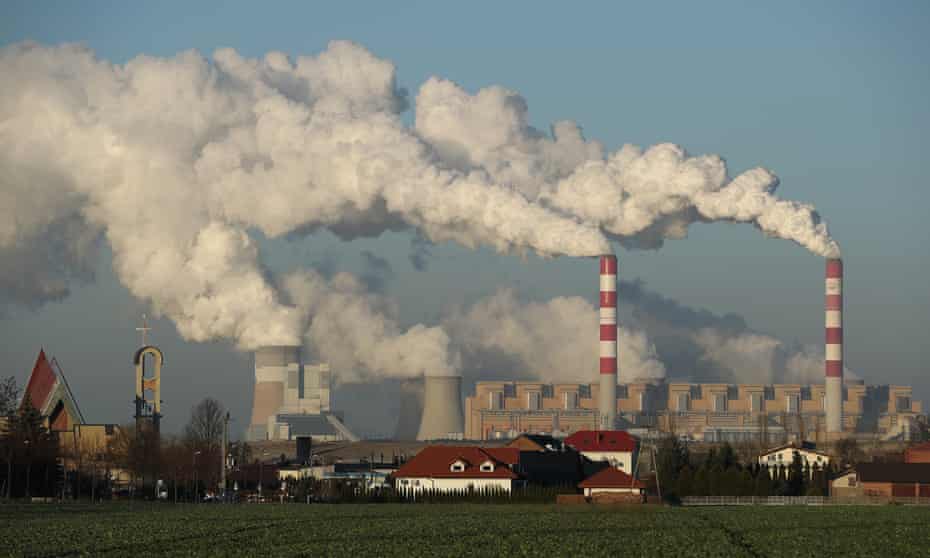
Steam and smoke rise from Bełchatów power station in Poland.
Steam and smoke rise from Bełchatów power station in Poland, one of the countries that has agreed to phase out coal-fired power. Photograph: Sean Gallup/Getty Images

Fiona HarveyJillian Ambrose and Patrick Greenfield in GlasgowWed 3 Nov 2021 22.30 GMT

More than 40 countries have agreed to phase out their use of coal-fired power, the dirtiest fuel source, in a boost to UK hopes of a deal to “keep 1.5C alive”, from the Cop26 climate summit.

Major coal-using countries, including Canada, Poland, South Korea, Ukraine, Indonesia and Vietnam, will phase out their use of coal for electricity generation, with the bigger economies doing so in the 2030s, and smaller economies doing so in the 2040s.

Tiếp tục đọc “More than 40 countries agree to phase out coal-fired power”

Old Coal Mines Can Win a Second Life as Green Energy Hotspots

bloomberg.com

By Rob Verdonck +Follow18 December 2020, 11:14 GMT+7

  •  Study examines turning coal operations into pumped hydro sites
  •  Other projects aim to add wind, solar at shuttered mines
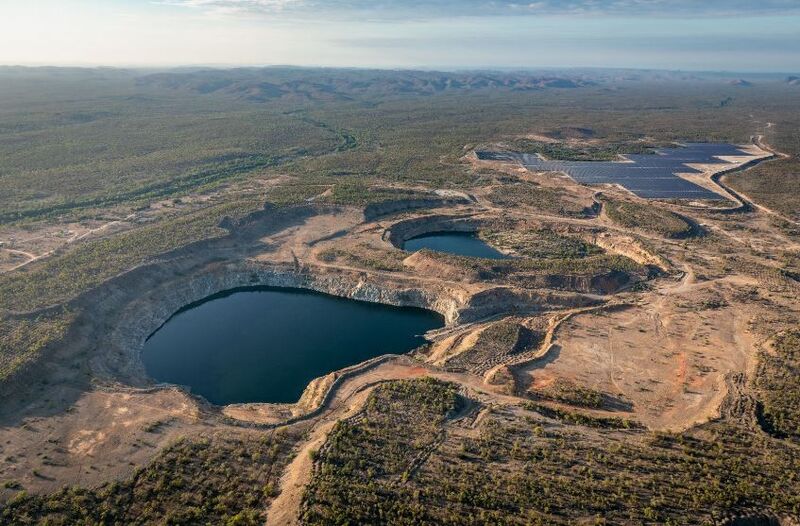
Genex Power’s 50-megawatt solar farm at the disused Kidston mine.
Genex Power’s 50-megawatt solar farm at the disused Kidston mine. Photographer: Genex

Australia is studying plans to transform a disused underground coal mine into a pumped hydro facility, part of a wider effort to reuse retiring fossil fuel sites for renewable energy generation.

Tiếp tục đọc “Old Coal Mines Can Win a Second Life as Green Energy Hotspots”

COP26: 40 countries agree to phase out coal-fired power

By Zachary Skidmore04 Nov 2021 (Last Updated November 4th, 2021 11:39) Power Technology

More than 40 countries have agreed at COP26 to phase out their use of coal power by 2040 at the latest.

COP26: 40 countries agree to phase out coal-fired power

More than 40 countries have agreed to phase out coal-fired power at the COP26 climate summit. The agreement includes 18 countries promising to phase out or stop investments in new coal-fired plants domestically and internationally for the first time.

The list includes major coal using countries, including Canada, Poland, Ukraine, and Vietnam. Signatories to the agreement have committed to phasing out coal power in the 2030s for major economies and the 2040s for poorer nations. Dozens of private organisations have also signed up to the pledge, with HSBC and Export Development Canada among several major banks agreeing to divest from the coal industry.

Tiếp tục đọc “COP26: 40 countries agree to phase out coal-fired power”

IEEFA: Defying global financial trends, Vietnam pivots back to coal power

Bản tiếng Việt >>

Thu Vu and Press Release September 29, 2021

Latest draft power development plan puts clean energy transition at risk by sacrificing renewables for more coal

29 September (IEEFA Vietnam): In the lead up to the United Nations Climate Change Conference COP26, President Xi Jinping recently declared that China will no longer build new coal-fired power projects abroad. Despite limited details, the ramifications of China’s coal exit strategy for coal-centric developing economies like Vietnam could be immense.

The ramifications of China’s coal exit for coal-centric developing economies could be immense

Before President Xi’s announcement, Vietnam’s latest draft Power Development Master Plan 8 (PDP8) was released, and in a surprising shift, proposed to raise the installed capacity target for coal-fired power by 3 gigawatts (GW) to 40GW by 2030, with an additional (and final) 10GW to be deployed by 2035.

Tiếp tục đọc “IEEFA: Defying global financial trends, Vietnam pivots back to coal power”