Major coral loss in Vietnam’s first marine protected area: Study

mongabay.com Keith Anthony Fabro 20 Jun 2025 VietnamOceans

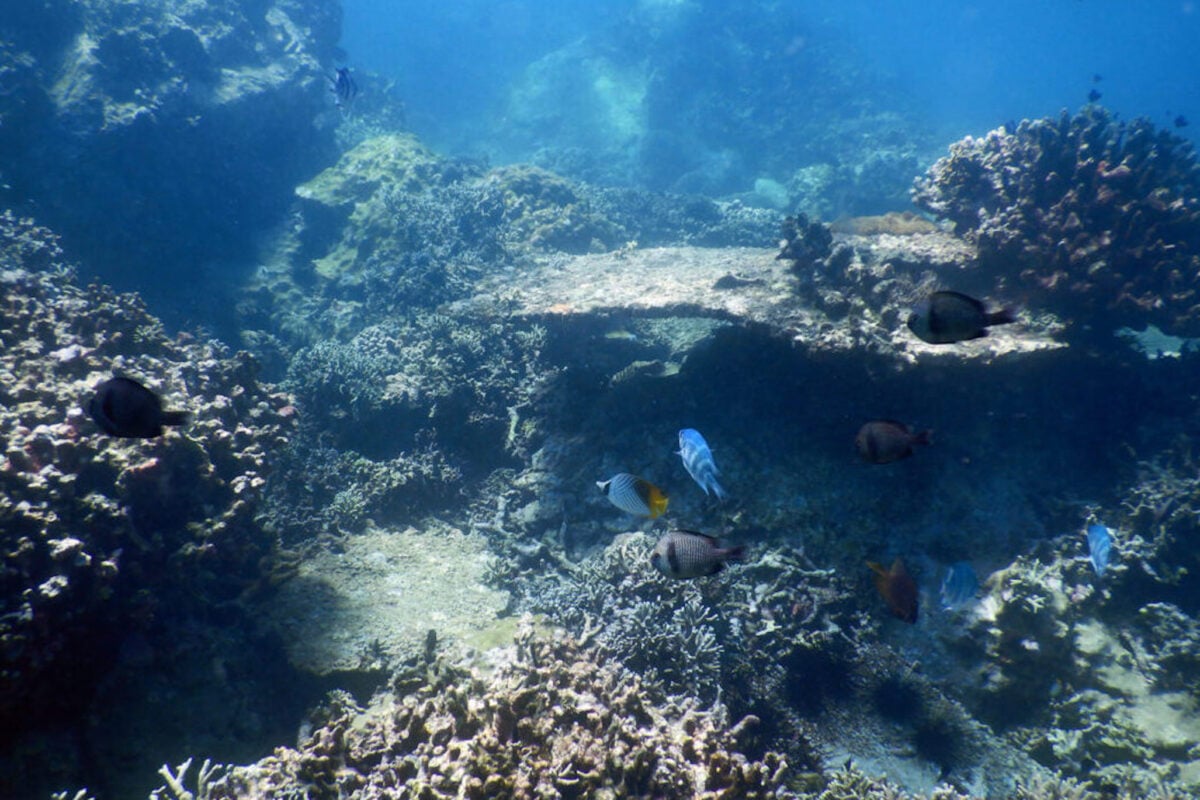
  • Vietnam’s first marine protected area (MPA), Nha Trang Bay, has lost nearly 200 hectares (494 acres) of coral reef since it was established in 2002, according to a new study.
  • Major drivers of the coral decline include coastal development, warming sea temperatures and devastating crown-of-thorns starfish (Acanthaster planci) outbreaks worsened by overfishing and nutrient pollution.
  • The study calls for stronger conservation measures inside Nha Trang Bay and other MPAs, including pollution control, active reef restoration and inclusive community governance.
  • Experts say Nha Trang Bay offers lessons for other MPAs in Southeast Asia facing similar threats.

See All Key Ideas

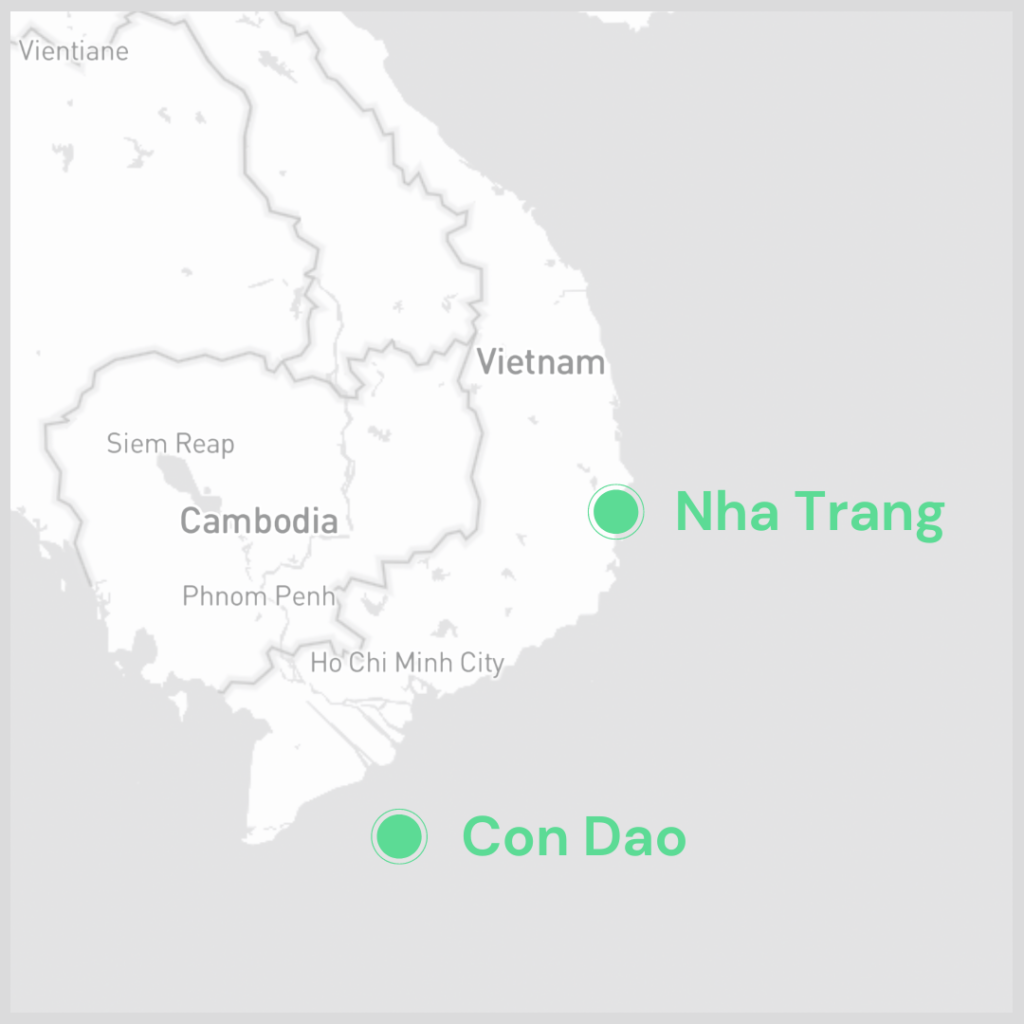
Vietnam’s first marine protected area, Nha Trang Bay, has lost nearly 200 hectares (494 acres) of coral reef since its creation in 2002, a new study shows. The alarming decline raises fresh questions about how effective conservation efforts have been in protecting one of the country’s most iconic coastal ecosystems.

Tiếp tục đọc “Major coral loss in Vietnam’s first marine protected area: Study”
Coral reefs in Vietnam face collapse. Can conservation efforts turn the tide?

APnews.com

Jonathan Hanitzsch rests after collecting trash off the coast of Hon Mot Island on Feb. 7, 2025, in Nha Trang, Vietnam. (AP Photo/Yannick Peterhans)

By  YANNICK PETERHANS and ANIRUDDHA GHOSALUpdated 9:02 AM GMT+7, March 5, 2025Share

NHA TRANG, Vietnam (AP) — The gentle waves off the coast of central Vietnam’s Nha Trang obscure an open secret: The life-giving coral reefs below are dying. The waters are eerily devoid of fish. The bounty of the ocean is coming to an end.

This is why Binh Van — who fished in these waters for over two decades — now charters his boat to Vietnamese tourists wanting to experience the thrill of fishing in the deep waters of the South China Sea. But there is only squid, which is flourishing in oceans warmed by climate change, to catch. His passengers don’t mind as the boat moves away from Nha Trang’s twinkling beach resorts. But Van is pensive.

Nguyen Tuan Hai drives Rainbow Diver's boat to Madonna Rock, Feb. 7, 2025, in Nha Trang, Vietnam. (AP Photo/Yannick Peterhans)
Nguyen Tuan Hai drives Rainbow Diver’s boat to Madonna Rock, Feb. 7, 2025, in Nha Trang, Vietnam. (AP Photo/Yannick Peterhans)

It wasn’t always like this. There was a time when he’d catch 70 kilograms (154 pounds) of fish, like tuna and grouper, in one night. He can’t make money on the squid.

“Now I usually go home empty-handed,” he said.

Tiếp tục đọc “Coral reefs in Vietnam face collapse. Can conservation efforts turn the tide?”

Reclamation: A flawed solution

beaneaththesand.earth

A deep dive into the rationale behind some of Asia’s reclamation projects, the toll they take on our environment and communities, and the search for more sustainable alternatives.

Reclamation is seen as a solution for countries to deal with increasing land demands, by expanding their territory and rehabilitating previously uninhabitable lands or seas. Yet, the process guzzles an alarming amount of sand, causing massive environmental damage as well as a rise of transnational criminal syndicates trading in illegal sand.

Coastlines, ecosystems, and entire populations are now facing adverse impacts due to increased sand-mining activity, with one of the major driving forces being land reclamation. This practice of creating new land at sea is often touted as a solution to urban expansion and climate change.

Read full story at https://www.beneaththesands.earth/reclamation

Việt Nam ký hiệp định mang tính lịch sử về biển cả

tuoitre.vn

Hiệp định về biển cả là văn kiện đầu tiên điều chỉnh toàn diện việc khai thác, chia sẻ lợi ích và bảo tồn nguồn gen biển tại các vùng biển quốc tế. Việt Nam là một trong những nước đầu tiên ký hiệp định trong khuôn khổ Tuần lễ cấp cao Đại hội đồng LHQ.

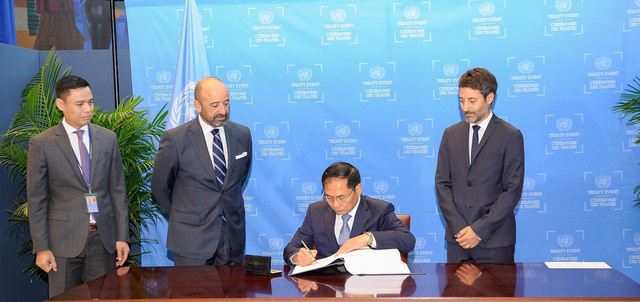
Bộ trưởng Bộ Ngoại giao Bùi Thanh Sơn ký Hiệp định về bảo tồn và sử dụng bền vững đa dạng sinh học ở vùng biển nằm ngoài quyền tài phán quốc gia - Ảnh: VGP
Bộ trưởng Bộ Ngoại giao Bùi Thanh Sơn ký Hiệp định về bảo tồn và sử dụng bền vững đa dạng sinh học ở vùng biển nằm ngoài quyền tài phán quốc gia – Ảnh: VGP

Sáng 20-9 (giờ New York, Mỹ), trong khuôn khổ hoạt động của Tuần lễ cấp cao Đại hội đồng Liên Hiệp Quốc khóa 78, Bộ trưởng Bộ Ngoại giao Bùi Thanh Sơn đã ký Hiệp định về bảo tồn và sử dụng bền vững đa dạng sinh học ở vùng biển nằm ngoài quyền tài phán quốc gia (Hiệp định về biển cả).

Hiệp định về biển cả là gì?

Tiếp tục đọc “Việt Nam ký hiệp định mang tính lịch sử về biển cả”

Vietnam becomes one of first nations to sign High Sea Treaty

vnexpress.net By VNA   September 21, 2023 | 12:03 pm GMT+7

Vietnam becomes one of first nations to sign High Sea Treaty

Minister of Foreign Affairs Bui Thanh Son signs the High Sea Treaty, a United Nations agreement on the conservation and sustainable use of marine biological diversity of areas beyond national jurisdiction. Photo by Thu HongVietnam on Wednesday signed the United Nations agreement on the conservation and sustainable use of marine biological diversity of areas beyond national jurisdiction, the High Sea Treaty.

The signing by Minister of Foreign Affairs Bui Thanh Son made Vietnam one of the first countries to sign the international-legally binding instrument under the 1982 United Nations Convention on the Law of the Sea (UNCLOS). It conveyed the message that Vietnam is a positive and responsible member of the international community as well as the country’s efforts to join hands with countries to deal with global issues, contributing to peace, prosperity and sustainable development.

More than 60 countries are scheduled to sign the agreement during the underway high-level week of the 78th UN General Assembly.

Tiếp tục đọc “Vietnam becomes one of first nations to sign High Sea Treaty”

Vietnam’s desolate seabed

mekongeye.com by Thu Quynh Nguyen 31 July 2023 at 14:39

As coral reefs and marine life disappear, efforts to save them are underway, but is it too late?

Coral die-off in Hon Mun, Nha Trang. PHOTO: Konstantin Tkachenko.

NHA TRANG, VIETNAM ― In Hon Chong, one of Vietnam’s last coral reefs, colorful schools of fish have become distant memories. These days, only small fish lurk behind bleached coral formations, a stark difference from the way some travel brochures depict the place.

Half an hour by boat from Hon Chong is Hon Mun, a marine conservation site once home to more than 340 coral species, and valued at approximately US$70 million for its biodiversity in 2005.

About 10 years before the Covid-19 pandemic, professional divers started noticing a gradual depletion of the coral reefs in the area. They had hoped that lockdowns and border closures would alleviate stress from tourism and revive the reef.

Source: Mapbox

“After two years [of Covid-19], I was speechless to see the ocean bed so empty, the coral all bleached,” photographer Na Son, a diver who has made hundreds of trips down to Hon Mun’s ocean bed, told Mekong Eye in June 2023. Last June, Na Son was one of many divers who spoke to local media about Hon Mun’s alarming coral depletion.

Coral reefs are considered to be one of Vietnam’s national treasures, as the country boasts one of the world’s most diverse ecosystems with 355 species, according to data from the World Resources Institute.

Yet across the country, vital coral reserves are depleting at such an alarming rate that frenzied attempts to salvage what remains are likely to be insufficient to restore the ecosystems.

Tiếp tục đọc “Vietnam’s desolate seabed”

The Looming Environmental Catastrophe in the South China Sea

Heated maritime and territorial disputes conceal the severe damage being done beneath the waves.

thediplomat.com

By Murray Hiebert January 14, 2022   

Much of the focus on the South China Sea over the past decade has centered around the nationalistic territorial disputes between China and four Southeast Asian claimants and a geopolitical tussle between China and the United States over freedom of navigation in the contested waters. What is going on beneath the surface of the sea – overfishing, destruction of coral reefs, climate change, plastics pollution, ocean acidification – is equally threatening and may have a longer-term impact on the survivability of the sea with its rich fishing beds, potential gas and oil reserves, and bustling sea lanes.

Tiếp tục đọc “The Looming Environmental Catastrophe in the South China Sea”

Hiện tượng thủy triều đỏ trên các vùng biển và đề xuất với Việt Nam

T.S Dư Văn Toán

thiennhien.net

“Thuỷ triều đỏ” là thuật ngữ ngày càng phổ biến và quen thuộc. Nó không thuần chỉ là một hiện tượng tự nhiên tuyệt vời đầy kì bí như nhiều người vẫn nghĩ mà thực chất là một vấn đề môi trường nhức nhối cần quan tâm.

“Thủy triều đỏ” chỉ sự nở hoa của các loài vi tảo biển. Đây là hiện tượng tự nhiên xảy ra do mật độ tế bào vi tảo gia tăng lên đến hàng triệu tế bào/lít (thông thường có khoảng 10 – 100 tế bào vi tảo/ml nhưng trong trường hợp “nở hoa”, mật độ có thể lên trên 10.000 tế bào/ml), làm biến đổi màu của nước biển từ xanh lục đậm, đỏ cho đến vàng xám.
Tiếp tục đọc “Hiện tượng thủy triều đỏ trên các vùng biển và đề xuất với Việt Nam”

Quảng Ninh: Lợi ích nhờ chuyển dịch cơ cấu kinh tế từ Nâu sang Xanh

Ngày 13/3/2018, tại đảo Tuần Châu, TP Hạ Long, Tổ chức bảo tồn thiên nhiên quốc tế (IUCN) cùng đại diện lãnh đạo tỉnh Quảng Ninh, thành phố Hải Phòng đã họp cấp lãnh đạo lần thứ năm, tiếp tục bàn các kế hoạch bảo vệ thiên nhiên và môi trường cho vùng di sản.

Chủ trì cuộc họp cấp lãnh đạo sáng kiến liên minh

Tiếp tục đọc “Quảng Ninh: Lợi ích nhờ chuyển dịch cơ cấu kinh tế từ Nâu sang Xanh”

Plankton decline hits marine food chain

DW_Plankton is the basis for the entire marine food web – and it is under threat. From the Mediterranean to the Pacific, animals have been struggling to survive, due apparently to changes with plankton.

Food chains represent the greatest interdependency within the webs of life. The marine food chain, for instance, is essential for oceans – and depends on plankton. But environmental changes and human activities may be threatening plankton– and therefore all marine animals.

According to a recent study,the biomass of sardines and anchovies has been decreasing at alarming rates in the Mediterranean Sea. At the same time, sea lions are struggling to forage on the coasts of California. Both cases have shed light on how a single food chain element can affect all others.

While it is still unknown whether species will be able to adapt to new conditions, the marine food chain is already experiencing drastic changes – and plankton plays a crucial role across the board.

“If anything happens to the plankton, an immediate cascade effect will take place on the food chain,” Ivan Nagelkerken, a University of Adelaide’s biology professor, told DW.

Shark swimming (Picture: Imago/OceanPhoto)Even top predators depend on plankton – indirectly

Building blocks of life

Plankton are tiny aquatic organisms that drift through the sea, forming the basis of the marine food chain.

For plankton, both quantity and quality – in terms of nutrients – affect life up the food chain. Tiếp tục đọc “Plankton decline hits marine food chain”

Vietnam sea poisoned by economic, tourism activities

Last update 07:10 | 13/11/2017
VietNamNet Bridge – A conflict exists between the protection of fishery resources and the development of tourism and other business fields.vietnam economy, business news, vn news, vietnamnet bridge, english news, Vietnam news, news Vietnam, vietnamnet news, vn news, Vietnam net news, Vietnam latest news, Vietnam breaking news, MPA, Hon Mun, coral reefs
The Ministry of Agriculture and Rural Development (MARD) has warned that the fishing output has exceeded the permitted limit by 30 percent, especially aquatic creatures of the bottom layer. While the average permitted exploitation limit is 2.45 million tons a year, the total exploitation output has reached 3.1 million tons. Tiếp tục đọc “Vietnam sea poisoned by economic, tourism activities”

Marine Protected Areas given power to protect sea turtles

Last update 07:50 | 03/11/2017
VietNamNet Bridge – Vietnam has given power to officials working in marine protected areas (MPAs) in an effort to protect sea turtles. vietnam economy, business news, vn news, vietnamnet bridge, english news, Vietnam news, news Vietnam, vietnamnet news, vn news, Vietnam net news, Vietnam latest news, Vietnam breaking news, sea turle, Cu Lao Cham, Con Dao Island

The MPA officers have the right to detain individuals who commit violations of MPA rules.

Nguyen Chu Hoi, former deputy director general of the Vietnam Administration of Seas and Islands, said that sea turtles live in many habitats and ecosystems during migration and development. The presence of sea turtles is considered one of the indicators of the health of the marine environment. Tiếp tục đọc “Marine Protected Areas given power to protect sea turtles”

Master plan to protect sea

vietnamnews

Update: September, 09/2017 – 09:00

Fisherwomen in the central province of Thanh Hóa unfurl their fishing nets in the early morning on Sầm Sơn Beach. — VNA/VNS Photo Trọng Đạt

The plan will map out sea-based socio-economic activities until 2035 in line with integrated management of sea and island resources and environment.

It focuses on marine environment and resources, the value of marine ecosystems and appropriate exploitation of the sea.

The plan is being built in accordance with the Việt Nam Law on Sea and the Law on Việt Nam’s Sea and Island Natural Resources and Environment. Tiếp tục đọc “Master plan to protect sea”

Chàm Island saves threatened turtle

vietnamnews

Update: August, 31/2017 – 18:32

Turtle haven: Green turtle eggs are laid at nests on the beach of Chàm Island in Quảng Nam Province. It’s the first stage of the endangered turtle species conservation programme in the island. — VNS Photo Lê Xuân Ái

Viet Nam News QUẢNG NAM  — The Chàm island’s Marine Protected Area (MPA) management board started conservation of the green turtle (Chelonia mydas) by hatching 450 eggs taken from Côn Đảo Island on August 30.

Lê Xuân Ái, a researcher, told the Việt Nam News yesterday that the first generation of the endangered turtle would be released to the sea in the next two weeks. Tiếp tục đọc “Chàm Island saves threatened turtle”