10 Rivers Contribute Most of the Plastic in the Oceans

ScientificAmerica

The 10 rivers that carry 93 percent of that trash are the Yangtze, Yellow, Hai, Pearl, Amur, Mekong, Indus and Ganges Delta in Asia, and the Niger and Nile in Africa. The Yangtze alone dumps up to an estimated 1.5 million metric tons of plastic waste into the Yellow Sea.


Credit: Amanda Montañez; Source: “Export of Plastic Debris by Rivers into the Sea,” by Christian Schmidt et al., in Environmental Science & Technology, Vol. 51, No. 21; November 7, 2017

Our seas are choking on plastic. A staggering eight million metric tons wind up in oceans every year, and unraveling exactly how it gets there is critical. A recent study estimates that more than a quarter of all that waste could be pouring in from just 10 rivers, eight of them in Asia.

“Rivers carry trash over long distances and connect nearly all land surfaces with the oceans,” making them a major battleground in the fight against sea pollution, explains Christian Schmidt, a hydrogeologist at the Helmholtz Center for Environmental Research in Leipzig, Germany.
Tiếp tục đọc “10 Rivers Contribute Most of the Plastic in the Oceans”
Plastic and paper scrap imports choke Vietnamese ports

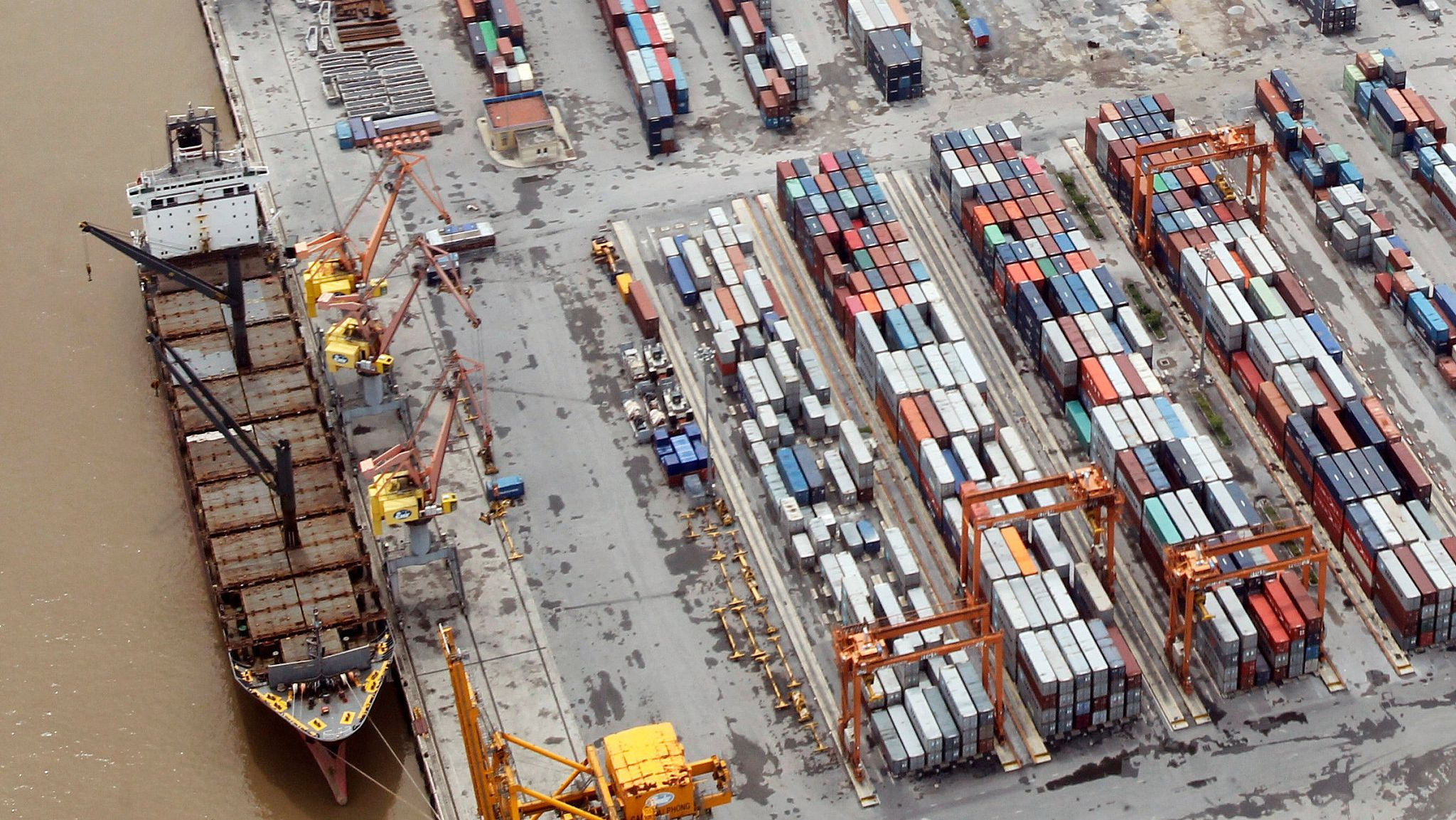
Large-scale waste dumping has reportedly choked Vietnamese ports, with hundreds of containers loaded with plastic and paper scraps lying unclaimed, forcing authorities to impose a temporary ban on waste imports.

Tan Cang – Cai Mep International Co., Ltd (TCIT), a terminal services company, in a letter to shipping lines and customers, said it would suspend imports of plastic and paper scrap as a similar decision earlier by another operator, Saigon Newport Corporation (SNC), had led to overcapacity at TCIT terminals.

“From 25th of June to 15th of October, TCIT will stop receiving all imports laden containers of plastic waste,” a letter signed by general director Chang Fa Wei said. Ngo Minh Tuan, deputy head of SNC, in an official communication, claimed previously that about 5,200 containers of plastic and paper waste have been stored for 90 days or longer at its port.

TCIT Port authorities are alarmed that more than 1,132 containers with plastic and paper waste have been stacked up at the port for last few months.

“Customers are not coming forward to claim the scraps. It’s a complicated situation,” Nguyen Thai Thuong, a senior employee of TCIT, told CGTN over the phone.

“The Chinese ban on waste import is the main reason behind the surge of plastic and paper waste imports, undoubtedly.

The Chinese ban has meant a diversion to Vietnam of the now unwelcome cargo.

Tiếp tục đọc “Plastic and paper scrap imports choke Vietnamese ports”

Rác đô thị Việt Nam – 60 năm trông chờ ‘tiếng chổi tre’

VNE – Thứ ba, 17/4/2018 | 00:00 GMT+7

Vấn đề rác đô thị vẫn phụ thuộc vào sức chịu đựng của những “chị lao công như sắt như đồng” mà Tố Hữu mô tả 60 năm trước.

Anh Minh sống ở Hà Nội đã 10 năm, nhưng vẫn chưa nói sõi tiếng Kinh.

Công việc chính của Minh không cho anh nhiều cơ hội để học tiếng Kinh: anh là một công nhân dọn rác dưới hầm chung cư. Ngăn cách giữa người đàn ông dân tộc Tày và đời sống xã hội là những tấm bê tông dày trên đầu. Kết nối đáng kể nhất giữa anh và những cư dân thành phố này là một chiếc ống rác thông tầng. Người ta ném rác vào ống, Minh thu dọn ở phía dưới, cho lên xe và đẩy đi.

Anh Minh trong xóm trọ tại Trung Văn, Hà Nội Tiếp tục đọc “Rác đô thị Việt Nam – 60 năm trông chờ ‘tiếng chổi tre’”

Quảng Ninh: Lợi ích nhờ chuyển dịch cơ cấu kinh tế từ Nâu sang Xanh

Ngày 13/3/2018, tại đảo Tuần Châu, TP Hạ Long, Tổ chức bảo tồn thiên nhiên quốc tế (IUCN) cùng đại diện lãnh đạo tỉnh Quảng Ninh, thành phố Hải Phòng đã họp cấp lãnh đạo lần thứ năm, tiếp tục bàn các kế hoạch bảo vệ thiên nhiên và môi trường cho vùng di sản.

Chủ trì cuộc họp cấp lãnh đạo sáng kiến liên minh

Tiếp tục đọc “Quảng Ninh: Lợi ích nhờ chuyển dịch cơ cấu kinh tế từ Nâu sang Xanh”

How can development cooperation address ocean plastic pollution?

23 January 2018

In the first weeks of 2018 there were (for me) unexpected announcements from both the EU and the UK Government on the urgent global issue of ocean plastic pollution. The EU intends to make all plastic packaging on the European market recyclable by 2030 and in her speech announcing the UK’s 25 Year Environment Plan, Prime Minister Theresa May committed the UK to eliminating all “avoidable plastic waste” by 2042. The Prime Minister also said it would direct UK aid to help developing nations reduce plastic waste, which could indicate a new direction for the UK’s and other countries’ aid programmes.

Tiếp tục đọc “How can development cooperation address ocean plastic pollution?”

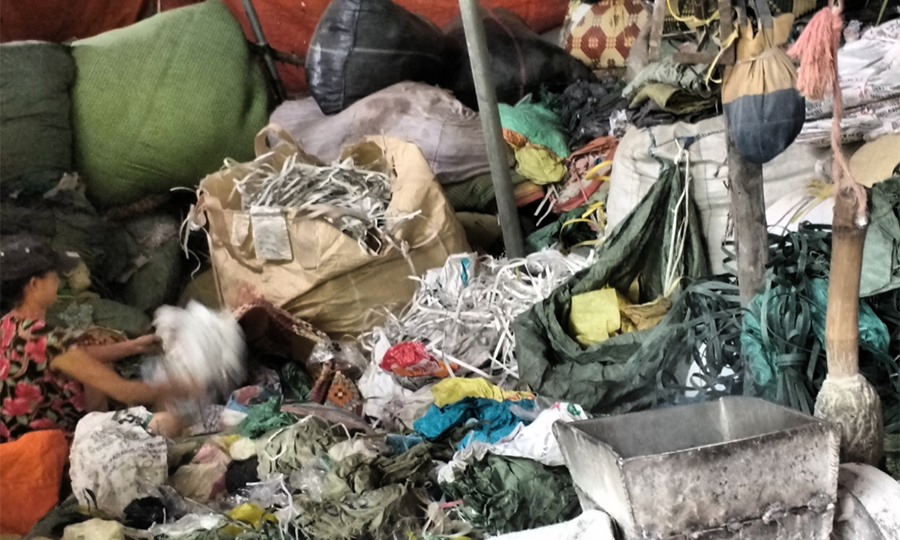
72 Hours in Vietnam: Observations from Craft Recycling Villages

oceanconservancy.org


© COURTESY OF ERIC DESROBERTS

Ocean plastic pollution – what role can social science play?

29 November 2017

IDS is partnering with the EU, UN, Chatham House and other organisations to host a high level side event on circular economy solutions to tackling ocean plastic pollution, during this year’s United Nations Environment Assembly in Nairobi (4-6 December). The event will showcase specific examples of collaborative action and policies that aim to reduce plastic waste, address unsustainable consumption and production patterns and redirect investment for a clean, efficient and circular economy. Ahead of the event, I want to highlight the importance of a universal development approach and transformative social science research, as solutions to the ocean plastics problem.

A large sculpture of a shark made out of plastic waste found in the ocean.

Ocean plastics pollution – not just an environmental issue

Plastics pollution of oceans has emerged as a major global environmental crisis. Between 4.8 and 12.7 million tonnes of plastics enter the ocean each year. It is devastating for marine ecosystems and the accumulation of microplastics in food chains pose a risk to human health. And the issue is becoming more serious.  By 2050, plastics production is expected to increase to over 2000 tonnes per year, up from 311 million tonnes in 2014.

Plastics end up in the ocean as the result of chains of human activities in different parts of the world. We are all contributing to it. China, Indonesia and the Philippines have been identified as the top three sources of ocean plastics pollution by the Ocean Conservancy. While litter found on the sea floor around the UK has risen 150% in the last year and UK plastic waste drifts to the artic where is has a very damaging impact on one of the most vulnerable ecosystems in the world.

Tiếp tục đọc “Ocean plastic pollution – what role can social science play?”

Company caught burying untreated waste without permit in Ho Chi Minh City – Mùn trồng cây’ của Tâm Sinh Nghĩa lổn nhổn nilông, dép nhựa

Company caught burying untreated waste without permit in Ho Chi Minh City


The general director of the firm has claimed that it was ‘a mistake’ by his employees
By Tuoi Tre News

August 30,2017, 13:45 GMT+7

​Company caught burying untreated waste without permit in Ho Chi Minh City
The solid waste treatment plant operated by Tam Sinh Nghia Investment Development JSC in Cu Chi District, Ho Chi Minh City. Photo: Tuoi Tre
A company in Ho Chi Minh City has raised serious concerns after being caught burying a large amount of untreated garbage without permission from authorities.A recent probe by Tuoi Tre (Youth) newspaper has revealed that Tam Sinh Nghia Investment Development JSC has been burying solid waste in an area within the Phuoc Hiep waste treatment complex in Cu Chi District, about 100 meters away from the company’s headquarters. Tiếp tục đọc “Company caught burying untreated waste without permit in Ho Chi Minh City – Mùn trồng cây’ của Tâm Sinh Nghĩa lổn nhổn nilông, dép nhựa”

Bốn nước châu Á hứa dọn rác nhựa trên biển

08/06/2017 08:31 GMT+7

TTO – Tại hội nghị thượng đỉnh về đại dương do Liên Hiệp Quốc lần đầu tổ chức, các đại biểu đến từ Trung Quốc, Thái Lan, Indonesia và Philippines cho biết họ sẽ cố dọn sạch rác nhựa trên biển.

Bốn nước châu Á hứa dọn rác nhựa trên biển
Mỗi năm có 5-13 triệu tấn rác thải nhựa từ các con sông đổ vào các đại dương – Ảnh: GETTY IMAGES

Theo BBC, các quan chức Liên Hiệp Quốc đã ca ngợi cam kết của bốn nước, dù một số cam kết chưa được chính thức hóa và các giải pháp mà họ đề xuất không được các nhà môi trường đánh giá cao. Tiếp tục đọc “Bốn nước châu Á hứa dọn rác nhựa trên biển”

ASEAN Could Take Lead on Plastic Crisis in Asia

Asia Foundation

April 19, 2017

By John J. Brandon

April 22 marks Earth Day around the globe. I was in 8th grade when Earth Day was first commemorated in 1970, and to mark the day, I participated in annual trash clean-up events at my school. At that time, my world was pretty much the town where I grew up in New Jersey and I didn’t think very much about the rest of the world, I just wanted my neighborhood to be clean. But eight years later, my world expanded when I went to live and work in Bangkok. I vividly remember being struck by the amount of plastic bags, bottles, and wrapping on the streets and in the city’s once-many canals. Now, after four decades of traveling in Southeast Asia, I have witnessed the plague of the plastic bag across pretty much every major city in the region.

Manila Bay garbage

A polluted Manila Bay. It is estimated that some plastic products take more than 400 years to decompose, especially in deep waters. Photo/Flickr user Adam Cohn

Tiếp tục đọc “ASEAN Could Take Lead on Plastic Crisis in Asia”