“This is false information used with ill intents with regards to Việt Nam’s efforts to combat and prevent crimes, as well as Việt Nam’s diplomatic activities.”
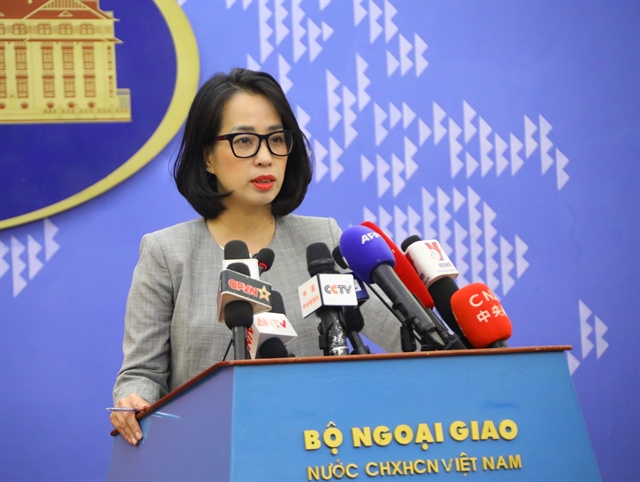
Spokesperson for the Ministry of Foreign Affairs Phạm Thu Hằng at Thursday’s press conference in Hà Nội. — VNA/VNS Photo Văn Điệp
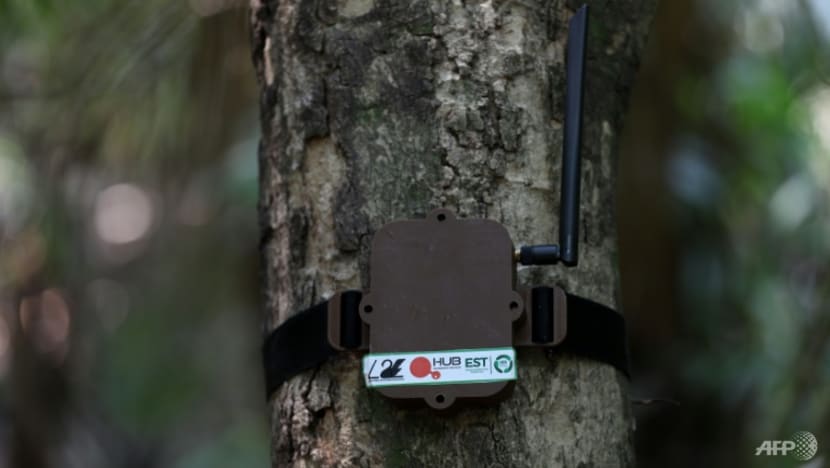
The Curupira sensors look like small internet modems but are in fact wireless and can relay data up to 1km via satellite to others in a network (Photo: AFP/Michael Dantas)
27 Sep 2023 11:58AM(Updated: 27 Sep 2023 12:06PM)
MANAUS, Brazil: Small, artificially intelligent boxes tied to tree trunks in the Brazilian Amazon are the latest weapon in the arsenal of scientists and environmentalists battling destructive jungle invaders.
The boxes, named Curupiras after a folkloric forest creature who preys on hunters and poachers, sport sensors and software trained “to recognise the sounds of chainsaws and tractors, or anything that could cause deforestation”, project manager Thiago Almeida told AFP.
“We recorded the sound of chainsaws and tractors in the forest … then, all the collected sounds were passed on to the AI team to train (the program) so that … it would only recognise these sounds and not the characteristic sounds of the forest, such as animals, vegetation and rain,” he explained.
Chiều ngày 25/04/2023 tại TP. HCM, Viện Nghiên cứu Truyền thông phát triển (RED Communication) đã tổ chức buổi Toạ đàm đa bên Tạo giá trị chung (CSV Talk) với chủ đề “Doanh nghiệp và Tổ chức xã hội hợp tác trồng cây giảm thiểu carbon”.
Đây là sự kiện thứ 4 của chuỗi CSV Talk hướng tới thúc đẩy các hoạt động, sáng kiến CSR – CSV (trách nhiệm xã hội doanh nghiệp – tạo giá trị chung), nằm trong khuôn khổ dự án “Win – Win for Vietnam” do RED phối hợp với ProNGO! e. V. (Đức) tổ chức, Liên minh châu Âu đồng tài trợ.
Toàn cảnh buổi CSV Talk 04 với sự tham gia của doanh nghiệp và tổ chức xã hội
CSV Talk 04 có sự tham gia của hơn 30 người tham dự đến từ các tổ chức xã hội và doanh nghiệp lớn nhỏ có quan tâm đến các vấn đề phát triển bền vững và tạo giá trị chung, đặc biệt trong lĩnh vực giảm thiểu carbon. Bên cạnh sáng kiến khởi xướng bởi RED, đại diện 2 doanh nghiệp SBBE và CAS-Energy có phiên chia sẻ về các dự án trồng cây giảm thiểu carbon, cùng với phần chia sẻ cá nhân lần lượt của người tham dự.
Chương trình TreeBank Đắk Lắk 2023 do Hội Từ Tâm Đắk Lắk tiếp tục triển khai sẽ diễn ra trong mùa mưa năm 2023, với sự hỗ trợ của Viện nghiên cứu truyền thông và phát triển- RED.
Mối liên kết và tiếp sức này sẽ giúp Hội Từ Tâm Đắk Lắk tiếp tục phát huy thành quả TreeBank năm trước: Chỉ trong tháng 9/2022 Hội Từ Tâm Đắk Lắk đã trao tặng được 11.300 cây ăn quả và bóng mát, phối hợp chính quyền 9 xã phía Nam tỉnh, thuộc 2 huyện Lắk và huyện Krông Bông, trao tặng cây đúng đối tượng, hỗ trợ vật tư và kỹ thuật chăm sóc, góp phần hỗ trợ sinh kế cho dân nghèo, chung tay phủ xanh Trái Đất.
Sáng kiến ” Treebank- Vườn ở khắp nơi” là một trong nhiều hoạt động của dự án CFLI “Giảm thiểu biến đổi khí hậu bằng cách phục hồi đất có rừng ở Việt Nam thông qua mô hình Ngân hàng Cây”; Thúc đẩy sự tham gia của phụ nữ trong công tác xã hội và khuyến khích các sáng kiến dựa vào cộng đồng trong phát triển bền vững” do Quỹ Canada dành cho các sáng kiến địa phương tài trợ và Tổ chức RED Communication thực hiện.
Còn nhớ, vào chiều thứ Sáu ngày 25/02/2022, buổi gặp gỡ ra mắt chương trình TreeBank đầu tiên tại Việt Nam đã diễn ra tại thành phố Hồ Chí Minh, với sự tham dự đông đảo của các khách mời đến từ các Cơ quan Báo chí, Doanh nghiệp, Marketer, Tổ chức xã hội, Chủ vườn rừng đến từ khắp nơi… Phát triển từ sáng kiến “Vườn ở khắp nơi” của chị Phan Diệu Linh, với sự hỗ trợ của Quỹ Sáng kiến Cộng đồng Canada (CFLI), thuộc Đại sứ quán Canada tại Việt Nam, TreeBank được tạo ra nhằm góp phần phục hồi đất rừng ở Việt Nam, giảm thiểu tác động của biến đổi khí hậu, tăng cường sự tham gia của phụ nữ trong các hoạt động xã hội nhằm đạt được các mục tiêu phát triển bền vững.
Vườn quốc gia U Minh Thượng, U Minh Hạ là hai vườn quốc gia quan trọng với hệ sinh thái đất ngập nước của đồng bằng sông Mê Kong. Mặc dù có diện tích rất nhỏ so với các vườn quốc gia khác, hai vườn này là ngôi nhà cho rất nhiều loài động vật hoang dã quan trọng của Việt Nam và thế giới như tê tê, rái cá, mèo rừng, nai, các loài chim nước, rùa, rắn, cá. Những năm gần đây, SVW đang triển khai một chuỗi các hoạt động bảo tồn tại 2 Vườn quốc gia U Minh Thượng và U Minh Hạ nhằm bảo vệ, phục hồi và phát triển các loài động vật hoang dã tại đây. Các hoạt động bao gồm: – Thúc đẩy thực thi pháp luật, chống buôn bán động vật hoang dã trái phép. – Thúc đẩy tuần tra bảo vệ rừng. – Nghiên cứu và giám sát đa dạng sinh học. – Giáo dục nâng cao nhận thức và thay đổi hành vi nhằm giảm nhu cầu sử dụng động vật hoang dã.
Home – là một bộ phim tài liệu bởi đạo diễn Yann Arthus-Bertrand, ra mắt vào ngày 5/6/2009 nhân Ngày môi trường thế giới. Bộ phim được quay trong vòng 18 tháng, tại 54 quốc gia, với một chiếc máy quay Cineplex & tốn chi phí 12 triệu USD. Bộ phim khắc họa nguồn gốc và đa dạng sự sống trên Trái Đất cũng như mối đe dọa từ các hoạt động của con người tới sự cân bằng sinh thái Trái Đất. Phim lập kỷ lục công chiếu trên hơn 50 quốc gia trên các kênh truyền hình và Youtube
Nếu các bạn để ý, từ đầu mùa hè năm cho đến hiện nay tháng 9-2023 có quá nhiều thiên tai, bão lụt, cháy rừng thảm khốc trên toàn thế giới từ Hồng Kông, Libya cho đến Pakistan. Việt Nam ta không ngoại lệ. Chúng ta đang phòng đón các mùa bão ngày càng bất thường. Thêm vào đó, sạt lở đất ngày càng thường xuyên ở các dự án phát triển xây dựng. Các dự án này có nguy cơ lấy đất rừng, chặt phá rừng tự nhiên. Việc này sẽ càng làm trầm trọng tình trạng sạt lở đất khi lũ đến ở Việt Nam.
Có lẽ không cần phải nhắc lại nhiều rằng chúng ta đang chứng kiến những ảnh hưởng tàn khốc của biến đổi khí hậu ra sao: từ thiên tai đến thời tiết cực đoan. Điều này không hề mới. Điểm khác là những thiên tai sẽ còn tiếp diễn khó lường và chúng ta không phản ứng kịp.
Từ những thế kỷ trước đây trải qua nhiều cuộc cách mạng công nghiệp cho đến đầu những 1980s, thế giới chưa chính thức nói đến và bàn nhiều về biến đổi khí hậu. Và nhiều người vẫn tin rằng thiên tai bất thường là do Thượng Đế tạo ra – The Acts of God – để nhắc nhở và trừng phạt những tội lỗi con người gây nên trên trái đất này.
Hiệp định về biển cả là văn kiện đầu tiên điều chỉnh toàn diện việc khai thác, chia sẻ lợi ích và bảo tồn nguồn gen biển tại các vùng biển quốc tế. Việt Nam là một trong những nước đầu tiên ký hiệp định trong khuôn khổ Tuần lễ cấp cao Đại hội đồng LHQ.
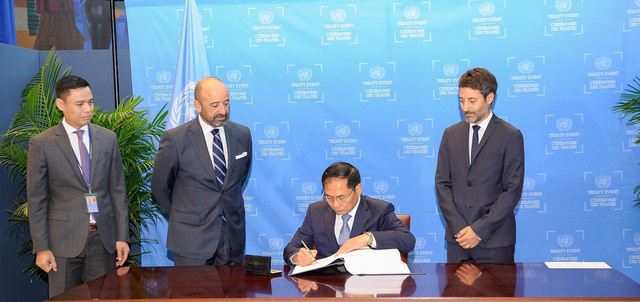
Bộ trưởng Bộ Ngoại giao Bùi Thanh Sơn ký Hiệp định về bảo tồn và sử dụng bền vững đa dạng sinh học ở vùng biển nằm ngoài quyền tài phán quốc gia – Ảnh: VGP
Sáng 20-9 (giờ New York, Mỹ), trong khuôn khổ hoạt động của Tuần lễ cấp cao Đại hội đồng Liên Hiệp Quốc khóa 78, Bộ trưởng Bộ Ngoại giao Bùi Thanh Sơn đã ký Hiệp định về bảo tồn và sử dụng bền vững đa dạng sinh học ở vùng biển nằm ngoài quyền tài phán quốc gia (Hiệp định về biển cả).
Minister of Foreign Affairs Bui Thanh Son signs the High Sea Treaty, a United Nations agreement on the conservation and sustainable use of marine biological diversity of areas beyond national jurisdiction. Photo by Thu HongVietnam on Wednesday signed the United Nations agreement on the conservation and sustainable use of marine biological diversity of areas beyond national jurisdiction, the High Sea Treaty.
The signing by Minister of Foreign Affairs Bui Thanh Son made Vietnam one of the first countries to sign the international-legally binding instrument under the 1982 United Nations Convention on the Law of the Sea (UNCLOS). It conveyed the message that Vietnam is a positive and responsible member of the international community as well as the country’s efforts to join hands with countries to deal with global issues, contributing to peace, prosperity and sustainable development.
More than 60 countries are scheduled to sign the agreement during the underway high-level week of the 78th UN General Assembly.
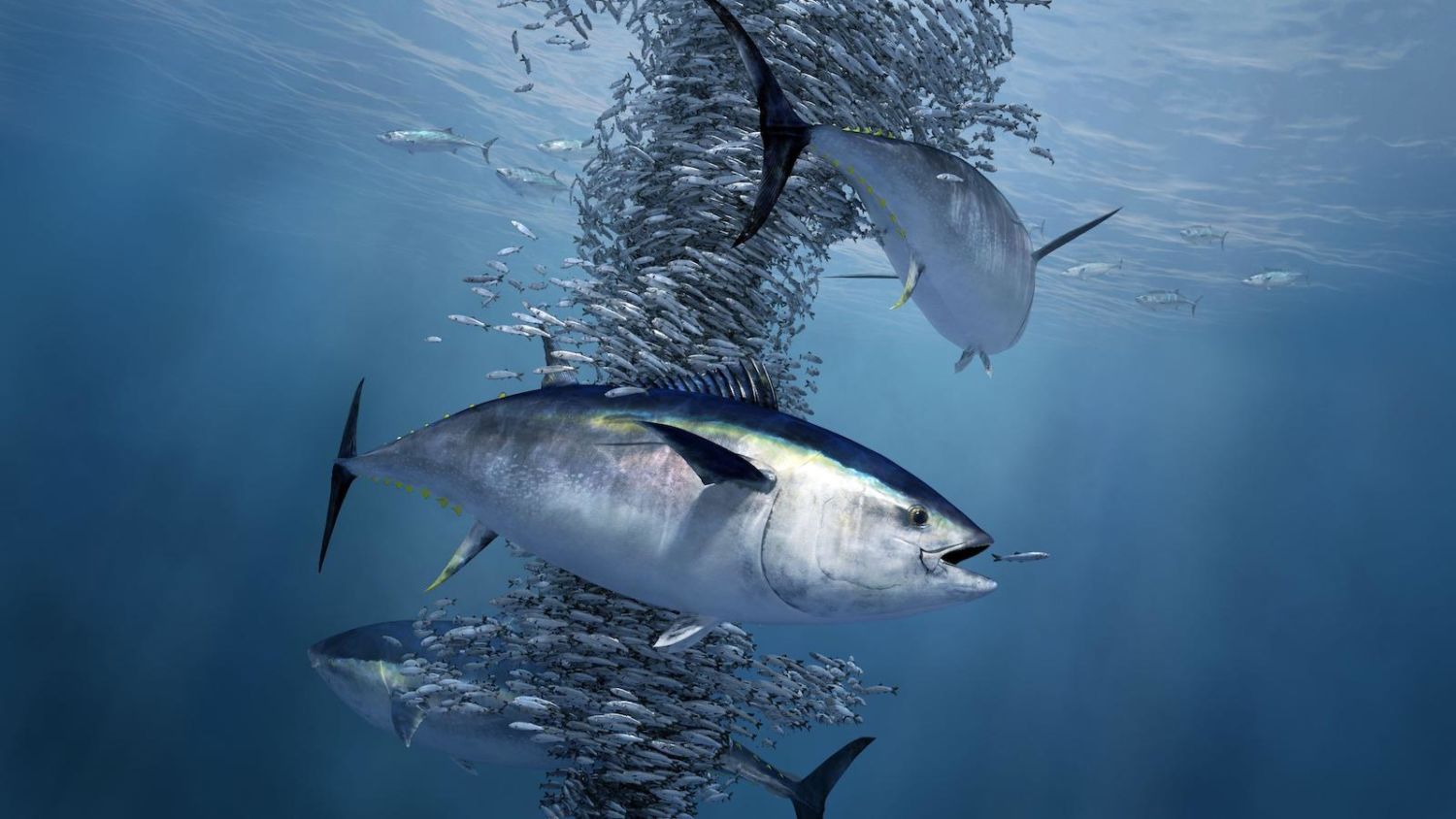
Atlantic bluefin tuna, shown feeding on a school of herring, have been driven into narrower layers of water by oxygen declines. MARKO STEFFENSEN / ALAMY STOCK PHOTO
Global warming not only increases ocean temperatures, it triggers a cascade of effects that are stripping the seas of oxygen. Fish are already moving to new waters in search of oxygen, and scientists are warning of the long-term threat to fish species and marine ecosystems.
Off the coast of southeastern China, one particular fish species is booming: the oddly named Bombay duck, a long, slim fish with a distinctive, gaping jaw and a texture like jelly. When research ships trawl the seafloor off that coast, they now catch upwards of 440 pounds of the gelatinous fish per hour — a more than tenfold increase over a decade ago. “It’s monstrous,” says University of British Columbia fisheries researcher Daniel Pauly of the explosion in numbers.
The reason for this mass invasion, says Pauly, is extremely low oxygen levels in these polluted waters. Fish species that can’t cope with less oxygen have fled, while the Bombay duck, part of a small subset of species that is physiologically better able to deal with less oxygen, has moved in.
The boom is making some people happy, since Bombay duck is perfectly edible. But the influx provides a peek at a bleak future for China and for the planet as a whole. As the atmosphere warms, oceans around the world are becoming ever more deprived of oxygen, forcing many species to migrate from their usual homes. Researchers expect many places to experience a decline in species diversity, ending up with just those few species that can cope with the harsher conditions. Lack of ecosystem diversity means lack of resilience. “Deoxygenation is a big problem,” Pauly summarizes.
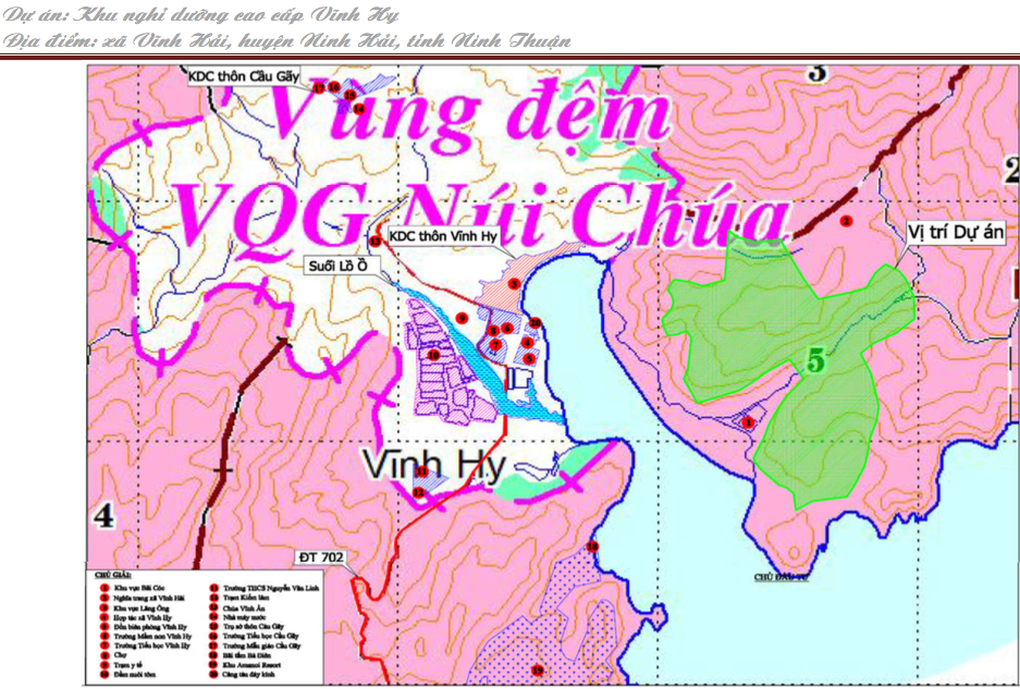
(Dân trí) – Dự án nghỉ dưỡng cao cấp Vĩnh Hy (Ninh Thuận) có 11,58ha rừng thuộc quy hoạch rừng đặc dụng do Ban quản lý Vườn quốc gia Núi Chúa quản lý vừa được công khai tham vấn về môi trường.
Ngày 12/9, Bộ Tài nguyên và Môi trường công khai tham vấn cộng đồng về Báo cáo đánh giá tác động môi trường (ĐTM) Dự án khu nghỉ dưỡng cao cấp Vĩnh Hy, tỉnh Ninh Thuận.
Đáng chú ý, theo ĐTM, dự án có 11,58ha diện tích rừng (rừng tự nhiên 10,60 ha; rừng trồng 0,98 ha) thuộc quy hoạch rừng đặc dụng do Ban quản lý Vườn quốc gia Núi Chúa quản lý (xã Vĩnh Hải, huyện Ninh Hải).
Vị trí dự án khu nghỉ dưỡng cao cấp Vĩnh Hy, tỉnh Ninh Thuận (Ảnh: Báo cáo ĐTM).
Thuộc thẩm quyền của Thủ tướng Chính phủ
Báo cáo ĐTM của dự án trích dẫn quy định tại khoản 2 Điều 20 Luật Lâm nghiệp nhấn mạnh việc quyết định chủ trương chuyển mục đích sử dụng rừng sang mục đích khác để thực hiện dự án khu nghỉ dưỡng cao cấp nói trên thuộc thẩm quyền của Thủ tướng.
Vì vậy, chủ dự án cần lập hồ sơ chuyển mục đích sử dụng rừng sang mục đích khác, tuân thủ Nghị định 83/2020 của Thủ tướng Chính phủ về sửa đổi, bổ sung Nghị định 156/2018 quy định chi tiết thi hành một số điều của Luật Lâm nghiệp.
Theo Quyết định số 332/2020 của UBND tỉnh Ninh Thuận về việc phê duyệt phương án quản lý rừng bền vững Vườn quốc gia Núi Chúa đến năm 2030 và Quyết định 333/2020 của tỉnh Ninh Thuận về phê duyệt Đề án phát triển du lịch sinh thái, nghỉ dưỡng, giải trí tại Vườn quốc gia Núi Chúa, khu vực dự án là khu vực 8 – dự án khu du lịch tại Vĩnh Hy, thuộc các khu cho thuê môi trường rừng.
Bringing together the findings from a range of key studies, the review highlights the serious and life-limiting risks of air pollution and how it affects multiple aspects of physical and mental health over the course of pregnancy and birth, child development, through to adulthood.
The authors looked at studies focused on the links between air pollution and ill health, including pollutants such as black carbon (or soot), small particulate matter (PM2.5), Nitrogen Dioxide (NO2), and Sulphur Dioxide (SO2).
National air pollution trends often follow the environmental kuznets curve (EKC). The EKC provides a hypothesis of the link between environmental degradation and economic development: in this case, air pollution initially worsens with the onset of industrial growth, but then peaks at a certain stage of economic development and from then on pollution levels begin to decline with increased development. Many high income nations are now at the late stage of this curve, with comparably low pollution levels. Meanwhile, developing nations span various stages of the growth-to-peak phase. I have previously written about this phenomenon in relation to sulphur dioxide (SO2) emissions here on Our World in Data.
If we take a historical look at pollution levels in London, for example, we see this EKC clearly. In the graph, we have plotted the average levels of suspended particulate matter (SPM) in London’s air from 1700 to 2016. Suspended particulate matter (SPM) refers to fine solid or liquid particles which are suspended in Earth’s atmosphere (such as soot, smoke, dust and pollen). Exposure to SPM – especially very small particles, which can more easily infiltrate the respiratory system – has been strongly linked to negative cardiorespiratory health impacts, and even premature death. As we see, from 1700 on, London experienced a worsening of air pollution decade after decade. Over the course of two centuries the suspended particulate matter in London’s air doubled. But at the very end of the 19th century the concentration reached a peak and then began a steep decline so that today’s levels are almost 40-times lower than at that peak.
The data presented has been kindly provided by Roger Fouquet, who has studied the topic of environmental quality, energy costs and economic development in great detail.1
An area in Hanoi on the morning of August 11, 2023. Photo by VnExpress/Viet AnThe air quality in Hanoi was ranked as “very unhealthy” on Friday morning and then “unhealthy for sensitive groups” at noon.
Switzerland-based air quality monitoring facility IQAir AirVisual recorded the air quality index (AQI) at over 200 in many places in Hanoi on Friday morning.
At noon, it dropped to 149 on average.
According to AirVisual, the AQI ranges from 0 to 500, though air quality can be indexed beyond 500 when there are higher levels of hazardous air pollution. Good air quality ranges from 0 to 50.
For over a century, economists have advocated taxing goods or services that impose greater costs on society than their price reflects. The idea isn’t to raise revenue, even if that’s a nifty benefit, but to discourage the overuse of things that cause unintended harm.
No bigger example of such unintended harm exists today than the air and climate pollution caused by the burning of fossil fuels. The International Monetary Fund conservatively estimates that the price of such fuels fails to account for $4.2 trillion in air and climate pollution costs each year.
By imposing a fee on fossil fuels to fairly reflect those social costs, on the other hand, we can invoke the power of the market to efficiently limit their use. That’s why more than 3,600 economists call carbon fees “the most cost-effective lever to reduce carbon emissions at the scale and speed that is necessary.”
Public support for carbon fees would be stronger if everyone grasped how they work to discourage the production and consumption of goods that cause societal harm. Unfortunately, many people don’t get it.
“The expectation that carbon taxes do not work is one of the main reasons for their rejection by people in surveys and real ballots,” an international scholarly review concluded in 2018. For example, only 39 percent of respondents in one Swedish poll understood that a carbon tax “affects my own and other people’s behavior.”








 CVD
CVD 