Singapore is reporting an increase in sightings of “shadow fleet” tankers carrying sanctioned cargo off its shores. These vessels often conceal their identities, change flags and switch off tracking systems. Most are old and poorly maintained, increasing the risk of accidents and environmental disasters. Experts say they pose serious safety concerns in one of the world’s busiest shipping lanes.
Al Jazeera’s Patrick Fok reports from Singapore. Jennifer Parker is a specialist in maritime law and security at the University of New South Wales and a former naval officer. She said shadow fleets are hard to track because they operate outside normal rules.
Jonathan Hanitzsch rests after collecting trash off the coast of Hon Mot Island on Feb. 7, 2025, in Nha Trang, Vietnam. (AP Photo/Yannick Peterhans)
By YANNICK PETERHANS and ANIRUDDHA GHOSALUpdated 9:02 AM GMT+7, March 5, 2025Share
NHA TRANG, Vietnam (AP) — The gentle waves off the coast of central Vietnam’s Nha Trang obscure an open secret: The life-giving coral reefs below are dying. The waters are eerily devoid of fish. The bounty of the ocean is coming to an end.
This is why Binh Van — who fished in these waters for over two decades — now charters his boat to Vietnamese tourists wanting to experience the thrill of fishing in the deep waters of the South China Sea. But there is only squid, which is flourishing in oceans warmed by climate change, to catch. His passengers don’t mind as the boat moves away from Nha Trang’s twinkling beach resorts. But Van is pensive.
Nguyen Tuan Hai drives Rainbow Diver’s boat to Madonna Rock, Feb. 7, 2025, in Nha Trang, Vietnam. (AP Photo/Yannick Peterhans)
It wasn’t always like this. There was a time when he’d catch 70 kilograms (154 pounds) of fish, like tuna and grouper, in one night. He can’t make money on the squid.
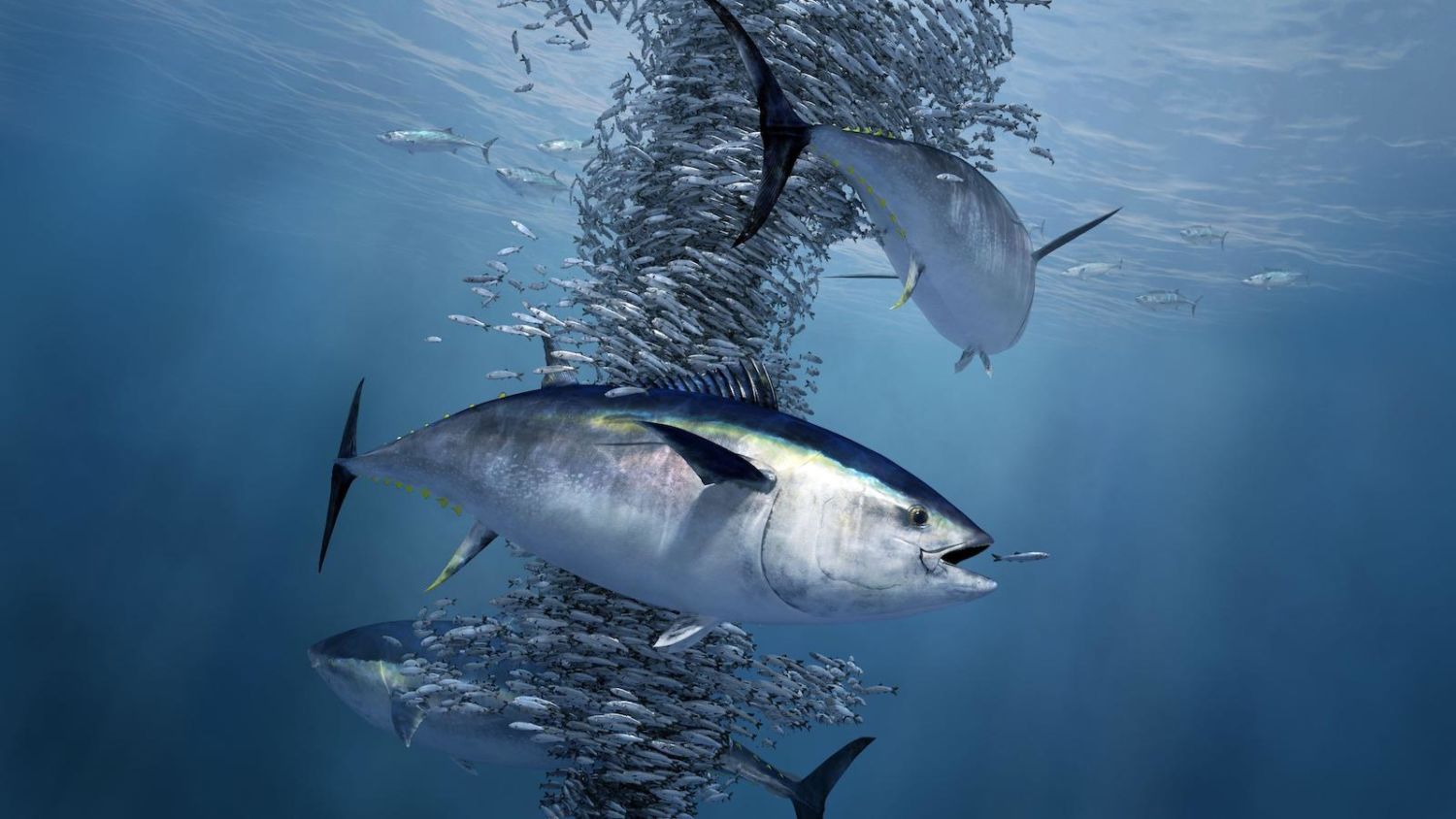
Atlantic bluefin tuna, shown feeding on a school of herring, have been driven into narrower layers of water by oxygen declines. MARKO STEFFENSEN / ALAMY STOCK PHOTO
Global warming not only increases ocean temperatures, it triggers a cascade of effects that are stripping the seas of oxygen. Fish are already moving to new waters in search of oxygen, and scientists are warning of the long-term threat to fish species and marine ecosystems.
Off the coast of southeastern China, one particular fish species is booming: the oddly named Bombay duck, a long, slim fish with a distinctive, gaping jaw and a texture like jelly. When research ships trawl the seafloor off that coast, they now catch upwards of 440 pounds of the gelatinous fish per hour — a more than tenfold increase over a decade ago. “It’s monstrous,” says University of British Columbia fisheries researcher Daniel Pauly of the explosion in numbers.
The reason for this mass invasion, says Pauly, is extremely low oxygen levels in these polluted waters. Fish species that can’t cope with less oxygen have fled, while the Bombay duck, part of a small subset of species that is physiologically better able to deal with less oxygen, has moved in.
The boom is making some people happy, since Bombay duck is perfectly edible. But the influx provides a peek at a bleak future for China and for the planet as a whole. As the atmosphere warms, oceans around the world are becoming ever more deprived of oxygen, forcing many species to migrate from their usual homes. Researchers expect many places to experience a decline in species diversity, ending up with just those few species that can cope with the harsher conditions. Lack of ecosystem diversity means lack of resilience. “Deoxygenation is a big problem,” Pauly summarizes.
As coral reefs and marine life disappear, efforts to save them are underway, but is it too late?
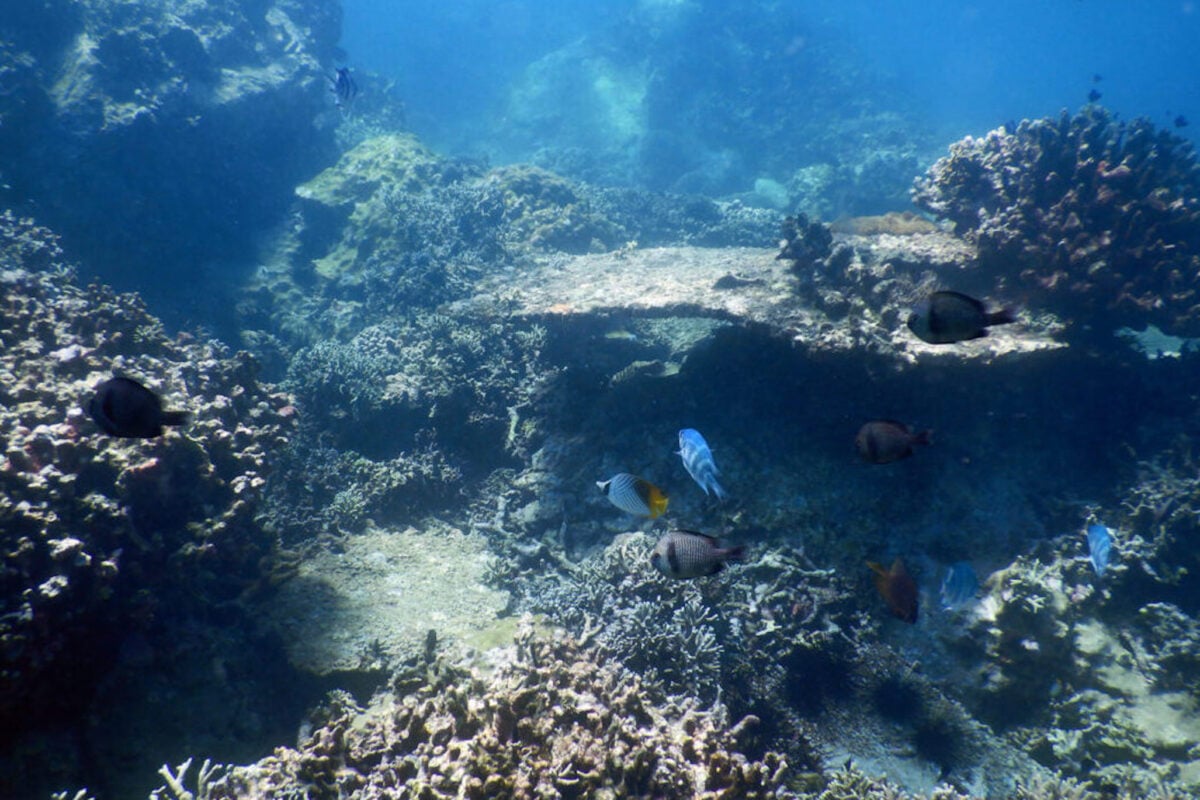
Coral die-off in Hon Mun, Nha Trang. PHOTO: Konstantin Tkachenko.
NHA TRANG, VIETNAM ― In Hon Chong, one of Vietnam’s last coral reefs, colorful schools of fish have become distant memories. These days, only small fish lurk behind bleached coral formations, a stark difference from the way some travel brochures depict the place.
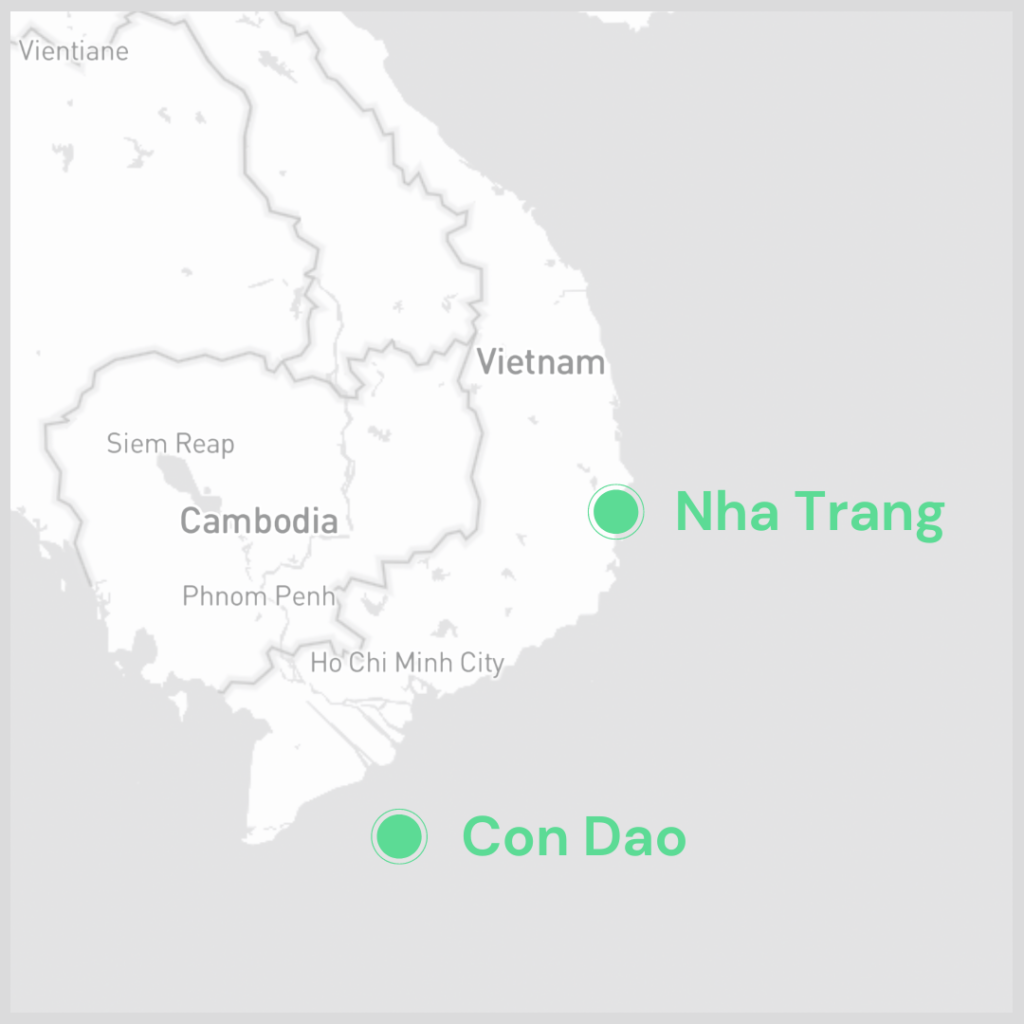
Half an hour by boat from Hon Chong is Hon Mun, a marine conservation site once home to more than 340 coral species, and valued at approximately US$70 million for its biodiversity in 2005.
About 10 years before the Covid-19 pandemic, professional divers started noticing a gradual depletion of the coral reefs in the area. They had hoped that lockdowns and border closures would alleviate stress from tourism and revive the reef.
Source: Mapbox
“After two years [of Covid-19], I was speechless to see the ocean bed so empty, the coral all bleached,” photographer Na Son, a diver who has made hundreds of trips down to Hon Mun’s ocean bed, told Mekong Eye in June 2023. Last June, Na Son was one of many divers who spoke to local media about Hon Mun’s alarming coral depletion.
Coral reefs are considered to be one of Vietnam’s national treasures, as the country boasts one of the world’s most diverse ecosystems with 355 species, according to data from the World Resources Institute.
Yet across the country, vital coral reserves are depleting at such an alarming rate that frenzied attempts to salvage what remains are likely to be insufficient to restore the ecosystems.
Trên mặt biển Quảng Ninh sóng chỉ lăn tăn nhưng ẩn sâu là những ‘cơn sóng lớn’ của việc chuyển đổi phao xốp sang nhựa, của sự tha thiết muốn có sổ đỏ mặt nước.
Người dân Vân Đồn đang thay phao xốp bằng phao nhựa. Ảnh: Dương Đình Tường.
Scientists ‘shocked’ by rate of change as rapid sea-ice melt drives absorption of CO2 – with ‘huge implications’ for Arctic sea life
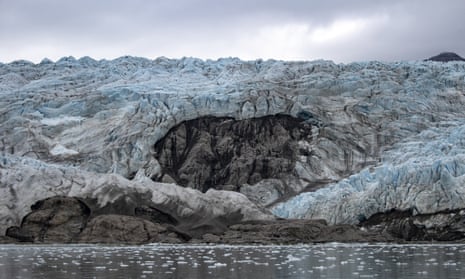
Norway’s Svalbard archipelago. Melting sea ice in the Arctic Ocean is driving faster warming and acidification, in a feedback loop known as Arctic amplification. Photograph: Anadolu Agency/Getty
Acidification of the western Arctic Ocean is happening three to four times faster than in other ocean basins, a new study has found.
The ocean, which absorbs a third of all of the carbon dioxide in the atmosphere, has grown more acidic because of fossil fuel use. Rapid loss of sea ice in the Arctic region over the past three decades has accelerated the rate of long-term acidification, according to the study, published in Science on Thursday.
A school of Japanese amberjack at the north-east coast of Taiwan. A new report warns that ocean warming and acidification are affecting the behaviour of fish. Copyright: Vincent C. Chen(CC BY SA 4.0).
Speed read
Warming, acidification of the oceans changing shoal behaviour in fish
Shoal behaviour key to fish survival and seafood supplies
Fish species moving towards the poles, changing temperate ecosystems
[NEW YORK] Ocean acidification and global warming are interfering with the way fish interact in groups, posing a threat to their survival which could affect seafood supplies, researchers say.
Marine ecosystems worldwide have shown an increased dominance of warm water species following seawater temperature rise, with parallel changes in the species composition of fish catches since the 1970s, according to a report by the Intergovernmental Panel on Climate Change (IPCC).
Much of the focus on the South China Sea over the past decade has centered around the nationalistic territorial disputes between China and four Southeast Asian claimants and a geopolitical tussle between China and the United States over freedom of navigation in the contested waters. What is going on beneath the surface of the sea – overfishing, destruction of coral reefs, climate change, plastics pollution, ocean acidification – is equally threatening and may have a longer-term impact on the survivability of the sea with its rich fishing beds, potential gas and oil reserves, and bustling sea lanes.
Vietnam’s $9.3 billion Can Gio Tourist City was recently approved for construction within the buffer zone of a UNESCO Mangrove Biosphere Reserve in Ho Chi Minh City.
Developed by Vingroup, Vietnam’s largest private company, the project will require the reclamation of a huge amount of land along Can Gio’s coast.
Environmentalists and activists have petitioned the government to reconsider the project, but Vingroup is a key part of the country’s drive toward industrialization and home-grown world-class companies.
HO CHI MINH CITY, Vietnam — A $9.3 billion residential and tourism development has been approved within the buffer zone of the Can Gio Mangrove Biosphere Reserve here in this city of 13 million, Vietnam’s largest urban area. The project was proposed by the Can Gio Tourism Urban Area Joint Stock Company, a subsidiary of Vinhomes, the real estate arm of Vingroup, the country’s largest private company. The Can Gio Tourist City would span 2,870 hectares (7,100 acres), largely on land that would be filled in along the South China Sea coast using sand. Tiếp tục đọc “Vietnam approves $9 billion development within mangrove reserve”→
Satellite images have revealed the illegal discharge of waste oil and sludge from ships to be a daily occurrence in Indonesia, while Southeast Asia’s biodiverse waters suffer more from the problem than anywhere. What can be done to stop the destructive practice of bilge dumping?
A beach covered in oily clumps in Bintan, Indonesia, in January 2020. Bilge dumping—the illegal discharge of waste oil from ships—is believed to be the cause, which is a daily occurrence in Indonesia, according to experts. Image: Luke Thomas
tuoitrenews – Tuesday, August 27, 2019, 15:46 GMT+7
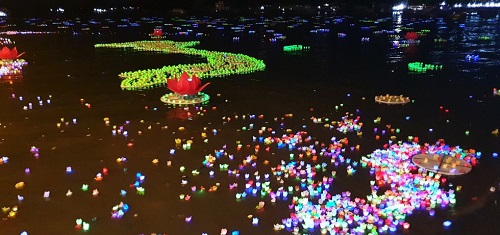
Lit-up lanterns are seen floating on Lan Ha off Hai Phong, northern Vietnam, on August 10, 2019. Photo: Thanh Trung / Tuoi Tre
An annual Buddhist festival held earlier this month in the northern Vietnamese city of Hai Phong has attracted environmental criticism as it purportedly involved people setting as many as 30,000 plastic lanterns afloat on a local bay.
On the night of August 10, hundreds of people gathered in Cat Ba Town on Cat Hai Island, a district administered by Hai Phong, to observe Vu Lan Occasion, a festival Buddhist followers hold annually to pay homage to their parents and ancestors.
It is not the sheer number of tourists descending on Venice that bothers Italian food blogger Monica Cesarato so much as the type of visitor.
Not so long ago Venice was considered the trip of a lifetime, said Cesarato, who runs gastronomic tours there. Visitors took days, even weeks, to explore the City of Canals, spending money in local restaurants and businesses.
Hurt by the sight of plastic waste invading coral reefs, one man has taken on the risky task of clearing it.
Over the past eight years, Dao Dang Cong Trung, 40, has spent most of his spare time collecting trash along roads leading to Son Tra Peninsula in Da Nang.
Thí nghiệm mô hình hoá này được thực hiện để cho thấy khả năng hiện rõ các tảng rác trôi nổi ở đại dương. Thí nghiệm này bắt nguồn từ dữ liệu trôi dạt, các điểm phao nổi đánh dấu dung cho mục đích khoa học mà Cơ quan khí tượng quốc gia Hoa Kỳ – NOAA đã thu thập ở đại dương trong suốt 35 năm và được thể hiện bằng các điểm trắng. Do đó, nếu các điểm phao nổi tiếp tục được đưa ra cùng lúc, nên rất khó để nhìn thấy các phao cũ đã được chuyển đi đâu. Do đó, nếu tất cả các tảng trôi nổi được di chuyển tại một thời điểm, chúng ta có thể quan sát đường di chuyển của các điểm trôi nổi này. Số lượng các điểm phao nổi giảm vì một số loại không bền bằng các loại khác. Các điểm phao nổi di chuyển đến 5 vòng xoáy đã được xác định được gọi là các đường đi của rác đại dương. Tiếp tục đọc “Rác ở đại dương: Thí nghiệm dòng trôi dạt của rác trên đại dương”→






 CVD
CVD 
