Việt Nam nguy cơ thành ‘vùng trũng’ carbon của hàng hải toàn cầu

tienphong.vn

TPO – Theo Cục Đăng kiểm Việt Nam, nếu không phát triển hạ tầng một cách nhanh chóng, Việt Nam có nguy cơ trở thành “vùng trũng” carbon trong mạng lưới hàng hải toàn cầu, bị các tuyến vận tải lớn né tránh để ưu tiên những trung tâm xanh hơn. Tháng 4 vừa qua, Hội nghị Bảo vệ môi trường hàng hải (MEPC 83) của Tổ chức hàng hải quốc tế (IMO), thuộc Liên Hợp Quốc (UN) đã đạt được một thỏa thuận mang tính bước ngoặt nhằm ứng phó với biến đổi khí hậu. Tại đây, cơ chế định giá carbon toàn cầu đối với khí thải từ vận tải biển quốc tế đã được thiết lập, dự kiến chính thức áp dụng từ năm 2028.

Theo Aljazeera, đến năm 2030, các tàu biển phải giảm cường độ phát thải xuống 8% so với mức cơ sở năm 2008; đến năm 2035, mức giảm bắt buộc sẽ là 30%. Với ngưỡng khắt khe hơn, yêu cầu cắt giảm lần lượt là 21% vào năm 2030 và 43% vào năm 2035. Những tàu đáp ứng mức phát thải thấp hơn ngưỡng nghiêm ngặt này sẽ được cấp tín chỉ phát thải có thể giao dịch, tạo động lực cho việc sớm áp dụng công nghệ xanh.

Cục Đăng kiểm Việt Nam (ĐKVN) đánh giá, các quyết định tại MEPC 83 không chỉ là những thay đổi về mặt quy định, mà còn là một tín hiệu mạnh mẽ về một cuộc chuyển đổi toàn diện của ngành hàng hải.

Cơ chế định giá carbon toàn cầu đối với khí thải từ vận tải biển quốc tế dự kiến chính thức áp dụng từ năm 2028. Ảnh: ĐKVN.

Tiếp tục đọc “Việt Nam nguy cơ thành ‘vùng trũng’ carbon của hàng hải toàn cầu”

How carbon prices are taking over the world

A quarter of global emissions are now covered, and the share is rising fast

A lump of coal penned-in by barcodes
image: matt chase

economist.com Oct 1st 2023

If global warming is to be limited, the world must forget fossil fuels as fast as possible—that much almost everyone agrees upon. How to do so is the complicated part. Economists have long favoured putting a price on carbon, a mechanism Europe introduced in 2005. Doing so allows the market to identify the cheapest unit of greenhouse gas to cut, and thus society to fight climate change at the lowest cost. Others, including many American politicians, worry that such schemes will provoke a backlash by raising consumer costs. Under President Joe Biden, America is instead doling out hundreds of billions of dollars to turn supply chains green.

Tiếp tục đọc “How carbon prices are taking over the world”

‘Putting a Price’ on Tobacco, Alcohol, and Carbon Emissions

Citizens’ Climate Lobby Posted on December 17, 2022 in Advance Climate Policy

Why taxing bad things is good

For over a century, economists have advocated taxing goods or services that impose greater costs on society than their price reflects. The idea isn’t to raise revenue, even if that’s a nifty benefit, but to discourage the overuse of things that cause unintended harm. 

No bigger example of such unintended harm exists today than the air and climate pollution caused by the burning of fossil fuels. The International Monetary Fund conservatively estimates that the price of such fuels fails to account for $4.2 trillion in air and climate pollution costs each year.

By imposing a fee on fossil fuels to fairly reflect those social costs, on the other hand, we can invoke the power of the market to efficiently limit their use. That’s why more than 3,600 economists call carbon fees “the most cost-effective lever to reduce carbon emissions at the scale and speed that is necessary.”

Public support for carbon fees would be stronger if everyone grasped how they work to discourage the production and consumption of goods that cause societal harm. Unfortunately, many people don’t get it. 

“The expectation that carbon taxes do not work is one of the main reasons for their rejection by people in surveys and real ballots,” an international scholarly review concluded in 2018. For example, only 39 percent of respondents in one Swedish poll understood that a carbon tax “affects my own and other people’s behavior.”

Tiếp tục đọc “‘Putting a Price’ on Tobacco, Alcohol, and Carbon Emissions”

Một số giải pháp nhằm giảm phát thải khí nhà kính trong nông nghiệp Việt Nam

icasp.org.vn

Trong số các loại KNK gây biến đổi khí hậu toàn cầu, có 3 loại KNK được ghi nhận phát thải chủ yếu trong lĩnh vực nông nghiệp là khí các bô níc (CO2), khí mê tan (CH4) và khí ô xít nitơ (N2O). 

Nông nghiệp Việt Nam đóng góp khoảng 30% tổng lượng phát thải khí nhà kính (KNK) toàn quốc. Phát thải KNK trong nông nghiệp tập trung chủ yếu trong 3 lĩnh vực chính: trồng lúa nước phát thải 49,7 triệu tấn CO2 quy đổi (CO2e), chiếm 50%; chăn nuôi phát thải 18,5 triệu tấn CO2e, chiếm 19%; quản lý đất và sử dụng phân bón phát thải 13,2 triệu tấn CO2e, chiếm 13%. Các loại KNK phát thải chính trong lĩnh vực nông nghiệp bao gồm khí CH4, N2O và CO2. Nghiên cứu về cơ chế phát thải của từng loại KNK trong từng lĩnh vực sản xuất nông nghiệp cụ thể đã tạo cơ sở khoa học cho đề xuất các giải pháp nhằm xử lý hiệu quả phát thải KNK trong nông nghiệp. Cụ thể, giải pháp chuyển đổi đất lúa và áp dụng tưới tiêu chủ động (nông lộ phơi), giải pháp cải thiện chế độ dinh dưỡng cho trâu bò và sử dụng các công nghệ xử lý chất thải chăn nuôi bằng khí sinh học, thu gom và sản xuất phân bón hữu cơ, giải pháp quản lý đất và sử dụng phân đạm hợp lý đã được đề xuất áp dụng nhằm giảm phát thải KNK trong nông nghiệp. Tuy nhiên, để các công nghệ giảm phát thải KNK trong nông nghiệp được áp dụng rộng rãi, nhà nước cần có chính sách hỗ trợ các nghiên cứu để việc đầu tư các công nghệ vừa giúp giảm phát thải KNK lại vừa thực sự đem lại hiệu quả kinh tế cho nông dân.

Tổng quan về phát thải KNK trong lĩnh vực nông nghiệp

Tiếp tục đọc “Một số giải pháp nhằm giảm phát thải khí nhà kính trong nông nghiệp Việt Nam”

Which countries are most exposed to the EU’s proposed carbon tariffs?

resourcetrade.earth Chris Kardish, Mattia Mäder, Mary Hellmich, and Maia Hall, 20 August 2021

The European Union (EU) is moving ahead with the world’s first border tax on the carbon content of imported goods which aims to strengthen its increasingly ambitious climate targets and policies, but is attracting criticism. How would it work and which trading partners are most vulnerable to its impacts?

Steel mill in Novokuznetsk, Russia. (Sergei Bobylev\TASS via Getty Images)

Contents

The EU is accelerating its climate ambition over the coming decade to support its 2050 long-term strategy of reaching net-zero greenhouse gas (GHG) emissions. Key aspects of this acceleration include raising its emissions reduction target from 40 per cent to at least 55 per cent below 1990 levels by 2030 and implementing a sweeping set of policy changes – especially to its flagship emissions trading system (ETS) which puts a price on pollution by requiring companies to purchase allowances for their emissions.

The costs of the allowances have skyrocketed recently and now hovers around record levels of €50 per tonne of carbon dioxide equivalent or above. This is due – at least in part – to those participating in the market expecting a tighter supply of allowances as the EU increases its climate targets. Prices are expected to continue rising over the coming decade as the EU implements its ambitious climate agenda.

Tiếp tục đọc “Which countries are most exposed to the EU’s proposed carbon tariffs?”

Hidden carbon: Fungi and their ‘necromass’ absorb one-third of the carbon emitted by burning fossil fuels every year

theconversation.com

Beneath our feet, remarkable networks of fungal filaments stretch out in all directions. These mycorrhizal fungi live in partnership with plants, offering nutrients, water and protection from pests in exchange for carbon-rich sugars.

Now, new research shows this single group of fungi may quietly be playing a bigger role in storing carbon than we thought.

How much bigger? These microscopic filaments take up the equivalent of more than a third (36%) of the world’s annual carbon emissions from fossil fuels – every year.

As we search for ways to slow or stop the climate crisis, we often look to familiar solutions: cutting fossil fuel use, switching to renewables and restoring forests. This research shows we need to look down too, into our soils.

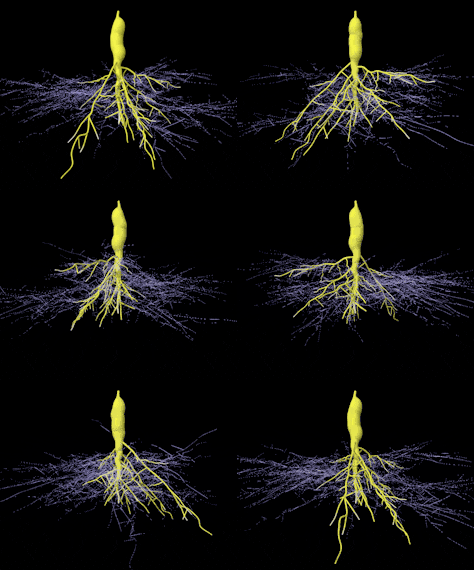
This shows how mycorrhizal fungi (fine white filaments) connect to plant root systems (yellow) and out into the soil. Scivit/Wikipedia

This fungi-plant partnership is 400 million years old

Mycorrhizal fungi are hard to spot, but their effects are startling. They thread networks of microscopic filaments through the soil and into the roots of almost every plant on earth.

But this is no hostile takeover. They’ve been partnering with plants for more than 400 million years. The length of these complex relationships has given them a vital role in our ecosystems.

Tiếp tục đọc “Hidden carbon: Fungi and their ‘necromass’ absorb one-third of the carbon emitted by burning fossil fuels every year”

What are NDCs – Nationally Determined Contributions, and how do they drive climate action?

UNDP.org May 31, 2023

NDC explainer visual

Summary

  • Nationally Determined Contributions, or NDCs, are countries’ self-defined national climate pledges under the Paris Agreement, detailing what they will do to help meet the global goal to pursue 1.5°C, adapt to climate impacts and ensure sufficient finance to support these efforts.
  • NDCs represent short- to medium-term plans and are required to be updated every five years with increasingly higher ambition, based on each country’s capabilities and capacities.
  • Concrete progress is already being made towards achievement of the Paris Agreement, particularly in developing countries. For example, pledges from African countries are more robust than the global average in terms of explaining how targets will be achieved. 
  • NDCs represent politically backed commitments by countries. If used right, they could be our way out of tackling the world’s current crises – not just the climate crisis, but other systemic problems like biodiversity loss and energy security as well.

What are Nationally Determined Contributions and where do they come from? 

The Paris Agreement changed the face of climate action.

The legally binding international treaty, which was adopted in 2015 by all 196 Parties to the UN Climate Convention in Paris, established universal global goals endorsed by all countries. Primarily, this includes ensuring global average temperature rise is held well below 2°C above pre-industrial levels and pursuing efforts to limit the increase to 1.5°C.  It also includes an aim to increase the ability to adapt to climate impacts, and make finance flows consistent with country needs to achieve these goals.  

Tiếp tục đọc “What are NDCs – Nationally Determined Contributions, and how do they drive climate action?”

Phantom Forests: Why Ambitious Tree Planting Projects Are Failing

e360.yale.edu

High-profile initiatives to plant millions of trees are being touted by governments around the world as major contributions to fighting climate change. But scientists say many of these projects are ill-conceived and poorly managed and often fail to grow any forests at all.

BY FRED PEARCE • OCTOBER 6, 2022

It was perhaps the most spectacular failed tree planting project ever. Certainly the fastest. On March 8, 2012, teams of village volunteers in Camarines Sur province on the Filipino island of Luzon sunk over a million mangrove seedlings into coastal mud in just an hour of frenzied activity. The governor declared it a resounding success for his continuing efforts to green the province. At a hasty ceremony on dry land, an official adjudicator from Guinness World Records declared that nobody had ever planted so many trees in such a short time and handed the governor a certificate proclaiming the world record. Plenty of headlines followed.

But look today at the coastline where most of the trees were planted. There is no sign of the mangroves that, after a decade of growth, should be close to maturity. An on-the-ground study published in 2020 by British mangrove restoration researcher Dominic Wodehouse, then of Bangor University in Wales, found that fewer than 2 percent of them had survived. The other 98 percent had died or were washed away.

Tiếp tục đọc “Phantom Forests: Why Ambitious Tree Planting Projects Are Failing”

What Does “Net-Zero Emissions” Mean? 8 Common Questions, Answered

WRI.org

The latest climate science is clear: Limiting global warming to 1.5 degrees C (2.7 degrees F) is still possible. But to avoid the worst climate impacts, global greenhouse gas (GHG) emissions will need to drop by half by 2030 and reach net-zero around mid-century.

Recognizing this urgency, a rapidly growing number of national government, local government and business leaders are making commitments to reach net-zero emissions within their jurisdictions or businesses. To date, over 80 countries have communicated such “net-zero targets,” including the world’s largest emitters (China, the United States, the European Union and India). On top of that, hundreds more regions, cities and businesses have set targets of their own.

Tiếp tục đọc “What Does “Net-Zero Emissions” Mean? 8 Common Questions, Answered”

Corporate Financing of Nature Based Solutions: What Next?

In this commentary, we share some perspectives on how to ensure high-ambition and high-integrity with respect to demand for and supply of credits. Crucially, we argue that companies’ investments in NBS should only qualify for consideration as carbon credits if the company can demonstrate that it is doing all that it should to eliminate carbon emissions from its operations and value chains, aligned with Science-Based Targets. The remainder of this commentary describes why, and how this would work.

WRI.org

April 5, 2021 By Andrew Steer and Craig Hanson

More than 1,500 companies have committed to net-zero emissions by mid-century, as have 11,000 cities and at least $9 trillion in private assets under management. This raises crucial questions as to how much offsetting of carbon can take place in mid-century and, more importantly, how much can take place on the path to get there. The January 2021 report of the Taskforce on Scaling the Voluntary Carbon Market suggested a market of 1-5 Gigatons of CO2e by 2030, with perhaps two-thirds directed at Nature Based Solutions (NBS), meaning that tens of billions of dollars of investment in NBS are potentially at stake.

Tiếp tục đọc “Corporate Financing of Nature Based Solutions: What Next?”

Can the world’s most polluting heavy industries decarbonize?

Grist.org

The production of steel, cement, and ammonia emit about one-fifth of all human-caused CO2. Technologies are emerging to decarbonize these problem industries, but analysts warn that big challenges remain.

A blast furnace at a steel mill in Salzgitter, Germany.
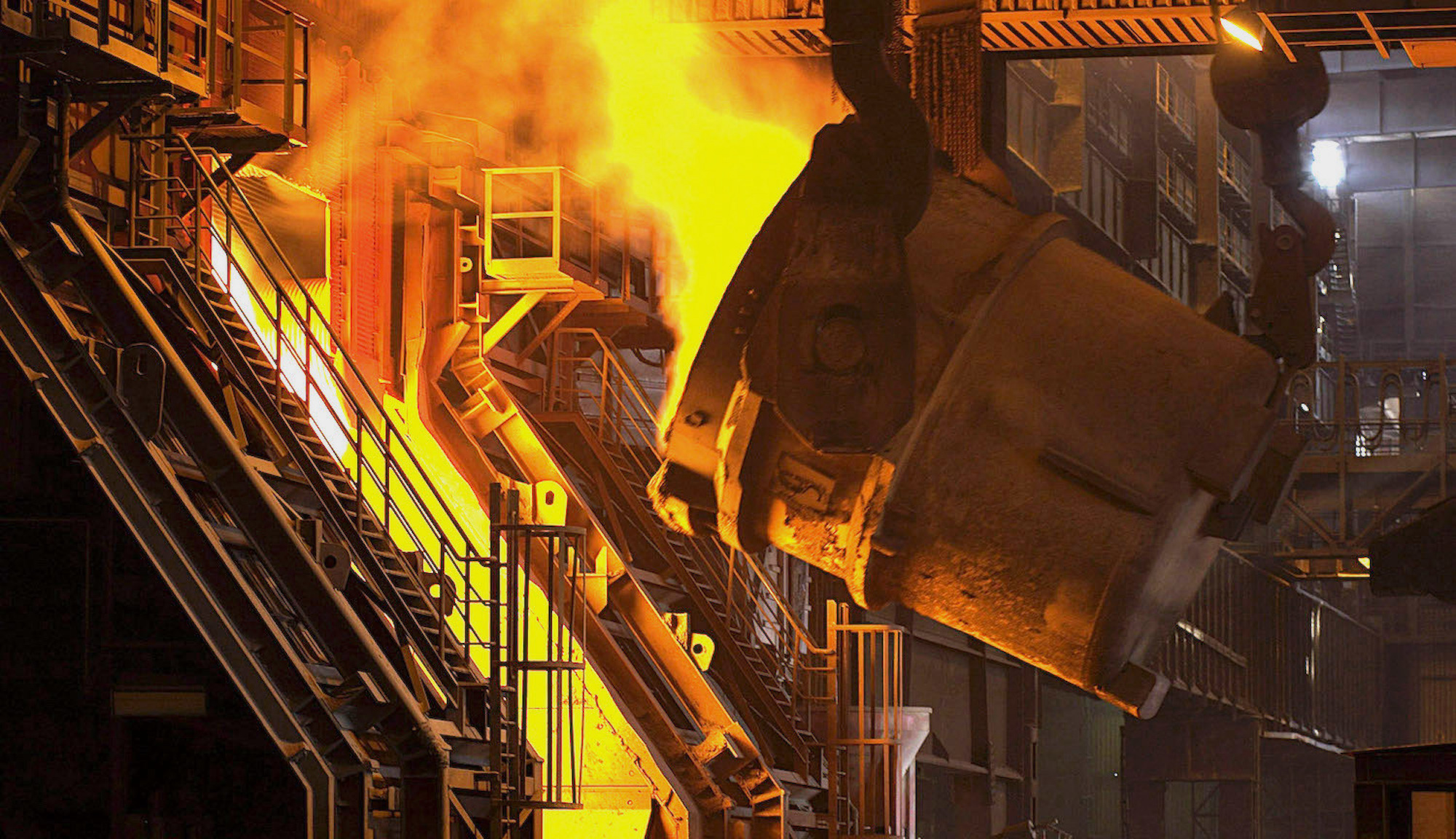
A blast furnace at a steel mill in Salzgitter, Germany. PLUS49 / CONSTRUCTION PHOTOGRAPHY / AVALON / GETTY IMAGES

This story was originally published by Yale Environment 360 and is reproduced here as part of the Climate Desk collaboration.

We know how to decarbonize energy production with renewable fuels and land transportation with electric vehicles. Blueprints for greening shipping and aircraft are being drawn up. But what about the big industrial processes? They look set to become decarbonization holdouts — the last and hardest CO2 emissions that we must eliminate if we are to achieve net-zero emissions by mid-century. In particular, how are we to green the three biggest globally-vital heavy industries: steel, cement, and ammonia, which together emit around a fifth of anthropogenic CO2? 

Our modern urban environments are largely constructed from concrete — which is made from cement — and steel. Most of our food is grown through the application of fertilizer made from ammonia. These most ubiquitous industrial materials are produced at huge expense of energy and carbon dioxide emissions. 

Tiếp tục đọc “Can the world’s most polluting heavy industries decarbonize?”

Is it possible to make steel without fossil fuels?

Greenbiz.com

By Josh Owens

September 24, 2020

Steel production
Steel production is an incredibly energy intensive process.

Steel is arguably the single most important resource when it comes to constructing infrastructure.

From roads to railways and the skeleton of most buildings, it is at the very heart of nearly every city on earth. Within those cities, the cars on the road, the cutlery in our kitchens and the furniture in our offices all rely on steel production. Steel production, however, is an incredibly energy intensive process, and the vast majority of this energy comes from fossil fuels.

Globally, steel is responsible for 7-9 percent of all direct emissions from fossil fuels. Most of those emissions come from the burning of coal, which makes up 89 percent of the energy input for blast furnace-basic oxygen furnace (BF-BOF) and 11 percent of the energy input of electric arc furnaces (EAF). Of those two types of steel production, BF-BOF is far more common, making up 75 percent of steel that is produced compared to 25 percent from EAF. Globally, steel is responsible for 7-9% of all direct emissions from fossil fuels.

Tiếp tục đọc “Is it possible to make steel without fossil fuels?”

Historical Greenhouse gas (GHG) Emissions

Climatewatchdata.org

Greenhouse gas (GHG) emissions which cause climate change have increased 50 fold since the mid-1800s. Energy makes up nearly three-quarters of global emissions, followed by agriculture. Breaking down the energy sector into its sub-sectors, electricity and heat generation make up the largest portion of emissions, followed by transportation and manufacturing. 64% of GHG emissions come from just 10 countries, while the 100 least-emitting contributed less than 3%.


QUÁ TRÌNH GIẢM PHÁT THẢI TRONG CHUỖI CUNG ỨNG CỦA CÁC CÔNG NGHIỆP Ở ĐÔNG NAM Á

Báo cáo của Global Efficiency Intelligence

Lĩnh vực công nghiệp là lĩnh vực tạo ra phát thải khí nhà kính (GHG) lớn nhất  trên toàn cầu. Ở Đông Nam Á, công nghiệp cũng là một trong những nguồn phát thải khí nhà kính lớn nhất. Cùng với mức tăng trưởng kinh tế và sản lượng công nghiệp đáng kể được dự báo tại từ Đông Nam Á trong vài thập kỷ tới, việc sử dụng năng lượng và phát thải khí nhà kính liên quan đến các ngành công nghiệp được dự báo là sẽ tăng  đáng kể nếu các quốc gia không có các chính sách và chiến lược quyết liệt để  giảm thải khí nhà kính.

Lĩnh vực tư nhân có tiềm năng trọng yếu trong việc thúc đẩy các hành động giảm thải các-bon trong công nghiệp. Đối với nhiều công ty và các thương hiệu mà lượng phát thải từ chuỗi cung  lớn hơn nhiều lần so với lượng phát thải từ việc vận hành của chính công ty, thì rõ ràng để làm được hành động có ý nghĩa, các công ty sẽ phải tận dụng sức mua và  làm việc với chuỗi cung ứng của họ. Tuy nhiên, theo tổ chức CDP,  chỉ có 29% nhà cung cấp của các hãng báo cáo về lượng khí thải giảm tuyệt đối trong năm 2019, rõ ràng là người mua và các nhà cung cấp của họ  ở Đông Nam Á và các khu vực khác  phải nỗ lực nhiều hơn nữa.

Trong báo cáo này, đầu tiên, chúng ta phân tích việc sử dụng năng lượng công nghiệp ở 5 nước tiêu thụ năng lượng lớn ở Đông Nam Á là: Indonesia, Malaysia, Philippines, Thái Lan và Việt Nam. Các chương tiếp theo của báo cáo thảo luận về các khía cạnh khác nhau của việc nâng cao hiệu quả sử dụng năng lượng và giảm phát thải khí nhà kính trong  linh vực công nghiệp ở Đông Nam Á thông qua tính bền vững của chuỗi cung ứng. Chúng ta thảo luận về các rào cản chính trong quá trình giảm thải cácbon trong các chuỗi cung ứng, các thực hành hàng đầu để thúc đẩy chuỗi cung ứng công nghiệp các-bon thấp, và tầm quan trọng của các hệ thống đo lường hiệu suất và các chỉ số đánh giá cơ bản tương ứng (KPI) để thúc đẩy tính bền vững của chuỗi cung ứng. Các nghiên cứu điển hình về tính bền vững của chuỗi cung ứng tập trung vào lĩnh vực dệt may cũng như lĩnh vực sản xuất sản phẩm điện tử. Hai lĩnh vực này có chuỗi cung ứng lớn ở Đông Nam Á.

Dựa trên những thực hành quốc tế tốt nhất xác định trong nghiên cứu này, các công ty có thể đưa ra các hành động để giảm phát thải carbon trong chuỗi cung ứng bằng cách:

• Phát triển các mối quan hệ chặt chẽ hơn với các nhà cung cấp của họ thông qua các chương trình gắn kết với nhà cung cấp và giúp các nhà cung cấp thiết lập các hệ thống và chính sách quản lý bền vững của riêng nhà cung cấp, điều này sẽ giúp cho  các nhà cung cấp đo lường và theo dõi lượng phát thải một cách có hệ thống.

• Là một phần của việc phát triển phương pháp quản lý dữ liệu cho nhà cung cấp, các công ty có thể tạo  lập hoặc thuê các công ty bên ngoài vận hành hệ thống  thu thập dữ liệu hoặc tận dụng chương trình báo cáo và công bố khí nhà kính hiện có.

• Đặt ra các mục tiêu giảm phát thải khí nhà kính và giảm các-bon cho chuỗi cung ứng.

• Chuyển tải các mục tiêu giảm phát thải khí nhà kính và giảm các-bon thành các mục tiêu cho các nhà cung cấp riêng lẻ của hãng có thể thực hiện được.

• Khuyến khích và hỗ trợ các nhà cung cấp chuyển đổi sang năng lượng tái tạo, đây là chìa khóa để đạt được các mục tiêu giảm khí thải phạm vi số 3. (Các phát thải gián tiếp khác phát sinh từ các hoạt động có liên quan trong chuỗi giá trị, chuỗi cung ứng từ các nguồn mà doanh nghiệp không sở hữu hoặc kiểm soát.)

• Khuyến khích và hỗ trợ các nhà cung cấp xác định và thực hiện các cơ hội sử dụng năng lượng hiệu quả và áp dụng tiêu chuẩn quản lý năng lượng ISO 50001

• Thiết lập giá carbon nội bộ. Chương trình này sẽ cung cấp cho các công ty cơ hội để đánh giá rủi ro liên quan đến các quy định trong tương lai   về giá các-bon bắt buộc, và do đó hướng tới việc xác định triển vọng tiết kiệm chi phí và doanh thu khi đầu tư vào các công nghệ  mới về các-bon thấp và giảm các-bon trong các hoạt động kinh doanh.

• Cung cấp thông tin và tài liệu đào tạo cho các nhà cung cấp của hãng để hỗ trợ nỗ lực của các nhà cung cấp và xây dựng năng lực trong việc cải thiện hiệu  suất năng lượng và chuyển đổi sang các-bon thấp.

Xem toàn bộ báo cáo tiếng Anh tại đây

China Aims For Carbon Neutrality By 2060

WRI.org

WASHINGTON (September 22, 2020)— Today in remarks delivered before the United Nations General Assembly, President Xi Jinping made a surprise announcement that China aims to achieve carbon neutrality before 2060 and to peak carbon emissions before 2030. This is the first time Chinese leadership has made a commitment about reaching net zero emissions.

Following is a statement from Helen Mountford, Vice President, Climate and Economics, World Resources Institute:

“President Xi sent an extremely important signal today with his unexpected announcement that China will strive for carbon neutrality by 2060 and strengthen its national climate commitment including peaking emissions before 2030. The devil will be in the details and China should set more specific near-term targets and an earlier peaking date, but China’s direction of travel toward a zero-carbon future is coming into focus. Tiếp tục đọc “China Aims For Carbon Neutrality By 2060”