Watch The British-Soviet Invasion of Iran (1941)

briliantmap.com

The Anglo-Soviet invasion of Iran (Operation Countenance) occurred in August 1941, during World War II.

The invasion was carried out jointly by the United Kingdom and the Soviet Union, aiming primarily to secure Iranian territory against Axis influence and protect critical supply routes.

Here’s a comprehensive overview:

Lead-Up and Reasons

Strategic Importance:

  • Iran had a strategically critical position, particularly as a transportation corridor between the Allies and the Soviet Union.
  • Iranian infrastructure, notably the Trans-Iranian Railway, offered a route for delivering vital supplies from the Allies (mostly Britain and the U.S.) to the USSR following Germany’s invasion (Operation Barbarossa) in June 1941.

Iranian Position and Axis Influence:

  • Although officially neutral, the Iranian ruler Reza Shah Pahlavi sympathized with Germany, partially due to historical rivalry with Britain and Russia.
  • Germany had established substantial diplomatic and commercial influence in Iran, with many German nationals working in strategic industries, raising fears of espionage and sabotage among the Allies.

Diplomatic Tensions:

  • Britain and the Soviet Union demanded Iran expel German nationals perceived as threats; Iran hesitated or refused, increasing Allied suspicions and tension.

Invasion: Operation Countenance

Date and Execution:

Began on August 25, 1941, when British forces advanced from the south and west, while Soviet forces attacked from the north.

Rapid military operations overwhelmed Iran’s defenses, which were relatively weak and poorly equipped compared to the invading powers.

Key Events:

  • British forces captured key oil fields in Khuzestan (Abadan), securing critical petroleum resources.
  • Soviet troops quickly took control of northern provinces, including major cities such as Tabriz and Mashhad.
  • Air and naval superiority allowed quick suppression of Iranian resistance.

Iranian Response: The Iranian army, despite fighting briefly in several locations, was rapidly overwhelmed, with significant casualties but limited overall resistance.

Tehran quickly realized the futility of resistance and began negotiations.

Tiếp tục đọc “Watch The British-Soviet Invasion of Iran (1941)”

Trung Đông 2024: Một năm đảo lộn

SÁNG ÁNH – 29/12/2024 07:55 GMT+7

TTCT Sau biến cố 7-10-2023 ở Israel, tại khu vực Trung Đông, vấn đề chính năm qua vẫn là xoay quanh Palestine.

Ảnh: The New Arab

Chuyện này không có gì mới, nhưng cường độ của vấn đề ở mức cao nhất từ hơn 100 năm qua, tức từ ngày xuất hiện phong trào Zion chủ nghĩa vào cuối thế kỷ 19. 

Nhắc lại, đây là phong trào thế tục sanh ra tại Âu châu, nơi người theo đạo và văn hóa Do Thái từng bị 1.000 năm phân biệt, chèn ép, bài xích, đưa đến xua đuổi, trục xuất và tiêu diệt. 

Giải pháp của Zion chủ nghĩa không phải là tranh đấu và đòi quyền bình đẳng sinh sống tại các nước Âu Tây, nơi họ có bấy nhiêu thế kỷ hiện diện, mà là lập một quốc gia riêng biệt.

Như vậy, Israel ra đời năm 1948 là vì người Do Thái bị Âu châu bạc đãi và trù dập. Hoàn cảnh lịch sử với ngày tàn của đế quốc Ottoman, thất trận của đế quốc Đức, rồi Đức quốc xã, khiến họ trở thành đồng minh đắc lực của Tây phương trong khu vực.

Như ngoại trưởng Mỹ Alexander Haig nói 35 năm trước: “Israel là tàu sân bay lớn nhất thế giới của Mỹ mà không thể bị đánh chìm, (lại) không cần đến một người lính Mỹ và ở tại vị trí then chốt cho an ninh Mỹ”.

Tiếp tục đọc “Trung Đông 2024: Một năm đảo lộn”

Assad leaves behind a fragmented nation – stabilizing Syria will be a major challenge for fractured opposition and external backers

The Conversation – Academic rigour, journalistic flair

Published: December 8, 2024 4.56pm GMT

End of a half-century of family rule.

A damaged portrait of Syrian President Bashar al-Assad hangs in the Syrian city of Qamishli. Delil Souleiman/AFP via Getty Images

Author

  1. Sefa Secen Assistant Professor of International and Global Studies, Nazareth University

Disclosure statement

Sefa Secen does not work for, consult, own shares in or receive funding from any company or organisation that would benefit from this article, and has disclosed no relevant affiliations beyond their academic appointment.

Partners

View all partners

CC BY ND We believe in the free flow of information
Republish our articles for free, online or in print, under Creative Commons licence.

The brutal 54-year reign of the Assad family in Syria looks to be over.

In a matter of days, opposition forces took the major city of Aleppo before advancing southward into other government-controlled areas of Hama, Homs and finally, on Dec 7, 2024, the capital, Damascus.

Tiếp tục đọc “Assad leaves behind a fragmented nation – stabilizing Syria will be a major challenge for fractured opposition and external backers”

The Gaza Strip − why the history of the densely populated enclave is key to understanding the current conflict

Published: The Conversation, October 10, 2023 7.16pm BST Updated: October 12, 2023 4.17pm BST

Author

  1. Maha Nassar Associate Professor in the School of Middle Eastern and North African Studies, University of Arizona

Disclosure statement

Maha Nassar does not work for, consult, own shares in or receive funding from any company or organisation that would benefit from this article, and has disclosed no relevant affiliations beyond their academic appointment.

Partners

University of Arizona provides funding as a member of The Conversation US.

View all partners

The focus on conflict in the Middle East has again returned to the Gaza Strip, with Israel’s defense minister ordering a “complete siege” of the Palestinian enclave.

Tiếp tục đọc “The Gaza Strip − why the history of the densely populated enclave is key to understanding the current conflict”

“The Houthis Have Defeated the U.S. Navy,” or, What is a Navy For?

The mission of the U.S. Navy has for centuries been to keep the sea lines of communication open, but the United States is abandoning that task in the Middle East today.

Blog Post by Elliott Abrams, CFR

August 31, 2024 10:45 am (EST)

A recent article in the Telegraph newspaper in London by former Royal Navy Commander Tom Sharpe was entitled “The Houthis Have Defeated the U.S. Navy.” If that is not correct, it is only because the U.S. Navy has been ordered not to fight. Tiếp tục đọc ““The Houthis Have Defeated the U.S. Navy,” or, What is a Navy For?”

An uneasy Arab-Israeli alliance

April 18, 2024
By David Leonhardt, New York Times
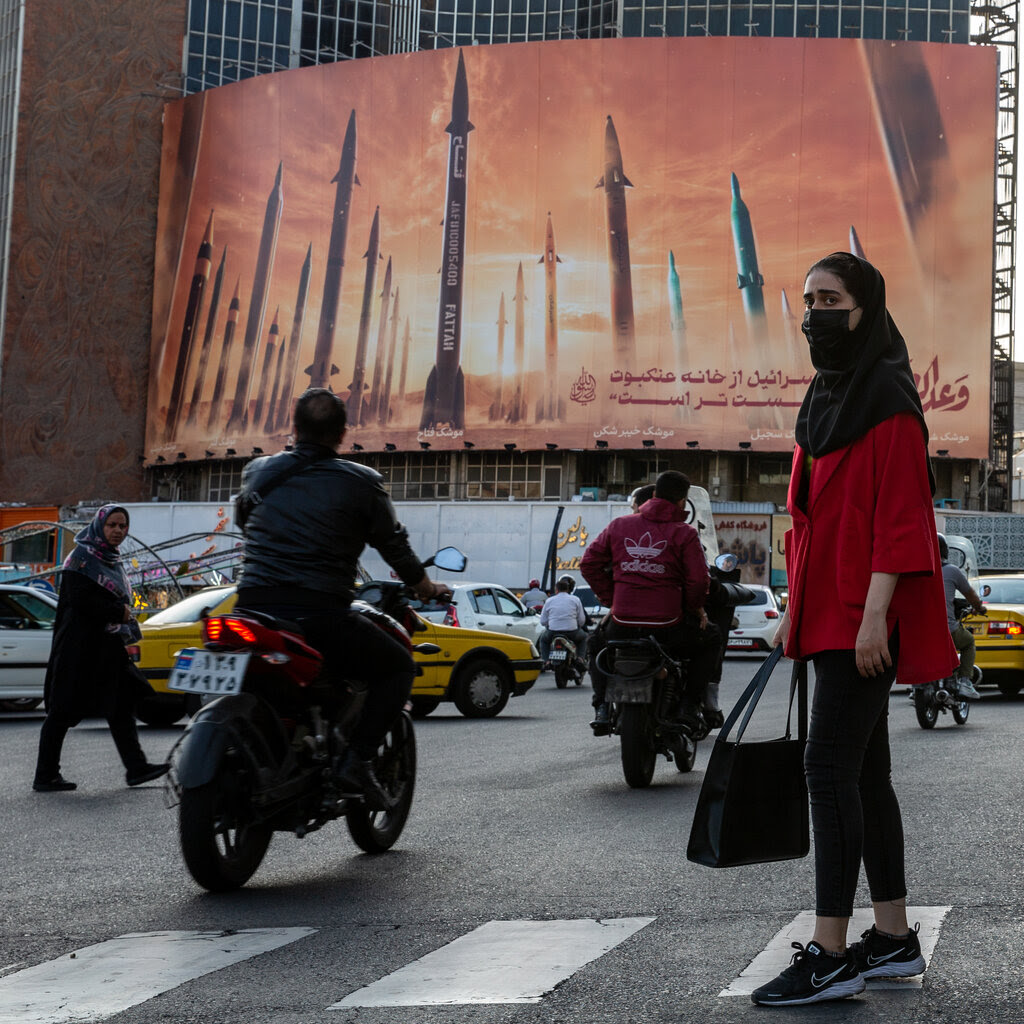
People on a city street. In the background is a billboard showing missiles.
In Tehran.  Arash Khamooshi for The New York Times

The anti-Iran coalition

To understand the current confrontation between Iran and Israel, it helps to think about three recent phases of Middle East geopolitics.

Phase 1: Before Oct. 7 of last year, Iran was arguably the most isolated power in the region. The Biden administration was growing closer to Saudi Arabia, Iran’s biggest rival for power. Israel, Iran’s longtime enemy, had signed a diplomatic deal during the Trump administration with Bahrain, Morocco and the U.A.E. Iran, for its part, was financing a network of extremist groups such as Hamas and the Houthis.

Tiếp tục đọc “An uneasy Arab-Israeli alliance”

China’s role in the Middle East: Can China be a peace mediator between Israel and Hamas?

CNA Insider – 28-3-2024

Over the last twenty years, China’s influence in the Middle East has grown substantially. China has major economic partnerships with Iran, Egypt, Saudi Arabia and also Israel.

How is the war in Gaza impacting these investments? Can China be a peace mediator between Israel and Hamas? And how do the current events in the Middle East impact great power competition between the United States and China? Tiếp tục đọc “China’s role in the Middle East: Can China be a peace mediator between Israel and Hamas?”

A widened Middle East war would be a disaster, but it can still be avoided

Stephen Collinson

Analysis by Stephen Collinson, CNN

Published 12:40 AM EST, Fri January 5, 2024

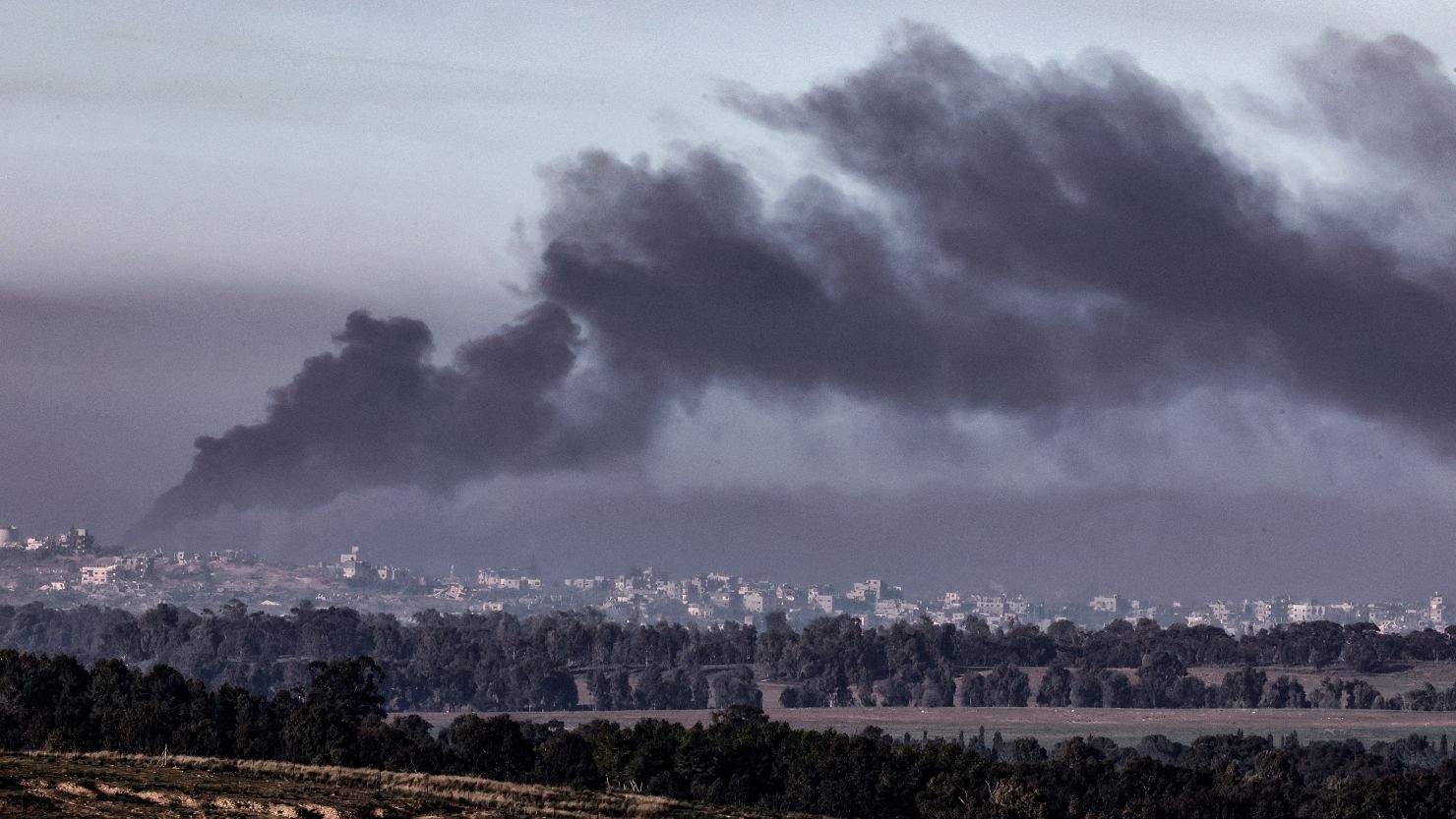
TOPSHOT - A picture taken from a position in southern Israel along the border with the Gaza Strip, shows smoke billowing over the Palestinian territory during Israeli bombardment on January 4, 2024, amid continuing battles between Israel and the militant group Hamas. (Photo by JACK GUEZ / AFP) (Photo by JACK GUEZ/AFP via Getty Images)

A picture taken from a position in southern Israel along the border with the Gaza Strip shows smoke billowing during Israeli bombardment on January 4, 2024, amid the ongoing Israel-Hamas war.Jack Guez/AFP/Getty ImagesCNN — 

Anxiety mounts every day that a full-scale Middle East war could erupt from the flames of the Israel-Hamas war in Gaza.

“We feel and we’re afraid of it,” Lebanese Foreign Minister Abdallah Bou Habib told CNN’s Christiane Amanpour this week. “We don’t want any escalation in the war. … We don’t like a regional war because it’s dangerous to everybody. Dangerous to Lebanon, dangerous to Israel and to the countries surrounding Israel,” he said, adding, “A regional war is bad for everybody.”

Tiếp tục đọc “A widened Middle East war would be a disaster, but it can still be avoided”

Lebanon’s Half-Formed Peace Plan May Be Gaza’s Best Chance

Prime Minister Najib Mikati’s tentative proposal needs Western backers.

By Justin Ling, a journalist based in Toronto. FP

Caretaker Lebanese Prime Minister Najib Mikati speaks on the phone ahead of an interview.

NOVEMBER 9, 2023, 4:30 PM

Lebanese Prime Minister Najib Mikati has a plan for peace in Gaza and Israel. If it has any hope of becoming reality, he’ll need Western backers. Thus far, he doesn’t have any.

It’s time for Western leaders to step up.

As the death toll in Gaza grows, now over 10,000, Lebanon’s caretaker prime minister has been trying to win allies for his three-step peace plan. First, Mikati proposes, would come a five-day pause in hostilities, during which Hamas would release some of its Israeli hostages and Israel would open its border crossings to more humanitarian aid. If the peace can hold for those 120 hours, negotiations would begin for the release of the remaining hostages in exchange for prisoners held by Israel. As that happens, work on an international summit for a permanent two-state solution would begin.

If it can get off the ground, Mikati’s proposal would channel the worst violence Israelis and Palestinians have seen in decades into the most serious peace effort since the collapse of the Oslo Accords.

Tiếp tục đọc “Lebanon’s Half-Formed Peace Plan May Be Gaza’s Best Chance”

Allies Fear US Is Overextended as Global Conflicts Spread


European and Asian allies of the United States increasingly doubt Washington’s ability to simultaneously help Israel and Ukraine – Bloomberg writes, citing sources.

The United States was confident in the normalization of relations between Israel and the Arab countries, so it moved resources from the Middle East to direct them to fight Russia or China, and is now forced to ask Tel Aviv to postpone the operation in the Gaza Strip in order to increase its forces in the region, the agency writes .

At the same time, Ukraine has exhausted its reserves of artillery shells from the United States and its allies, and attempts to increase ammunition production are facing various obstacles.

Tiếp tục đọc “Allies Fear US Is Overextended as Global Conflicts Spread”

‘Not in our name’: Jewish peace activists across the US call for immediate ceasefire and justice for Palestinians

CNN.com By Alaa Elassar, CNN Updated 11:38 AM EDT, Mon October 23, 2023

https://edition.cnn.com/media/sites/cnn/cnn-fallback-image.jpg

Jewish peace activists staged a sit-in on Capitol Hill, where they called for an immediate ceasefire in the Israel-Gaza war on October 18.Jim Lo Scalzo/EPA-EFE/ShutterstockCNN — 

As Rabbi Alissa Wise scrolls through social media, her feed is littered with videos of dead Palestinian children, parents holding their lifeless bodies with screams caught in their throats and eyes sunken with grief.

Like millions around the world, she has been haunted by the gruesome scenes flooding out of Gaza, where civilians have endured more than two weeks of an Israeli siege and bombing campaign that has collapsed homes, destroyed vital infrastructure and sparked a humanitarian crisis.

The airstrikes have killed more than 4,600 Palestinians so far, including an estimated 1,900 children, and wounded at least 14,000 others, according to the Palestinian Ministry of Health in Gaza. Another 1.4 million people have been internally displaced, the United Nations Office for the Coordination of Humanitarian Affairs said.

Tiếp tục đọc “‘Not in our name’: Jewish peace activists across the US call for immediate ceasefire and justice for Palestinians”

This is the moment of Truth. History will judge us all.

U.N. secretary general: I repeat my call for a humanitarian ceasefire in the Middle East, the unconditional release of all hostages, and the delivery of life-saving supplies at the scale needed. Everyone must assume their responsibilities. This is a moment of truth. History will judge us all.

Turkey, the United States, and the Israel-Hamas War

President Erdogan’s recent troubles with the United States have prevented Turkey from playing a potentially constructive role in the early phases of the Israel-Hamas war.

Article by Henri J. Barkey

October 25, 2023 2:17 pm (EST)

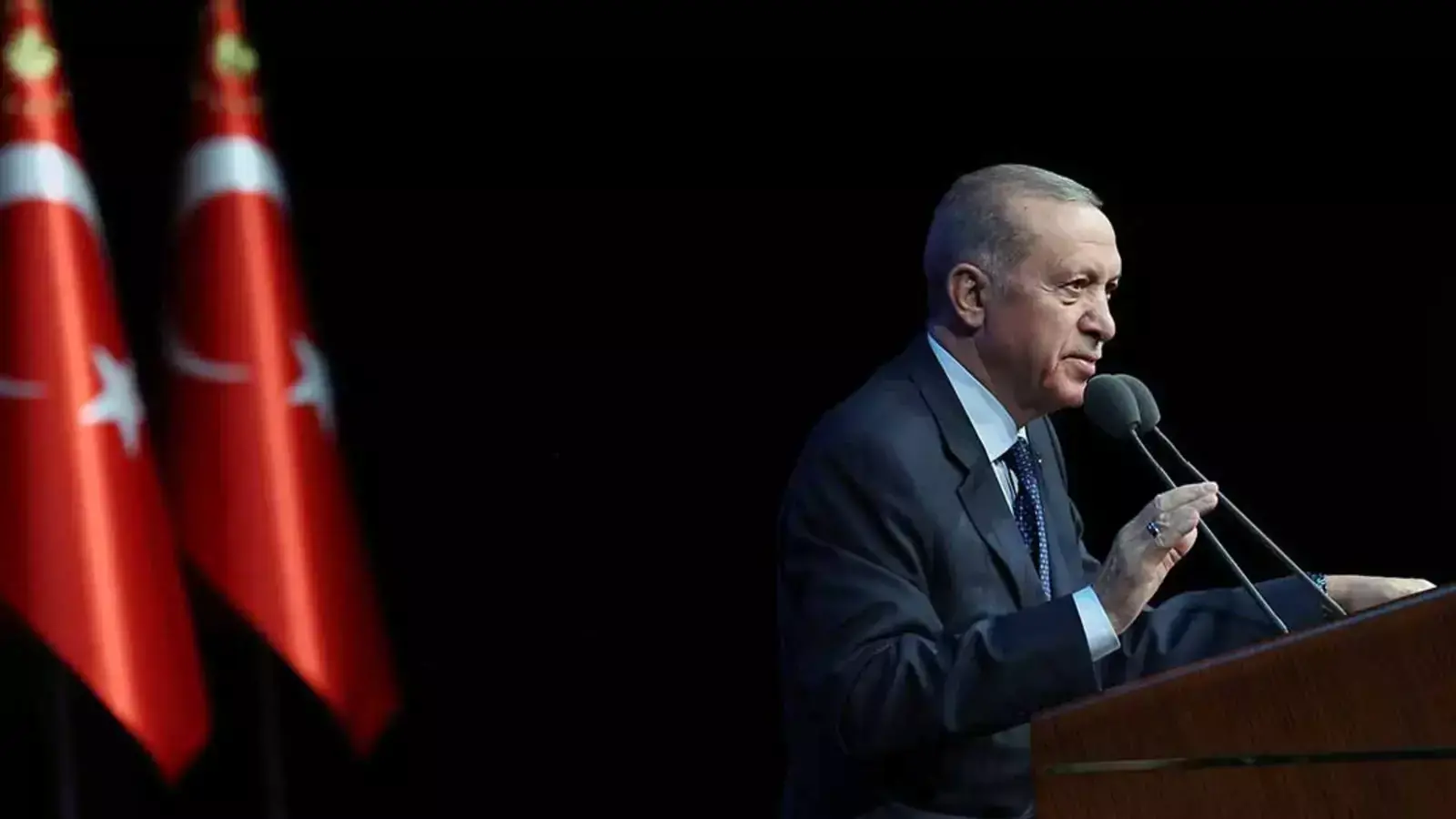
President Recep Tayyip Erdogan delivers remarks at a youth organization’s convention in Ankara, Turkey.
President Recep Tayyip Erdogan delivers remarks at a youth organization’s convention in Ankara, Turkey. Murat Kula/Anadolu/Getty Images

The timing and scope of the war between Israel and Hamas have put Turkey and its president, Recep Tayyip Erdogan, in a challenging situation.

At first, shocked by the violence perpetrated by Hamas, Erdogan reached out to his Israeli counterpart, Isaac Herzog. However, the strength of public support for Hamas in Turkey, the mobilization of the Israeli military, and the start of the Israeli aerial offensive in the Gaza Strip almost immediately made him shift his position. The tone of his criticism of Israel for its campaign in the Gaza Strip has progressively become more strident.

This has not prevented Erdogan from seeking to play a mediation role; he initiated several phone calls to regional leaders, UN Secretary-General António Guterres, and Russian President Vladimir Putin. Missing was U.S. President Joe Biden. Meanwhile, U.S. Secretary of State Antony Blinken launched a whirlwind tour of regional capitals as soon as the crisis erupted, seeking ways to prevent further deterioration. He appears to have deliberately sidestepped a visit to Ankara, preferring to confer with the Turkish foreign minister, Hakan Fidan, by telephone. The Biden-Erdogan relationship has been strained for some time; Biden, too, has limited his contacts with Erdogan and been unwilling to invite him, for instance, for a state visit to Washington.

Tiếp tục đọc “Turkey, the United States, and the Israel-Hamas War”

From Nazism to the Creation of Israel vs Palestine 1920: The Other Side of the Palestinian Story. Then what is Hamas?

In 1948, the State of Israel was created. For Jews around the world, it is the end of 2000 years of exile. For the 700,000 Palestinians present on these lands, this is the beginning of injustice.

Documentary

Palestine 1920: The Other Side of the Palestinian Story

“A land without a people, and a people without a land” is how the relationship between Palestine and the Jewish people was described by Christian writers in the 1800s. And the 20th-century history of the Middle East has largely been written through these eyes.

But this film from Al Jazeera Arabic looks at Palestine from a different angle. It hears from historians and witness accounts, and features archive documents that show Palestine as a thriving province of Greater Syria and the Ottoman Empire at the dawn of the 20th century. The evidence suggests that its cities had a developing trade and commercial sector, growing infrastructure, and embryonic culture that would enable it to meet the challenges of the decades ahead. However, the political ramifications of the Balfour Declaration, San Remo Conference and British Mandate set in motion a series of events that profoundly affected this vibrant, fledgeling society and led to the events of 1948 and beyond.

This film is the other side of the Palestinian story.

What is the armed Palestinian group Hamas?

Israel has declared war on the Palestinian armed group, Hamas. But where did the group come from, who supports it and what is it fighting for? Here’s what you need to know: