[TĐH: This is a very good economic lesson on monopoly. In this case, the monopoly in selling tickets of entertainment shows, and how the monopoly was formed.]
Good morning. One company controls a wide swath of the concert industry, and lawmakers say music fans are paying the price.
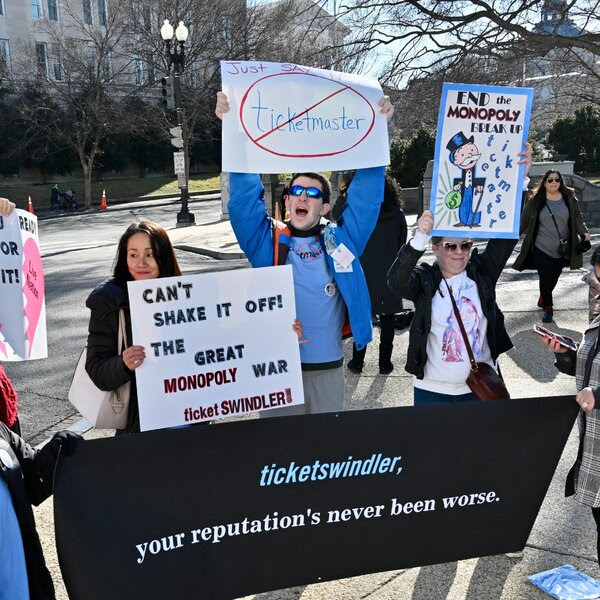
Protesters outside the Senate this past week.Kenny Holston/The New York Times
Ticketmaster has come under intense scrutiny since it botched the rollout of tickets to Taylor Swift’s tour late last year. Though the company has long been accused of anti-consumer practices, the backlash to the Swift debacle brought a new level of public attention. This week, the Senate held a hearing that explored whether Ticketmaster and its parent company, Live Nation Entertainment, have an unfair monopoly over the live music industry.
I spoke with Ben Sisario, who covers the music industry for The Times, about how Ticketmaster become so dominant.
Vietnam President Nguyen Xuan Phuc might be removed from his position. If online speculation is true, Phuc will become the first Vietnamese president to be ousted while still in office.
On the evening of 13 January 2023, Vietnamese President Nguyen Xuan Phuc was seen present at My Dinh Stadium in Hanoi cheering the Vietnamese national football team in the first leg of the Asean Football Federation Championship final against Thailand. Despite his cheerful appearance, Phuc is facing a critical turnaround in his political career. During a secret meeting on the same day, the Politburo of the Communist Party of Vietnam (CPV) quietly voted to oust him from his position as president.
Contrary to Russia’s plans, Europe has secured enough energy to be safe this winter. Thanks to the efforts of Europeans, we have cut our gas use by 20%, well above our target of 15% set in July. More about the #REPowerEU plan → http://europa.eu/!wbD6NW
Editor’s note: There will be no Daily Brief on Monday, January 16, for Martin Luther King Jr. Day.
Top of the Agenda
Japan’s Kishida Visits White House Amid Historic Military Buildup at Home
Japanese Prime Minister Kishida Fumio and U.S. President Joe Biden will meet today (WaPo) in Washington, with Biden expected to praise Japan’s plans to dramatically boost its defense spending. Their meeting is expected to focus on the war in Ukraine, Chinese military aggression, the North Korean nuclear threat, and boosting security cooperation. Ahead of the visit, U.S. National Security Council spokesperson John Kirby told Nikkei that Washington is willing to help Tokyo gain the ability to launch missile attacks on enemy territory. The two leaders are also expected to discuss U.S. export controls (Reuters) targeting China’s semiconductor sector. Tokyo supports the controls but has not matched them. Kishida’s visit caps off a weeklong tour of Western partner countries ahead of the Group of Seven (G7) summit that Japan will host in May.
Putin Replaces Russia’s Top General in Ukraine After Battlefield Setbacks
Russia’s highest-ranking military officer, General Valery Gerasimov, was promoted to lead the country’s forces (FT) in Ukraine, replacing General Sergey Surovikin. Since Surovikin was appointed three months ago (CBS), Russia has lost control of the southern town of Kherson and struggled to provide basic equipment to the hundreds of thousands of troops it started conscripting in September. Surovikin has also faced criticism for housing hundreds of troops in a building that was bombed by Ukraine. He will now serve as one of Gerasimov’s deputies. Meanwhile, tensions have reportedly flared between Russia’s military and its Wagner Group of mercenaries over which forces deserve credit for alleged territorial gains in the town of Soledar. An unnamed source told the Financial Times that Surovikin’s demotion could be linked to the Wagner Group’s apparent successes.
By Kentaro Furuya Capt. Kentaro Furuya (JCG) (k-furuya@grips.ac.jp) is an adjunct professor at the National Graduate Institute for Policy Studies (GRIPS) and professor at the Japan Coast Guard Academy.This PacNet was developed as a part of a workshop on potential cooperation among Quad coast guards to implement the FOIP vision organized by YCAPS. The papers were edited by John Bradford (RSIS) and Blake Herzinger (AEI). For the first in the series, click here.
Originally responsible primarily for maintaining good order and the safety of life at sea in domestic waters, the Japan Coast Guard (JCG) has expanded its commitment to international duties to cultivate external relationships and much-needed capacity building in neighboring states. While they began in the 1970s, these international activities have, in recent years, become essential functions in realizing Japan’s Free and Open Indo-Pacific (FOIP). The JCG’s broad spectrum of capabilities and engagements makes it indispensable across all elements of Tokyo’s broader regional strategy, and its deepening partnership with the United States Coast Guard (USCG) is amplifying its impact. Tiếp tục đọc “The Japan Coast Guard’s role in realizing a Free and Open Indo-Pacific”→
TOKYO—To get back some of the high-tech mojo that made it an economic powerhouse, Japan is launching an ambitious program to bring back cutting-edge semiconductor manufacturing, a field it ceded to Taiwan, South Korea, and China nearly 20 years ago. But will this new campaign at state-backed industrial policy succeed, and more importantly, is it even the right goal?
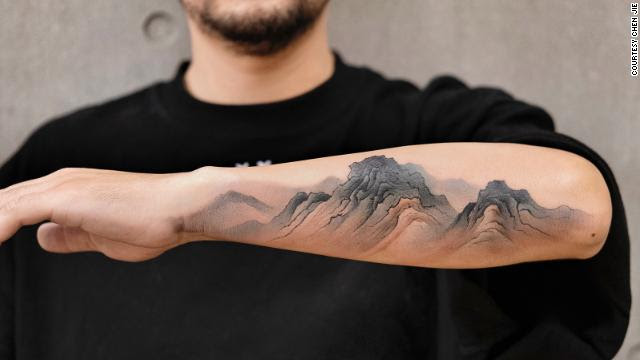
CNN “My behavior encroached on the physical and mental health of minors,” read a court-ordered apology issued by a tattoo artist in China’s Shaanxi province in September. “I am deeply aware of my mistakes,” he added.
The man, who had admitted giving tattoos to 43 minors, became one of the first people charged under a new age restriction law, which came into effect in June. But while many countries enforce similar rules banning young people from getting inked, Chinese state media coverage suggested that protecting minors was as much about ideology as medical welfare.
At the time, tabloid newspaper Global Times argued that tattoos are “driving minors away from establishing socialist core values,” as they can convey “harmful ideas” such as “feudal superstition,” “gang culture” and “overseas culture.”
An op-ed in Beijing Youth Daily meanwhile said that tattoo subculture “clashes” with the mainstream. The legislation, which bans people from even encouraging those aged under 18 to get tattoos, is just the latest move in an expanding crackdown on body art in China. Tiếp tục đọc “Inside China’s crackdown on tattoo culture”→
by the President of the European Council, the President of the European Commission, and the Secretary General of the North Atlantic Treaty Organization
The NATO-EU strategic partnership is founded on our shared values, our determination to tackle common challenges and our unequivocal commitment to promote and safeguard peace, freedom and prosperity in the Euro-Atlantic area.
Today, we are faced with the gravest threat to Euro-Atlantic security in decades. Russia’s brutal war on Ukraine violates international law and the principles of the UN Charter. It undermines European and global security and stability. Russia’s war has exacerbated a food and energy crisis affecting billions of people around the world.
We condemn in the strongest possible terms Russia’s aggression. Russia must immediately stop this war and withdraw from Ukraine. We express our full solidarity with Ukraine and reiterate our unwavering and continued support for its independence, sovereignty and territorial integrity within its internationally recognized borders. We fully support Ukraine’s inherent right to self-defence and to choose its own destiny
Authoritarian actors challenge our interests, values and democratic principles using multiple means – political, economic, technological and military.
We live in an era of growing strategic competition. China’s growing assertiveness and policies present challenges that we need to address.
Persistent conflict, fragility and instability in our European neighbourhood undermine our security and provide fertile ground for strategic competitors, as well as terrorist groups, to gain influence, destabilise societies and pose a threat to our security.
As underlined by both the NATO Strategic Concept and the EU Strategic Compass, this is a key juncture for Euro-Atlantic security and stability, more than ever demonstrating the importance of the transatlantic bond, calling for closer EU-NATO cooperation.
NATO remains the foundation of collective defence for its Allies and essential for Euro Atlantic security. We recognise the value of a stronger and more capable European defence that contributes positively to global and transatlantic security and is complementary to, and interoperable with NATO.
Our mutually reinforcing strategic partnership contributes to strengthening security in Europe and beyond. NATO and the EU play complementary, coherent and mutually reinforcing roles in supporting international peace and security. We will further mobilize the combined set of instruments at our disposal, be they political, economic or military, to pursue our common objectives to the benefit of our one billion citizens.
Building on the 2016 Warsaw Joint Declaration and the 2018 Brussels Joint Declaration, which significantly expanded the breadth and depth of our partnership established more than twenty years ago, we have achieved unprecedented progress across all areas of cooperation.
We have reached tangible results in countering hybrid and cyber threats, operational cooperation including maritime issues, military mobility, defence capabilities, defence industry and research, exercises, counter terrorism, and capacity-building of partners.
As the security threats and challenges we are confronted with are evolving in scope and magnitude, we will take our partnership to the next level on the basis of our long-standing cooperation. We will further strengthen our cooperation in existing areas, and expand and deepen our cooperation to address in particular the growing geostrategic competition, resilience issues, protection of critical infrastructures, emerging and disruptive technologies, space, the security implications of climate change, as well as foreign information manipulation and interference.
In signing this declaration we will take the NATO-EU partnership forward in close consultation and cooperation with all NATO Allies and EU Member States, in the spirit of full mutual openness and in compliance with the decision-making autonomy of our respective organisations and without prejudice to the specific character of the security and defence policy of any of our members. In this context, we view transparency as crucial. We encourage the fullest possible involvement of the NATO Allies that are not members of the EU in its initiatives. We encourage the fullest possible involvement of the EU members that are not part of the Alliance in its initiatives.
We will assess progress on a regular basis.
Signed at Brussels on 10 January 2023 in triplicate.
Charles Michel President of the European Council
Ursula von der Leyen President of the European Commission
Jens Stoltenberg Secretary General of the North Atlantic Treaty Organization
Bolsonaro Supporters Attack Government Buildings in Brazil
Brazilian police arrested at least three hundred people after thousands of supporters of former President Jair Bolsonaro stormed and vandalized (AP) Brazil’s Congress, Supreme Court, and presidential palace yesterday in scenes reminiscent of the January 6, 2021, attack on the U.S. Capitol. The rioters protested the results of last year’s presidential election, which Bolsonaro lost to left-wing former President Luiz Inácio Lula da Silva. Bolsonaro has for years pushed false claims about the credibility of Brazil’s election system, and many of his supporters say the 2022 election was stolen from him. Multiple world leaders condemned the events (NYT) and voiced support for Lula, who said there was “incompetence or bad faith” on behalf of police who allowed the events to unfold. Bolsonaro, believed to be in Florida, tweeted a condemnation (NYT) of the attack several hours after it began.
By David Santoro and Akhil Ramesh David Santoro (david@pacforum.org) is President and CEO of the Pacific Forum. Follow him on Twitter @DavidSantoro1 Akhil Ramesh (akhil@pacforum.org) is Senior Resident Fellow at Pacific Forum.
The relationship with India is “the most important for the United States in the 21st century,” said Kurt Campbell, the Biden administration’s National Security Council Coordinator for the Indo-Pacific, last month. President Biden made similar comments earlier in 2022, and the recently published US strategic reviews also talk about the importance of India. The US National Security Strategy, for instance, states that, “As India is the world’s largest democracy and a Major Defense Partner, the United States and India will work together, bilaterally and multilaterally, to support our shared vision for a free and open Indo-Pacific.”
Numerous reasons explain this enthusiasm for US-India rapprochement. Even though differences between the two countries are many (notably development level), similarities also abound. Both are big countries with a large and diverse population, both are democracies and both have vibrant civil societies and incredibly innovative communities, especially in technology. Tiếp tục đọc “Taking the US-India relationship to the next level”→
Ukrainian soldiers fire toward Russian positions in the Donbas region of eastern Ukraine.
By Comfort Ero, the president and CEO of the International Crisis Group, and Richard Atwood, executive vice president of the International Crisis Group.
Will he, or won’t he? This time last year, that was the question. Russian President Vladimir Putin had massed almost two hundred thousand troops on Ukraine’s borders. U.S. intelligence warned that Russia was preparing for all-out war. All the signs pointed to an assault, bar one: It seemed unthinkable.
True, Russia had attacked Ukraine in 2014, and in the spring of 2021 had staged a dress rehearsal for an invasion, building up forces on the frontier before sending them home. Putin seemed ever angrier at Kyiv’s refusal to bow to his will. He openly derided Ukrainian national identity and sovereignty. Still, it was shocking, when Russian forces did roll in, that a nuclear-armed power in 2022 would seek to conquer a neighbor in an act of unprovoked aggression.
Divided government is back! After two years of Democratic control of the presidency and both houses of Congress—just barely in the case of the Senate—the 118th Congress that opened yesterday puts Republicans in charge of the U.S. House of Representatives. A single party has controlled the White House and Congress only three times in the last three decades.
Nectar Gan, Jessie Yeungand Laura He
After a tumultuous end to a momentous and challenging year, China heads into 2023 with a great deal of uncertainty – and potentially a glimpse of light at the end of the pandemic tunnel.
The chaos unleashed by leader Xi Jinping’s abrupt and ill-prepared exit from zero-Covid is spilling over into the new year, as large swathes of the country face an unprecedented Covid wave.
But the haphazard reopening also offers a glimmer of hope for many: after three years of stifling Covid restrictions and self-imposed global isolation, life in China may finally return to normal as the nation joins the rest of the world in learning to live with the virus.
“We have now entered a new phase of Covid response where tough challenges remain,” Xi said in a nationally televised New Year’s Eve speech. “Everyone is holding on with great fortitude, and the light of hope is right in front of us. Let’s make an extra effort to pull through, as perseverance and solidarity mean victory.” Tiếp tục đọc “China – From the unwinding of zero-Covid to economic recovery: What to watch in 2023 “→
A former member of the US Congress from Maine, Tom Andrews is a Robina Senior Human Rights Fellow at Yale University Law School, an Associate of Harvard University’s Asia Center and has a Washington DC based consulting practice, Andrews Strategic Services. He has worked with the National Democratic Institute for International Affairs and parliamentarians, NGOs and political parties in several countries including Cambodia, Indonesia, Algeria, Croatia, Serbia, Ukraine and Yemen.
Andrews served as General Secretary of “The Nobel Peace Laureate Campaign for Aung San Suu Kyi and the People of Burma” in 2001 and was a consultant for the National Coalition Government of the Union of Burma and the Euro-Burma Network. He has run advocacy NGOs including Win Without War and United to End Genocide, led an education institute at the University of Maine and served in the Maine House of Representatives and the Maine Senate. He lives with his wife and son in Fairfax, Virginia outside of Washington DC.
The mandate of the Special Rapporteur on the situation of human rights in Myanmar was first established in 1992 under the Commission on Human Rights Resolution 58 and extended annually. Human Rights Resolution 25/26 adopted 15 April 2014 broadened the mandate to report on the progress in the electoral process and reform in the run-up to the 2015 election. Human Rights Resolution 31/24 adopted 24 March 2016 broadened the mandate to include identifying benchmarks for progress and priority areas for technical assistance and capacity-building.
_____________
In July 2022, the military junta of Myanmar executed four political prisoners, including a prominent pro – democracy activist and a former member of parliament.
These unconscionable acts are consistent with the junta’s unflinching embrace of violence against the people of Myanmar. In recent months, military forces have systematically bombed and burned villages and massacred innocent civilians, including 11 children in Sagaing Region who were shot and killed when junta forces attacked their school in September. The forces have killed thousands and displaced nearly 1 million people since the coup. Many of the more than 12,000 political prisoners have been tortured and an unknown number have died in custody.
In the midst of this darkness, however, civil society in Myanmar is a shining light and inspiration. Activists, human rights defenders, aid workers, community leaders, journalists, health – care professionals and educators are among those who are taking great personal risks to document atrocities, deliver humanitarian assistance and respond to the needs of displaced and traumatized communities. Human rights organizations, women’s associations, professional networks, trade unions and labour activists, and grass – roots groups are adopting strategies to remain safe and effective in a deadly environment. In many cases, individuals and organizations are operating with little international support and few opportunities to communicate with the outside world.
In the present report, the Special Rapporteur outlines the human rights and humanitarian catastrophe in Myanmar. He also describes the essential and aweinspiring work being done by Myanmar civil society in the most challenging of circumstances. He calls on the international community to view civil society in Myanmar as a vital partner in addressing the crisis in the country, working with grassroots networks to deliver aid and increasing financial and technical support to civil society organizations.
The fate of Myanmar depends on the activists, organizations and networks that have risen to defy military rule, defend human rights and prepare for a free and democratic future. They need and deserve a significant increase in support from the international community.
ISSUED BY:
Special Rapporteur on the situation of human rights in Myanmar