Functional Jurisdiction in the Law of the Sea

Functional Jurisdiction in the Law of the Sea – Download >>

It is a commonplace observation that the 1982 UN Convention on the Law of the Sea establishes a framework for the Law of the Sea that is based upontwo different concepts. One is a zonal analysis, which takes the juridicalzones into which the seas are divided and stipulates the basic rules applica- ble to each of them in turn. The other is a topical analysis, taking some of themain activities on the seas, such as fishing, marine research and pollution,and again setting out the basic rules for each.

The framework is, however,incomplete, and a great deal is left open, not only to be worked out in moredetailed treaties but also to be governed by more general principles of inter-national law. In this way the 1982 regime will continue to develop to meet new challenges and changed circumstances.

In this monograph Dr Gavouneli explores these issues and offers an expertinsight into the jurisdictional developments that are clearly discernable aquarter-century after the adoption of the Convention. Her keen analysismoves from fundamental principles governing jurisdiction in internationallaw to shrewd reflections on the significance of current developments suchas the Proliferation Security Initiative and questions of jurisdiction over theinternational seabed area. This thoughtful text will be of real interest to allwho have a concern with the directions in which the contemporary Law of the Sea is growing.

Vaughan Lowe
Oxford, August 2007

Functional Jurisdiction in the Law of the Sea – Download >>

Council on Foreign Relations: Daily news brief, Nov. 2, 2022

November 2, 2022
Top of the Agenda

Seoul Fires Back After Barrage of North Korean Missile Tests

North Korea fired a missile that crossed the Northern Limit Line, a maritime border with South Korea that Pyongyang does not recognize (CNN), for the first time since the 1950–53 Korean War. South Korea’s military called the launch “rare and intolerable” and responded by firing three missiles (Yonhap) into waters north of the line. North Korea’s missile was one of as many as twenty-three it test-fired into the seas off of South Korea’s east and west coasts today. The missile deployment was North Korea’s largest in a single day. The launches came after U.S.-South Korea military drills began on Monday. U.S. Defense Secretary Lloyd Austin is set to meet with his South Korean counterpart at the Pentagon tomorrow.  
Tiếp tục đọc “Council on Foreign Relations: Daily news brief, Nov. 2, 2022”

South Korean authorities say they had no guidelines for Halloween crowds, as families grieve 155 victims

Jessie Yeung
Sophie Jeong
Gawon Bae
Jake Kwon


By Jessie YeungSophie JeongGawon BaeJake Kwon and Mayumi Maruyama, CNN

Updated 12:29 PM EDT, Mon October 31, 2022

Seoul halloween south korea return alley ripley W&T intl hnk ovn vpx_00012611.png

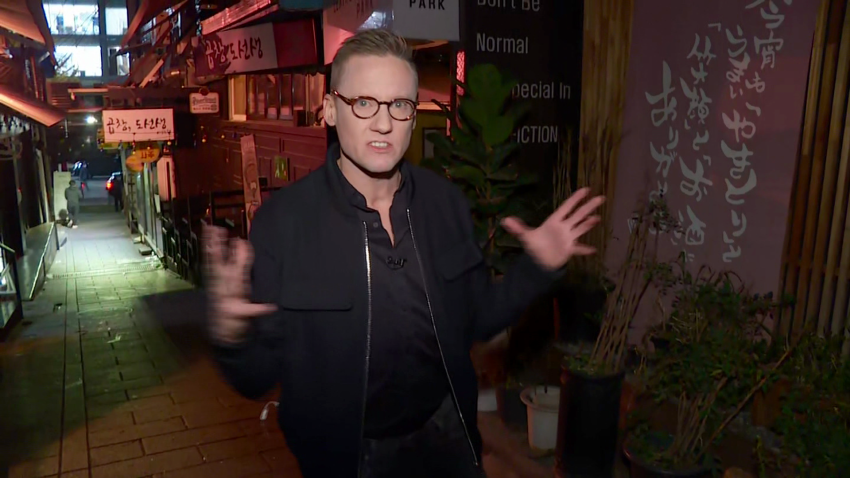
CNN reporter returns to Itaewon’s narrow alley one day after the Halloween disaster. See what’s it like

01:39 – Source: CNNSeoul, South KoreaCNN — 

South Korean authorities said Monday they had no guidelines to handle the huge crowds that gathered for Halloween festivities in Seoul, as families in the country and around the world mourn the 155 victims of Saturday night’s crowd crush.

Tiếp tục đọc “South Korean authorities say they had no guidelines for Halloween crowds, as families grieve 155 victims”

Anti-Xi protest spreads in China and worldwide as Chinese leader begins third term

By CNN Staff

Updated 11:20 PM EDT, Sat October 22, 2022

Anti-Xi posters on a notice board at a university campus in London.

CNN — 

Jolie’s nerves were running high as she walked into the campus of Goldsmiths, the University of London, last Friday morning. She’d planned to arrive early enough that the campus would be deserted, but her fellow students were already beginning to filter in to start their day.

In the hallway of an academic building, Jolie, who’d worn a face mask to obscure her identity, waited for the right moment to reach into her bag for the source of her nervousness – several pieces of A4-size paper she had printed out in the small hours of the night.

Finally, when she made sure none of the students – especially those who, like Jolie, come from China – were watching, she quickly pasted one of them on a notice board.

“Life not zero-Covid policy, freedom not martial-lawish lockdown, dignity not lies, reform not cultural revolution, votes not dictatorship, citizens not slaves,” it read, in English.

Tiếp tục đọc “Anti-Xi protest spreads in China and worldwide as Chinese leader begins third term”

Secretary-General’s remarks at the 45th Anniversary of Viet Nam’s Membership in the United Nations [as delivered]

21 October 2022 UN

Dear Mr President, Excellencies, Ladies and gentlemen,

Xin chào!

Thank you for your warm welcome.

It is an honour to be with all of you to mark Viet Nam’s 45th anniversary in the United Nations.

Today, we recognize more than a strong partnership – we celebrate a remarkable journey.

A story of transformation and hope written by the Vietnamese people.

Tiếp tục đọc “Secretary-General’s remarks at the 45th Anniversary of Viet Nam’s Membership in the United Nations [as delivered]”

Council on Foreign Relations – The World This Week October 21, 2022

The New Nuclear Era, Richard Haass

A Russian nuclear missile during the military parade in Moscow’s Red Square in 2020, marking the 75th anniversary of the end of World War II. Mikhail Svetlov/Getty ImagesThe world is on the cusp of a new era where nuclear weapons are likely to play a more prominent role. Read more on Project-Syndicate.org
Tiếp tục đọc “Council on Foreign Relations – The World This Week October 21, 2022”

Council on Foreign Relations – Daily news brief Oct. 21, 2022

Top of the Agenda

Truss’s Departure Kicks Off Another UK Leadership Contest

Lawmakers from the ruling Conservative Party in the United Kingdom (UK) will hold a preliminary vote (FT) on Monday to choose candidates to succeed Liz Truss, who announced her resignation yesterday. Party members will then choose from the final two candidates in an online poll next Friday. The victor will become the UK’s fourth prime minister in four years and take the helm of a country rattled by inflation and market turmoil under Truss’s six week tenure. Ex–finance minister Rishi Sunak, who opposed Truss’s controversial tax cuts, is expected to stand for the role. Former Home Secretary Suella Braverman, an immigration hard-liner, and former Prime Minister Boris Johnson could also join (The Economist) the race. Markets have calmed after Truss’s second finance minister reversed her budgetary plans, but the Conservative Party still trails the opposition Labour Party by around 30 percent in opinion polls.
Tiếp tục đọc “Council on Foreign Relations – Daily news brief Oct. 21, 2022”

The right of privacy in the digital age

Human Rights Council
Fifty-first session
12 September–7 October 2022
Agenda items 2 and 3
Annual report of the United Nations
High Commissioner for Human Rights and
reports of the Office of the High Commissioner
and the Secretary-General


Promotion and protection of all human rights, civil,
political, economic, social and cultural rights,
including the right to development


The right to privacy in the digital age
Report of the Office of the United Nations High Commissioner for
Human Rights*

Download full report >>

Summary


The present report, submitted pursuant to Human Rights Council resolution 48/4,
discusses recent trends and challenges concerning the right to privacy. The report focuses,
in particular, on: (a) the abuse of intrusive hacking tools; (b) the key role of encryption in
ensuring the enjoyment of the right to privacy and other rights; and (c) wide-spread
monitoring of public spaces. It highlights the risk of creating systems of pervasive
surveillance and control that may undermine the development of vibrant and rightsrespecting societies.

I. Introduction

II. Surveillance of personal devices and communications

A. Hacking

B. Restriction on encryption

III. Surveillance of the public

A. Surveillance of public places

B. Online monitoring

C. Human rights impact

D. Human rights requirements

IV. Conclusion and recommendations

Download full report >>

2022 Survey of Public Opinion on US Foreign Policy

October 20, 2022 The Chicago Council on Global Affairs

RESEARCHPUBLIC OPINION SURVEY  BY DINA SMELTZ , IVO H. DAALDER , KARL FRIEDHOFF , CRAIG KAFURA , AND EMILY SULLIVAN

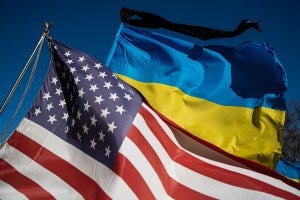
American and Ukrainian flags fly side by side

Download Report (PDF)

On some of the most significant issues of the day, including how the United States should respond to Russia’s invasion of Ukraine, Americans across party lines are in agreement, albeit often for different reasons.

Tiếp tục đọc “2022 Survey of Public Opinion on US Foreign Policy”

China’s 20th Party Congress Report: Doubling Down in the Face of External Threats

CSIS, October 19, 2022

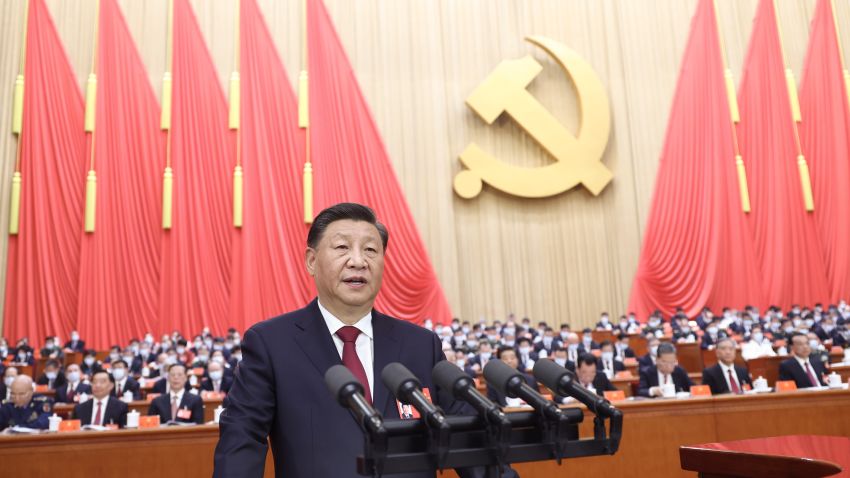
President Xi Jinping loomed large over the opening of the Chinese Communist Party’s 20th National Congress on October 16, 2022. He is all but guaranteed to emerge from the party congress with a history-making third five-year term, and he is widely expected to tighten his hold over the party by placing political allies in key positions.

Xi kicked off the party gathering with a landmark speech that stretched for nearly two hours. His address, an abridged version of the full party congress report, focused heavily on domestic issues but also provided a useful glimpse into how Xi and the party leadership view the world and China’s place in it. Xi’s address (and the full report) struck a different tone from the last one Xi delivered at the 19th Party Congress in 2017. While Xi still voiced confidence that China’s power and prospects are on the rise, he also doled out stark warnings about the growing threats and challenges that China faces.

Tiếp tục đọc “China’s 20th Party Congress Report: Doubling Down in the Face of External Threats”

Europe’s inflation crisis is different from America’s

October 19, 2022, By German Lopez. The New York Times – Good Morning

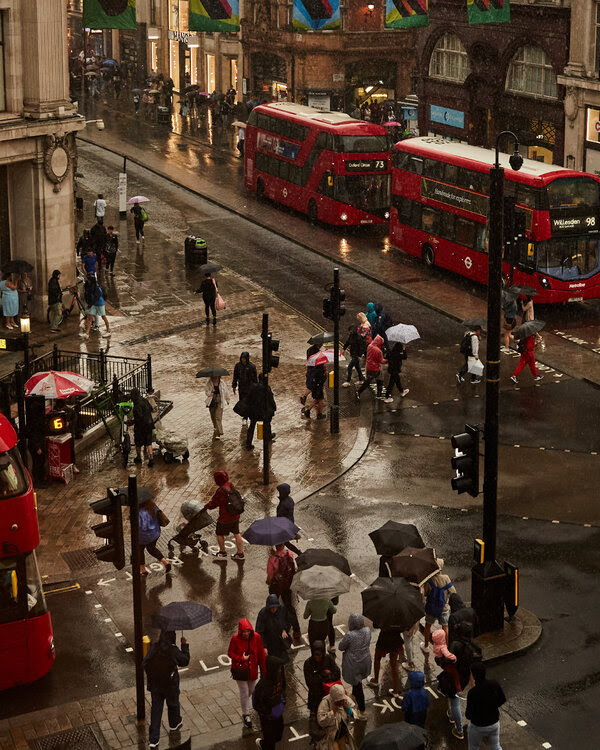
Oxford Circus in London this year.Alice Zoo for The New York Times
Global costs
Political and economic crises typically have multiple causes. But many right now are driven by one main factor: the rising cost of living.
In Britain, Prime Minister Liz Truss is facing calls to resign after just six weeks in office over a now-abandoned tax cut plan that experts warned would worsen inflation, if not wreak economic havoc. Europe is bracing for skyrocketing energy costs this winter. In the U.S., the Federal Reserve is considering more aggressive steps to bring down price increases, but its moves could also cause a recession, as The Times reported yesterday.
Tiếp tục đọc “Europe’s inflation crisis is different from America’s”

Addressing Putin’s Nuclear Threat: Thinking Like the Cold War KGB Officer That He Was

by Douglas London October 18, 2022 justsecurity.org

The powerful explosion that crippled Vladimir Putin’s showcase bridge over the Kerch Strait linking Russia and Crimea increased pressure on the cornered Kremlin potentate to do something shocking, as he loses control on the battlefield and inside his royal court. But will he stop at the intensified missile bombardments that are hitting apartments and playgrounds in Kyiv and other civilian infrastructure across Ukraine?

Tiếp tục đọc “Addressing Putin’s Nuclear Threat: Thinking Like the Cold War KGB Officer That He Was”

Marjorie Taylor Greene’s success demonstrates Trumpism’s hold over the Republican Party

October 17, 2022 New York Times newsletter
By German Lopez

Marjorie Taylor Greene in Michigan this month.Brittany Greeson for The New York Times
A political revival
In February 2021, Representative Marjorie Taylor Greene of Georgia was dealt what would typically be considered a knockout blow in Washington politics: She lost her seats on House committees, where Congress does much of its work, because she had supported the QAnon conspiracy theory and spread other dangerous misinformation on social media.
Tiếp tục đọc “Marjorie Taylor Greene’s success demonstrates Trumpism’s hold over the Republican Party”

‘Walled-in’ China under Xi Jinping poses long-term global challenges

Steven Jiang, Beijing Bureau Chief   ‘Walled-in’ China under Xi Jinping poses long-term global challenges     ----------
Analysis by Steven Jiang, Beijing Bureau Chief, CNN
Updated 4:54 AM EDT, Mon October 17, 2022

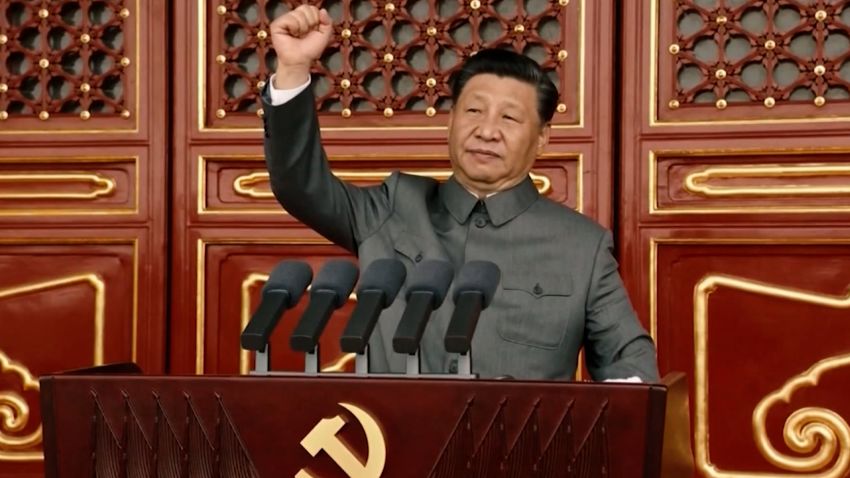
Xi Jinping delivers a report to the 20th National Congress of the Communist Party of China (CPC) on behalf of the 19th CPC Central Committee at the Great Hall of the People in Beijing, capital of China, Oct. 16, 2022. The 20th CPC National Congress opened on Sunday.

Editor’s Note: A version of this story appeared in CNN’s Meanwhile in China newsletter, a three-times-a-week update exploring what you need to know about the country’s rise and how it impacts the world. Sign up here.

BeijingCNN — 

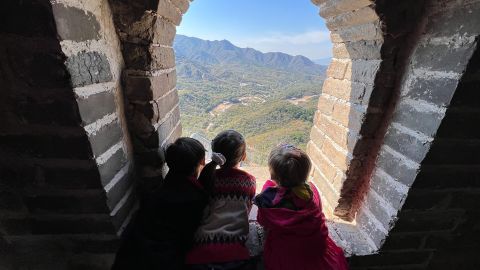
During China’s National Day holiday in early October, several expatriate friends and I took our young children – who are of mixed races and tend to stand out in a Chinese crowd – to the Great Wall on the outskirts of Beijing.

As we climbed a restored but almost deserted section of the ancient landmark, a few local families on their way down walked past us. Noticing our kids, one of their children exclaimed: “Wow foreigners! With Covid? Let’s get away from them…” The adults remained quiet as the group quickened their paces.

That moment has lingered on my mind. It feels like a snapshot that illustrates how China has changed since its strongman leader Xi Jinping took power a decade ago – it’s become an increasingly walled-in nation physically and psychologically – and such transformation will have long-term global implications.

Understanding the big picture is timely as Xi is poised to break convention to assume a third term as the head of the Chinese Communist Party – the real source of his power instead of the ceremonial presidency – at the ruling party’s twice-a-decade national congress, which opened in Beijing on Sunday.


The view of the Great Wall of China on October 7, 2022.
Steven Jiang/CNN

The Great Wall, a top tourist attraction that normally draws throngs of visitors during holidays, stood nearly empty when we went thanks to Xi’s insistence – three years into the global pandemic – on a policy of zero tolerance for Covid infections while the rest of the world has mostly moved on and reopened.

China’s borders have remained shut for most international travelers since March 2020, while many foreigners who once called the country home have chosen to leave.
With the highly contagious Omicron variant raging through parts of the country, authorities had discouraged domestic travel ahead of National Day holiday. They are also sticking to a playbook of strict quarantine, incessant mass testing and invasive contact tracing – often locking down entire cities of millions over a handful of cases.
Unsurprisingly, holiday travel plummeted during the so-called “Golden Week” along with tourism spending, which fell to less than half of that in 2019, the last “normal” year.

And it’s not just one industry: Pessimism blankets other sectors, from automobile to real estate, as the world’s second-largest economy falters.


Children visit the Great Wall of China on October 6, 2022.
Steven Jiang/CNN

Xi’s biggest challenge

The Chinese economic slowdown poses a massive political challenge for Xi, whose party’s legitimacy in the past few decades has relied on rapid growth and rising incomes for 1.4 billion people. It’s also a harsh reality check for the international community: the world’s longtime growth engine is sputtering, just as the prospect of a global recession emerges.

But Xi’s costly “zero-Covid” intransigence is a natural outcome of the unprecedented amount of power he has amassed. For many Chinese officials, this policy is less about science and more about political loyalty to the country’s most powerful leader in decades.

Online videos abound of local health workers swabbing fruits, animals and even shoes for Covid testing despite the absence of sound scientific basis. China’s only Covid-related deaths in September were 27 people who were killed when their bus crashed on its way to a quarantine facility. Still, officials nationwide have doubled down on enforcing draconian rules, especially ahead of the party congress, helped by the world’s most sophisticated surveillance technologies.

China had boasted more security cameras than any other country even before Covid. Now, in the age of smartphones, mandatory apps allow the government to check people’s Covid status and track their movement in real time. Authorities can easily confine someone to their home by remotely switching the health app to code red – and they did just that on several occasions to stop potential protesters from taking to the streets.

Whether physical lockdowns or digital manipulation, these measures born out of “zero-Covid” have proven such effective means of control in a system obsessed with social stability that many worry Xi and his underlings will never ditch the policy.
A series of recent articles published by the party’s mouthpieces had reinforced such concern by stressing the policy’s “correctness” and “sustainability,” even before Xi hailed “zero-Covid” as a resounding success story in his two-hour speech Sunday. And state media fills its coverage with depictions of the “grim reality” in foreign countries where leaders supposedly turn a blind eye to mass fatalities and suffering caused by Covid – in contrast to China’s apparent triumph in saving lives with “minimal overall cost.”

For years, Xi’s cyber police have been fortifying the country’s so-called “Great Firewall” – perhaps the world’s most extensive internet filtering and censorship system that blocks and deletes anything deemed “harmful” by the party. Now supported by artificial intelligence, censors quickly scrub clean any posts seen as contradicting the party line – including on Covid.

This potent mix of propaganda and control under Xi appears to have had its desired effect on a large segment of Chinese society, creating a buffer for the leadership by convincing enough people of the superiority of China’s system even as millions of their fellow countrymen grow resentful of “zero-Covid.” But this approach, combined with prolonged border closure and escalating geopolitical tensions, also provides fertile ground for xenophobia.

The local child’s remarks on the Great Wall reflected that. But the true danger of the “blame the foreigners” sentiment comes when adults in powerful positions take advantage of it in the face of mounting pressure on the domestic front.
screengrab xi speech 2021

Here’s Xi Jinping’s vision to make China great again
03:04 – Source: CNN

Make China great again?

Since his ascent to the top in 2012, Xi’s ruling philosophy has become increasingly clear: Only he can make China great again by restoring the party’s – thus his – omnipresence and dominance, as well as the country’s rightful place on the global stage.

With China’s increasing economic and military might, coexistence with the West has given way to confrontation with the United States and its allies. Gone are the days of “hiding your strength and biding your time” – Chinese diplomats under Xi are proud warriors training fire on anyone who dares to question their government.

Underpinned by rising nationalism, China has started flexing military muscle beyond its shores. Tensions over Taiwan poses a real threat of war in Asia, as few doubt that “reunification” with the self-governed democratic island – long claimed by the Communist leadership despite having never ruled it – would be seen as the crown jewel of Xi’s legacy.

That outward power projection goes hand in hand with China’s sense of besiegement in a US-led world order, which Xi has made no secret of trying to reshape along with other autocrats like Russian President Vladimir Putin. Until that happens, though, the Chinese strongman’s instinct and demand for total control at home seem to have meant the erection of ever-higher barriers – in the real world and cyberspace – to keep out pesky outsiders, the perceived source of dangerous viruses and ideas.

A history paper released recently by a government-run research institute has gone viral as it, like Xi, upended a long-held consensus. Instead of denouncing the isolationist policy adopted by China’s last two imperial dynasties as a cause of their backward turn and eventual collapse, the authors defended its necessity to protect national sovereignty and security when faced with Western invaders.

The emperors of those dynasties, who also rebuilt parts of the Great Wall, failed to reverse their country’s decline back then. But the tools at their disposal were no match to the high-tech ones in the hands of China’s current ruler. Xi seems confident that his “walls” – among other things – will help him realize his oft-cited ultimate goal: the great rejuvenation of the Chinese nation.

Whether or not he succeeds, the world will feel the impact for years to come.

Around the Halls: Assessing the 2022 National Security Strategy

Brookings Institute

Shadi HamidDaniel S. HamiltonRyan HassBruce JonesPatricia M. KimSuzanne MaloneyAmy J. NelsonMichael E. O’HanlonNatan SachsBruce RiedelMelanie W. SissonMireya SolísConstanze Stelzenmüller, and Andrew Yeo Friday, October 14, 2022

ORDER FROM CHAOS

On October 12, 2022, U.S. President Joe Biden’s administration released the 2022 National Security Strategy (NSS). Brookings experts reflect on the document and what it reveals about the United States’ security trajectory.

SHADI HAMID (@shadihamid)
Senior Fellow, Center for Middle East Policy


In the past, I have been critical of the administration’s tendency to instrumentalize democracy by suggesting that its strength and value hinges on its ability to produce “good” outcomes. As I argue in “The Problem of Democracy“, this way of thinking about the democratic idea can easily lead to incoherence. Policymakers have little choice but to be incoherent, some of the time; the world is complicated. Still, identifying these tensions is worthwhile, in anticipation of when they might cause problems for U.S. foreign policy. In this case, they almost certainly will, because they already have.

Tiếp tục đọc “Around the Halls: Assessing the 2022 National Security Strategy”