What happens when you say “Hello” to ChatGPT?

The Hidden Behemoth Behind Every AI Answer

Billions of daily queries are reshaping energy and infrastructure

IEEE.org

Such a simple query might seem trivial, but making it possible across billions of sessions requires immense scale. While OpenAI reveals little information about its operations, we’ve used the scraps we do have to estimate the impact of ChatGPT—and of the generative AI industry in general.

This article is part of The Scale Issue.

OpenAI’s actions also provide hints. As part of the United States’ Stargate Project, OpenAI will collaborate with other AI titans to build the largest data centers yet. And AI companies expect to need dozens of “Stargate-class” data centers to meet user demand.

ChatGPT uses 8.5 Wh/day per user in 2025, equal to running a 10W LED bulb for 1 hour.

Estimates of ChatGPT’s per-query energy consumption vary wildly. We used the figure of 0.34 watt-hours that OpenAI’s Sam Altman stated in a blog post without supporting evidence. It’s worth noting that some researchers say the smartest models can consume over 20 Wh for a complex query. We derived the number of queries per day from OpenAI’s usage statistics below. illustrations: Optics Lab

ChatGPT uses 850 MWh daily, equaling 14,000 EV charges for 2.5 billion global queries.

OpenAI says ChatGPT has 700 million weekly users and serves more than 2.5 billion queries per day. If an average query uses 0.34 Wh, that’s 850 megawatt-hours; enough to charge thousands of electric vehicles every day.

ChatGPT's 912B queries yearly need 310 GWh, equal to powering 29,000 US homes.

2.5 billion queries per day adds up to nearly 1 trillion queries each year—and ChatGPT could easily exceed that in 2025 if its user base continues to grow. One year’s energy consumption is roughly equivalent to powering 29,000 U.S homes for a year, nearly as many as in Jonesboro, Ark.

AI queries need 15 TWh/year, equal to two nuclear reactors\u2019 output.

Though massive, ChatGPT is just a slice of generative AI. Many companies use OpenAI models through the API, and competitors like Google’s Gemini and Anthropic’s Claude are growing. A report from Schneider Electric Sustainability Research Institute puts the overall power draw at 15 terawatt-hours. Using the report’s per-query energy consumption figure of 2.9 Wh, we arrive at 5.1 trillion queries per year.

Generative AI queries projected to reach 120 trillion annually by 2030.

AI optimists expect the average queries per day to jump dramatically in the next five years. Based on a Schneider Electric estimate of overall energy use in 2030, the world could then see as many as 329 billion prompts per day—that’s about 38 queries per day per person alive on planet Earth. (That’s assuming a global population of 8.6 billion in 2030, which is the latest estimate from the United Nations.) As unrealistic as that may sound, it’s made plausible by plans to build AI agents that work independently and interact with other AI agents.

Diagram of 38 Stargate-class data centers with racks of GPUs and construction needed.

The Schneider Electric report estimates that all generative AI queries consume 15 TWh in 2025 and will use 347 TWh by 2030; that leaves 332 TWh of energy—and compute power—that will need to come online to support AI growth. That implies the construction of dozens of data centers along the lines of the Stargate Project, which plans to build the first ever 1-gigawatt facilities. Each of these facilities will theoretically consume 8.76 TWh per year—so 38 of these new campuses will account for the 332 TWh of new energy required.

Graphic: 347 TWh requires 44 nuclear reactors with icons of cooling towers.

While estimates for AI energy use in 2030 vary, most predict a dramatic jump in consumption. The gain in energy consumption will be driven mostly by AI inference (the power used when interacting with a model) instead of AI training. This number could be much lower or much higher than the Schneider Electric estimate used here, depending on the success of AI agents that can work together—and consume energy—independent of human input.

The European Union is planning new legislation aimed at curbing the worst harms associated with artificial intelligence.

technologyreview.com

By Melissa Heikkilä

May 13, 2022

Europe's AI Act concept

MS TECH | NGA

It’s a Wild West out there for artificial intelligence. AI applications are increasingly used to make important decisions about humans’ lives with little to no oversight or accountability. This can have devastating consequences: wrongful arrests, incorrect grades for students, and even financial ruin. Women, marginalized groups, and people of color often bear the brunt of AI’s propensity for error and overreach. 

The European Union thinks it has a solution: the mother of all AI laws, called the AI Act. It is the first law that aims to curb these harms by regulating the whole sector. If the EU succeeds, it could set a new global standard for AI oversight around the world.

But the world of EU legislation can be complicated and opaque. Here’s a quick guide to everything you need to know about the EU’s AI Act. The bill is currently being amended by members of the European Parliament and EU countries. 

What’s the big deal?

The AI Act is hugely ambitious. It would require extra checks for “high risk” uses of AI that have the most potential to harm people. This could include systems used for grading exams, recruiting employees, or helping judges make decisions about law and justice. The first draft of the bill also includes bans on uses of AI deemed “unacceptable,” such as scoring people on the basis of their perceived trustworthiness. 

Tiếp tục đọc “The European Union is planning new legislation aimed at curbing the worst harms associated with artificial intelligence.”

Big Tech’s attention economy can be reformed. Here’s how.

The business model is doing irreparable harm to society. But there is an alternative, and we don’t need to destroy the tech giants to get there.

by Tristan Harrisarchive page

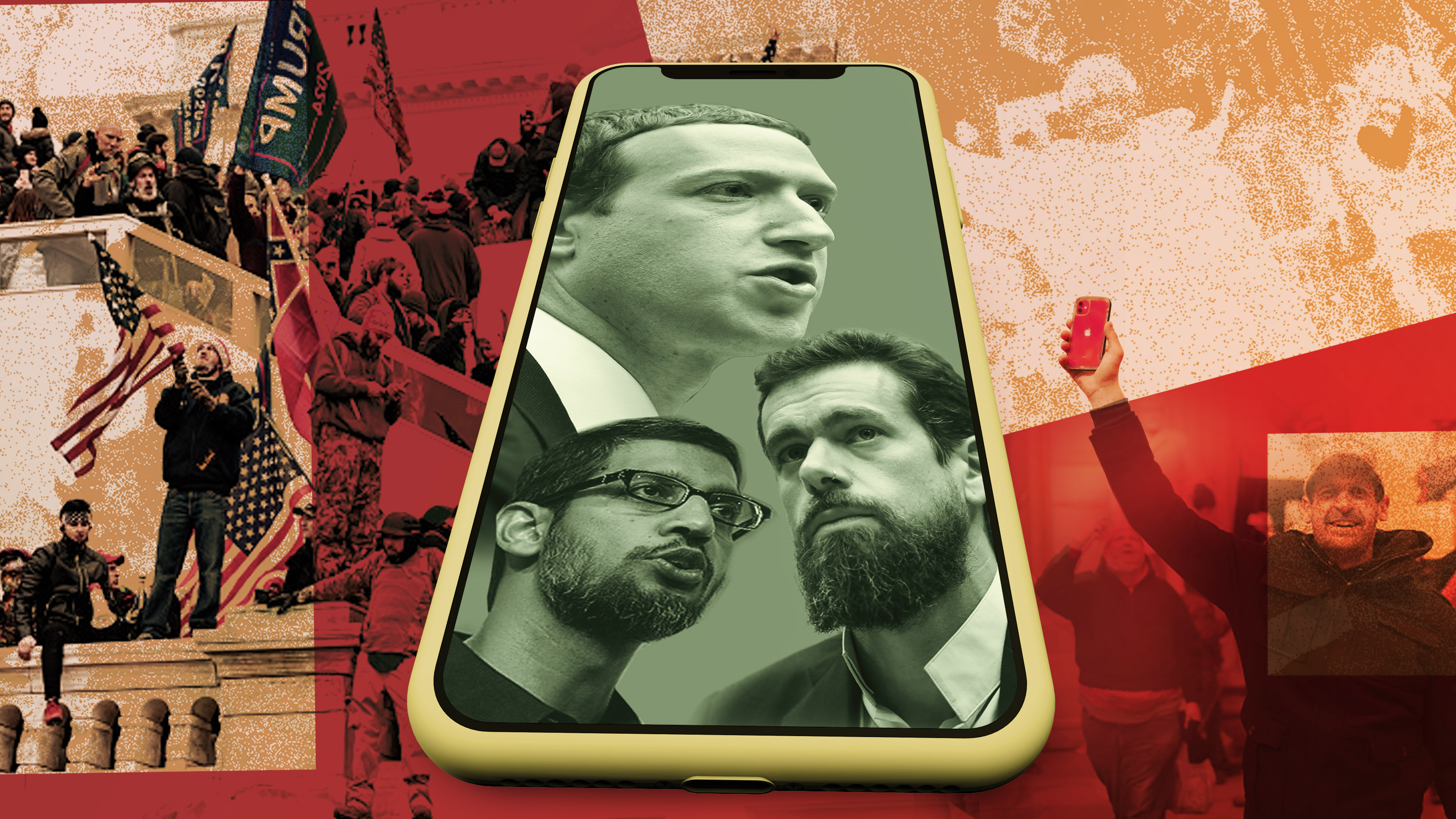
technologyreview – January 10, 2021attention economy illoMS TECH | GETTY

This week a violent mob mounted the biggest attack on the Capitol, the seat of American democracy, in more than 200 years, driven by the false belief that the presidential election had been stolen. The chief author of that claim was President Donald Trump, but the mob’s readiness to believe it was in large part a product of the attention economy that modern technology has created.

News feeds on Facebook or Twitter operate on a business model of commodifying the attention of billions of people per day, sorting tweets, posts, and groups to determine which get the most engagement (clicks, views, and shares)—what gets the strongest emotional reactions. These commodifying attention platforms have warped the collective psyche. They have led to narrower and crazier views of the world.

Tiếp tục đọc “Big Tech’s attention economy can be reformed. Here’s how.”

Deepfakes đe dọa doanh nghiệp

By Nguyễn Vũ 3/8/2019, 06:36

TBKTSG – Lâu nay khi nói đến deepfakes, tức kỹ thuật dùng trí tuệ nhân tạo và học máy để làm ra các video giả, người ta chỉ nghĩ đến loại video giả các chính trị gia nói chuyện trên trời dưới đất hay loại video các nhân vật nổi tiếng như David Beckham kể chuyện tiếu lâm bằng tiếng Việt. Thế nhưng, vừa có những cảnh báo bọn lừa đảo dùng công nghệ này để giả danh chủ doanh nghiệp đánh lừa nhân viên để chiếm đoạt tiền bạc. Tiếp tục đọc “Deepfakes đe dọa doanh nghiệp”

Better access to information means better chances to thrive

VNN – BY Khoa Thư – July 19, 2019 – 09:00

Ethnic minority women from Trang Village listen to the bulletin during their VSLA meeting. — VNS Photo Khoa Thư

HÀ NỘI — Meticulously wrapping a white linen scarf around her head, adjusting a silver necklace, Lý Thị Mai made the final touches before joining her friends. Tiếp tục đọc “Better access to information means better chances to thrive”

Bộ trưởng Công an: ‘Chặn Internet thì ta không chơi được với ai’

Thượng tướng Tô Lâm nói dòng chảy thông tin giống như hệ tuần hoàn của cơ thể con người, “phải làm sao để không bị nghẽn mạch”.

VNexpress_Chiều 13/11, Quốc hội thảo luận ở tổ về dự án Luật An ninh mạng. Thượng tướng Tô Lâm – Bộ trưởng Công an, cho biết Bộ được phân công chủ trì soạn thảo dự luật này và đã rất thận trọng trong thực hiện, vì đây là nội dung liên quan đến quyền tự do, dân chủ của nhân dân.

“Đây cũng là vấn đề rất khó, không chỉ Việt Nam mà với thế giới”, Bộ trưởng nói.

Tiếp tục đọc “Bộ trưởng Công an: ‘Chặn Internet thì ta không chơi được với ai’”

The smartphone is eventually going to die, and Apple, Google, Microsoft, and Facebook are racing to kill it

Industry 4.0 poses great challenges to ASEAN, including Vietnam

Tuoi Tre News

Updated : 06/11/2017 15:14 GMT + 7

Vu Khoan, former Deputy Prime Minister of Vietnam, speaks at the international conference on ‘geo-political transition in the Asia-Pacific and the half-century road of ASEAN’ in Hanoi, June 9, 2017.

The Fourth Industrial Revolution, or Industry 4.0, was named one of the biggest challenges facing ASEAN at a conference in Hanoi on Friday to review the association’s prospects.

ASEAN, or the Association of Southeast Asian Nations, is a ten-country politico-economic bloc whose members include Brunei, Cambodia, Indonesia, Laos, Malaysia, Myanmar, the Philippines, Singapore, Thailand, and Vietnam. Tiếp tục đọc “Industry 4.0 poses great challenges to ASEAN, including Vietnam”