While attention has been on the war in Gaza, there’s been a rise in violence against Palestinians in the occupied West Bank.#AJStartHere with Sandra Gathmann explains what’s happening.
00:53 – What is the West Bank? 01:25 – How control of the West Bank is divided between the Palestinian Authority and Israel 02:10 – How Israel restricts life for Palestinians in the West Bank 04:34 – Israeli army raids in the West Bank 06:40 – Israeli settlers in the West Bank 07:04 – Settler attacks on Palestinians 08:30 – How Palestinians have been displaced because of settler violence 09:12 – How the Israeli government supports settlers 10:07 – President Biden’s response to the settler attacks
This episode features: Nour Odeh – Political commentator & analyst Charles Stratford – Al Jazeera correspondent Hoda Abdel-Hamid – Al Jazeera correspondent Nida Ibrahim – Al Jazeera correspondent
This Gazan doctor won't let himself feel hate – despite losing 25 members of his family in an Israeli airstrike last week, and the deaths of his daughters 14 years ago. pic.twitter.com/QLbVZOtcik
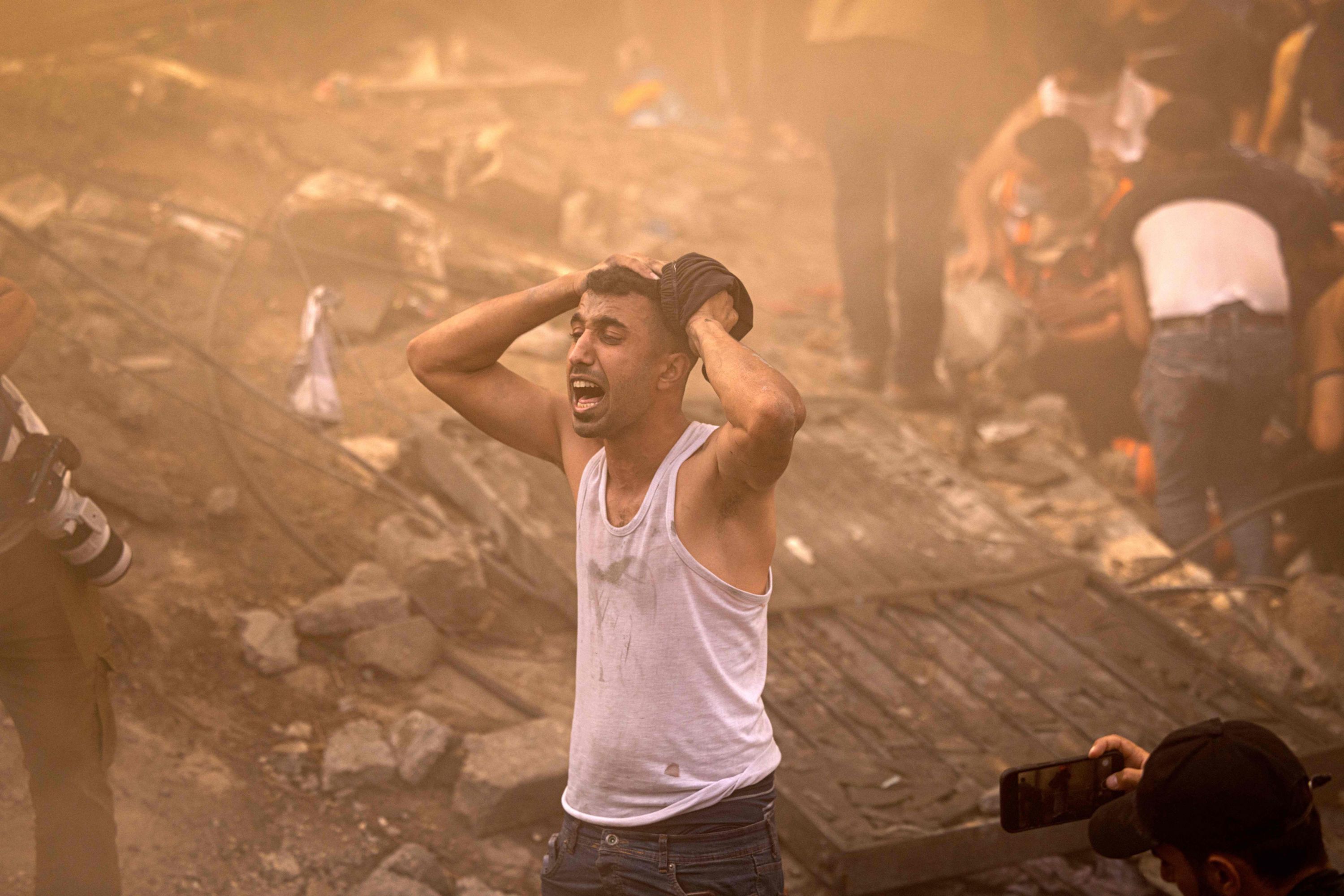
A Palestinian man reacts as others check the rubble of a building in Khan Younis, Gaza, on November 6. Mahmud Hams/AFP/Getty Images
In pictures: Israel at war with Hamas
Updated 1:39 AM EST, Tue November 7, 2023
One month ago, the Palestinian militant group Hamas launched a brutal assault on Israel, killing more than 1,400 people and kidnapping more than 240, according to Israeli authorities. It was the deadliest terror attack in the country’s history.
Israel’s retaliation has been lethal, with an air and ground campaign on the densely populated enclave of Gaza, which Hamas has controlled since 2007. Israeli Prime Minister Benjamin Netanyahu said his country would take “mighty vengeance” and was readying for “a long and difficult war.”
The siege of Gaza has killed more than 10,000 people, according to the Hamas-controlled health ministry there. Gaza’s population is also gripped by humanitarian crisis after Israel cut off access to food, water and electricity. Only a “trickle” of aid has been allowed to enter the isolated territory, according to the United Nations. Residents are grappling with severe shortages, and power is running out as fuel dwindles.
Editor’s note: This gallery contains graphic images. Viewer discretion is advised.
Queen Rania Al Abdullah of Jordan has called for a ceasefire in Israel’s war against Hamas, saying that supporting the protection of Palestinian lives does not equal being antisemitic or pro-terrorism.
“Let me be very, very clear. Being pro-Palestinian is not being antisemitic, being pro-Palestinian does not mean you’re pro-Hamas or pro-terrorism,” Rania told CNN’s Becky Anderson on Sunday.
“What we’ve seen in recent years is the charge of antisemitism being weaponized in order to silence any criticism of Israel,” she said.
“I want to absolutely and wholeheartedly condemn antisemitism and Islamophobia…but I also want to remind everyone that Israel does not represent all the Jewish people around the world. Israel is a state and is alone is responsible for its own crimes.”
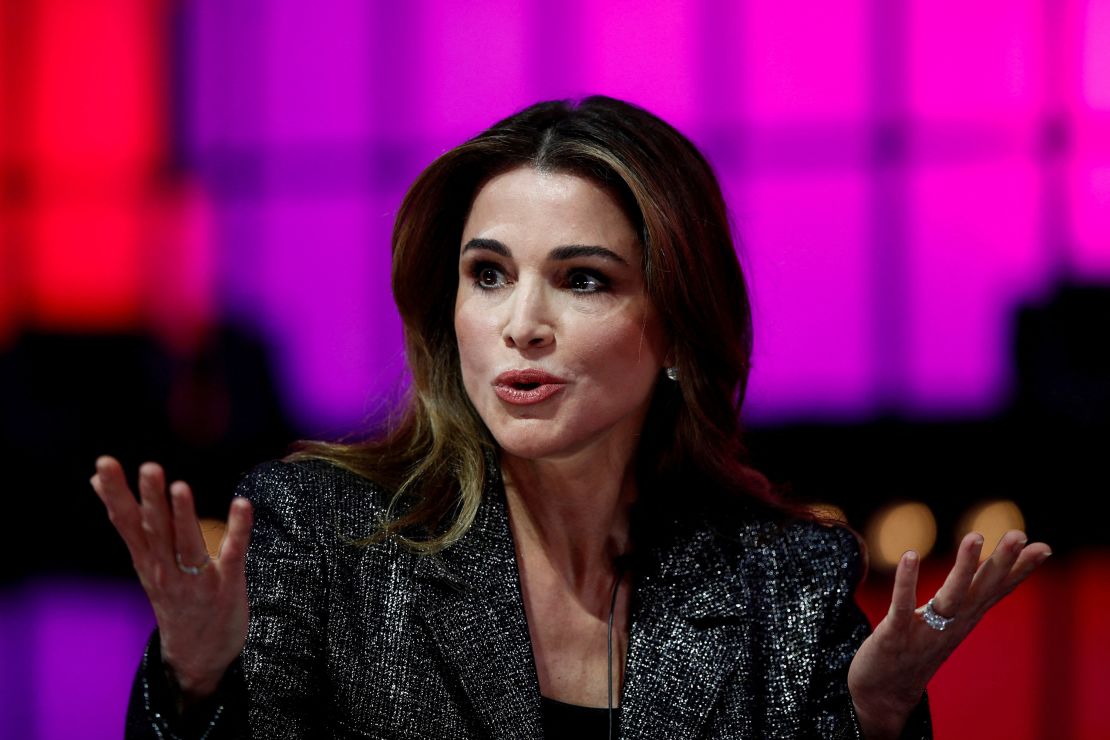
Queen of Jordan, Rania Al-Abdullah, speaks during the Web Summit, Europe’s largest technology conference, in Lisbon, Portugal, November 2, 2022. REUTERS/Pedro NunesPedro Nunes/Reuters
Israel declared a “complete siege” on Gaza following the October 7 terror attacks by Palestinian militant group Hamas, which controls the coastal enclave.
Two dozen aid workers from Doctors Without Borders made it out of Gaza Wednesday through the Rafah crossing. Andrea Mitchell is joined by Faris Al Jawad, Communications Manager for Doctors Without Borders in Jerusalem, to discuss the status of hospitals and medical experts in Gaza, the desperate need for fuel and the potential for more mass casualties. “Our international staff that have just recently got out are safely over the border. However, I think what we are far more concerned about now is the 300 or so Palestinian staff that we still have in Gaza, still working, many of them in some of the most dangerous areas that are being relentlessly struck,” Al Jawad says. “There are bombs going off very nearby. There are thousands of people taking shelter there, there’s no medication, there’s no anesthesia, we’re doing operations on the floor.”
Moment BBC reporter falls to his knees and weeps while reporting inside Gaza hospital
Moses leading the Israelites out of Egypt. Tranh của Molnár, 1861
Đặng Hoàng Xa
“Mọi sự đều sẽ hết, nhưng người Do Thái thì không. Tất cả các thế lực khác sẽ qua đi, nhưng Họ vẫn còn. Bí mật trong sự bất tử của Họ là gì?” – Văn hào Mark Twain
Người Do Thái trên vùng đất Israel (Canaan)
Sự ra đời của đức tin
Người Do Thái có nguồn gốc từ người Hebrew cổ đại xuất hiện tại Trung Đông vào 4.000 năm trước. Theo truyền thuyết, người Do Thái và người Ả Rập là con cháu dòng dõi từ Abram (tên lúc sinh của Abraham) là người đã vâng theo lời gọi của Thượng Đế rời bỏ quê hương ở thành Ur thuộc phía Bắc vùng Mesopotamia (Lưỡng Hà) – nay là Đông-Nam Thổ Nhĩ Kỳ, đến lập nghiệp tại xứ Canaan, một vùng đất kéo ngang từ bờ sông Jordan tới biển Địa Trung Hải ngày nay.
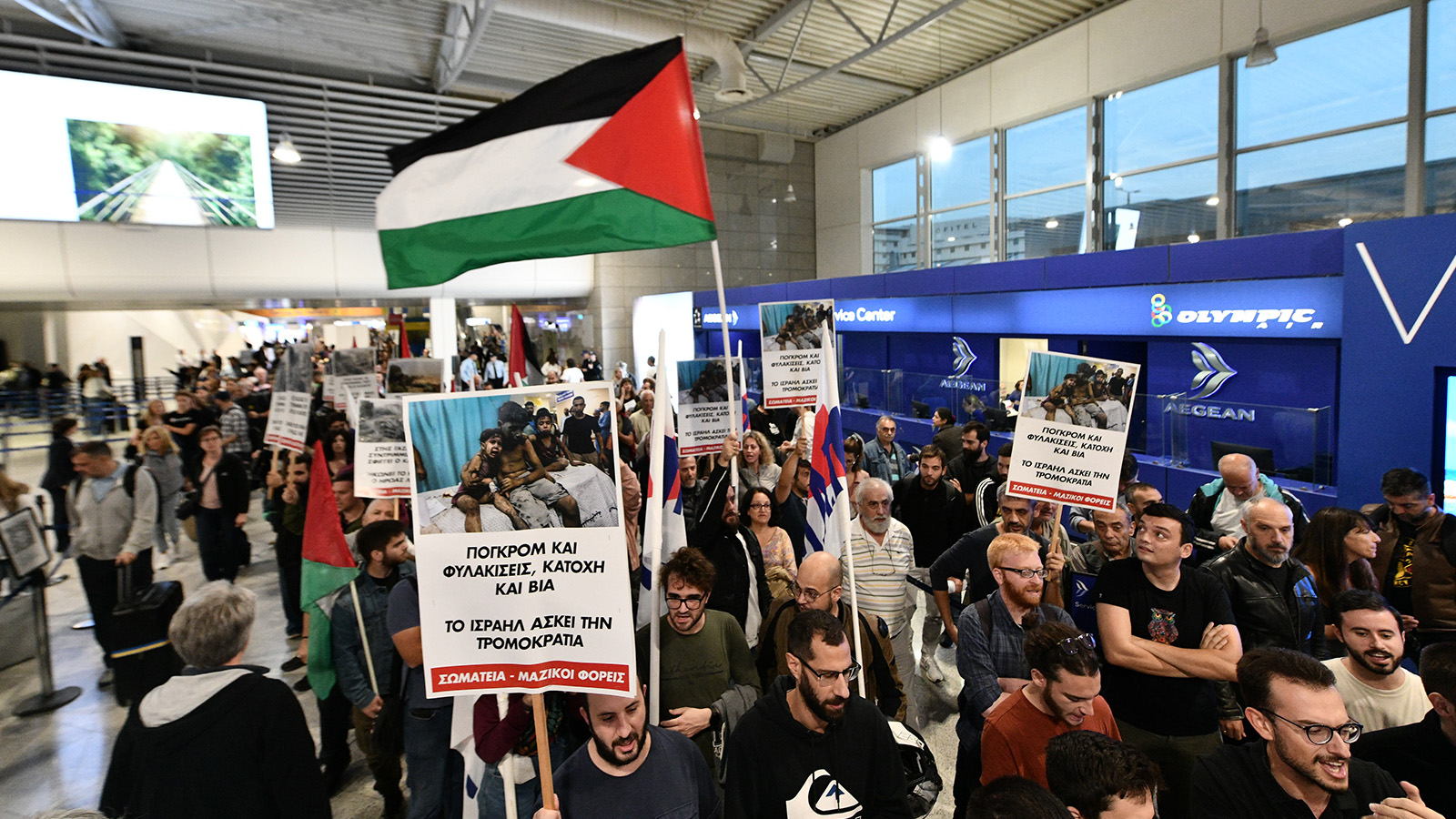
FILE – Thousands of Moroccans take part in a protest in solidarity with Palestinians in Gaza and against normalisation with Israel, in Casablanca, Morocco, Sunday, Oct. 29, 2023. Countries in the Middle East that have normalized or are considering normalizing relations with Israel are coming under growing public pressure to cut those ties because of Israel’s war with Hamas. The protesters’ demands present an uncomfortable dilemma for governments that have enjoyed the benefits of closer military and economic ties with Israel in recent years. (AP Photo/Mosa’ab Elshamy, File)Read More
2 of 4 |
FILE – Thousands of Moroccans take part in a protest in solidarity with Palestinians in Gaza and against normalisation with Israel, in Casablanca, Morocco, Sunday, Oct. 29, 2023. Countries in the Middle East that have normalized or are considering normalizing relations with Israel are coming under growing public pressure to cut those ties because of Israel’s war with Hamas. The protesters’ demands present an uncomfortable dilemma for governments that have enjoyed the benefits of closer military and economic ties with Israel in recent years. (AP Photo/Mosa’ab Elshamy)Read More
3 of 4 |
FILE – Protesters shout anti-Israel slogans during a rally to show solidarity with the people of Gaza after Friday prayers at Azhar mosque, the Sunni Muslim world’s premier Islamic institution, in Cairo, Egypt, Friday, Oct. 20, 2023. Countries in the Middle East that have normalized or are considering normalizing relations with Israel are coming under growing public pressure to cut those ties because of Israel’s war with Hamas. The protesters’ demands present an uncomfortable dilemma for governments that have enjoyed the benefits of closer military and economic ties with Israel in recent years. (AP Photo/Amr Nabil, File)Read More
4 of 4 |
FILE – Protesters shout anti-Israel slogans during a rally to show solidarity with the people of Gaza after Friday prayers at Azhar mosque, the Sunni Muslim world’s premier Islamic institution, in Cairo, Egypt, Friday, Oct. 20, 2023. Countries in the Middle East that have normalized or are considering normalizing relations with Israel are coming under growing public pressure to cut those ties because of Israel’s war with Hamas. The protesters’ demands present an uncomfortable dilemma for governments that have enjoyed the benefits of closer military and economic ties with Israel in recent years. (AP Photo/Amr Nabil, File)Read More
BY SAM METZUpdated 4:49 AM GMT+7, November 2, 2023 AP
RABAT, Morocco (AP) — Arab nations that have normalized or are considering improving relations with Israel are coming under growing public pressure to cut those ties because of Israel’s war with Hamas.
Tens of thousands of people have taken to the streets of Rabat and other Moroccan cities in support of the Palestinians. In Bahrain — a country that almost never allows protest — police stood by as hundreds of people marched last month, waving flags and gathering in front of the Israeli Embassy in Manama.
The demonstrations, which mirror protests across the Middle East, present an uncomfortable dilemma for governments that have enjoyed the benefits of closer military and economic ties with Israel in recent years.
Among Gaza’s population of 2.2 million people, 1 in 4 are women and girls of reproductive age – around 572,000 – who need access to reproductive health services. An estimated 50,000 pregnant women are caught up in the conflict, with around 5,500 due to give birth within the next 30 days – more than 160 deliveries every day. An estimated 840 women may experience pregnancy or birth-related complications. Many of these women have been cut off from safe delivery services, as hospitals, which are overwhelmed with casualties, run out of fuel for generators, medicines and basic supplies – including for the management of obstetric emergencies.
Around 73,000 women are currently pregnant in the West Bank, with more than 8,120 expected to give birth in the next month as the violence threatens to spill over.
UNFPA is dispatching life-saving reproductive health medicines and supplies to Egypt for stockpiling and transportation across the border into Gaza when possible. As of 26 October, UNFPA has 3,000 dignity kits containing hygiene supplies in Egypt, ready to go into Gaza, as well as life-saving reproductive health supplies, prepositioned and ready to be sent through Egypt. These health kits and supplies save the lives of pregnant women – they are as vital as food, water, shelter.
Among other initiatives, a UNFPA-supported helpline is available for women, youth and other people requiring assistance in Gaza and the West Bank
In the West Bank, the Ministry of Health has redeployed midwives from hospitals to Safe Motherhood Emergency Centres supported by UNFPA, ensuring that midwives are accessible in every community. In addition, online support systems and referral services are helping to ensure women’s continued access to sexual and reproductive health care.
With more than half of Gaza’s population displaced, the risk of gender-based violence has also increased exponentially for women and girls who are on the move, seeking refuge in overcrowded shelters, which lack privacy and sanitation facilities.
UNFPA condemns the violence in Israel and the occupied Palestinian territories and echoes the UN Secretary-General’s call for an immediate ceasefire, for the immediate and unconditional release of hostages by Hamas, and for unimpeded access for humanitarian aid and workers within Gaza.
Gaza is a virtual prison with hardly any way in or out. And it has been so since ten years ago when Al Jazeera entered Gaza to talk to the grandchildren of Fatima al Najar, who had recently achieved a strange kind of fame as the oldest Palestinian suicide bomber.
These children, whose lives had been shaped by the oppressive conditions imposed on the territory by Israel, spoke frankly about the hopes, and fear, for their future. Tehal was just ten at the time, and wanted to be the first female president of Palestine.
She said she had three priorities; to clean up the mess left behind by the Israeli bulldozers, to give children their rights, and “to build a new Gaza”. In contrast, another young girl – Rana – hoped to become a journalist, “So I can tell the people how we suffer here. I am a child, I know what death means, I know what war means, I know what blood means.”
These and other children opened their hearts in a moving show of optimism in the face of the dire conditions in which they lived.
Now, a decade on, Rewind returns to Gaza in search of the children featured in Children of Conflict, now young adults.Once again they speak to Al Jazeera’s cameras contrasting their aspirations of ten years ago with the reality of today.
UNICEF OCTOBER 26, 2023 by UNICEF Executive Director Catherine Russell
The true cost of the violence in Gaza and Israel will be measured in children’s lives—those lost to the violence and those forever changed by it.
Less than three weeks on from the horrific attack inside Israel and the start of daily bombings of the Gaza Strip, the devastating tally in Israel and Gaza is quickly adding up. More than 2,700 Palestinian children have been killed and nearly 6,000 injured, according to Gaza’s Ministry of Health, for a shocking average of more than 480 child casualties per day.
More than 30 Israeli children have reportedly been killed, while at least 20 remain hostage in the Gaza Strip, their fates unknown.
Sadly, more suffering and death is on the horizon.
Gaza is one of the most densely populated places on Earth—home to more than 2 million people, nearly half of whom are children. More than 1 million people in the north have been warned to move south, ahead of what is expected to be a wide-scale military operation. But with near-constant shelling, closed borders, and little room for movement, they have nowhere truly safe to go.
Meanwhile, what clean water remains is quickly running out, leaving many Gazans with little choice but to rely on polluted wells. This dramatically increases the risk of waterborne-disease outbreaks. Unless access to safe drinking water is restored, people will die from severe dehydration and illness, with children the most vulnerable.
TTCT – Israel đang triển khai một sách lược rất kiểu “tát nước bắt cá” có nguy cơ gây ra một thảm họa nhân đạo tại Dải Gaza trong cuộc chiến Trung Đông hiện giờ.
Trẻ em Palestine trên xe cứu thương, ngay sau vụ tấn công bệnh viện Al-Ahly ở Gaza ngày 17-10. Ảnh: Reuters
Sau hai tuần chiến tranh, ngày 21-10, 20 xe tải, tức 400 tấn hàng cứu trợ, được cho phép vào Dải Gaza bị Israel vây hãm. Đây là kết quả sau khi thương thuyết, thảo luận tới lui và Israel lúc thuận lúc không.
Nguyên tắc của Israel là nếu Hamas buông súng đầu hàng thì Gaza sẽ được tiếp tế. Trừng trị tập thể, như ta biết, là vi phạm quy ước quốc tế. Không thể vì 2.000 du kích mà đánh bom và bỏ đói tập thể hơn 2 triệu người dân tại Gaza.
Đây chẳng phải là việc lén lút, mà là chính sách công khai của Israel mang tên “Sách lược Dahiya”, do tham mưu trưởng Gadi Eizenkot (2015-2019) chủ trương từ lúc ông là tư lệnh mặt trận miền bắc đối diện Lebanon. Trong chiến tranh với Hezbollah tại Lebanon (2006), Dahiya là khu ngoại ô Beirut do Hezbollah quản lý.
Cenk Uygur, a Turkish-American political commentator and media host. He is the creator of The Young Turks
“We have to have two state solution immediately. I’m asking Israeli not out of hate….So many of my friends I grew up with are Jewish. This is not good for them. This is not good for any body. Please look into your hearts. Look. Be the moral that I know you can be. I’ve been to the Passover dinner where you pray for your oppressors. Now I breaks my heart. But I have to tell you, you have to pray for those you’re oppressing. And saying you’re not oppressing them after brutalizing them for 56-long years. You’re kidding yourself. And as a friend and an ally, I’m trying to get you wake up. You can not keep doing this.
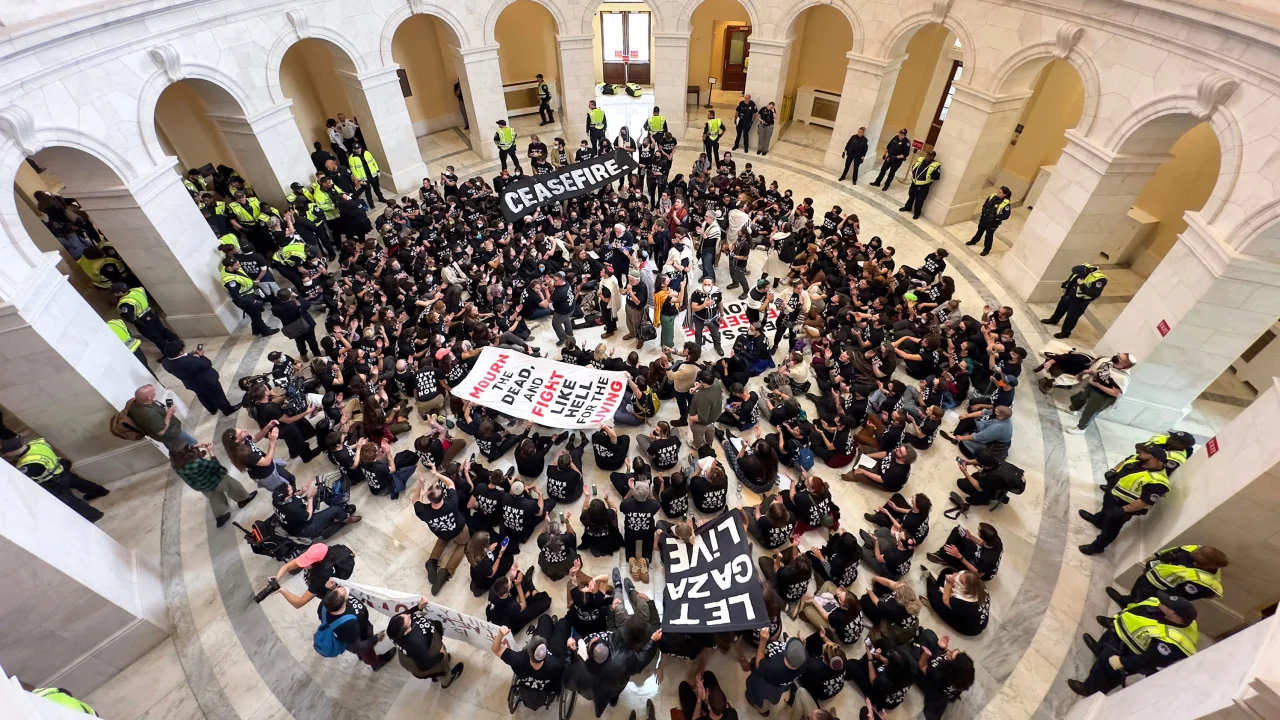
Jewish peace activists staged a sit-in on Capitol Hill, where they called for an immediate ceasefire in the Israel-Gaza war on October 18.Jim Lo Scalzo/EPA-EFE/ShutterstockCNN —
As Rabbi Alissa Wise scrolls through social media, her feed is littered with videos of dead Palestinian children, parents holding their lifeless bodies with screams caught in their throats and eyes sunken with grief.
Like millions around the world, she has been haunted by the gruesome scenes flooding out of Gaza, where civilians have endured more than two weeks of an Israeli siege and bombing campaign that has collapsed homes, destroyed vital infrastructure and sparked a humanitarian crisis.
The airstrikes have killed more than 4,600 Palestinians so far, including an estimated 1,900 children, and wounded at least 14,000 others, according to the Palestinian Ministry of Health in Gaza. Another 1.4 million people have been internally displaced, the United Nations Office for the Coordination of Humanitarian Affairs said.
It’s been over two weeks since the October 7 Hamas attacks and Israel’s subsequent bombardment and siege of Gaza, which has taken thousands of Palestinian lives. The United States has stood firmly behind Israel, giving it a carte blanche to do whatever it wishes – without critique and consequence. And U.S. news media has followed suit. In this special episode of Backspace, Sana Saeed looks at how the U.S. news media protects Israel from criticism and condemnation.