Từ đứa trẻ lang thang trở thành Giám đốc điều hành tổ chức hỗ trợ hàng vạn trẻ em

infonet.vietnamnet -25/03/2022   08:02 (GMT+07:00)

Từ một đứa trẻ lang thang, kiếm sống qua ngày bằng việc đánh giày trên đường phố Hà Nội, Đỗ Duy Vị (35 tuổi) vừa được bổ nhiệm vào vị trí Đồng Giám đốc điều hành của Blue Dragon – Children’s Foundation (Tổ chức Trẻ em Rồng xanh).

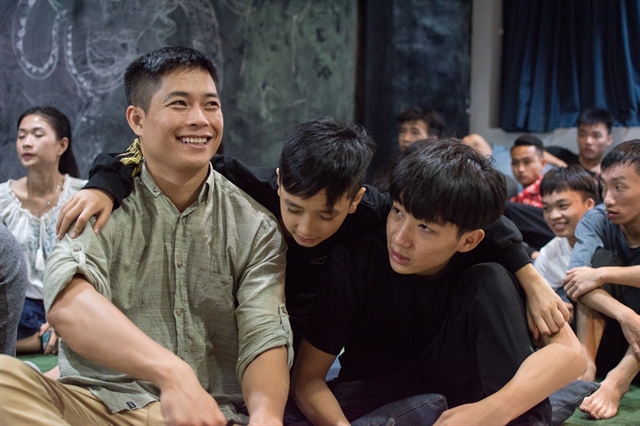
Đỗ Duy Vị năm 15 tuổi và hiện tại.

Blue Dragon mới đây thông báo bổ nhiệm ông Đỗ Duy Vị (sinh năm 1987) vào vị trí Đồng Giám đốc điều hành (Co-CEO), bên cạnh Đồng Giám đốc điều hành hiện tại, Skye Maconachie. Việc bổ nhiệm này diễn ra sau khi Nhà sáng lập Michael Brosowski rời khỏi vị trí Co-CEO, nhưng tiếp tục đồng hành với Blue Dragon trên cương vị Nhà sáng lập và Giám đốc chiến lược.

Với vị trí này, Đỗ Duy Vị sẽ tập trung vào tầm nhìn của tổ chức để chấm dứt nạn mua bán người. Điều thú vị là trước đó, tân Giám đốc điều hành của tổ chức này từng là một đứa trẻ lang thang, kiếm sống qua ngày bằng công việc đánh giày trên đường phố Hà Nội.

Tiếp tục đọc “Từ đứa trẻ lang thang trở thành Giám đốc điều hành tổ chức hỗ trợ hàng vạn trẻ em”

About the Trafficking Inc. investigation

An ICIJ investigation examines networks of companies, people and business practices that draw profit from cross-border labor trafficking and sex trafficking.

By Michael Hudson Image: Rocco Fazzari / ICIJ June 12, 2023

On any given day, the United Nations estimates, nearly 28 million adults and children around the world are trapped in jobs that are so oppressive that they amount to modern slavery or human trafficking.

They are forced to work long hours for little or no pay, toiling on farms and construction sites, in sweatshops and restaurants, as janitors and, in some cases, sex workers. They are exploited by recruiters and employers who use their poverty, isolation and immigration status against them, often threatening them with violence, arrest or deportation or ensnaring them in debts they struggle to repay.

A new investigation by the International Consortium of Investigative Journalists and other media partners has begun examining human trafficking in Asia, Africa, the Middle East and the United States.

The investigation, Trafficking Inc., focuses on two forms of human trafficking: labor trafficking and sex trafficking. Both involve using force, fraud or coercion to induce someone to work or provide a service.

ICIJ and its reporting partners are working to bring to light untold stories of hardship and abuse suffered by trafficked people — and expose the networks of companies, individuals and business practices that set the traps and profit from them.

The investigative team includes journalists from ICIJ, Reuters, NBC NewsWGBH BostonThe Washington PostArab Reporters for Investigative Journalism, the Philippine Center for Investigative Journalism and the Investigative Reporting Program at the University of California, Berkeley.

Tiếp tục đọc “About the Trafficking Inc. investigation”

Inside Southeast Asia’s Casino Scam Archipelago

Special Economic Zones and self-governing statelets across the Mekong region have become conduits for human trafficking on a massive scale.

thediplomat.com

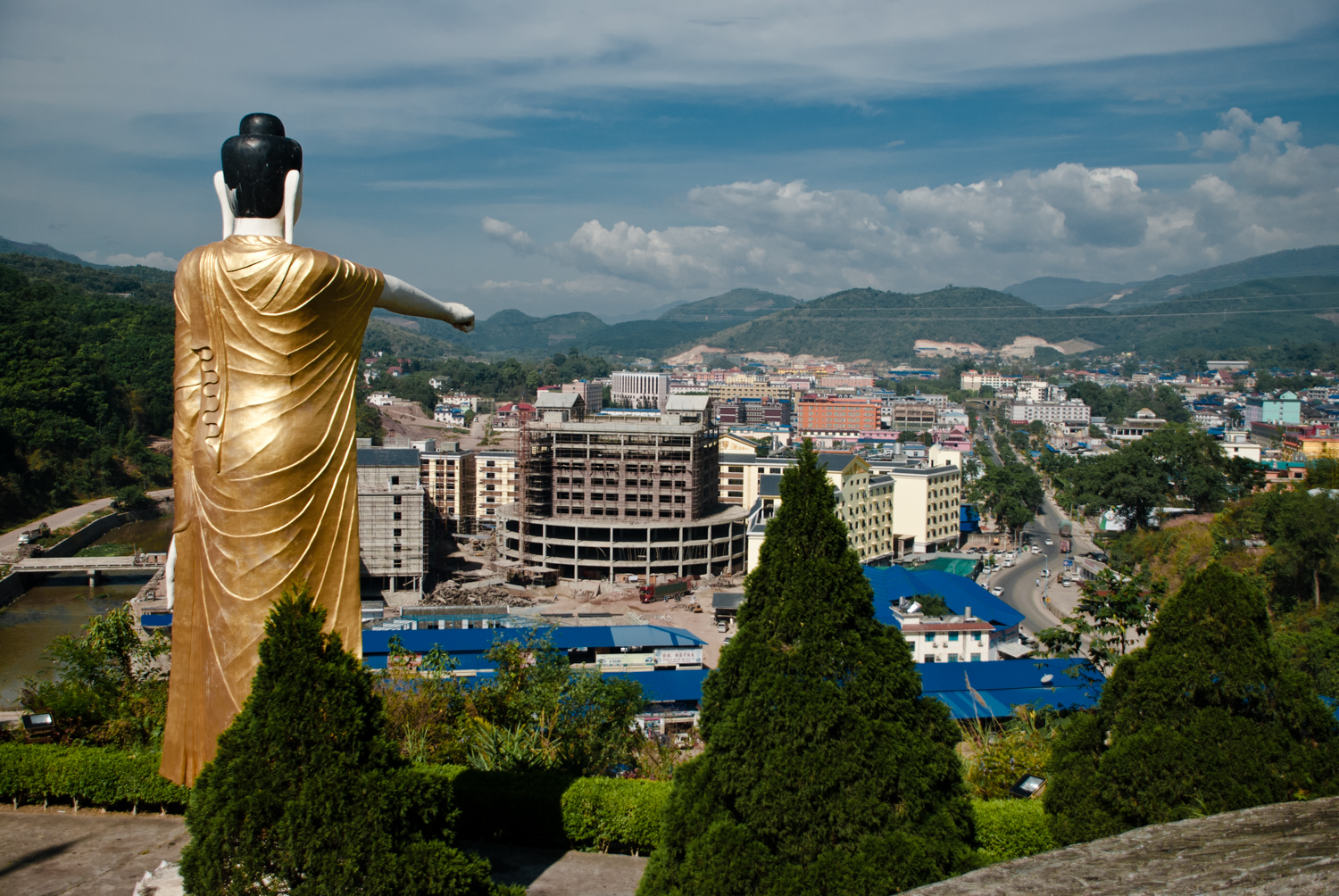
*Mong La, a town on the border between China and Myanmar, is notorious for a gambling town dubbed a ‘City of Sin’ in the heart of the Golden Triangle with Laos and Thailand”

A view of Mong La, a gambling enclave on the border between China and a rebel-administered sliver of Myanmar’s Shan State. (Sebastian Strangio)

Around six months ago, Ekapop Lueangprasert, a local government official and business owner in the Sai Mai suburb of Bangkok, was checking messages sent to his Sai Mai Must Survive Facebook page – a volunteer initiative he’d set up to try and help local people struggling financially during the pandemic – when he received a disturbing video from an 18-year-old girl.

“Today is January 28th at 1 am, 2022. I’m in a building opposite the Karaoke Bar,” says the Thai teenager into the camera, her eyes swollen from crying. She seems exhausted, close to breaking point, but determined to get as much information across as she can while she has the chance. The woman explains that she traveled from Bangkok to Sa Kaeo on the Thailand-Cambodia border to meet a Thai broker who had promised her a job in Poipet, a seedy casino town just over the border in Cambodia. She was then told that the role would actually involve scamming strangers online – and that if she wanted to leave, her father would have to pay 40,000 baht ($1,080) to secure her release. “I know everything and I’m afraid that [the boss] will kill me,” she sobs. “I don’t know what he will do to the others after this and I don’t know if I can contact you again. I’ve heard that at least 20 or 30 people have died.”

The request had come out of the blue and Ekapop was initially apprehensive. “I asked her, how can you use your phone?” he says. But as the teenager hastily sent and deleted location pins, photos from the compound, and other evidence of her treatment, it became clear she was telling the truth – and in the coming months, messages, videos, and photos flooded in from other Thai trafficking victims trapped in borderland casino towns in Cambodia, Laos, and Myanmar. All told near-identical stories about being duped by offers of well-paid, legitimate work, only to find themselves imprisoned in horrifying conditions by Chinese gangsters. Under constant threat of violence, they were forced to engage in illegal activities – mostly tricking people into making fake investments online – with the knowledge or even collusion of local authorities.

Tiếp tục đọc “Inside Southeast Asia’s Casino Scam Archipelago”

Cyber slavery: inside Cambodia’s online scam gangs –

Illicit industry traffics thousands of victims from China through Southeast Asia

“The videos provide a window into the dark world run by transnational criminal networks able to smuggle people from China, through Vietnam and into Cambodia and Myanmar”

SHAUN TURTON, Contributing WriterSEPTEMBER 1, 2021 06:00 JST

PHNOM PENH — The first punch lands on the left side of the young man’s face, the second on the right.

Several more follow. Knees strike his stomach. He cannot defend himself, his hands are cuffed. His attacker, face outside the frame, has his fist wrapped in cloth.

He drags his victim by the lapels into the middle of the frame, faces him to the camera and tells him to speak.

“Dad, I’m in Cambodia, I’m not inside of China,” says the young man, through tears, his voice breaking and blood streaming from his nose. “I beg you, please send money.”

The ransom video, which was sent to the victim’s parents, was one of several shown to Nikkei Asia by Li*, a person who helps rescue human trafficking victims in Cambodia.

This ransom video supplied to Nikkei shows a handcuffed man being beaten with a stick while other victims watch in horror. 
Another video shows a shirtless man cuffed on the ground being beaten with a stick while two more captives, handcuffed to a nearby window grill, watch on in terror. In a third, a grounded man, a foot on his neck, writhes in pain as he is electrocuted with a Taser.

The videos provide a window into the dark world run by transnational criminal networks able to smuggle people from China, through Vietnam and into Cambodia and Myanmar.

Tiếp tục đọc “Cyber slavery: inside Cambodia’s online scam gangs –”

Forced to Scam: Cambodia’s Cyber Slaves

Al Jazeera English – 15 – 7- 2022

Chinese cyber-scam operations are stealing tens of billions of dollars from victims around the world.

But few realise that thousands of those perpetrating these frauds are victims too.

Young men and women are enslaved, tortured and forced to scam in countries like Cambodia.

In an exclusive report, 101 East investigates Chinese cyber-slave syndicates operating in Cambodia and exposes the powerful and politically connected people protecting them.

Forced to Scam: Cambodia’s Cyber Slaves | 101 East Documentary

Former street kid became co-CEO of children’s rescue foundation

Update: March, 01/2022 – 08:38

|vietnamnews.vn

https://link.gov.vn/2o6WZa

Nhật Hồng & Bảo Hoa

HÀ NỘI — At 15 years old, Đỗ Duy Vị left his hometown to make a living on the streets of Hà Nội. Two decades later, he is now one of the Chief Executives of the foundation that rescued him. 

Vị might be one of many street kids that return to work at Blue Dragon, and one of the few that have spent more than ten years with the organisation, but his story has special significance as he has witnessed the growth of Blue Dragon even before it was established.

Đỗ Duy Vị with some of the children at the shelter. — Photo courtesy of Blue Dragon Children’s Foundation

Born to a family of farmers in Nam Định Province, Vị and his three other siblings stayed with their mother while their father often travelled to other provinces for work. 

Tiếp tục đọc “Former street kid became co-CEO of children’s rescue foundation”

Biến tướng hủ tục “cướp vợ” đến “tụt cả váy” của người H’mông

ANTG – 2/6/2019

Tục bắt vợ vốn là một nét văn hóa của đồng bào dân tộc Mông. Nhưng giờ đây, thay vì tiếng khèn, câu hát, những ánh mắt yêu thương người ta bắt gặp qua các vụ bắt vợ là cảnh giằng xé hỗn loạn, sự sợ hãi, nỗ lực chống cự yếu ớt của cô gái và những nụ cười hào hứng của trai bản, mà không biết rằng đây chính là hành vi vi phạm pháp luật.

https://www.youtube.com/watch?v=DyNAda-ehew

UN experts call for protection of trafficked workers from Viet Nam in Saudi Arabia 

Riyadh, the capital of Saudi Arabia.

Unsplash/Ekrem OsmanogluRiyadh, the capital of Saudi Arabia.    

UN – 4 November 2021 – Human Rights

Some women and girls being recruited in Viet Nam to serve as domestic workers in Saudi Arabia, are suffering sexual abuse and torture, leading a group of UN independent human rights experts on Thursday to call on both nations to curb human trafficking. 

“We are seeing traffickers targeting Vietnamese women and girls living in poverty, many of whom are already vulnerable and marginalized. Traffickers operate with impunity”, they said in a statement

After signing on with labour recruitment companies in Viet Nam, some girls and women found themselves sexually abused, beaten and subjected to torture and other cruel treatments by employers once they arrived in Saudi Arabia. 

Often these women are denied food and medical treatment, not paid at all, or paid less than stipulated in their contracts. 

Tiếp tục đọc “UN experts call for protection of trafficked workers from Viet Nam in Saudi Arabia “

Phát hiện hơn 1.000 vụ mua bán người

yenbai.gov.vn – 17/10/2019 10:16:00

Theo báo cáo của Bộ Công an, tại Việt Nam, từ năm 2016 đến 6 tháng đầu năm 2019, toàn quốc phát hiện xảy ra hơn 1.000 vụ, với gần 1.500 đối tượng, lừa bán hơn 2.600 nạn nhân, trong đó có 892 vụ mua bán người sang Trung Quốc, với 1.187 đối tượng, lừa bán 2.319 nạn nhân…

Đẩy mạnh tuyên truyền về phòng chống mua bán người.
Tiếp tục đọc “Phát hiện hơn 1.000 vụ mua bán người”

Những cô dâu Việt “giá sáu vạn tệ”

VNE

***

Lời mở đầu

– Đi, đi với anh, lên Lào Cai chơi thăm nhà anh.

– Không đi đâu, em còn phải về học.

– Đi ba ngày thôi rồi về. Không về học nữa thì anh cưới em.

Đó là khung cảnh một buổi chiều thứ Bảy, tháng Mười năm 2016, tại bến xe khách thành phố Yên Bái.

Lù Thị Chang học lớp 9 một trường nội trú ở Yên Bái. Tan học sau buổi trưa, cô rủ người bạn Giàng Thị Dung ra quốc lộ bắt xe. Người bạn trai quen trên Facebook được một tháng hẹn gặp đi uống nước. Trước lúc rời phòng trọ, cô gái đứng ngắm mình trong gương, chọn bộ quần áo đẹp nhất, và thoa thêm một chút son màu hồng. Đây là lần đầu tiên cô gặp “người ấy”. Tiếp tục đọc “Những cô dâu Việt “giá sáu vạn tệ””

Chăn dắt ăn xin: Cuộc bóc lột siêu lợi nhuận

Mang dấu hiệu của tội phạm có tổ chức, hoạt động ngay trên phố, nhưng hình hài các đường dây chăn dắt ăn xin vẫn là bí ẩn.

Hai giờ chiều, Trung tâm Bảo trợ xã hội 1, Đông Anh, Hà Nội còn yên ắng. Thấy người lạ bước vào, một đứa bé đang cầm khăn rửa mặt chạy đến nắm tay khách, liến thoắng. Tiếp tục đọc “Chăn dắt ăn xin: Cuộc bóc lột siêu lợi nhuận”

‘It’s not that I want to sell my kid. I just need money’: The Philippine mothers who sell their babies

channelnewsasia.com 

In the Philippines, some new mothers who feel they cannot raise their own babies sell them in the illegal trade of child adoption.

A mother hold a baby in a park
A Filipino mother holds her two-month-old baby inside a park near the Port of Manila. She wants to sell him for adoption and use the money to start a new life. (Photo: Pichayada Promchertchoo)

MANILA: Christine holds her baby as she breastfeeds him in a quiet park near the Port of Manila. She has covered his small head with a piece of cloth to shield him from the burning sun. His eyes may be closed but the boy knows his mother is there. He grabs her with his tiny hands as she cradles him in her arms.

The baby is two months old, delicate and defenceless. His father died before he was born and his mother has become his sole protection, his only source of love and security. But he has no idea she wants to sell him as soon as she can. Tiếp tục đọc “‘It’s not that I want to sell my kid. I just need money’: The Philippine mothers who sell their babies”

Vietnam human trafficking worth billions of dollars a year

VNE – By Phan Anh   December 1, 2019 | 10:58 am GMT+7

Vietnam human trafficking worth billions of dollars a year
A Vietnamese woman who was rescued in 2018 after being sold to China. Photo by AFP/Manan Vatsyayana.

Vietnam is a human trafficking and illegal migration hotspot with annual profits worth tens of billions of dollars, according to the Ministry of Public Security.

“Vietnam is considered a hotspot for human trafficking and illegal migration among countries in the Mekong Subregion, with estimated profits of tens of billions of U.S. dollars per year,” Le Van Nhan, deputy head of the anti-human trafficking division under the Public Security Ministry, said at a conference held in HCMC Friday. Tiếp tục đọc “Vietnam human trafficking worth billions of dollars a year”

Human trafficking of girls in particular “on the rise,” United Nations warns

BY PAMELA FALK CBS NEWS

THAILAND-TRAFFICKING
Foreign women are seen in a karaoke bar in Thailand’s southern province of Narathiwat during a police raid as part of a campaign against prostitution and human trafficking involving women and minors, Nov. 9, 2018.GETTY

United Nations — A new U.N. report warns “the number of human trafficking victims is on the rise” as criminal gangs and terror groups prey increasingly on women and children to make money and bolster their numbers. The 90-page Global Trafficking in Persons report says that children, who account for 30 percent of all trafficking victims, include “far more” girls than boys.

“The vast majority of detected victims of trafficking for sexual exploitation and 35 percent of those trafficked for forced labor are female,” Yury Fedotov, Executive Director of the United Nations Office on Drugs and Crime (UNODC) wrote in the report, adding that trafficking cases overall have hit a 13-year high. Tiếp tục đọc “Human trafficking of girls in particular “on the rise,” United Nations warns”

Vì sao đối tượng mua bán trẻ sơ sinh ít bị xử lý?

cand – 11:28 22/03/2014

Tội phạm mua bán trẻ sơ sinh ở TP Hồ Chí Minh diễn ra từ khá lâu nhưng số vụ bị phát hiện và bắt giữ thì chỉ đếm trên đầu ngón tay. Nếu như không có vụ bắt được Lê Thị Bích Trâm thì có lẽ đường dây mua bán trẻ sơ sinh khá lớn do Tưởng Đình Thương (thường gọi là Hói, 35 tuổi, quê quán TP Hải Phòng) và Ngô Thị Lan (tự Hồng, 39 tuổi, ngụ phường Nguyễn Thái Bình, quận 1, TP Hồ Chí Minh) cầm đầu còn chưa bị lộ diện.

Một bà mẹ nhẫn tâm bán đi núm ruột của mình.

Tiếp tục đọc “Vì sao đối tượng mua bán trẻ sơ sinh ít bị xử lý?”