(VNF) – Trong những năm gần đây, các hoạt động lừa đảo xuyên biên giới tại khu vực Đông Nam Á đã gia tăng mạnh mẽ, đặc biệt là những tổ chức lừa đảo có sự tham gia của các nhóm tội phạm Trung Quốc. Những tổ chức này không chỉ gây thiệt hại tài chính mà còn ảnh hưởng nghiêm trọng đến an ninh và trật tự xã hội của các quốc gia trong khu vực.
Các chiến dịch quốc tế nhằm đối phó với tình trạng này, bao gồm việc hồi hương hàng chục nghìn tội phạm lừa đảo về Trung Quốc, đã cho thấy sự tham gia của tội phạm nước này trong các vụ lừa đảo tại Đông Nam Á là rất lớn.
Theo một báo cáo mới đây của Trung tâm nghiên cứu chiến lược và quốc tế (CSIS, Mỹ), những hang ổ lừa đảo cắm rễ sau sự xuống dốc của lĩnh vực kinh doanh cờ bạc tại Đông Nam Á và gắn liền với các băng nhóm tội phạm người Trung Quốc.
Sau phong tỏa trong đại dịch Covid-19, nhiều khu casino và khách sạn bỏ trống đã biến thành các trung tâm lừa đảo qua mạng, nơi các nạn nhân buôn người bị chúng dụ dỗ và cưỡng ép đã lừa hàng tỷ USD từ nhiều người.
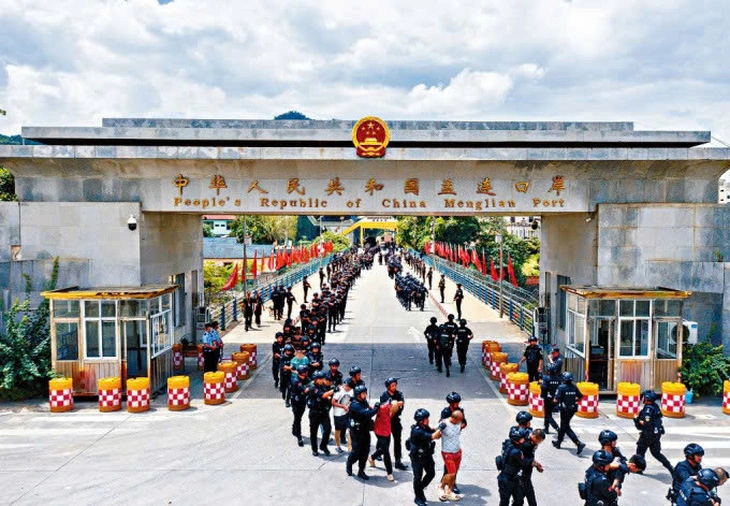
Các nghi phạm bị dẫn giải từ Myanmar về Trung Quốc tại cửa khẩu Mạnh Liên ở Vân Nam (Ảnh: XINHUA)
Toxic runoff from unregulated mines in Myanmar has sparked health and environmental concerns, across the border in Thailand.
Thai authorities have detected levels of arsenic nearly five times above acceptable limits. Meanwhile, local fishermen and residents are complaining of falling incomes and expressing food safety concerns.
Al Jazeera’s Tony Cheng reports from Bangkok, Thailand.
Rare earth rush in Myanmar blamed for toxic river spillover into Thailand
Water tests from the Kok and Sai rivers near Thailand’s border with Myanmar have revealed elevated arsenic levels, leading Thai officials to warn citizens to avoid contact with river water.
The pollution is widely believed to be linked to unregulated mining in Myanmar’s Shan state.
Extraction of gold in Shan State has surged in the years since the 2021 military coup in Myanmar; more recently, mounting evidence suggests rare earth mining is also expanding across the state.
Elevated arsenic levels have also been found at testing points in the Mekong, which is fed by both the Kok and Sai rivers.
Myanmar has struggled with civil war, military rule and widespread poverty for much of the past seven decades. But the country’s youth have never faced threats to their survival and future as severe as today.
The military coup of February 2021 shattered the hopes of many young people in Myanmar who had envisioned a better and more stable future under their democratically elected leader, Aung San Suu Kyi.
As brutal crackdowns on peaceful protests unfolded, thousands of young people fled to the jungles to take up arms. Hundreds of thousands more joined the civil disobedience movement, abandoning their studies to protest military rule through demonstrations and strikes.
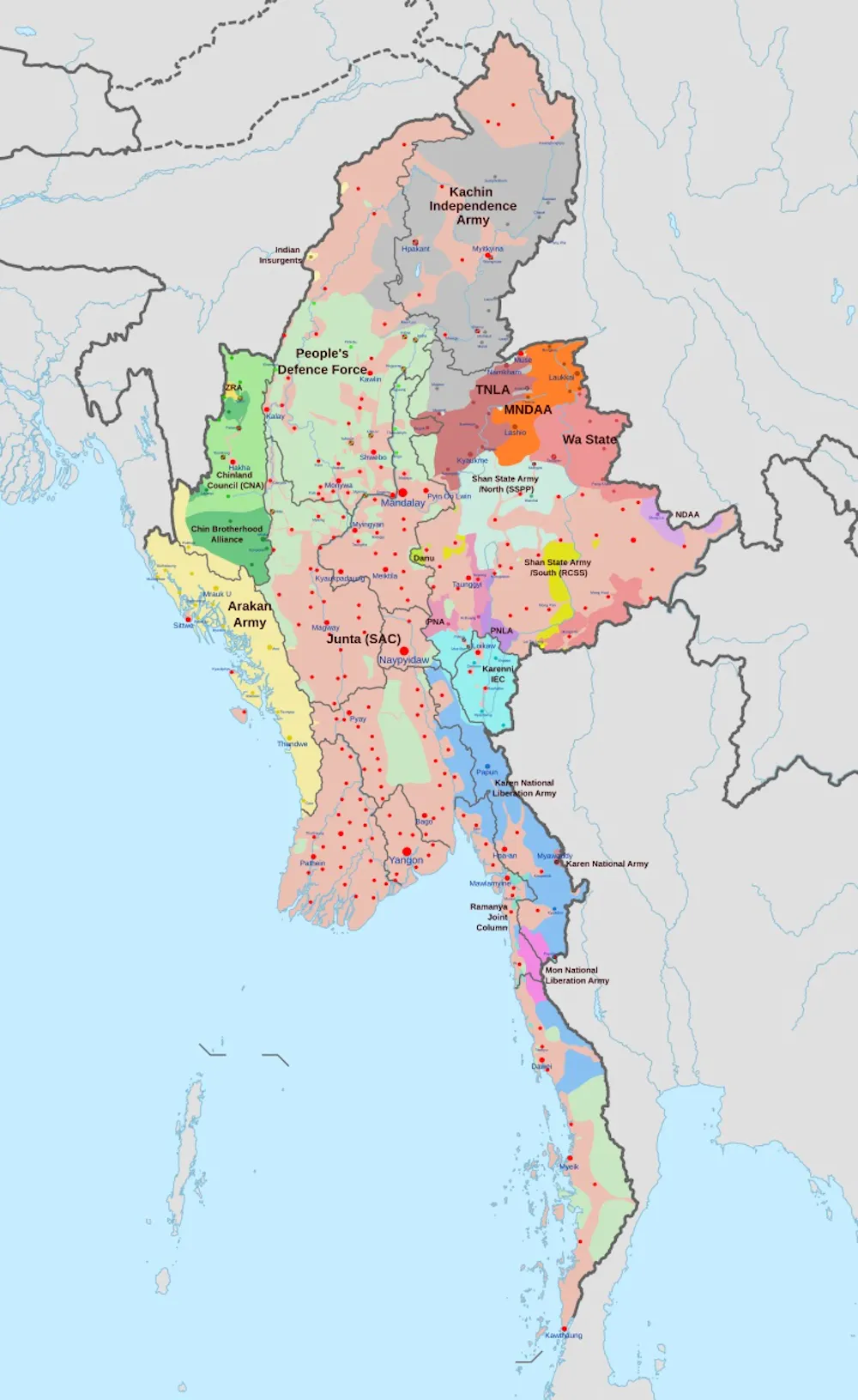
The military situation in Myanmar as of February 4 2025. Wikimedia Commons
Myanmar’s armed opposition has made significant gains over the past year, seizing vast territories from the military – though the latter still controls major cities like Naypyidaw, Yangon, and Mandalay.
Amid the surging violence, young people in Myanmar are finding themselves even more deprived of opportunities and increasingly forced into submission.
In February 2024, Myanmar’s junta declared mandatory military service for men aged 18 to 35 and women aged 18 to 27. Those who do not comply face up to five years in prison.
The Independent Investigative Mechanism for Myanmar (IIMM) on Tuesday revealed compelling evidence of the country’s military and affiliate militias engaging in more frequent and audacious war crimes and crimes against humanity.
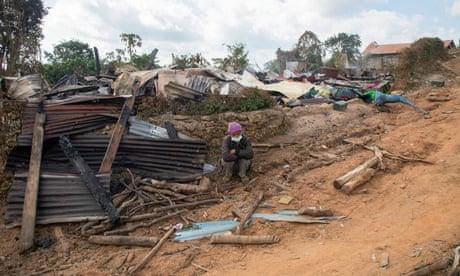
These include indiscriminate attacks on civilians from aerial bombing, mass executions of civilians and detained combatants, and large-scale and intentional burning of civilian homes and buildings, resulting in the destruction of entire villages in some cases, the Mechanism said in a news release.
Civilians are being killed by Russian weapons just like in Ukraine, says special rapporteur Tom Andrews in call for global action
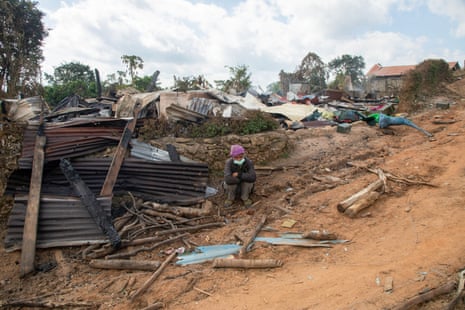
A man sits in front of a house destroyed by a Myanmar junta air strike. The UN special rapporteur for human rights there has called for an arms embargo. Photograph: SOPA Images/LightRocket/Getty Images
Rebecca Ratcliffe South-east Asia correspondentWed 15 Mar 2023 19.00 GMT
Myanmar is a “failing state” and the crisis is getting exponentially worse, a UN special rapporteur for the country has warned, urging countries to adopt the same unified resolve that followed the invasion of Ukraine.
“The same types of weapons that are killing Ukrainians are killing people in Myanmar,” Tom Andrews, special rapporteur on the situation of human rights in Myanmar, told the Guardian in an interview, citing the supply of Russian weapons to the junta since the coup two years ago. The junta relies heavily on aircraft from China and Russia, and has increasingly resorted to airstrikes to attempt to quell determined resistance forces.
The international response to Myanmar has been inadequate and some countries are continuing to enable the junta’s atrocities, Andrews said, calling for an arms embargo.
U.N. council adopts first Myanmar resolution in decades
UNITED NATIONS, Dec 21 (Reuters) – The U.N. Security Council adopted its first resolution on Myanmar in 74 years on Wednesday to demand an end to violence and urge the military junta to release all political prisoners, including ousted leader Aung San Suu Kyi.
Myanmar has been in crisis since the army took power from Suu Kyi’s elected government on Feb. 1, 2021, detaining her and other officials and responding to pro-democracy protests and dissent with lethal force.
It has long been split on how to deal with the Myanmar crisis, with China and Russia arguing against strong action. They both abstained from the vote on Wednesday, along with India. The remaining 12 members voted in favor.
“China still has concerns,” China’s U.N. Ambassador Zhang Jun told the council after the vote. “There is no quick fix to the issue … Whether or not it can be properly resolved in the end, depends fundamentally, and only, on Myanmar itself.”
He said China had wanted the Security Council to adopt a formal statement on Myanmar, not a resolution.
Russia’s U.N. Ambassador Vassily Nebenzia said Moscow did not view the situation in Myanmar as a threat to international peace and security and therefore believed it should not be dealt with by the U.N. Security Council.
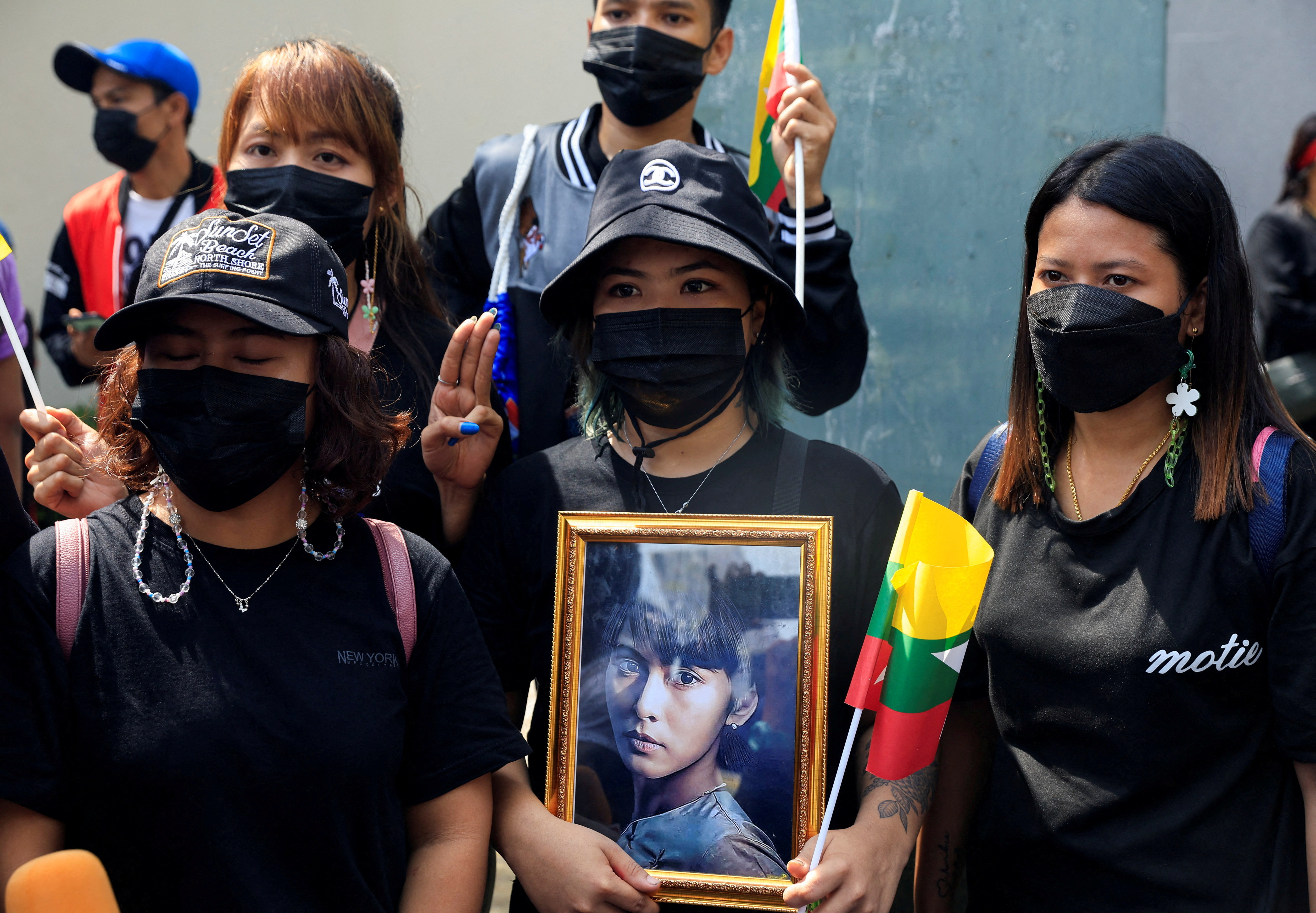
Myanmar citizens who live in Thailand, hold a portrait of former Myanmar state counsellor Aung San Suu Kyi as they protest against the execution of pro-democracy activists, at Myanmar embassy in Bangkok, Thailand July 26, 2022. REUTERS/Soe Zeya Tun
U.S. Secretary of State Antony Blinken welcomed the resolution’s adoption. “This is an important step by the Security Council to address the crisis and end the Burma military regime’s escalating repression and violence against civilians,” he said in a statement.
‘FIRST STEP’
Until now the council had only agreed formal statements on Myanmar, where the army also led a 2017 crackdown on Rohingya Muslims that was described by the United States as genocide. Myanmar denies genocide and said it was waging a legitimate campaign against insurgents who attacked police posts.
Challenging the regime’s legitimacy at home and abroad, Myanmar’s shadow National Unity Government (NUG) foreign minister Daw Zin Mar Aung, 45, has engaged with foreign governments and parliaments, international aid agencies and Myanmar’s many armed groups.
However, the elected lawmaker from the ousted National League for Democracy and winner of the 2012 International Women of Courage Award said international assistance is largely limited to moral support.
She exclusively tells The Irrawaddy about the importance of international support, including funding and arms, Myanmar’s friends and foes and how it receives different treatment from Ukraine.
It has been more than a year since the revolution against military rule was launched. We heard the revolution has received no assistance from foreign countries. Why is that?
It is mainly because the international community regards the crisis as a domestic issue if we compare it with the Ukraine war. It is widely believed that countries should not interfere in domestic affairs.
Yangon in February last year protests after the military coup.
Following is a joint statement on Armed Forces Day in Myanmar issued by the High Representative on behalf of the European Union and the Foreign Ministers of Albania, Australia, Bosnia and Herzegovina, Canada, Georgia, Iceland, Liechtenstein, Marshall Islands, the Federated States of Micronesia, Montenegro, New Zealand, North Macedonia, Norway, Palau, Republic of Korea, Serbia, Switzerland, Ukraine, the United Kingdom, and the United States.
Begin text:
On Armed Forces Day, we remember those killed and displaced by violence over the last year, including at least 100 people killed on this day alone one year ago.
Some countries continue to supply lethal assistance to Myanmar’s military regime, enabling its violence and repression. We urge all countries to support the people of Myanmar by immediately stopping the sale or transfer of arms, military equipment, materiel, dual-use equipment, and technical assistance to Myanmar, in line with UN General Assembly Resolution A/RES/75/287. We reiterate our call on the military to cease its violence and restore Myanmar’s path to democracy.
The UN independent rights expert on the situation of human rights in Myanmar, told the UN Human Rights Council on Wednesday that conditions inside the country following the 1 February military coup have worsened, urging a “change of course” to prevent further human rights abuses and deaths.
According to Special Rapporteur Tom Andrews, since its power grab and overthrow of the democratically-elected Government, the junta and its forces have murdered more than 1,100 people, arbitrarily detained more than 8,000, and forcibly displaced more than 230,000 civilians, bringing the total number of internally placed persons in Myanmar to well over half a million.
Japanese Prime Minister Shinzo Abe, center, speaks at the 10th Mekong-Japan Summit Meeting held in the State Guest House in Tokyo’s Moto-Akasaka district on Oct. 9. (Pool)
Five Southeast Asian leaders joined Prime Minister Shinzo Abe at the State Guest House in Tokyo on Oct. 9 to adopt an agreement to strengthen ties between their nations and Japan.
The agreement, titled “Tokyo Strategy 2018,” was adopted by Cambodia, Laos, Myanmar, Thailand and Vietnam, as well as Japan, at the 10th Mekong-Japan Summit Meeting.
The document positions relations between Japan and the Mekong River region as a “strategic partnership,” and it describes “strengthening connectivity,” “raising human resources” and “environmental protection” as its pillars, with the aim of developing high-quality infrastructure. Tiếp tục đọc “Mekong-Japan partnership strategy agreed at Tokyo summit”→
By 2030, more than 40% of the population in the Greater Mekong Subregion will be living in cities. Photo: ADB.
greatermekong – The subregion is one of the least urbanized areas in the world, but its cities are growing and their economic impact is being felt.
Urbanization levels in the Greater Mekong Subregion are low, ranging from 19.5% in Cambodia to 44.2% in Thailand. However, in all GMS countries, urban areas account for a much larger percentage of the gross domestic product (GDP)—at least half in most countries and about 75% in Thailand—than the share of its national populations.
Urbanization growth rates in the subregion range from 4.9% annually in Yunnan Province, People’s Republic of China (PRC) —six times the provincial population growth rate—to a low of 2.6% annually in Myanmar—1.7 times the national population growth rate. Tiếp tục đọc “The Greater Mekong Subregion: Rural no more”→
The Greater Mekong, including Vietnam, is expected to have a colossal US$66 billion poured in to strengthen regional economic co-operation in the next five years, said an Asian Development Bank (ADB) official on Tuesday.
Director of ADB’s division of regional co-operation and operations coordination in Southeast Asia Alfredo Perdiguero.
The money was upped by $2 billion compared to what ministers of the six Greater Mekong Sub-region (GMS) countries – Myanmar, Laos, Viet Nam, Cambodia, Thailand and China – agreed to in the action plan framework for 2018-2022 late last year. Tiếp tục đọc “$66b invested in Greater Mekong Sub-region: ADB official”→
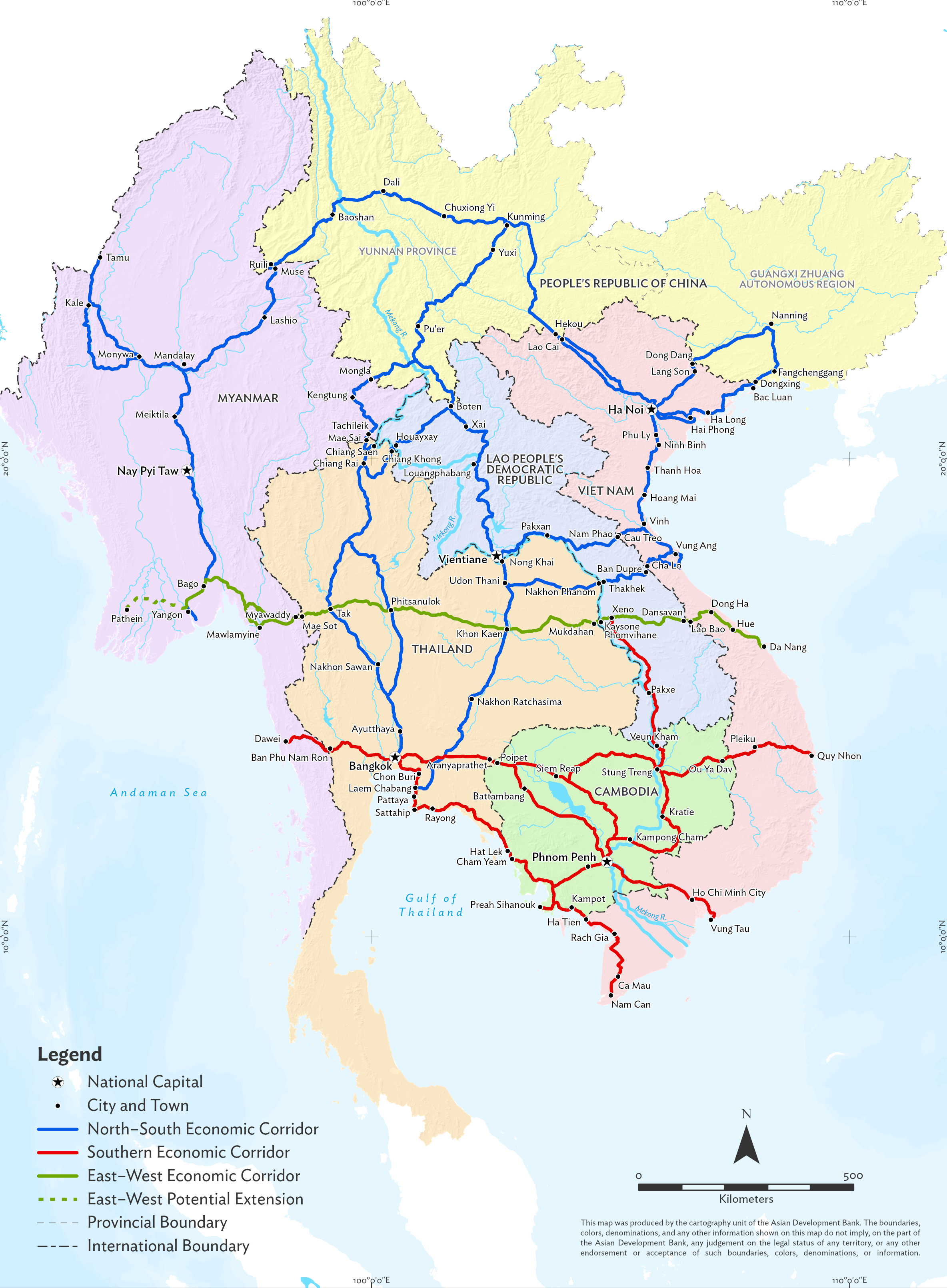
greatermekong – Economic corridors are areas, usually along major roadways, that host a variety of economic and social activities. This includes factories, tourism, trade, environmental protection activities and other aspects of the economy and social development of an area.
An economic corridor is much more complex than a mere road connecting two cities. It involves not only the development of infrastructure but also the crafting of laws and regulations that make it easier to do business, access markets, and conduct other activities that support trade and development in a comprehensive manner.
(Chinhphu.vn) – Bản ghi nhớ “Thu hoạch sớm” được các nước Tiểu vùng Mekong mở rộng (Việt Nam, Campuchia, Trung Quốc, Lào, Thái Lan và Myanmar) cho phép triển khai có hiệu quả Giấy phép vận tải đường bộ GMS và Sổ theo dõi tạm nhập cho xe thương mại.
Các nước thành viên GMS ký Bản ghi nhớ thực hiện “Thu hoạch sớm” Hiệp định GMS. Ảnh: VGP/Phan Trang
Hội nghị Ủy ban Hỗn hợp lần thứ 6 thực hiện Hiệp định Tạo thuận lợi vận chuyển người và hàng hóa qua lại biên giới 6 nước Tiểu vùng Mekong mở rộng (Hiệp định GMS-CBTA) cấp Bộ trưởng diễn ra chiều qua (15/3) đã thông qua và ký kết Bản ghi nhớ thực hiện “Thu hoạch sớm” và chính thức thực hiện từ tháng 6/2018. Tiếp tục đọc “Mở rộng vận tải xuyên biên giới Tiểu vùng sông Mekong”→
Minh Bui Jones looking at a previous issue of his magazine on the terrace of his house in Cambodia’s capital, Phnom Penh.CreditOmar Havana for The New York Times
HONG KONG — At Monument Books, a bookstore in Phnom Penh, Cambodia, the magazine racks are stacked with copies of The Economist and other titles from Britain, Australia, France and the United States.
But one top-selling magazine there was founded in Phnom Penh and takes its name — Mekong Review — from the mighty river that runs beside the city’s low-rise downtown.



 Japanese Prime Minister Shinzo Abe, center, speaks at the 10th Mekong-Japan Summit Meeting held in the State Guest House in Tokyo’s Moto-Akasaka district on Oct. 9. (Pool)
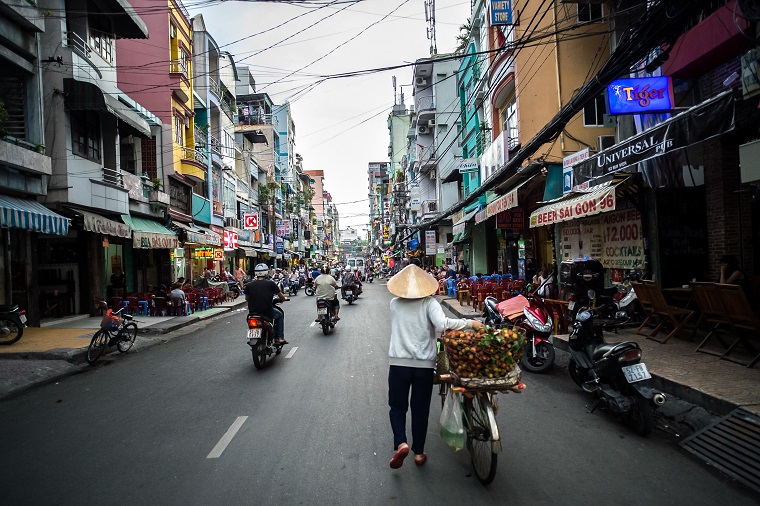 By 2030, more than 40% of the population in the Greater Mekong Subregion will be living in cities. Photo: ADB.


 CVD
CVD 
