Global warming is heating up the Arctic, and global powers like the United States, Russia and China are manoeuvring to stake a claim to the resources under its melting ice. Some experts say the region, once known as an exception – an island of international cooperation in the midst of geopolitical struggles – is becoming the site of a second cold war.
The Arctic may seem like a frozen and desolate environment where nothing ever changes. But the climate of this unique and remote region can be both an early indicator of the climate of the rest of the Earth and a driver for weather patterns across the globe. William Chapman explains why scientists often describe the Arctic as the “canary in the coal mine” when it comes to climate change
Hội nghị quốc tế lần thứ V về hợp tác giữa Việt Nam và các tổ chức phi chính phủ nước ngoài
Ngày 4/12/2025, Oxfam vinh dự cùng đại diện từ hơn 300 tổ chức phi chính phủ nước ngoài (TCPCPNN) tại Việt Nam tham gia Hội nghị quốc tế lần thứ 5 về hợp tác giữa Việt Nam và các TCPCPNN, các đối tác vì sự phát triển thịnh vượng và bền vững do Ủy ban Công tác về các tổ chức phi chính phủ nước ngoài (COMINGO) và Liên hiệp các tổ chức hữu nghị Việt Nam (VUFO) tổ chức.
Hội nghị đã đánh giá kết quả quan hệ đối tác giữa Việt Nam và các TCPCPNN giai đoạn 2019 – 2025, xác định phương hướng hợp tác và nâng cao hiệu quả viện trợ trong 5 năm tiếp theo, xây dựng các kiến nghị, đề xuất với Chính phủ và Thủ tướng Chính phủ nhằm tăng cường quan hệ đối tác giữa Việt Nam với các TCPCPNN, nhà tài trợ và doanh nghiệp quốc tế trong thời gian tới.
Tính đến 30/11, có 379 tổ chức PCPNN hoạt động thường xuyên tại Việt Nam với tổng giá trị viện trợ giai đoạn 2020-2024 đạt gần 1,14 tỷ USD. Các dự án trải rộng trên phạm vi cả nước, tập trung vào những lĩnh vực thiết yếu như y tế, phát triển kinh tế – xã hội, giải quyết các vấn đề xã hội, giáo dục – đào tạo, tài nguyên – môi trường, xây dựng năng lực tổ chức và hỗ trợ tư pháp…
Phát biểu tại hội nghị, Phó Thủ tướng Bùi Thanh Sơn ghi nhận và đánh giá cao những đóng góp thiết thực, bền bỉ của các tổ chức phi chính phủ và các đối tác đối với Việt Nam trong nhiều thập kỷ qua, nhất là trong y tế, giáo dục, giảm nghèo, phát triển cộng đồng, chống biến đổi khí hậu, ứng phó với thiên tai, bảo vệ nhóm yếu thế, thúc đẩy bình đẳng giới, phát triển nông thôn.
Hiện cả nước có trên 80 khu vực lấn biển, trong đó có khoảng trên 70 khu vực/dự án thuộc loại hình lấn biển, còn lại là các dự án đê chắn song, đường ống dẫn dầu…; có 19 tỉnh, thành phố ven biển phát triển các dự án lấn biển, với mục đích xây dựng cầu cảng, phát triển quỹ đất để xây dựng khu đô thị (KĐT), dân cư, du lịch, nghỉ dưỡng, khu công nghiệp… tiêu biểu như: Dự án đầu tư xây dựng, kinh doanh cơ sở hạ tầng khu công nghiệp – cảng biển – phi thuế quan Nam Đình Vũ (Hải Phòng), diện tích 1.329 ha; KĐT phức hợp Hạ Long Xanh tại thị xã Quảng Yên và TP. Hạ Long, với tổng diện tích đất ước tính khoảng 4.109,64 ha; KĐT du lịch Hùng Thắng (Bãi Cháy – Quảng Ninh), diện tích 224 ha; KĐT mới Hạ Long Marina (Hạ Long – Quảng Ninh), diện tích 230 ha; KĐT quốc tế Đa Phước (Đà Nẵng), diện tích 210 ha; KĐT sinh thái biển Phương Trang New Town (Đà Nẵng), diện tích 117 ha; KĐT mới Rạch Giá (Kiên Giang), diện tích 420 ha; Dự án Khu đô thị du lịch Cần Giờ, TP. Hồ Chí Minh, diện tích 2.870 ha [5].
Environmental activists from the Irish Wildlife Trust and Extinction Rebellion called on the Irish Government to introduce legislation in the form of a Biodiversity Act at a protest outside the National Biodiversity Conference in Dublin Castle on June 8, 2022. Credit: Niall Carson/PA Images via Getty Images
Ireland—a nation synonymous with its abundant, verdant landscapes—is considering a nationwide referendum on the rights of nature and the human right to a healthy environment.
If that happens, Ireland would become the first European country to constitutionally recognize that ecosystems, similar to humans and corporations, possess legal rights. More than two-thirds of the 27 European Union countries already recognize a universal human right to a healthy environment.
In December, a legislative committee proposed that the Irish government take a series of administrative measures to draft proposed constitutional amendments recognizing that nature has inherent rights to exist, perpetuate and be restored, and that humans have a right to a clean environment and stable climate.
To take legal effect, the proposed amendments must be approved by both houses of parliament, the Dáil Éireann (the lower house) and the Seanad (the upper house), and win a majority of the popular vote.
Home – là một bộ phim tài liệu bởi đạo diễn Yann Arthus-Bertrand, ra mắt vào ngày 5/6/2009 nhân Ngày môi trường thế giới. Bộ phim được quay trong vòng 18 tháng, tại 54 quốc gia, với một chiếc máy quay Cineplex & tốn chi phí 12 triệu USD. Bộ phim khắc họa nguồn gốc và đa dạng sự sống trên Trái Đất cũng như mối đe dọa từ các hoạt động của con người tới sự cân bằng sinh thái Trái Đất. Phim lập kỷ lục công chiếu trên hơn 50 quốc gia trên các kênh truyền hình và Youtube
THE PALE BLUE DOT OF EARTH “That’s here. That’s Home. That’s us.”Image: NASA / JPL
“Hãy nhìn lại cái chấm đó. Cái Chấm đó chính là đây. Là nhà. Là chúng ta. Trên cái Chấm có tất cả những người thương yêu của bạn, có tất cả những ai bạn biết, những ai bạn từng nghe nhắc tới, và cả mọi con người đã từng tồn tại, từng sống trọn vẹn cuộc đời của họ. Cái Chấm đó là tổng hòa hỗn hợp của vui sướng và bất hạnh của mọi con người chúng ta, là hàng ngàn tôn giáo tín ngưỡng, mọi ý thức hệ, các học thuyết kinh tế, mọi thợ săn và thợ rèn, mọi anh hùng và kẻ hèn hạ, mọi nhà sáng lập và kẻ huỷ diệt nền văn minh, tất cả vua chúa và thường dân, tất cả đôi lứa đang yêu, tất cả ai làm cha mẹ và những đứa trẻ đầy triển vọng, mọi nhà phát minh và nhà thám hiểm, các thầy giảng các giáo viên, tất cả các chính trị gia tham nhũng, các “siêu sao”, các “lãnh đạo tối cao”, tất cả những vị thánh và kẻ tội đồ trong lịch sử loài người chúng ta đều sống ở đó – ở trên một cái Chấm hạt bụi lơ lửng trong một vệt nắng.
Trái Đất là một sân khấu siêu nhỏ trong một vũ đài vũ trụ mênh mông. Hãy nghĩ về những dòng sông đầy máu dưới tay của những vị tướng và hoàng đế, để mà trong vinh quang và chiến thắng, họ có thể trở thành những bá chủ nhất thời của một phần tí ti trong cái dấu Chấm đó. Hãy nghĩ về sự tàn khốc vô tận mà cư dân ở một góc tí ti này giáng xuống người dân ở một góc tí ti khác mà những con người ở đó thì đều giống nhau đến mức khó có thể phân biệt được, hãy nghĩ về mức độ nhầm lẫn thường xuyên của những con người đó, về sự háo hức tàn sát nhau về lòng căm thù sục sôi như thế.
Sự giả tạo của chúng ta, tự huyễn hoặc về cái sự quan trọng của chính mình, cái sự ảo tưởng rằng chúng ta có đặc quyền trong Vũ trụ bị thách thức bởi điểm Chấm mờ này. Hành tinh Trái Đất của chúng ta chỉ là một cái đốm lẻ loi, bao trùm bởi bóng tối vũ trụ bao la. Trong cái sự mù mờ của chúng ta, trong vũ trụ vô tận này, không hề có một dấu vết nào cho thấy sẽ có sự giúp đỡ đến từ một nơi nào khác (ngoài cái Chấm này) để cứu rỗi chúng ta khỏi chính mình.
Cho đến nay trong mọi nơi mà ta từng biết đến, Trái Đất là thế giới duy nhất cho phép sự sống neo đậu và trú ẩn. Không một hành tinh nào khác, ít nhất là trong tương lai gần, mà loài người chúng ta có thể di cư đến. Vâng, đến thăm thì được, chứ định cư thì chưa đâu. Dù muốn hay không, thì Trái Đất vẫn là nơi cho ta cư trú ở thời điểm hiện tại.
Người ta nói thiên văn học là một trải nghiệm khiêm nhường và để xây dựng chí khí. Có lẽ không có cách bày tỏ nào tốt hơn về sự tự phụ ngu xuẩn của loài người bằng hình ảnh xa xôi về thế giới nhỏ bé của chúng ta. Đối với tôi, hình ảnh cái Chấm này nhấn mạnh trách nhiệm của chúng ta để đối xử tử tế với nhau hơn, để giữ gìn và trân trọng cái Chấm xanh mờ nhạt này, ngôi nhà duy nhất mà con người chúng ta biết đến.”
— Carl Sagan, Pale Blue Dot, 1994
Look again at that dot. That’s here. That’s home. That’s us. On it everyone you love, everyone you know, everyone you ever heard of, every human being who ever was, lived out their lives. The aggregate of our joy and suffering, thousands of confident religions, ideologies, and economic doctrines, every hunter and forager, every hero and coward, every creator and destroyer of civilization, every king and peasant, every young couple in love, every mother and father, hopeful child, inventor and explorer, every teacher of morals, every corrupt politician, every “superstar,” every “supreme leader,” every saint and sinner in the history of our species lived there–on a mote of dust suspended in a sunbeam.
The Earth is a very small stage in a vast cosmic arena. Think of the rivers of blood spilled by all those generals and emperors so that, in glory and triumph, they could become the momentary masters of a fraction of a dot. Think of the endless cruelties visited by the inhabitants of one corner of this pixel on the scarcely distinguishable inhabitants of some other corner, how frequent their misunderstandings, how eager they are to kill one another, how fervent their hatreds.
Our posturings, our imagined self-importance, the delusion that we have some privileged position in the Universe, are challenged by this point of pale light. Our planet is a lonely speck in the great enveloping cosmic dark. In our obscurity, in all this vastness, there is no hint that help will come from elsewhere to save us from ourselves.
The Earth is the only world known so far to harbor life. There is nowhere else, at least in the near future, to which our species could migrate. Visit, yes. Settle, not yet. Like it or not, for the moment the Earth is where we make our stand.
It has been said that astronomy is a humbling and character-building experience. There is perhaps no better demonstration of the folly of human conceits than this distant image of our tiny world. To me, it underscores our responsibility to deal more kindly with one another, and to preserve and cherish the pale blue dot, the only home we’ve ever known.
Indian Roots of the Term Speak of a History of Non-Violent Resistance
The first tree huggers were 294 men and 69 women belonging to the Bishnois branch of Hinduism, who, in 1730, died while trying to protect the trees in their village from being turned into the raw material for building a palace. They literally clung to the trees, while being slaughtered by the foresters. But their action led to a royal decree prohibiting the cutting of trees in any Bishnoi village.
Photo courtesy Waging NonviolenceThe Chipko movement (which means “to cling”) started in the 1970s when a group of peasant women in Northern India threw their arms around trees designated to be cut down.
Show the slightest bit of concern for the environment and you get labeled a tree hugger. That’s what poor Newt Gingrich has been dealing with recently, as the other presidential candidates attack his conservative credentials for having once appeared in an ad with Nancy Pelosi in support of renewable energy. Never mind that he has since called the ad the “biggest mistake” of his political career and talked about making Sarah Palin energy secretary. Gingrich will be haunted by the tree hugger label the rest of his life. He might as well grow his hair out, stop showering and start walking around barefoot.
But is that what a tree hugger really is? Just some dazed hippie who goes around giving hugs to trees as way to connect with nature. You might be shocked to learn the real origin of the term.
The first tree huggers were 294 men and 69 women belonging to the Bishnois branch of Hinduism, who, in 1730, died while trying to protect the trees in their village from being turned into the raw material for building a palace. They literally clung to the trees, while being slaughtered by the foresters. But their action led to a royal decree prohibiting the cutting of trees in any Bishnoi village. And now those villages are virtual wooded oases amidst an otherwise desert landscape. Not only that, the Bishnois inspired the Chipko movement (chipko means “to cling” in Hindi) that started in the 1970s, when a group of peasant women in the Himalayan hills of northern India threw their arms around trees designated to be cut down. Within a few years, this tactic, also known as tree satyagraha, had spread across India, ultimately forcing reforms in forestry and a moratorium on tree felling in Himalayan regions.
when it comes to the Paris Agreement and climate action; namely that when individuals change their behaviour by consuming differently they can drive industries to change, as those industries are then caught between a ‘greening’ consumer demand and international and governmental policies focusing on climate action.
Back in the 1980s, everyone was talking about the hole in the ozone layer, so what happened, and what can the international agreement to ban CFCs teach us about the importance of multilateral cooperation when it comes to climate action?
What exactly is the ozone layer?
The ozone layer is the part of the Earth’s atmosphere that protects the planet from ultraviolet radiation. It’s found in the Stratosphere which is around 10-50km above the surface of the earth. Think of it as a layer of sunscreen that protects us from all manner of harmful rays. Without it, life on Earth would be extremely unpleasant.
The first Earth Day was in 1970. What’s changed since? Our population has doubled. We’re emitting 2.6 times more CO2. Sea levels have risen 12 centimeters
Coral reefs are an undeniably critical part of the ocean. Although these ecosystems only occupy 0.01% of the ocean floor, they support 25% of all marine life, providing crucial habitat for a myriad of fish and invertebrate species. Coral reefs also have a significant impact on coastal communities, with one billion people benefiting from their existence. They provide food and livelihoods, reduce storm surge and flood risk to coastlines across the tropics, protect against erosion and attract tourists to over 100 countries and territories.
Theo số liệu thống kê của Hiệp hội làng nghề Việt Nam, hiện cả nước có khoảng 5.400 làng nghề, trong đó có khoảng 2.000 làng nghề truyền thống đã được công nhận. Trong đó, có 60% làng nghề tập trung khu vực phía Bắc, miền Trung chiếm khoảng 23,6% và miền Nam chiếm khoảng 16,6%. Hiện các làng nghề phát triển đang theo hình thức tự phát, là nguyên nhân chính khiến tình trạng ô nhiễm môi trường làng nghề ở mức báo động, ảnh hưởng đến môi trường và đời sống người dân.
Điểm tập kết rác thải thôn Quan Độ, xã Văn Môn, huyện Yên Phong, tỉnh Bắc Ninh quá tải và ô nhiễm nghiêm trọng
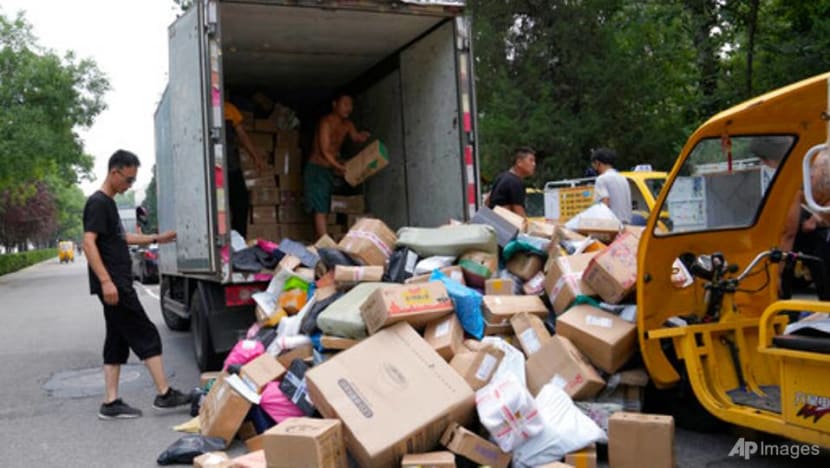
Big sales events like 10.10 or 11.11 singles day sales may excite shoppers and net billions in profits for online retailers but if we don’t stop this insatiable need to consume, all of us are in trouble, says climate activist Ho Xiang Tian.
The pop-up art installation in the heart of Times Square is meant to raise environmental awareness, coinciding with New York State’s ban on all plastic carryout bags.

 Hội nghị đã đánh giá kết quả quan hệ đối tác giữa Việt Nam và các TCPCPNN giai đoạn 2019 – 2025, xác định phương hướng hợp tác và nâng cao hiệu quả viện trợ trong 5 năm tiếp theo, xây dựng các kiến nghị, đề xuất với Chính phủ và Thủ tướng Chính phủ nhằm tăng cường quan hệ đối tác giữa Việt Nam với các TCPCPNN, nhà tài trợ và doanh nghiệp quốc tế trong thời gian tới.
 Tính đến 30/11, có 379 tổ chức PCPNN hoạt động thường xuyên tại Việt Nam với tổng giá trị viện trợ giai đoạn 2020-2024 đạt gần 1,14 tỷ USD. Các dự án trải rộng trên phạm vi cả nước, tập trung vào những lĩnh vực thiết yếu như y tế, phát triển kinh tế – xã hội, giải quyết các vấn đề xã hội, giáo dục – đào tạo, tài nguyên – môi trường, xây dựng năng lực tổ chức và hỗ trợ tư pháp…




 CVD
CVD 