Government Debt to GDP by Country in 2025

visualcapitalist

By Niccolo Conte Graphics/Design: Sabrina Lam

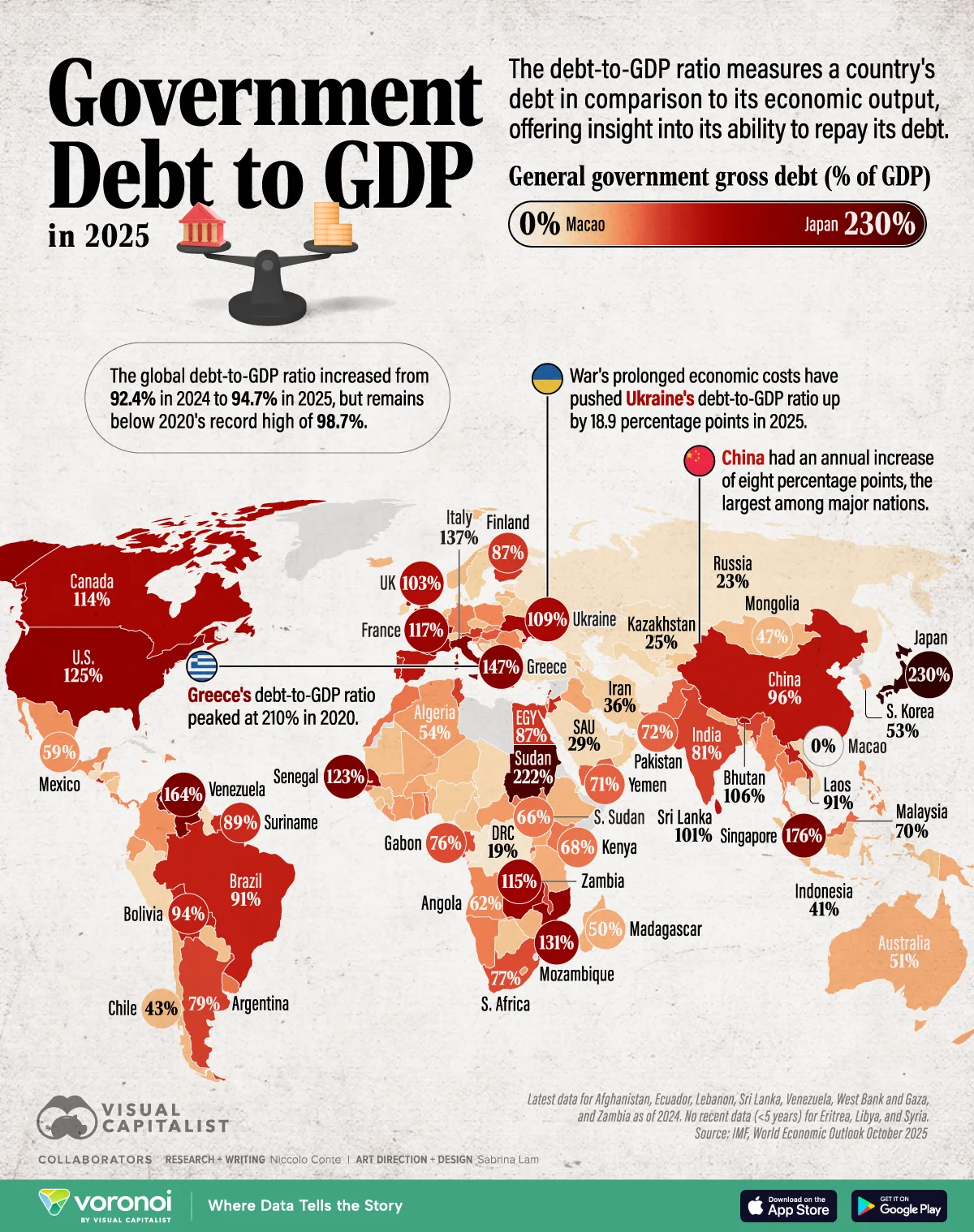
Global map of government debt in 2025 by country

Key Takeaways

  • The global debt-to-GDP ratio rose 2.3 percentage points to 94.7% in 2025, but is still below the pandemic-era peak of 98.7% in 2020.
  • Japan remains the world’s most indebted nation at 230% of GDP, followed by Sudan (222%) and Singapore (176%).

Global debt levels continue to rise, with 2025 marking another year of fiscal strain across both advanced and developing economies.

Tiếp tục đọc “Government Debt to GDP by Country in 2025”

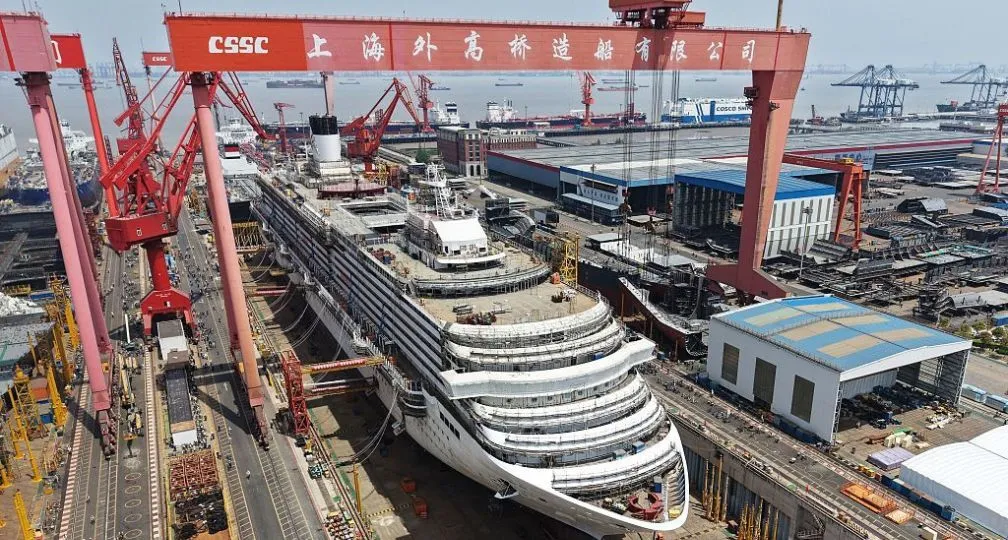
China’s shipyard dominance leads to geoeconomic risks

japantimes.co.jp 2025.07.02

China’s unparalleled shipbuilding capacity has the U.S., Japan and its allies — both military and economic — rightly concerned about maritime threats to trade and security.
Without a concerted effort and international cooperation to challenge Beijing’s commanding lead in the global shipbuilding industry, those threats will materialize furthering China’s alarming dominance.

According to 2024 data from the Chinese government, the country ranks first worldwide in ship completions, new orders and order backlogs — claiming global shares of 55.7%, 74.1% and 63.1%, respectively. China is also expanding its capabilities in high value-added vessels, surpassing South Korea and Japan, while consolidating its role as a “shipbuilding superpower.”

Shipbuilding is not merely an economic activity — it underpins both global trade and national defense. Civilian shipbuilding provides the foundation for training engineers and skilled workers essential to naval production. As such, the growth of China’s shipbuilding sector carries profound implications, not only for maritime commerce but also for the international security architecture.

Tiếp tục đọc “China’s shipyard dominance leads to geoeconomic risks”

Why China is finally starting to acknowledge its overcapacity problem

channelnewsasia.com

Where Beijing once celebrated its manufacturing and export prowess, it now openly discusses the need to curb “involution”. This is a dramatic departure from its previous stance, says Enodo Economics’ Diana Choyleva.

Commentary: Why China is finally starting to acknowledge its overcapacity problem
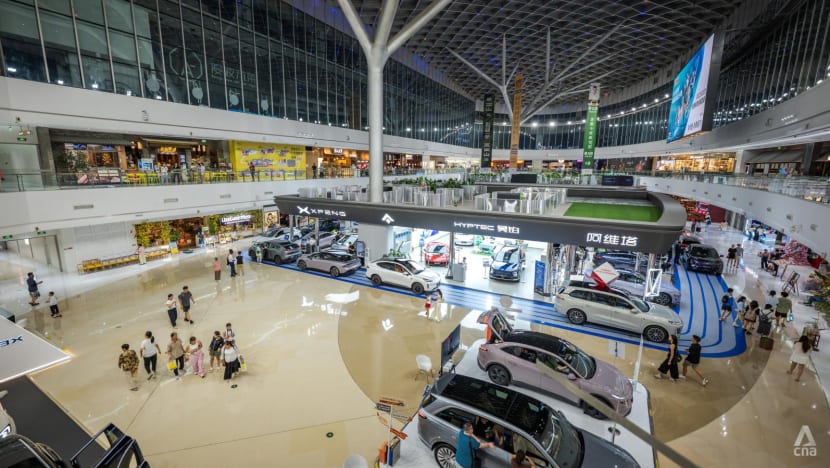
People browse in electric car showrooms located on the 5th floor in a popular shopping mall in Beijing on Jul 21, 2025. (Photo: CNA/Hu Chushi)

LONDON: For years, Beijing dismissed Western concerns about Chinese overcapacity as protectionist rhetoric. When the United States and European Union complained about cheap Chinese exports flooding global markets, China’s response was predictable: These were simply competitive advantages in a free market economy.

That narrative has now fundamentally shifted. In a remarkable policy U-turn, China has not only started acknowledging the overcapacity problem but is treating it as a national priority that requires urgent intervention.

While there have been signs of this narrative change for a while, the clearest signal of this messaging transformation came through recently on China’s own policy channels.

In July, the Communist Party’s leading journal Qiushi warned that “disorderly competition has destroyed entire industry ecology”. This wasn’t diplomatic language about market dynamics – it was an admission that destructive competition had reached crisis proportions.

Tiếp tục đọc “Why China is finally starting to acknowledge its overcapacity problem”

Ranked: Emerging Markets by FDI Confidence

 visualcapitalist.com June 30, 2025

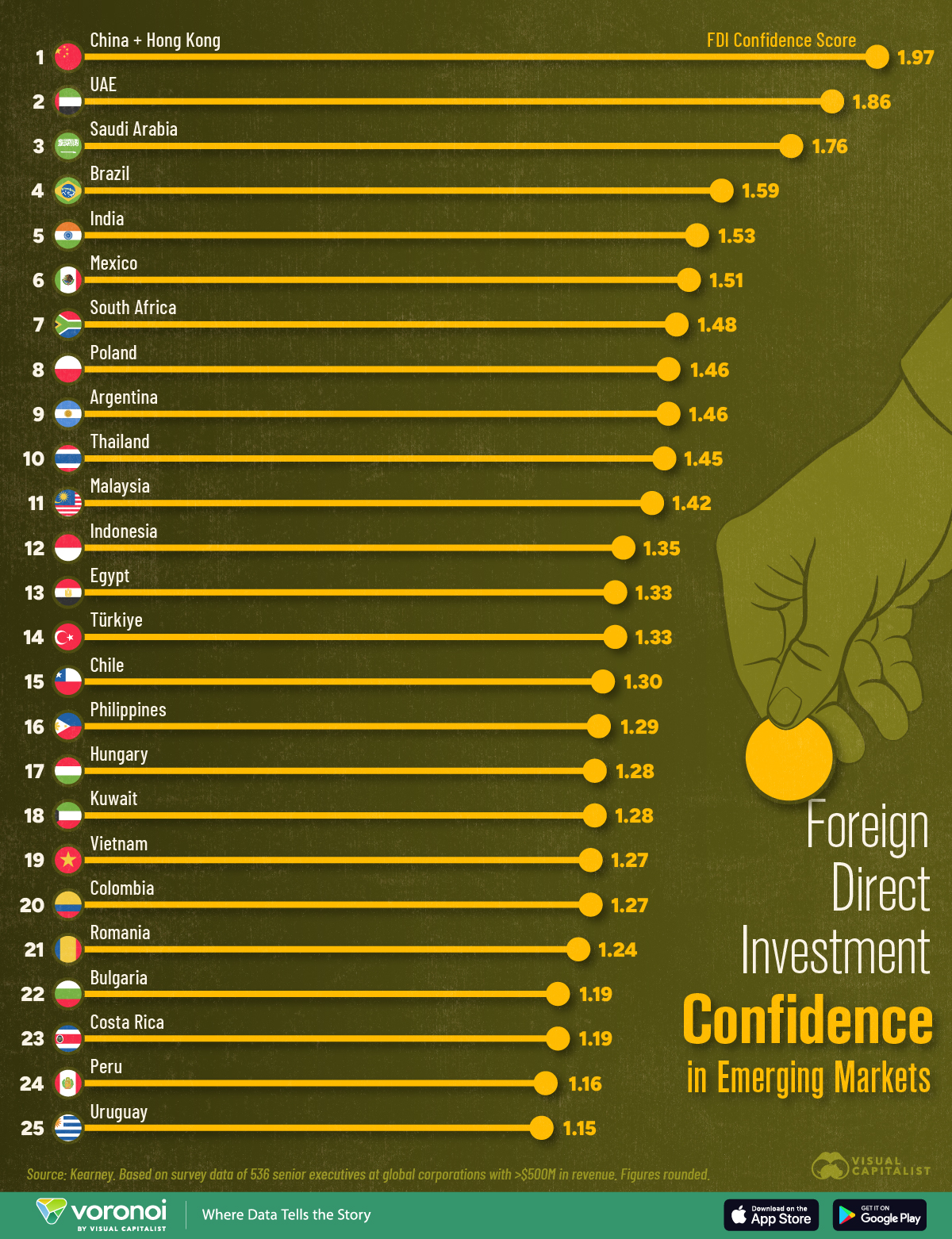
This infographic ranks the top 25 emerging markets by their FDI confidence in 2025, based on a survey of global business leaders.

Key Takeaways

  • China, the UAE, and Saudi Arabia are the top three emerging markets by FDI confidence in 2025
  • Brazil overtook India to take the fourth spot, with both countries making the top five
  • Domestic economic performance and efficiency of legal and regulatory processes were the top two priorities for FDI investors

Emerging markets often attract foreign investors with prospects for higher economic growth and diversification.

Where are global business leaders placing their foreign direct investment (FDI) bets in 2025?

This chart highlights the top 25 emerging markets by FDI confidence score in 2025, based on a survey conducted by Kearney. The rankings are drawn from responses by 536 senior executives at global companies with annual revenues above $500 million.

China Leads in Foreign Investor Sentiment

China (including Hong Kong) remains the top emerging market for foreign investor confidence in 2025. However, FDI inflows have slowed in recent years, hitting multi-year lows in 2023.

Following China, the UAE and Saudi Arabia also retain their places as the second and third-most favored developing economies for FDI.

Here’s a look at the full list of top emerging markets for FDI confidence in 2025:Search:

RankCountryFDI Confidence Score
1China (including Hong Kong) 🇨🇳🇭🇰1.97
2United Arab Emirates 🇦🇪1.86
3Saudi Arabia 🇸🇦1.76
4Brazil 🇧🇷1.59
5India 🇮🇳1.53
6Mexico 🇲🇽1.51
7South Africa 🇿🇦1.48
8Poland 🇵🇱1.46
9Argentina 🇦🇷1.46
10Thailand 🇹🇭1.45

Brazil and India—two of the biggest emerging economies by GDP—round out the top five, with Brazil overtaking India in FDI confidence in the 2025 rankings.

These rankings align with investors’ FDI priorities from the same survey, where the efficiency of legal and regulatory processes and domestic economic performance top the list.

South Africa made the largest upward move in 2025, jumping from 11th to 7th in the rankings. It also recorded FDI inflows of around $661 million in Q1 2025, up 56% from the fourth quarter of 2024.

Overall, 11 of the top 25 emerging markets for FDI confidence are in Asia and the Middle East.

What’s Driving Investor Confidence?

The factors driving FDI confidence vary for each economy.

In China, tech innovation was the leading driver of investor confidence, while economic performance ranked highest for the UAE and Saudi Arabia.

Meanwhile, the talent/skill of the labor pools in India and Mexico were the strongest factors attracting investors.

How U.S. Corporations sterilized thousands worldwide – No sperm, no kids

AJ+ – 14-3-2025

Tens of thousands of former farmworkers claim they’ve been rendered sterile by a highly toxic pesticide known as DBCP, unable to ever have children.

Though DBCP was banned by the U.S. government in the 70s, U.S. fruit companies continued to use it abroad in poorer countries with fewer regulations.

Decades later, these farmworkers are still fighting for justice, filing lawsuits against some of the world’s biggest corporations. Yara travels to Costa Rica to investigate one of the most devastating occupational health disasters in history.

Vụ bê bối PricewaterhouseCoopers ở Australia: Bài học không thể bỏ qua

CAND – Thứ Tư, 06/09/2023, 11:00

Từ đầu tháng 5/2023, dư luận Australia đặc biệt quan tâm tới vụ bê bối của tập đoàn kiểm toán và tư vấn hàng đầu thế giới PricewaterhouseCoopers (PwC), sau khi tập đoàn này bị phát hiện hành vi lạm dụng thông tin mật về chính sách thuế của Australia để giúp các đối tác của mình trục lợi, trốn thuế thương mại.

PwC là công ty cung cấp dịch vụ kế toán cũng như tư vấn hàng đầu thế giới.

Và nó đã trở thành một bài học rất đáng chú ý, trên phương diện quản lý nhà nước, đối với mọi chính phủ, mọi quốc gia.

Tiếp tục đọc “Vụ bê bối PricewaterhouseCoopers ở Australia: Bài học không thể bỏ qua”

What impact is Brexit having on the UK economy?

The UK’s trade has dropped in recent years, the pound has fallen considerably against the dollar and business investment is yet to return to its peak in 2016. While these factors are predicted to be a result of Brexit, ministers have blamed international issues.

The UK’s recent disastrous “mini” Budget can trace its origins back to Britain’s decision to leave the European Union. The economic costs of Brexit were masked by the Covid-19 pandemic and the crisis in Ukraine. But six years after the UK voted to leave, the effect has become clear. In this film, senior FT writers and British businesspeople examine how Brexit hit the UK economy, the political conspiracy of silence, and why there has not yet been a convincing case for a ‘Brexit dividend’.

Warren Buffett’s shifting Asian portfolio

Geopolitics push ‘Oracle of Omaha’ to move away from China and invest in Japan

asia.nikkei.com

KENJI KAWASE, Nikkei Asia chief business news correspondentMAY 24, 2023 04:30 JST

OMAHA, U.S. — For Antonius Budianto, an independent stock investor from Indonesia, it was a dream come true to be in Omaha, Nebraska for the first time.

Traveling from East Java with his wife and 14-year-old daughter, Antonius was standing in a queue in front of Omaha’s CHI Health Center at 3 a.m. to grab a seat at the annual general shareholders meeting of investment company Berkshire Hathaway on May 6. Antonius said they wanted to be “as close as possible” to the podium as his two business idols — Warren Buffett and Charlie Munger — sat and took questions from shareholders in the audience and around the world.

Antonius has been investing in listed stocks in Indonesia for over 20 years, faithfully following the Buffett method: focus on a few companies with strong earnings, handsome dividend payments and sound corporate governance, and hold on to them, sometimes for decades. At Berkshire, this strategy has been distilled into the oft-repeated maxim: “Just hold the goddamn stock,” as Munger put it that day.

For his part, Antonius has been making a living as a full-time professional investor since 2010.

Tiếp tục đọc “Warren Buffett’s shifting Asian portfolio”

Japan’s quiet leadership as it hosts the G7 summit in Hiroshima

brookings.edu

Mireya Solís, director of the Center for East Asian Policy Studies at Brookings, explains the significance of Japan hosting the G7 summit in Hiroshima, and how Tokyo centers its foreign policy on promoting a free and open Indo-Pacific region. “This is Japan’s grand strategy,” Solís says, “this is really the roadmap that Japan has charted to achieve its security and prosperity.”

Mireya Solís, director of the Center for East Asian Policy Studies at Brookings, explains the significance of Japan hosting the G7 summit in Hiroshima, and how Tokyo centers its foreign policy on promoting a free and open Indo-Pacific region. “This is Japan’s grand strategy,” Solís says, “this is really the roadmap that Japan has charted to achieve its security and prosperity.”

TRANSCRIPT

[music]

DOLLAR: Hi, I’m David Dollar, host of the Brookings Trade podcast Dollar and Sense. Today, my guest is Mireya Solís, director of the Center for East Asian Policy Studies here at Brookings. Mireya is a leading expert on Japan’s trade and economic diplomacy, and she has a book coming out this summer on Japan’s quiet leadership. And one aspect of this quiet leadership, or maybe not so quiet right now, is Japan will be hosting the G7 summit in Hiroshima starting on May 19. That’s the main thing we’re going to talk about.

Because of the Memorial Day holiday in the United States, we’re going to push back production one week. So, the next episode will come out on June 5th.

So, welcome to the show, Mireya.

SOLÍS: Thank you so much, David. It’s a pleasure to be here.

Tiếp tục đọc “Japan’s quiet leadership as it hosts the G7 summit in Hiroshima”

Big Oil’s Big Lies: How the industry denied global warming – 2 parts

Big Oil’s Big Lies: How the industry denied global warming – Part 1 | People and Power

https://www.youtube.com/watch?v=Oq8_YRXjJk4

Big Oil’s Big Lies: How the industry denied global warming – Part 2 | People and Power

https://www.youtube.com/watch?v=ujOrbr5hKRE

Al Jazeera English – 9-2-2023

More than 40 years ago, the world’s largest and most profitable oil companies began to understand the effects their products were having on our climate. Their own scientific research told them so – well before it became common knowledge.

But for the next four decades – time we could have better spent transitioning to greener forms of energy – they sought to discredit and downplay evidence of global warming and the calamities it would lead to; wildfires, rising sea levels, extreme storms and much else besides. Tiếp tục đọc “Big Oil’s Big Lies: How the industry denied global warming – 2 parts”

The New Industrial Age

America Should Once Again Become a Manufacturing Superpower

foreignaffairs.com

By Ro Khanna

January/February 2023

Taylor Callery

Download Article

For many citizens, the American dream has been downsized. In recent decades, the United States has ceased to be the world’s workshop and become increasingly reliant on importing goods from abroad. Since 1998, the widening U.S. trade deficit has cost the country five million well-paying manufacturing jobs and led to the closure of nearly 70,000 factories. Small towns have been hollowed out and communities destroyed. Society has grown more unequal as wealth has been concentrated in major coastal cities and former industrial regions have been abandoned. As it has become harder for Americans without a college degree to reach the middle class, the withering of social mobility has stoked anger, resentment, and distrust. The loss of manufacturing has hurt not only the economy but also American democracy.

Tiếp tục đọc “The New Industrial Age”

The Global Energy Crisis 2021-2023 and Political Upheaval: Could It Get Worse?

energytracker.com

What started as a sharp post-pandemic rise in energy prices in mid-2020 has turned into a full-blown global energy crisis. How is this affecting the political stability of countries?

17 January 2023 – by Heba Hashem

Last updated on 24 January 2023

The world is going through a global energy crisis. Fuel costs affect many parts of daily life, including energy for heating and lighting, individual travel and commodities transportation.

The world is now facing a cost-of-living catastrophe. Millions of households are struggling to cover basic needs after energy prices spiked to levels not seen in decades.

Is There a Global Energy Crisis Today in 2023?

Actually, there is a global energy crisis. From Indonesia to the UK and Peru, people across the globe have taken their anger to the streets. As many as 92 countries witnessed protests against high fuel prices between January and September 2022. These include developed European countries like France, Spain and the UK.

Tiếp tục đọc “The Global Energy Crisis 2021-2023 and Political Upheaval: Could It Get Worse?”

Asia’s ticking debt bomb: Sri Lanka crisis sounds alarm bells across region

Disaster looms in Laos, Bangladesh and elsewhere as China seems reluctant to take losses on Asian loans

asia.nikkei.com

A customer hands over Sri Lankan rupee banknotes at an open market in the capital, Colombo. The country is currently experiencing its worst economic crisis in decades.    © Getty Images

CHANDANA POKUNA, Sri Lanka — Every day after 4 p.m., residents in this quiet, leafy village listen for the putt-putting of motorbikes on the sandy road next to their homes. When they hear it, they know to shut their doors and turn off their lights. Their children are instructed to run inside and not let anyone in.

A motorbike is the vehicle of choice for local debt collectors, who fan out through places like Chandana Pokuna, some 500 brick-faced, rundown houses in Sri Lanka’s rice-farming north central district of Polonnaruwa. The motorcycle men, agents of microlending companies, start work in the late afternoon, when they know residents will be at home.

Tiếp tục đọc “Asia’s ticking debt bomb: Sri Lanka crisis sounds alarm bells across region”

Nghèo đừng chơi sang

XÊ NHO 08/08/2022 16:41 GMT+7

TTCT Rất lạ – Mỹ tăng lãi suất để chống lạm phát là chuyện nước họ; thế mà nước nào cũng lo nền kinh tế của mình bị ảnh hưởng. Thậm chí tờ Washington Post, trong một podcast, đặt vấn đề theo hướng: Vì sao lãi suất ở Mỹ có thể kéo theo khủng hoảng đói kém toàn cầu?

Nghèo đừng chơi sang - Ảnh 1.

Dân Sri Lanka xếp hàng đợi đổi bình gas nấu ăn. Nợ nần đã khiến ngân khố cạn kiệt. Ảnh: The Telegraph

Để độc giả dễ hình dung, tờ này ví von: Bạn mua nhà, trả góp 30 năm – hằng tháng phải đều đặn trả một khoản tiền. Giả dụ tiền mua nhà trả bằng đôla Mỹ, trong khi thu nhập của bạn tính bằng đồng peso, nên phải đổi từ peso sang đôla mới có tiền trả góp. 

Giả định mỗi năm bạn làm ra 100 peso và tiền trả góp mua nhà là 5 USD, nếu đồng đôla lên giá gấp đôi, bạn phải để ra số peso nhiều gấp đôi mới đủ trả nợ. Thế nên tiền đi chợ, tiền thuốc men… hụt đi, khả năng đói kém hiển hiện.

Tiếp tục đọc “Nghèo đừng chơi sang”