FILE – The Nobel laureates and the royal family of Sweden during the Nobel Prize award ceremony at the Concert Hall in Stockholm, Saturday Dec. 10 2022. The Nobel Foundation has withdrawn its invitation for representatives of Russia, Belarus and Iran to attend this year’s Nobel Prize award ceremonies after the decision to invite them “provoked strong reactions.” Saturday’s U-turn came after several Swedish lawmakers said they would boycott this year’s Nobel Prize award ceremonies. (Pontus Lundahl/TT via AP, File)
Updated 4:44 AM GMT+7, September 3, 2023Share
STOCKHOLM (AP) — The Nobel Foundation on Saturday withdrew its invitation for representatives of Russia, Belarus and Iran to attend this year’s Nobel Prize award ceremonies after the decision announced a day earlier “provoked strong reactions.”
Several Swedish lawmakers said Friday they would boycott this year’s Nobel Prize award ceremonies in the Swedish capital, Stockholm, after the private foundation that administers the prestigious awards changed its position from a year earlier and invited representatives of the three countries to attend, saying it “promotes opportunities to convey the important messages of the Nobel Prize to everyone.”
Some of the lawmakers cited Russia’s war on Ukraine and the crackdown on human rights in Iran as reasons for their boycott. Belarusian opposition figure Sviatlana Tsikhanouskaya on Friday called on the Swedish Nobel Foundation and the Norwegian Nobel Committee not to invite representatives of Belarusian President Alexander Lukashenko’s “illegitimate regime to any events.”
Unofficial figures point to a mental health crisis amid severe restrictions on Afghan women’s lives
Zahra Nader and Zan Times reportersMon 28 Aug 2023 10.00 BST
First, her dreams of becoming a doctor were dashed by the Taliban’s ban on education. Then her family set up a forced marriage to her cousin, a heroin addict. Latifa* felt her future had been snatched away.
“I had two options: to marry an addict and live a life of misery or take my own life,” said the 18-year-old in a phone interview from her home in central Ghor province. “I chose the latter.”
It was not an isolated act of desperation. Since the Taliban took control of Afghanistan in the summer of 2021, there has been a disturbing surge in the number of women taking their own lives or attempting to do so, data collected from public hospitals and mental health clinics across a third of Afghanistan’s provinces shows.
way from the eyes of the world, a brutal civil war is intensifying in Myanmar. Thousands of civilians have been killed, including more than 150 in a devastating airstrike last week.
The repressive military regime that seized power two years ago doesn’t allow journalists to report freely inside the country, as it attempts to suppress coverage, but following painstaking negotiations with local contacts, we travelled secretly into rebel-controlled territory in order to document the conflict. Only a handful of other international journalists have been able to make the journey: young men and women who were once peaceful protesters are now part of an armed rebellion, sacrificing their lives in the hope of being able to restore democracy. We were given rare access to the Generation Z guerrillas who have been on the frontlines.
Not far from the banks of the idyllic Salween River, which divides Thailand and Myanmar, a white pick-up truck is speeding towards us. The men inside look like professional soldiers, dressed in camouflage uniforms and clutching automatic weapons. But one is a former baker, while another used to be an engineer. In fact, most of them had never even held a gun until a military coup in 2021.
The film tells the story of J. Robert Oppenheimer (1904–1967), the theoretical physicist who led the effort to build the first atomic bomb, tested in July 1945 at Trinity site in New Mexico.It features interviews with several Manhattan Project scientists, as well as newly declassified archival footage.
This essay explores contributions to Vietnamese history by Việt Nam’s first historical generals (who were women) as well as by women from the Vietnamese Communist Party’s early years through the French-American War (1945–1954) and the American War (1954‒1975). It discusses how women used Confucian subservience, gender-determined dress, and traditional roles to supply local soldiers, gather intelligence, and resist the French and American armies. I provide information, documents, and photographs gathered by completing annotated book translations and by engaging in conversations and interviews conducted in Vietnamese over the course of nearly fifty years, including accounts from both famous and ordinary Vietnamese women. Their stories are unique yet representative of the experiences of many wartime participants.
Vietnamese Women in War and Peace
When we think about the French-American War (1945‒1954) and the American War in Việt Nam (which Americans often call the Vietnam War, 1954‒1975), we should address a seldom-spoken truth: Since the Vietnamese fought a people’s war (toàn dân—all the people), demographics suggest that half of those fighting against the American-allied front were women. The story of these women begins in the first century C.E. with another seldom-spoken truth: The first Vietnamese historical (as opposed to legendary) personages were women.
Rooted in Ancient Matriarchy
From time immemorial, Việt Nam was a matriarchy with a well-established religion of mother goddesses, whom many Vietnamese still worship today (See Illus. #1, Hữu Ngọc 2016, 2017, 76–79). Matriarchy spawned Việt Nam’s first historical generals, the Trưng sisters— Trưng Trắc and Trưng Nhị (both ?–43 C.E.)—from an outlying district of modern-day Hà Nội. The Hán Chinese had occupied Việt Nam since 111 B.C.E. In 40 C.E., the sisters led a rebellion to avenge the death of Trưng Trắc’s husband, whom the Vietnamese annals say Chinese pro-consul Su Ting had assassinated. The sisters, their mother, and their women generals (whose names are known, affirming the sisters’ presence as historical characters) liberated Việt Nam from the Chinese. Before doing so, Trưng Trắc began Việt Nam’s tradition of generals writing poetry to galvanize their troops. Her “Oath at Hát River” in six-eight rhythm—a six-word line followed by an eight-word line—emphasizes the legendary Vietnamese Hùng Dynasty, which began in about 2870 B.C.E.:First pledge: Wash away the enemy Second pledge: Rebuild the Hùng Family’s ancient karma Third: Avenge injustices against my husband Fourth pledge: Execute this oath beginning to end (Borton 2007, 1).
Illus. #1
A Vietnamese mother goddess in a drawing collected by the French soldier Henri Oger, who published more than 4,000 drawings of traditional Vietnamese life depicted by Vietnamese artists. Scholar Olivier Tessier of École française d’Extrême-Orient (ÉFEO) oversaw the Oger Collection’s centennial publication in 2009. Source: Olivier Tessier, ÉFEO.
How Minerals Made Civilization, the UA Lowell Institute for Mineral Resources’ YouTube video series on the role of mineral resources in history, is launching a trilogy about how mineral resources influenced the war. Part 1, posted today, covers mineral resources during the interwar buildup: how mineral resources figured in national (and transnational) politics in the 1930s, how resource-poor nations sought to build up their supplies, and how the struggle for resources eventually culminated in the outbreak of the war. From the video, here are a few fun facts you may not have known:
• Coins for combat: During the early to mid-1930s, both Germany and Japan reissued old silver coinages in nickel so they would have a nickel supply for gun steels when the war broke out. • Coal, meet hydrogen: Coal-to-oil conversion was invented too late to change the outcome of World War 1, but it was about to play a major role in supplying Germany in the next war. • Why we use molybdenum in steels: The Nazi-Soviet Pact of 1939 redirected Soviet manganese exports from the USA to Germany, so American metallurgists developed improved molybdenum-alloy steels as a substitute using molybdenum from Arizona and Colorado.
Sudan’s health system is disintegrating under the weight of the fighting raging in the country since mid-April, doctors and health officials warn, with the damage expected to last for decades.
Health and relief institutions say the conflict threatens to become a humanitarian catastrophe as tens of thousands flee for safety to neighbouring South Sudan, Chad, Egypt and Ethiopia amid intense fighting between the army and militia.
Services have ceased in more than 70 per cent of hospitals in areas hit by the clashes in a number of Sudanese states, Sudan’s doctors’ syndicate said Tuesday (25 April). In total, 13 of the hospitals were bombed, while 19 others forcibly evacuated.
“We are in a state of total collapse,” said Atiya Abdullah Atiya, a key member of the syndicate, in a phone call to SciDev.Net.
“Our drug stocks are depleted, health institutions have been destroyed, and our medical teams have been killed in battle.”
The shortage of staff and medical supplies and constant power outages threaten to shut down the remaining functioning hospitals, while the number of victims of the ongoing clashes continues to rise, according to Atiya.
Fighting erupted on 15 April in the capital Khartoum between the army and a paramilitary group known as the Rapid Support Forces. A fragile US-brokered ceasefire which came into effect Tuesday was due to end later today (Thursday), with negotiations ongoing.
Fighting in Sudan between forces loyal to two top generals has put that nation at risk of collapse and could have consequences far beyond its borders.
Both sides have tens of thousands of fighters, foreign backers, mineral riches and other resources that could insulate them from sanctions. It’s a recipe for the kind of prolonged conflict that has devastated other countries in the Middle East and Africa, from Lebanon and Syria to Libya and Ethiopia.
The fighting, which began as Sudan attempted to transition to democracy, already has killed hundreds of people and left millions trapped in urban areas, sheltering from gunfire, explosions and looters.
A look at what is happening and the impact it could have outside Sudan.
WHO IS FIGHTING?
Gen. Abdel Fattah Burhan, head of the armed forces, and Gen. Mohammed Hamdan Dagalo, the leader of a paramilitary group known as the Rapid Support Forces that grew out of Darfur’s notorious Janjaweed militias, are each seeking to seize control of Sudan. It comes two years after they jointly carried out a military coup and derailed a transition to democracy that had begun after protesters in 2019 helped force the ouster of longtime autocrat Omar al-Bashir. In recent months, negotiations were underway for a return to the democratic transition.
Vietnam’s state utility EVN says it could run out of cash by May unless it raises electricity prices.
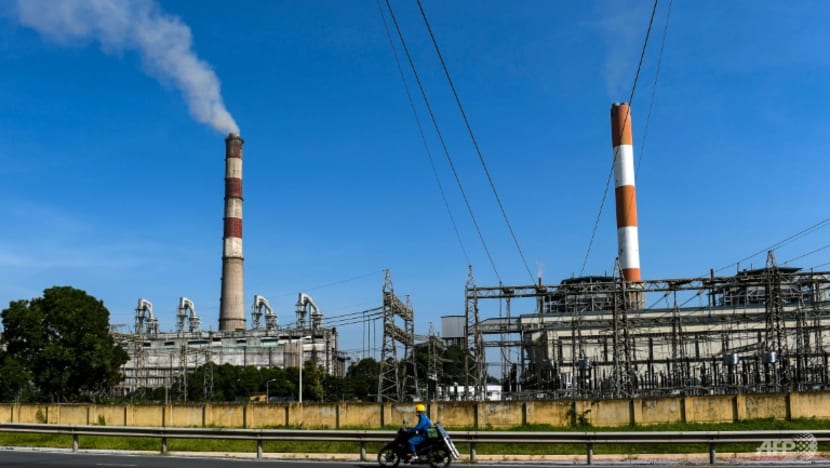
After China and India, Vietnam has the world’s third-largest pipeline of new coal power projects (Photo: AFP/STR)
HANOI: Vietnam may be thousands of kilometres away from the Russia-Ukraine war, but it is feeling the effects of the conflict, particularly in energy prices and its defence industry.
The Southeast Asian country is seeking to hike electricity prices for the first time since 2019 amid the ongoing global energy crisis, following record losses by its state utility.
Vietnam produces around 40 million tonnes of coal each year and imports another 29 million tonnes or so, with most of the coal going towards fuelling the country’s power plants.
However, the cost of doing so has increased exponentially.
“Because of the conflict between Russia and Ukraine, the price of coal in the global market in 2022 has increased by sixfold since 2020, and by 2.6-fold since 2021,” said chairman of Vietnam Valuation Association Nguyen Tien Thoa.
Vietnam’s state utility EVN has forecast it could run out of cash by May this year unless it raises electricity prices. This comes as the firm expects combined losses of nearly US$4 billion for 2022 and this year.
The Nazis prepared for war from the moment Hitler came into power in 1933. In the feverish building up of German striking power, they had the support of the professional military men. The Nazis not only produced the weapons of war; they geared their economy for the strain of a future conflict. They carried on political intrigues to promote their purposes. Their propaganda machine had long been a going concern when Hitler felt ready to strike at Poland, the first step in an ambitious plan to lay the world at his feet.
Military, economic, political, and propaganda weapons were forged for the fray. Britain and France and, soon after, other peaceful nations were compelled to forge them to resist the Nazi onrush.
Today’s war is four-dimensional. It is a combination of military, economic, political, and propaganda pressure against the enemy. An appeal to force alone is not regarded as enough, in the twentieth century, to win final and lasting victory. War is fought on all four fronts at once—the military front, the economic front, the political front, and the propaganda front.
To understand how this four-dimensional warfare has come about, we have to look at history. We have to go back to the rise of nationalism in the eighteenth century.
Before the American and French revolutions took place at the end of the eighteenth century, many armies fought in the pay of monarchies, such as the Bourbons, Hapsburgs, and Hohenzollerns, or of individual leaders. They were mercenary armies. They did not fight for patriotic motives. They did not fight for causes. They fought because fighting was their business. No fight, no pay!
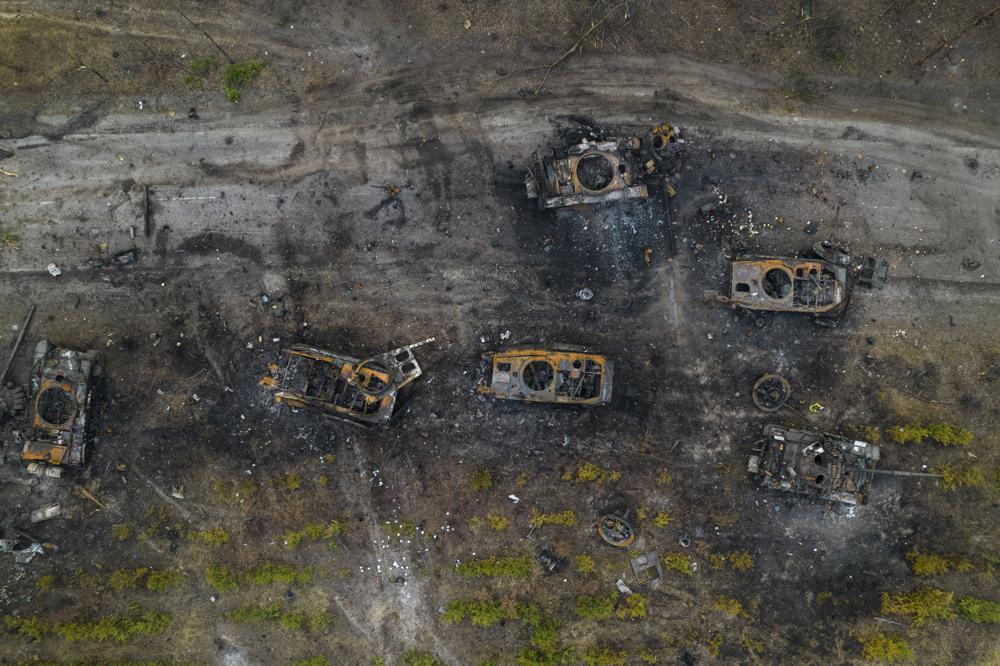
FILE – Destroyed Russian armored vehicles sit on the outskirts of Kyiv, Ukraine, March 31, 2022. In the year since Russia invaded Ukraine, disinformation and propaganda have emerged as key weapons in the Kremlin’s arsenal. (AP Photo/Rodrigo Abd, File)
WASHINGTON (AP) — Russia’s invasion of Ukraine is the deadliest conflict in Europe since World War II, and the first to see algorithms and TikTok videos deployed alongside fighter planes and tanks.
The online fight has played out on computer screens and smartphones around the globe as Russia used disinformation, propaganda and conspiracy theories to justify its invasion, silence domestic opposition and sow discord among its adversaries.
Now in its second year, the war is likely to spawn even more disinformation as Russia looks to break the will of Ukraine and its allies.
When we rise in the morning and listen to the radio or read the newspaper, we are confronted with the same sad news: violence, crime, wars, and disasters. I cannot recall a single day without a report of something terrible happening somewhere. Even in these modern times it is clear that one’s precious life is not safe. No former generation has had to experience so much bad news as we face today; this constant awareness of fear and tension should make any sensitive and compassionate person question seriously the progress of our modern world.
It is ironic that the more serious problems emanate from the more industrially advanced societies. Science and technology have worked wonders in many fields, but the basic human problems remain. There is unprecedented literacy, yet this universal education does not seem to have fostered goodness, but only mental restlessness and discontent instead. There is no doubt about the increase in our material progress and technology, but somehow this is not sufficient as we have not yet succeeded in bringing about peace and happiness or in overcoming suffering.
We can only conclude that there must be something seriously wrong with our progress and development, and if we do not check it in time there could be disastrous consequences for the future of humanity. I am not at all against science and technology – they have contributed immensely to the overall experience of humankind; to our material comfort and well-being and to our greater understanding of the world we live in. But if we give too much emphasis to science and technology we are in danger of losing touch with those aspects of human knowledge and understanding that aspire towards honesty and altruism.
Science and technology, though capable of creating immeasurable material comfort, cannot replace the age-old spiritual and humanitarian values that have largely shaped world civilization, in all its national forms, as we know it today. No one can deny the unprecedented material benefit of science and technology, but our basic human problems remain; we are still faced with the same, if not more, suffering, fear, and tension. Thus it is only logical to try to strike a balance between material developments on the one hand and the development of spiritual, human values on the other. In order to bring about this great adjustment, we need to revive our humanitarian values.
I am sure that many people share my concern about the present worldwide moral crisis and will join in my appeal to all humanitarians and religious practitioners who also share this concern to help make our societies more compassionate, just, and equitable. I do not speak as a Buddhist or even as a Tibetan. Nor do I speak as an expert on international politics (though I unavoidably comment on these matters). Rather, I speak simply as a human being, as an upholder of the humanitarian values that are the bedrock not only of Mahayana Buddhism but of all the great world religions. From this perspective I share with you my personal outlook – that:
The security of supply of gas has been the hottest topic of the last 12 months since Russia invaded Ukraine. James Kneebone at theFlorence School of Regulation (FSR) has written an explainer that lays out the EU’s history of dealing with energy security, going back to the 1990s. Because the EU has a single market for natural gas and widely shared value chains (pipelines, LNG terminals, storage, etc.), impacts are felt across the bloc. But that interconnectedness is also a strength and the basis for ensuring security across the region. Kneebone also details the updated regulations that are behind the drive to build in new capacity and obligations for solidarity between Member States. It means that today, the coordination and cooperation for allocating resources and delivering better energy security are stronger than ever.
What is security of supply?
The European Environment Agency (EEA) define security of energy supply as “…the availability of energy at all times in various forms, in sufficient quantities, and at reasonable and/or affordable prices.” In the context of gas security of supply specifically, the concept refers to the provision of gaseous energy, namely ‘natural gas’[1].
People from the collective ‘Kyivska Kolyada’ ride in the train after singing Christmas carols and collect money for the Ukrainian army at a metro station in Kyiv, Ukraine, 25 December 2022. 2022 is the first year Orthodox churches were allowed to hold a Christmas prayer service on 24 December. Traditionally, the Orthodox church celebrates Christmas on 6 January. [EPA-EFE/OLEG PETRASYUK]
Russian forces bombarded scores of towns in Ukraine on Christmas Day as Russian President Vladimir Putin said he was open to negotiations, a stance Washington has dismissed as posturing because of continued Russian attacks.
Russia on Sunday launched more than 10 rocket attacks on the Kupiansk district in the Kharkiv region, shelled more than 25 towns along the Kupiansk-Lyman frontline, and in Zaporizhzhia hit nearly 20 towns, said Ukraine’s top military command.
Russia’s defence ministry said on Sunday that it had killed about 60 Ukrainian servicemen the previous day along the Kupiansk-Lyman line of contact and destroyed numerous pieces of Ukrainian military equipment.
Reuters was not able to independently verify the reports.
Putin’s 24 February invasion of Ukraine – which Moscow calls a “special military operation” – has triggered the biggest European conflict since World War Two and confrontation between Moscow and the West since the 1962 Cuban Missile Crisis.
Despite Putin’s latest offer to negotiate, there is no end in sight to the 10-month conflict.
“We are ready to negotiate with everyone involved about acceptable solutions, but that is up to them – we are not the ones refusing to negotiate, they are,” Putin told Rossiya 1 state television in an interview broadcast on Sunday.
An adviser to Ukrainian President Volodymyr Zelenskyy said Putin needed to return to reality and acknowledge it was Russia that did not want talks.
“Russia single-handedly attacked Ukraine and is killing citizens,” the adviser, Mykhailo Podolyak, tweeted. “Russia doesn’t want negotiations, but tries to avoid responsibility.”
Russian attacks on power stations have left millions without electricity, and Zelenskyy said Moscow would aim to make the last few days of 2022 dark and difficult.
“Russia has lost everything it could this year. … I know darkness will not prevent us from leading the occupiers to new defeats. But we have to be ready for any scenario,” he said in an evening video address on Christmas Day.
Ukraine has traditionally not celebrated Christmas on 25 December, but 7 January, the same as Russia. However, this year some Orthodox Ukrainians decided to celebrate the holiday on 25 December and Ukrainian officials, starting with Zelenskyy and Ukraine’s prime minister, issued Christmas wishes on Sunday.
The Kremlin says it will fight until all its territorial aims are achieved, while Kyiv says it will not rest until every Russian soldier is ejected from the country.
Asked if the geopolitical conflict with the West was approaching a dangerous level, Putin on Sunday said: “I don’t think it’s so dangerous.”
Kyiv and the West say Putin has no justification for what they cast as an imperial-style war of occupation.
Blasts at Engels airbase
Blasts were heard at Russia’s Engels air base, hundreds of kilometres (miles) from the Ukraine frontlines, Ukrainian and Russian media reported on Monday.
Russia’s governor of Saratov region, home to the Engels air-base, said law enforcement agencies were checking information about “an incident at a military facility”.
“There were no emergencies in residential areas of the (Engels) city,” Roman Busargin, the governor of the region, said on the Telegram messaging app. “Civil infrastructure facilities were not damaged.”
The air base, near the city of Saratov, about 730 km (450 miles) southeast of Moscow, was hit on 5 December in what Russia said were Ukrainian drone attacks on two Russian air bases that day. The strikes dealt Moscow a major reputational blow and raised questions about why its defences failed, analysts said.
Ukraine has never publicly claimed responsibility for attacks inside Russia, but has said, however, that such incidents are “karma” for Russia’s invasion.
epa10363106 Pro-government supporters, including families of killed Iranian soldiers, protest against the UN and western countries in front of the United Nation office in Tehran, Iran, 13 December 2022. EPA-EFE/ABEDIN TAHERKENAREH
2022 has been a year where high-profile international cases of violence against women, such as in Iran, Ukraine, and Afghanistan, have made headlines, but this is just part of a trend that permeates every aspect of society, according to United Nations (UN) officials interviewed by EURACTIV.
UN Women Brussels Director Dagmar Schumacher and the UN’s Director in Brussels Camilla Bruckner sat down with EURACTIV to discuss progress in Europe and the situation for women outside of the Union following the 16 Days of Activism against Gender-Based Violence.




 CVD
CVD 