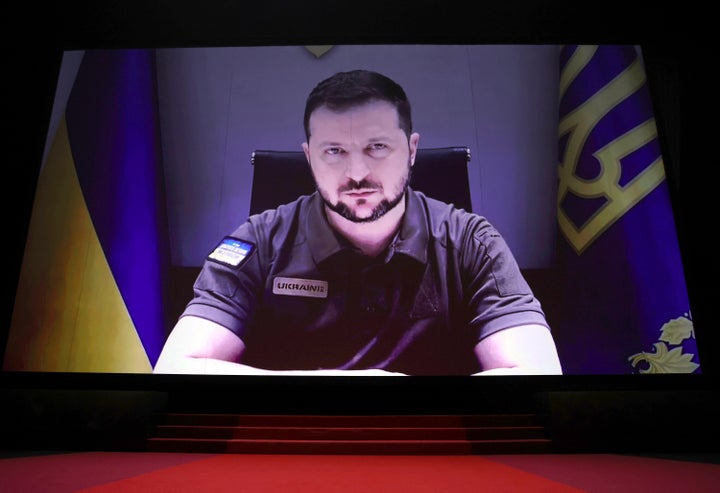
Briefing the Security Council on his shuttle diplomacy last week in Russia and Ukraine, Secretary-General António Guterres declared that he “did not mince words” during meetings with Presidents Putin and Zelenskyy, on the need to end the brutal conflict.
“I said the same thing in Moscow as I did in Kyiv…Russia’s invasion of Ukraine is a violation of its territorial integrity and of the Charter of the United Nations,” he told the Ambassadors.
“It must end for the sake of the people of Ukraine, Russia, and the entire world…the cycle of death, destruction, dislocation and disruption must stop.”
The UN chief said he had gone into an active war zone in Ukraine, after first travelling to Moscow, without much prospect of any ceasefire – as the east of the country continues to face “a full-scale ongoing attack”.
Karina Yershova, right, is pictured with her grandmother in an undated photograph provided by the family.
Lviv, Ukraine (CNN)When Russian troops invaded Ukraine and began closing in on its capital, Kyiv, Andrii Dereko begged his 22-year-old stepdaughter Karina Yershova to leave the suburb where she lived.
But Yershova insisted she wanted to remain in Bucha, telling him: “Don’t talk nonsense, everything will be fine — there will be no war,” he said.
With her tattoos and long brown hair, Yershova stood out in a crowd, her stepfather said, adding that despite living with rheumatoid arthritis, she had a fiercely independent spirit: “She herself decided how to live.”
Yershova worked at a sushi restaurant in Bucha, and hoped to earn her university degree in the future, Dereko said: “She wanted to develop herself.”
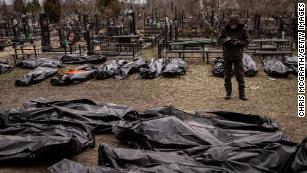
Unclaimed and unidentified: Bucha empties its mass graves 03:24
As Russian soldiers surrounded Bucha in early March, Yershova hid in an apartment with two other friends. On one of the last occasions Dereko and his wife, Olena, heard from Yershova, she told them she had left the apartment to get food from a nearby supermarket.
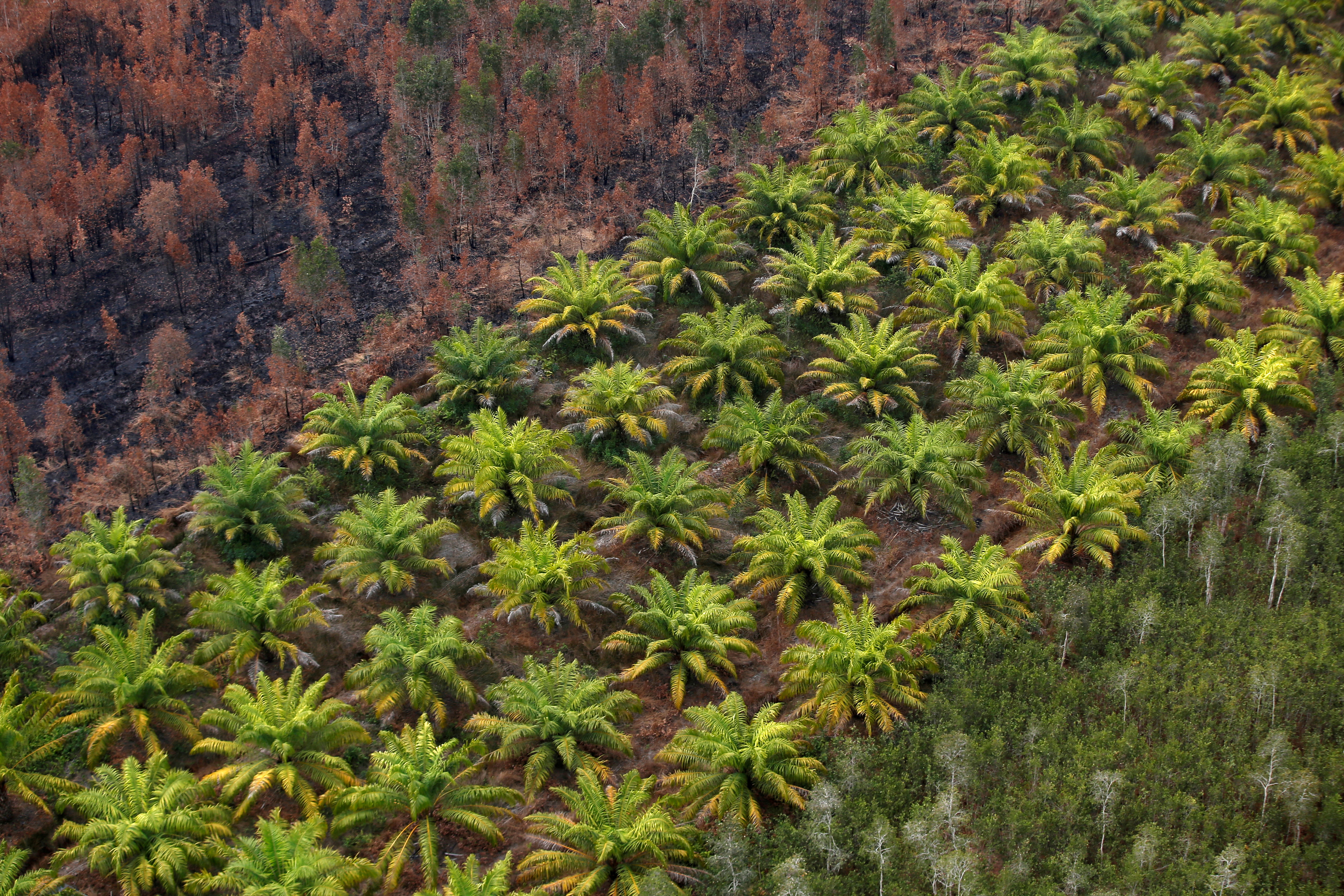
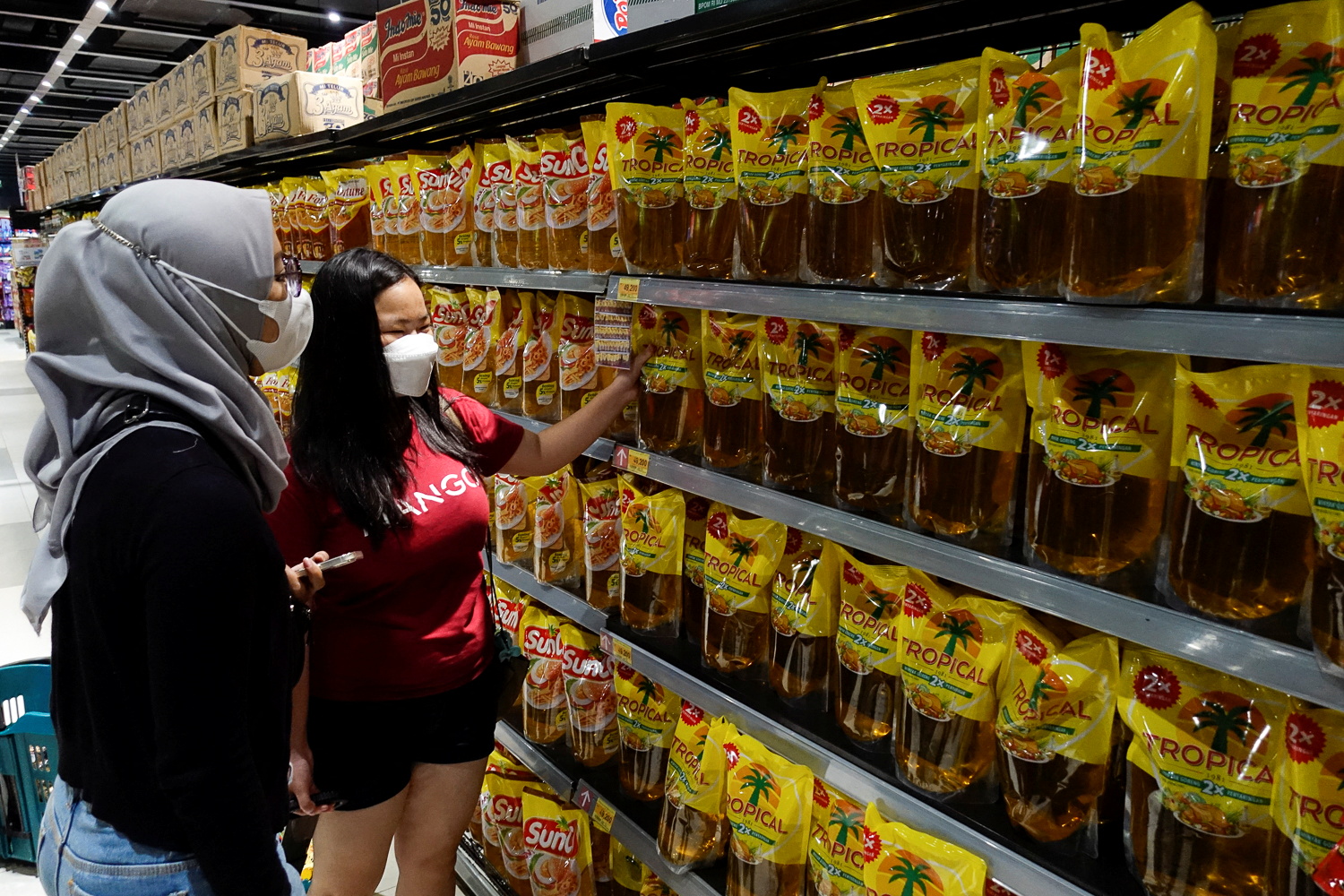
WASHINGTON, April 22 (Reuters) – Indonesia’s new palm oil export ban will hurt other countries but is necessary to try to bring down the soaring domestic price of cooking oil driven up by Russia’s war in Ukraine, Indonesia’s finance minister told Reuters on Friday.
Sri Mulyani Indrawati said that with demand exceeding supplies, the ban announced earlier on Friday is “among the harshest moves” the government could take after previous measures failed to stabilize domestic prices. read more
“We know that this is not going to be the best result,” for global supplies, she said in an interview on the sidelines of the International Monetary Fund and World Bank spring meetings. “If we are not going to export, that’s definitely going to hit the other countries.”
China and India are among big importers of palm oil from Indonesia, the world’s largest producer accounting for more than half the world’s supply. Palm oil is used in products from cooking oils to processed foods, cosmetics and biofuels.
Indrawati said previous measures requiring producers to reserve stocks for domestic use did not result in “the level of prices that we want. It’s still too expensive for the ordinary household to buy those cooking oils.”
Young Russians tell us about a war few wanted and how the sanctions are affecting their lives.
Sanctions on Russia following its invasion of Ukraine have targeted banks, oil refineries and key members of the Russian regime and oligarchs close to the Kremlin, but have also led caused the value of the rouble to plummet and inflation to soar, impacting the daily lives of Russian citizens [Pavel Golovkin/AP Photo]
Since Russia invaded Ukraine on February 24, an outcry has arisen around the world. On March 2, the UN voted overwhelmingly to approve a resolution demanding the end of the invasion, with only five countries opposing – Russia, Belarus, North Korea, Eritrea, and Syria. As the war rages on, thousands have been killed according to Ukrainian authorities and many more injured.
In response, the US, EU, UK and other countries have levelled sanctions, both general and targeted, and doors have closed to Russians around the world, from research institutions to sporting events, in protest at Russia’s invasion.
Following an agreement on 1 April by IEA member countries for a new emergency release of oil stocks, the IEA Governing Board confirmed today that the total amount committed to date stands at 120 million barrels, making it the largest stock release in IEA history.
The unanimous agreement among IEA member countries on 1 April for a second collective action this year came in response to the significant strains in oil markets resulting from Russia’s invasion of Ukraine. In the days since the decision, each IEA member country has been considering how much it could contribute to the announced response plan, given its domestic circumstances.
The commitments submitted by members reached 120 million barrels to be released over a six month period, demonstrating strong unity. The United States will contribute about 60 million barrels, which are part of the larger drawdown from its Strategic Petroleum Reserve (SPR) that was announced on 31 March.
Poland’s Deputy Prime Minister and the Minister of Culture Piotr Glinski, 13 October 2021. [EPA-EFE/Jonas Ekströmer]
Poland has shown immense support for Ukraine since the Russian invasion started. What is less known is that the two countries share a history of oppression and bloodshed, but according to Poland’s Deputy Prime Minister Piotr Gliński, the war has given them a chance to achieve full reconciliation.
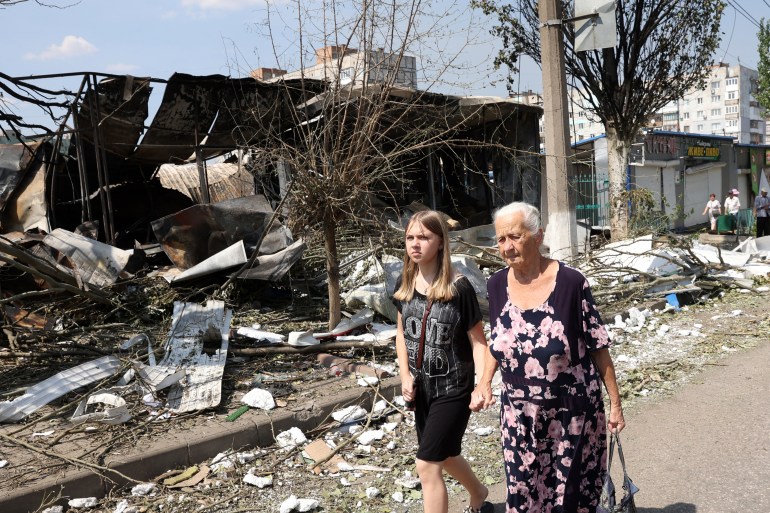
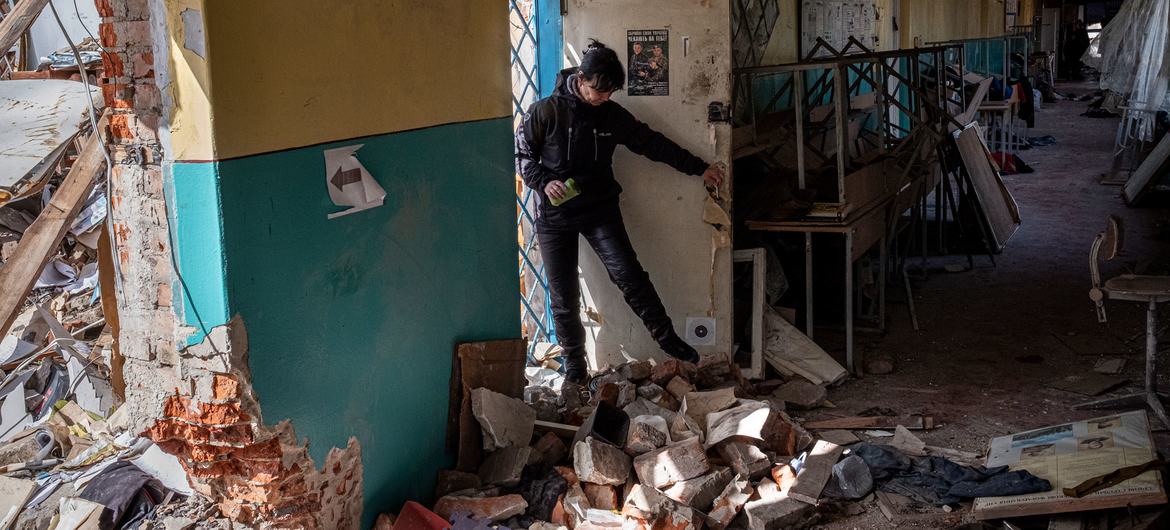
As Russian artillery and rockets land on Ukrainian hospitals and apartment blocks, devastating residential districts with no military value, the world is watching with horror what is, for Russia, an increasingly standard practice.
Its forces conducted similar attacks in Syria, bombing hospitals and other civilian structures as part of Russia’s intervention to prop up that country’s government.
Moscow went even further in Chechnya, a border region that had sought independence in the Soviet Union’s 1991 breakup. During two formative wars there, Russia’s artillery and air forces turned city blocks to rubble and its ground troops massacred civilians in what was widely seen as a deliberate campaign to terrorize the population into submission.
Now, Vladimir V. Putin, whose rise to Russia’s presidency paralleled and was in some ways cemented by the Chechen wars, appears to be deploying a similar playbook in Ukraine, albeit so far only by increments.
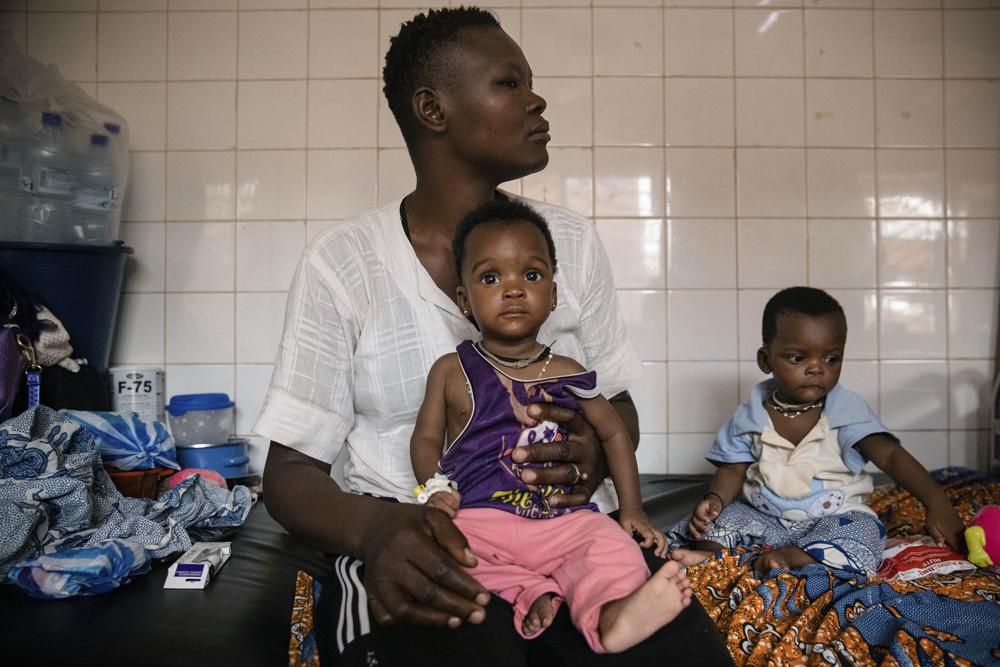
Russia’s invasion of Ukraine has already driven millions of people from their homes and left many without water, power and food. As hostilities continue, the humanitarian and economic consequences will expand far beyond the region, putting potentially millions of people around the world at risk of hunger.
And these aren’t just short-term threats. The decisions that farmers and policymakers make over the next few weeks and months will have long-term consequences for the future of the world’s food systems. The right responses can keep the world on track for a sustainable food future. The wrong ones will worsen food insecurity and fuel climate change.
Ukrainian refugees escape to the border town of Medyka, Poland. Millions of Ukrainian residents have fled their homes in recent weeks, due to the Russian invasion. Photo by Damian Pankowiec/Shutterstock
“And yet, just when the climate scientists and governments across the eight Arctic states should be working together to understand and address the climate crisis, Russia’s war on Ukraine has forced the Arctic Council, an intergovernmental group of Arctic states and Arctic Indigenous Peoples, to suspend their joint activities in protest of Russia’s unprovoked aggression.“
Europe’s energy independence from Russia, including in its financial aspects, will be a key topic of discussion at a two-day summit in Versailles hosted by the French EU presidency. [France Diplomatie – MEAE]
European Union leaders will tackle ways to wean themselves off Russian fossil fuels on Thursday (10 March) and debate how quickly to ditch their key supplier, with countries split over whether to sanction oil and gas imports as Moscow wages war in Ukraine.
A still image taken from a handout video made available by the Russian Defence Ministry press service shows a general view of the Chernobyl Nuclear Power Plant in Pripyat, Ukraine, 7 March 2022. Russian President Putin on 24 February 2022 announced a “special military operation against Ukraine”. Martial law has been introduced in Ukraine, and explosions are heard in many cities including Kyiv. [Handout photo/EPA/EFE]
Ukraine said on Wednesday (9 March) there was a danger of a radiation leak at the Chernobyl nuclear power station after electricity was cut off to the plant, but the UN nuclear watchdog saw “no critical impact on security”.
Zaporizhzhia nuclear power plant in southern Ukraine. The two tall smokestacks are at a coal-fired generating station about 3km beyond the nuclear plant. Photo credit: Ralf1969 via Wikimedia Commons.
As the Russian invasion of Ukraine began to unfold, Russia’s swift occupation of the Chernobyl reactor complex and the surrounding exclusion zone sparked widespread speculation and concern.[1] The concern was not limited to whether the occupation would cause further radioactive release from Chernobyl;[2] it also included possible Russian military action against other Ukrainian nuclear facilities. These fears were further accelerated when Russian forces shelled and apparently occupied the Zaporizhzhia nuclear power complex near Enerhodar, Ukraine.[3] There have also been reports of attacks on a former Radon disposal site near Kyiv.[4]
World leaders have expressed concerns, and the UN Security Council held an emergency meeting on Friday to discuss the issue. At the meeting, the US ambassador told the emergency session that the assault on the Zaporizhzhia nuclear power plant “represents a dire threat to the world.” [5] The IAEA’s Board of Governors passed a resolution that deplored the Russian invasion and urged Russia to allow Ukraine to continue to control its nuclear facilities. The board’s resolution was similar to a UN General Assembly resolution passed on March 3rd.[6] Despite the high levels of concern the reactors at Zaporizhzhia do not appear to have been damaged and there has been no reported radiation release from the facility.
It is the first time in 40 years the security council has referred a crisis to the assembly and only the 11th time an emergency session of the UN general assembly has been called since 1950.
The United Nations has voted overwhelmingly for a resolution deploring Russia’s invasion of Ukraine and called for the immediate withdrawal of its forces, in a global expression of outrage that highlighted Russia’s increasing isolation.
In an emergency session of the UN’s general assembly, 141 of the 193 member states voted for the resolution, 35 abstained, and five voted against. The only countries to vote no in support of Moscow were Belarus, North Korea, Eritrea and Syria. Longstanding allies Cuba and Nicaragua joined China in abstaining.
The resolution said the UN “deplores in the strongest terms the aggression by the Russian Federation against Ukraine”. It demanded that “the Russian Federation immediately cease its use of force against Ukraine” and “immediately, completely and unconditionally withdraw all of its military forces”.
The resolution is not legally binding, but is an expression of the views of the UN membership, aimed at increasing pressure on Moscow and its ally, Belarus.
“It isn’t going to stop Russian forces in their stride, but it’s a pretty enormous diplomatic win for the Ukrainians and the US, and everyone who has got behind them,” Richard Gowan, UN director at the International Crisis Group, said.
Speaking before the vote, the US ambassador to the UN, Linda Thomas-Greenfield, compared the Russian invasion to the Nazi conquest of Europe.
“A few of the eldest Ukrainians and Russians might recall a moment like this, a moment when one aggressive European nation invaded another without provocation to claim the territory of its neighbour, a moment when a European dictator declared he would return his empire to its former glory and invasion that caused a war so horrific, that it spurred this organization into existence,” Thomas-Greenfield said.
Dr Đặng Minh Hiệu before and after having his head shaved to facilitate his work in COVID-19 prevention and control. — Photo tienphong.vn
Thousands of people of different generations have volunteered to join the country’s efforts in the fight against COVID-19, and their acts of kindness have contributed to helping many overcome the most difficult times in their lives.
They include not only medical workers and soldiers but also normal people willing to work for the good of others.