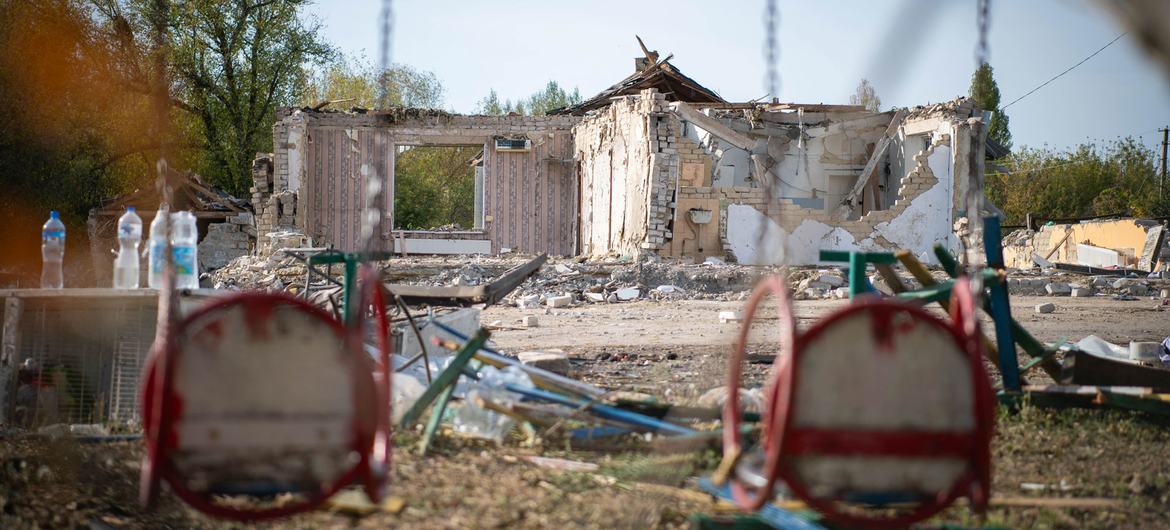
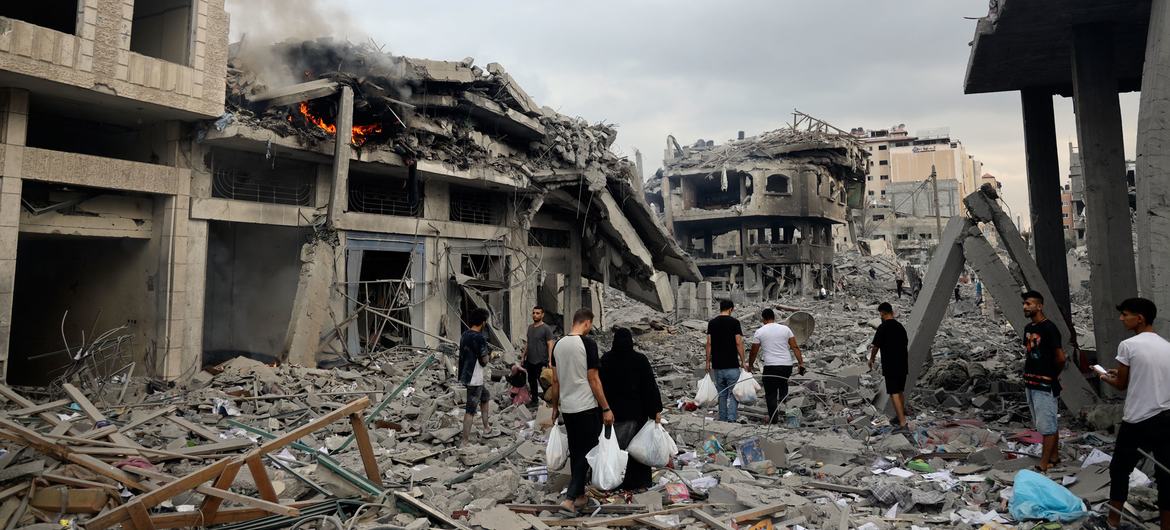
Antipersonnel landmines are explosive devices designed to injure or kill people. They can lie dormant for years and even decades under, on, or near the ground until a person or animal triggers their detonating mechanism.
They can be activated by direct pressure from above, by pressure put on a wire or filament attached to a pull switch, by a radio signal or other remote firing method, or even simply by the proximity of a person within a predetermined distance. Because no one controls the detonation of landmines, they can be referred to as victim-activated weapons. Since mines are not aimed at a specific target they can indiscriminately kill or injure civilians, including children, soldiers, peacekeepers, and aid workers.
Status of 2008 Convention on Cluster Munitions
Cluster Munition Casualties in 2022 and in Historical Record
Descriptive Note: Memorandum
Corporate Author: RAND CORP SANTA MONICA CA
Personal Author(s): Gurtov, Melvin
Report Date: 1968-07-01
Abstract:
An analysis is made of 1 U.S. policy and diplomacy during the 1954 Geneva Conference on Indochina, 2 the objectives of the participants in the conference, 3 the tactics used during the negotiations, and 4 the implications of those tactics for the present conflict. Although Vietnamese unity was not a priority objective of China or the Soviet Union, neither power may have expected a South Vietnamese regime to survive until the national elections. The U.S. goal, among others, was to maximize the Saigon governments chances of posing an authentic challenge in the elections of 1956. In terms of the present conflict, additional Communist participation might complicate rather than strengthen Hanois position by increasing the opportunity for division on issues of troop withdrawal and political settlement. Saigons influence could be reduced if the United States were to limit South Vietnams role to talks with the Viet Cong. In the realm of tactics, Geneva indicates, first, that an ambiguous commitment on the part of the United States to a negotiated settlement can have far greater value than an obvious disposition to accept terms second, that the threat of a use of force hitherto restrained can be more valuable to the U.S. bargaining position than force already applied.
Full report https://www.rand.org/content/dam/rand/pubs/research_memoranda/2005/RM5617.pdf
This winter marks 50 years since U.S. and Vietnamese diplomats in Paris ceremoniously signed “peace accords” that did not end the Vietnam War, but that achieved America’s withdrawal from it. Thus, the accords permitted, a half-century later, what is now a durable American-Vietnamese reconciliation. In the face of seemingly intractable wars — in Ukraine, Afghanistan, the eastern Congo basin, Yemen or elsewhere — the growing U.S.-Vietnamese relationship shows that even a peace that seems impossible today can indeed be built for our children.
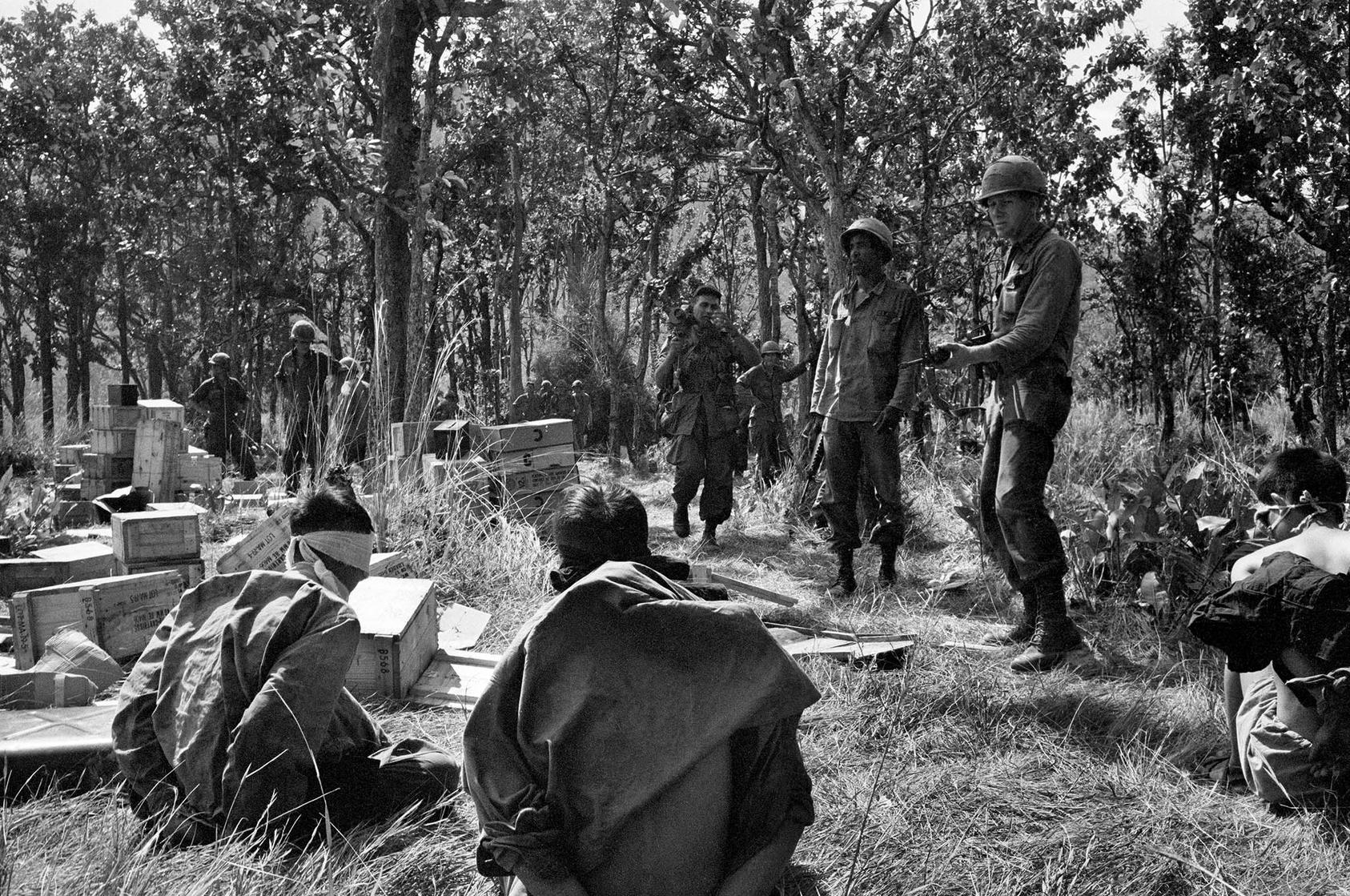
U.S. troops guard North Vietnamese prisoners in 1965, early in the Vietnam War. U.S. and Vietnamese veterans have led reconciliation work in decades since, notably in searching for remains of those killed in the war. (Neil Sheehan/The New York Times)Tiếp tục đọc “We Can Heal War’s Traumas; U.S. and Vietnam Show How”→
Extreme heat and flooding could erase $65bn in apparel export earnings from four Asian countries by 2030 as it jeopardises the health of the workers, new research has revealed.
The slow growth from extreme climate conditions will also result in one million fewer jobs being created, found the study by Cornell University and Schroders.
The research mapped out the climate vulnerability of 32 apparel production hubs of six global brands in Bangladesh, Cambodia, Pakistan and Vietnam. It found flooding and heat pose material risks to entire fashion industry, leading to a 22 per cent decline in export earnings.
These projections are expected to rise significantly by 2050, representing about 69 per cent in foregone export earnings and 8.64 million fewer jobs, warned the researchers.
But brands, investors or regulators are not prioritising in planning for these risks in the countries that collectively represent 18 per cent of global apparel export due to the industry’s focus on mitigation rather than adaptation measures, said the study.
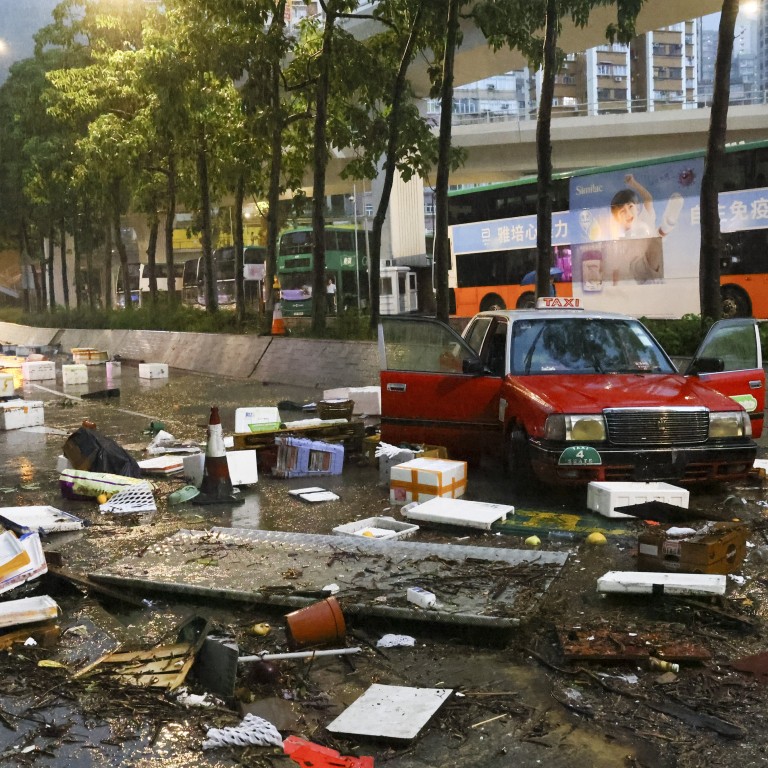
A Hong Kong road is strewn with debris, rubbish and an abandoned taxi as floodwaters recede. Photo: Dickson Lee
Hong Kong officials met the press at 2.30pm on Friday to provide details on efforts in handling the aftermath of the city’s worst downpour in more than a century amid mounting questions over a perceived lack of preparedness.
By Nadeen Ebrahim and Laura Paddison, CNN Updated 12:08 PM EDT, Fri September 15, 2023
A satellite image shows the town of Derna in the aftermath of the floods in eastern Libya on Wednesday.Maxar Technologies/ReutersCNN —
It started with a bang at 3 a.m. Monday as the residents of Derna were sleeping. One dam burst, then a second, sending a huge wave of water gushing down through the mountains towards the coastal Libyan city, killing thousands as entire neighborhoods were swept into the sea.
More than 5,000 people are believed to have been killed with thousands more missing, though estimates from different Libyan officials and aid groups have varied and the toll is expected to rise.
The eastern Libyan city of Derna, the epicenter of the disaster, had a population of around 100,000 before the tragedy. Authorities say that at least 10,000 remain missing. CNN could not independently verify the figures.
Buildings, homes and infrastructure were “wiped out” when a 7-meter (23-foot) wave hit the city, according to the International Committee of the Red Cross (ICRC), which said Thursday that dead bodies were now washing back up on shore.
But with thousands killed and many more still missing, there are questions as to why the storm that also hit Greece and other countries caused so much more devastation in Libya.
Experts say that apart from the strong storm itself, Libya’s catastrophe was greatly exacerbated by a lethal confluence of factors including aging, crumbling infrastructure, inadequate warnings and the impacts of the accelerating climate crisis.
A fire that broke out before midnight on September 12, 2023 in a Hanoi residential building took the lives of at least 56 people and injured dozens of others, according to authorities. The death toll made the fire Vietnam’s deadliest in 20 years.
FILE – The Nobel laureates and the royal family of Sweden during the Nobel Prize award ceremony at the Concert Hall in Stockholm, Saturday Dec. 10 2022. The Nobel Foundation has withdrawn its invitation for representatives of Russia, Belarus and Iran to attend this year’s Nobel Prize award ceremonies after the decision to invite them “provoked strong reactions.” Saturday’s U-turn came after several Swedish lawmakers said they would boycott this year’s Nobel Prize award ceremonies. (Pontus Lundahl/TT via AP, File)
Updated 4:44 AM GMT+7, September 3, 2023Share
STOCKHOLM (AP) — The Nobel Foundation on Saturday withdrew its invitation for representatives of Russia, Belarus and Iran to attend this year’s Nobel Prize award ceremonies after the decision announced a day earlier “provoked strong reactions.”
Several Swedish lawmakers said Friday they would boycott this year’s Nobel Prize award ceremonies in the Swedish capital, Stockholm, after the private foundation that administers the prestigious awards changed its position from a year earlier and invited representatives of the three countries to attend, saying it “promotes opportunities to convey the important messages of the Nobel Prize to everyone.”
Some of the lawmakers cited Russia’s war on Ukraine and the crackdown on human rights in Iran as reasons for their boycott. Belarusian opposition figure Sviatlana Tsikhanouskaya on Friday called on the Swedish Nobel Foundation and the Norwegian Nobel Committee not to invite representatives of Belarusian President Alexander Lukashenko’s “illegitimate regime to any events.”
Unofficial figures point to a mental health crisis amid severe restrictions on Afghan women’s lives
Zahra Nader and Zan Times reportersMon 28 Aug 2023 10.00 BST
First, her dreams of becoming a doctor were dashed by the Taliban’s ban on education. Then her family set up a forced marriage to her cousin, a heroin addict. Latifa* felt her future had been snatched away.
“I had two options: to marry an addict and live a life of misery or take my own life,” said the 18-year-old in a phone interview from her home in central Ghor province. “I chose the latter.”
It was not an isolated act of desperation. Since the Taliban took control of Afghanistan in the summer of 2021, there has been a disturbing surge in the number of women taking their own lives or attempting to do so, data collected from public hospitals and mental health clinics across a third of Afghanistan’s provinces shows.
way from the eyes of the world, a brutal civil war is intensifying in Myanmar. Thousands of civilians have been killed, including more than 150 in a devastating airstrike last week.
The repressive military regime that seized power two years ago doesn’t allow journalists to report freely inside the country, as it attempts to suppress coverage, but following painstaking negotiations with local contacts, we travelled secretly into rebel-controlled territory in order to document the conflict. Only a handful of other international journalists have been able to make the journey: young men and women who were once peaceful protesters are now part of an armed rebellion, sacrificing their lives in the hope of being able to restore democracy. We were given rare access to the Generation Z guerrillas who have been on the frontlines.
Not far from the banks of the idyllic Salween River, which divides Thailand and Myanmar, a white pick-up truck is speeding towards us. The men inside look like professional soldiers, dressed in camouflage uniforms and clutching automatic weapons. But one is a former baker, while another used to be an engineer. In fact, most of them had never even held a gun until a military coup in 2021.
Ngày 16/5, Trung tâm Báo tin động đất và cảnh báo sóng thần – Viện Vật lý Địa cầu, Viện Hàn lâm Khoa học và Công nghệ Việt Nam phát đi thông báo về các trận động đất xảy ra vào sáng cùng ngày tại khu vực huyện Kon Plông, tỉnh Kon Tum.
Vị trí tâm chấn trận động đất 3.7 độ ở Kon Tum trưa ngày 16/5.
Theo đó, trận động đất mới nhất xảy ra lúc 12 giờ 21 phút 21 giây, có độ lớn 2.6 độ richter, độ sâu chấn tiêu khoảng 8km.
Trung tâm Báo tin động đất và cảnh báo sóng thần – Viện Vật lý Địa cầu vẫn đang tiếp tục theo dõi trận động đất này.
Cũng trong sáng ngày 16/5, vào hồi 00 giờ 52 phút 51 giây (giờ GMT) ngày 16 tháng 5 năm 2023 tức 07 giờ 52 phút 51 giây (giờ Hà Nội) ngày 16 tháng 5 năm 2023 một trận động đất có độ lớn 3.0 xảy ra tại vị trí có tọa độ (14.902 độ vĩ Bắc, 108.303 độ kinh Đông), độ sâu chấn tiêu khoảng 8 km. Động đất xảy ra tại khu vực huyện Kon plong, tỉnh Kon Tum. Cấp độ rủi ro thiên tai cấp 0.
Như vậy trong 5 ngày qua, trên địa bàn huyện Kon Plông (tỉnh Kon Tum) liên tiếp diễn ra 10 trận động đất. Trong đó, trận động đất lớn nhất có độ lớn 3.7 vừa xảy ra là trận có cường độ lớn nhất từ đầu năm đến nay. Trước đó, chỉ trong 4 ngày từ 12/5 – 15/5, trên địa bàn huyện này cũng liên tiếp xảy ra 9 trận động đất có độ lớn từ 2.6 đến 3.2 độ Richter. Trong đó riêng 2 ngày đã xảy ra 6 trận, tuy nhiên các trận động đất trên đều không gây thiệt hại về người.
Theo thống kê từ Viện Vật lý địa cầu, từ đầu năm đến nay trên địa bàn huyện Kon Plông đã xảy ra khoảng 100 trận động đất. Trận mạnh nhất có độ lớn 3,9 độ Richter. Các trận động đất thường xảy ra xung quanh khu vực Thuỷ điện Thượng Kon Tum và Thuỷ điện Đắk Đrinh. Trước tình trạng động đất xảy ra liên tục, UBND tỉnh Kon Tum đã yêu cầu chủ đầu tư các công trình thủy điện lắp đặt ngay thêm 5 trạm quan sát động đất theo kiến nghị của đoàn kiểm tra thuộc Viện vật lý địa cầu.
Động đất tại Kon Plông, Kon Tum được Viện Vật lý Địa cầu nhận định là động đất kích thích, xảy ra do hồ chứa thủy điện tích nước gây áp lực lên hệ thống đứt gãy hoạt động bên dưới, khiến động đất xảy ra sớm hơn so với quy luật tự nhiên.
Động đất kích thích ở Kon Plông, Kon Tum xảy ra từ tháng 4/2021, đến nay với ghi nhận hàng trăm trận. Trong đó, trận động đất mạnh nhất có độ lớn 4.7, gây rung chấn cho nhiều tỉnh miền Trung. Các chuyên gia nhận định, động đất tại khu vực này có thể tiếp diễn trong thời gian tới, liên quan chặt chẽ đến chu trình tích nước hồ chứa thủy điện. Tuy nhiên, động đất cực đại ở khu vực này ít khả năng vượt quá độ lớn 5.0.
The film tells the story of J. Robert Oppenheimer (1904–1967), the theoretical physicist who led the effort to build the first atomic bomb, tested in July 1945 at Trinity site in New Mexico.It features interviews with several Manhattan Project scientists, as well as newly declassified archival footage.
This essay explores contributions to Vietnamese history by Việt Nam’s first historical generals (who were women) as well as by women from the Vietnamese Communist Party’s early years through the French-American War (1945–1954) and the American War (1954‒1975). It discusses how women used Confucian subservience, gender-determined dress, and traditional roles to supply local soldiers, gather intelligence, and resist the French and American armies. I provide information, documents, and photographs gathered by completing annotated book translations and by engaging in conversations and interviews conducted in Vietnamese over the course of nearly fifty years, including accounts from both famous and ordinary Vietnamese women. Their stories are unique yet representative of the experiences of many wartime participants.
Vietnamese Women in War and Peace
When we think about the French-American War (1945‒1954) and the American War in Việt Nam (which Americans often call the Vietnam War, 1954‒1975), we should address a seldom-spoken truth: Since the Vietnamese fought a people’s war (toàn dân—all the people), demographics suggest that half of those fighting against the American-allied front were women. The story of these women begins in the first century C.E. with another seldom-spoken truth: The first Vietnamese historical (as opposed to legendary) personages were women.
Rooted in Ancient Matriarchy
From time immemorial, Việt Nam was a matriarchy with a well-established religion of mother goddesses, whom many Vietnamese still worship today (See Illus. #1, Hữu Ngọc 2016, 2017, 76–79). Matriarchy spawned Việt Nam’s first historical generals, the Trưng sisters— Trưng Trắc and Trưng Nhị (both ?–43 C.E.)—from an outlying district of modern-day Hà Nội. The Hán Chinese had occupied Việt Nam since 111 B.C.E. In 40 C.E., the sisters led a rebellion to avenge the death of Trưng Trắc’s husband, whom the Vietnamese annals say Chinese pro-consul Su Ting had assassinated. The sisters, their mother, and their women generals (whose names are known, affirming the sisters’ presence as historical characters) liberated Việt Nam from the Chinese. Before doing so, Trưng Trắc began Việt Nam’s tradition of generals writing poetry to galvanize their troops. Her “Oath at Hát River” in six-eight rhythm—a six-word line followed by an eight-word line—emphasizes the legendary Vietnamese Hùng Dynasty, which began in about 2870 B.C.E.:First pledge: Wash away the enemy Second pledge: Rebuild the Hùng Family’s ancient karma Third: Avenge injustices against my husband Fourth pledge: Execute this oath beginning to end (Borton 2007, 1).
Illus. #1
A Vietnamese mother goddess in a drawing collected by the French soldier Henri Oger, who published more than 4,000 drawings of traditional Vietnamese life depicted by Vietnamese artists. Scholar Olivier Tessier of École française d’Extrême-Orient (ÉFEO) oversaw the Oger Collection’s centennial publication in 2009. Source: Olivier Tessier, ÉFEO.
How Minerals Made Civilization, the UA Lowell Institute for Mineral Resources’ YouTube video series on the role of mineral resources in history, is launching a trilogy about how mineral resources influenced the war. Part 1, posted today, covers mineral resources during the interwar buildup: how mineral resources figured in national (and transnational) politics in the 1930s, how resource-poor nations sought to build up their supplies, and how the struggle for resources eventually culminated in the outbreak of the war. From the video, here are a few fun facts you may not have known:
• Coins for combat: During the early to mid-1930s, both Germany and Japan reissued old silver coinages in nickel so they would have a nickel supply for gun steels when the war broke out. • Coal, meet hydrogen: Coal-to-oil conversion was invented too late to change the outcome of World War 1, but it was about to play a major role in supplying Germany in the next war. • Why we use molybdenum in steels: The Nazi-Soviet Pact of 1939 redirected Soviet manganese exports from the USA to Germany, so American metallurgists developed improved molybdenum-alloy steels as a substitute using molybdenum from Arizona and Colorado.