Building an Open, Inclusive and Interconnected World For Common Development
2023-10-18 12:42
Keynote Speech by H.E. Xi Jinping
President of the People’s Republic of China
At the Opening Ceremony
Of the Third Belt and Road Forum for International Cooperation
October 18, 2023
Your Excellencies Heads of State and Government, Heads of International Organizations, Representatives of Various Countries, Distinguished Guests, Ladies and Gentlemen, Friends,
Today, we are meeting here for the opening ceremony of the Third Belt and Road Forum for International Cooperation (BRF). On behalf of the Chinese government and Chinese people and in my own name, I wish to extend a very warm welcome to you all!
This year marks the 10th anniversary of the Belt and Road Initiative (BRI) I proposed. The BRI, drawing inspiration from the ancient Silk Road and focusing on enhancing connectivity, aims to enhance policy, infrastructure, trade, financial and people-to-people connectivity, inject new impetus into the global economy, create new opportunities for global development, and build a new platform for international economic cooperation.
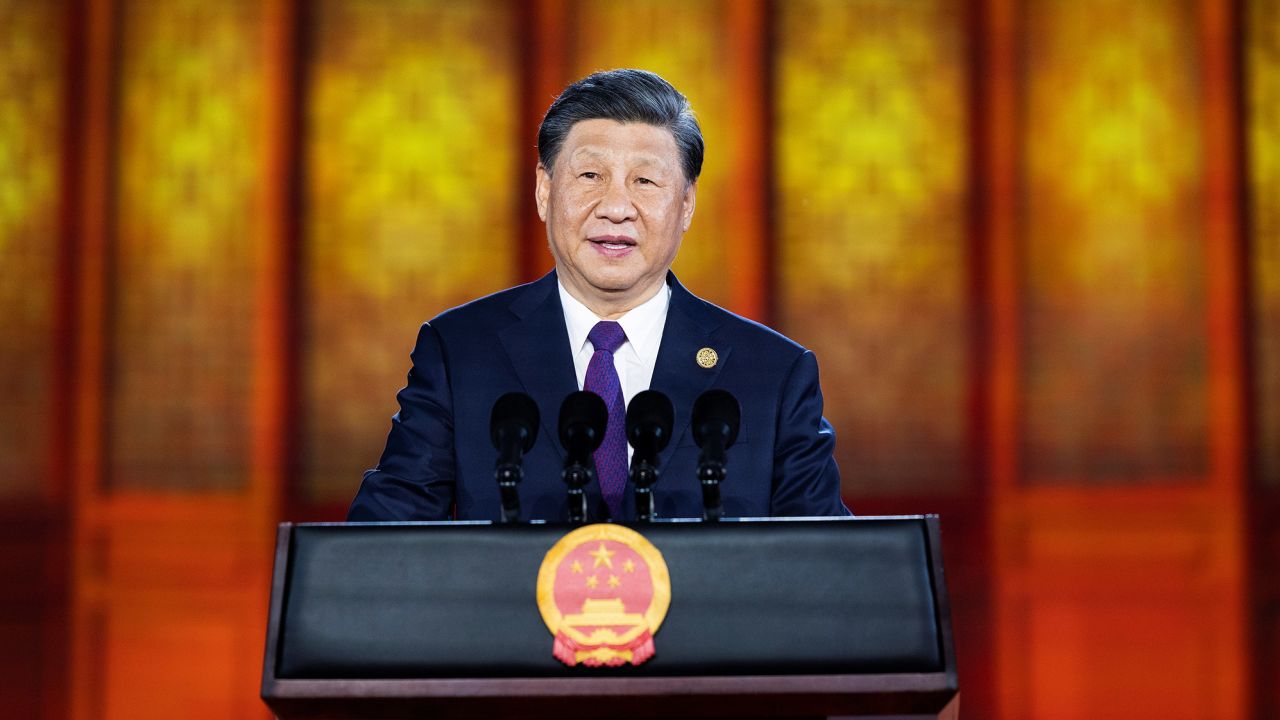
Chinese leader Xi Jinping speaks at the China-Central Asia Summit held this past May in Xi’an.Huang Jingwen/Xinhua/Getty Images
BeijingCNN — Chinese leader Xi Jinping is gathering world leaders in Beijing this week for a high profile forum with a clear set of goals: laud China’s role backing economic development over the past decade and project its expanding ambitions as an alternative global leader to the United States.
That bid takes on heightened significance as renewed conflict in Israel and Gaza threatens to trigger broader instability in the Middle East, a region where the US is the traditional power broker, but China has been growing its influence and efforts to play a role in peace.
A $6 billion Chinese-built railway in Laos is transforming a small town on the border of China, easing transportation and promising new products for export. The 262-mile rail line is a key part of China’s Belt and Road Initiative, aimed at upgrading trade and transport networks from Africa to the Pacific. China is looking to link its companies with new overseas markets while Laos has hopes of growing a robust export market. But what are the costs of developing this massive infrastructure? WSJ explores the ambition behind China’s envisioned rail network, the economic implications for Laos and challenges as other railways eye development.
The Three Gorges Dam is a hydroelectric gravity dam that spans the Yangtze River, in Central China. It is the world’s largest hydroelectric power station, but all that power comes with great responsibility. According to NASA, the dam delays the rotation of the Earth by 0.06 microseconds. This happens when the dam raises trillions of pounds of water 574 feet (175 m) above sea level increasing the Earth’s moment of inertia and thus slowing its rotation. Will the dam cause major consequences in our future or will the very minor delay not be noticeable for thousands of years?
As China seeks to meet its targets of becoming carbon neutral by 2060, it is turning its sights to some of the wildest reaches of the Tibetan Plateau where it plans to build a hydropower plant so ambitious that it could produce three times as much power as Three Gorges.
Experts believe it could be the riskiest mega structure ever built. Not only is the location prone to massive landslides and some of the most powerful earthquakes ever recorded, it’s also precariously close to the disputed border between India and China. Meaning any major project could further escalate discontent in a tense territorial dispute between the world’s two most populous countries.
Every country should have the ability to tell its story to the world. However, a nation’s narrative should be based on facts and rise and fall on its own merits. The PRC employs a variety of deceptive and coercive methods as it attempts to influence the international information environment. Beijing’s information manipulation spans the use of propaganda, disinformation, and censorship. Unchecked, the PRC’s efforts will reshape the global information landscape, creating biases and gaps that could even lead nations to make decisions that subordinate their economic and security interests to Beijing’s.
PRC Information Manipulation
The PRC spends billions of dollars annually on foreign information manipulation efforts.2 Beijing uses false or biased information to promote positive views of the PRC and the Chinese Communist Party (CCP). At the same time, the PRC suppresses critical information that contradicts its desired narratives on issues such as Taiwan, its human rights practices, the South China Sea, its domestic economy, and international economic engagement. More broadly, the PRC seeks to cultivate and uphold a global incentive structure that encourages foreign governments, elites, journalists, and civil society to accept its preferred narratives and avoid criticizing its conduct.
The PRC’s approach to information manipulation includes leveraging propaganda and censorship, promoting digital authoritarianism, exploiting international organizations and bilateral partnerships, pairing cooptation and pressure, and exercising control of Chinese-language media. Collectively, these five elements could enable Beijing to reshape the global information environment along multiple axes:
Overt and covert influence over content and platforms. Beijing seeks to maximize the reach of biased or false pro-PRC content. It has acquired stakes in foreign media through public and non-public means and sponsored online influencers. Beijing has also secured sometimes restrictive content sharing agreements with local outlets that can result in trusted mastheads providing legitimacy to unlabeled or obscured PRC content. In addition, Beijing has also worked to coopt prominent voices in the international information environment such as foreign political elites and journalists. Beyond focusing on content producers, the PRC has targeted platforms for global information dissemination, for example, investing in digital television services in Africa and satellite networks.
Constraints on global freedom of expression. On issues it deems sensitive, the PRC has employed online and real-world intimidation to silence dissent and encourage self-censorship. The PRC has also taken measures against corporations in situations where they are perceived to have challenged its desired narratives on issues like Xinjiang. Within democratic countries, Beijing has taken advantage of open societies to take legal action to suppress critical voices. On WeChat, an application used by many Chinese-speaking communities outside the PRC, Beijing has exercised technical censorship and harassed individual content producers. Notably, data
harvested by PRC corporations operating overseas have enabled Beijing to fine-tune global censorship by targeting specific individuals and organizations.
An emerging community of digital authoritarians. The PRC promotes digital authoritarianism, which involves the use of digital infrastructure to repress freedom of expression, censor independent news, promote disinformation, and deny other human rights.3 Through disseminating technologies for surveillance and censorship, often through capabilities bundled under the umbrella of “smart” or “safe cities,” the PRC has exported aspects of its domestic information environment globally. Beijing has also propagated information control tactics, with a particular focus on Africa, Asia, and Latin America. In parallel, the PRC has promoted authoritarian digital norms that other countries have adopted at a rapid pace. As other countries emulate the PRC, their information ecosystems have become more receptive to Beijing’s propaganda, disinformation, and censorship requests.
Future Impact
The PRC’s global information manipulation is not simply a matter of public diplomacy – but a challenge to the integrity of the global information space. Unchecked, Beijing’s efforts could result in a future in which technology exported by the PRC, coopted local governments, and fear of Beijing’s direct retaliation produce a sharp contraction of global freedom of expression. Beijing would play a significant – and often hidden – role in determining the print and digital content that audiences in developing countries consume. Multilateral fora and select bilateral relationships would amplify Beijing’s preferred narratives on issues such as Taiwan and the international economy. Access to global data combined with the latest developments in artificial intelligence technology would enable the PRC to surgically target foreign audiences and thereby perhaps influence economic and security decisions in its favor. Lastly, Beijing’s global censorship efforts would result in a highly curated international information environment characterized by gaps and inherent pro-PRC biases.
BEIJING, Sept. 26 (Xinhua) — China’s State Council Information Office on Tuesday released a white paper titled “A Global Community of Shared Future: China’s Proposals and Actions.”
Please see the attachment for the document. Enditem
How did two countries with the same language, culture, and history turn out so differently?
Last Updated April 28, 2023
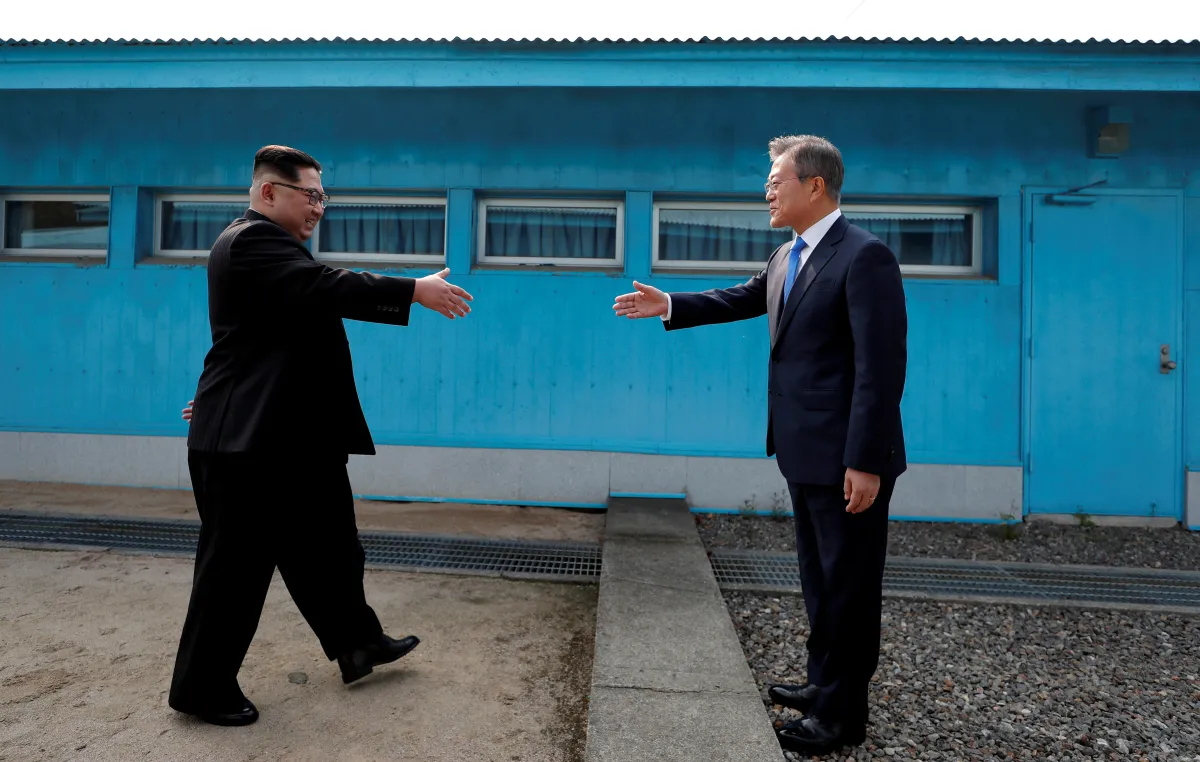
South Korean President Moon Jae-in and North Korean leader Kim Jong Un shake hands at the truce village of Panmunjom inside the demilitarized zone separating the two Koreas, South Korea, April 27, 2018.
Source: Korea Summit Press Pool via Reuters.SHARE
South Korea is one of the world’s most successful economies. It’s home to billion-dollar corporations like Samsung and produces some of the best high-tech electronics. But just across the border, North Korea is one of the most impoverished countries in the world. How can two countries with the same language, culture, and history—that were, not long ago, one united country—turn out so differently?
North and South Korea had been one nation for over a thousand years. Theoretically, they could have developed similarly after splitting in 1945, at the end of World War II. In fact, North Korea possessed the resources to outpace the south in development. But the political and economic decisions their leaders made destined the countries for completely different futures.
Many people have wrongly assumed that political freedom would follow new economic freedoms in China and that its economic growth would have to be built on the same foundations as in the West. The authors suggest that those assumptions are rooted in three essentially false beliefs about modern China: (1) Economics and democracy are two sides of the same coin; (2) authoritarian political systems can’t be legitimate; and (3) the Chinese live, work, and invest like Westerners. But at every point since 1949 the Chinese Communist Party—central to the institutions, society, and daily experiences that shape all Chinese people—has stressed the importance of Chinese history and of Marxist-Leninist doctrine. Until Western companies and politicians understand this and revise their views, they will continue to get China wrong.
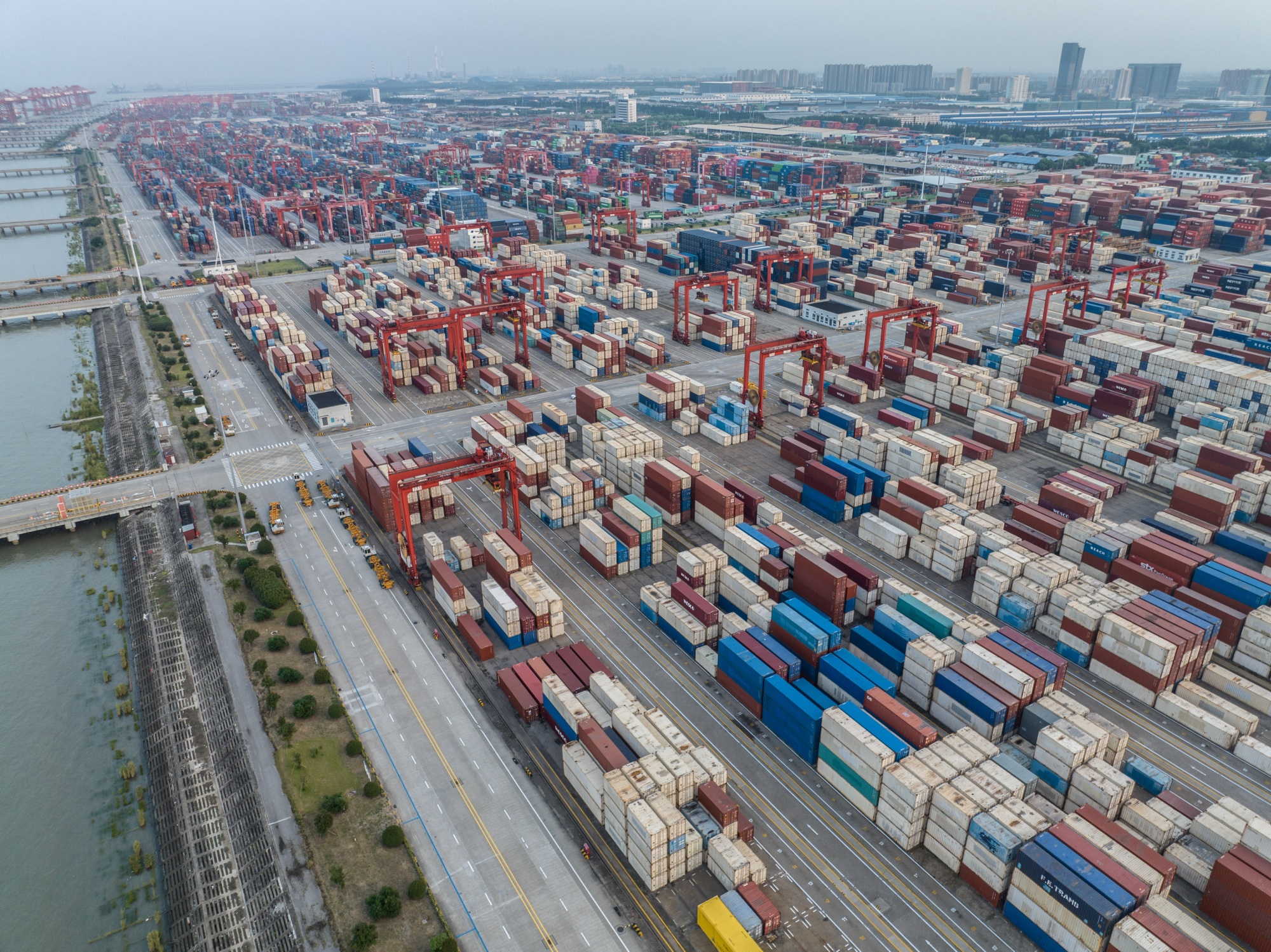
Shipping containers in China’s Jiangsu Province. The economic slowdown in recent months is sounding alarm bells across the world.Bloomberg
Today, I’ll tell you all you need to know about the slowdown in the world’s second-biggest economy.
If I had to use one word to describe the current situation, it would be fragile. The economic data we’ve gotten over the past few months have largely painted a gloomy picture. Chinese households are spending less than expected and saving more instead. Businesses are borrowing and investing at a reduced pace. And while the overall jobs situation has been stable, unemployment among the country’s youth has jumped so much that Beijing decided to stop releasing the data.
As downbeat as all that is, it is important to note the economy is not crashing. Economists are still expecting Chinese gross domestic product to grow 5.1% this year, 4.5% next year and 4.6% in 2025. By comparison, the US is forecast to grow 2% this year, 0.9% next year and 1.9% in 2025.
Author: Chih-Ling Liu Senior Lecturer in Marketing, Lancaster University
Disclosure statement: Chih-Ling Liu does not work for, consult, own shares in or receive funding from any company or organisation that would benefit from this article, and has disclosed no relevant affiliations beyond their academic appointment.
Partners:
Lancaster University provides funding as a founding partner of The Conversation UK.
China has a gender crisis. The country has a huge surplus of men – around 722 million compared to 690 million women in 2022. This is largely because of sex-selective abortions linked to China’s one-child policy, which ended in 2015.
Though popular belief is that the policy was strictly enforced, many Chinese couples managed to have more than one child by paying fines, accepting benefit deprivations, or proclaiming their membership of a minority ethnic group. Often, they chose to do so because their first child was a girl. The one-child policy lasted three and a half decades, replaced by the two-child policy in 2016 and the three-child policy in 2021. But even today, the belief that boys have more value than girls persists.
An increasingly autocratic government is making bad decisions
Aug 24th 2023
Whatever has gone wrong? After China rejoined the world economy in 1978, it became the most spectacular growth story in history. Farm reform, industrialisation and rising incomes lifted nearly 800m people out of extreme poverty. Having produced just a tenth as much as America in 1980, China’s economy is now about three-quarters the size. Yet instead of roaring back after the government abandoned its “zero-covid” policy at the end of 2022, it is lurching from one ditch to the next.
Japan And China: Competition Or Cooperation In Southeast Asia? | Japan’s Indo-Pacific Plan – Part 1
Japan is investing in a series of infrastructure and supply chain resilience projects in ASEAN. It’s all part of the Free and Open Indo-Pacific plan launched by the Japanese government. Is this an alternative to China’s Belt and Road Initiative? What is the current state of relations between Japan & China? Will the two Asian giants cooperate or compete?
***
How Will Japan’s Indo-Pacific Strategy Impact Southeast Asia? | Japan’s Indo-Pacific Plan – Part 2
Japan is investing in infrastructure to alleviate the economic bottlenecks in ASEAN countries. In Indonesia, it’s building the country’s first MRT project. In Vietnam, it has invested in a network of roads, rail, ports and energy infrastructure. And in the Philippines, it’s investing in a flood mitigation project. What do these projects have in common? And why has Japan chosen to invest in them?
A new generation of Chinese are challenging the values and traditions that have been the foundation of the nation’s modern successes. Hard work, whether to build your future, beat your competitor or just get rich before you are too old, have long been core values in China. But what happens when a new generation of workers starts to question such ideas? Terms like “lying flat” and more recently “let it rot” have been used to describe a movement brewing among young Chinese who seem ready to give up when faced with challenges such as widespread unemployment and a high cost of living.







 CVD
CVD 