Trung Quốc liên tục giở trò ngang ngược trên Biển Đông

[eMagazine] - Bóc mẽ loạt âm mưu thâm độc của Trung Quốc trên biển Đông thời dịch Covid-19 - Ảnh 1.

Nguoilaodong

Tân Hoa Xã hôm 20-3 đưa tin Trung Quốc vừa thiết lập hai trạm nghiên cứu trên đá Chữ Thập và đá Xu Bi – đang bị Bắc Kinh chiếm đóng phi pháp ở quần đảo Trường Sa thuộc chủ quyền Việt Nam. Theo thông tin trên, 2 cơ sở mới có phòng thí nghiệm về sinh thái, địa chất và môi trường, nhằm hỗ trợ điều tra thực địa và nghiên cứu khoa học ở quần đảo Trường Sa. Tiếp tục đọc “Trung Quốc liên tục giở trò ngang ngược trên Biển Đông”

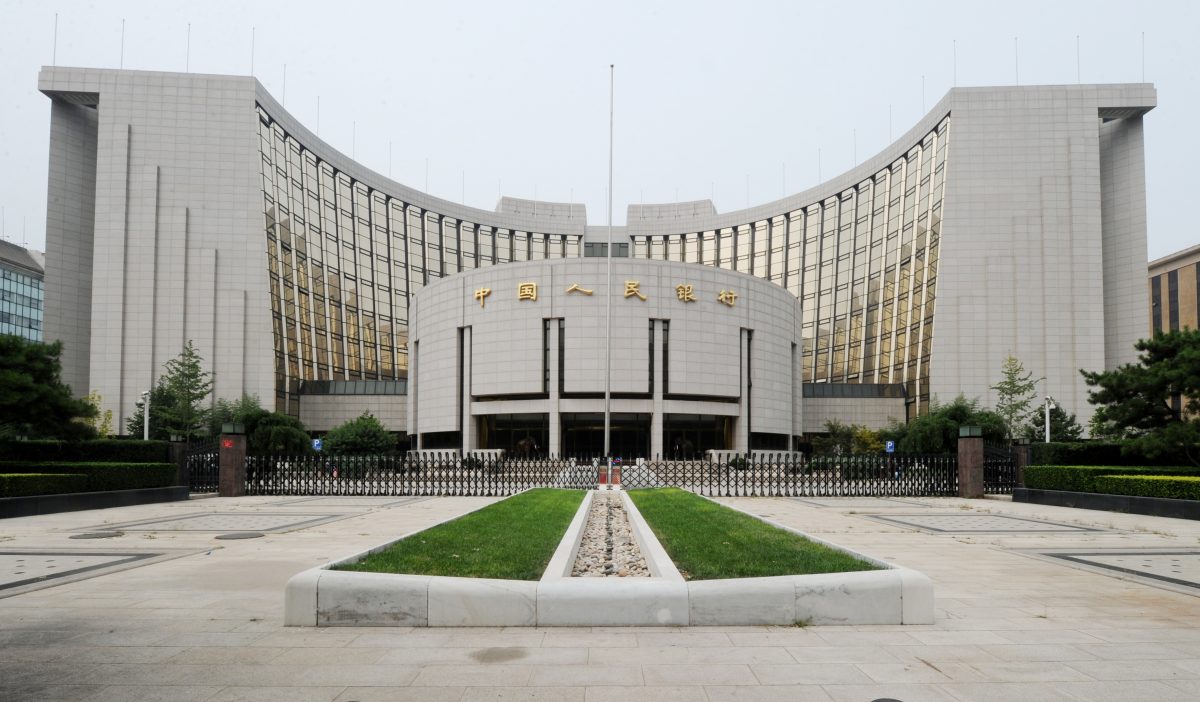
Ngân hàng Trung ương Trung Quốc có thể mất sạch tiền dự trữ do nợ xấu

Ngân hàng Trung ương Trung Quốc có thể mất sạch tiền dự trữ do nợ xấu

 Trà Nguyễn • 19:07, 17/04/20NTD

Tính toán của nhóm chuyên gia kinh tế NTDVN cho thấy nếu Ngân hàng Nhân dân Trung Quốc (PBoC) hạch toán nợ theo chuẩn kế toán quốc tế, nợ xấu sẽ lên tới 5.600 tỷ USD, chiếm tới 39,4% GDP. Khoản nợ xấu này sẽ khiến PBoC mất toàn bộ khoản dự trữ bắt buộc mà ngân hàng thương mại (NHTM) gửi, kèm theo 42,28% khối lượng ngoại hối dự trữ. PBoC không còn dư địa chính sách tiền tệ như họ tuyên truyền… Tiếp tục đọc “Ngân hàng Trung ương Trung Quốc có thể mất sạch tiền dự trữ do nợ xấu”

Mỹ lên án Trung Quốc đâm chìm tàu cá Việt Nam ở Biển Đông

vietnamnet – 06/04/2020 22:57 GMT+7

Người phát ngôn Bộ Ngoại giao Mỹ Morgan Ortagus nêu rõ: “Chúng tôi quan ngại sâu sắc trước thông tin về việc Trung Quốc đâm chìm 1 tàu cá của Việt Nam ở gần quần đảo Hoàng Sa”.

Bà Morgan Ortagus nhấn mạnh, đây là vụ việc mới nhất trong một loạt hành động của Trung Quốc nhằm khẳng định những tuyên bố hàng hải trái phép và gây thiệt hại cho các nước láng giềng Đông Nam Á ở Biển Đông.

Mỹ lên án Trung Quốc đâm chìm tàu cá Việt Nam ở Biển Đông
Người phát ngôn Bộ Ngoại giao Mỹ Morgan Ortagus

Tiếp tục đọc “Mỹ lên án Trung Quốc đâm chìm tàu cá Việt Nam ở Biển Đông”

Economic Watch: Trade recovers on China-Vietnam border

Source: Xinhua| 2020-03-18 19:05:20|Editor: huaxia
NANNING, March 18 (Xinhua) — Hundreds of flat-bed and container trucks queued along a border bridge in Dongxing, a city in south China’s Guangxi Zhuang Autonomous Region, waiting for customs clearance, a scene that signifies the recovery of trade on the China-Vietnam border from the COVID-19 epidemic.

Pham Van Tan, a 31-year-old Vietnamese, was driving a truck loaded with about 20 tonnes of dragon fruit produced in Vietnam’s Da Nang. Once passing the customs checkpoints, the goods will soon be seen in the markets of cities such as Shanghai and Beijing. Tiếp tục đọc “Economic Watch: Trade recovers on China-Vietnam border”

Offshore wind farms could power much of coastal China

Sciencedaily.com

February 21, 2020

Source: Harvard John A. Paulson School of Engineering and Applied Sciences

Summary:If China is to meet and exceed its Paris Climate Agreement goal by 2030, it’s going to need to find a way to increase its wind capacity. Researchers found that offshore wind could be a big part of the solution.

Under the Paris Climate Agreement, China committed to rely on renewable resources for 20 percent of its energy needs by 2030. Currently, the country is on track to double that commitment, aiming to hit 40 percent by the next decade. Wind power is critical to achieving that goal. Over the past 20 years, China’s wind power capacity has exploded from 0.3 gigawatts to 161 gigawatts.

But, in recent years, that growth has slowed and the hopes for China’s wind-powered future have dampened.

Why? Location, location, location. Tiếp tục đọc “Offshore wind farms could power much of coastal China”

Banks need to take Belt and Road environmental risks seriously

China’s banks supporting BRI projects should apply environmental risk-management policies and oversight, says Divya Narain

Article image
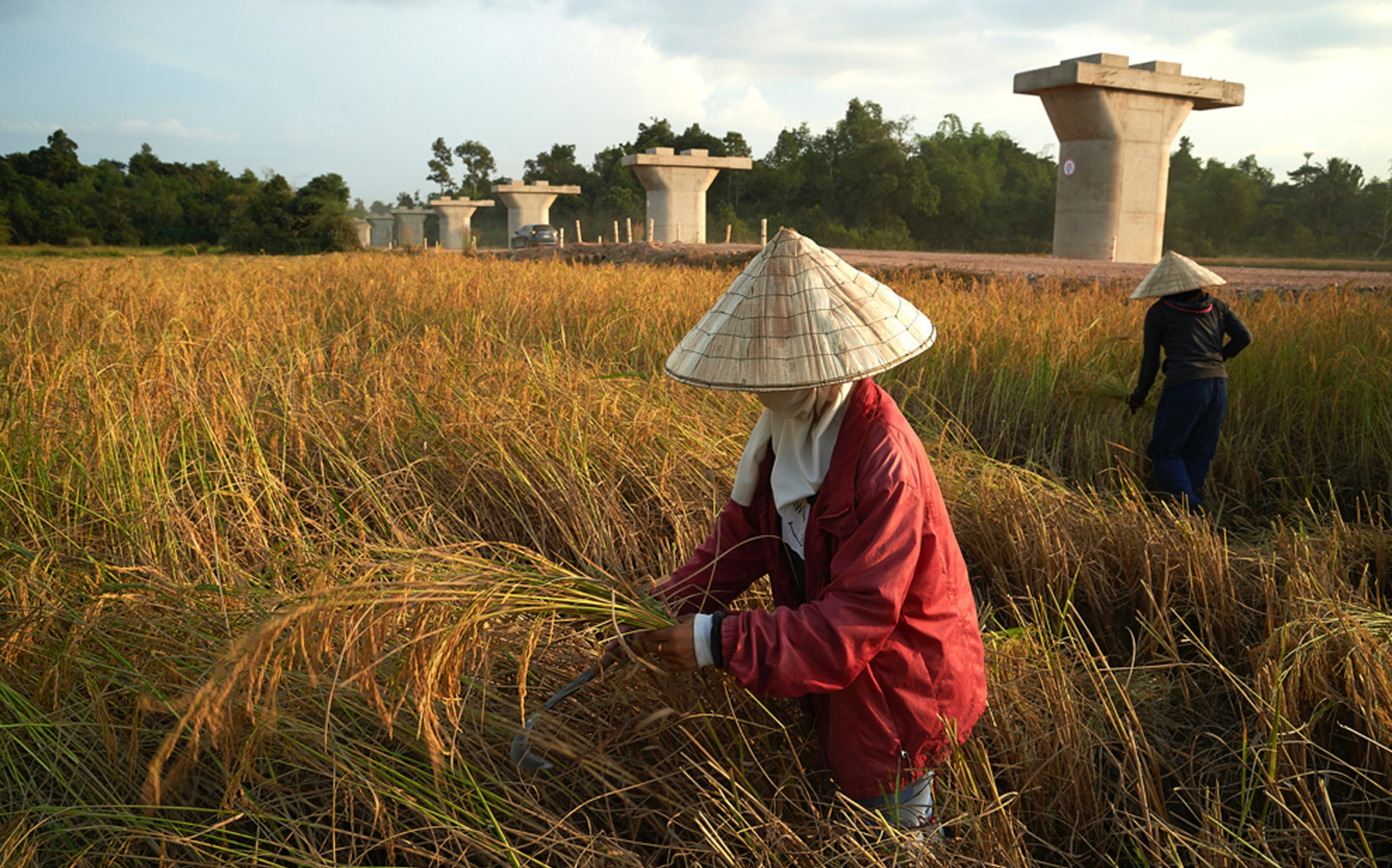
Rice harvesting near Vientiane in Laos. The pillars will support the Nam Khone bridge, the longest on the China–Laos high-speed railway (Image: Surya Chuen / China Dialogue)

China’s Belt and Road Initiative (BRI) is intended to catalyse the economies of countries around the globe.

Yet BRI projects overlap some of the most ecologically fragile places on earth. The multi-trillion-dollar initiative – to build transcontinental networks of roads, railways and ports, studded with dams, mines, power plants, and solar and wind farms – has its environmental impacts. These include air and water pollution, soil contamination and erosion, habitat and wildlife loss. Tiếp tục đọc “Banks need to take Belt and Road environmental risks seriously”

Coronavirus Exposes Core Flaws, and Few Strengths, in China’s Governance

nytimes

While China can mobilize a huge national response to the outbreak, its response to the crisis is also a lesson in how the country’s political weak points can carry grave consequences for world health.

Health care workers at the Wuhan Red Cross Hospital on Saturday.Credit…Hector Retamal/Agence France-Presse — Getty Image

  • Published Jan. 25, 2020Updated Jan. 26, 2020, 12:45 a.m. ET

It was the initial news reports that first suggested China’s political system might be getting in the way of its ability to confront the coronavirus outbreak.

The outbreak seemed to already be a full-blown crisis, infecting dozens in China and even some abroad, by the time it became widely reported. Tiếp tục đọc “Coronavirus Exposes Core Flaws, and Few Strengths, in China’s Governance”

China holds firm on strategy to build self-sufficient domestic polysilicon industry

pv-magazine.com
The Chinese government will extend duties on U.S. and South Korean polysilicon for another five years from today despite committing to buy $200 billion more American goods and services in the trade deal signed on Wednesday. Poly manufacturer REC Silicon says it expects polysilicon to form part of that trade agreement.


China’s Ministry of Commerce (MOFCOM) has announced the anti-dumping duties applied to U.S. and South Korean-made polysilicon will remain in place for another five years from today.

Norwegian poly producer REC Silicon, which manufactures almost all of its current output of the solar module raw material in the U.S., said this morning the extension of duties announced yesterday was expected as part of a pre-planned tariff review independent of the trade deal thrashed out by President Trump and China on Wednesday. Tiếp tục đọc “China holds firm on strategy to build self-sufficient domestic polysilicon industry”

Oldest Confucius Institute in U.S. to Close


Chronicle.com 

The oldest Confucius Institute in the United States is closing. In a letter to students and faculty and staff members at the University of Maryland at College Park, President Wallace D. Loh said the 15-year-old Chinese language and cultural center would shut down because of 2018 legislation that made colleges with the institutes, which are supported by the Chinese government, ineligible for certain Defense Department funding. Maryland is among nearly two dozen American colleges to close their Confucius Institutes in the last two years. And it’s the second in little more than a week —– the University of Missouri also will shutter its center. Colleges have faced pressure over Confucius Institutes from lawmakers who say the agreements lack transparency and amount to Chinese-government propaganda on American campuses. In his letter, Loh said Maryland remained committed to education and scholarship in Chinese language and culture.

What the Philippines and Australia can learn from Vietnam about living with China

EUAN GRAHAM

Photo: Flickr/Patrik M. Loeff

Photo: Flickr/Patrik M. Loeff

Published 5 Oct 2016 11:14   Lowry Institute

It is early days, granted, but the Philippines’ crude and crass new president Rodrigo Duterte appears increasingly intent on reversing his predecessor’s plucky South China Sea policy and pro-Alliance leanings, opting instead for a tilt towards China. Tiếp tục đọc “What the Philippines and Australia can learn from Vietnam about living with China”

Belt and rail: New Vietnam- China train aims to put relations on track

Updating a colonial legacy railway might offer more than a
smoother connection between sometimes tense neighbours.

An early morning start in Lao Cai in 2013 (Photo: Biggs/Flickr)

An early morning start in Lao Cai in 2013 (Photo: Biggs/Flickr)
Published 15 Jan 2020 06:00 Lowry Institute

Last year, China and Vietnam unveiled plans to refurbish a colonial-era railway between the two countries. It was an attempt to update a historical legacy – and also signified new bilateral dynamics in a consequential and sometimes fraught regional relationship. Tiếp tục đọc “Belt and rail: New Vietnam- China train aims to put relations on track”