 Image copyright Getty Images
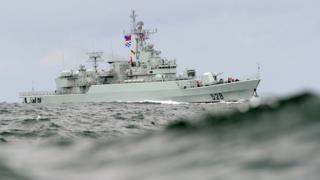
China says it is conducting military exercises near the Taiwan Strait to “protect its sovereignty” as a top US official visits Taiwan.
Tiếp tục đọc “China holds military drill as US envoy visits Taiwan”
Conversations on Vietnam Development
 Image copyright Getty Images
China says it is conducting military exercises near the Taiwan Strait to “protect its sovereignty” as a top US official visits Taiwan.
Tiếp tục đọc “China holds military drill as US envoy visits Taiwan”

17 Sep 2020 12:49AM(Updated: 17 Sep 2020 03:15PM) CNA
WASHINGTON: The US Justice Department on Wednesday (Sep 16) announced charges against five Chinese nationals and two Malaysians who ran global hacking operations for at least six years to steal identities and video game technology, plant ransomware, and spy on Hong Kong activists.
Tiếp tục đọc “US announces charges against Chinese, Malaysian hackers”
17 Sep 2020 09:03AM CNA
TAIPEI: Two Chinese anti-submarine aircraft flew into Taiwan’s air defence identification zone on Wednesday (Sep 16) and were warned to leave by Taiwan’s air force, the island’s defence ministry said on Thursday, the day a senior US official is due to arrive.
Tiếp tục đọc “Taiwan says Chinese anti-submarine aircraft off its coast”
16 Sep 2020 05:44PM CNA
SYDNEY: Australia has named China in a court document as the foreign state under investigation by police in its first foreign interference investigation, though Beijing dismissed the allegation as an anti-China smear.
Tiếp tục đọc “Australian government lawyer names China in interference investigation”By Justin Harper Business reporter, BBC News
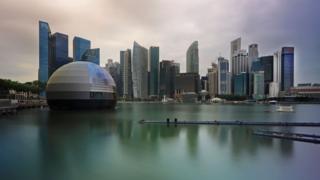
Some of China’s biggest technology firms are expanding operations in Singapore as tensions rise between Washington and Beijing.
Tiếp tục đọc “Singapore becomes a hub for Chinese tech amid US tensions”
16 Sep 2020 11:55AM CNA
The measure is unlikely to have much of an immediate effect because of the city’s coronavirus restrictions, but it could worsen fraying U.S.-China ties.


By Austin Ramzy
Sept. 15, 2020, 9:37 a.m. ET New York Times
The State Department advisory warned that the security law, which came into force in June, could subject Americans who have been publicly critical of China “to a heightened risk of arrest, detention, expulsion, or prosecution.”
The security law targets what it deems acts of secession, subversion, terrorism and collusion with foreign elements, but critics say the broad wording also gives the authorities wide-ranging powers to target voices of dissent. Dozens of people in Hong Kong have already been arrested under the law, including Jimmy Lai, a prominent pro-democracy media tycoon.
ADVERTISEMENTContinue reading the main story
The State Department has previously warned about the risk of arbitrary detention in mainland China and about the use of exit bans that cannot be readily challenged in court to keep Americans in the country.
Hong Kong, a semiautonomous territory of China, has its own legal system that is more independent and transparent than the Communist Party-controlled courts in the mainland. But the U.S. travel advisory suggests the risk of arbitrary enforcement is increasing in Hong Kong as well.
Americans traveling in mainland China or Hong Kong “may be detained without access to U.S. consular services or information about their alleged crime,” the advisory said. “U.S. citizens may be subjected to prolonged interrogations and extended detention without due process of law.”
Wang Wenbin, a spokesman for the Chinese Ministry of Foreign Affairs, criticized the new travel warning on Tuesday, saying China was one of the safest places on earth and the mainland had recorded no local transmission of the coronavirus for a month.
Last year, the State Department warned of the risk of “confrontational” demonstrations in Hong Kong, as mass pro-democracy rallies evolved into an increasingly violent push against Chinese rule. Several other countries issued similar warnings.
Why Are Men Still Explaining Things to Women?Montana’s Greatest Cultural Export: Inane Campaign AdsIf You See Someone Not Wearing a Mask, Do You Say Something?Continue reading the main storyhttps://tpc.googlesyndication.com/safeframe/1-0-37/html/container.html
ADVERTISEMENTContinue reading the main story
The United States also suspended extradition and bilateral tax agreements with Hong Kong after President Trump ended the special status granted to the city. Australia, Britain, Canada and New Zealand have also halted their extradition agreements with Hong Kong over the security law.
The United States has penalized Hong Kong and Chinese officials, and Beijing has responded with similar measures against American lawmakers and heads of nongovernmental organizations.
The warning on Hong Kong came as the United States improved its assessment of the coronavirus risk in China, where the spread of the virus is largely controlled, by changing its advisory level to “reconsider travel” from “do not travel.”
Austin Ramzy is a Hong Kong reporter, focusing on coverage of the city and also of regional and breaking news. He previously covered major events around Asia from Taipei and Beijing. @austinramzy
By Ben Westcott and Selina Wang, CNN Business
Updated 0357 GMT (1157 HKT) September 9, 2020


Hong Kong (CNN Business)Disney has publicly thanked a Chinese government agency accused of human rights abuses in Xinjiang for its help in making “Mulan” — a revelation that has provoked a storm of criticism online.Disney (DIS) acknowledges several Chinese government bodies in the credits for the live-action remake of the 1998 animated picture of the same name, but a few in particular have raised red flags: The Xinjiang government’s publicity department and the Public Security and Tourism bureaus for Turpan, a city of about 633,400 people just outside Xinjiang’s capital Urumqi.Disney did not respond to a request for comment from CNN Business to its media inquiry line, and to US press officers about the film and the credits. It’s not clear how much of “Mulan” may have been shot in Xinjiang, though people who worked on the movie have said on social media and in interviews that they scouted and filmed locations there.The US State Department estimates that since 2015 as many as two million of the Muslim-majority Uyghurs and other Turkic minorities have been imprisoned in enormous re-education camps in Xinjiang.The Turpan Public Security Bureau has been listed by the US government as an organization involved in “human rights violations and abuses” in the region.Beijing has long defended the crackdown in Xinjiang as necessary to tackle extremism and terrorism, and said it is in line with Chinese law and international practice, calling accusations of mass detentions a “groundless lie” and “sensational rumor.” A spokesperson for the country’s foreign ministry on Tuesday reiterated its defense of what it calls its Xinjiang “vocational skills education and training centers.” CNN Business has reached out to the Xinjiang government and Turpan’s tourism bureau, but Turpan’s Public Security bureau could not be reached for comment.
Tiếp tục đọc “Disney hit by backlash after thanking Xinjiang authorities in ‘Mulan’ credits”
Published: 1:30pm, 8 Sep, 2020 SCMP

Workers from the China Communications Constructions Company at the construction site of the East Coast Rail Link project in Malaysia. Photo: AFPBarrels of ink have been spent on hyping up the Belt and Road Initiative, which Beijing launched with great fanfare in 2013. But in the intervening years, the programme has faced a raft of challenges as it sought to move across China’s southern border into Southeast Asia.The RWR Advisory Group in Washington, which monitors belt-and-road projects around the world, estimates that China has started work on or completed projects totalling US$200 billion in Southeast Asia in the five years beginning in 2013. But that number seems inflated to someone who has visited most of the countries in recent years.
Tiếp tục đọc “China’s belt and road: from Malaysia to Philippines, Asean projects face roadblocks”
5/09/2020 07:32 GMT+7 vietnamnet
Trung Quốc ngầm xác nhận tham gia vụ bán TikTok tại MỹMỹ sẽ cấm thêm nhiều ứng dụng Trung Quốc sau TikTok, WeChatTrung Quốc ra ứng dụng đối phó tin giả
Hôm 2/9, Ấn Độ tiếp tục cấm 118 ứng dụng Trung Quốc, trong đó có các tựa game lớn của Tencent và NetEase và dịch vụ của Baidu, Alibaba. Bộ Điện tử và Công nghệ thông tin nước này cho rằng các ứng dụng tham gia vào hoạt động gây phương hại đến chủ quyền và tính toàn vẹn của đất nước. Nhà chức trách cũng cáo buộc các dịch vụ gửi dữ liệu công dân sang máy chủ đặt ngoài Ấn Độ.
Tiếp tục đọc “Ấn Độ đã dạy cho doanh nghiệp Trung Quốc một ‘bài học đau đớn’”BY BENEDICT ROGERS | JULY 29, 2020, 11:33 AM FP

This month, the president of the Board of Deputies of British Jews wrote a most courageous letter to the Chinese ambassador in London.
Van der Zyl is just one of many faith leaders to speak out against the atrocities being committed in Xinjiang. But one voice has been strangely absent—that of Pope Francis, ordinarily a powerful advocate for the oppressed. His silence speaks to the dangers of the deal made with China by the Vatican—and demands that others in the church speak out.
Tiếp tục đọc “Pope Francis’s Silence on Xinjiang Speaks Volumes”Intense rainfall and severe flooding that has battered China since early June 2020, has affected tens of millions of people and left at least 140 dead or missing. The Three Gorges Dam that spans the Yangtze River has been put to the test in terms of its ability to control floods along Asia’s longest river. But why have floods across a large region of China been so severe in the summer of 2020?
Tiếp tục đọc “Hong Kong to be governed by mysterious law secretly passed by China”
Beijing move to stamp out anti-government protests poses diplomatic test for UK
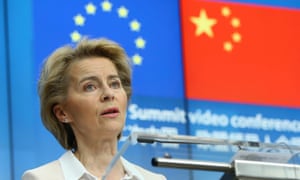
European leaders condemned China’s “deplorable decision” to press ahead with its new security laws in Hong Kong, warning that it will speed up the reassessment of China as a trustworthy economic partner.
The European Union council president, Charles Michel, said “we deplore the decision” and the head of the European Commission, Ursula von der Leyen, said the bloc was now discussing with international partners on any possible measures in response.
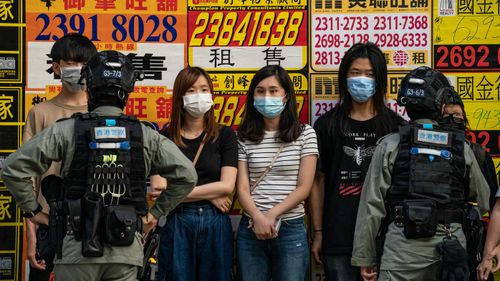
The legislaton, passed by lawmakers in Beijing on Tuesday, is aimed at stamping out anti-government protests in Hong Kong. It will criminalise secession, subversion, terrorism and collusion with foreign forces.
The UK foreign secretary, Dominic Raab, facing the greatest test of British diplomatic clout since the Salisbury poisoning in March 2018, described the imposition of the new law as a grave step.
Despite the urging of the international community, Beijing has chosen not to step back from imposing this legislation. China has ignored its international obligations regarding Hong Kong. This is a grave step, which is deeply troubling.
He told MPs his offer to provide visas, and paths to citizenship, to millions of Hong Kong British National Overseas passport holders stood. “We urgently need to see the full legislation, and will use that to determine whether there has been a breach of the Joint Declaration and what further action the UK will take,” he added.
A further statement to MPs on Wednesday is possible if the bill has been translated and analysed by the foreign office by then.
The UK can try to punish China collectively through sanctions, or through selective sanctions against named individuals, but few expect that they will persuade China to step back.
Donald Trump, already on a pre-election collision course with China, has previously said the US will remove Hong Kong’s favoured trading status. The US secretary of state, Mike Pompeo, said on Monday the US would bar defence exports to Hong Kong and would soon require licenses for the sale of items to Hong Kong that had both civilian and military uses.
China has responded by saying it would impose a visa ban on US citizens seeking to interfere with Hong Kong’s security laws.
Pompeo believes he is also making headway in persuading the EU to take a more sceptical approach to Chinese investment, but the EU foreign affairs chief, Josep Borrell, on Monday said the EU had to retain the right to view China through its own lenses.
An EU-China Summit set for September has been postponed due to the coronavirus pandemic, but the German foreign minister, Heiko Maas, said it needed to be quickly rescheduled and it was essential that the EU spoke with one voice on China.
By leaving the EU, the UK has less ability to shape the bloc’s sanctions response, but the UK will welcome the signs of Europe-US convergence.
The authority of the US to condemn human rights abuses in Hong Kong has been diminished by revelations last week in the book by the former US national security adviser John Bolton that Trump repeatedly refused to condemn China, believing its cooperation was critical to his re-election chances.
Norbert Röttgen, a senior German CDU member, condemned “the complete lack of transparency” in the new Hong Kong law – which has not been published in full – and said 1 July marked the day “one country, two systems” no longer exists.
Lord Patten, the last British governor of Hong Kong, said: “This decision, which rides roughshod over Hong Kong’s elected legislature, marks the end of ‘one country, two systems’. It is a flagrant breach of the Sino-British joint declaration – a treaty lodged at the United Nations – and Hong Kong’s mini constitution, the Basic Law.
“It will throttle the city’s rule of law, presenting a major confrontation between what passes for law in China and the common law system in Hong Kong, which has allowed the city to function as one of most important financial hubs in Asia. The separation of powers is in danger of being shattered and the courts politicised by the provision that the chief executive will herself choose the judges for national security cases.”
Benedict Rogers, a co-founder of Hong Kong Watch, called for the appointment of a UN special envoy/rapporteur on Hong Kong, the passing of targeted sanctions against the perpetrators of human rights abuses, the formation of an international contact group to monitor the situation on the ground, and the coordination of an international life-boat policy “to help Hongkongers in need of a lifeline”.
Japan’s ambassador to the EU, Kazuo Kodama, told Euractiv news: “There was an important deal reached between the UK and China […] We understood that Hong Kong’s way of life would be maintained, liberalism and independence of judiciary would be maintained, as well as freedom of speech and press, as these values are protected in the US, Europe and Japan.”
A number of countries are experiencing strained relations with China. Australia, in a deepening security and trade dispute with China, has announced plans for a $A1.35bn (£755m) boost to its cyber security budget, including the recruitment of 500 cyber spies.
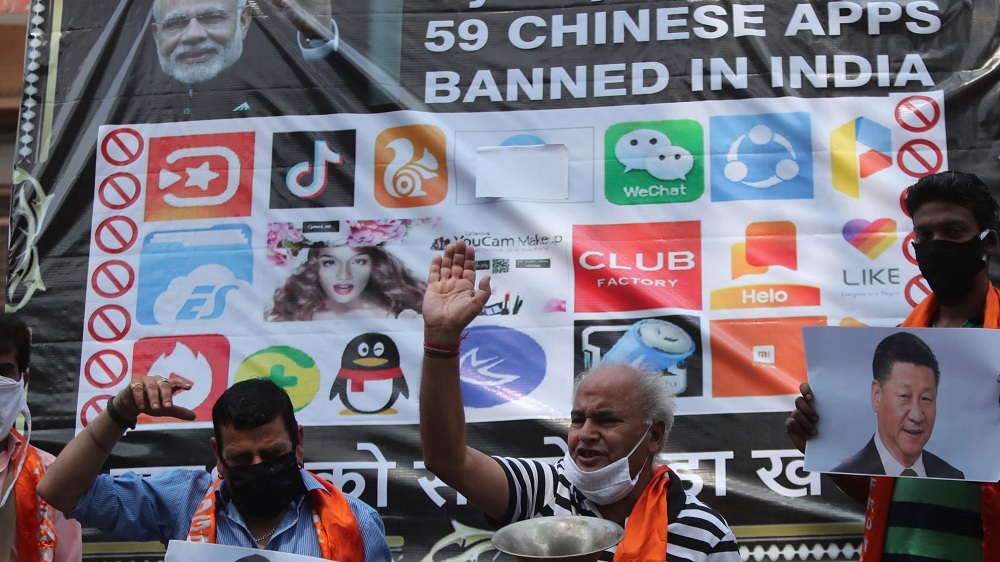
India, traditionally a non-aligned country but already at odds with China over deadly clashes on the eastern Ladakh border, on Monday announced it was banning more than 50 Chinese apps, including Bytedance’s TikTok and Tencent’s WeChat. China says it was concerned by the move and seeking details.
France is seeking stronger relations with India, and more recently Russia, to try to build an alliance of countries opposed to China. Other countries would prefer any anti-Chinese alliance to comprise democracies spreading from Europe, the US and Asia, but without Putin.
The test for China will come if it finds that by locking itself into so many disputes with the bulk of its major trade partners, moves such as clamping down on protest in Hong Kong end up backfiring by damaging the Chinese economy, and pushing previously neutral countries into the American orbit.
 CVD
CVD