China and Russia have grown increasingly close in recent years, including as trading partners, in a relationship that brings both opportunities and risks as Russia reels from tough new sanctions led by the West in response to its invasion of Ukraine. Total trade between China and Russia jumped 35.9% in 2021 last year to a record US$147.9 billion, according to Chinese customs data, with Russia serving as a major source of oil, gas, coal and agriculture commodities, and running a trade surplus with China.
Since sanctions were imposed in 2014 after Russia annexed Ukraine’s Crimea, bilateral trade has expanded by more than 50% and China has become Russia’s biggest export destination The two were aiming to boost total trade to US$200 billion by 2024, but according to a new target unveiled last month during Russian President Vladimir Putin’s visit to Beijing for the Winter Olympics, the two sides want bilateral trade to grow to US$250 billion.
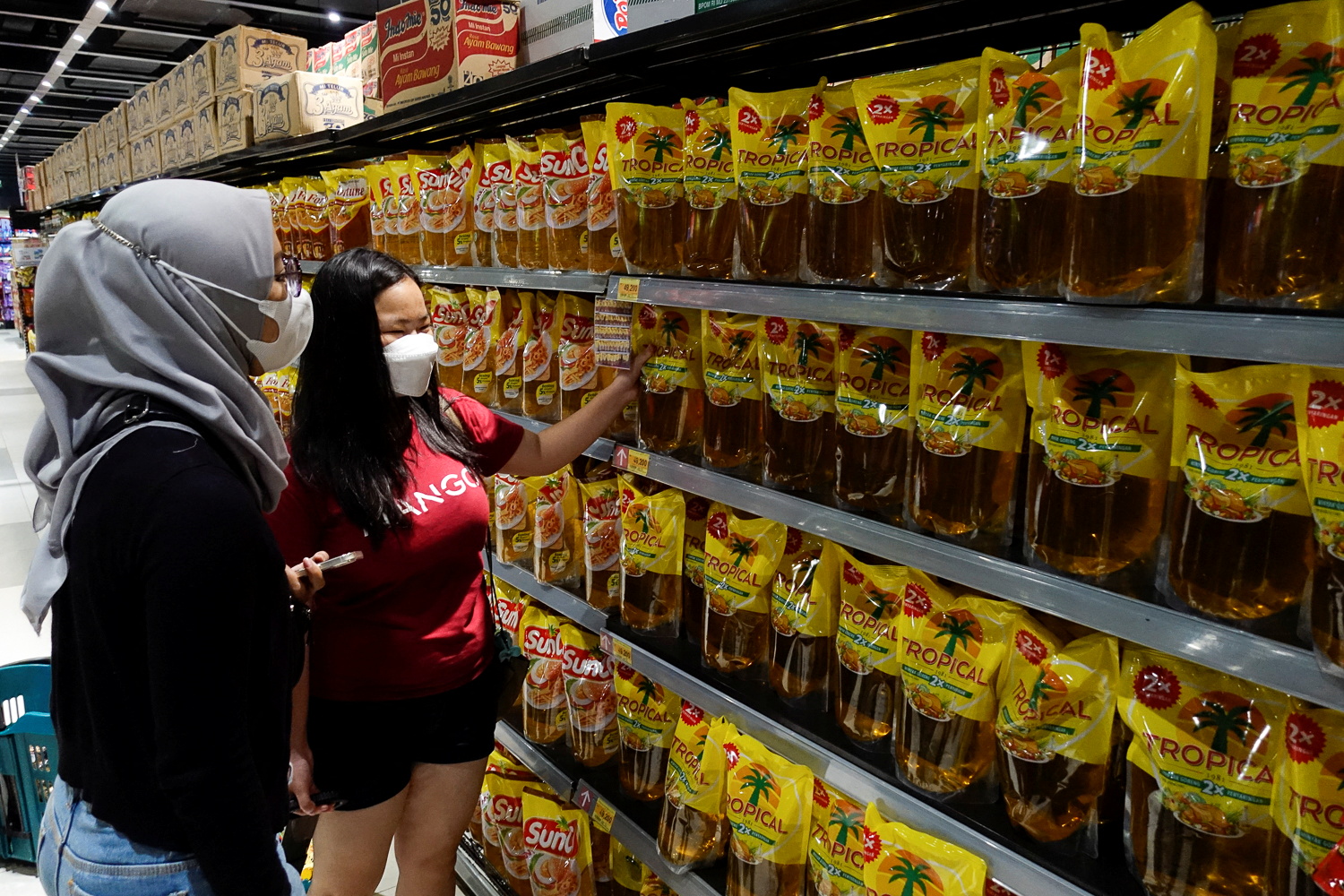
WASHINGTON, April 22 (Reuters) – Indonesia’s new palm oil export ban will hurt other countries but is necessary to try to bring down the soaring domestic price of cooking oil driven up by Russia’s war in Ukraine, Indonesia’s finance minister told Reuters on Friday.
Sri Mulyani Indrawati said that with demand exceeding supplies, the ban announced earlier on Friday is “among the harshest moves” the government could take after previous measures failed to stabilize domestic prices. read more
“We know that this is not going to be the best result,” for global supplies, she said in an interview on the sidelines of the International Monetary Fund and World Bank spring meetings. “If we are not going to export, that’s definitely going to hit the other countries.”
China and India are among big importers of palm oil from Indonesia, the world’s largest producer accounting for more than half the world’s supply. Palm oil is used in products from cooking oils to processed foods, cosmetics and biofuels.
Indrawati said previous measures requiring producers to reserve stocks for domestic use did not result in “the level of prices that we want. It’s still too expensive for the ordinary household to buy those cooking oils.”
Officers with the Royal Solomon Islands Police Force undergo training by members of the China Police Liaison Team in this undated photo released March 29 by the RSIPF. (AFP/Royal Solomon Islands Police Force) (Handout/AFP/Getty Images)
Over the past few weeks, the world has been understandably transfixed by Russian President Vladimir Putin’s horrific invasion of Ukraine. Meanwhile, though, his close ally Chinese President Xi Jinping has been quietly taking advantage of the West’s distraction by expanding China’s sphere of influence in the South Pacific. If Washington doesn’t wake up to this threat, China’s efforts to dominate the region will gain dangerous and perhaps irreversible momentum.
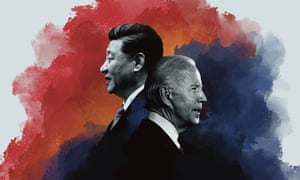
Armed conflict between the world’s two superpowers, while not yet inevitable, has become a real possibility. The 2020s will be the decade of living dangerously. By Kevin Rudd
The Ukraine war is complicating the calculus of China’s energy security and the prospect of a new energy deal with Russia
Can Beijing afford to be close to a Moscow that is increasingly politically and economically isolated?
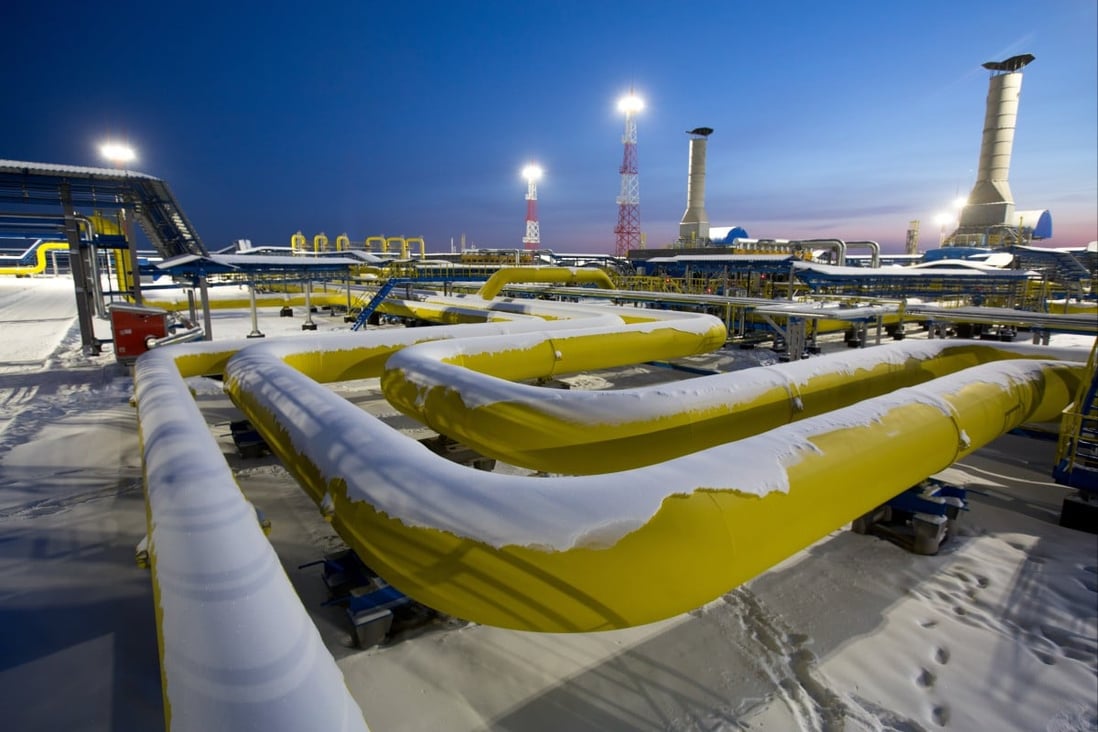
Snow covers sections of connected pipework at the Gazprom PJSC Atamanskaya compressor station, part of the Power Of Siberia gas pipeline extending to China, near Svobodny, in the Amur region, Russia, in 2019. Photo: Bloomberg
Two recent developments reveal the possibility of a new energy agreement between China and Russia. First, Russian gas giant Gazprom PJSC announced a contract to design the Soyuz Vostok pipeline across Mongolia towards China. Second, Beijing is reported to be discussing with its state-owned companies opportunities to buy stakes in Russian energy companies, and is also looking at a Power of Siberia 2 pipeline to China.
With the exit of international energy companies from Russia following its invasion of Ukraine, Germany’s decision to halt the certification process of the Kremlin-backed Nord Stream 2 pipeline, and rounds of sanctions on Russia, there are certainly new opportunities for the Chinese government and companies to strengthen their position in the Russian market.
However, even as domestic, regional and global factors may push China towards a new energy deal with Russia, Beijing could also face a range of challenges.
Firstly, Beijing’s ambition to be carbon-neutral by 2060 and replace much coal with gas is one of the most important domestic factors prompting China to further improve its relations with Russia.
Russian gas exports – whether liquefied natural gas or pipeline gas delivered through the original Power of Siberia, for example – would help China reduce greenhouse gas emissions as the country makes a green transition.
Secondly, the withdrawal of Western energy companies such as BP and Shell from Russia due to the Ukraine war creates opportunities for Chinese energy companies, especially state-owned ones, to invest in Russia and diversify their portfolio.
Thirdly, while China also imports gas from Turkmenistan, Russian gas is one of the cheapest options for Chinese consumers, making a new energy deal with Russia that much more attractive.
However, there could also be obstacles to such a deal. One problem could be the political and economic uncertainties now looming over Russia; the deterioration of the Russian business environment under current sanctions might discourage Chinese companies from investing in Russia.
Particularly, sanctions led by Washington seem to inspire caution in Beijing and Chinese companies. For example, the state-run Sinopec Group recently suspended talks about a major petrochemical investment and a gas marketing venture in Russia, apparently heeding a government call to tread carefully with Russian assets.
(WASHINGTON, DC)—U.S. Senator Jeff Merkley (D-OR) and U.S. Representative James P. McGovern (D-MA), Chair and Cochair of the bipartisan and bicameral Congressional-Executive Commission on China (CECC), issued today the Commission’s 2021 Annual Report on human rights conditions and rule of law developments in the People’s Republic of China (PRC). The full report and anexecutive summary are available for download on the CECC’s website.
“The Chinese government’s horrific abuse of human rights and trampling of human dignity make it more important than ever that the Congressional-Executive Commission on China document abuses of human rights and the rule of law in China, as the Commission has done for the past 20 years,” said CECC Chairman Merkley. “This report calls attention to the limitations of China’s model of governance in meeting the needs of the Chinese people and in respecting fundamental rights both in China and globally. It should serve as a call to action. Those fleeing persecution, facing arbitrary detention, fighting coercion, or fearing the destruction of their culture need to know the United States has their back, and I hope Congress and the Biden Administration will continue to act on the CECC’s recommendations to do so.”
Chinese President Xi Jinping at the Great Hall of the People in Beijing Photo Credit: Aly Song/Reuters.
China is challenging the West. What is the West? It is not only nations in Europe or North America. It is countries that practice democracy.
India, Japan, South Korea, and Australia are Western nations that surround China. They worry about China’s size and ambitions. They view China with suspicion. Also, in the West, the United States and most of Europe see China as an adversary.
Every week, Asia Stream tracks and analyzes the Indo-Pacific with a mix of expert interviews and original reporting by our correspondents from across the globe.
NEW YORK — Welcome to Nikkei Asia’s podcast: Asia Stream.
Every week, Asia Stream tracks and analyzes the Indo-Pacific with a mix of interviews and original reporting by our correspondents from across the globe.
Hong Kong (CNN)In a year when all Xi Jinping craved was for things to be stable, 2022 is shaping up to be anything but.
After years of careful preparation, the Chinese leader is expected to step into an almost unprecedented third term at the helm of the country and its Communist Party this fall.
But instead of a smooth ride, dual crises are threatening to upend the status-quo, with China’s largest outbreak of Covid-19 in two years emerging at home while overseas, Russia embarks on a brutal, widely denounced invasion of Ukraine.
NEW YORK — Welcome to Nikkei Asia’s podcast: Asia Stream.
Every week, Asia Stream tracks and analyzes the Indo-Pacific with a mix of interviews and original reporting by our correspondents from across the globe.
cfr – The 2021 coup returned Myanmar to military rule and shattered hopes for democratic progress in a Southeast Asian country beset by decades of conflict and repressive regimes.
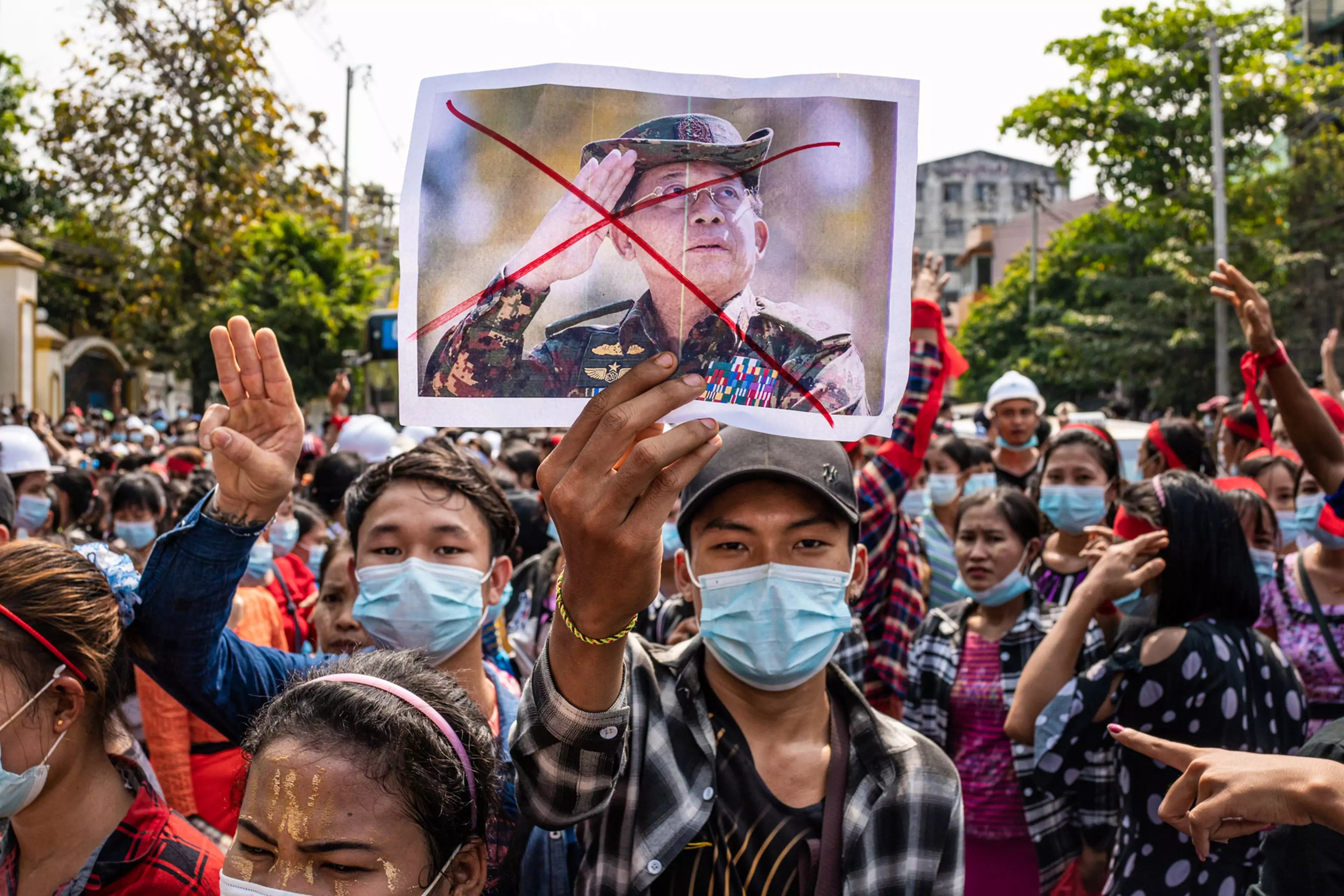
A protester holds an image of Senior General Min Aung Hlaing during an anti-coup march in February 2021. Getty Images
Myanmar, also known as Burma, has suffered decades of repressive military rule, widespread poverty, and civil war with ethnic minority groups.
The transition away from full military rule starting in 2011 spurred hopes of democratic reforms. But the military maintained control over much of the government and began a campaign of ethnic cleansing against the Rohingya.
The military launched a coup in February 2021 and then cracked down on protests. The opposition formed a shadow government and fighting force, leading to a civil war and humanitarian crisis that could spill over Myanmar’s borders.
U.S. President Nixon shakes hands with Chinese President Mao Zedong (Feb. 21, 1972, AP)
nikkei – Feb. 21 marks the 50th anniversary of U.S. President Richard Nixon’s trip to China, a turning point in international relations.
Washington and Beijing joined together to counter the Soviet Union, but China did not democratize as the U.S. hoped. It has now become an economic and military powerhouse under the one-party rule of the Communist Party. A half-century after the handshake that changed the world, cooperation has turned to confrontation. The U.S.-China relationship and global affairs have all undergone tumultuous change.
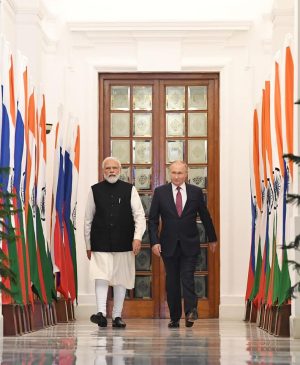
India’s Prime Minister Narendra Modi with Russian President Vladirmir Putin during the summit in New Delhi, India on December 6, 2021.Credit: Facebook/ Ministry of External Affairs, India
Russia’s invasion of Ukraine on February 24 has put India in a particularly difficult spot. Since the conflict between Moscow and the U.S. over Ukraine began escalating late last year, India has avoided taking sides. But with Moscow’s invasion of Ukraine, that cautious approach will become increasingly untenable for New Delhi. It could hurt India’s interests in the long-run.







 CVD
CVD 