Hồ Tây ở Hà Nội và Hồ Tây ở Hằng Châu (Trung Quốc) tương đồng về quy mô, hình thế, công năng văn hóa. Nhưng Hồ Tây ở Hằng Châu đã trở thành Di sản văn hóa thế giới, đại chúng cùng được thụ hưởng, trong khi Hồ Tây ở Hà Nội có nguy cơ thành “vùng bất động sản khủng của các doanh nghiệp”.
Trong khu vực các nước đồng văn, có rất nhiều hồ mang tên Hồ Tây. Trung Quốc có 36 Hồ Tây, Nhật Bản có một Hồ Tây (ở huyện Yamanashi) và Việt Nam có một Hồ Tây tại thủ đô Hà Nội. Không chỉ cùng tên, tất cả các Hồ Tây kể trên còn mang một đặc điểm chung rất quan trọng: đều là nơi hội tụ, ghi dấu của thơ ca, truyền thuyết và tín ngưỡng dân gian.
Nổi tiếng nhất trong số đó, phải kể đến Hồ Tây ở Hằng Châu (Trung Quốc) và Hồ Tây tại Hà Nội với nhiều điểm tương đồng mà chúng tôi sẽ lần lượt nêu ra.
Hồ Tây và thành phố Hằng Châu nhìn từ trên cao. Ảnh tư liệu Đinh Thế Anh
A leaked junta memo shows three Chinese firms appealing to Nay Pyi Taw to arrange liquified natural gas imports from Russia amid economic turmoil in Myanmar.
By FRONTIER
A leaked document from the junta’s Ministry of Electric Power reveals that three Chinese energy companies appealed to the junta for help importing liquified natural gas from the Russian government, as the regime’s economic policies wreak havoc on the energy sector.
The document, in the form of a memo, indicates a meeting took place on July 25 in Nay Pyi Taw with representatives from MoEP, Hong Kong-listed VPower and Chinese state-owned firms CNTIC and Genertec. (VPower is also part-owned by CITIC, another Chinese state-owned investment firm).
Since 2015, the Cambodian government has been addressing the politically and diplomatically sensitive issue of illegal Vietnamese immigrants through methods such as documentation, deportation, eviction, relocation and registration. In this picture, Cambodia’s Prime minister Hun Sen (R) and his then Vietnamese counterpart Nguyen Xuan Phuc (L) inspect the guard of honour during a welcome ceremony at the Presidential Palace in Hanoi on 4 October 2019. Photo: Nhac NGUYEN/AFP.
EXECUTIVE SUMMARY
Since 2015, the Cambodian government has been addressing the politically and diplomatically sensitive issue of illegal Vietnamese immigrants through methods such as documentation, deportation, eviction, relocation and registration.
These actions are the ruling Cambodian People’s Party’s response to the opposition Cambodia National Rescue Party’s successful politicisation of anti-Vietnamese sentiments among Cambodian voters.
The Cambodian government’s Vietnamese immigrant policies also serve the ecological development goal of improving Cambodian water systems, as well as beautifying and developing its urban areas.
Given Cambodia’s asymmetrical power relationship with Vietnam and the sensitive issue of illegal Vietnamese immigrants, the closer bond between Cambodia and China serves as an enabling factor for the Cambodian government in adopting tougher policies.
The Cambodian government’s measures will however neither reduce the fear held by many Cambodians of Vietnamese domination nor will they alleviate the potential diplomatic fallout.
*Jing Jing Luo is Post-Doctoral Researcher at the School of Public Affairs, Xiamen University, China. Kheang Un is Professor of Political Science at Northern Illinois University, USA.
Temple Prof Seeks Reinstatement of Damage Claims Against FBI
A Temple University physicist who was charged with sharing scientific technology with China only for the case to collapse before trial and be dismissed by the Justice Department is asking a federal appeals court to reinstate his claims for damages against the FBI agent who investigated him.
FILE – An American flag flies outside the Department of Justice in Washington, March 22, 2019. A Temple University physicist who was charged with sharing scientific technology with China only for the case to collapse before trial and be dismissed by the Justice Department is asking a federal appeals court to reinstate his lawsuit against the FBI agent who investigated him. Lawyers for Xiaoxing Xi and his wife say in a brief filed Monday with a Philadelphia-based appeals court that a judge erred last year when he dismissed their claims for damages. (AP Photo/Andrew Harnik, File) THE ASSOCIATED PRESS
By ERIC TUCKER, Associated Press
WASHINGTON (AP) — A Temple University physics professor who was charged with sharing scientific technology with China only for the case to collapse before trial and be dismissed by the Justice Department asked a federal appeals court on Monday to reinstate his clams for damages against the U.S. government.
Teams of inspectors arrived this morning at the Central offices of PwC and KPMG to start reviewing the audit records of US-listed, China-based companies
The PCAOB has high standards and will perform a ‘very detailed’ inspection, which will take ‘as long as needed’, former SFC chairman says
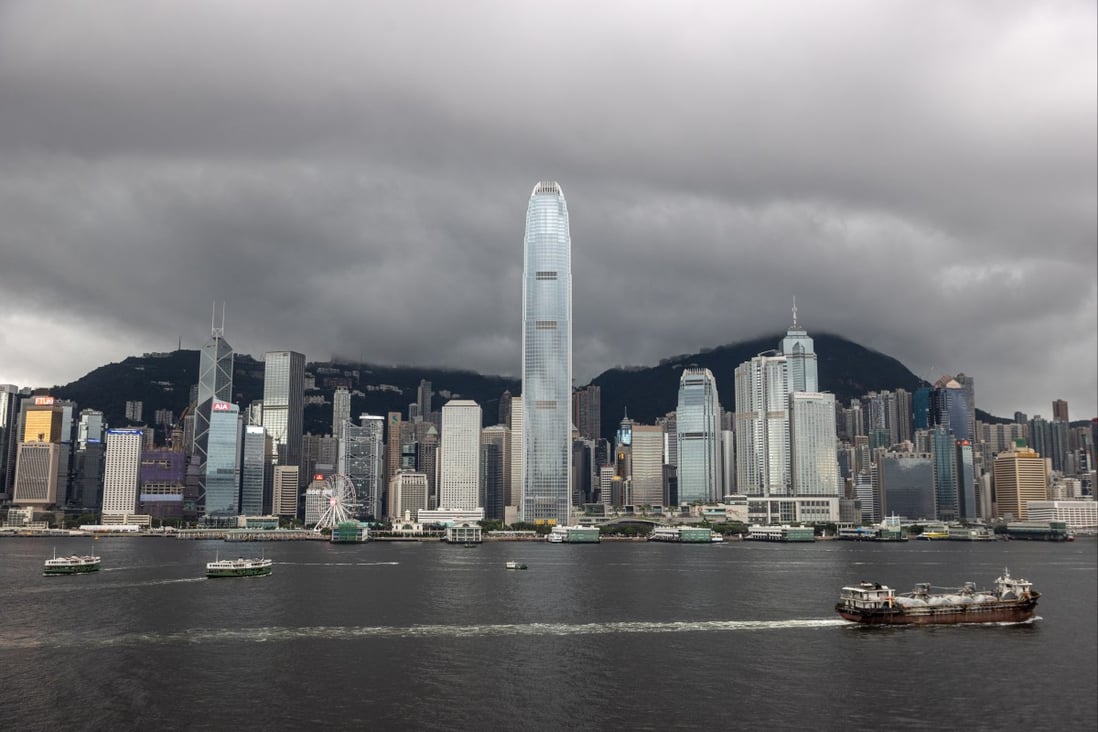
The Hong Kong island skyline, showing the Central business district, pictured on June 6, 2022. Photo: EPA-EFE
Teams of US audit inspectors arrived at the Central offices of accounting firms PwC and KPMG this morning to begin a historic review of the audit records of US-listed, China-based companies, two sources told the South China Morning Post.
The inspectors from the Public Company Accounting Oversight Board (PCAOB) arrived in Central on Monday morning to work at the Hong Kong offices of PwC in the Prince’s Building and Edinburgh Tower as well as KPMG’s office in the Prince’s Building, the sources said.
Both accounting firms have reserved rooms for the inspectors to perform their review. The two firms have also already prepared the paper and electronic audit materials of the selected clients named by the PCAOB.
TTCT – Đào tạo sinh viên nước ngoài là hoạt động giao lưu nhân dân có ý nghĩa nhưng cũng là mối lo của nhiều cường quốc trước nguy cơ gián điệp kiểu mới.
Ảnh: CNN
Nhật Bản là quốc gia mới nhất yêu cầu các trường đại học phải xin giấy phép trước khi chuyển giao công nghệ liên quan đến an ninh quốc phòng cho sinh viên quốc tế. Theo tạp chí Nikkei, quy định này áp dụng cho các sinh viên nước ngoài học tập tại Nhật từ 6 tháng trở lên và “chịu ảnh hưởng” từ nước khác, ví dụ như có hơn 25% thu nhập đến từ tài trợ của một chính phủ nước ngoài. Các trường hợp này phải được báo cáo về Bộ Kinh tế, thương mại và công nghiệp (METI) để được cấp phép.
Australia’s universities are embroiled in a growing geopolitical storm.
In recent months, pro and anti-Beijing groups have clashed on campuses amid rising concerns over the Chinese government’s expanding power abroad.
Universities earn billions of dollars a year from student fees and research collaborations with China, but there are growing fears these lucrative arrangements may be putting academic institutions, and even national security, at risk.
As government ministers warn that the country faces an “unprecedented level of threat” from foreign interference, 101 East investigates the infiltration of Australia’s universities by Beijing.
TTCT – Muốn trung lập thật sự phải ở vị thế của kẻ mạnh. Indonesia là ví dụ điển hình ở khu vực Đông Nam Á.
Cho tới nay, có thể nói là ông Jokowi đã lèo lái thành công con thuyền Indonesia trong một thế giới đầy bất trắc. Ảnh: Nikkei Asia Review
Tờ Kompass của Indonesia hôm 12-8 đăng tin: “Binh sĩ Indonesia và Hoa Kỳ diễn tập bắn đạn thật khi căng thẳng Trung Quốc lên cao”. Còn hôm 1-8, Hãng tin News 18 (Ấn Độ) chạy tít: “Tập Cận Bình gặp Widodo của Indonesia: Trung Quốc cần đồng minh giữa cuộc chiến Ukraine và cuộc khủng hoảng Đài Loan”. Vậy thì Indonesia đang đứng về phe nào trong cuộc cạnh tranh toàn cầu mới?
Việc hàng ngàn binh sĩ Indonesia, Mỹ và các đồng minh khác diễn tập bắn đạn thật vào hôm 12-8 được tư lệnh Bộ tư lệnh Ấn Độ Dương – Thái Bình Dương của Mỹ, đô đốc John Aquilino, gọi là nỗ lực của Washington nhằm ngăn chặn một cuộc xung đột khu vực sau “các hành động gây bất ổn” của Trung Quốc xung quanh Đài Loan.
Kèm theo bản tin là tấm hình chụp ông Aquilino và Tổng tư lệnh Lực lượng vũ trang Indonesia Andika Perkasa thị sát cuộc tập trận mang tên Siêu lá chắn Garuda 2022, diễn ra ở Baturaja, nam Sumatra.
Laos is facing one of its worst economic crises in decades, with the country experiencing galloping inflation and staring at a debt default.
Inflation in Laos has hit a 22-year high, causing a scarcity of essential commodities like fuel
Laos’ economy has been on the brink of collapse due to a spiraling debt crisis that is crippling the country’s finances and bringing it perilously close to default.
In June, the Southeast Asian nation’s Statistics Bureau announced that inflation hit a 22-year high of 23.6%, causing staple goods to become scarce and eroding the population’s purchasing power.
China forgets who was the real aggressor in Korean War
Voice of America – 9-8-2022
July 27 marked the 69th anniversary of the signing the Korean War armistice between military commanders from the U.S.-led United Nations forces, North Korea and China.
During the 1950-1953 war on the peninsula, the People’s Republic of China backed North Korea with help from the Soviet Union, while U.S.-led U.N. forces defended South Korea.
By Adnan Aamir, Marwaan Macan-Markar, Shaun Turton and Cissy Zhou – AUGUST 10, 2022
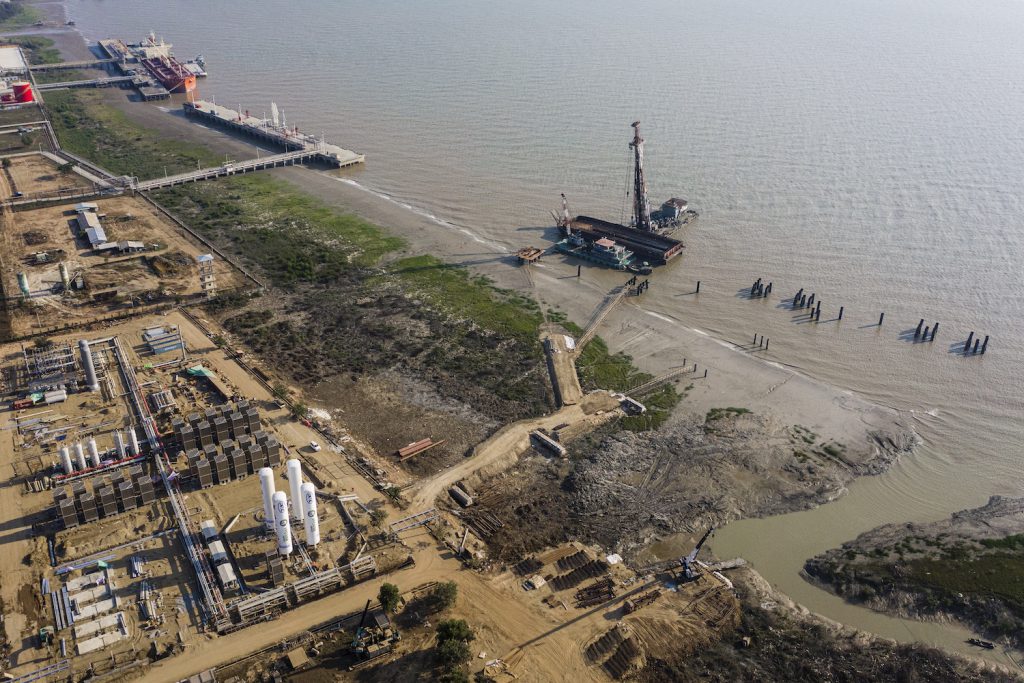
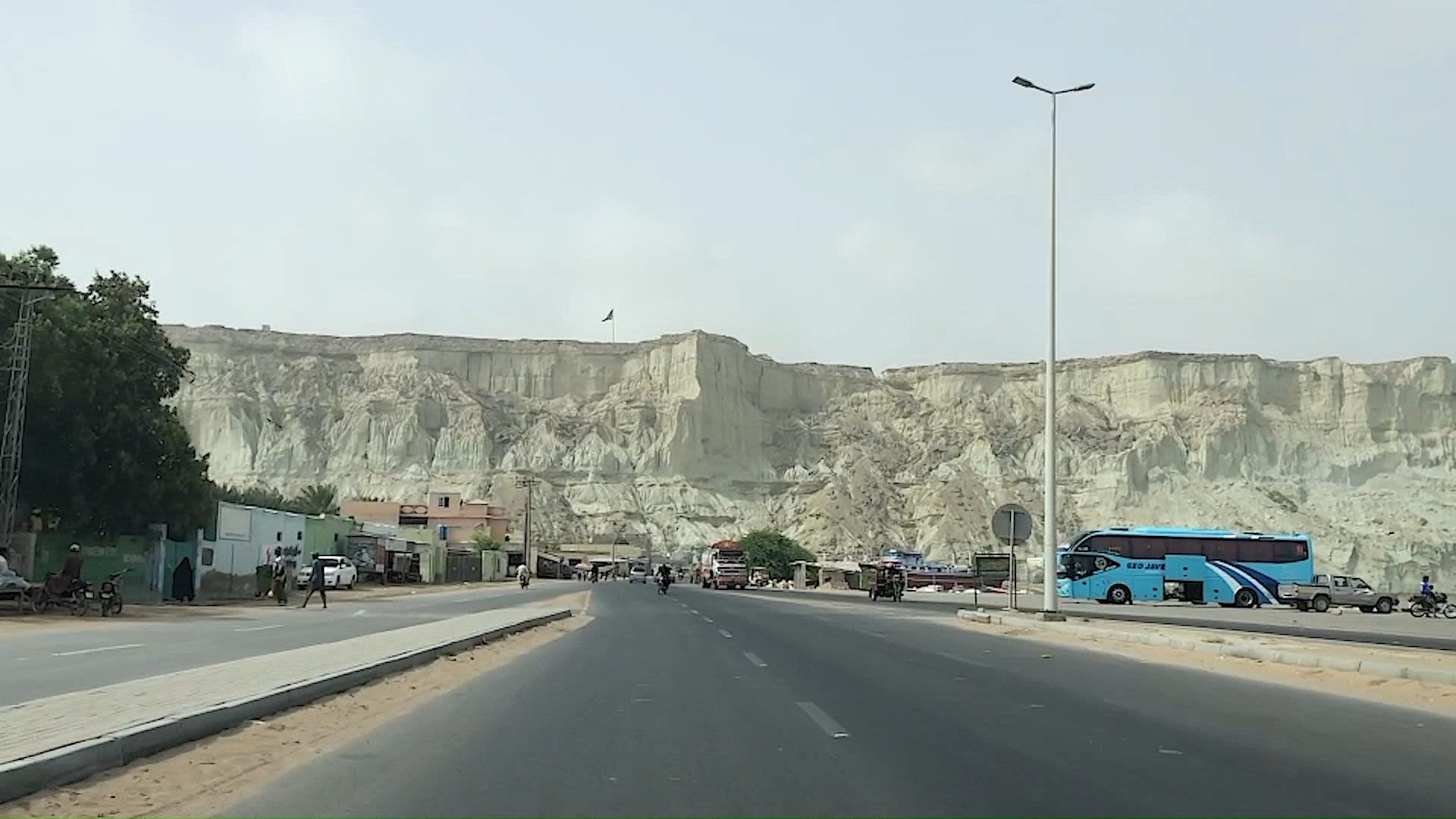
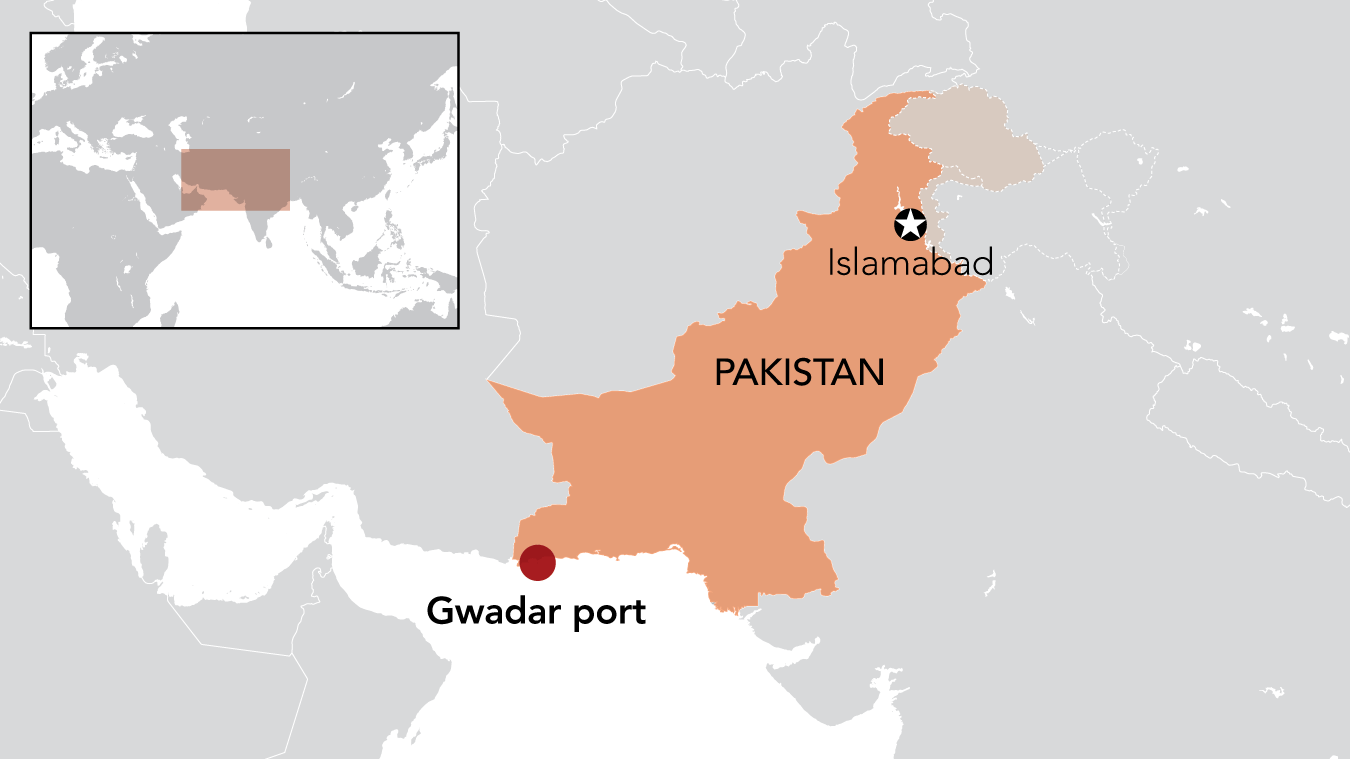
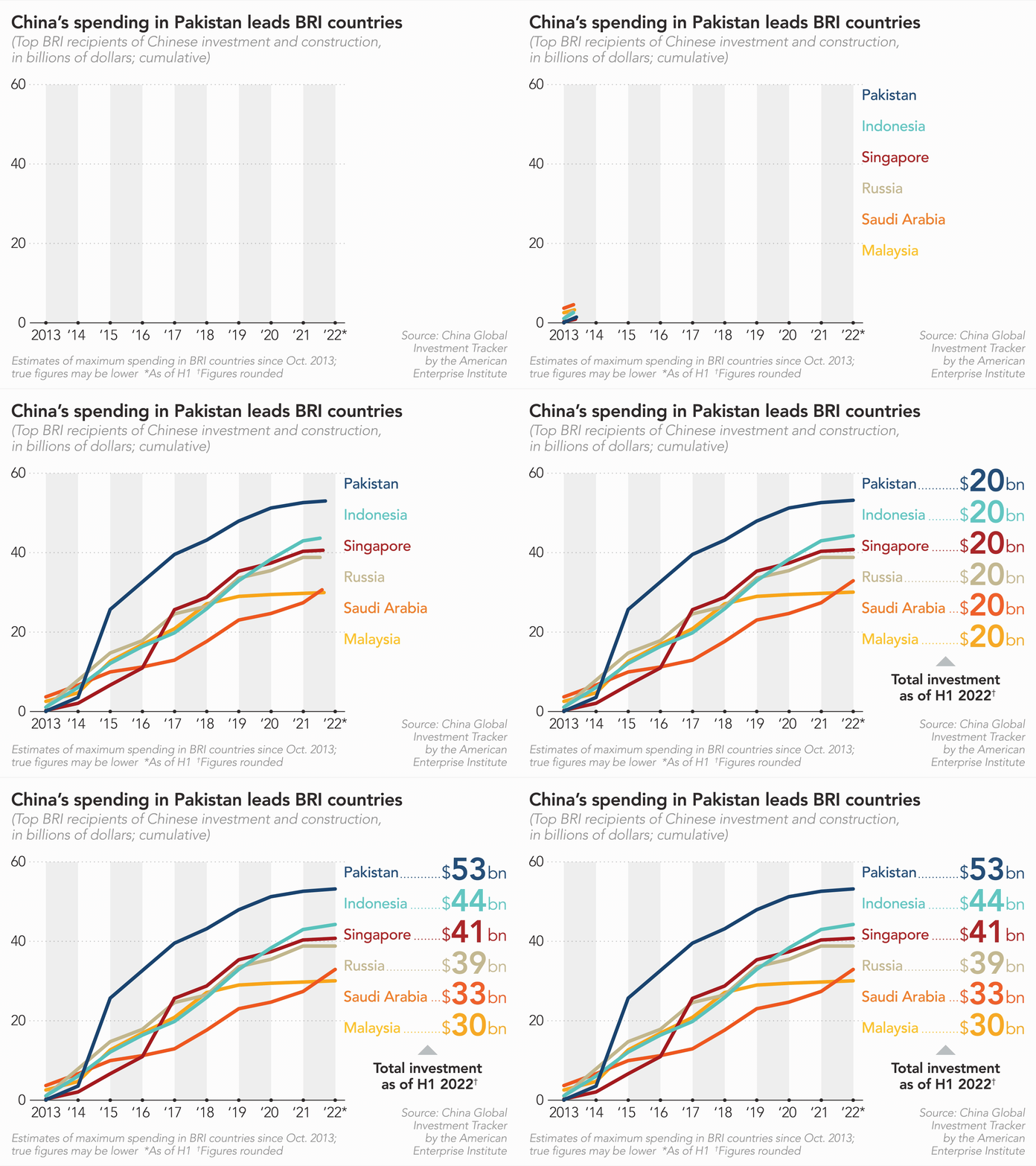
The drive to Pakistan’s port of Gwadar takes seven and a half hours from Karachi via the Makran coastal highway. Much of the 600-km route is deserted, with no restaurants, restrooms or even fuel stations. On a recent journey, around 200 vehicles in total could be counted during the entire drive.
Arriving in the city on Pakistan’s Indian Ocean coast, Chinese and Pakistani flags are ubiquitous, and Chinese-financed construction projects loom, but the city is spookily devoid of economic activity. Near the seafront, broad avenues are curiously empty of vehicles. Inside the city center, the roads are narrow, congested and covered with foul smelling drain water, with few multistory buildings aside from the Chinese-built port compound.
It is hard to visualize Gwadar as the launch pad of a new global paradigm, but that is what Beijing would have the world believe.
Nine years ago it was plucked out of obscurity — a backwater in Pakistan’s restive Balochistan region — and presented as China’s commercial window onto the Indian Ocean, a hub for regional integration under the Belt and Road Initiative, which was to harness the juggernaut of the Chinese economy to the goal of Asian economic development.
The BRI is an audacious program of lending, aid and infrastructure contracts totaling over $880 billion, according to the American Enterprise Institute.
The initiative, which includes pledges to 149 countries, aims to promote Chinese-led regional integration — and sow economic dependence on Beijing.
First announced in a speech by Chinese President Xi Jinping in 2013 as the “Silk Road,” the BRI was fleshed out in April 2015 with the announcement of the China-Pakistan Economic Corridor (CPEC), stretching from Gwadar to the Chinese city of Kashgar, in Xinjiang. The CPEC showcased the China-Pakistan “all-weather friendship” with $46 billion in pledged funds that has since grown to $50 billion. It was to be the backbone of the now renamed Belt and Road Initiative.
The Indonesian Chinese still grappling with discrimination
South China Morning Post – 26-10-2018
Indonesian Chinese make up just three per cent of the country’s population, but they have played a prominent role in its history. A driving force behind Indonesia’s economic growth, they have also been the target of violent riots and xenophobic sentiment, with many leaving the country where their ancestors have lived for generations. Although they are allowed to express their ethnicity and culture openly again, a resurgence of nationalist sentiments have brought their place in Indonesian society back into question.
Between two superpowers: Indonesia’s position in the US-China rivalry
South China Morning Post – 25-7-2022
Indonesia is the largest developing economy in Southeast Asia, with a gross domestic product of over US$1 trillion. The country’s size and location have made it Indonesia an attractive strategic partner for China and the United States to influence the Asean region. Indonesia has attempted to remain neutral in the China-U.S rivalry, but if tensions between the two continue to rise, will Indonesia be forced to take sides or adopt a foreign policy that doesn’t align with either superpower?
Evergrande: the end of China’s property boom | FT Film
Financial Times – 10-3-2022
The rapid expansion of China’s property sector was powered by a great migration from the farms to the cities – and built on cheap credit. The FT tells the story of Evergrande, the most indebted property developer in the world, which now stands on the brink of collapse. It’s a story that changes the outlook for China’s position as the locomotive of global economic growth. But is this China’s Lehman Brothers moment? Read more at https://on.ft.com/3tNHO0j
BEIJING, Aug. 10 (Xinhua) — The Taiwan Affairs Office of the State Council and the State Council Information Office of the People’s Republic of China published a white paper titled “The Taiwan Question and China’s Reunification in the New Era” on Wednesday.
The following is the full text of the white paper:
The Taiwan Question and China’s Reunification in the New Era
The People’s Republic of China
The Taiwan Affairs Office of the State Council and The State Council Information Office
August 2022
Contents
Preamble
I. Taiwan Is Part of China – This Is an Indisputable Fact
II. Resolute Efforts of the CPC to Realize China’s Complete Reunification
III. China’s Complete Reunification Is a Process That Cannot Be Halted
IV. National Reunification in the New Era
V. Bright Prospects for Peaceful Reunification
Conclusion
Preamble
Resolving the Taiwan question and realizing China’s complete reunification is a shared aspiration of all the sons and daughters of the Chinese nation. It is indispensable for the realization of China’s rejuvenation. It is also a historic mission of the Communist Party of China (CPC). The CPC, the Chinese government, and the Chinese people have striven for decades to achieve this goal.
The 18th National Congress of the CPC in 2012 heralded a new era in building socialism with Chinese characteristics. Under the strong leadership of the CPC Central Committee with Xi Jinping at the core, the CPC and the Chinese government have adopted new and innovative measures in relation to Taiwan. They have continued to chart the course of cross-Straits relations, safeguard peace and stability across the Taiwan Straits, and promote progress towards national reunification. However, in recent years the Taiwan authorities, led by the Democratic Progressive Party (DPP), have redoubled their efforts to divide the country, and some external forces have tried to exploit Taiwan to contain China, prevent the Chinese nation from achieving complete reunification, and halt the process of national rejuvenation.






 CVD
CVD 