Hiệp định có hiệu lực mở ra những cơ hội và không gian hợp tác to lớn và chưa từng có cho Việt Nam trong bảo tồn đa dạng sinh học biển và phát triển bền vững kinh tế biển.
TPO –Hiệp ước Biển cả chính thức có hiệu lực từ hôm nay, mở ra những cơ hội và không gian hợp tác to lớn và chưa từng có cho Việt Nam trong bảo tồn đa dạng sinh học biển và phát triển bền vững kinh tế biển.
Hiệp định thực thi Công ước Liên Hợp Quốc về Luật Biển về bảo tồn và sử dụng bền vững đa dạng sinh học tại vùng biển ngoài quyền tài phán quốc gia (gọi tắt là “Hiệp ước Biển cả”) chính thức có hiệu lực vào ngày 17/1/2026. Nhân dịp này, Thứ trưởng thường trực Bộ Ngoại giao Nguyễn Minh Vũ đã có cuộc trả lời phỏng vấn báo chí.
As part of efforts to achieve independence from Chinese supplies of critical minerals, the Trump administration has expressed renewed U.S. interest in deep sea mining. An April 24 executive order titled Unleashing America’s Offshore Critical Minerals and Resources aims to rapidly develop U.S. seabed mining capabilities, including expediting the process for issuing mining licenses in areas beyond national jurisdiction. But with an international regime for seabed mining on the high seas already established by 1982 United Nations Convention on the Law of the Sea (UNCLOS), Washington faces difficult decisions about its path toward critical mineral resiliency. Tiếp tục đọc “Between Rocks and a Hard Place: Seabed Mining in the Pacific”→
How the United Nations Convention on the Law of the Sea provides the legal framework within which all activities in the ocean and seas must be carried out.
The United Nations Convention on the Law of the Sea (A historical perspective)
UN.org Originally prepared for the International Year of the Ocean, 1998
Links to the texts of the 1958 Geneva Conventions on the Law of the SeaConvention on the Territorial Sea and the Contiguous Zone, 1958Convention on the High Seas, 1958Convention on Fishing and Conservation of the Living Resources of the High Seas, 1958Convention on the Continental Shelf, 1958Optional Protocol of Signature concerning the Compulsory Settlement of Disputes, 1958
Hiệp định về biển cả là văn kiện đầu tiên điều chỉnh toàn diện việc khai thác, chia sẻ lợi ích và bảo tồn nguồn gen biển tại các vùng biển quốc tế. Việt Nam là một trong những nước đầu tiên ký hiệp định trong khuôn khổ Tuần lễ cấp cao Đại hội đồng LHQ.
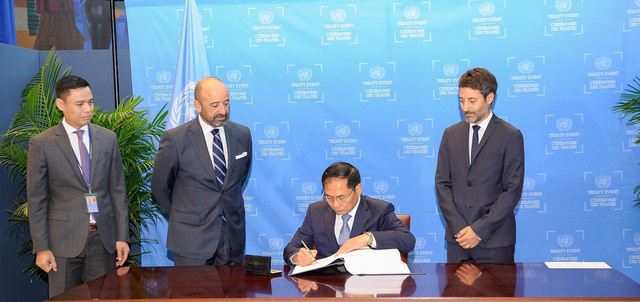
Bộ trưởng Bộ Ngoại giao Bùi Thanh Sơn ký Hiệp định về bảo tồn và sử dụng bền vững đa dạng sinh học ở vùng biển nằm ngoài quyền tài phán quốc gia – Ảnh: VGP
Sáng 20-9 (giờ New York, Mỹ), trong khuôn khổ hoạt động của Tuần lễ cấp cao Đại hội đồng Liên Hiệp Quốc khóa 78, Bộ trưởng Bộ Ngoại giao Bùi Thanh Sơn đã ký Hiệp định về bảo tồn và sử dụng bền vững đa dạng sinh học ở vùng biển nằm ngoài quyền tài phán quốc gia (Hiệp định về biển cả).
Minister of Foreign Affairs Bui Thanh Son signs the High Sea Treaty, a United Nations agreement on the conservation and sustainable use of marine biological diversity of areas beyond national jurisdiction. Photo by Thu HongVietnam on Wednesday signed the United Nations agreement on the conservation and sustainable use of marine biological diversity of areas beyond national jurisdiction, the High Sea Treaty.
The signing by Minister of Foreign Affairs Bui Thanh Son made Vietnam one of the first countries to sign the international-legally binding instrument under the 1982 United Nations Convention on the Law of the Sea (UNCLOS). It conveyed the message that Vietnam is a positive and responsible member of the international community as well as the country’s efforts to join hands with countries to deal with global issues, contributing to peace, prosperity and sustainable development.
More than 60 countries are scheduled to sign the agreement during the underway high-level week of the 78th UN General Assembly.
Pace International Law Review Volume 14 Issue 1 Spring 2002 Article 2 April 2002 Coastal State’s Jurisdiction over Foreign Vessels Anne Bardin Follow this and additional works at: https://digitalcommons.pace.edu/pilr Recommended Citation Anne Bardin, Coastal State’s Jurisdiction over Foreign Vessels, 14 Pace Int’l L. Rev. 27 (2002) DOI: https://doi.org/10.58948/2331-3536.1188 Available at: https://digitalcommons.pace.edu/pilr/vol14/iss1/2 This Article is brought to you for free and open access by the School of Law at DigitalCommons@Pace. It has been accepted for inclusion in Pace International Law Review by an authorized administrator of DigitalCommons@Pace. For more information, please contact dheller2@law.pace.edu.
July 11, 2023 – Ottawa, Ontario – Global Affairs Canada
Global Affairs Canada today issued the following statement:
“On the anniversary of the award rendered by the Arbitral Tribunal constituted under the United Nations Convention on the Law of the Sea (UNCLOS) in the matter of the South China Sea, Canada reiterates that this decision is final, binding on the parties, and provides a vital foundation for the peaceful resolution of competing maritime claims in the region, consistent with international law.
Trả lời câu hỏi phóng viên chiều ngày 25/5/2023, Phó Phát ngôn Bộ Ngoại giao Việt Nam Phạm Thu Hằng cho biết, tàu khảo sát Hướng Dương Hồng 10 (XYH-10) của Trung Quốc cùng một số tàu hải cảnh, tàu cá bảo vệ đã xâm phạm vùng đặc quyền kinh tế của Việt Nam được xác lập phù hợp với các quy định của Công ước Liên Hiệp Quốc về Luật biển năm 1982. Trước đó, theo tin từ Reuters, tàu XYH-10 cùng loạt tàu hộ tống đã xuất hiện tại vùng đặc quyền kinh tế của Việt Nam từ ngày 8/5.
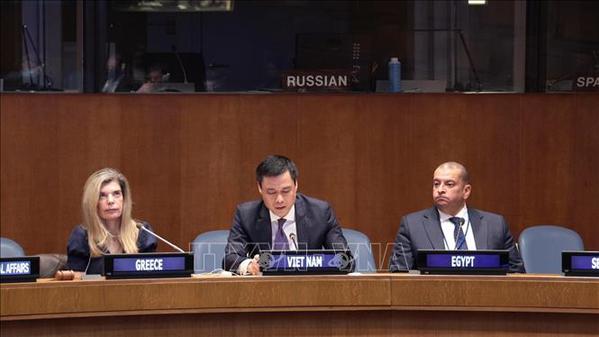
Ambassador Dang Hoang Giang, Head of the Permanent Delegation of Vietnam to the United Nations (centre) at the event. (Photo: VNA)
Hanoi (VNA) – Vietnam, in coordination with Greece, Egypt and Senegal, on December 8 hosted a workshop on achievements and challenges since the adoption of the 1982 United Nations Convention on the Law of the Sea (UNCLOS) 40 years ago.
Main topics at the event were the outcomes of the convention, sea level rise and the relationship between UNCLOS and Sustainable Development Goal 14, which is to conserve and sustainably use the oceans, seas and marine resources for sustainable development.
Vietnam’s President Nguyen Xuan Phuc will make a historic visit to Indonesia, a G20 member and de facto leader of the Association of Southeast Asian Nations (ASEAN), from Dec. 21–23, 2022, to reshape strategic ties between the two countries. President Phuc will be accompanied by First Lady Tran Nguyet Thin, several senior officials, and a business delegation.
This will be Phuc’s first visit to Indonesia ever since becoming Vietnam’s president on April 5, 2021. His state visit marks a new milestone in the 67 years of bilateral relations between Vietnam and Indonesia.
We need only call to mind the first half of 2022 for an array of the extreme, energy-related global challenges we all face. Around the world, local versions of climate change effects—the temperatures, wildfires, droughts, storms, flooding—underscore how important it is for us to transition away from our overdependence on fossil fuels. And our energy sources don’t just have environmental implications but security ones as well. The Russian invasion of Ukraine is the latest rendition of the resource curse. At the heart of it all, fossil fuels are what enabled and amplified the murderous narcissism we see in Vladimir Putin and created a country with an unbalanced and unhealthy domestic economy able to profoundly destabilize energy flows and prices around the world.
The South China Sea (SCS) brings together its own assortment of these complex challenges and factors. Competing security concerns, resource needs, and nationalisms shape the motivations of the claimants. Much of the attention and conflict has centred on the oil and gas in the seabed. Estimates of SCS hydrocarbon volumes vary; only some of these resources are proven reserves that have been confirmed and measured, and are actually recoverable. But even in more generous assessments, the SCS only provides us with a small percentage of the global total of oil and gas reserves, and even less of the overall energy mix if we include non-fossil-fuel energy sources.
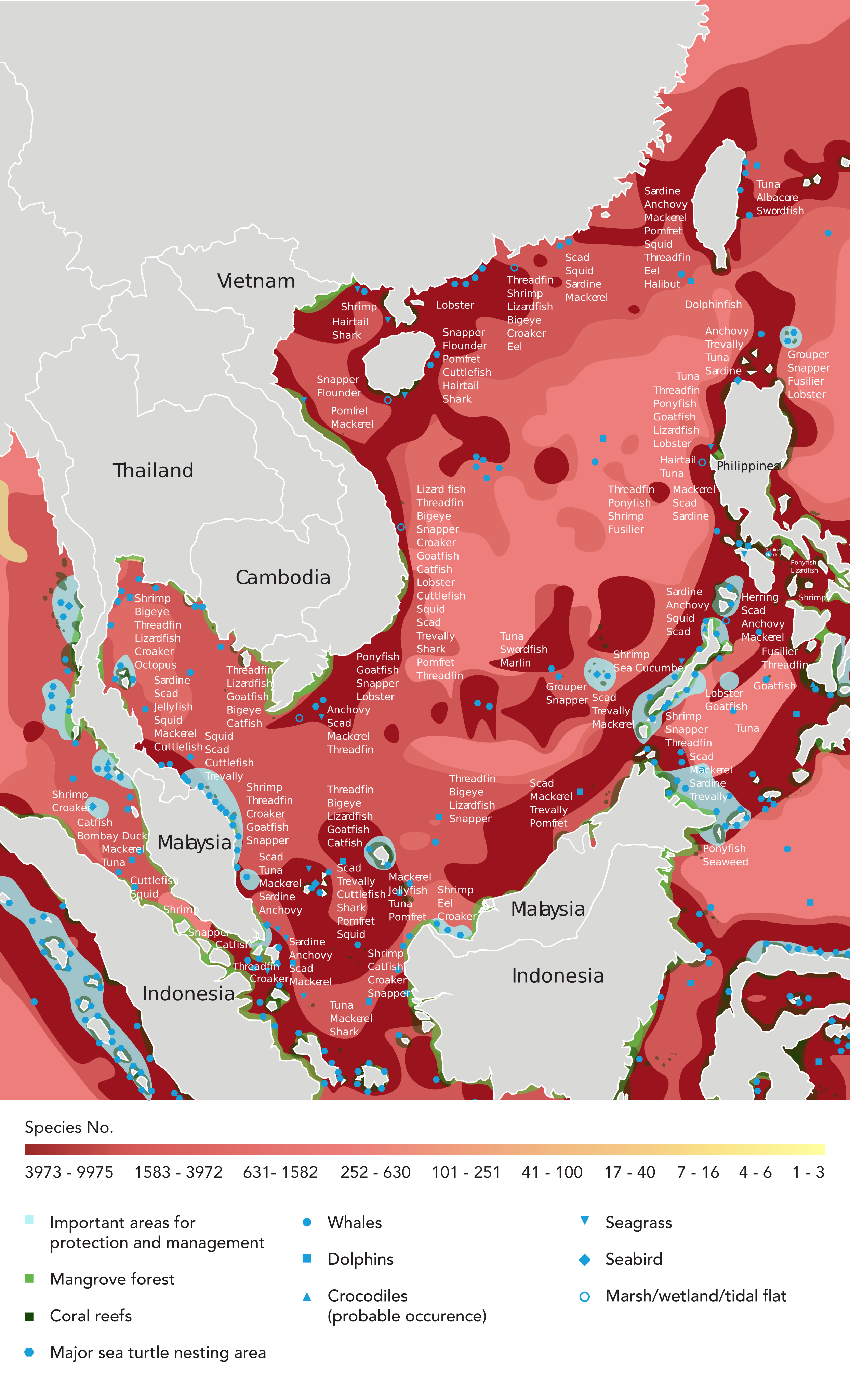
Beyond hydrocarbons, in a two-way tie with the adjacent Coral Triangle, the SCS has the highest level of marine biodiversity in the world. SCS fisheries feed and employ millions of people in the region. It’s true that conflict over these living marine resources also drives the territorial disputes in the region, and a wide variety of human activity degrades the SCS ecosystem. Yet drilling for hydrocarbons in the SCS threatens this vulnerable marine habitat even more, while also clearly contributing to geopolitical and security tensions in the region—and to climate change.
Given how destabilizing oil and gas pursuits have been for the SCS since the 1970s, we might ask ourselves whether we want to keep drilling for fossil fuels there. Do the costs and risks outweigh the benefits?
Download this 21-page report (button above) from Dr. Tabitha Grace Mallory, an inaugural John H. McArthur Research Fellow, an initiative of the Asia Pacific Foundation of Canada, and the Founder of China Ocean Institute and Affiliate Professor, Jackson School of International Studies, University of Washington.
Below, explore the rich marine biodiversity of the South China Sea, one of the most hotly-contested maritime jurisdictions on the planet, in this original map created by the author and APF Canada graphic designer Chloe Fenemore, based on historical and contemporary maps cited in the full report.
Tabitha Grace Mallory is the Founder of China Ocean Institute and Affiliate Professor, Jackson School of International Studies, University of Washington. Dr. Mallory specializes in Chinese foreign and environmental policy. She conducts research on China and global ocean governance and has published work on China’s fisheries and oceans policy.
Dr. Mallory is an inaugural John H. McArthur Research Fellow, an initiative of the Asia Pacific Foundation of Canada launched in 2021 to provide research opportunities for exceptional, mid-career scholars who are working on programs and research areas with direct relevance to Canada and Canada’s interests in Asia.
This photo taken on 20 August 2022, shows a worker sorting a fresh catch of fish at Sa Ky port on Vietnam’s offshore Ly Son island. Ly Son island, situated north-east of central Vietnam’s Quang Ngai province, is the country’s closest island to the disputed Paracel archipelago in the South China Sea region. (Photo: Nhac Nguyen / AFP)
This article is part of “UNCLOS 40th Anniversary Series – Why UNCLOS Matters” conceptualised by the Blue Security programme. The series, which commemorates the 40th anniversary of the U.N. Convention on the Law of the Sea, brings together established and emerging maritime security scholars from Southeast Asia and the broader Indo-Pacific to address the pertinence and relevance of UNCLOS. Blue Security brings together Australian and Southeast Asian experts to look at a range of maritime security issues across the region. The series was developed by Dr. Troy Lee-Brown and Dr. Bec Strating. It is published in collaboration with the team at Fulcrum.
UNCLOS’s relevance to Vietnam is significant, but the Convention must be updated if Vietnam and other signatories are to succeed in dealing with contemporary challenges in maritime affairs.
By Tran Đinh Hoanh Tran Đinh Hoanh is an international litigator and writer in Washington DC.
[TĐH: I’ve tried to make this piece ultra-short, simple, and easy
to remember, with sufficient citations for those who’d like to dig
deeper into UNCLOS]
During China Foreign Ministry Spokesperson Wang Wenbin’s Regular Press Conference on June 13, he responded to a Bloomberg question concerning the legal status of the Taiwan Strait. Asked about Chinese military officials’ contention that the Taiwan Strait does not constitute “international waters,” he said that Taiwan is “an inalienable part of China’s territory. …According to UNCLOS and Chinese laws, the waters of the Taiwan Strait, extending from both shores toward the middle of the Strait, are divided into several zones including internal waters, territorial sea, contiguous zone, and the Exclusive Economic Zone. China has sovereignty, sovereign rights and jurisdiction over the Taiwan Strait.”
He went on to say that calling the strait international waters is “a false claim” by “certain countries” searching for a pretext for “threatening China’s sovereignty and security.”
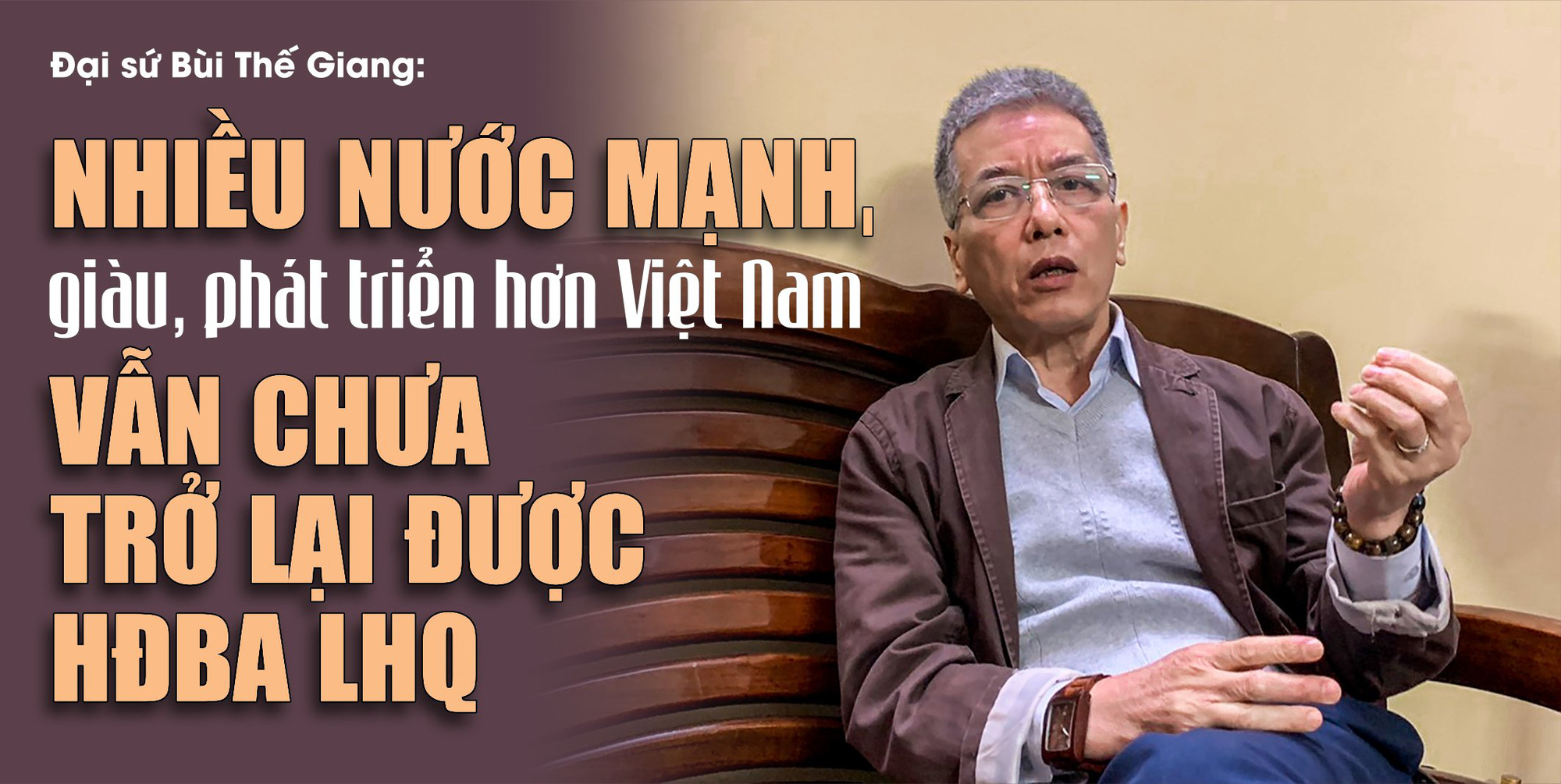
DV – Từng là Phó Trưởng Phái đoàn Đại diện Thường trực Việt Nam tại Liên Hợp Quốc (LHQ) từ cuối 2007 đến đầu 2012, trong đó có 2 năm 2008 & 2009 là Phó Đại diện Việt Nam tại Hội đồng Bảo an (HĐBA) LHQ, đến giờ Đại sứ Bùi Thế Giang vẫn giữ thói quen theo dõi lịch làm việc hàng ngày của HĐBA LHQ. Với nhiều người, những sự kiện Việt Nam tham gia chỉ là một dòng tin, nhưng Đại sứ Bùi Thế Giang phân tích với cái nhìn của người trong cuộc.
This study examines the maritime claims of the People’s Republic of China (PRC) in the SouthChina Sea. The PRC’s expansive maritime claims in the South China Sea are inconsistent with international law as reflected in the 1982 United Nations Convention on the Law of the Sea (“Convention”).
The PRC asserts four categories of maritime claims* in the South China Sea:
• Sovereignty claims over maritime features. The PRC claims “sovereignty” over more than one hundred features in the South China Sea that are submerged below the sea surface at high tide and are beyond the lawful limits of any State’s territorial sea. Such claims areinconsistent with international law, under which such features are not subject to a lawfulsovereignty claim or capable of generating maritime zones such as a territorial sea.
• Straight baselines. The PRC has either drawn, or asserts the right to draw, “straight baselines” that enclose the islands, waters, and submerged features within vast areas of ocean space in the South China Sea. None of the four “island groups” claimed by the PRCin the South China Sea (“Dongsha Qundao,” “Xisha Qundao,” “Zhongsha Qundao,” and“Nansha Qundao”) meet the geographic criteria for using straight baselines under the Convention. Additionally, there is no separate body of customary international law that supports the PRC position that it may enclose entire island groups within straight baselines.
• Maritime zones. The PRC asserts claims to internal waters, a territorial sea, an exclusive economic zone, and a continental shelf that are based on treating each claimed South China Sea island group “as a whole.” This is not permitted by international law. The seaward extent of maritime zones must be measured from lawfully established baselines, which are normally the low-water line along the coast. Within its claimed maritime zones, the PRC also makes numerous jurisdictional claims that are inconsistent with international law.
• Historic rights. The PRC asserts that it has “historic rights” in the South China Sea. Thisclaim has no legal basis and is asserted by the PRC without specificity as to the nature orgeographic extent of the “historic rights” claimed.
The overall effect of these maritime claims is that the PRC unlawfully claims sovereignty or someform of exclusive jurisdiction over most of the South China Sea. These claims gravely underminethe rule of law in the oceans and numerous universally-recognized provisions of international lawreflected in the Convention. For this reason, the United States and numerous other States haverejected these claims in favor of the rules-based international maritime order within the SouthChina Sea and worldwide.
* Islands in the South China Sea over which the PRC claims sovereignty are also claimed by other States. This studyexamines only the maritime claims asserted by the PRC and does not examine the merits of sovereignty claims toislands in the South China Sea asserted by the PRC or other States. The United States takes no position as to whichcountry has sovereignty over the islands in the South China Sea, which is not a matter governed by the law of the sea.







 CVD
CVD