China: Design for nuclear-powered ship unveiled

By ZHAO LEI | China Daily | Updated: 2023-12-06 23:09
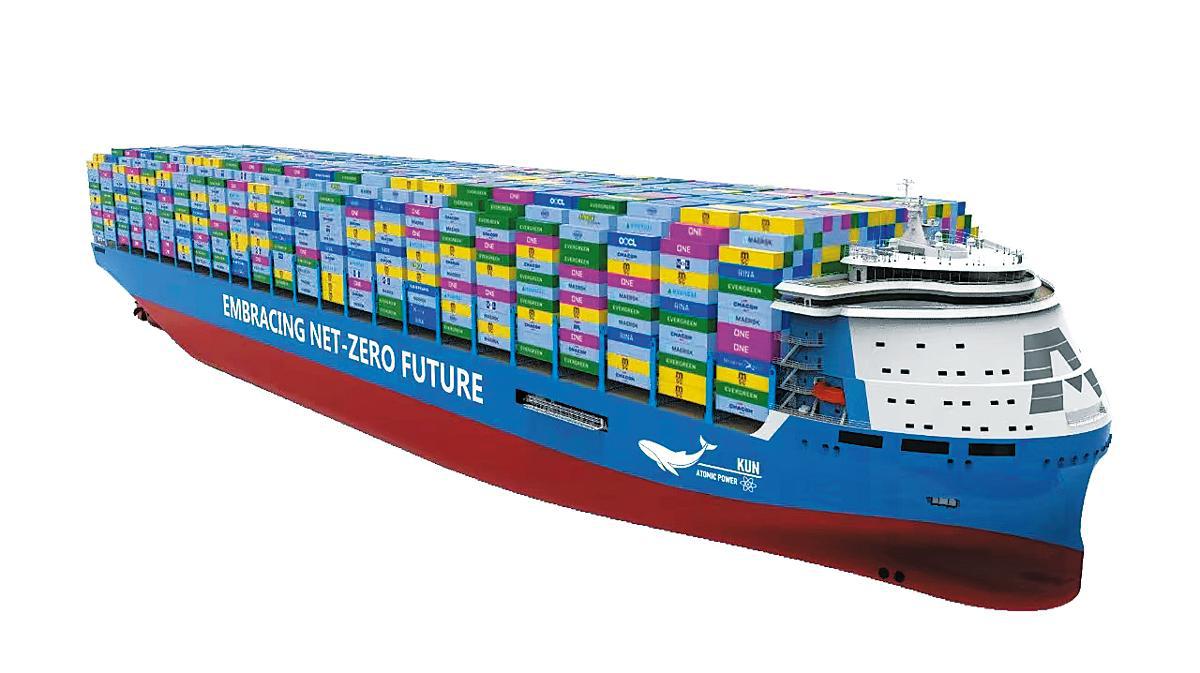
An illustration of the large nuclear-powered container ship, which can carry 24,000 standard containers. [Photo provided to China Daily]

China has unveiled a conceptual design for what could potentially become the world’s largest nuclear-powered container ship.

The vessel, which has yet to be named, will be powered by molten salt reactors and will have the capacity to carry 24,000 standard containers. In other words, it will be able to hold more than 1 billion boxes of Apple iPhones.

The conceptual design, made by China State Shipbuilding Corp’s Jiangnan Shipyard in Shanghai, was published on Tuesday, as the four-day Marintec China 2023 exhibition opened in the city.

The ship’s design earned an Approval in Principle certificate from the DNV, one of the world’s leading classification societies, at an unveiling ceremony.

A senior researcher at Jiangnan Shipyard, who asked to be identified only as Hu, told China Daily on Wednesday that the idea for a nuclear-powered container ship was the result of the shipyard’s endeavor to seek clean energy solutions for its products.

“Shipbuilders around the world have been under huge pressure from shipping businesses, investors and environmentalists to find cleaner fuel solutions. It is only natural for us to take nuclear power into consideration,” he said.

According to industry statistics, shipping operations account for about 3 percent of global greenhouse gas emissions. The International Maritime Organization has repeatedly pledged to reduce the emissions caused by shipping businesses.

Tiếp tục đọc “China: Design for nuclear-powered ship unveiled”
Tracking China’s Control of Overseas Ports

cfr.org

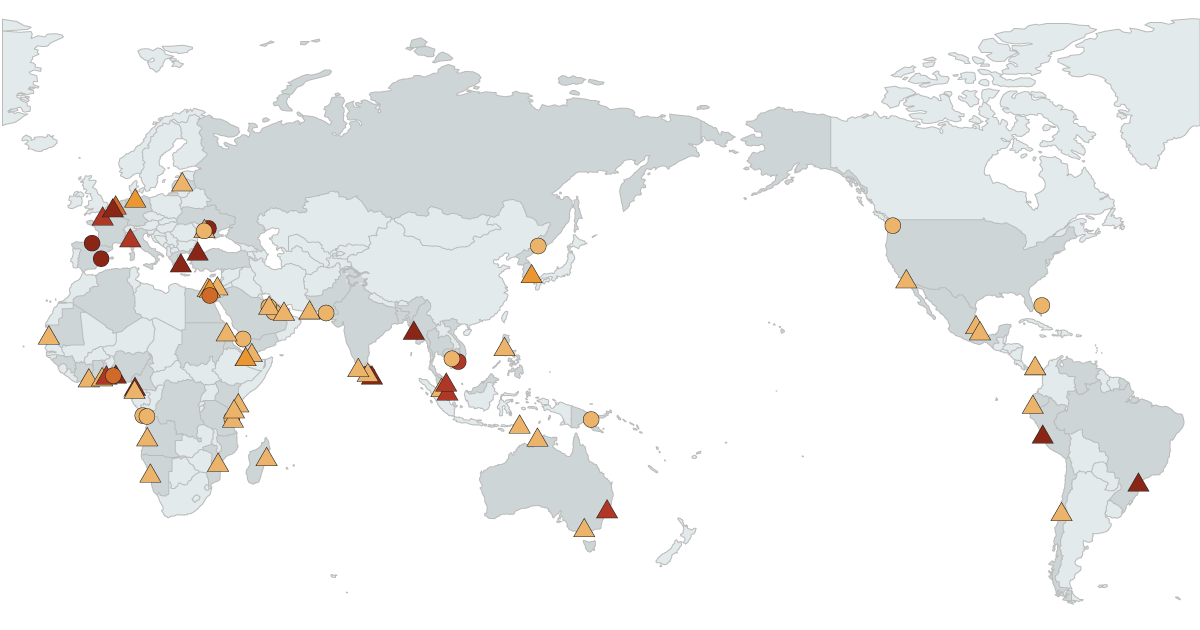
This interactive map tracks China’s growing maritime influence through investments in strategic overseas ports. Users can plot the location of each port and view satellite images alongside detailed information on the share of Chinese ownership, the total amount of Chinese investment, and the port’s suitability for use by the Chinese military.

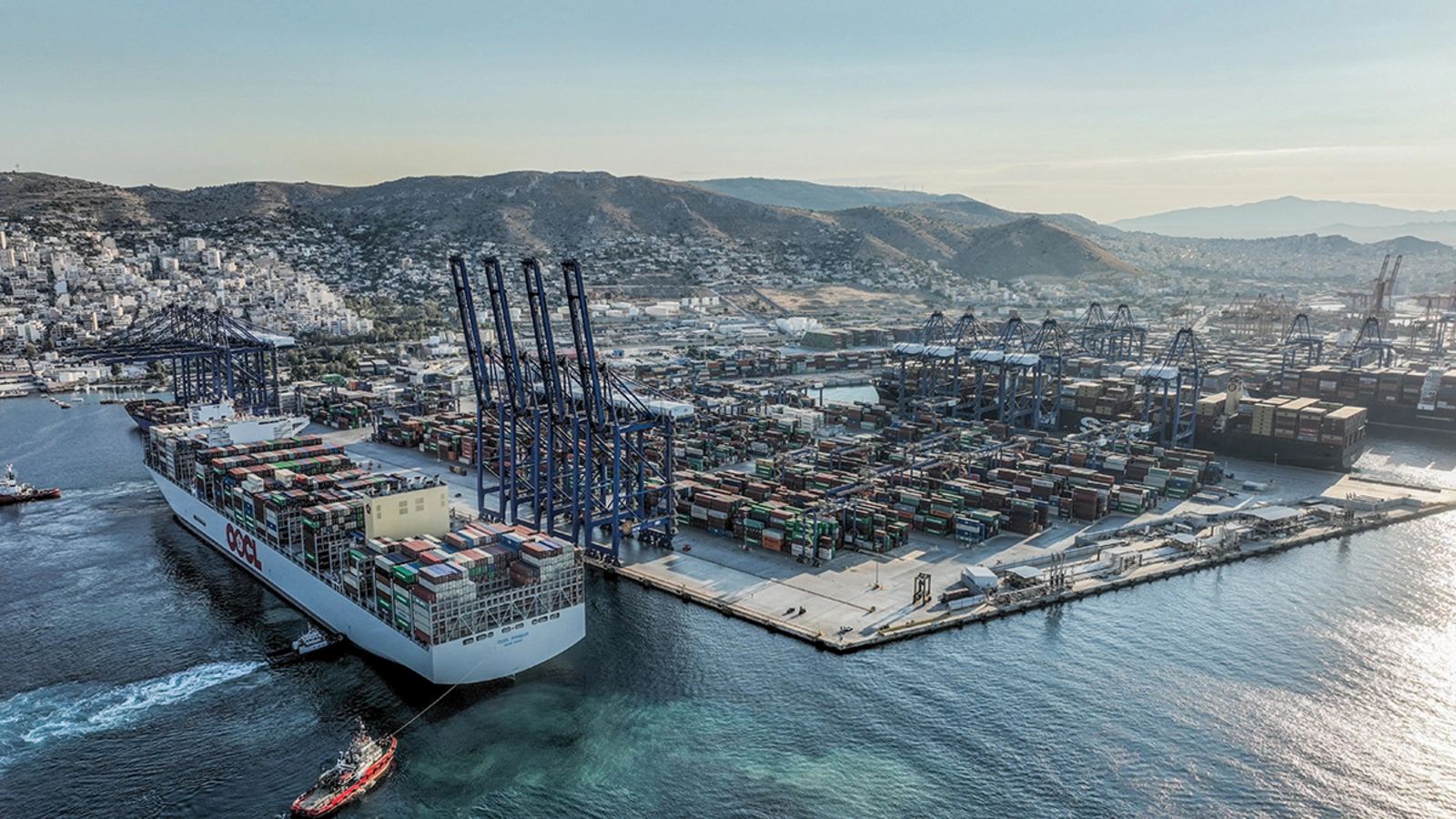
The new container ship, OOCL Piraeus, docks at the Port of Piraeus in Greece in 2023.

The new container ship, OOCL Piraeus, docks at the Port of Piraeus in Greece in 2023. Xinhua via Getty Images

The China Overseas Ports interactive visualizes degrees of China’s overseas port ownership by types of investment across regions and time. It also evaluates the dual-use (commercial and military) potential of ports owned, constructed, or operated by Chinese entities. The database supporting this interactive includes 101 port projects of which Chinese entities have acquired varied equity ownership or operational stakes. China operates or has ownership in at least one port in every continent except Antarctica. Of the 101 projects, 92 are active, whereas the remaining 9 port projects have become inactive due to cancellation or suspension by the end of September 2023. Reasons for cancellation or suspension include environmental concerns, souring of political relations, financial problems, and security issues raised domestically and internationally. Suspended projects, such as China’s construction of the Khalifa Port in the United Arab Emirates, could resume construction.

92 Port projects total (port projects outside China with Chinese investment)

13 Port projects with majority Chinese ownership

10 Port projects with majority Chinese ownership where there is physical potential for naval use

Excludes cancelled port projectsChineseownership0–12.5%12.5–25%25–37.5%37.5–50%Over 50%The share of the port project that is owned by the Chinese government or Chinese companiesPhysicalpotential for naval useWhether the port project is located at a port that includes berths with enough depth for a naval vesselYesNoData is as of September 2023.

Icon Description

Tiếp tục đọc “Tracking China’s Control of Overseas Ports”

Preparing for Dangerous Storms – 3 Parts

Inside China’s People’s Liberation Army | Preparing For Dangerous Storms – Part 1 | CNA Documentary


CNA Insider
6-5-2023

China’s People’s Liberation Army celebrates its centenary in 2027, what are its goals for this date? The PLA is already the largest army in the world with over 2 million soldiers. It also has the biggest number of warships. But China’s defense budget is still climbing amidst increasing geopolitical tensions. How exactly is the PLA “preparing for Dangerous Storms” as tasked by President Xi?

Tiếp tục đọc “Preparing for Dangerous Storms – 3 Parts”

Philippines orders strengthened military presence after ‘Chinese activities’ near islands

Reuters – December 22, 20226:12 PM GMT+7

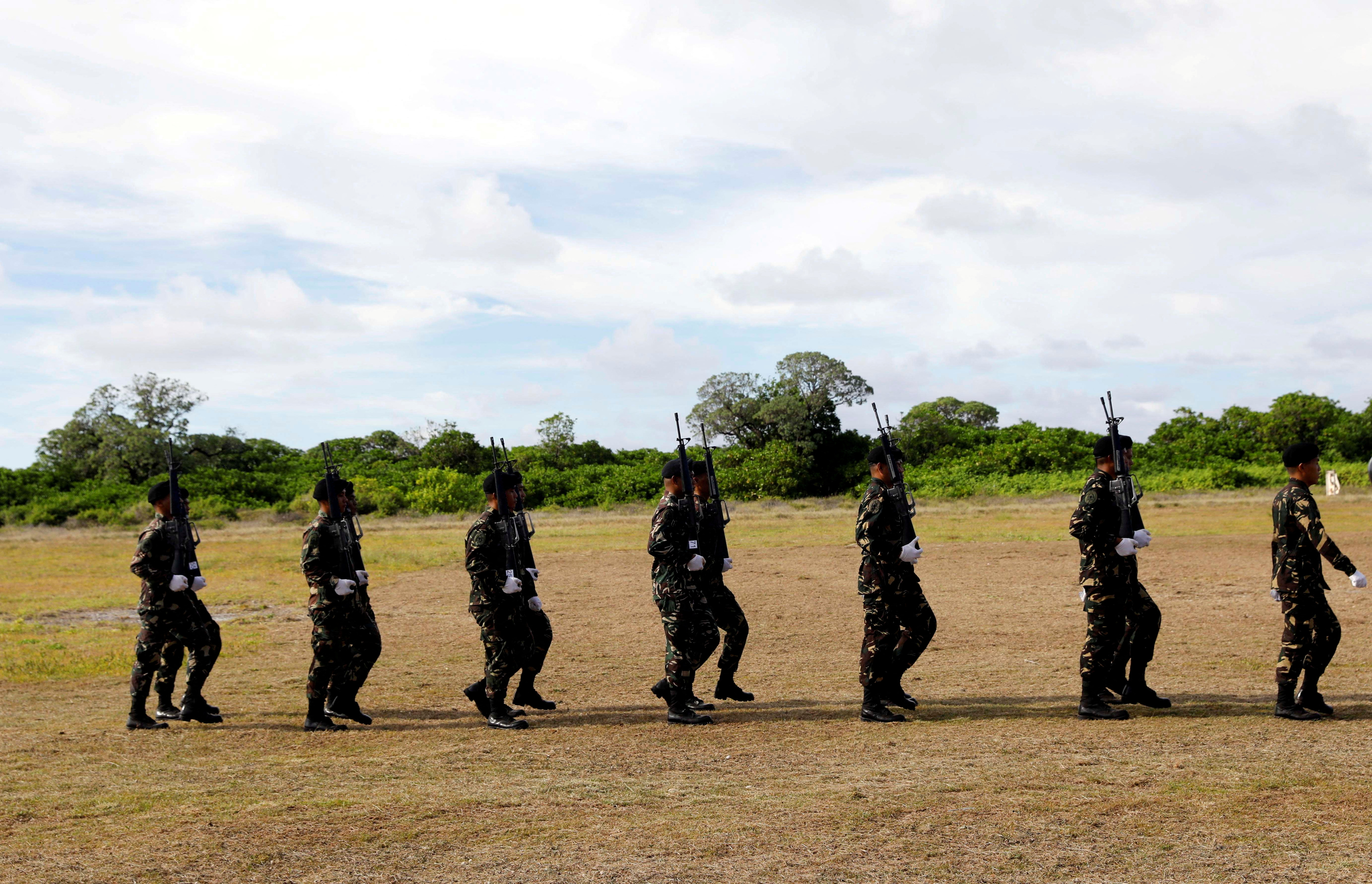
Filipino soldiers march in Thitu island
Filipino soldiers march in Philippine occupied Thitu island in disputed South China Sea, April 21, 2017. REUTERS/Erik De Castro

MANILA, Dec 22 (Reuters) – The Philippines’ defence ministry on Thursday ordered the military to strengthen its presence in the South China Sea after monitoring “Chinese activities” in disputed waters close to a strategic Philippine-held island.

The ministry did not specify what activities those were and its statement follows a report this week of Chinese construction on four uninhabited features in the disputed Spratly islands, news that Beijing has dismissed as “unfounded”.

Tiếp tục đọc “Philippines orders strengthened military presence after ‘Chinese activities’ near islands”

Vietnam takes a stand in the South China Sea

Vietnam takes a stand in the South China Sea
A Vietnamese soldier stands watch overlooking the South China Sea. Photo: Facebook

After buckling in previous confrontations, Vietnam is finally facing down Chinese expansionism in its oil and gas-rich waters

Normally, Vietnam would have backed down. In July 2017 and March 2018, when China reportedly threatened military action if Vietnam did not stop oil exploration in contested areas of the South China Sea, Vietnam blinked and withdrew its vessels.

Last year, Vietnam scrapped a US$200 million oil and gas development project with Spanish energy giant Repsol situated within its own exclusive economic zone (EEZ) due to Chinese pressure. However, when a Chinese survey ship and coastguard vessels sailed last month to the contested oil-rich Vanguard Bank, which also lies well within Vietnam’s southeastern EEZ, Hanoi stood its ground. Tiếp tục đọc “Vietnam takes a stand in the South China Sea”

Vast Chinese Loans Pose Risks to Developing World

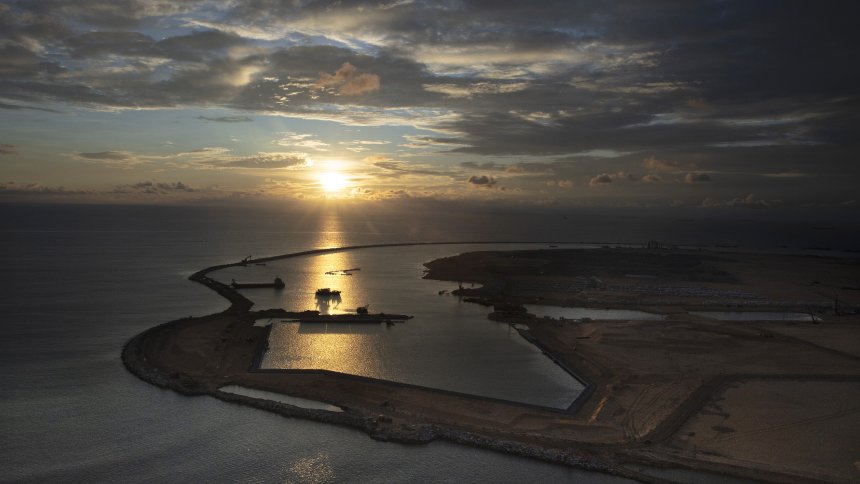
The Colombo Port City project in Sri Lanka, seen here, was funded by $1.4 billion from China.

SP By Bartholomäus Grill, Michael Sauga and Bernhard Zand

July 04, 2019 11:03 AM

China is the largest creditor in the world, funding infrastructure projects in the developing world in exchange for access to raw materials. A new study shows that the risk of a new debt crisis is significant.

The future rail link cuts its way through the jungles of Laos for over 400 kilometers. Soon, trains will be rolling through — over bridges, through tunnels and across dams built just for the line, which runs from the Chinese border in the north to the Laotian capital of Vientiane on the Mekong River.  Tiếp tục đọc “Vast Chinese Loans Pose Risks to Developing World”

Diễn biến tại Bãi Tư Chính và lô 06-01 qua góc nhìn Luật quốc tế

Tác giả: Phạm Ngọc Minh Trang, nghiencuuquocte.org

Hôm 19/7, người phát ngôn Bộ Ngoại giao Việt Nam Lê Thị Thu Hằng đã cho công luận biết rằng nhóm tàu khảo sát Hải Dương 8 của Trung Quốc đã vi phạm vùng đặc quyền kinh tế và thềm lục địa Việt Nam ở khu vực phía nam Biển Đông.

“Đây là vùng biển hoàn toàn của Việt Nam, được xác định theo đúng các quy định của Công ước của Liên Hợp Quốc về Luật Biển 1982 mà Việt Nam và Trung Quốc đều là thành viên,” bà Thu Hằng phát biểu, theo truyền thông Việt Nam. Tiếp tục đọc “Diễn biến tại Bãi Tư Chính và lô 06-01 qua góc nhìn Luật quốc tế”

Chinese Power Projection Capabilities in South China Sea

June 28, 2019  |  AMTI Interactive

Chinese Power Projection Capabilities in the South China Sea

(This is the latest in a series of major updates to AMTI’s interactive maps of the Asia Pacific.)

Since 2014, China has substantially expanded its ability to monitor and project power throughout the South China Sea via the construction of dual civilian-military bases at its outposts in the disputed Spratly and Paracel Islands. These include new radar and communications arrays, airstrips and hangars to accommodate combat aircraft, and deployments of mobile surface-to-air and anti-ship cruise missile systems.

This map highlights how these capabilities overlap. For illustrative purposes, the ranges of known high frequency radar installations are depicted as being 300 kilometers, while those of smaller arrays are shown as 50 kilometers. Combat radii for fighter aircraft are shown based on China’s J-11 fighters while bomber ranges are based on China’s H-6 bombers, both of which have been deployed to Woody Island. SAM and cruise missile ranges are based on the HQ-9, YJ-62, and YJ-12B systems that have been deployed across Woody Island, Fiery Cross Reef, Mischief Reef, and Subi Reef. Fighter and bomber ranges at Fiery Cross, Mischief, and Subi Reefs represent expected future deployments based on the hangars built to accommodate those assets.

Recent Analysis

China’s Hidden Navy by Greg Poling (Foreign Policy)

Incident at Reed Bank: A Crisis in the Philippines’ China Policy by Renato Cruz de Castro

Davids and Goliath: Time for Southeast Asian Fishery Cooperation in the South China Sea by Nguyen Thanh Trung

Duterte’s Pivot to Japan by Richard Heydarian

An Indian Ocean Agenda for Modi 2.0 by Lalit Kapur

Facing China’s Sea Power: Strategic Culture & Maritime Strategy by C.J. Jenner

###

The Center for Strategic and International Studies (CSIS) is a bipartisan, nonprofit organization founded in 1962 and headquartered in Washington, D.C. It seeks to advance global security and prosperity by providing strategic insights and policy solutions to decisionmakers.

Việt Nam kiên quyết phản đối hoạt động của Trung Quốc ở đá Bông Bay

VOV

VOV.VN – Việt Nam kiên quyết phản đối hành động của Trung Quốc ở đá Bông Bay, yêu cầu Trung Quốc chấm dứt ngay và không tái diễn những hành động tương tự.

viet nam kien quyet phan doi hoat dong cua trung quoc o da bong bay hinh 1
Cấu trúc Trung Quốc xây dựng phi pháp trên đá Bông Bay thuộc quần đảo Hoàng Sa của Việt Nam. Ảnh: AMTI/CSIS.

Ngày 22/11, tại cuộc họp báo thường kỳ của Bộ Ngoại giao, khi được hỏi về phản ứng của Việt Nam trước thông tin Trung Quốc đã lắp đặt một số cấu trúc mới trên đá Bông Bay thuộc quần đảo Hoàng Sa của Việt Nam, phó phát ngôn Bộ Ngoại giao Nguyễn Phương Trà khẳng định:

Tiếp tục đọc “Việt Nam kiên quyết phản đối hoạt động của Trung Quốc ở đá Bông Bay”

China Quietly Upgrades a Remote Reef

November 20, 2018  |  AMTI BRIEF

China Quietly Upgrades a Remote Reef

Recent satellite imagery of Bombay Reef in the Paracel Islands shows that China has installed a new platform at the largely untouched South China Sea feature, which is also claimed by Taiwan and Vietnam. The modest new structure appears to be anchored on the north edge of the reef and is topped by a radome and solar panels. The development is interesting given Bombay Reef’s strategic location, and the possibility that the structure’s rapid deployment could be repeated in other parts of the South China Sea. Tiếp tục đọc “China Quietly Upgrades a Remote Reef”

Mattis takes hard line on China in Singapore speech

US Defense Secretary James Mattis accused China of “intimidation and coercion” in the Indo-Pacific and declared that the United States does not plan to abandon its role in the region during a speech Saturday in Singapore.
Friday, June 1st 2018, 9:17 pm EDT

Updated:

Friday, June 1st 2018, 10:22 pm EDT
By Joshua Berlinger CNN

SINGAPORE (CNN) — US Defense Secretary James Mattis accused China of “intimidation and coercion” in the Indo-Pacific and declared that the United States does not plan to abandon its role in the region during a speech Saturday in Singapore.

“Make no mistake: America is in the Indo-Pacific to stay. This is our priority theater,” Mattis said. Tiếp tục đọc “Mattis takes hard line on China in Singapore speech”

Australia won’t bite its tongue, Defence Minister warns in clear signal to China

Defence Minister Marise Payne has issued a coded but clear demand on China not to bully other countries that disagree with it.

In a speech to military and political leaders from Asia and the Pacific region on Saturday, Senator Payne will say that no one country can tear up the system of international rules – which she pointedly notes has let countries such as China grow and prosper peacefully.

Senator Marise Payne listens to Foreign Affairs Secretary Frances Adamson during estimates.
Senator Marise Payne listens to Foreign Affairs Secretary Frances Adamson during estimates.Photo: Dominic Lorrimer

In the speech to the Shangri-La dialogue in Singapore, Senator Payne makes it clear Australia will continue calling out behaviour that tries unilaterally to change what Australia and its allies call “the rules-based order”.

While she doesn’t name China, Senator Payne makes thinly veiled references to China’s behaviour, making it apparent the Turnbull government means to keep pressing Beijing over issues such as the South China Sea and foreign interference even as it tries to improve the relationship after a rocky six months. Tiếp tục đọc “Australia won’t bite its tongue, Defence Minister warns in clear signal to China”

Philippines: We Will go to War Over South China Sea Violations

  • Critics claim Duterte’s “defeatist” approach has emboldened China.

    Critics claim Duterte’s “defeatist” approach has emboldened China. | Photo: Reuters FILE

Published 29 May 2018 .telesurtv
The secretary allayed fears and addressed criticism by stressing that the Philippines has not lost a single inch of territory to China during the Duterte administration.

The government of Filipino President Rodrigo Duterte has fired off a stern warning to China regarding the natural resources in the South China Sea region.

RELATED:
US Ships Sail Near South China Sea Islands Claimed by Beijing

The Philippines foreign ministry vows that the country will not shy away from going to war over the disputed region. The official, on Monday, stated that there are several “red lines” or actions – if crossed or taken – would be deemed unacceptable resulting in an aggressive response from Manila. Tiếp tục đọc “Philippines: We Will go to War Over South China Sea Violations”