How the climate crisis fuels gender inequality

The climate crisis may be a collective problem, but its impacts do not fall equally. Women and girls often bear the heaviest burdens.

November 30, 2023

Editor’s note

This story is part of As Equals, CNN’s ongoing series on gender inequality. For information about how As Equals is funded and more, check out our FAQ.

Climate change acts as a threat multiplier, finding existing injustices and amplifying them. Women and girls already grapple with gender inequality, but when extreme weather devastates a community, the UN found that inequalities worsen: Intimate partner violence spikes, girls are pulled from school, daughters are married early, and women and girls forced from their homes face a higher risk of sexual exploitation and trafficking.

Tiếp tục đọc “How the climate crisis fuels gender inequality”

A critical system of Atlantic Ocean currents could collapse as early as the 2030s, new research suggests

Angela Fritz

By Angela Dewan and Angela Fritz, CNN

Updated 10:56 AM EDT, Sat August 3, 2024

Light blue and turquoise phytoplankton seen through the clouds highlight the ocean currents off the coast of Greenland. New research suggest an important system of these currents is at risk of collapsing as soon as next decade.

Light blue and turquoise phytoplankton seen through the clouds highlight the ocean currents off the coast of Greenland. New research suggest an important system of these currents is at risk of collapsing as soon as next decade. NASA Earth/Shutterstock/FILECNN — 

vital system of Atlantic Ocean currents that influences weather across the world could collapse as soon as the late 2030s, scientists have suggested in a new study — a planetary-scale disaster that would transform weather and climate.

Several studies in recent years have suggested the crucial system — the Atlantic Meridional Overturning Circulation, or AMOC — could be on course for collapse, weakened by warmer ocean temperatures and disrupted saltiness caused by human-induced climate change. Tiếp tục đọc “A critical system of Atlantic Ocean currents could collapse as early as the 2030s, new research suggests”

Những dòng sông vĩnh viễn đổi thay

Tia sáng – 24-5-2024

Có một kịch bản chung không thể đảo ngược ở tất cả các con sông, dù chúng có mặt ở bất cứ nơi nào, đó là nếu đã xây đập thủy điện và khai thác cát quá mức, tất yếu sẽ cạn kiệt phù sa dẫn tới biến dạng sông, xói lở hạ du, hạ thấp lòng dẫn, rút chân đồng bằng, …

Không ai mường tượng hết những gì sẽ xảy ra, bởi mọi chuyện giờ mới chỉ bắt đầu.

“Hồi tôi mới về công tác thì các bãi này còn rất rộng, có những điểm chiều rộng cả km, nhưng giờ đã mất sạch”, ông Vũ Thanh Thuận, Hạt phó Hạt Đê điều Hải Hậu, nhìn ra dải bờ biển kể trong tiếng sóng vỗ dưới chân kè nhà thờ đổ Trái tim Chúa của giáo xứ Xương Điền, xã Hải Lý, điểm được kè để giữ lại chứng tích của những trận xói lở. “Sóng đánh vào làm nứt chân đê, đất cát dần trôi ra, đê bị hở hàm ếch, xong bị sập dần từng đoạn”.

“Trước năm 1995, lở dần bãi ngoài đê, đê có dấu hiệu bị dọa vỡ ở nhiều điểm, chính quyền đã vận động dân di dời vào phía trong và bắt đầu đắp tuyến đê số hai ở sâu bên trong để dự phòng”, ông Thuận nhớ lại. Cuộc di chuyển kéo dài trong chục năm theo tốc độ ăn vào của biển, một số hộ chuyển sâu vào phía trong đê số hai, một số hộ không còn đất để chuyển vào đã bỏ đi miền Nam.

Tiếp tục đọc “Những dòng sông vĩnh viễn đổi thay”

Dự án kênh Phù Nam Techo: Vấn đề chia sẻ thông tin

THANH TUẤN – 11/05/2024 09:34 GMT+7

TTCT – Dự án kênh đào Phù Nam Techo của Campuchia gây chú ý gần đây khi xuất hiện lo ngại dự án sẽ làm thay đổi dòng chính sông Mekong, tác động tới vùng lũ và sinh kế người dân Đồng bằng sông Cửu Long.

Ảnh: Getty

Chỉ ngắn hơn kênh đào Suez 13km, dự án 180km này dự kiến nối thủ đô Phnom Penh của Campuchia với tỉnh Kep, giáp biên giới Việt Nam. 

Được coi là nỗ lực hồi sinh hệ thống sông ngòi lịch sử Campuchia, con kênh với bề rộng 100m và sâu 5,4m có thể phục vụ tàu 3.000 tấn vào mùa khô và 5.000 tấn vào mùa mưa.

Theo China Global South Project, con kênh sẽ kéo dài từ khu vực Prek Takeo của sông Mekong tới Prek Ta Ek và Prek Ta Hing của sông Bassac (sông Hậu) và đi qua bốn tỉnh Kandal, Takeo, Kampot và Kep, với ba hệ thống âu tàu, 11 cầu và 208km đường ven bờ được xây dựng bởi Tập đoàn Cầu đường Trung Quốc (CRBC) theo mô hình BOT. 

Thủ tướng Campuchia Hun Manet ủng hộ mạnh mẽ dự án, và nói nó không có tác hại gì tới môi trường, đặc biệt là tới dòng Mekong đi qua nhiều nước ASEAN.

Tối 5-5, trả lời báo chí, người phát ngôn Bộ Ngoại giao Việt Nam Phạm Thu Hằng nói: “Việt Nam rất quan tâm và tôn trọng lợi ích chính đáng của Campuchia theo tinh thần của Hiệp định Mekong 1995, phù hợp với các quy định liên quan của Ủy hội sông Mekong và quan hệ láng giềng hữu nghị truyền thống giữa hai nước”. 

Về dự án kênh Phù Nam Techo, bà Hằng nói Việt Nam mong “Campuchia tiếp tục phối hợp chặt chẽ với Việt Nam và các nước trong Ủy hội sông Mekong chia sẻ thông tin, đánh giá đầy đủ tác động của dự án này đối với nguồn nước, tài nguyên nước và môi trường sinh thái của khu vực tiểu vùng sông Mekong cùng các biện pháp quản lý phù hợp nhằm bảo đảm hài hòa lợi ích của các quốc gia ven sông, quản lý, sử dụng hiệu quả và bền vững nguồn nước và tài nguyên nước sông Mekong”.

Tiếp tục đọc “Dự án kênh Phù Nam Techo: Vấn đề chia sẻ thông tin”

Khát nước cạnh những dòng sông

THANH HUYỀN – MẬU TRƯỜNG – 27/03/2024 05:42 GMT+7

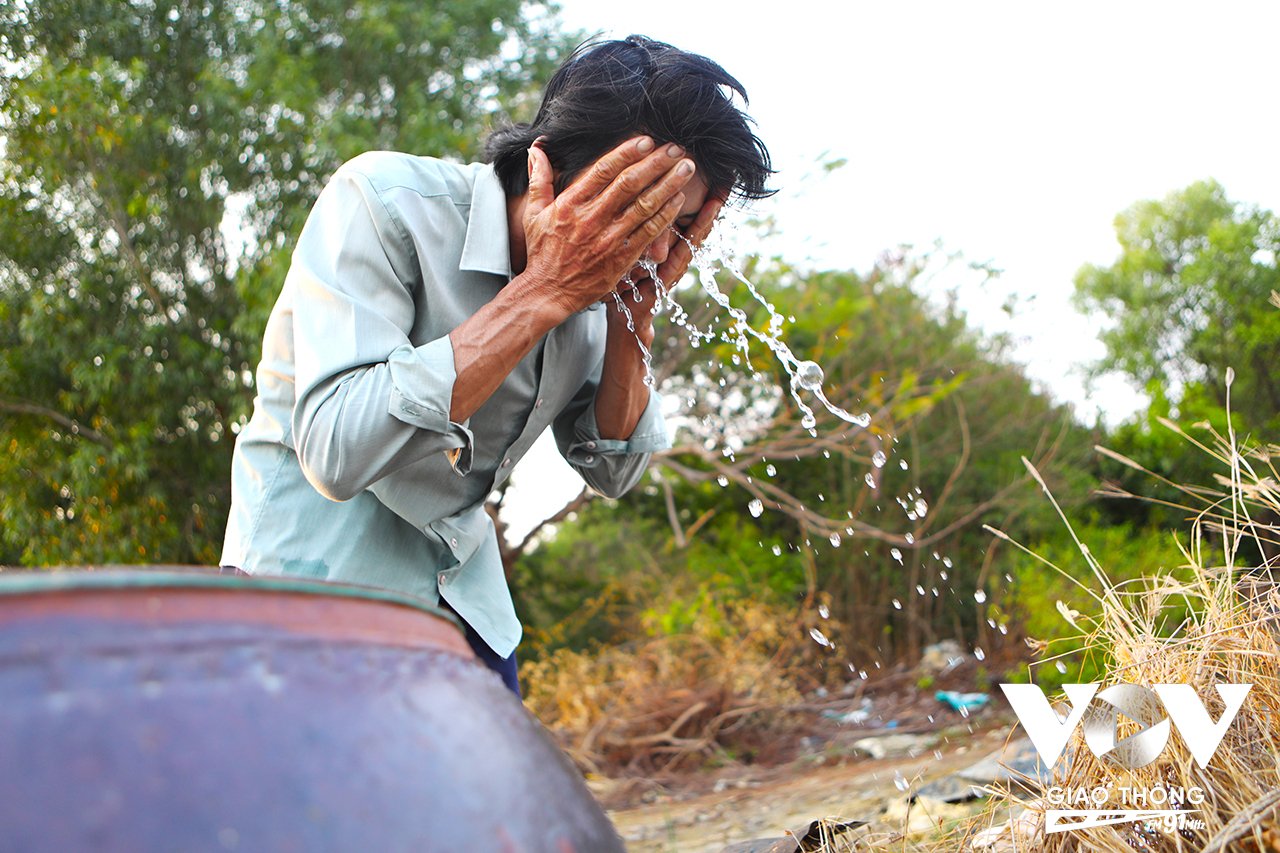
TTCT Sau nhiều tháng nắng gắt và không có mưa, nước mặn xâm nhập ngày càng sâu vào Đồng bằng sông Cửu Long. Cà Mau và Bến Tre là hai tỉnh bị ảnh hưởng sớm và nặng nhất cho đến thời điểm này.

Ruộng lúa của ông Nguyễn Văn Cảnh chết khô vì thiếu nước ngọt. Ảnh: THANH HUYỀN Tiếp tục đọc “Khát nước cạnh những dòng sông”

‘Hopeless and broken’: why the world’s top climate scientists are in despair

We asked 380 top climate scientists what they felt about the future…

theguardian.com

 Hopeless and broken – Ruth Cerezo-Mota Mexico

 We live in an age of fools – Anonymous South Africa

I worry about the future my children are inheriting – Lorraine Whitmarsh UK

They are terrified, but determined to keep fighting.Here’s what they said

Exclusive: Survey of hundreds of experts reveals harrowing picture of future, but they warn climate fight must not be abandoned

Damian Carrington Environment editorWed 8 May 2024 10.00 BSTShare

“Sometimes it is almost impossible not to feel hopeless and broken,” says the climate scientist Ruth Cerezo-Mota. “After all the flooding, fires, and droughts of the last three years worldwide, all related to climate change, and after the fury of Hurricane Otis in Mexico, my country, I really thought governments were ready to listen to the science, to act in the people’s best interest.”

Instead, Cerezo-Mota expects the world to heat by a catastrophic 3C this century, soaring past the internationally agreed 1.5C target and delivering enormous suffering to billions of people. This is her optimistic view, she says.

Tiếp tục đọc “‘Hopeless and broken’: why the world’s top climate scientists are in despair”

Biden administration finalizes new rules for power plants in one of its most significant climate actions to-date

Ella Nilsen
Jen Christensen


By Ella Nilsen and Jen Christensen, CNN

 6 minute read 

Updated 9:29 AM EDT, Thu April 25, 2024

Steam rises from the Miller coal Power Plant in Adamsville, Alabama on April 11, 2021.

Steam rises from the Miller coal-fired power plant in Adamsville, Alabama, in 2021. Andrew Caballero-Reynolds/AFP/Getty ImagesCNN — 

The Biden administration on Thursday finalized a highly anticipated suite of rules to cut hazardous, planet-warming pollution generated by power plants in one of its most significant environment and climate actions to-date.

The Environmental Protection Agency’s new rules will compel coal and new natural gas power plants to either cut or capture 90% of their climate pollution by 2032. The rules are expected to reduce the carbon dioxide emissions from the sector by 75% compared to its peak in 2005. Tiếp tục đọc “Biden administration finalizes new rules for power plants in one of its most significant climate actions to-date”

Don’t blame Dubai’s freak rain on cloud seeding – the storm was far too big to be human-made

Published: April 19, 2024 5.21pm BST, The Conversation

Author

  1. Richard WashingtonProfessor of Climate Science, University of Oxford

Disclosure statement

Richard Washington receives funding from the Natural Environment Research Council to study climate processes.

Partners

University of Oxford provides funding as a member of The Conversation UK.

CC BY ND
We believe in the free flow of information
Republish our articles for free, online or in print, under Creative Commons licence.

Some years ago, I found myself making my way up the narrow stairs of a Learjet on a sultry runway in a deserted airport near the South Africa-Mozambique border. The humidity was there to taste – the air thick with it.

Tiếp tục đọc “Don’t blame Dubai’s freak rain on cloud seeding – the storm was far too big to be human-made”

270 million people are living on sinking land in China’s major cities, new study finds

Rachel Ramirez

By Rachel Ramirez, CNN

Published 2:00 PM EDT, Thu April 18, 2024

[TĐH: Vietnam has the same problems as those of China]

Shanghai is one of the coastal cities significantly exposed to both land subsidence and projected sea level rise. Roughly a quarter of the country’s coasts will be lower than sea level, according to new research.

Shanghai is one of the coastal cities significantly exposed to both land subsidence and projected sea level rise. Roughly a quarter of the country’s coasts will be lower than sea level, according to new research. AFP/Getty ImagesCNN — 

Land is sinking underneath millions of peoples’ feet in China’s major cities due to human activities, putting the country’s coastal areas more at risk of flooding and rising sea levels, new research shows.

Nearly half of China’s urban areas comprising 29% of the country’s population are sinking faster than 3 millimeters (about 0.12 inches) per year, according to the study published Thursday in the journal Science. That’s 270 million people living on sinking land.

Tiếp tục đọc “270 million people are living on sinking land in China’s major cities, new study finds”

Verdict saying Switzerland violated rights by failing on climate action could ripple across Europe

Europe’s highest human rights court ruled Tuesday that countries must better protect their people from the consequences of climate change, siding with a group of older Swiss women against their government in a landmark ruling that could have implications across the continent.

BY MOLLY QUELL AND RAF CASERT Updated 9:06 AM GMT+7, April 10, 2024

STRASBOURG, France (AP) — Europe’s highest human rights court ruled Tuesday that countries must better protect their people from the consequences of climate change, siding with a group of older Swiss women against their government in a landmark ruling that could have implications across the continent.

Tiếp tục đọc “Verdict saying Switzerland violated rights by failing on climate action could ripple across Europe”

France provides loan for Hoi An anti-erosion project

VNE – By Gia Chinh   March 17, 2024 | 08:00 am GMT+7

Erosion along the coast of Hoi An City, 2022. Photo by VnExpress/ Dac Thanh

The French Development Agency will provide 42 million euros (US$45.7 million) between now and 2028 to fund works to prevent coastal erosion in Hoi An City.

The Ministry of Finance and the European Union (EU) on Friday signed an agreement for the Hoi An Erosion Prevention and Sustainable Coastal Protection project.

Of the 42 million euros, 35 million euros are a loan from the AFD, two million euros are in the form of non-refundable aid from the EU, and five million euros are Vietnam’s counterpart fund.

The work comprises building seven concrete embankments and pouring sand to create a beach along a five-kilometer stretch of coast along Cua Dai Beach.

Tiếp tục đọc “France provides loan for Hoi An anti-erosion project”

Severe subsidence and erosion afflict Vietnam’s southernmost province

VNE – By An Minh   March 2, 2024 | 06:41 am GMT+7

Tran Van Thoi District of the Mekong Delta’s Ca Mau Province has suffered around 340 cases of subsidence and soil erosion along river and canal routes in the past two months.

Severe subsidence and erosion afflict Vietnam's southernmost province

Nearly 100 meters of embankment in front of the office of Khanh Hung Commune in Tran Van Thoi District experienced severe subsidence on Feb. 20, with the deepest collapse measured at 2 m.

Since the beginning of the year, the district has recorded about 340 cases of subsidence and soil erosion, stretching a total length of 9 km, and causing damages of over VND13 billion (US$528,000).

Tiếp tục đọc “Severe subsidence and erosion afflict Vietnam’s southernmost province”

Rừng ngập mặn: Giữa những bủa vây

Tiasang – 28-1-2024

Nếu muốn rừng ngập mặn cứu chúng ta thì trước tiên chúng ta phải cứu rừng.

“Ấp Âu Thọ A: đi tuần tra, phát hiện một vụ đào đồm độp (hay còn gọi là sâm đất) trong rừng; Ấp Âu Thọ B: phát hiện chặt 2 cây rừng về làm củi đốt; Ấp Trà Sết: đi tuần tra phát hiện chặt 20 cây đước; cây ở khu vực rừng mới trồng bị sâu ăn lá nhưng vẫn đang mọc lên bình thường…”

Một buổi sáng tháng 10, dù bận rộn vụ thu hoạch lúa và xuống hành giống nhưng các thành viên trong tổ bảo vệ rừng cộng đồng ở xã Vĩnh Hải – Hạt Kiểm lâm Vĩnh Hải, thị xã Vĩnh Châu, Sóc Trăng vẫn có mặt và báo cáo việc bảo vệ rừng chính xác đến… từng cây một.

Hạt Kiểm lâm Vĩnh Châu chỉ có vỏn vẹn chín người nhưng phải quản lý rừng trên một khu vực rộng lớn khắp cả Vĩnh Châu đến sát tỉnh Bạc Liêu nên cần dựa vào tổ bảo vệ rừng cộng đồng. Do chưa có chính sách giao đất giao rừng và yêu cầu từng hộ được giao đất phải chịu trách nhiệm bảo vệ rừng trong khoảnh được giao khoán nên những “tai mắt nhân dân” trong tổ bảo vệ rừng – thường là những hộ sống ở ven rừng, phải tuần tra, để ý liên tục “nghe tiếng tiếng búa đốn là tới ngay”.

Tiếp tục đọc “Rừng ngập mặn: Giữa những bủa vây”

The world is reducing its reliance on fossil fuels – except for in three key sectors

theguardian.com

Dramatic changes in energy industry and EVs reducing fossil fuel use, but shipping, aviation and industry a long way from net zero

@olliemilmanFri 9 Feb 2024 12.00 GMT

Humanity has made some uneven progress in reducing our addiction to fossil fuels – but there remain three areas of our lives in which we are notably not on track to kick the habit over the next 30 years, according to a new analysis.

Record levels of investment in clean energy (solar has been called the cheapest source of electricity in history by the International Energy Agency) and a decline in coal-powered generation means less and less of the world’s power will come from fossil fuels between now and 2050, the analysis from Rhodium shows.

Similarly, the blossoming electric vehicle market is going to drive down emissions from cars and trucks, with global oil consumption for on-road vehicles set to drop by 50% over the next three decades, the forecast finds.

But even with these dramatic changes reshaping two of the world’s hungriest consumers of fossil fuels, emissions are still a long way from hitting net zero by 2050, as scientists say they must if dangerous global heating – spurring worsening heatwaves, floods, droughts and more – is to be avoided.https://interactive.guim.co.uk/uploader/embed/2024/02/archive-zip/giv-13425ZCBwhBxEyLin/

A major reason for this is the stubborn, ongoing carbon pollution from three areas: aviation, shipping and industry.

.https://interactive.guim.co.uk/uploader/embed/2024/02/archive-zip/giv-13425v3zDOTaHHQGz/

There is currently no widespread alternative to jet fuel or ship diesel, meaning steady or even rising fossil fuel use as developing countries’ economies grow. A range of industrial processes – such as cement-making and the production of plastic – will collectively fail to meaningfully cut carbon-intensive fuels by 2050, too.

“We’ve made a lot of progress in the last few years – wind and solar are really poster children of success and electric vehicles are at a turning point now,” said Hannah Pitt, associate director at Rhodium, which made the projections based on anticipated policies until 2050.

“That makes up a good chunk of emissions but there is much less progress in other sectors. With aviation and shipping, there’s just not as much innovation and no clear cost-effective alternatives to fossil fuels.

“And then we have industrial processes that make up a huge fraction of emissions and each require their own tools and innovations to bring that down, and emissions are staying stubbornly high.”

All told, global fossil fuel use will likely flatten or decline by mid-century before starting to grow again due to rising energy demand in various parts of the world, according to the report’s projections. Gas will lead the way, rising significantly in use even as oil and coal decline.https://interactive.guim.co.uk/uploader/embed/2024/02/archive-zip/giv-13425v3zDOTaHHQGz/

Pitt said we are still a long way from breaking our dependence on fossil fuels in everything from switching on a light at home, to driving a car, to getting an Amazon package delivered, to flying to a holiday destination.

“The success with renewables and EVs shows it can be done, but it really will take a lot of different policies and innovations. There’s no one solution,” said Pitt.

“This is a good reminder that climate change touches every piece of our economies, and it needs solutions to each of those areas. There is a lot of work to do.”

Oil firms forced to consider full climate effects of new drilling, following landmark Norwegian court ruling

theconversation.com Published: January 31, 2024 12.02pm GMT

Norway’s district court in Oslo recently made a decision on fossil fuels that deserves the attention of every person concerned about climate change.

This ruling, which compels energy firms to account for the industry’s entire carbon footprint, could change the way oil and gas licenses are awarded in Norway – and inspire similar legal challenges to fossil fuel production in other countries.

The court ruled that three petroleum production licenses, held by energy companies including Equinor and Aker BP, were invalid largely due to the lack of consideration that had been given to so-called “downstream emissions”. That is, emissions from burning the petroleum that these firms would extract from the North Sea (also called scope 3 emissions).

This case is a big win for environmental campaigners who have tried to make oil and gas companies account for the emissions that come from burning their products. Similar efforts have been defeated in legal challenges elsewhere over the last few years.

Our mission is to share knowledge and inform decisions.

About us

Tiếp tục đọc “Oil firms forced to consider full climate effects of new drilling, following landmark Norwegian court ruling”