What are the High Seas (and why should we care?)

Mongbay.com Abhishyant Kidangoor 23 Oct 2024

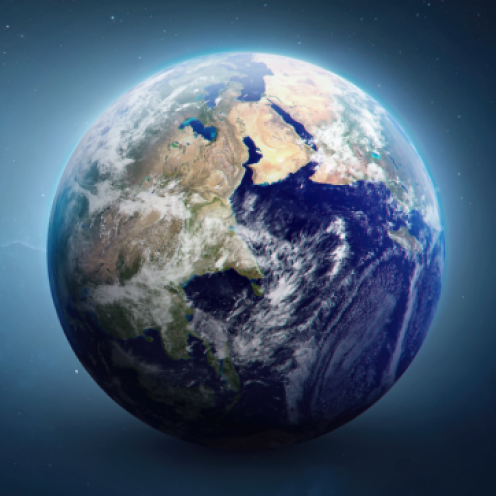
High seas cover over half of our planet’s surface, and represent two-thirds of the entire ocean. They serve as a crucial habitat for countless marine species, many of which remain undiscovered. They also play a vital role in climate regulation. The high seas are also home to secret treasures that could potentially reshape medical science. Painkillers, antibiotics and many other drugs have been produced from genetic material found in the depths of the ocean.

Despite their immense ecological and medical importance, only 1% of these international waters are legally protected. Since they fall outside the jurisdiction of any country, high seas are not governed by anyone. This has led to patchy regulation and uncoordinated management, leaving them vulnerable to threats like overfishing, shipping traffic, and ocean acidification.

An international treaty aims to address these concerns. Last year, countries around the world agreed upon the Agreement on Marine Biodiversity of Areas Beyond National Jurisdiction (BBNJ Treaty) after decades of discussions and negotiations. The historic treaty aims to establish legal frameworks for the conservation and sustainable use of marine resources. The treaty has created a blueprint for countries that want to propose and create protected areas in the high seas. It tackles prior assessment of potentially damaging activities like deep sea mining while also trying to figure out a way to share and distribute marine resources in an equitable manner. Sixty countries will have to ratify the treaty before it goes into effect.

Watch this video to learn more about the high seas, the significance of the BBNJ treaty and the questions that remain unanswered

How the climate crisis fuels gender inequality

The climate crisis may be a collective problem, but its impacts do not fall equally. Women and girls often bear the heaviest burdens.

November 30, 2023

Editor’s note

This story is part of As Equals, CNN’s ongoing series on gender inequality. For information about how As Equals is funded and more, check out our FAQ.

Climate change acts as a threat multiplier, finding existing injustices and amplifying them. Women and girls already grapple with gender inequality, but when extreme weather devastates a community, the UN found that inequalities worsen: Intimate partner violence spikes, girls are pulled from school, daughters are married early, and women and girls forced from their homes face a higher risk of sexual exploitation and trafficking.

“When we look at who’s affected worse, who’s on the frontlines of the climate crisis, it’s primarily women — women in poor and vulnerable countries,” Selwin Hart, UN Special Adviser to the Secretary-General on Climate Action and Just Transition, told CNN. “And unfortunately, our policies or strategies are really not geared to address this challenge.”

To explore the complex links between gender and climate change, CNN worked with seven women photojournalists who spent time with women and girls in seven countries across the Global South to document the challenges they face.

This visual project gives a snapshot of the myriad ways the human-induced climate crisis is upending their lives, but also shows how they are fighting back. Every image shows both struggle and survival, the battle to live a decent life in a swiftly changing climate.

Girls’ education in Nigeria

The Center for Girls’ Education runs a series of programs in Nigeria to help girls stay in school. One in every five of the world’s children who are out of school is in Nigeria, according to UNICEF, and it is girls who are impacted the most.

Photographs by Taiwo Aina for CNN

More than 10 million children between 5 and 14 years old are absent from classrooms across Nigeria, according to UNICEF. For girls, the statistics are even bleaker: In states in the northeast and northwest of the country, fewer than half attend school.

This education crisis is the result of a tangle of factors, including poverty, geography and gender discrimination, the UN agency adds. But against the backdrop of these individual factors is the broader context of the climate crisis.

Nigeria is growing hotter and dryer, and extreme weather such as flash floods and landslides are becoming fiercer and more frequent. Climate disasters can make schools inaccessible and classrooms unsafe. Communities struggling to cope with extreme weather sometimes turn to their children to help or to earn extra money to support the family. And girls, whose attendance at school is already discouraged in some communities, are often most affected.

For every additional year the average girl attends school, her country’s resilience to climate disasters can be expected to improve by 3.2 points on an index that measures vulnerability to climate-related disasters, according to estimates from the Brookings Institution.

There are efforts to support girls’ education and equip them with the resources to cope with a fast-changing climate. The Center for Girls’ Education in the northern Nigerian city of Zaria runs programs to help girls stay in school and offers training on how to cope with the impacts of extreme weather.

“I feel when we give the girls education on climate change, how to mitigate it, it will go a long way in helping the girls in how to support themselves in times of difficulties, and even help them prepare for it,” said Habiba Mohammed, director of the Center for Girls’ Education.

Asiya Sa’idu, 17

Tiếp tục đọc “How the climate crisis fuels gender inequality”

Plastic is choking the Mekong River

themekongeye.com By Anton L. Delgado 20 January 2025 at 10:54

Plastic is now ubiquitous in the Mekong, Asia’s Mother of Rivers, and experts and local people are struggling to contain the risks to human health, biodiversity and livelihoods

ILLUSTRATION: Sunhee Park / Dialogue Earth

On Sơn Island in Viet Nam’s Mekong Delta, Le Trung Tin scatters fish feed into his ponds, where dozens of snakehead fish leap through the surface in synchronized bursts. “I taught them how to do that,” he says proudly, tossing another handful of feed at his fish.

The scene looks idyllic, but Le’s fish farm is a reluctant response to an escalating crisis. For decades, he made his living fishing the Hậu River, a distributary of the Mekong. But in recent years, plastic waste clogged his nets and strangled the fish. “I had no choice but to stop,” he says. “Everything was tangled – trash, nets, even the fish themselves. It was hopeless.”

Now, Le relies on enclosed ponds using filtered water to keep his fish alive. “I built this ecological environment free of plastic waste, chemical spills and [protected it from] extreme weather,” he says.

https://player.vimeo.com/video/1037846174?dnt=1&app_id=122963VIDEO: Anton L. Delgado/Dialogue Earth

Le’s experience reflects the wider challenges facing the Mekong. Stretching over 4,300 kilometres from the Tibetan Plateau to the South China Sea, the river supports nearly 70 million people and some of the world’s most biodiverse ecosystems. Yet, it is one of the most plastic-polluted rivers in the world and among the 10 rivers in Asia that carry the vast majority of plastic to the sea. The Mekong dumps – by some estimates – tens of thousands of tonnes each year into the ocean, with plastic waste accumulating along its banks, tributaries and lakes.

Plastic enters the Mekong in myriad ways – agricultural runoff, unregulated dumping and a flood of single-use packaging from upstream countries like China and Myanmar. It accumulates in hotspots like Tonle Sap Lake in Cambodia and the wetlands of Vietnam’s Mekong Delta, where this plastic waste threatens biodiversity, food security and human health.

Plastics and other waste scattered along the riverbank
Plastics and other waste accumulate along the riverbank near the city of Can Tho in Vietnam’s Mekong Delta region. PHOTO: Anton L. Delgado / Dialogue Earth

Tiếp tục đọc “Plastic is choking the Mekong River”

“Cool” years are now hotter than the “warm” years of the past: tracking global temperatures through El Niño and La Niña

oneworldata.org

The world is warming despite natural fluctuations from the El Niño cycle.

In 2024, the world was around 1.5°C warmer than it was in pre-industrial times.1 You can see this in the chart below, which shows average warming relative to average temperatures from 1861 to 1890.2

Temperatures, as defined by “climate”, are based on temperatures over longer periods of time — typically 20-to-30-year averages — rather than single-year data points. But even when based on longer-term averages, the world has still warmed by around 1.3°C.3

But you’ll also notice, in the chart, that temperatures haven’t increased linearly. There are spikes and dips along the long-run trend.

Many of these short-term fluctuations are caused by “ENSO” — the El Niño-Southern Oscillation — a natural climate cycle caused by changes in wind patterns and sea surface temperatures in the Pacific Ocean.

While it’s caused by patterns in the Pacific Ocean and most strongly affects countries in the tropics, it also impacts global temperatures and climate.

There are two key phases of this cycle: the La Niña phase, which tends to cause cooler global temperatures, and the El Niño phase, which brings hotter conditions. The world cycles between El Niño and La Niña phases every two to seven years.4 There are also “neutral” periods between these phases where the world is not in either extreme.

The zig-zag trend of global temperatures becomes understandable when you are taking the phases of the ENSO cycles into account. In the chart below, we see the data on global temperatures5, but the line is now colored by the ENSO phase at that time.6

The El Niño (warm phase) is shown in orange and red, and the La Niña (cold phase) is shown in blue.

You can see that temperatures often reach a short-term peak during warm El Niño years before falling back slightly as the world moves into La Niña years, shown in blue.

Full article https://ourworldindata.org/global-temperatures-el-nino-la-nina?utm_source=OWID+Newsletter&utm_campaign=df01bb5c85-biweekly-digest-2025-03-07&utm_medium=email&utm_term=0_-0c7f305164-537125314

Mekong Dam Monitor Weekly Update

February 24 – March 2, 2025 Stimson Mekong Monitor

Spotlight

Significant releases from China’s large dams push river to higher-than-normal levels.

Sustained large releases from China’s Xiaowan and Nuozhadu Dams are causing the river to run at levels 1-2 meters higher than normal along the Thai-Lao border. The two graphs illustrate  the sudden spike in river level occurring during the last days of February, corresponding to about 900 million cubic meters of water releases from China’s dams. Under normal dry season conditions, the river level does not spike in a manner seen on the graphs. At this time of year, the river level should gradually decrease over the next six weeks. Sudden spikes in river level, particularly those which run for sustained periods at higher levels, can be devastating for the river’s ecological processes and for the communities who depend on the river.

What Happened Last Week?

    • Where’s the Water: Last week, dams throughout the basin released a significant cumulative total of 1.6 billion cubic meters of water. Significant releases came from Xiaowan (PRC, 749 million cubic meters), Nuozhadu (PRC, 164 million cubic meters), and Thuen Hinboun Expansion (LAO, 199 million cubic meters). Dry season water releases generate hydropower but also artificially raise the level of the river. Where is the water?
    • River Levels: River levels throughout the basin are now about one meter higher than normal. See how this looks.
    • Wetness and Weather: While the headwaters of the Mekong in China are excessively wet (blue), most of the lower Mekong region is experiencing intensifying drought (red). Dry season irrigation activities in the Mekong Delta are creating slightly above average wetness anomalies in Vietnam’s delta. Temperatures in the Mekong basin were about average overall, with slightly above-average temperatures in the northern portion of the basin and slightly below average temperatures in the lower basin. See the maps.

Tiếp tục đọc “Mekong Dam Monitor Weekly Update”

Impact of Trump 2.0 on Southeast Asia’s Energy Geopolitics

Fulcrum.sg Published 3 Mar 2025 Mirza Sadaqat Huda

Trump’s rent-seeking foreign policy pertaining to energy and critical minerals will force Southeast Asian countries to do what they least desire: making a choice between China and the US.

The Trump administration’s insular and rent-seeking foreign policy will significantly alter the geopolitics of energy transition in Southeast Asia. This will manifest in two ways. First, the potential cessation of US involvement in the region’s energy sector will heighten fears of China’s dominance in energy infrastructure projects — including the ASEAN Power Grid (APG). Second, Trump’s intentions of using critical minerals as a bargaining chip for providing military assistance, if applied to the ASEAN region, will impact the regional vision for sustainable mineral development.

The shutting down of the United States Agency for International Development (USAID), an important player in the energy sector, will intensify existing fears of China’s dominance in electricity transmission and generation. As shown in Table 1, China provided approximately US$534 million in aid to the region’s energy sector in 2022, accounting for more than a quarter of the total share. Comparatively, the US provided only US$23.7 million, or 1 per cent of total energy-related aid to Southeast Asia. In addition, the China Southern Power Grid Company and State Grid Corporation of China own and operate significant portions of the national grids in Laos and the Philippines, respectively.

China Leads in Energy Aid

Table 1 Energy-related aid to Southeast Asia 2022 (excerpt) (USD, in %)

Donor Amount Contribution
China 534 million 26
ADB 368 million 18
Germany 274 million 13
Canada 231 million 11
South Korea 211 million 10
Japan 167 million 8
World Bank 90.0 million 4
EU Institutions 42.3 million 2
France 42.2 million 2
AIIB 34.8 million 2
United States 23.7 million 1

The table is modified from Lowy Institute’s (2024) Southeast Asia Aid Map.

Tiếp tục đọc “Impact of Trump 2.0 on Southeast Asia’s Energy Geopolitics”

Global Risks Report 2025: Conflict, Environment and Disinformation Top Threats

Reliefweb.int

Full report https://www.weforum.org/publications/global-risks-report-2025/

World Economic Forum, public.affairs@weforum.org

  • State-based armed conflict emerges as the top immediate risk for 2025, identified by nearly a quarter of respondents, reflecting heightened geopolitical tensions and fragmentation globally.
  • Misinformation and disinformation lead the short-term risks and may fuel instability and undermine trust in governance, complicating the urgent need for cooperation to address shared crises.
  • Environmental risks dominate the 10-year horizon, led by extreme weather events, biodiversity loss and ecosystem collapse.
  • Read the Global Risks Report 2025 here and join the conversation using #Risks25. Follow the Annual Meeting here and on social media using #WEF25

Geneva, Switzerland, 15 January 2025 – The 20th edition of the World Economic Forum’s Global Risks Report, released today, reveals an increasingly fractured global landscape, where escalating geopolitical, environmental, societal and technological challenges threaten stability and progress. While economic risks have less immediate prominence in this year’s survey results, they remain a concern, interconnected with societal and geopolitical tensions.

State-based armed conflict is identified as the most pressing immediate global risk for 2025, with nearly one-quarter of respondents ranking it as the most severe concern for the year ahead.

Misinformation and disinformation remain top short-term risks for the second consecutive year, underlining their persistent threat to societal cohesion and governance by eroding trust and exacerbating divisions within and between nations. Other leading short-term risks include extreme weather events, societal polarization, cyber-espionage and warfare.

Environmental risks dominate the longer-term outlook, with extreme weather events, biodiversity loss and ecosystem collapse, critical change to Earth systems and natural resources shortages leading the 10-year risk rankings. The fifth environmental risk in the top 10 is pollution, which is also perceived as a leading risk in the short term. Its sixth-place ranking in the short term reflects a growing recognition of the serious health and ecosystem impacts of a wide range of pollutants across air, water and land. Overall, extreme weather events were identified prominently as immediate, short-term and long-term risks.

The long-term landscape is also clouded by technological risks related to misinformation, disinformation and adverse outcomes of AI technologies.

“Rising geopolitical tensions and a fracturing of trust are driving the global risk landscape” said Mirek Dušek, Managing Director, World Economic Forum. “In this complex and dynamic context, leaders have a choice: to find ways to foster collaboration and resilience, or face compounding vulnerabilities.”

Fractured systems, fragile futures

The report, which draws on the views of over 900 global risks experts, policy-makers and industry leaders surveyed in September and October 2024, paints a stark picture of the decade ahead. Respondents are far less optimistic about the outlook for the world over the longer term than the short term. Nearly two-thirds of respondents anticipate a turbulent or stormy global landscape by 2035, driven in particular by intensifying environmental, technological and societal challenges.

Over half of respondents expect some instability within two years, reflecting the widespread fracturing of international cooperation. Long-term projections signal even greater challenges as mechanisms for collaboration are expected to face mounting pressure. Societal risks such as inequality and societal polarization feature prominently in both short- and long-term risk rankings. Rising concerns about illicit economic activity, mounting debt burdens and the concentration of strategic resources highlight vulnerabilities that could destabilize the global economy in the coming years. All these issues risk exacerbating domestic instability and eroding trust in governance, further complicating efforts to address global challenges.

All 33 risks in the ranking increase in severity score over the longer term, reflecting respondents’ concerns about the heightened frequency or intensity of these risks as the next decade unfolds.

“From conflicts to climate change, we are facing interconnected crises that demand coordinated, collective action,” says Mark Elsner, Head of the Global Risks Initiative, World Economic Forum. “Renewed efforts to rebuild trust and foster cooperation are urgently needed. The consequences of inaction could be felt for generations to come.”

A decisive decade: Collaboration as the key to stability

As divisions deepen and fragmentation reshapes geopolitical and economic landscapes, the need for effective global cooperation has never been more urgent. Yet, with 64% of experts anticipating a fragmented global order marked by competition among middle and great powers, multilateralism faces significant strain.

However, turning inward is not a viable solution. The decade ahead presents a pivotal moment for leaders to navigate complex, interconnected risks and address the limitations of existing governance structures. To prevent a downward spiral of instability – and instead rebuild trust, enhance resilience, and secure a sustainable and inclusive future for all – nations should prioritize dialogue, strengthen international ties and foster conditions for renewed collaboration.

Links to other visuals and graphics

– Current Risk Landscape – 2025

– Global risks ranked by severity- 2 years

– Global Risks ranked by severity – 10 years

– Short and long-term global outlook

– Global risks landscape an interconnections map

About the Global Risks Report
The Global Risks Report is the World Economic Forum’s flagship publication on global risks, now in its 20th edition. Produced by the Global Risks Initiative at the Forum’s Centre for the New Economy and Society, the report leverages insights from the Global Risks Perception Survey, which draws on the views of over 900 global leaders across business, government, academia and civil society. The report identifies and analyses the most pressing risks across immediate, short- and long-term horizons, aiming to equip leaders with foresight to address emerging challenges. It serves as a key resource for understanding the evolving global risk landscape and fostering collective action to build a more resilient future.

For more information, visit the Global Risks Initiative and read the full report here.

Bhutan at the frontier of the climate crisis | 101 East Documentary

Al Jazeera English – 6-2-2025

The small Himalayan nation of Bhutan was the world’s first carbon-negative country.

With 70 % of its land covered by forests, it absorbs three times more carbon dioxide than it emits.

The environment is protected by the country’s constitution, and it is illegal to cut down trees without a permit.

Bhutan’s fast-flowing rivers provide the country with clean energy, making it almost entirely powered by hydroelectricity.

However, climate change and global warming are drying up rivers and threatening the country’s power supply.

In the high mountains, rising temperatures are causing glacial lakes to melt, increasing the risk of floods and other natural disasters.

101 visits Bhutan, a country at the frontier of climate change.

The National Security Imperative of USAID’s Food Security Programs

Climateandsecurity.org

As of today, the Trump Administration has paused two essential US global food security initiatives, Feed the Future and the Famine Early Warning Systems Network (FEWS NET). Created in reaction to the 2007-8 global food crisis and resulting instability, Feed the Future is a marquee US government food security program and tool for implementing the bipartisan Global Food Security Act, working in 20 countries to build a more resilient food system and supporting agricultural innovation at 17 US universities. Operating since 1985, FEWS NET provides rigorous analysis and forecasting of acute food insecurity to inform US and other humanitarian responses in 30 countries.

These programs make invaluable contributions to US national security and global stability. For example, Feed the Future builds resilience in five countries where the US National Intelligence Estimate on climate change assesses “building resilience…would probably be especially helpful in mitigating future risks to US interests.” In Central America, where drought during growing seasons has driven increased migration to the United States, Honduran Feed the Future beneficiaries report a 78% lower intent to migrate than the wider population. Meanwhile, FEWSNET’s data and analysis more quickly and efficiently direct US humanitarian support in reaction to conflict, economic shocks, and extreme weather, including in regions where the US military is deployed. 

Both programs have historically received consistent bipartisan support. Speaking at the launch of a new Feed the Future initiative last year, Senator John Boozman (R-AR) noted, “food security is national security.” Another Feed the Future supporter, Representative Tracey Mann (R-KS 1st District), has highlighted the value of his district’s Feed the Future Innovation Lab and stated that global food security programs have “an especially strong return on investment because they support American agriculture producers today, while greatly reducing the need for conflict or war-related dollars spent tomorrow” and are “a way to stop wars before they start.” As Executive Director of the World Food Program (2017-2023), former South Carolina Governor and Representative David Beasely testified to the Senate that “Investments in early warning systems like USAID’s Famine Early Warning System…allow humanitarian partners to project and respond in real time to potential emergencies….Without this capacity to forecast food insecurity, the cost of humanitarian intervention is much greater, both in dollars and lives lost.”

Last year, dozens of national security leaders, including the former commanders of Indo-Pacific Command (INDOPACOM), Africa Command (AFRICOM), and Central Command (CENTCOM), endorsed the Council on Strategic Risks’ The Feeding Resilience Plan: Safeguarding US National Security at the Crossroads of Food and Climate Change. The report makes recommendations to US policymakers to better anticipate, prevent, and respond to food- and climate-driven national security threats, including to:

  • “Support long-term resilience building in vulnerable countries by sustaining and expanding Feed the Future,” noting it and similar programs “bolster vulnerable countries’ ability to withstand food shocks and forestall security threats or need for costly US assistance,” and
  • “Expand on USAID’s FEWS NET to include longer-term food insecurity warnings” and to have security and defense agencies better “integrate FEWSNET projections with processes to forecast political instability and conflict.”

Amid multiplying threats from instability, extreme weather, and geopolitical competition, these recommendations remain critical today, and highlight the important national security benefits of capabilities like Feed the Future and FEWS NET.  

Việt Nam có 11,8 triệu ha đất đang bị sa mạc hoá

VNN – 22/12/2024 10:45

Biến đổi khí hậu và các hoạt động của con người gây ra khiến 11,8 triệu ha đất của nước ta đang bị sa mạc hoá.

Nỗi lo đất bị sa mạc hoá. Ảnh: VNN

Theo Bộ Tài nguyên và Môi trường, nước ta có khoảng 1,2 triệu ha đất bị suy thoái nặng, 3,8 triệu ha đất suy thoái trung bình và 6,8 triệu ha đất suy thoái nhẹ. Vùng có diện tích đất suy thoái lớn nhất là Trung du miền núi phía Bắc, Bắc Trung Bộ và Duyên hải miền Trung.

Tiếp tục đọc “Việt Nam có 11,8 triệu ha đất đang bị sa mạc hoá”

Swapping gas for batteries

USAID – Wednesday, December 18, 2024

Language

How USAID Supports Vietnam’s Journey to Net Zero

With over 70 million scooters and motorcycles on the roads in Vietnam, over 90% of households own one, two wheelers in Vietnam are ubiquitous. They form the backbone of the shipping sector, easily navigating the chaotic traffic and narrow back alleys to deliver goods. However, this contributes to air that is clouded with exhaust for Vietnamese citizens.

Emissions in Vietnam have multiplied fivefold in the last 20 years. As pollution worsened, the demand for electric vehicles (EV) skyrocketed. Vietnam is now home to the third largest two-wheeler EV market in the world—but the sector still lags far behind that of the gasoline-powered two wheelers. Improved government policies and a two wheel EV ecosystem are needed to support Vietnam’s EV shift, reduce emissions, and clean up its air.

Tiếp tục đọc “Swapping gas for batteries”

Mekong Delta factory workers between a rock and a hard place

mekongeye.com – By Võ Kiều Bảo Uyên

18 March 2024 at 13:44 (Updated on 19 March 2024 at 10:27)

Garment and footwear workers from the delta seek alternative jobs as threats of mass layoffs loom, and while many want to return home, it remains their last resort

A workers’ dormitory in Tân Tạo Ward, Bình Tân District, Hồ Chí Minh City. PHOTO: Thành Nguyễn.

HỒ CHÍ MINH CITY, VIỆT NAM – Every weekend, workers at Adidas supplier Pouyuen swap their hairnets for vendor hats. Facebook groups then turn into online bazaars, teeming with sales posts of ready-to-eat meals, vegetables, fruit, snacks and sweets.

These side gigs that started as a way of coping with the reduced hours and layoffs during the Covid-19 pandemic have now evolved into full-time commitments for many of these workers, most of them women.

Tiếp tục đọc “Mekong Delta factory workers between a rock and a hard place”

Thảm kịch lũ quét và sạt lở sau bão Yagi: Sự cố hi hữu hay vấn đề hệ thống? 

tia sáng – 8-10-2024 – Hà Thị Hằng – Lưu Thị Diệu Chinh

Từ thực tế ảnh hưởng của cơn bão Yagi, đã đến lúc, chúng ta cần suy nghĩ đến việc cần thiết phải bảo vệ các khu vực miền núi trước thiên tai theo một cách khác.

Trận lũ phá tan hoang khu vực bản trung tâm của xã Hồ Bốn, Mù Cang Chải, Yên Bái vào tháng 8 năm 2023. Ảnh: Việt Cường

Tiếp tục đọc “Thảm kịch lũ quét và sạt lở sau bão Yagi: Sự cố hi hữu hay vấn đề hệ thống? “

Bất ngờ cuộc sống ở “Làng du lịch tốt nhất thế giới” Tân Hóa trong cảnh ngập lụt

NĐT –  15:38 | Thứ sáu, 20/09/2024 0

Thay vì lo âu, sợ hãi chạy lên núi tránh trú khi lũ đến như mọi năm. Bây giờ người dân ở “Làng du lịch tốt nhất thế giới” Tân Hóa (Quảng Bình) vui vẻ, sinh hoạt ăn uống bình thường, ngắm nhìn dòng nước lũ trên nhà phao một cách bình yên.

Làng Tân Hóa bình yên bên dòng lũ.

Tính đến 13 giờ ngày hôm nay (20.9), vùng “rốn lũ” Tân Hóa, huyện Minh Hóa, tỉnh Quảng Bình – nơi trở nên nổi tiếng bởi được công nhận là một trong những “Làng du lịch tốt nhất thế giới” năm 2023 – có gần 430 ngôi nhà bị ngập sâu từ 0,5-2m.

Tiếp tục đọc “Bất ngờ cuộc sống ở “Làng du lịch tốt nhất thế giới” Tân Hóa trong cảnh ngập lụt”