Time for Vietnam to Resolve Its Renewable Energy Legal Quagmire

fulcrm.sg Published 19 Nov 2025 Le Hong Hiep

In Vietnam, an impasse over feed-in-tariffs for renewable energy producers threatens foreign investors’ confidence in government policies

Afestering legal crisis is threatening to derail Vietnam’s energy development plans. 173 solar and wind projects, representing about US$13 billion in investments, are stuck in limbo due to ongoing disputes regarding their feed-in-tariffs (FITs) – the guaranteed payments that the government would pay for their contribution to the power grid. This situation raises concerns about Vietnam’s business environment and the consistency of its economic policy. If Vietnam does not resolve these disputes promptly, the country could face significant legal, financial, and reputational repercussions.

Between 2018 and 2021, Vietnam experienced a significant boom in renewable energy, primarily fuelled by the government’s commitment to offer attractive 20-year FITs to investors for projects that began commercial operations before designated deadlines. However, in 2023, an investigation by the Government Inspectorate found that many of these projects had not obtained their Construction Completion Acceptance (CCA) certificates before their Commercial Operation Date (COD). Following the inspection, the Ministry of Industry and Trade issued a new circular, effective June 2023, stipulating that renewable energy projects must obtain a CCA certificate before being recognised for COD. This effectively disqualified the affected projects from receiving the original FIT rates.

Tiếp tục đọc “Time for Vietnam to Resolve Its Renewable Energy Legal Quagmire”

Vì sao chậm giải cứu hàng nghìn người kẹt ở rốn lũ Đăk Lăk?

VNE – Thứ ba, 25/11/2025, 06:00 (GMT+7)

Cả đêm vật lộn với lũ, chị Nguyễn Thị Phương, 35 tuổi, thôn Mỹ Điền, xã Hòa Thịnh, một tay ôm đứa nhỏ, tay còn lại luồn qua mái ngói, kéo đứa lớn để không chìm trong nước.

“Có lúc tôi nghĩ chỉ giữ được đứa nhỏ”, người mẹ hai con nhớ lại đêm kinh hoàng từ tối 19/11 đến rạng sáng hôm sau. Chồng đi làm xa, ba mẹ con chị Phương sống trong căn nhà cấp 4 nằm dọc sông. Trước đó, chị nhận thông báo về mưa, lũ qua nhóm Zalo của khu dân cư. Chiều 19/11, điện mất, mạng Internet và sóng điện thoại chập chờn, khiến chị gần như không theo kịp các tin nhắn mới.

Cùng thời điểm, khu vực mưa rất lớn, thủy điện Sông Ba Hạ cách Hòa Thịnh gần 60 km xả lũ kỷ lục 16.100 m3/s. Lượng nước trong một giây đủ làm đầy khoảng 80 căn nhà rộng hơn 50 m2, cao tầm 4 m như của chị Phương. Tuy nhiên, chị không hình dung được mức độ nguy hiểm, chỉ kê đồ dễ hư lên cao hơn đầu gối và chuẩn bị thức ăn cho 1-2 ngày.

Chiều cùng ngày, nước bò vào phòng khách, ngập lút đồ đạc. Nghĩ nước sẽ rút như mọi năm, chị chưa quá lo. Nhưng càng về đêm, nước càng dâng nhanh. Gần nửa đêm, nước ngập qua bộ ghế phòng khách, chị vội bế hai con lên dầm nhà – phần khung sắt dưới mái ngói. Song đây vẫn chưa phải đỉnh lũ, dòng nước tiếp tục dâng, nhấn chìm cả phần khung.

Chị Nguyễn Thị Phương trong căn nhà nơi ba mẹ con mắc kẹt từ tối 19/11 khi nước dâng cao. Ảnh: Đình Văn
Chị Nguyễn Thị Phương trong căn nhà nơi ba mẹ con kẹt từ tối 19/11 khi nước dâng cao. Ảnh: Thanh Tùng
Tiếp tục đọc “Vì sao chậm giải cứu hàng nghìn người kẹt ở rốn lũ Đăk Lăk?”

Global Infrastructure Resilience Report 2025 

CDRI.world

GIR 2025 report emphasizes the urgent need to incorporate resilience into infrastructure planning and investment. It shows that economic losses from service disruptions after disasters are, on average, 7.4 times higher than direct infrastructure damage.  

The report emphasizes the importance of risk assessments, faster reconstruction, and governance reforms to reduce these losses. It advocates for localized risk modelling, institutional readiness, and innovative financing, including insurance and risk pooling. Businesses must also build end-to-end resilience across supply chains.  

With over 75 case studies, GIR 2025 provides actionable insights across key pillars, including technology, finance, governance, and nature-based solutions. It calls for global cooperation to ensure infrastructure systems can withstand, adapt to, and recover from disasters, turning resilience into a driver of sustainable, inclusive growth. 

Key points

  • Economic losses from service disruptions exceed direct infrastructure damage costs.
  • Faster reconstruction halves the GDP impact compared to delayed recovery efforts.
  • Risk assessments guide resilient investments and infrastructure planning decisions.
  • Businesses need resilient supply chains to reduce disaster vulnerabilities.
  • Financing resilience requires layered tools like insurance and risk pooling.
  • Governance reforms strengthen infrastructure recovery and long-term development stability.

Download

TP.HCM trước nguy cơ “dời đô” vì chìm dần

Sụt lún nghiệm trọng đang xảy ra tại TP.HCM thực tế đã được nghiên cứu và cảnh báo cách đây hơn 15 – 20 năm. Tuy nhiên, chính sách phát triển đô thị ở đây khi tính đến nguy cơ sụt lún vẫn xìu xìu ển ển.

TP.HCM đang ‘chìm dần’ và ‘chìm’ nhanh thứ 2 thế giới. Nếu Việt Nam tiếp tục chậm trễ trong quy hoạch và xây dựng, Việt Nam sẽ giống Indonesia khi phải di dời thủ đô do thành phố Jakarta đang chìm dần. Tương lai có thể tệ hơn khi TP.HCM bị lún nhiều gấp 4 lần Jakarta.

Đào Thu Hằng

***

TP HCM ‘chìm dần’

VNE – Thứ tư, 29/10/2025, 06:00 (GMT+7)

Mỗi năm nước biển dâng một cm, tốc độ lún bình quân của TP HCM 2-5 cm khiến nhiều khu vực địa hình thấp, nền đất yếu đang “chìm dần”.

Tiếp tục đọc “TP.HCM trước nguy cơ “dời đô” vì chìm dần”

10 Years After a Breakthrough Climate Paris Agreement, Here’s Where We Are

nytimes.com Nov. 7, 2025

Almost exactly 10 years ago, a remarkable thing happened in a conference hall on the outskirts of Paris: After years of bitter negotiations, the leaders of nearly every country agreed to try to slow down global warming in an effort to head off its most devastating effects.

The core idea was that countries would set their own targets to reduce their climate pollution in ways that made sense for them. Rich, industrialized nations were expected to go fastest and to help lower-income countries pay for the changes they needed to cope with climate hazards.

So, has anything changed over those 10 years? Actually, yes. Quite a bit, for the better and the worse. For one thing, every country remains committed to the Paris Agreement, except one. That’s the United States.

Tiếp tục đọc “10 Years After a Breakthrough Climate Paris Agreement, Here’s Where We Are”

Deforestation can raise local temperatures by up to 4.5°C – and heat untouched areas 6km away

theconversation.com Published: November 15, 2021 7.10pm GMT

Forests directly cool the planet, like natural evaporative air conditioners. So what happens when you cut them down?

In tropical countries such as Indonesia, Brazil and the Congo, rapid deforestation may have accounted for up to 75% of the observed surface warming between 1950 and 2010. Our new research took a closer look at this phenomenon.

Using satellite data over Indonesia, Malaysia and Papua New Guinea, we found deforestation can heat a local area by as much as 4.5°C, and can even raise temperatures in undisturbed forests up to 6km away.

More than 40% of the world’s population live in the tropics and, under climate change, rising heat and humidity could push them into lethal conditions. Keeping forests intact is vital to protect those who live in and around them as the planet warms.

Tiếp tục đọc “Deforestation can raise local temperatures by up to 4.5°C – and heat untouched areas 6km away”

Phá rừng tại Đông Nam Á gây ra nhiều ca tử vong hơn bất kỳ khu vực nhiệt đới nào

vtv.vn 08/10/2025 08:26 GMT+7

VTV.vn – Nghiên cứu mới do Đại học Leeds (Anh) cho biết hoạt động phá rừng ở Đông Nam Á đang gây ra số ca tử vong liên quan đến nắng nóng cao nhất trong các vùng nhiệt đới.

(Ảnh minh họa: The Nation)

(Ảnh minh họa: The Nation)

Theo báo cáo được công bố trên tạp chí Nature Climate Change, mỗi năm có khoảng 15.680 người dân nông thôn ở Đông Nam Á tử vong do các biến chứng liên quan đến nắng nóng trầm trọng hơn bởi phá rừng, so với 9.890 người ở châu Phi nhiệt đới và 2.520 người ở châu Mỹ.

Trong giai đoạn 2001 – 2020, Đông Nam Á đã mất khoảng 490.000 km² thảm thực vật, trong khi khu vực Trung và Nam Mỹ mất tới 760.000 km² rừng nhiệt đới. Tuy nhiên, theo Tiến sĩ Carly Reddington, tác giả chính của nghiên cứu, mật độ dân số cao khiến số ca tử vong do nắng nóng ở Đông Nam Á lớn hơn đáng kể. Mặc dù ở Nam Mỹ, diện tích rừng bị mất nhiều hơn, nhưng ít người sinh sống tại các khu vực này.

Nghiên cứu cũng ghi nhận rằng trong 20 năm qua, biến đổi khí hậu kết hợp với phá rừng đã làm nhiệt độ trung bình ở Đông Nam Á tăng thêm 0,72°C. Các khu rừng không chỉ hấp thụ khí CO₂ mà còn giúp làm mát tự nhiên – tán cây tạo bóng râm, còn lá cây bốc hơi nước, làm giảm nhiệt độ xung quanh. Khi rừng bị chặt hạ, hiệu ứng làm mát này biến mất, khiến mặt đất khô, tối màu và hấp thụ nhiệt mạnh hơn, dẫn tới “nhiệt độ địa phương tăng cao, đôi khi còn vượt cả mức nóng lên toàn cầu”, bà Reddington giải thích.

Phá rừng tại Đông Nam Á gây ra nhiều ca tử vong hơn bất kỳ khu vực nhiệt đới nào- Ảnh 1.
(Ảnh: AFP)

Nhóm nghiên cứu đã kết hợp dữ liệu vệ tinh với hồ sơ y tế để ước tính mối liên hệ giữa phá rừng, nhiệt độ và tử vong do nắng nóng. Họ nhận thấy các cộng đồng nghèo, dân tộc thiểu số và người lao động ngoài trời là những nhóm chịu ảnh hưởng nặng nề nhất, do hạn chế về cơ sở hạ tầng, dịch vụ y tế và khả năng tiếp cận các biện pháp làm mát.

Một nghiên cứu trước đó tại Berau (Đông Kalimantan, Indonesia) cho thấy phá rừng trong giai đoạn 2002 – 2018 đã gây ra hơn 100 ca tử vong do nắng nóng mỗi năm, đồng thời rút ngắn thời gian làm việc an toàn trong ngày tới 20 phút.

Tiến sĩ Reddington nhấn mạnh: “Phá rừng nhiệt đới không chỉ là vấn đề môi trường, nó đang trực tiếp đe dọa sức khỏe con người, đặc biệt ở những cộng đồng ít khả năng thích ứng. Bảo vệ rừng không chỉ cứu hành tinh mà còn cứu mạng sống”.

Các chuyên gia y tế và khí hậu trong khu vực, như Phó giáo sư Kimberly Fornace (Đại học Quốc gia Singapore) và Giáo sư Winston Chow (Đại học Quản lý Singapore), đều đồng tình rằng để giảm thiểu hậu quả do chặt, phá rừng, cần tăng cường nghiên cứu y tế địa phương, cảnh báo sớm nắng nóng và đầu tư vào tái trồng rừng.

Australia and Mekong River Commision deepen cooperation to strengthen river monitoring and digital innovation in Lao PDR

mrcmekong.org

Australia and MRC deepen cooperation to strengthen river monitoring and digital innovation in Lao PDR

Share: 

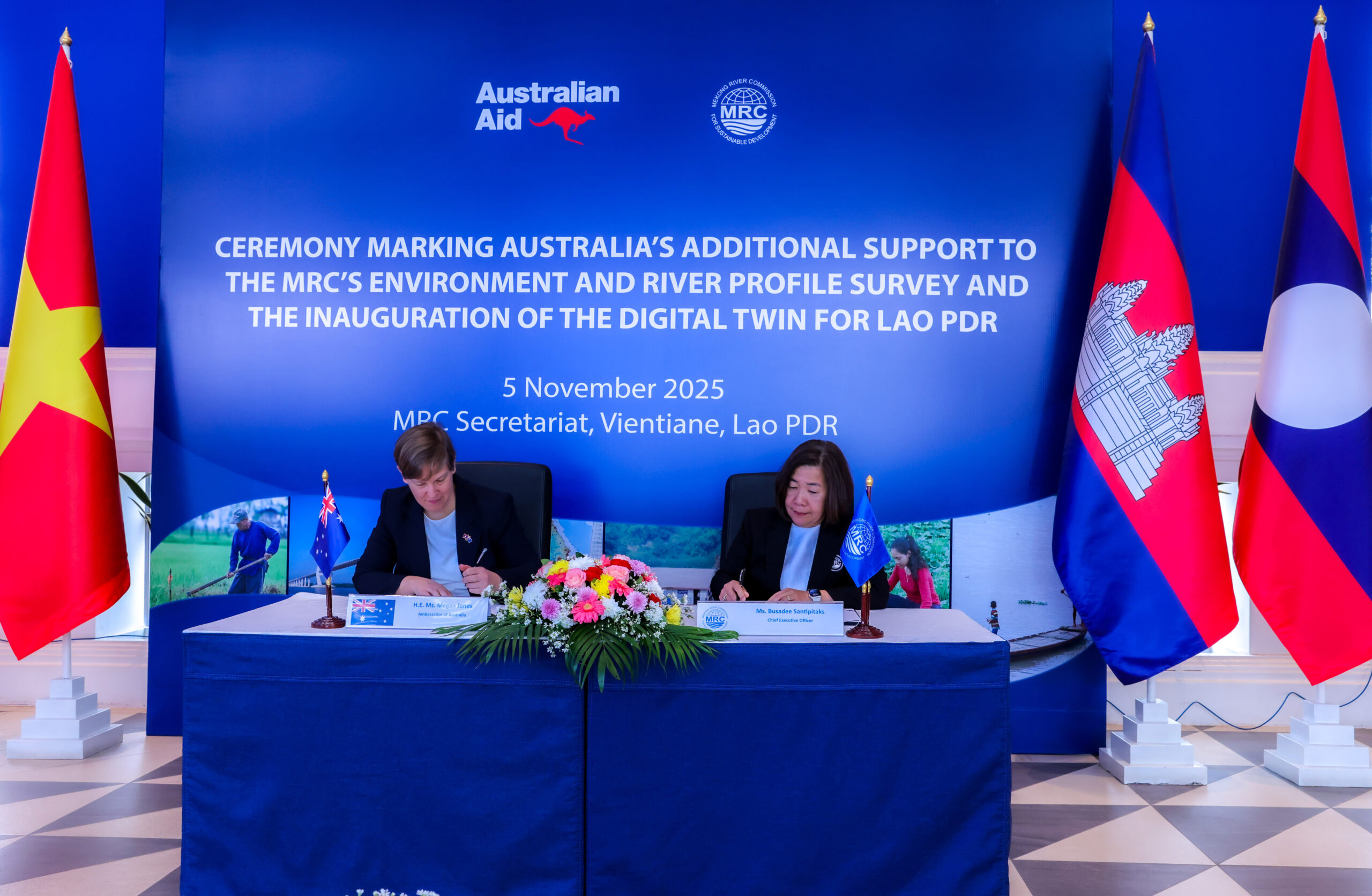
Vientiane, Lao PDR, 6 November 2025 – The Mekong River Commission (MRC) and the Government of Australia have reinforced their long-standing partnership through additional Australian support and the use of new digital innovations to enhance water monitoring and management in the Mekong region.

At a ceremony held today at the MRC Secretariat in Vientiane, Australia formalised an additional USD 1.71 million to support the MRC’s Environment and River Profile Survey, a key program that helps the MRC to enhance monitoring of river conditions, improve forecast changes, and better assess the health of the basin. This ensures the MRC can continue gathering and analysing data effectively that inform decisions on the river’s management and protection.

Australia’s support for the Environment and River Profile Survey builds on its core support to the MRC under the Mekong-Australia Partnership, which seeks to strengthen water security, economic resilience and sustainable growth in the sub-region. “Australia is proud to support this project as it will benefit the MRC, its member countries, and the river’s communities, economy, and environment” said H.E. Ms Megan Jones, Australian Ambassador to Lao PDR.

Joining the event was His Excellency Dr Linkham Douangsavanh, Minister of Agriculture and Environment of Lao PDR. Together with the MRC and Australia, he witnessed the formal launch of a new “Digital Twin” platform, a real-time modelling tool that integrates hydrological, meteorological and spatial data to help visualise how changes in rainfall, flow or land-use could affect communities and ecosystems.

“With this Digital Twin platform, we are giving our communities and partners a window into the river’s future,” said Dr Douangsavanh. “When we see what may come, we can plan better, respond faster and protect the peoples and their livelihoods and nature that depend so much on the Mekong.”

“Today we harness new digital capabilities and advanced capabilities so that we can ensure shared benefits for the sustainable development of the Mekong River Basin. The MRC is grateful for this timely support from Australia that has allowed this to happen,” said H.E. Ms Busadee Santipitaks, Chief Executive Officer of the MRC Secretariat.

About the Mekong River Commission

The MRC is an intergovernmental organisation established in 1995 to boost regional dialogue and cooperation in the Lower Mekong River Basin. Based on the Mekong Agreement among Cambodia, Lao PDR, Thailand, and Viet Nam, the MRC serves as both a regional platform for water diplomacy and a knowledge hub – to manage water resources and support sustainable development of the region.

Cambodia’s mega canal has Vietnam worried: What does it mean for the Mekong?

CNAInsider – 31-10-2025

This April, China and Cambodia finalised a deal to build the Funan Techno Canal. It is a 180km waterway which will connect the Mekong River to the Gulf of Thailand. The USD 1.8 billion infrastructure project will be undertaken jointly by the Cambodian government and Chinese investors. The project has an ambitious completion date of 2028.

Cambodia argues that the canal will finally allow the country to control its own destiny. Currently, about a third of Cambodia’s global cargo are relying on Vietnamese ports for export, via the Mekong. The canal will allow the shipments to be exported through Cambodia’s own ports, reducing its reliance on its neighbour. The Kingdom sees the canal as a source of economic independence and growth, as well as a way to boost its transport links.

But Vietnam is concerned that the canal will divert water flows from the Mekong. Indochina’s most important river is already under threat by upstream dams and climate change. A massive new canal could well starve Vietnamese farmlands of much needed water. Cambodia on the other hand, insists that the canal will have minimal impact. As construction of the canal gets underway, what will be the long-term impact of this monumental project? Tiếp tục đọc “Cambodia’s mega canal has Vietnam worried: What does it mean for the Mekong?”

Remote Sensing for Climate-Sensitive Infectious Diseases

NASA Earth Data

This ARSET training covers general approaches to apply satellite remote sensing data when studying or forecasting climate-sensitive infectious diseases.

Description

Climate-sensitive vector-borne diseases such as malaria impact millions of people each year, causing more than 700,000 deaths annually, according to the World Health Organization (WHO). Satellite remote sensing data can provide valuable insights for monitoring conditions which support disease vectors. In this training, participants will learn the basic principles of how satellite remote sensing data can be applied to track climate-sensitive vector-borne disease outbreaks and provide early warnings for potential outbreaks. Participants will learn about general approaches to apply satellite remote sensing data when studying or forecasting climate-sensitive infectious diseases. These will be illustrated with a case study example in the forecasting of malaria. Participants will also become familiar with some of the common, freely available NASA remote sensing datasets used in these applications, as well as where and how to access them and how to decide which datasets are fit for their purpose.

Part 1: How Remote Sensing Can be Used to Study Climate-Sensitive Infectious Diseases

  • Identify environmental variables and conditions that can be observed from space which are relevant to climate-sensitive infectious disease outbreaks.
  • Identify how satellite observations can improve the assessment and forecasting of climate-sensitive infectious disease outbreaks.
  • List the steps of a conceptual framework for incorporating remote sensing data into the study of climate-sensitive infectious diseases.
  • Recognize several remote sensing datasets commonly used to study and forecast climate sensitive infectious diseases, along with their key attributes such as resolution, coverage, latency, and uncertainty.
  • Select appropriate remote sensing datasets for studying climate-sensitive infectious diseases based on the disease characteristics, region of interest, and relevant environmental parameters.
  • Examine common benefits and challenges of using remote sensing data for studying climate-sensitive infectious diseases.

Host: Assaf Anyamba

Guest Instructors: Tatiana Loboda

Materials

Part 2: Case Study in the Use of Remote Sensing to Study Climate-Sensitive Infectious Diseases

  • Identify environmental variables and conditions relevant to malaria that can be observed from space.
  • Recognize why the remote sensing datasets used in this case study were chosen, based on their key attributes.
  • Recognize the steps taken for accessing and preparing remote sensing data for use in this case study.
  • Identify the steps used by the EPIDEMIA system for integrating remote sensing data.
  • Examine the benefits and challenges of using remote sensing data for tracking and forecasting malaria in Ethiopia, and how these were addressed through the case study.
  • Examine the primary outcomes of the case study and ways its approach might be expanded in the future.

Host: Assaf Anyamba

Guest Instructors: Michael Wimberly

Materials

Military Responses to Climate Hazards tracker

Aproject of the Center for Climate and Security (CCS). Please read important information on this project’s scope, methodology, limitations, and citation guidelines below. 

Tracker https://csrisks.maps.arcgis.com/apps/dashboards/1225aca7da4a4d528687e8d02f3ef9c8

Methodology

This map is based on a dataset regularly updated by CCS staff, based on publicly available information, tracking the date, location, actors, and circumstances of military deployments to climate-related hazards. 

Researchers, journalists, academics, government officials, or members of the public are encouraged to contribute to this effort by entering information and sourcing on such incidents here, which CCS uses to supplement its own tracking in updating this map. 

The dataset starts in June 2022 and was last updated 30 September, 2025.  

Scope and Definitions

This project tracks the deployment of military and paramilitary personnel and equipment in response to natural hazards exacerbated by climate change, worldwide. 

This includes all hazard types that climate change is known to make more likely or intense–such as heatwaves, flooding, drought, extreme precipitation, and storms and hurricanes—even if a scientific study has not yet quantified the role of climate change in a particular incident. Natural disasters largely unrelated to climate change, such as earthquakes or volcanoes, are excluded. Entries include direct deployment of military forces, the use of other armed paramilitaries, and the lending of military personnel or equipment to civil authorities, but does not include purely civilian disaster response.

Similarly, military deployments in response to challenges indirectly contributed to by climate change (such as migration or civil unrest) are not included, nor are deployments related to energy security or the energy transition. 

Limitations

Users should be aware of limitations in this project, especially in comprehensiveness and precision. Because of the project’s scope, data access issues, and English-language focus, this page probably misses some incidents that fit the project’s criteria, especially in locations under-covered in English-language media and/or with opaque militaries. CCS logs incidents based on approximate start date and displays incidents by month, and logs incidents by the most precise location feasible based on available information and the geographic scope of the hazard. Finally, this project does not distinguish military deployments or hazards by magnitude – users should click through to underlying sources to learn more about the size of a given incident.

Citation

This data may be freely cited by academics, researchers, or journalists, crediting The Center for Climate and Security.

Growing demand for military involvement in climate emergencies worldwide

Global Military Advisory Council on Climate Change 


Brussels / The Hague – 30 July  2025

A groundbreaking new report, “Resilience, Readiness, and Response,” from Project CASA (Climate and Security Action through Civil-Military Cooperation in Climate-Related Emergencies) highlights the increasing and essential role of national militaries in addressing the escalating global climate crisis.

The report is the result of a comprehensive two-year study which provides the first cross-national dataset on military involvement in climate disasters. Edited by Ronald A. Kingham and Dr. Ashley McIlvain Moran and published by the Environment & Development Resource Centre (EDRC), the report serves as both a critical resource and a call to action for policymakers and practitioners grappling with climate-worsened disasters.

Tiếp tục đọc “Growing demand for military involvement in climate emergencies worldwide”

3 năm nữa, nội thành Hà Nội sẽ hết ngập

*Lưu ý: Đây là bản tin đăng trên Vietnamnet năm 2012

vietnamnet.vn Thứ Ba, 10/07/2012 – 18:19

Giai đoạn 2011-2015, Hà Nội sẽ giải quyết cơ bản chống ngập úng cho khu vực đô thị trung tâm phía Nam sông Hồng đến sông Tô Lịch, khắc phục khoảng 60 điểm ngập úng cục bộ trong đô thị trung tâm.

Theo bản Quy hoạch thoát nước Thủ đô Hà Nội đến năm 2030, tầm nhìn đến năm 2050 được trình kỳ họp HĐND TP đang diễn ra, giai đoạn 2011-2015, TP sẽ đáp ứng được các vấn đề bức xúc của thành phố về giảm thiểu ngập úng và ô nhiễm nguồn nước mặt.

Theo đó, sẽ giải quyết cơ bản chống ngập úng cho khu vực đô thị trung tâm phía Nam sông Hồng đến sông Tô Lịch (quận Hoàn Kiếm, Ba Đình, Đống Đa, Hai Bà Trưng, Hoàng Mai) với trận mưa có chu kỳ tính toán 10 năm và khắc phục khoảng 60 điểm ngập úng cục bộ hiện nay trong đô thị trung tâm.

Cảnh ngập lụt ở Hà Nội tháng 11/2008. Ảnh: VietNamNet

Cũng  trong giai đoạn này, TP đề ra mục tiêu từng bước giải quyết ngập úng cục bộ cho các khu tập trung dân cư của các đô thị vệ tinh và cải tạo các hồ hiện trạng có chức năng điều hòa nước mưa trong khu vực đô thị trung tâm.

Hà Nội cho rằng, để đảm bảo đủ chi phí quản lý vận hành hệ thống thoát nước, thu gom và các nhà máy xử lý nước thải, cần thiết phải thu phí nước thải và tăng phí theo lộ trình. Theo tính toán ban đầu, sẽ thu 1.501 đồng/m3 vào năm 2015, 12.200 đồng/m3 đến năm 2020 và 52.500 đồng/m3 đến năm 2050 (tính theo giá hiện tại).

Hiện nay, tổng lượng mưa cả năm tại Hà Nội trung bình là 1.676 mm, cao hơn trung bình các thập kỷ trước. Vì vậy, trong tương lai, TP nhận định cần xem xét kế hoạch dự phòng cho hệ thống thoát nước đô thị với lượng mưa tăng lên theo kịch bản biến đổi khí hậu của Việt Nam.

Hiền Anh

What happens when you say “Hello” to ChatGPT?

The Hidden Behemoth Behind Every AI Answer

Billions of daily queries are reshaping energy and infrastructure

IEEE.org

Such a simple query might seem trivial, but making it possible across billions of sessions requires immense scale. While OpenAI reveals little information about its operations, we’ve used the scraps we do have to estimate the impact of ChatGPT—and of the generative AI industry in general.

This article is part of The Scale Issue.

OpenAI’s actions also provide hints. As part of the United States’ Stargate Project, OpenAI will collaborate with other AI titans to build the largest data centers yet. And AI companies expect to need dozens of “Stargate-class” data centers to meet user demand.

ChatGPT uses 8.5 Wh/day per user in 2025, equal to running a 10W LED bulb for 1 hour.

Estimates of ChatGPT’s per-query energy consumption vary wildly. We used the figure of 0.34 watt-hours that OpenAI’s Sam Altman stated in a blog post without supporting evidence. It’s worth noting that some researchers say the smartest models can consume over 20 Wh for a complex query. We derived the number of queries per day from OpenAI’s usage statistics below. illustrations: Optics Lab

ChatGPT uses 850 MWh daily, equaling 14,000 EV charges for 2.5 billion global queries.

OpenAI says ChatGPT has 700 million weekly users and serves more than 2.5 billion queries per day. If an average query uses 0.34 Wh, that’s 850 megawatt-hours; enough to charge thousands of electric vehicles every day.

ChatGPT's 912B queries yearly need 310 GWh, equal to powering 29,000 US homes.

2.5 billion queries per day adds up to nearly 1 trillion queries each year—and ChatGPT could easily exceed that in 2025 if its user base continues to grow. One year’s energy consumption is roughly equivalent to powering 29,000 U.S homes for a year, nearly as many as in Jonesboro, Ark.

AI queries need 15 TWh/year, equal to two nuclear reactors\u2019 output.

Though massive, ChatGPT is just a slice of generative AI. Many companies use OpenAI models through the API, and competitors like Google’s Gemini and Anthropic’s Claude are growing. A report from Schneider Electric Sustainability Research Institute puts the overall power draw at 15 terawatt-hours. Using the report’s per-query energy consumption figure of 2.9 Wh, we arrive at 5.1 trillion queries per year.

Generative AI queries projected to reach 120 trillion annually by 2030.

AI optimists expect the average queries per day to jump dramatically in the next five years. Based on a Schneider Electric estimate of overall energy use in 2030, the world could then see as many as 329 billion prompts per day—that’s about 38 queries per day per person alive on planet Earth. (That’s assuming a global population of 8.6 billion in 2030, which is the latest estimate from the United Nations.) As unrealistic as that may sound, it’s made plausible by plans to build AI agents that work independently and interact with other AI agents.

Diagram of 38 Stargate-class data centers with racks of GPUs and construction needed.

The Schneider Electric report estimates that all generative AI queries consume 15 TWh in 2025 and will use 347 TWh by 2030; that leaves 332 TWh of energy—and compute power—that will need to come online to support AI growth. That implies the construction of dozens of data centers along the lines of the Stargate Project, which plans to build the first ever 1-gigawatt facilities. Each of these facilities will theoretically consume 8.76 TWh per year—so 38 of these new campuses will account for the 332 TWh of new energy required.

Graphic: 347 TWh requires 44 nuclear reactors with icons of cooling towers.

While estimates for AI energy use in 2030 vary, most predict a dramatic jump in consumption. The gain in energy consumption will be driven mostly by AI inference (the power used when interacting with a model) instead of AI training. This number could be much lower or much higher than the Schneider Electric estimate used here, depending on the success of AI agents that can work together—and consume energy—independent of human input.

Bão vào Việt Nam trong 70 năm (1945 – 2020)

P-gis.com

Chính xác từ năm 1945, hơn 70 năm qua, số liệu về các cơn bão và áp thấp nhiệt đới đổ bộ vào đất liền thuộc địa phận Việt Nam đã được ghi nhận khá đầy đủ bởi NOAA (Tổng cục Hải Dương và Khí quyển Hoa Kỳ). Những ghi nhận này cho phép chúng ta nhìn lại các cơn bão từ quá khứ tới hiện tại về thời điểm đổ bộ, tốc độ gió, mức độ cảnh báo, vị trí trung tâm bão, và những thông tin thú vị khác. Nhóm nghiên cứu của P-GIS đã tiến hành phân tích 459 cơn bão đổ bộ vào đất liền Việt Nam trong 70 năm qua. Những dữ liệu này được chiết xuất từ cơ sở dữ liệu đường đi của bão khu vực Châu Á – Thái Bình Dương với hơn 227 nghìn cơn bão trong cùng thời gian.

Đường đi của các cơn bão đổ bộ vào Biển Đông và Việt Nam trong 70 năm qua

Tiêu chí và phạm vi đánh giá được P-GIS thống nhất như sau:

Tiếp tục đọc “Bão vào Việt Nam trong 70 năm (1945 – 2020)”