The climate crisis has begun to disrupt human societies by severely affecting the very foundations of human livelihood and social organisation. Climate impacts are not equally distributed across the world: on average, low- and middle-income countries suffer greater impacts than their richer counterparts. At the same time, the climate crisis is also marked by significant inequalities within countries. Recent research reveals a high concentration of global greenhouse gas emissions among a relatively small fraction of the population, living in emerging and rich countries. In addition, vulnerability to numerous climate impacts is strongly linked to income and wealth, not just between countries but also within them.
The aim of this report is twofold. It endeavours first to shed light on these various dimensions of climate inequality in a systematic and detailed analysis, focusing on low- and middle-income countries in particular. It then builds on these insights, together with additional empirical work and interviews with experts, to suggest pathways to development cooperation,and tax and social policies that tackle climate inequalities at their core.
Can progressive carbon taxes help alleviate poverty?
With unsustainable industrial development and unfettered capitalism driving climate change, it is no surprise that income inequality and carbon inequality are intrinsically linked. The latest report from the Intergovernmental Panel on Climate Change (IPCC) highlights the indisputable inequitable human impacts of climate change. Can climate policy interventions like carbon taxes address the complex and interconnected nature of global warming and wealth?
More money, more carbon
Research shows that the richest 1% are responsible for twice as much carbon pollution as the poorest half of humanity. Yet those living in low-income areas and who are already facing the multidimensional burdens of poverty will bear the brunt of the impacts of climate change.
The 2022 World Inequality report further emphasises the notion of “carbon inequality”, finding that global greenhouse-gas (GHG) emissions are concentrated amongst a small percentage of people: the top 10% of emitters are responsible for close to 50% of GHG emissions. As the findings show, this is not necessarily a “rich” vs “poor” country problem, as there are high emitters across all regions. Those high emitters, however, are almost always part of a high-income earning bracket.
If carbon taxes are effectively redistributed, they can fund policies that address both the social and environmental implications of climate change.
Can progressive carbon taxes help tackle carbon and income inequality?
Instruments like carbon taxes are essential to curbing emissions—something The Economist has argued for years. Some believe, however, that these types of policy interventions can be regressive, and end up disproportionately burdening low-income communities and small businesses while allowing richer, high-emitting individuals and corporations to continue to pollute—as long as they can pay. These concerns sparked the now infamous 2018 “yellow vest” protests in Paris.
Fortunately, if carbon taxes are effectively redistributed, they can fund policies that address both the social and environmental implications of climate change. Analysis shows that if every country adopted a uniform global carbon tax and returned revenues to citizens on an equal per-capita basis, it is possible to limit global warming to 2 degrees celsius by 2100 above pre-industrial levels. This type of redistributive carbon tax would also increase wellbeing, reduce inequality and could alleviate poverty across the world.
“Quan điểm là chắc chắn không thể đánh đổi và thực hiện như tỉnh Thái Bình đang làm được. Bởi khu vực này nằm trong nhiều chương trình liên quan đến ứng phó với biển đổi khí hậu theo Nghị quyết 102 của Quốc hội, và được nhiều tổ chức quốc tế đầu tư vào đây”.
Ông Đoàn Hoài Nam – Trưởng phòng Quản lý rừng đặc dụng, phòng hộ (Cục Lâm nghiệp)
TP – Đại diện Cục Lâm nghiệp – Bộ Nông nghiệp và Phát triển Nông thôn cho biết, việc điều chỉnh quy hoạch ở khu vực Bảo tồn thiên nhiên đất ngập nước Tiền Hải cần sự đồng thuận của các bộ, ngành. Tuy nhiên, sau khi gửi văn bản mang tính chất thông báo, UBND tỉnh Thái Bình lại im lặng không phản hồi và tự ra quyết định thay đổi quy hoạch khiến bộ hết sức ngỡ ngàng.
Trao đổi với PV Tiền Phong, ông Đoàn Hoài Nam – Trưởng phòng Quản lý rừng đặc dụng, phòng hộ, Cục Lâm nghiệp – cho biết, khu Bảo tồn thiên nhiên đất ngập nước Tiền Hải, một trong hai vùng lõi của khu Dự trữ sinh quyển châu thổ sông Hồng và được UNESCO công nhận là một trong những vùng lõi quan trọng của khu dự trữ sinh quyển thế giới.
Tiếp tục đọc “Vụ thu hẹp khu bảo tồn thiên nhiên Tiền Hải: ‘Không thể đánh đổi như Thái Bình’”→
The ruling, the first of its kind, is reverberating worldwide, especially among young climate activists. But it still faces hurdles.
Plaintiffs in the landmark Held v. Montana climate change lawsuit arrive at the Lewis and Clark County Courthouse on June 12 in Helena, Mont. (Robin Loznak/AFP/Getty Images)
Mặc dù đã có nhiều chấn chỉnh từ chỉ đạo cho đến việc sửa đổi quy định liên quan nhưng sau 5 năm, nguy cơ mất rừng bởi các dự án phát triển kinh tế vẫn chưa có dấu hiệu hạ nhiệt.
Hiện nay, cả nước đang rà soát và điều chỉnh lại quy hoạch 3 loại rừng, gồm rừng đặc dụng, rừng phòng hộ, rừng sản xuất. Một nhà khoa học ngành lâm nghiệp đang tham gia quá trình này ở nhiều tỉnh thành đã thốt lên: “Chúng ta cần nhìn thẳng và chấp nhận sự thật là diện tích rừng hiện không còn bao nhiêu!”.
Ông cho biết thực tế có những tỉnh sau khi rà soát, diện tích rừng được gọi đúng khái niệm rừng(*) chỉ còn khoảng 1/3 diện tích so với con số báo cáo. Nhiều diện tích đất rừng từ lâu người dân đã làm rẫy, xâm canh, trồng hoa màu, cây công nghiệp… Thậm chí, có tỉnh để đạt được mục tiêu độ che phủ rừng đề ra của địa phương mà lấy cả diện tích rừng ngoài quy hoạch, tức đất nông nghiệp đang trồng các loại cây công nghiệp lâu năm như keo lá tràm của người dân đưa vào quy hoạch 3 loại rừng.
Nước lên đem đất phù sa vào làm cho ruộng đất tốt thêm, cá theo nước vào hồ, có hàng ức triệu con, để nhân dân chài lưới mà sinh nhai. Dân Cao Miên giàu về nghề đánh cá. Nước tràn vào các khu rừng gần hồ, mênh mông như biển, ngập cả cây cối.
Mùa ấy gọi là “mùa cá lên ngàn“. Trong khi ấy thì không gì thú bằng một con thuyền đủng đỉnh dạo chơi trên mặt nước.
(Trích Quốc văn Giáo khoa thư)
Giải nghĩa. – Đất phù sa = đất sông bồi lên.
Đoạn văn trên đây tôi được học cách đây hơn nữa thế kỷ, lúc đó còn nhỏ, chỉ biết các dòng nước không trong xanh như trong hình ở sách giáo khoa, vì lẽ sông Tiền, sông Hậu của quê hương tôi, màu nước lúc nào cũng đục, màu của bùn, đất, cát ..của phù sa chảy theo dòng nước… phù sa trôi dạt và bám thành những giồng đất vườn quanh năm cho chúng tôi trái ngọt, những cánh dồng do phù sa bồi đắp cho chúng tôi những cánh đồng bát ngát lúa vàng óng ánh, những cành lúa nặng trĩu những hạt lúa no tròn, thơm lừng trong chén cơm hàng ngày của người nông dân cần cù chất phát của vùng đất do phù sa bồi đắp mà Ông Cha đã dầy công dựng nên trong tiến trình mở nước về phương Nam: Đồng Bằng Sông Cửu Long.
While farming continues to drive deforestation around the world, 60% of the destruction of Earth’s large, intact forests is caused by other forces. In particular, our research shows that more than one-third of this destruction can be blamed on the production of commodities for export, particularly timber, minerals and oil and gas.
Increasing global demand for these commodities, which are often exported through globe-spanning supply chains, explains much of the ongoing removal, degradation and fragmentation of intact forests in a handful of countries including Brazil, Canada, the Democratic Republic of Congo and Russia.
We define intact forest landscapes (IFLs) as seamless mosaics of forest and related habitats bigger than 500km² where there is no detectable sign of activities such as logging, mining or energy extraction. Although IFLs made up 20% of the world’s remaining tropical forest in 2020, they stored 40% of all the carbon held in these habitats. Since 2000, the global extent of IFLs has shrunk by 7.2%, a loss of 1.5 million km² – more than quadruple the area of Germany.
Cảng Trần Đề diện tích 5.400 ha, mức đầu tư giai đoạn đầu hơn 33.700 tỷ đồng, có thể tiếp nhận tàu trên 100.000 DWT (tương đương 100.000 tấn) được kỳ vọng sẽ giúp Đồng bằng sông Cửu Long “thoát nghèo”.
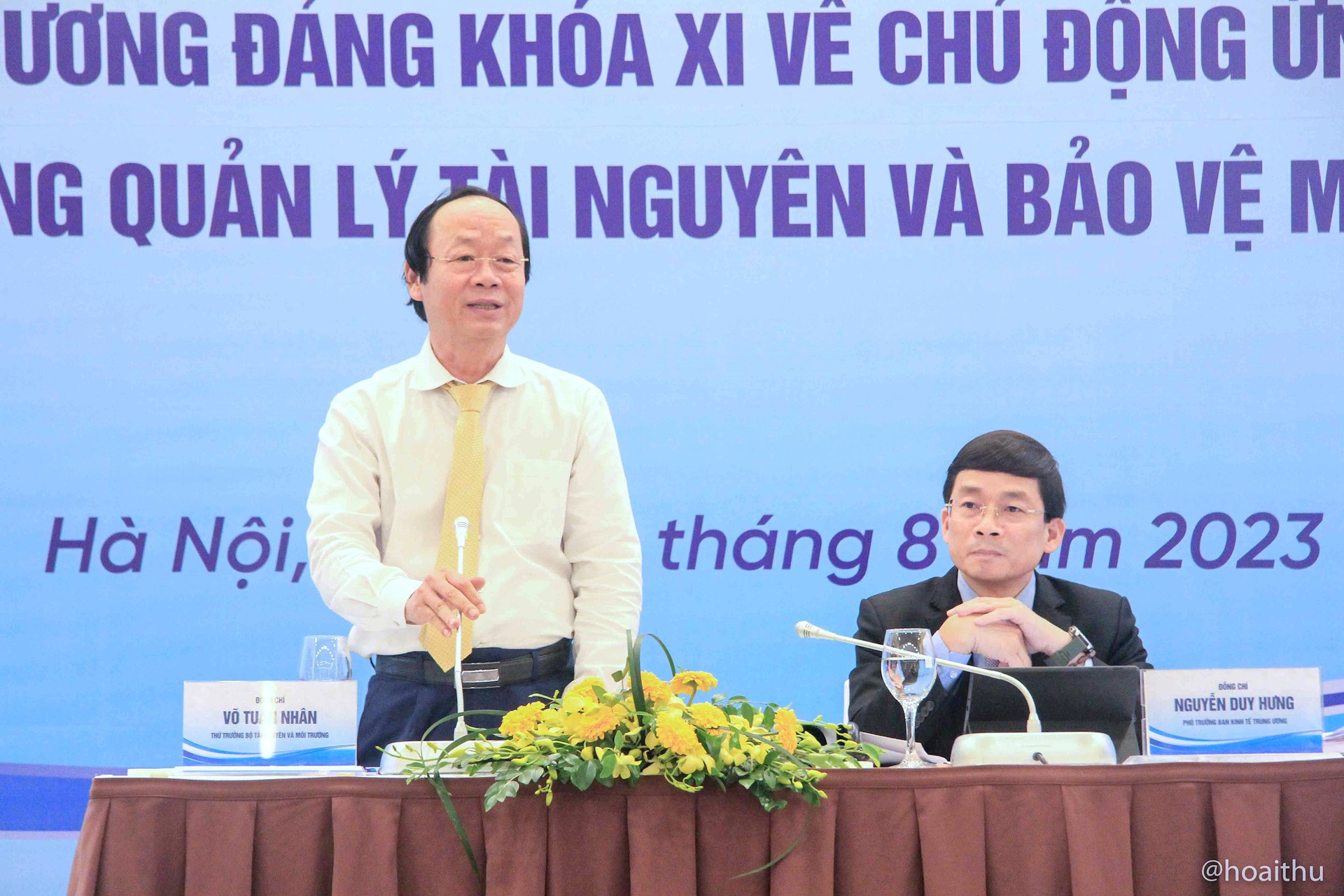
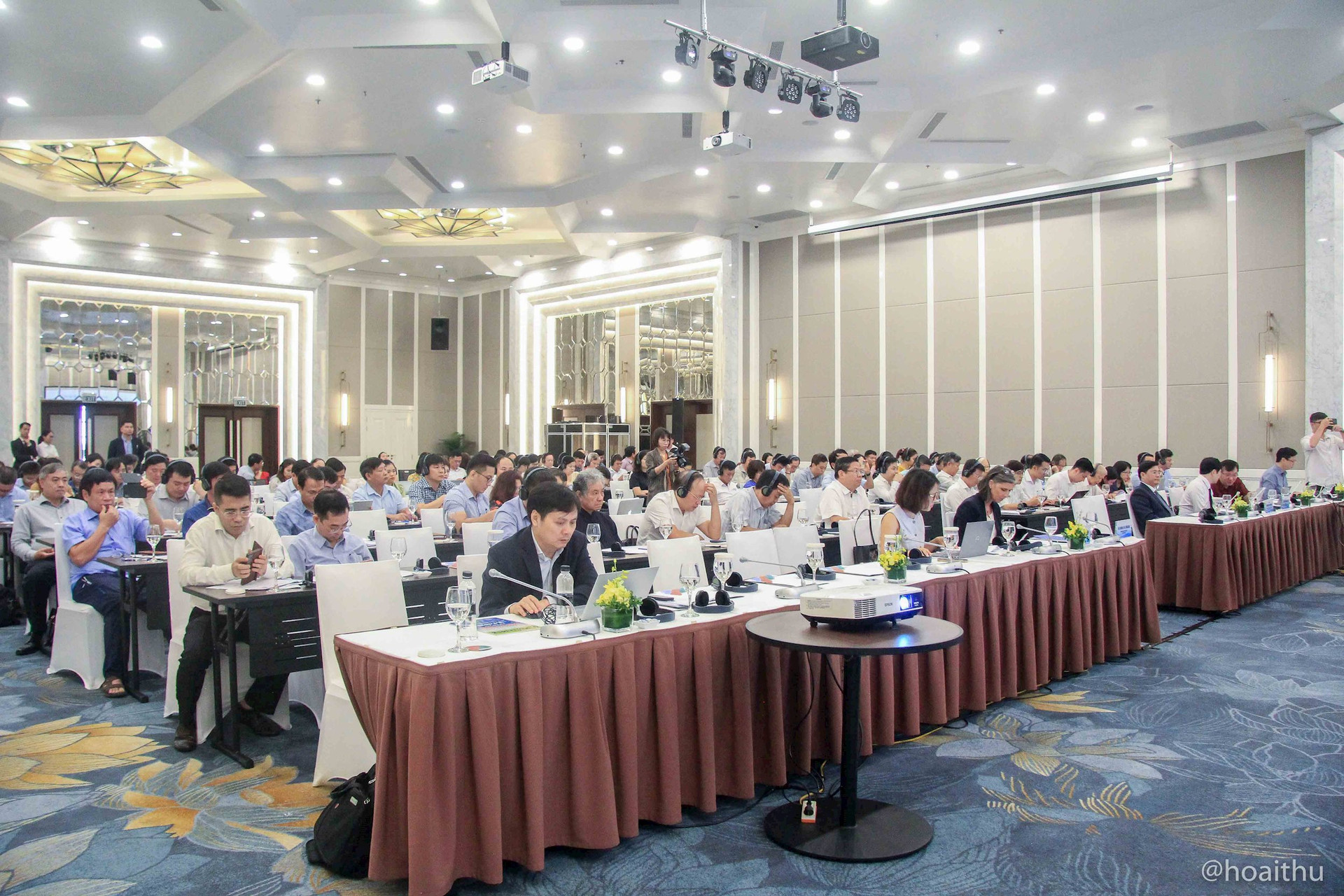
Ngày 9/8, tại Hà Nội, Ban chỉ đạo Tổng kết Nghị quyết số 24-NQ/TW (Ban chỉ đạo) đã tổ chức Hội thảo khu vực miền Bắc tổng kết Nghị quyết số 24-NQ/TW của Ban chấp hành Trung ương Đảng khóa XI về chủ động ứng phó với biến đổi khí hậu, tăng cường quản lý tài nguyên và bảo vệ môi trường.
Ông Nguyễn Duy Hưng, Phó Trưởng ban Kinh tế Trung ương – Phó trưởng Ban chỉ đạo và Thứ trưởng Bộ Tài nguyên và Môi trường Võ Tuấn Nhân đã chủ trì Hội thảo.
Thứ trưởng Bộ Tài nguyên và Môi trường Võ Tuấn Nhân phát biểu tại hội thảo
Tham dự có ông Nguyễn Tuấn Anh, Phó Chủ nhiệm Ủy ban Khoa học, Công nghệ và Môi trường của Quốc hội; bà Ramla Al Khalidi, Trưởng Đại diện thường trú của Chương trình Phát triển Liên hợp quốc tại Việt Nam; ông Miachael Siegner, đại diện Viện Hanns Seidel Foundation; cùng hơn 100 đại biểu đến từ các Bộ/ngành, các tổ chức quốc tế, 25 tỉnh/thành khu vực miền Bắc, các Viện nghiên cứu, các chuyên gia và nhà khoa học.
Nghị quyết số 24-NQ/TW của Ban Chấp hành Trung ương được ban hành ngày 3/6/2013 tại Hội nghị lần thứ 7 khóa XI. Nghị quyết đã đề ra những quyết sách lớn của Đảng trong ứng phó với biến đổi khí hậu (BĐKH), quản lý tài nguyên và bảo vệ môi trường ở nước ta. Sau 10 năm thực hiện, Ban cán sự đảng Bộ TN&MT được giao chủ trì, chuẩn bị trình Bộ Chính trị Đề án Tổng kết 10 năm thực hiện Nghị quyết 24-NQ/TW. Quá trình tổng kết đã được triển khai sâu rộng từ các Đảng ủy, Đảng đoàn, Ban cán sự đảng ở Trung ương đến các Tỉnh ủy, Thành ủy ở các địa phương.
Phát biểu tại hội thảo, Phó Trưởng Ban Kinh tế Trung ương Nguyễn Duy Hưng cho biết: Nghị quyết 24 là căn cứ chính trị đặc biệt quan trọng, đưa ra các chủ trương đường lối của Đảng một cách toàn diện, đồng bộ trong các lĩnh vực theo 3 nhóm chủ đề: ứng phó biến đổi khí hậu, quản lý tài nguyên, bảo vệ môi trường.
TTO – Khoảng 40% dân số thế giới sống ven biển và có nguy cơ bị bão tố, sóng thần tấn công. Một vũ khí hữu ích để chống đỡ bão tố và sóng thần chính là rừng ngập mặn.
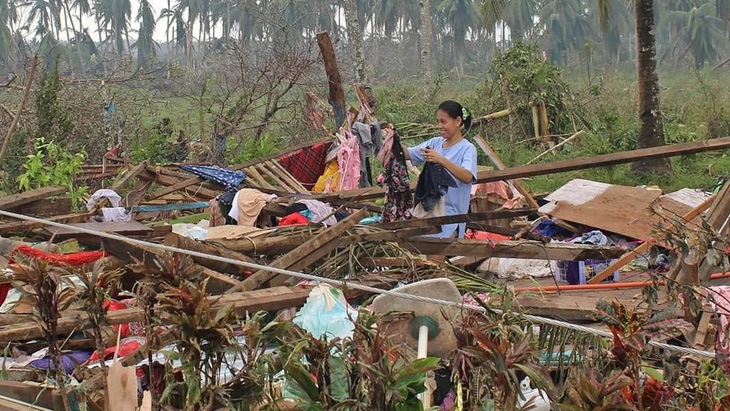
Siêu bão Odette tàn phá thị trấn Del Carmen vào tháng 12-2021 – Ảnh: AFP
Rừng ngập mặn không chỉ ngăn sạt lở mà còn trở thành tấm khiên hóa giải tác động của sóng bão. 1km rừng ngập mặn có thể giảm 70% sức mạnh sóng thần và trữ bốn lần khí carbon hơn rừng nhiệt đới. – CHƯƠNG TRÌNH PHÁT TRIỂN CỦA LIÊN HIỆP QUỐC
Sống sót sau cuồng phong bão táp
Thị trấn nhỏ Del Carmen tọa lạc trên đảo Siargao (tỉnh Surigao del Norte) ở miền nam Philippines. Với dân số hơn 20.000 người, mỗi năm thị trấn đón tiếp hơn 200.000 du khách.
Ngoài du lịch, người dân còn sống nhờ nông nghiệp và đánh cá. Do vị trí đầu sóng ngọn gió nhìn ra Thái Bình Dương, thị trấn thường xuyên đương đầu với bão tố, triều cường, nước biển dâng.
Trung tuần tháng 12-2021, siêu bão Odette (tên quốc tế là bão Rai) đổ bộ lên đảo Siargao với cường độ bão cấp 5 theo thang bão Saffir-Simpson. Trời mưa dữ dội. Sức gió lên tới 195km/h. Cuồng phong tàn phá mọi thứ.
Escalating construction costs, the rise of solar and wind power, and mounting public opposition have led to a precipitous decrease in massive new hydropower projects. Experts say the world has hit “peak dams,” which conservationists hail as good news for riverine ecosystems.
Numerous recently published reports reflect this planet-altering fact. One study, conducted by scholars at the United Nations University’s Institute for Water, Environment and Health, found that construction of large dams globally fell from a late-1970s peak of about 1,500 a year to around 50 a year in 2020. “There will not be another ‘dam revolution’ to match the scale of the high-intensity dam construction experienced in the early to middle 20th century,” the 2021 study concluded.
Data compiled by the International Renewable Energy Agency (IRENA), an intergovernmental organization that promotes renewable energy, including hydropower, show that in the 21st century, newly installed hydropower capacity peaked in 2013 at 45,000 megawatts a year and then dropped every year but one through 2021, when it reached only 18,900 megawatts. Similarly, investments in new hydropower dropped from a peak of $26 billion in 2017 to an estimated $8 billion in 2022, according to IRENA.
Dam building in China declined sharply around 2015 and has stagnated ever since.
Dự án Forest Symphony (thuộc chương trình Hạnh phúc Xanh do Quỹ Sống bền vững triển khai) tiếp tục thực hiện chiến dịch “Trồng rừng vững đất” năm 2023. Với thông điệp “một cây khỏe, triệu người vui”, chiến dịch kêu gọi cộng đồng chung tay trồng thêm 10ha rừng mới (tương đương 44.000 cây) tại tỉnh Sóc Trăng trong năm nay và cùng nhau hướng đến mục tiêu phủ xanh 50ha rừng ngập mặn trong năm năm.
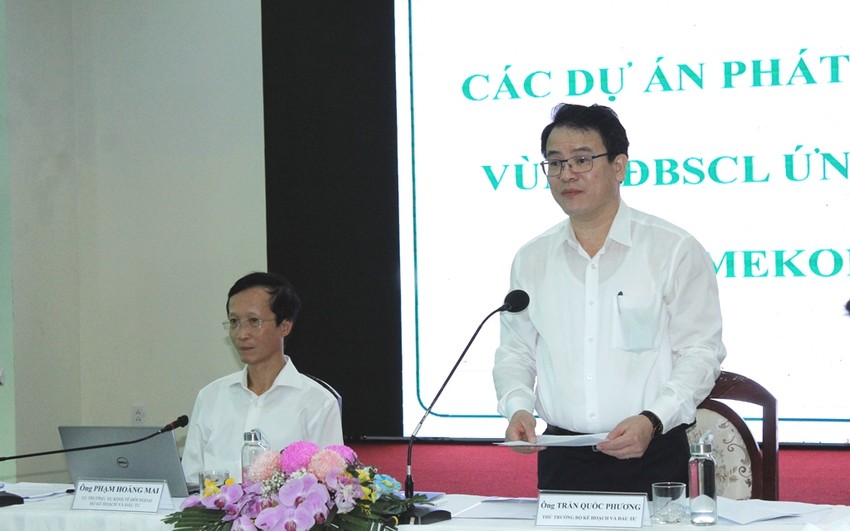
(PLO)- Họp rà soát tiến độ 16 dự án phát triển bền vững vùng ĐBSCL ứng phó với biến đổi khí hậu (Mekong DPO), Bộ KH&ĐT mong các dự án này sẽ được phê duyệt đề xuất trong quý III này.
Ngày 15-7, tại TP Cần Thơ, Bộ KH&ĐT chủ trì hội nghị với 13 tỉnh, thành vùng đồng bằng sông Cửu Long (ĐBSCL) và bộ, ngành liên quan để rà soát, thúc đẩy tiến độ các dự án phát triển bền vững vùng ĐBSCL ứng phó với biến đổi khí hậu (Mekong DPO), gồm 16 dự án.
Thứ trưởng Bộ KH&ĐT Trần Quốc Phương cho biết 3 tháng qua, tiến độ chuẩn bị các dự án Mekong DPO đã có những chuyển biến tích cực.
Cụ thể, đề xuất dự án của Bộ GTVT đã được Thủ tướng phê duyệt đề xuất. Nhiều đề xuất dự án đã được các địa phương điều chỉnh, bổ sung, hoàn thiện căn cứ góp ý của các cơ quan có liên quan và gửi lại Bộ KH&ĐT, Bộ Tài chính.
Enormous water diversion projects spark concern across region
Water is released from the Xiaolangdi Reservoir Dam on the Yellow River in a sand-discharging operation. July 2022, Luoyang, China. (Footage via Getty Images)
Drought in China dried up parts of the Yangtze river last year – but the largest water transfer apparatus ever built still drew from it to supply Beijing’s needs.
More than a billion cubic meters flowed through the colossal South-to-North Water Diversion Project in 2022. It traveled from a reservoir in central China to millions of households in the capital 1,200 kilometers away. The journey, via underground tunnels and canals that cross the Yellow River, roughly equaled the distance between Amsterdam and Rome.
The movement highlights the scale of China’s measures to shore up water security – and the profound potential effects these have on neighboring countries.
Many of Asia’s transboundary rivers originate in the Indo-Tibetan plateau in China. They flow into 18 downstream nations such as India, Kazakhstan, Bangladesh and Vietnam, delivering water to a quarter of the world’s population.
That alone makes the world’s second most populous nation an upstream superpower with enormous influence over irrigation of much of the continent. Projects such as building dams and hydropower plants potentially fuel existing regional political tensions – and create new ones.
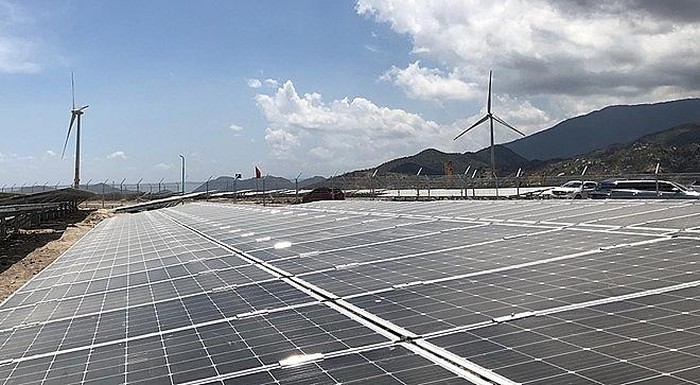
(Chinhphu.vn) – Phó Thủ tướng Trần Hồng Hà ký Quyết định số 893/QĐ-TTg phê duyệt Quy hoạch tổng thể về năng lượng quốc gia thời kỳ 2021 – 2030, tầm nhìn đến năm 2050.
27/07/2023 17:33
Quy hoạch tổng thể về năng lượng quốc gia thời kỳ 2021 – 2030, tầm nhìn đến năm 2050.
Mục tiêu tổng quát của Quy hoạch là bảo đảm vững chắc an ninh năng lượng quốc gia, đáp ứng yêu cầu phát triển kinh tế – xã hội và công nghiệp hóa, hiện đại hóa đất nước, bảo đảm quốc phòng, an ninh, nâng cao đời sống của nhân dân, bảo vệ môi trường sinh thái.
Thực hiện thành công chuyển đổi năng lượng góp phần quan trọng đáp ứng mục tiêu phát thải ròng bằng “0” vào năm 2050. Ngành năng lượng phát triển hài hoà giữa các phân ngành với hạ tầng đồng bộ và thông minh, đạt trình độ tiên tiến của khu vực, phù hợp với xu thế phát triển khoa học công nghệ của thế giới.
Phát triển ngành công nghiệp năng lượng độc lập tự chủ; hình thành hệ sinh thái công nghiệp năng lượng tổng thể dựa trên năng lượng tái tạo, năng lượng mới, hướng tới trở thành một trung tâm công nghiệp năng lượng sạch và xuất khẩu năng lượng tái tạo của khu vực.



 CVD
CVD 