Time for Vietnam to Resolve Its Renewable Energy Legal Quagmire

fulcrm.sg Published 19 Nov 2025 Le Hong Hiep

In Vietnam, an impasse over feed-in-tariffs for renewable energy producers threatens foreign investors’ confidence in government policies

Afestering legal crisis is threatening to derail Vietnam’s energy development plans. 173 solar and wind projects, representing about US$13 billion in investments, are stuck in limbo due to ongoing disputes regarding their feed-in-tariffs (FITs) – the guaranteed payments that the government would pay for their contribution to the power grid. This situation raises concerns about Vietnam’s business environment and the consistency of its economic policy. If Vietnam does not resolve these disputes promptly, the country could face significant legal, financial, and reputational repercussions.

Between 2018 and 2021, Vietnam experienced a significant boom in renewable energy, primarily fuelled by the government’s commitment to offer attractive 20-year FITs to investors for projects that began commercial operations before designated deadlines. However, in 2023, an investigation by the Government Inspectorate found that many of these projects had not obtained their Construction Completion Acceptance (CCA) certificates before their Commercial Operation Date (COD). Following the inspection, the Ministry of Industry and Trade issued a new circular, effective June 2023, stipulating that renewable energy projects must obtain a CCA certificate before being recognised for COD. This effectively disqualified the affected projects from receiving the original FIT rates.

Tiếp tục đọc “Time for Vietnam to Resolve Its Renewable Energy Legal Quagmire”

What happens when you say “Hello” to ChatGPT?

The Hidden Behemoth Behind Every AI Answer

Billions of daily queries are reshaping energy and infrastructure

IEEE.org

Such a simple query might seem trivial, but making it possible across billions of sessions requires immense scale. While OpenAI reveals little information about its operations, we’ve used the scraps we do have to estimate the impact of ChatGPT—and of the generative AI industry in general.

This article is part of The Scale Issue.

OpenAI’s actions also provide hints. As part of the United States’ Stargate Project, OpenAI will collaborate with other AI titans to build the largest data centers yet. And AI companies expect to need dozens of “Stargate-class” data centers to meet user demand.

ChatGPT uses 8.5 Wh/day per user in 2025, equal to running a 10W LED bulb for 1 hour.

Estimates of ChatGPT’s per-query energy consumption vary wildly. We used the figure of 0.34 watt-hours that OpenAI’s Sam Altman stated in a blog post without supporting evidence. It’s worth noting that some researchers say the smartest models can consume over 20 Wh for a complex query. We derived the number of queries per day from OpenAI’s usage statistics below. illustrations: Optics Lab

ChatGPT uses 850 MWh daily, equaling 14,000 EV charges for 2.5 billion global queries.

OpenAI says ChatGPT has 700 million weekly users and serves more than 2.5 billion queries per day. If an average query uses 0.34 Wh, that’s 850 megawatt-hours; enough to charge thousands of electric vehicles every day.

ChatGPT's 912B queries yearly need 310 GWh, equal to powering 29,000 US homes.

2.5 billion queries per day adds up to nearly 1 trillion queries each year—and ChatGPT could easily exceed that in 2025 if its user base continues to grow. One year’s energy consumption is roughly equivalent to powering 29,000 U.S homes for a year, nearly as many as in Jonesboro, Ark.

AI queries need 15 TWh/year, equal to two nuclear reactors\u2019 output.

Though massive, ChatGPT is just a slice of generative AI. Many companies use OpenAI models through the API, and competitors like Google’s Gemini and Anthropic’s Claude are growing. A report from Schneider Electric Sustainability Research Institute puts the overall power draw at 15 terawatt-hours. Using the report’s per-query energy consumption figure of 2.9 Wh, we arrive at 5.1 trillion queries per year.

Generative AI queries projected to reach 120 trillion annually by 2030.

AI optimists expect the average queries per day to jump dramatically in the next five years. Based on a Schneider Electric estimate of overall energy use in 2030, the world could then see as many as 329 billion prompts per day—that’s about 38 queries per day per person alive on planet Earth. (That’s assuming a global population of 8.6 billion in 2030, which is the latest estimate from the United Nations.) As unrealistic as that may sound, it’s made plausible by plans to build AI agents that work independently and interact with other AI agents.

Diagram of 38 Stargate-class data centers with racks of GPUs and construction needed.

The Schneider Electric report estimates that all generative AI queries consume 15 TWh in 2025 and will use 347 TWh by 2030; that leaves 332 TWh of energy—and compute power—that will need to come online to support AI growth. That implies the construction of dozens of data centers along the lines of the Stargate Project, which plans to build the first ever 1-gigawatt facilities. Each of these facilities will theoretically consume 8.76 TWh per year—so 38 of these new campuses will account for the 332 TWh of new energy required.

Graphic: 347 TWh requires 44 nuclear reactors with icons of cooling towers.

While estimates for AI energy use in 2030 vary, most predict a dramatic jump in consumption. The gain in energy consumption will be driven mostly by AI inference (the power used when interacting with a model) instead of AI training. This number could be much lower or much higher than the Schneider Electric estimate used here, depending on the success of AI agents that can work together—and consume energy—independent of human input.

Kết luận của Tổng Bí thư tại buổi làm việc với Viện Năng lượng Nguyên tử Việt Nam

Nangluongvietnam.vn 10:08 | 17/09/2025

 – Văn phòng Ban Chấp hành Trung ương Đảng vừa có Thông báo số 321-TB/VPTW, ngày 13/9/2025, về Kết luận của Tổng Bí thư Tô Lâm tại buổi làm việc với Viện Năng lượng Nguyên tử Việt Nam (ngày 4/9/2025). Dưới đây là nguyên văn Thông báo Kết luận của Tổng Bí thư.

Ngày 4/9/2025, Tổng Bí thư Tô Lâm đã làm việc với Viện Năng lượng Nguyên tử Việt Nam (VINATOM) tại trụ sở của Viện.

Tham dự buổi làm việc có Thủ tướng Chính phủ Phạm Minh Chính; các Uỷ viên Bộ Chính trị: Nguyễn Duy Ngọc – Chủ nhiệm Uỷ ban Kiểm tra Trung ương, Phó Trưởng Ban Chỉ đạo Trung ương về phát triển khoa học, công nghệ, đổi mới sáng tạo và chuyển đổi số; Lương Tam Quang – Bộ trưởng Bộ Công an; Lê Minh Hoan – Uỷ viên Trung ương Đảng, Phó Chủ tịch Quốc hội.

Tiếp tục đọc “Kết luận của Tổng Bí thư tại buổi làm việc với Viện Năng lượng Nguyên tử Việt Nam”

Ai gánh món nợ gần 45 nghìn tỷ của EVN?

Vietnamnet.vn Thứ Hai, 18/08/2025  Tư Giang

Kiến nghị của Tập đoàn Điện lực Việt Nam (EVN) về việc cho phép đưa khoản lỗ lũy kế gần 45.000 tỷ đồng vào giá bán lẻ điện bình quân đang làm dấy lên nhiều tranh luận.

Cũng như nhiều lần trước khi tăng giá điện trước đây, xuất hiện câu hỏi: ai sẽ gánh rủi ro về giá điện – Nhà nước, doanh nghiệp hay người dân?

EVN và khoản lỗ 44.792 tỷ đồng

Trong giai đoạn 2022–2023, giá nhiên liệu thế giới leo thang vì bất ổn địa chính trị, chi phí mua điện tăng mạnh, khiến EVN lỗ khoảng 50.000 tỷ đồng. Dù đã cắt giảm chi phí, tái cơ cấu, đến cuối năm 2024, công ty mẹ EVN vẫn còn gánh khoản lỗ hơn 44.792 tỷ đồng. EVN cho rằng khoản lỗ này khiến vốn Nhà nước bị bào mòn, đi ngược nguyên tắc bảo toàn vốn đầu tư.

Tiếp tục đọc “Ai gánh món nợ gần 45 nghìn tỷ của EVN?”

Chuyển đổi xe xăng sang xe điện – Dục tốc bất đạt

  • Báo TTCT – Từ xe xăng sang xe điện: Thượng Hải cần tới 18 năm
  • Báo TTCT – Xe điện: Thí nghiệm, môi trường và thị trường
  • Báo VNE – Thách thức khi Hà Nội loại bỏ xe máy xăng

***

Từ xe xăng sang xe điện: Thượng Hải cần tới 18 năm

NGUYỄN THÀNH TRUNG – 27/07/2025 10:09 GMT+7

TTCTTrong kế hoạch chuyển đổi sang xe điện ở các đô thị lớn, nhìn ra thế giới, không ít bài học của các quốc gia đi trước có thể sẽ hữu ích cho Việt Nam.

Hiếm có nước nào chuyển đổi xe xăng sang xe điện nhanh và thành công như Trung Quốc. Ảnh: AFP

Theo kế hoạch từ ngày 1-7-2026, xe gắn máy chạy xăng dầu sẽ bị cấm lưu thông trong vành đai 1 ở thành phố Hà Nội. Từ ngày 1-1-2028, phạm vi hạn chế được mở rộng sang vành đai 2, bao gồm cấm xe máy và hạn chế xe ô tô cá nhân sử dụng nhiên liệu hóa thạch.

Nhìn ra thế giới, không ít bài học của các quốc gia đi trước có thể sẽ hữu ích cho Việt Nam.

Tiếp tục đọc “Chuyển đổi xe xăng sang xe điện – Dục tốc bất đạt”

Hòn đảo nhỏ lập kỷ lục dùng toàn bộ điện tái tạo 28 ngày liên tục

vietnamnet.vn

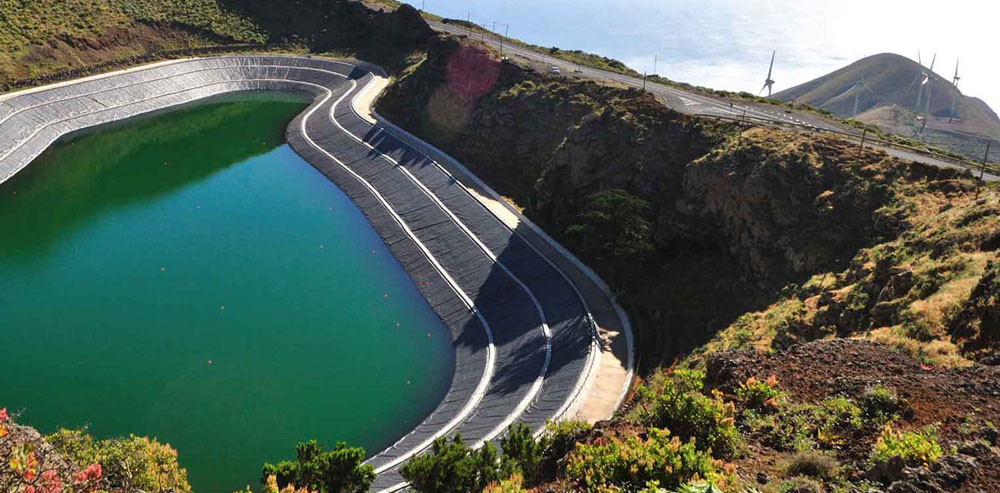
El Hierro, hòn đảo nhỏ trong quần đảo Canary của Tây Ban Nha, ghi dấu ấn lịch sử vào hè năm ngoái khi sử dụng toàn bộ nguồn năng lượng điện tái tạo trong 28 ngày liên tục.

El Hierro hiện là hòn đảo duy nhất trên thế giới đạt được kỳ tích như vậy. Theo báo cáo, hòn đảo 1,1 triệu năm tuổi này đang trên con đường đạt được khả năng tự cung tự cấp 100% năng lượng sạch nhờ vào gió và nước.

Nhà máy thủy điện Gorona del Viento là nguồn điện chính trên đảo, cung cấp năng lượng cho khoảng 11.000 cư dân. Nhà máy tận dụng địa hình của hòn đảo, kết hợp với những hồ nước ở những độ cao khác nhau tạo ra thủy điện và năng lượng gió từ ngoài khơi Đại Tây Dương.

Nhà máy điện hoạt động bằng cách khai thác năng lượng từ các tua-bin gió công nghiệp, được xây dựng trên sườn đồi. Vào những ngày gió lớn, công suất dư thừa từ trang trại gió 11,5 megawatt (MW), giúp bơm nước ngọt từ một hồ chứa nhỏ gần bến cảng của hòn đảo đến một lưu vực lớn hơn tại một miệng núi lửa cao khoảng 700m so với mực nước biển.

Tiếp tục đọc “Hòn đảo nhỏ lập kỷ lục dùng toàn bộ điện tái tạo 28 ngày liên tục”

China is Southeast Asia’s biggest public funder of clean energy with US$2.7bn in investment

eco-business.com

Indonesia received the most funding from China over the last decade, according to a new report by Zero Carbon Analytics. But uncertainties caused by US-driven tariff plans could see Southeast Asian countries retract green investments, said an analyst.

Cirata floating solar Indonesia
China’s PowerChina Huadong Engineering Corporation Limited constructed the Cirata floating solar plant in West Java, Indonesia. Image: PLN Nusantara

By Hannah Alcoseba Fernande June 4, 2025

China is the leading source of public clean energy investments in Southeast Asia over the last decade, channeling over US$ 2.7 billion into projects across the region, according to a report by international research organisation Zero Carbon Analytics.

Tiếp tục đọc “China is Southeast Asia’s biggest public funder of clean energy with US$2.7bn in investment”

Nước hồ thủy điện Hòa Bình liên tục xuống thấp đến mức kỷ lục

baotintuc.com Thứ Bảy, 07/06/2025 19:49 | 

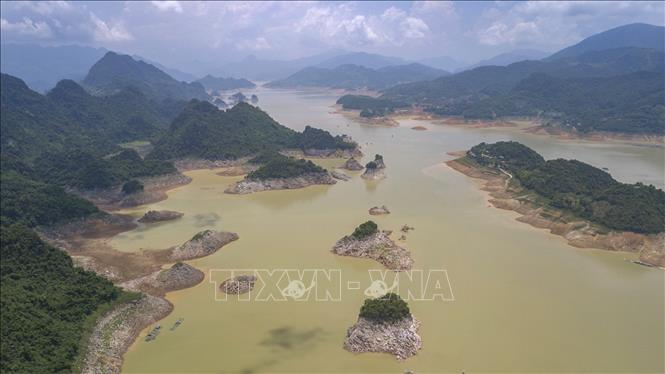
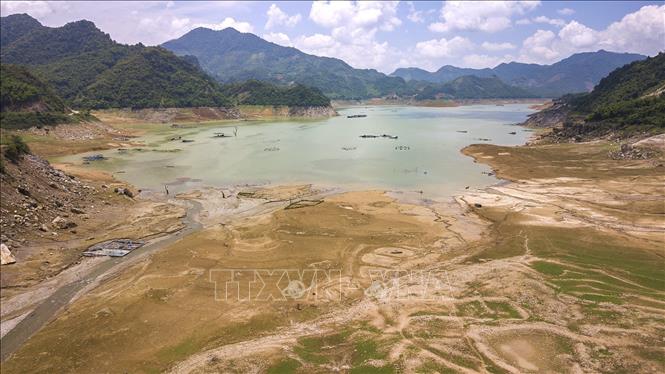
Từ tháng 3/2025, mực nước hồ thủy điện Hòa Bình liên tục xuống thấp đến mức kỷ lục, nhiều nơi trên lòng hồ cạn trơ đáy. Điều này đã ảnh hưởng nghiêm trọng đối với đời sống và sản xuất của người dân tại các xã ven hồ thuộc huyện Đà Bắc.

 Đặc biệt, các hộ nuôi cá lồng, các bến cảng, các điểm du lịch cộng đồng, du lịch nghỉ dưỡng ở các xã Vầy Nưa, Hiền Lương và Tiền Phong của huyện Đà Bắc đang bị ảnh hưởng nặng nề do môi trường nước thay đổi bất thường.

Chú thích ảnh
Hình ảnh lòng hồ Hòa Bình khi mực nước xuống thấp kỷ lục đã làm những dãy đảo đá trơ trọi xơ xác trên nền màu nước đục ngầu.
Chú thích ảnh
Nhiều năm qua, hồ Hòa Bình đang đối mặt với nguy cơ sụt giảm lượng nước nghiêm trọng vào mùa khô điều này đang gây ra nhiều tác động tiêu cực đến đời sống và sản xuất của người dân.

Tiếp tục đọc “Nước hồ thủy điện Hòa Bình liên tục xuống thấp đến mức kỷ lục”

What the blackout in Spain, Portugal says about renewables

DW.com Holly Young 05/20/2025May 20, 2025

The recent power outage in Spain and Portugal has raised questions about the stability of solar and wind power. It also reignited the debate around the phasing out of nuclear energy.

People walk down the street between flashlights and light reflections during the power outage that affects Spain on April 28, 2025

At 12:33 p.m. on April 28, swathes of Spain and parts of Portugal were plunged into darkness: trains were stranded, phone and internet coverage faltered, and ATMs stopped working.

The electricity blackout across the Iberian Peninsula is believed to be one of the worst in Europe’s history.

While most power was restored by the next morning, weeks later the investigation into the blackout is ongoing.

Last week, Spain’s energy minister Sara Aagesen said so far it was clear an abrupt loss of power at a substation in Granada, followed by failures in Badajoz and Seville, led to a loss of 2.2 gigawatts of electricity, but that the precise cause was unknown.

In the wait for answers, some have pointed the finger at Spain’s high reliance on renewables and reignited debates over plans to phase out nuclear power by 2035.

Are renewables to blame for the blackout?

Tiếp tục đọc “What the blackout in Spain, Portugal says about renewables”

Impact of Trump 2.0 on Southeast Asia’s Energy Geopolitics

Fulcrum.sg Published 3 Mar 2025 Mirza Sadaqat Huda

Trump’s rent-seeking foreign policy pertaining to energy and critical minerals will force Southeast Asian countries to do what they least desire: making a choice between China and the US.

The Trump administration’s insular and rent-seeking foreign policy will significantly alter the geopolitics of energy transition in Southeast Asia. This will manifest in two ways. First, the potential cessation of US involvement in the region’s energy sector will heighten fears of China’s dominance in energy infrastructure projects — including the ASEAN Power Grid (APG). Second, Trump’s intentions of using critical minerals as a bargaining chip for providing military assistance, if applied to the ASEAN region, will impact the regional vision for sustainable mineral development.

The shutting down of the United States Agency for International Development (USAID), an important player in the energy sector, will intensify existing fears of China’s dominance in electricity transmission and generation. As shown in Table 1, China provided approximately US$534 million in aid to the region’s energy sector in 2022, accounting for more than a quarter of the total share. Comparatively, the US provided only US$23.7 million, or 1 per cent of total energy-related aid to Southeast Asia. In addition, the China Southern Power Grid Company and State Grid Corporation of China own and operate significant portions of the national grids in Laos and the Philippines, respectively.

China Leads in Energy Aid

Table 1 Energy-related aid to Southeast Asia 2022 (excerpt) (USD, in %)

Donor Amount Contribution
China 534 million 26
ADB 368 million 18
Germany 274 million 13
Canada 231 million 11
South Korea 211 million 10
Japan 167 million 8
World Bank 90.0 million 4
EU Institutions 42.3 million 2
France 42.2 million 2
AIIB 34.8 million 2
United States 23.7 million 1

The table is modified from Lowy Institute’s (2024) Southeast Asia Aid Map.

Tiếp tục đọc “Impact of Trump 2.0 on Southeast Asia’s Energy Geopolitics”

Bhutan at the frontier of the climate crisis | 101 East Documentary

Al Jazeera English – 6-2-2025

The small Himalayan nation of Bhutan was the world’s first carbon-negative country.

With 70 % of its land covered by forests, it absorbs three times more carbon dioxide than it emits.

The environment is protected by the country’s constitution, and it is illegal to cut down trees without a permit.

Bhutan’s fast-flowing rivers provide the country with clean energy, making it almost entirely powered by hydroelectricity.

However, climate change and global warming are drying up rivers and threatening the country’s power supply.

In the high mountains, rising temperatures are causing glacial lakes to melt, increasing the risk of floods and other natural disasters.

101 visits Bhutan, a country at the frontier of climate change.

Swapping gas for batteries

USAID – Wednesday, December 18, 2024

Language

How USAID Supports Vietnam’s Journey to Net Zero

With over 70 million scooters and motorcycles on the roads in Vietnam, over 90% of households own one, two wheelers in Vietnam are ubiquitous. They form the backbone of the shipping sector, easily navigating the chaotic traffic and narrow back alleys to deliver goods. However, this contributes to air that is clouded with exhaust for Vietnamese citizens.

Emissions in Vietnam have multiplied fivefold in the last 20 years. As pollution worsened, the demand for electric vehicles (EV) skyrocketed. Vietnam is now home to the third largest two-wheeler EV market in the world—but the sector still lags far behind that of the gasoline-powered two wheelers. Improved government policies and a two wheel EV ecosystem are needed to support Vietnam’s EV shift, reduce emissions, and clean up its air.

Tiếp tục đọc “Swapping gas for batteries”

The world is reducing its reliance on fossil fuels – except for in three key sectors

theguardian.com

Dramatic changes in energy industry and EVs reducing fossil fuel use, but shipping, aviation and industry a long way from net zero

@olliemilmanFri 9 Feb 2024 12.00 GMT

Humanity has made some uneven progress in reducing our addiction to fossil fuels – but there remain three areas of our lives in which we are notably not on track to kick the habit over the next 30 years, according to a new analysis.

Record levels of investment in clean energy (solar has been called the cheapest source of electricity in history by the International Energy Agency) and a decline in coal-powered generation means less and less of the world’s power will come from fossil fuels between now and 2050, the analysis from Rhodium shows.

Similarly, the blossoming electric vehicle market is going to drive down emissions from cars and trucks, with global oil consumption for on-road vehicles set to drop by 50% over the next three decades, the forecast finds.

But even with these dramatic changes reshaping two of the world’s hungriest consumers of fossil fuels, emissions are still a long way from hitting net zero by 2050, as scientists say they must if dangerous global heating – spurring worsening heatwaves, floods, droughts and more – is to be avoided.https://interactive.guim.co.uk/uploader/embed/2024/02/archive-zip/giv-13425ZCBwhBxEyLin/

A major reason for this is the stubborn, ongoing carbon pollution from three areas: aviation, shipping and industry.

.https://interactive.guim.co.uk/uploader/embed/2024/02/archive-zip/giv-13425v3zDOTaHHQGz/

There is currently no widespread alternative to jet fuel or ship diesel, meaning steady or even rising fossil fuel use as developing countries’ economies grow. A range of industrial processes – such as cement-making and the production of plastic – will collectively fail to meaningfully cut carbon-intensive fuels by 2050, too.

“We’ve made a lot of progress in the last few years – wind and solar are really poster children of success and electric vehicles are at a turning point now,” said Hannah Pitt, associate director at Rhodium, which made the projections based on anticipated policies until 2050.

“That makes up a good chunk of emissions but there is much less progress in other sectors. With aviation and shipping, there’s just not as much innovation and no clear cost-effective alternatives to fossil fuels.

“And then we have industrial processes that make up a huge fraction of emissions and each require their own tools and innovations to bring that down, and emissions are staying stubbornly high.”

All told, global fossil fuel use will likely flatten or decline by mid-century before starting to grow again due to rising energy demand in various parts of the world, according to the report’s projections. Gas will lead the way, rising significantly in use even as oil and coal decline.https://interactive.guim.co.uk/uploader/embed/2024/02/archive-zip/giv-13425v3zDOTaHHQGz/

Pitt said we are still a long way from breaking our dependence on fossil fuels in everything from switching on a light at home, to driving a car, to getting an Amazon package delivered, to flying to a holiday destination.

“The success with renewables and EVs shows it can be done, but it really will take a lot of different policies and innovations. There’s no one solution,” said Pitt.

“This is a good reminder that climate change touches every piece of our economies, and it needs solutions to each of those areas. There is a lot of work to do.”

Vietnam’s forests have been cleared to supply the world’s timber industry (2 parts)

pulitzercenter.org – APRIL 4, 2023

Vietnam’s Forests Have Been Cleared To Supply the World’s Timber Industry

author image

In Central Vietnam’s factory, wood chips are accumulated in the rear of a three-wheel vehicle used to transport acacia wood to the processing machine. Image by Thanh Nguyen.

Vietnam is ranked the fifth-largest country in the world, second in Asia, and the largest in Southeast Asia in furniture exports. Vietnamese furniture has been directly exported to 120 countries and territories.

However, behind this impressive figure is that series of natural forests that have been cut down and quickly. These forest land areas have been occupied for growing short-term timber trees.

Deforestation makes natural disasters in Vietnam more severe, local people suffer the most from the consequences.

An investigation will be published on Mekong Eye.

Tiếp tục đọc “Vietnam’s forests have been cleared to supply the world’s timber industry (2 parts)”

The Unexpected Twist in Vietnam’s Renewable Energy Saga

fulcrumm.sg PUBLISHED 4 JAN 2024 LE HONG HIEP

Punishment awaits the senior officials who allowed Vietnam’s renewable energy quest to go off the rails, despite its apparent initial success. This policy crisis has the potential to affect other economic sectors if no clear end is in sight.

In late 2023, the Inspection Commission of the Central Committee of the Communist Party of Vietnam (CPV) found that Tran Tuan Anh, head of CPV’s Central Economic Commission, and Trinh Dinh Dung, former deputy prime minister, were among the senior government officials responsible for “shortcomings in the advisory and policy-making processes for the development of solar and wind power projects, as well as in the implementation of the amended Power Development Plan VII” (PDP7). The Commission therefore recommended disciplinary actions be taken against Anh, Dung and some other senior officials involved.

Anh served as the minister of industry and trade while Dung was deputy prime minister overseeing economic affairs, including the energy sector, from 2016 to 2021. During their tenure, Vietnam experienced a remarkable surge in renewable energy, with numerous solar and wind power projects completed in just three years. According to Vietnam Electricity (EVN), the state-owned utility company, this led to a significant increase in Vietnam’s renewable energy output, rising from a mere 997 GWh in 2018 to an impressive 37,865 GWh in 2022. Vietnam therefore emerged as Southeast Asia’s renewable energy leader, accounting for 69 per cent of the region’s solar and wind power generation by 2022.

Such successes, however, did not come without problems. Last April, an inspection by the Government Inspectorate revealed numerous violations in the licensing and certification of renewable energy projects. For example, the amended PDP7 outlined a goal of installing 850MW of solar power by 2020, increasing to 4,000MW by 2025. Similarly, the plan projected 800MW of wind power by 2020, with a target of 2,000MW by 2025. However, as of May 2023, the total installed capacity of wind, solar, and rooftop solar projects in Vietnam had already reached a staggering 21,839MW, greatly surpassing targets set in PDP7.

This sudden surge in renewable energy has caused a strain on the national power grid, particularly in the central region where most renewable energy projects are located. Moreover, during the same period, there was a lack of new traditional power plants constructed, which are necessary to provide a stable baseload for renewable energy sources that are more weather-dependent and thus less reliable. This has created significant safety concerns for the national power system. Consequently, EVN had to curtail the amount of power it purchased from renewable sources, resulting in substantial financial losses for project owners.

A main driver behind Vietnam’s rapid growth in renewable energy has been the implementation of high feed-in tariffs (FITs) for certified projects that began commercial operation before specific deadlines. For instance, solar farms that became operational by 30 June 2019 were eligible for a FIT of 9.35 US cents/kWh, while onshore and offshore wind farms that began commercial operation by 1 November 2021 received FITs of 8.5 US cents/kWh and 9.8 US cents/kWh, respectively. Meanwhile, the FIT for rooftop solar projects operated before 31 December 2020 is 8.38 US cents/kWh. These FITs are locked in for 20 years.

This sudden surge in renewable energy has caused a strain on the national power grid, particularly in the central region where most renewable energy projects are located.

These attractive FITs sparked fierce competition among local investors to build solar and wind projects but most of them had no track record in the energy sector. They mainly leveraged connections, often involving under-the-table payments, to secure project licenses, then relied heavily on bank financing or corporate bonds to fund project development. Due to the pandemic and cut-throat competition for equipment and contractors, 62 wind projects failed to start operation before the FIT deadlines. Unable to sell their output to EVN, these projects faced severe financial difficulties. Even projects that qualified for the FITs faced mounting issues. Aside from the curtailment imposed by EVN, the Government Inspectorate found violations in the certification of many projects, putting them at risk of disqualification from the FITs. Foreign investors acquiring projects from local investors may face potential losses if similar violations are found.

The situation also negatively impacts the state and the broader economy. Most FIT rates are higher than average electricity retail prices, meaning that the state and end-users are essentially subsidising renewable energy projects. These high FITs have contributed to EVN’s mounting accumulative losses over the past two years, reaching VND55 trillion (US$2.3 billion) by September 2023. The government therefore has had no choice but to allow EVN to raise electricity retail prices, putting upward pressure on inflation and undermining Vietnam’s competitiveness.

In light of these grave consequences, the government has been trying to contain the damage. For example, EVN stopped buying power from rooftop solar projects completed after 31 December 2020, leaving thousands of investors in limbo. Authorities have also conducted thorough inspections into most renewable energy projects. Projects found to have committed serious violations, such as lacking construction permits or failing to secure proper land usage purpose conversion and commercial operation certification, may have their power purchase agreements with EVN terminated.

Last month, EVN even proposed lowering the FITs for 38 projects but quickly withdrew the proposal after just one day. This sudden reversal may reflect the government’s struggle in finding a satisfactory solution. Being lenient will perpetuate losses for the state budget but a heavy-handed approach could cause extensive financial losses for investors, potentially affecting the banking system, given investors’ heavy reliance on bank financing. This could also negatively impact investors’ confidence in Vietnam’s investment climate and raise doubts about the country’s commitment to energy transition.

At present, there seems to be no straightforward solution. It is not clear yet how Vietnam will effectively address and learn from this situation for future policy decisions. However, it is inevitable that those responsible for this predicament will soon face serious consequences for what could potentially become one of the most significant policy mishaps in Vietnam’s recent history.

2024/2

Le Hong Hiep is a Senior Fellow and Coordinator of the Vietnam Studies Programme at ISEAS – Yusof Ishak Institute.