Năm 2025, được ghi nhận là một trong những năm đặc biệt, có diễn biến thiên tai cực đoan, đặt ra áp lực lớn đối với công tác chỉ đạo, điều hành. Tuy nhiên, nhờ cách làm mới, chuyển từ ứng phó sự vụ sang chiến lược dài hạn; lấy khoa học công nghệ, chuyển đổi số làm nền tảng, đã giúp giảm đáng kể tác hại do thiên tai gây ra.
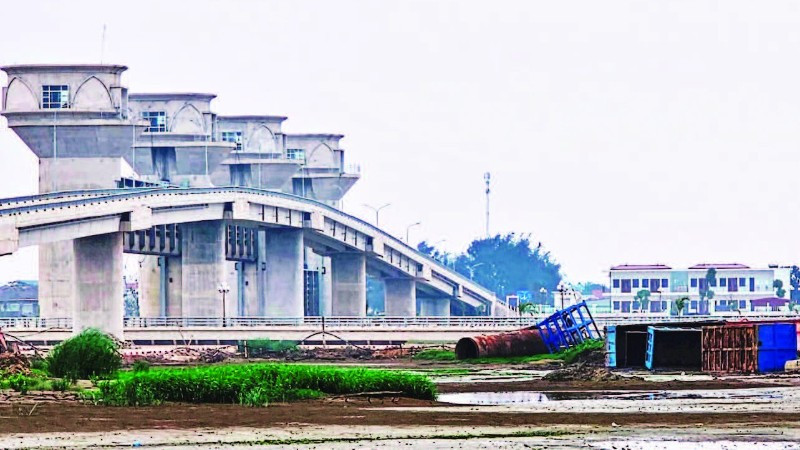
Đập ngăn mặn, trữ ngọt trên sông Lèn, phục vụ sản xuất, đời sống nhân dân các địa phương phía đông bắc tỉnh Thanh Hóa. (Ảnh: MAI LUẬN)
Theo Cục trưởng Cục Quản lý đê điều và Phòng, chống thiên tai (Bộ Nông nghiệp và Môi trường) Phạm Đức Luận: Tại Việt Nam, trong năm 2025, thiên tai đã gây ra những con số thiệt hại lớn, với 468 người chết và mất tích, 741 người bị thương, thiệt hại kinh tế ước tính gần 98.700 tỷ đồng. Đó không chỉ là tổn thất về vật chất, mà còn là những hệ lụy lâu dài đối với đời sống và sinh kế của hàng triệu người dân. Trong năm, đã chứng kiến những cơn bão chồng bão, mưa lớn vượt ngưỡng kỷ lục, sạt lở đất kinh hoàng xảy ra ở nhiều vùng, miền… Trong bối cảnh đó, song song với ứng phó, công tác phòng ngừa và kiểm soát rủi ro thiên tai được đặc biệt chú trọng. Cục Quản lý đê điều và Phòng, chống thiên tai đã tham mưu hoàn thiện cơ chế chỉ đạo phòng, chống thiên tai, không để gián đoạn trong giai đoạn cả nước kiện toàn tổ chức vận hành theo mô hình chính quyền địa phương 2 cấp.
Chủ tịch Hội thủy lợi Việt Nam cho biết trước đây khi ngành thủy lợi làm quy hoạch cho các lưu vực ở miền Trung, sông nào cũng có dung tích phòng lũ. Song khi thay đổi đầu mối quản lý, với việc xây dựng ồ ạt nhiều dự án thủy điện, các bộ ngành phối hợp không chặt chẽ, nên dung tích phòng lũ ở miền Trung gần như không có hoặc không đáng kể.
Nhật ký lũ trên cột nhà ông Nguyễn Văn Biên (82 tuổi) ở Hội An, Đà Nẵng, năm nay khắc thêm một dấu mốc mới – 2025, vượt tất cả năm lịch sử ông từng ghi dấu trước đó – 1964, 1999, 2007, và 2009.
Trận lũ Giáp Thìn diễn ra 61 năm trước vẫn là nỗi ám ảnh với ông Biên. Nước lũ ngập quá căn nhà cổ một tầng. Chàng thanh niên 20 tuổi cùng cha mẹ vác theo 3 kg gạo, gói vài bộ áo quần, bơi qua trú tạm ở căn nhà hai tầng đối diện. Họ thất thần nhìn dòng nước lũ nhấc bổng những căn nhà tranh, và cuốn trôi không ít phận người xấu số.
“Không có ngôi nhà hai tầng đó, chắc mình cũng giống họ”, ông nhớ lại.
Không ai thống kê số người tử nạn năm đó. Nhưng ông Biên chắc chắn nó gây thiệt hại hơn cả trận “đại hồng thuỷ” năm 1999, khiến 595 người chết và mất tích tại 10 tỉnh, thành, trong đó Quảng Nam (cũ) và Đà Nẵng là 110 người.
Ký ức từ những trận lũ lịch sử trở thành bài học cho nhiều thế hệ sống nơi tâm lũ như ông Biên. Khi tích lũy đủ tiền để sửa nhà năm 2018, ông ngẫm ngập phố cổ chưa năm nào quá 3 m, nên quyết định nâng sàn tầng hai cao hơn mặt đường 4 m, và cách mặt sông Hoài chừng 5 m. Đêm 30/10, nước lũ lên nhanh, ngập đến 2,5 m cột nhà, vượt cả mốc lũ năm 1964. Lúc ấy, ông lo sợ lịch sử lặp lại, phải tính đến phương án xấu nhất sẽ gọi cứu hộ thế nào.
May mắn, nước chưa lên tới tầng hai, nhưng ngập đến ngày thứ 5 mới rút, ít ngày sau lại lên lại. Trong hơn 10 ngày từ 22/10 đến 3/11, người dân Hội An chạy lũ ba lần. Toàn thành phố Đà Nẵng (sau sáp nhập) ghi nhận 15 người chết và 3 mất tích, thấp hơn nhiều con số năm 1999.
Southeast Asia is facing one of its wettest seasons in recent memory, with record-breaking rain and floods — and a powerful weather combo is driving it.
In the area you have selected (Vietnam) tsunami hazard is classified as medium according to the information that is currently available. This means that there is more than a 10% chance of a potentially-damaging tsunami occurring in the next 50 years. Based on this information, the impact of tsunami should be considered in different phases of the project for any activities located near the coast. Project planning decisions, project design, and construction methods should take into account the level tsunami hazard. Further detailed information should be obtained to adequately account for the level of hazard.
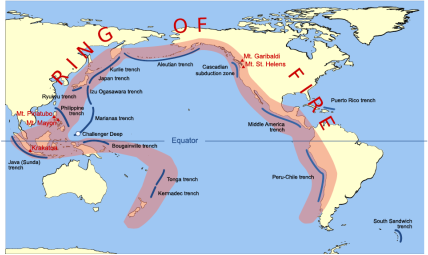
Pacific “Ring of Fire” (enlarged graphic). Source: Adapted from U.S. Geological SurveyDownload Image
Climate change impact: The areas at risk of tsunami will increase as global mean sea level rises. According to the IPCC (2013), global mean sea level rise depends on a variety of factors, and estimates for 2100 range from ~20 cm to nearly 1 m. However, regional changes in sea level are difficult to predict. Projects in low-lying coastal areas such as deltas, or in island states should be designed to be robust to projected increases in global sea level.
Ngay sau bão số 15, cơn bão Senyar được đánh giá là cơn bão có một không hai trong lịch sử hơn 180 năm qua.
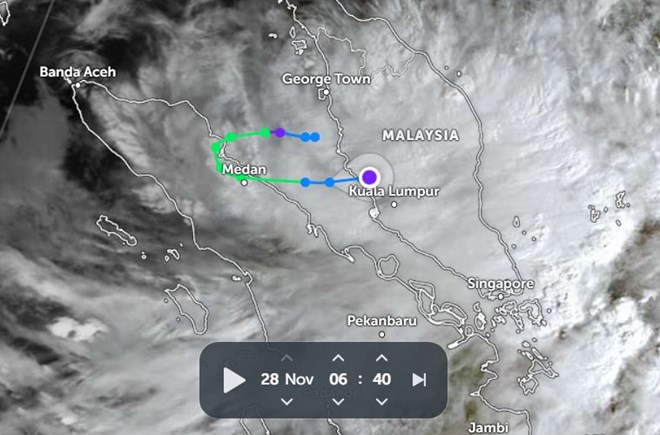
Sau bão số 15, xuất hiện bão Senya. Trong ảnh là đường đi của bão lúc 6h40 ngày 28.11. Ảnh: Zoom Earth
Bão Senyar – hiện tượng khí tượng được đánh giá là “chưa từng có tiền lệ” trên eo biển Malacca – không chỉ lập hàng loạt kỷ lục hiếm gặp mà còn để lại một vùng áp thấp có khả năng tác động trực tiếp đến Biển Đông trong vài ngày tới.
Dưới ảnh hưởng của bão số 15, vùng áp thấp này có thể bị hút ngược ra Biển Đông và mạnh lên trở lại thành áp thấp nhiệt đới vào khoảng ngày 29.11.
Nếu hình thành xoáy thuận mới, đây sẽ là xoáy thuận nhiệt đới thứ 21 trên Biển Đông năm 2025, vượt kỷ lục 20 cơn của năm 2017, qua đó lập kỷ lục lịch sử về số xoáy thuận hoạt động trong 1 năm.
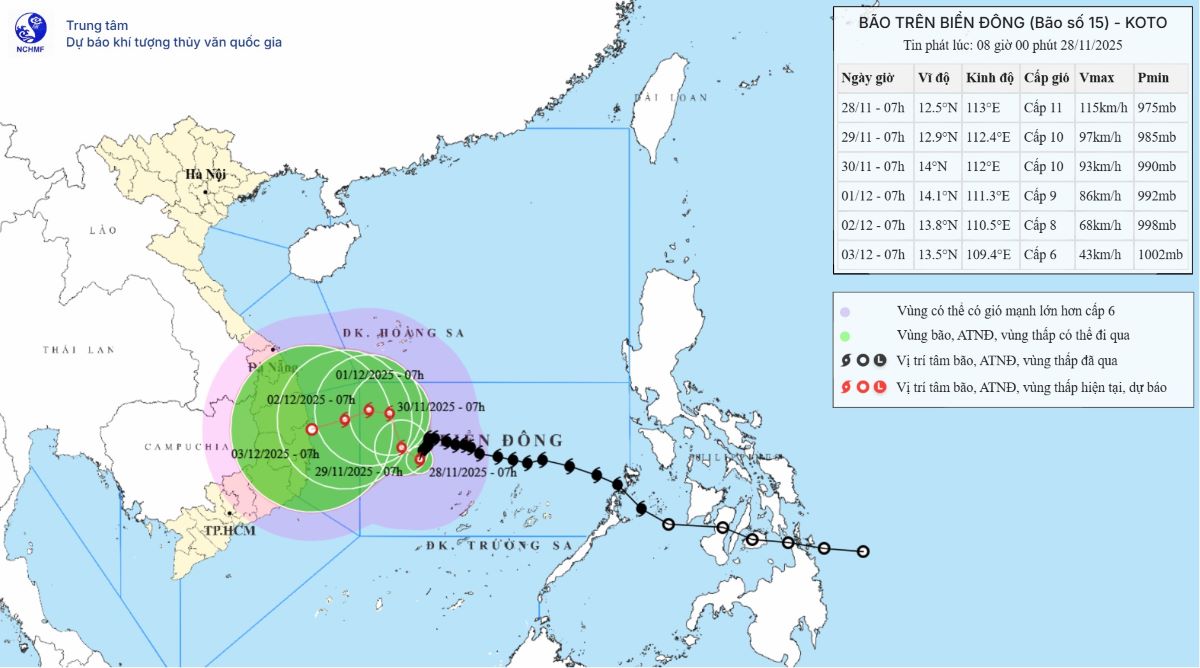
Vị trí và dự báo hướng đi của bão số 15 lúc 8h sáng 28.11. Ảnh: Trung tâm Dự báo khí tượng thủy văn quốc gia Việt Nam
Senyar: Cơn bão “có một không hai” trong lịch sử khí tượng
Bão Senyar tan sau khi đổ bộ vào bờ Tây Malaysia rạng sáng 28.11, nhưng ngay lập tức được ghi nhận là một trong những hiện tượng khí quyển đặc biệt nhất khu vực Ấn Độ Dương – Tây Bắc Thái Bình Dương.
Theo tin bão của Cục Khí tượng Malaysia (MetMalaysia), bão đổ bộ khoảng 1h sáng 28.11 vào giữa Banting và Port Dickson, sau đó suy yếu khi đi vào Pahang, nhưng vẫn gây mưa từng đợt tại nhiều bang do hoàn lưu thấp còn sót lại.
Lý do Senyar gây chấn động giới khí tượng nằm ở hàng loạt kỷ lục mới được xác lập:
Cơn bão nhiệt đới đầu tiên trong lịch sử hơn 180 năm qua hình thành ngay trên eo biển Malacca, khu vực vốn được xem là không có bão. Kể từ năm 1842, chưa từng có xoáy thuận nhiệt đới mạnh nào được ghi nhận tại vị trí Senyar xuất hiện.
Cơn bão đầu tiên được Cục Khí tượng Ấn Độ (IMD) đặt tên tại vị trí này.
Cơn bão có vĩ độ hình thành thấp thứ hai kể từ khi IMD đặt tên bão năm 2004.
Cơn bão đầu tiên đổ bộ Sumatra (Indonesia) trong tháng 11 trong hơn 1 thế kỷ dữ liệu.
Cơn bão có sức gió mạnh nhất khi đổ bộ Sumatra, vượt qua bão Vamei (2001).
Cơn bão có tên đầu tiên đổ bộ Indonesia trong lưu vực Bắc Ấn Độ Dương.
Cơn bão thứ hai trong lịch sử đổ bộ phần lãnh thổ Indonesia thuộc Bắc Bán Cầu.
Cơn bão đầu tiên đổ bộ Indonesia trong tháng 11 kể từ bão 03S (2001).
MetMalaysia nhấn mạnh rằng Malaysia vốn nằm ngoài đường đi của bão nhiệt đới, do đó sự xuất hiện của Senyar là “cực kỳ bất thường”. Cơ quan này tiếp tục phát cảnh báo mưa lớn đến hết ngày 29.11 và theo dõi sát diễn biến của hoàn lưu còn lại.
Vùng áp thấp sau Senyar: Nguy cơ tái sinh thành xoáy thuận trên Biển Đông
Điều đáng lo ngại hơn nằm ở vùng áp thấp hình thành sau khi bão Senyar tan. Vùng xoáy yếu này đang tồn tại phía Tây Malaysia và hiện di chuyển chậm.
Dưới tác động của cơn bão số 15 (lúc 7h sáng 28.11 ở vào khoảng 12,5 độ vĩ bắc, 113,0 độ kinh đông, cách đảo Song Tử Tây khoảng 190km về phía tây bắc), vùng áp thấp có thể bị hút sang phía đông, một hiện tượng lần đầu tiên được ghi nhận giữa hai lưu vực khí hậu Ấn Độ Dương và Tây Bắc Thái Bình Dương.
Các mô hình dự báo bão cho thấy, khi tiến ra Biển Đông, vùng áp thấp này có thể mạnh lên thành áp thấp nhiệt đới trong khoảng ngày 29.11. Nếu điều này xảy ra, đây sẽ là cơn áp thấp hoặc bão thứ 21 hoạt động ở Biển Đông năm nay – con số chưa từng có.
Chính xác từ năm 1945, hơn 70 năm qua, số liệu về các cơn bão và áp thấp nhiệt đới đổ bộ vào đất liền thuộc địa phận Việt Nam đã được ghi nhận khá đầy đủ bởi NOAA (Tổng cục Hải Dương và Khí quyển Hoa Kỳ). Những ghi nhận này cho phép chúng ta nhìn lại các cơn bão từ quá khứ tới hiện tại về thời điểm đổ bộ, tốc độ gió, mức độ cảnh báo, vị trí trung tâm bão, và những thông tin thú vị khác. Nhóm nghiên cứu của P-GIS đã tiến hành phân tích 459 cơn bão đổ bộ vào đất liền Việt Nam trong 70 năm qua. Những dữ liệu này được chiết xuất từ cơ sở dữ liệu đường đi của bão khu vực Châu Á – Thái Bình Dương với hơn 227 nghìn cơn bão trong cùng thời gian.
Đường đi của các cơn bão đổ bộ vào Biển Đông và Việt Nam trong 70 năm qua
Tiêu chí và phạm vi đánh giá được P-GIS thống nhất như sau:
Some fear the world is fast approaching temperature levels where professional risk managers will no longer be able to offer cover for financial services.
Günther Thallinger, a board member at Allianz, one of the world’s biggest insurers, says the climate crisis could make adaptation economically unviable.
Zurich Insurance Group, meanwhile, said alongside a recent research paper assessing climate resilience that the outlook looks “alarmingly bleak.”
A firefighting helicopter flies near as a home burns from the Mountain Fire on November 6, 2024 in Camarillo, California.
David Mcnew | Getty Images News | Getty Images
Top insurers fear the climate crisis could soon outpace industry solutions, effectively threatening to make entire regions around the world uninsurable.
Günther Thallinger, a board member at Allianz, one of the world’s biggest insurers, recently outlined how the world is fast approaching temperature levels where insurers will no longer be able to offer cover for financial services, such as mortgages and investments.
In practice, this scenario implies some may face difficulty being able to afford home insurance cover, which is typically a prerequisite for getting a mortgage.
In a LinkedIn post published in late March, Thallinger made the case for rapid decarbonization, pointing out that entire asset classes were “degrading in real time” as extreme weather events take their toll. Perhaps most strikingly of all, he warned the worsening climate crisis appears to be on track to destroy capitalism.
Insurance, which is regarded as the invisible lubricant of the global economy, has a unique role to play in addressing climate-related risks. As professional risk managers, insurers routinely allow investors to take on calculated risks, protecting individuals and businesses against financial losses.
Thallinger, who is responsible for investment management and sustainability at Allianz, told CNBC that approximately two-thirds of economic losses from natural catastrophes are currently uninsured, indicating a “major societal problem.”
Massive glacial bursts are becoming more frequent and more dangerous due to the climate crisis, experts tell Mukesh Pokhrel, warning: ‘They are not going to stop anytime soon’
Wednesday 16 July 2025 12:25 BST
Up until a disastrous day earlier this month, more than 150 trucks crossed daily over a border bridge between Nepal and China. Known by locals as the Miteri Pul (Friendship Bridge), the Rasuwagadhi crossing served as the main trade route between the two countries, with over $50m of goods passing over it last year alone.
But on the 8 July, floodwaters tore through northern Nepal’s Rasuwa district, sweeping away parts of this critical border highway. According to the National Disaster Risk Reduction & Management Authority, seven people lost their lives, and 20 were missing, including six Chinese nationals.
The Chinese nationals were working on a 200 megawatt hydro project in the Tirsuli River, which was also damaged by the floods. Initial estimates suggest Nepal has sustained losses of over $100m in the incident as a whole.
– 83.4 million people were living in internal displacement at the end of 2024, more than twice as many as only six years ago (2018).
– 90 per cent had fled conflict and violence. In Sudan, conflict led to 11.6 million internally displaced people (IDPs), the most ever for one country. Nearly the entire population of the Gaza Strip remained displaced at the end of the year.
– Disasters triggered nearly twice as many movements in 2024 as the annual average over the past decade. The 11 million disaster displacements in the United States were the most ever recorded for a single country.
GENEVA, Switzerland – The number of internally displaced people (IDPs) reached 83.4 million at the end of 2024, the highest figure ever recorded, according to the Global Report on Internal Displacement 2025 published today by the Internal Displacement Monitoring Centre (IDMC). This is equivalent to the population of Germany, and more than double the number from just six years ago.
“Internal displacement is where conflict, poverty and climate collide, hitting the most vulnerable the hardest,” said Alexandra Bilak, IDMC director. “These latest numbers prove that internal displacement is not just a humanitarian crisis; it’s a clear development and political challenge that requires far more attention than it currently receives.”
Cuốn “Sổ tay hệ thống cảnh báo sớm hiểm họa tự nhiên tại Việt Nam” nhằm cung cấp một cách khoa học và hệ thống thông tin về các loại hình hiểm họa tự nhiên (bao gồm: hiểm họa khí tượng – thủy văn và hiểm họa địa vật lý), đồng thời đề cập việc quản lý rủi ro thảm họa tiếp cận thông qua “Hệ thống cảnh báo sớm đa thiên tai tại Việt Nam”, qua đó góp phần nâng cao hiểu biết và nhận thức của đội ngũ cán bộ Hội, các cấp chính quyền, các tổ chức cộng đồng và nhân dân về thiên tai, thảm họa
Từ thực tế ảnh hưởng của cơn bão Yagi, đã đến lúc, chúng ta cần suy nghĩ đến việc cần thiết phải bảo vệ các khu vực miền núi trước thiên tai theo một cách khác.
Trận lũ phá tan hoang khu vực bản trung tâm của xã Hồ Bốn, Mù Cang Chải, Yên Bái vào tháng 8 năm 2023. Ảnh: Việt Cường
In Metro Manila, Philippines, an increase in devastating fires has put volunteer firefighters at the front lines, battling blazes in some of the city’s most vulnerable neighbourhoods. These are the lives of Danie Cabillo, Joanna Mandap (who runs a female dominant fire brigade), and Marvin Bustamante – and their families, as we unmask the emotional complexities and high-risk conditions associated with their heroic roles. From facing life-or-death scenarios that test their limits, these are stories of sacrifice, courage, and triumph – where every second is a battle against time.
The first Earth Day was in 1970. What’s changed since? Our population has doubled. We’re emitting 2.6 times more CO2. Sea levels have risen 12 centimeters





 CVD
CVD 