Climate Finance in Southeast Asia: Trends and Opportunities

fulcrum.sg

PUBLISHED 11 FEB 2022

Qiu Jiahui

MELINDA MARTINUS|QIU JIAHUI

The Covid-19 crisis has stalled the delivery of much-needed climate finance to developing countries. For Southeast Asia, a region frequently cited as being one of the most vulnerable regions threatened by climate change, the broken promise of climate finance is highly disappointing.

INTRODUCTION

Climate finance has been one of the most contentious issues in global climate politics. At the 2009 United Nations Climate Change Conference (COP 15), developed countries committed to mobilising by 2020 US$100 billion climate finance annually to assist vulnerable countries. The pledge has been key to building trust between states to limit global warming to well below 2 degrees Celsius, as specified in the Paris Agreement.

Tiếp tục đọc “Climate Finance in Southeast Asia: Trends and Opportunities”

How Peatlands Can Advance Climate Action in Southeast Asia

WRI.org

Topic Forest and Landscape Restoration Region Asia

Southeast Asia is home to over 54% of the world’s peatlands — tropical wetlands which have a major role to play in climate action. But they are being deforested rapidly: Around 25 million hectares of tropical peatlands in Southeast Asia have been deforested and drained over the last three decades alone, and only 6% of peatlands remain untouched.

This is a major blow to the region. These terrestrial wetland ecosystems help regulate water flow by capturing rainwater during the wet season and slowly releasing it during the dry season. They are also key habitats for endangered and rare species of both plants and animals, and are essential for the livelihoods of local communities.

Additionally, they are an important carbon store in the global carbon cycle; more than three-fourths of global peat carbon stocks (52 Gigatons) are stored in Southeast Asian peatlands. Their destruction warrants global attention.

Tiếp tục đọc “How Peatlands Can Advance Climate Action in Southeast Asia”

‘Acidifying, warming seas affecting seafood supplies’

scidev.net

Japanese amberjack

A school of Japanese amberjack at the north-east coast of Taiwan. A new report warns that ocean warming and acidification are affecting the behaviour of fish. Copyright: Vincent C. Chen(CC BY SA 4.0)

Speed read

  • Warming, acidification of the oceans changing shoal behaviour in fish
  • Shoal behaviour key to fish survival and seafood supplies
  • Fish species moving towards the poles, changing temperate ecosystems

By: Claudia Caruana

[NEW YORK] Ocean acidification and global warming are interfering with the way fish interact in groups, posing a threat to their survival which could affect seafood supplies, researchers say.

Marine ecosystems worldwide have shown an increased dominance of warm water species following seawater temperature rise, with parallel changes in the species composition of fish catches since the 1970s, according to a report by the Intergovernmental Panel on Climate Change (IPCC).

Tiếp tục đọc “‘Acidifying, warming seas affecting seafood supplies’”

Giải pháp giúp nông dân ĐBSCL thoát khỏi ‘vòng kim cô’ cây lúa

Vân Phong – 16/12/2021 19:32

(KTSG Online) – GS Võ Tòng Xuân – Hiệu trưởng Trường Đại học Nam Cần Thơ – cho rằng việc giao chỉ tiêu GDP từ chính quyền cấp trên xuống cấp dưới với đơn vị là tấn lúa khiến nhiều nông dân ở khu vực đồng bằng sông Cửu Long (ĐBSCL) phải trồng lúa mà không được làm những việc khác, từ đó dần mắc trong “vòng kim cô” mang tên cây lúa.

Quan điểm này được GS Võ Tòng Xuân nêu tại tọa đàm “Đồng bằng sông Cửu Long: Thuận thiên bền vững, vượt đại dịch” sáng 16-12.

Nông dân ĐBSCL đang thu hoạch lúa. Ảnh: Trung Chánh

Tiếp tục đọc “Giải pháp giúp nông dân ĐBSCL thoát khỏi ‘vòng kim cô’ cây lúa”

Responding to Coronavirus: Low-carbon Investments Can Help Economies Recover

WRI.org

By Helen Mountford 

Windmills running in the background of a dense forest.
Cover Image by: Camila Fernández León

The COVID-19 pandemic is first and foremost a human tragedy, infecting more than 120,000 and killing more than 4,200 people as of March 12, 2020. The loss of human life is heart-breaking and set to continue ticking upwards.

The virus has also hit society like a global tsunami, disrupting travel, cutting off communities, shuttering factories and shaking up economic markets. The global manufacturing sector has suffered its worst contraction since the 2009 recession. Goldman Sachs forecasts zero earnings growth for U.S. companies, while airlines and cruise lines are reeling as people opt to stay home.

Unsurprisingly this major global disruption is leading to lower energy demand, which in turn reduces global greenhouse gas emissions. China’s industrial output has dropped 15% to 40% since the crisis began, leading to a roughly 25% drop in emissions over that same period.

Tiếp tục đọc “Responding to Coronavirus: Low-carbon Investments Can Help Economies Recover”

Tài chính khí hậu: Tiền đi đâu, về đâu?

LÊ MY 18/11/2021 15:10 GMT+7

TTCT Cách đây 12 năm, các nước giàu có cùng đưa ra một cam kết tốt đẹp để giúp các nước nghèo thích ứng với biến đổi khí hậu, cùng con số long lanh 100 tỉ USD viện trợ mỗi năm. Lời hứa hoa mỹ hóa ra lại thành quả táo bất hòa, mà hệ quả của nó tới nay vẫn còn.

 Một ngôi nhà tạm bị hư hại ở Bangladesh, trong khu vực ven biển đang bị đe dọa bởi xói mòn và xâm nhập mặn. Ảnh: Getty

“Chúng tôi không xin tiền bố thí, chúng tôi yêu cầu tiền bồi thường cho những thiệt hại gây ra bởi thói hoang phí của các quốc gia phát triển. Những kẻ đã thải ra lượng khí thải carbon này, gây ra các hiện tượng khí hậu, phải trả tiền” – Molwyn Joseph, bộ trưởng môi trường của quốc đảo Antigua và Barbuda, nói với báo Financial Times ngày 3-11.

Tiếp tục đọc “Tài chính khí hậu: Tiền đi đâu, về đâu?”

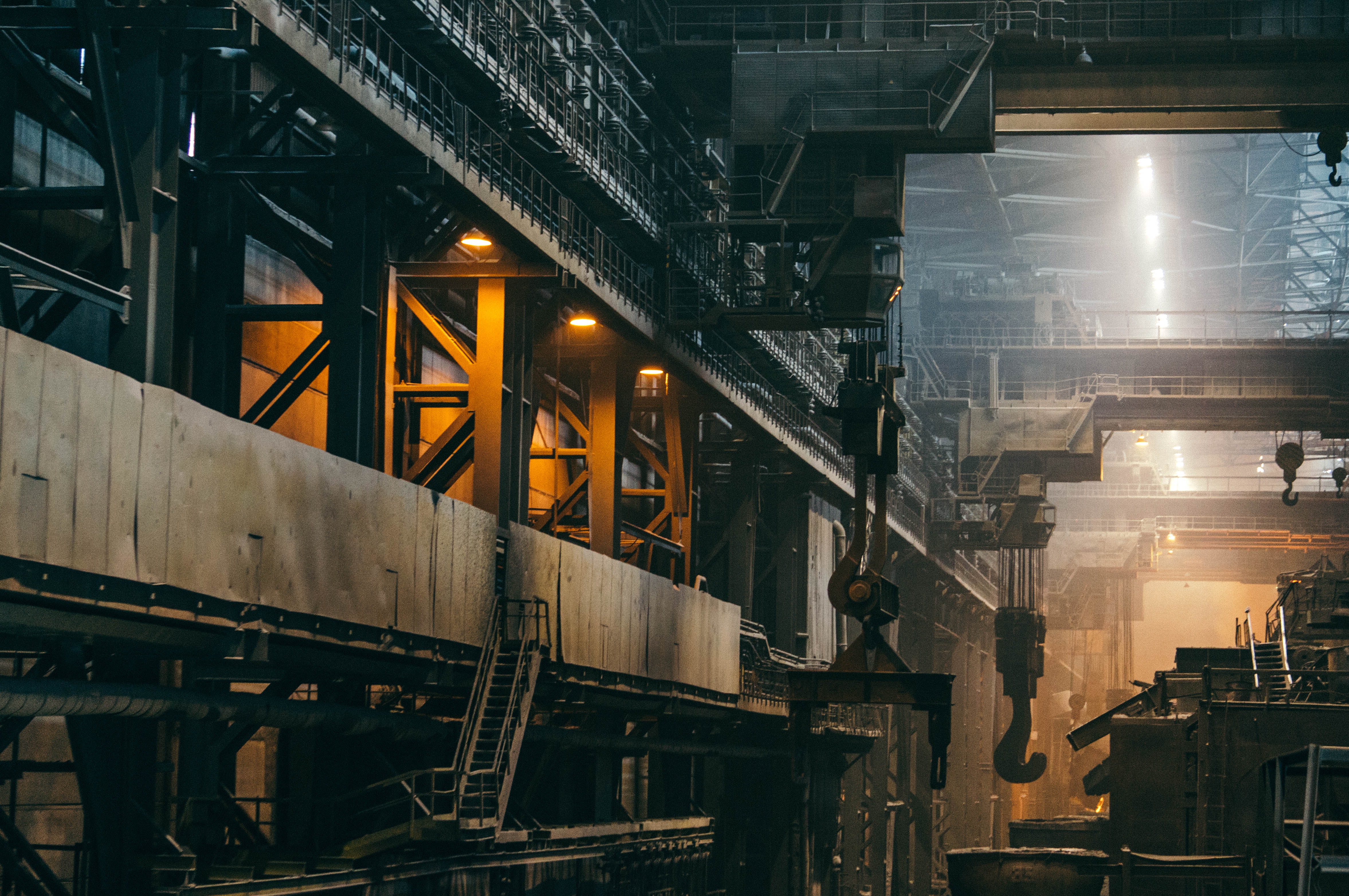
Is it possible to make steel without fossil fuels?

Greenbiz.com

By Josh Owens

September 24, 2020

Steel production
Steel production is an incredibly energy intensive process.

Steel is arguably the single most important resource when it comes to constructing infrastructure.

From roads to railways and the skeleton of most buildings, it is at the very heart of nearly every city on earth. Within those cities, the cars on the road, the cutlery in our kitchens and the furniture in our offices all rely on steel production. Steel production, however, is an incredibly energy intensive process, and the vast majority of this energy comes from fossil fuels.

Globally, steel is responsible for 7-9 percent of all direct emissions from fossil fuels. Most of those emissions come from the burning of coal, which makes up 89 percent of the energy input for blast furnace-basic oxygen furnace (BF-BOF) and 11 percent of the energy input of electric arc furnaces (EAF). Of those two types of steel production, BF-BOF is far more common, making up 75 percent of steel that is produced compared to 25 percent from EAF. Globally, steel is responsible for 7-9% of all direct emissions from fossil fuels.

Tiếp tục đọc “Is it possible to make steel without fossil fuels?”

China, India, other big coal users missing from COP26 phase-out deal

reuters.com

By Kate Abnett and Elizabeth Piper

Summary

  • Poland, Indonesia sign up to phase out coal
  • China, India, U.S., Australia not included
  • COP26 mini deals aim to add up to big climate win

GLASGOW, Nov 4 (Reuters) – Indonesia, Poland, Vietnam and other nations pledged on Thursday to phase out use of coal-fired power and stop building plants, but their deal at the COP26 climate summit failed to win support from China, India and other top coal consumers.

Britain has said one of its main aims for the United Nations summit is “consigning coal power to history”. The deal saw 23 nations making new commitments, a move the president of the COP26 summit, Alok Sharma, said put the end of coal “in sight”.https://17f4ab6d574607e1c63d4da62d7a4666.safeframe.googlesyndication.com/safeframe/1-0-38/html/container.html

“Today I think we can say that the end of coal is in sight,” Sharma told the Glasgow meeting.

Tiếp tục đọc “China, India, other big coal users missing from COP26 phase-out deal”

More than 40 countries agree to phase out coal-fired power

theguardian.com

Critics say pledge to end use of dirtiest fuel source in 2030s and 40s does not go far enough

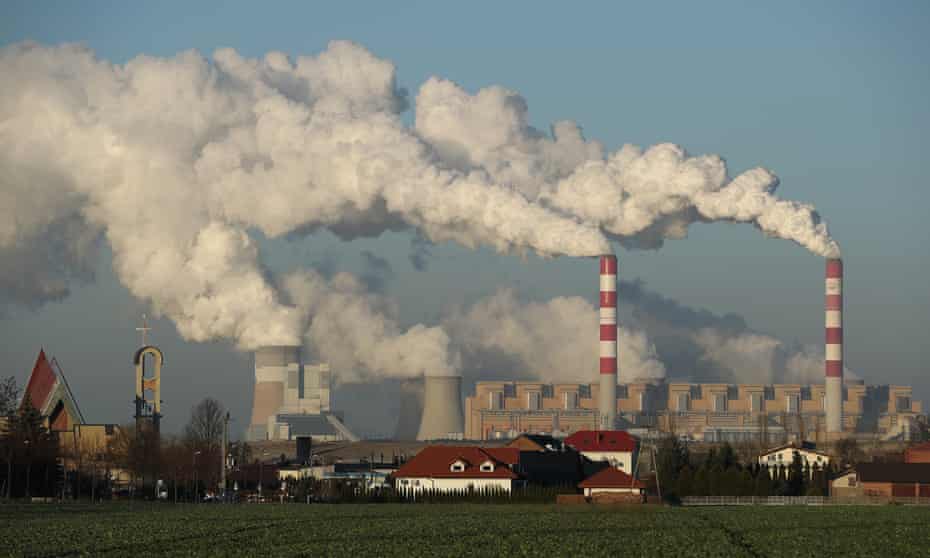
Steam and smoke rise from Bełchatów power station in Poland.
Steam and smoke rise from Bełchatów power station in Poland, one of the countries that has agreed to phase out coal-fired power. Photograph: Sean Gallup/Getty Images

Fiona HarveyJillian Ambrose and Patrick Greenfield in GlasgowWed 3 Nov 2021 22.30 GMT

More than 40 countries have agreed to phase out their use of coal-fired power, the dirtiest fuel source, in a boost to UK hopes of a deal to “keep 1.5C alive”, from the Cop26 climate summit.

Major coal-using countries, including Canada, Poland, South Korea, Ukraine, Indonesia and Vietnam, will phase out their use of coal for electricity generation, with the bigger economies doing so in the 2030s, and smaller economies doing so in the 2040s.

Tiếp tục đọc “More than 40 countries agree to phase out coal-fired power”

Chống biến đổi khí hậu: Tiền ở đâu ra mà hứa hẹn nhiều thế?

XÊ NHO 18/11/2021 6:10 GMT+7

TTCTXung quanh Hội nghị COP26, có chuyện dễ hiểu nhầm phổ biến về các mức cam kết khổng lồ và chuyện “thủ phạm” phát thải.

 Ảnh: un.org

 Đọc tin về COP26 rất dễ bị ấn tượng mạnh bởi mẩu tin hàng trăm ngân hàng, quỹ đầu tư, hãng bảo hiểm có trong tay đến 130.000 tỉ đôla cam kết đặt ưu tiên cho các hoạt động vì khí hậu. Ai cũng nghĩ với những khoản tiền khổng lồ như thế, việc hỗ trợ các nước chuyển đổi từ năng lượng hóa thạch như than đá sang các nguồn năng lượng tái tạo là dễ như trở bàn tay. 

Tiếp tục đọc “Chống biến đổi khí hậu: Tiền ở đâu ra mà hứa hẹn nhiều thế?”

COP26 và tương lai năng lượng của Việt Nam

Nguyễn Đăng Anh Thi – 14/11/2021 15:56

(KTSG) – Hội nghị Biến đổi khí hậu của Liên hiệp quốc (COP26) tại Glasgow, Vương quốc Anh đang khép lại với những cam kết hành động mạnh mẽ của các lãnh đạo toàn cầu về cắt giảm phát thải, đầu tư tài chính và hỗ trợ chuyển dịch năng lượng. Tương lai năng lượng và mô hình tăng trưởng của Việt Nam sẽ như thế nào sau COP26?

Cam kết “đột phá” của Việt Nam tại COP26

Từ những ngày đầu COP26, những thông tin tích cực từ nước Anh cho thấy sẽ có bước đột phá của Việt Nam về cam kết giảm phát thải khí nhà kính, chung tay cùng nhân loại làm giảm sự nóng lên toàn cầu.

Ngày 1-11, trong bài phát biểu tại COP26, Thủ tướng Phạm Minh Chính đã đưa ra một tuyên bố lịch sử: “Mặc dù là nước đang phát triển mới chỉ bắt đầu tiến trình công nghiệp hóa trong hơn ba thập kỷ qua, Việt Nam là một nước có lợi thế về năng lượng tái tạo, sẽ xây dựng và triển khai các biện pháp giảm phát thải khí nhà kính mạnh mẽ bằng nguồn lực của mình, cùng với sự hợp tác và hỗ trợ của cộng đồng quốc tế, nhất là các nước phát triển, cả về tài chính và chuyển giao công nghệ, trong đó có thực hiện các cơ chế theo Thỏa thuận Paris, để đạt mức phát thải ròng bằng 0” vào năm 2050”.

Tiếp tục đọc “COP26 và tương lai năng lượng của Việt Nam”

State of Climate Action 2021: Systems Transformations Required to Limit Global Warming to 1.5°C

WRI.org

Transformations must occur across every sector at far faster pace than recent trends to keep the window open to achieve the Paris Agreement’s goal to limit global warming to 1.5°C, according to this Systems Change Lab report authored by the UN High-Level Climate Champions, Climate Action Tracker, ClimateWorks Foundation, Bezos Earth Fund and World Resources Institute.

Limiting global warming to 1.5°C requires far-reaching transformations across power generation, buildings, industry, transport, land use, coastal zone management, and agriculture, as well as the immediate scale-up of technological carbon removal and climate finance. This report translates these transitions into 40 targets for 2030 and 2050, with measurable indicators.

Tiếp tục đọc “State of Climate Action 2021: Systems Transformations Required to Limit Global Warming to 1.5°C”

Climate Benefits of Iconic Protected Forests Are Under Threat

WRI.org

Last month, nine philanthropic organizations pledged $5 billion to protect 30% of the planet over the next decade — the largest commitment of private funding ever made for the conservation of nature. These organizations intend to address three interrelated global crises — the climate crisis, the biodiversity crisis and the public health crisis — while working with Indigenous Peoples and local communities. 

The pledges arrive not a moment too soon. A new report released on October 28, 2021 by WRI, the United Nations Educational, Scientific and Cultural Organization (UNESCO), and the International Union for Conservation of Nature (IUCN) reveals that despite substantial carbon stored and absorbed by forests across UNESCO’s World Heritage network, the climate benefits of even some of the world’s most iconic and protected places are under pressure from land use and climate change. Continued reliance on these forests’ carbon sinks and storage depends upon stronger protection measures.

Tiếp tục đọc “Climate Benefits of Iconic Protected Forests Are Under Threat”

Top Takeaways from the UN World Leaders Summit at COP26

Dawn over Glasgow COP26

CommentaryTopic Climate

WRI.org

The first two days of the UN Climate Conference (COP26) featured over 100 high-level announcements and speeches during the “World Leaders Summit,” helping set the tone for the two-week long conference. The gathering of world leaders was immediately preceded by the G20 Summit held in Rome.

While several important announcements were made that will help to move the needle on global climate action, negotiators will still have their work cut out for them as they try to pave the way for more progress in the coming days.

Here’s a look at the developments so far.

Limited Progress at G20 Summit in Rome

In a final communique, G20 nations recognized the importance of strengthening national climate action this decade, and committed to revisit and further enhance their 2030 emission reduction targets where necessary. This should pave the way for negotiators at COP26 to agree that major emitters will further strengthen their 2030 targets within the next couple of years to keep the Paris Agreement’s 1.5 degrees C (2.7 degrees F) temperature goal within reach.  

Tiếp tục đọc “Top Takeaways from the UN World Leaders Summit at COP26”

COP26: Những tranh đấu bên ngoài bàn đàm phán của người trẻ

XUÂN TÙNG 7/11/2021 23:10 GMT+7

TTCTNhững lời kêu gọi “bảo vệ môi trường cho thế hệ con em chúng ta” vẫn thường được các chính trị gia trên toàn thế giới nhấn mạnh, song những người trẻ, vốn có nhiều thứ để mất hơn bất kỳ ai khác trong cơn khủng hoảng biến đổi khí hậu, lại không nhìn thấy mình trong các quyết sách được nhà cầm quyền đưa ra.

 Các đại biểu tại Hội nghị COP26 vào hôm 1-11. Ảnh: Reuters

Tiếp tục đọc “COP26: Những tranh đấu bên ngoài bàn đàm phán của người trẻ”