The global stocktake is a critical turning point in our battle against the escalating climate crisis – a moment to take a long, hard look at the state of our planet and chart a better course for the future.
“The global stocktake is an ambition exercise. It’s an accountability exercise. It’s an acceleration exercise,” said UN Climate Change Executive Secretary Simon Stiell. “It’s an exercise that is intended to make sure every Party is holding up their end of the bargain, knows where they need to go next and how rapidly they need to move to fulfill the goals of the Paris Agreement.”
Prime Minister of the UK, Margaret Thatcher studied chemistry at Oxford, and worked briefly as a research chemist before becoming a barrister
Mr President, it gives me great pleasure to return to the Podium of this assembly. When I last spoke here four years ago, on the 40th anniversary of the United Nations, the message that I and others like me gave was one of encouragement to the organisation to play the great role allotted to it.
Of all the challenges faced by the world community in those four years, one has grown clearer than any other in both urgency and importance—I refer to the threat to our global environment. I shall take the opportunity of addressing the general assembly to speak on that subject alone.
Climate finance refers to financial resources and instruments that are used to support action on climate change.
Examples of climate finance include grants provided by multilateral funds, market-based and concessional loans from financial institutions, sovereign green bonds issued by national governments, and resources mobilized through carbon trading and carbon taxes.
Investments in climate action can yield results that dramatically outweigh the upfront costs, yet significant funding gap remains to advance the green transition and enhance resilience in developing countries.
Current financial flows for climate change mitigation need to increase at least three times, if we are to limit global warming to 2°C or below and achieve the Paris Agreement targets.
UNDP is one of the major entities supporting countries access and effectively use climate finance.
Climate security refers to the impacts of the climate crisis on peace and security, particularly in fragile and conflict-affected settings.
Climate change impacts can trigger competition over natural resources, insecure livelihoods, and mass displacement, increasing the risk of social tensions and instability.
Investing in climate action can be an opportunity to strengthen cooperation, rebuild trust, and mend the social fabric in fragile and conflict-affected settings.
UNDP supports countries in fragile settings align responses to climate change with conflict prevention and peacebuilding actions.
What is climate security?
Climate security refers to the impacts of the climate crisis on peace and security, particularly in fragile and conflict-affected settings.
Climate change can exacerbate food, water, and livelihood insecurity, with cascading effects such as increased competition over natural resources, social disruptions, and displacement. This can lead to increased tensions, conflict, and instability in a country or region.
In settings where conflict already exists, the impacts of climate change can aggravate or prolong it, making it more difficult to reach and sustain peace. Conflict can in turn disrupt or impede climate action, either through the active destruction of energy, water, and agricultural assets, or by delaying or blocking mitigation and adaptation interventions.
Why does climate security matter?
By 2030, climate change could push up to 130 million more people into poverty, not only exacerbating existing vulnerabilities, including food and water insecurity, but also socio-economic fragility, and political grievances. Within already fragile settings, these impacts can escalate security challenges and worsen instability. Furthermore, climate-related security risks often affect women at disproportionate levels.
The plaintiffs, who range in age from 5 to 22, successfully argued that the state’s refusal to consider climate change impacts before supporting fossil fuel development violated their right a clean environment under the Montana state constitution. Their lawsuit was the first to reach trial among several similar cases in the United States and is likely to bolster other actions seeking to use the legal system to force action on curbing emissions.
VHO- Có thể nói, hòn Trống Mái nằm ngay ở ví trí trung tâm của di sản thiên nhiên thế giới vịnh Hạ Long, là biểu tưởng du lịch nổi tiếng trong nước và quốc tế của vùng đất này, nhưng lại đang phải đối mặt với nhiều nguy cơ đổ, trượt nếu chính quyền, cơ quan chức năng sở tại không có ngay giải pháp bảo tồn cấp thiết.
Hòn Trống Mái được giới chuyên gia cảnh báo có nguy cơ cao bị gãy, trượt
Cuộc hội thảo góp ý cho Báo cáo tổng kết và các sản phẩm chính của nhiệm vụ khoa học công nghệ “Nghiên cứu đánh giá hiện trạng và các yếu tố ảnh hưởng làm cơ sở đề xuất các giải pháp bảo tồn hòn Trống Mái, vịnh Hạ Long” diễn ra từ hồi cuối tháng 7 vừa qua, tuy nhiên cho đến nay theo tìm hiểu của chúng tôi, các bên liên quan vẫn chưa có những động thái mạnh mẽ cho vấn đề “cấp cứu” biểu tượng có một không hai của di sản vịnh Hạ Long.
Còn nhớ vào cuối năm ngoái, chúng tôi cùng đoàn chuyên gia thuộc nhiều lĩnh vực khác nhau có chuyến tham quan vịnh Hạ Long, và một trong những điểm đến là hòn Trống Mái. Cơ duyên đưa đến địa điểm này không hề xuất phát từ sự tò mò hay chụp ảnh lưu niệm vì biểu tượng này đã nằm lòng trong sự yêu thích của biết bao du khách, mà trong đoàn có một chuyên gia về địa chất mong muốn mọi người có cái nhìn thực địa ở khoảng cách gần nhất có thể để nhận diện rõ hơn về sự ăn mòn đáng sợ đối với “hai chân” của hòn Trống Mái. Bằng con mắt chuyên môn, vị chuyên gia về địa chất đã cảnh báo rằng, với tốc độ xâm thực và bào mòn của sóng, gió và tác động của con người như hiện nay, chẳng bao lâu nữa độ kết cấu “hai chân” của hòn Trống Mái sẽ bị cưa đứt. Tại thời điểm đó có người nói đùa rằng, hòn Trống Mái đang đứng trên hai “que tăm” bởi trông nó rất chênh vênh, chung chiêng nhất là khi những đợt sóng cao ập vào. Vị chuyên gia còn nói thêm, cũng đã nhiều lần lên tiếng cảnh báo qua mối quan hệ công việc nhưng nhìn chung chưa mấy ai tin, hoặc nhận được câu trả lời đại loại như “trông thế thôi, nó còn vững chãi lắm”.
The climate crisis has begun to disrupt human societies by severely affecting the very foundations of human livelihood and social organisation. Climate impacts are not equally distributed across the world: on average, low- and middle-income countries suffer greater impacts than their richer counterparts. At the same time, the climate crisis is also marked by significant inequalities within countries. Recent research reveals a high concentration of global greenhouse gas emissions among a relatively small fraction of the population, living in emerging and rich countries. In addition, vulnerability to numerous climate impacts is strongly linked to income and wealth, not just between countries but also within them.
The aim of this report is twofold. It endeavours first to shed light on these various dimensions of climate inequality in a systematic and detailed analysis, focusing on low- and middle-income countries in particular. It then builds on these insights, together with additional empirical work and interviews with experts, to suggest pathways to development cooperation,and tax and social policies that tackle climate inequalities at their core.
Can progressive carbon taxes help alleviate poverty?
With unsustainable industrial development and unfettered capitalism driving climate change, it is no surprise that income inequality and carbon inequality are intrinsically linked. The latest report from the Intergovernmental Panel on Climate Change (IPCC) highlights the indisputable inequitable human impacts of climate change. Can climate policy interventions like carbon taxes address the complex and interconnected nature of global warming and wealth?
More money, more carbon
Research shows that the richest 1% are responsible for twice as much carbon pollution as the poorest half of humanity. Yet those living in low-income areas and who are already facing the multidimensional burdens of poverty will bear the brunt of the impacts of climate change.
The 2022 World Inequality report further emphasises the notion of “carbon inequality”, finding that global greenhouse-gas (GHG) emissions are concentrated amongst a small percentage of people: the top 10% of emitters are responsible for close to 50% of GHG emissions. As the findings show, this is not necessarily a “rich” vs “poor” country problem, as there are high emitters across all regions. Those high emitters, however, are almost always part of a high-income earning bracket.
If carbon taxes are effectively redistributed, they can fund policies that address both the social and environmental implications of climate change.
Can progressive carbon taxes help tackle carbon and income inequality?
Instruments like carbon taxes are essential to curbing emissions—something The Economist has argued for years. Some believe, however, that these types of policy interventions can be regressive, and end up disproportionately burdening low-income communities and small businesses while allowing richer, high-emitting individuals and corporations to continue to pollute—as long as they can pay. These concerns sparked the now infamous 2018 “yellow vest” protests in Paris.
Fortunately, if carbon taxes are effectively redistributed, they can fund policies that address both the social and environmental implications of climate change. Analysis shows that if every country adopted a uniform global carbon tax and returned revenues to citizens on an equal per-capita basis, it is possible to limit global warming to 2 degrees celsius by 2100 above pre-industrial levels. This type of redistributive carbon tax would also increase wellbeing, reduce inequality and could alleviate poverty across the world.
The ruling, the first of its kind, is reverberating worldwide, especially among young climate activists. But it still faces hurdles.
Plaintiffs in the landmark Held v. Montana climate change lawsuit arrive at the Lewis and Clark County Courthouse on June 12 in Helena, Mont. (Robin Loznak/AFP/Getty Images)
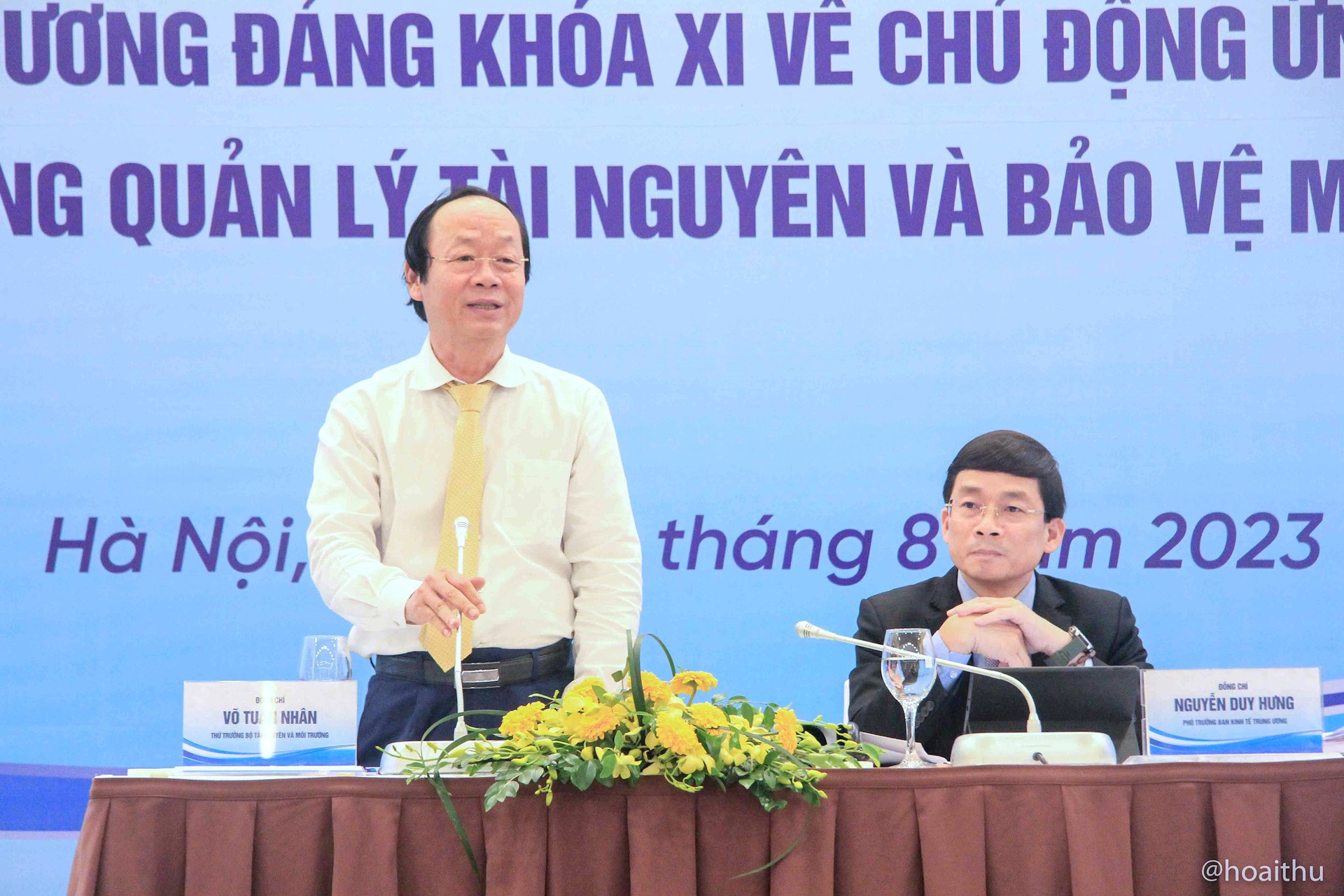
Ngày 9/8, tại Hà Nội, Ban chỉ đạo Tổng kết Nghị quyết số 24-NQ/TW (Ban chỉ đạo) đã tổ chức Hội thảo khu vực miền Bắc tổng kết Nghị quyết số 24-NQ/TW của Ban chấp hành Trung ương Đảng khóa XI về chủ động ứng phó với biến đổi khí hậu, tăng cường quản lý tài nguyên và bảo vệ môi trường.
Ông Nguyễn Duy Hưng, Phó Trưởng ban Kinh tế Trung ương – Phó trưởng Ban chỉ đạo và Thứ trưởng Bộ Tài nguyên và Môi trường Võ Tuấn Nhân đã chủ trì Hội thảo.
Thứ trưởng Bộ Tài nguyên và Môi trường Võ Tuấn Nhân phát biểu tại hội thảo
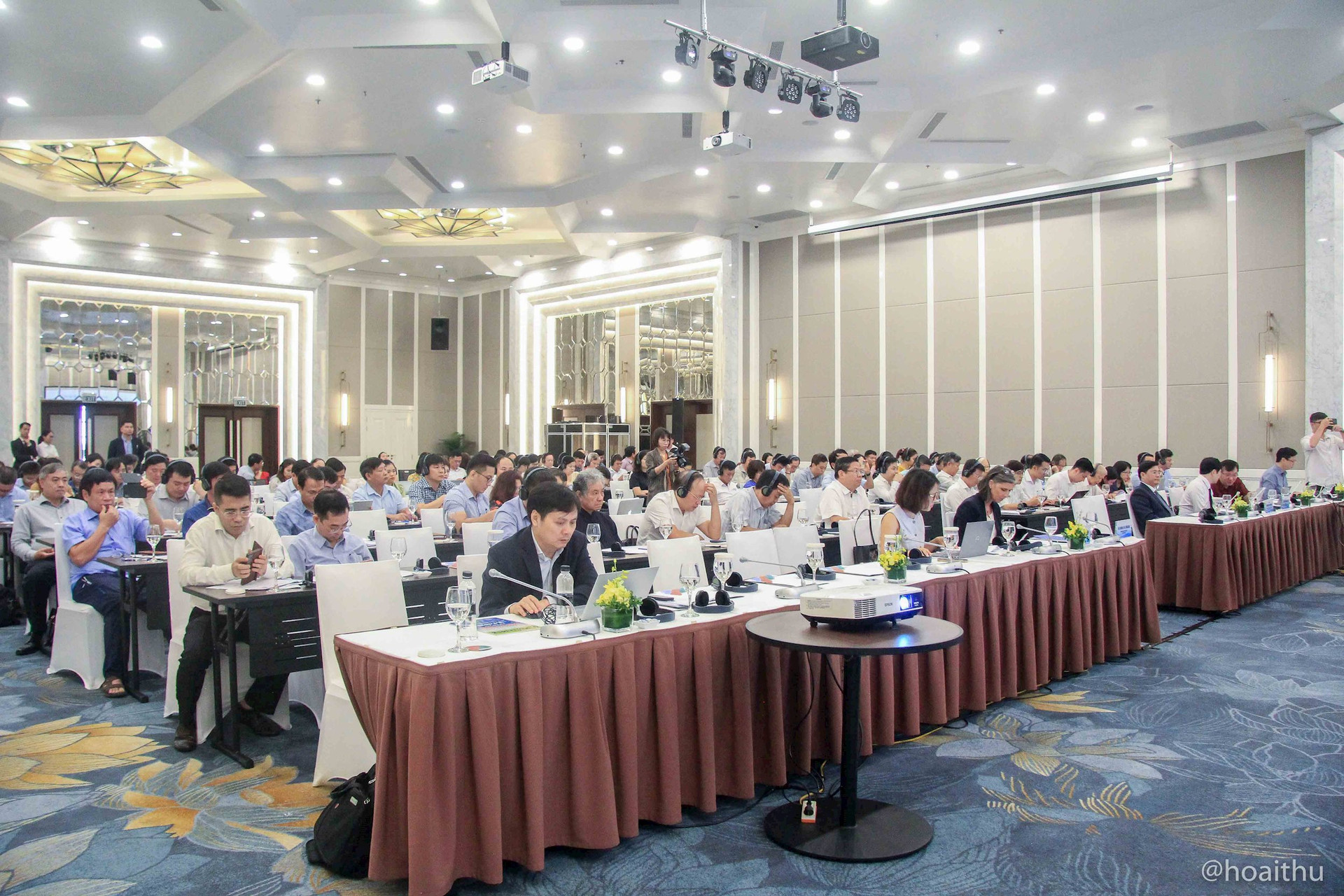
Tham dự có ông Nguyễn Tuấn Anh, Phó Chủ nhiệm Ủy ban Khoa học, Công nghệ và Môi trường của Quốc hội; bà Ramla Al Khalidi, Trưởng Đại diện thường trú của Chương trình Phát triển Liên hợp quốc tại Việt Nam; ông Miachael Siegner, đại diện Viện Hanns Seidel Foundation; cùng hơn 100 đại biểu đến từ các Bộ/ngành, các tổ chức quốc tế, 25 tỉnh/thành khu vực miền Bắc, các Viện nghiên cứu, các chuyên gia và nhà khoa học.
Nghị quyết số 24-NQ/TW của Ban Chấp hành Trung ương được ban hành ngày 3/6/2013 tại Hội nghị lần thứ 7 khóa XI. Nghị quyết đã đề ra những quyết sách lớn của Đảng trong ứng phó với biến đổi khí hậu (BĐKH), quản lý tài nguyên và bảo vệ môi trường ở nước ta. Sau 10 năm thực hiện, Ban cán sự đảng Bộ TN&MT được giao chủ trì, chuẩn bị trình Bộ Chính trị Đề án Tổng kết 10 năm thực hiện Nghị quyết 24-NQ/TW. Quá trình tổng kết đã được triển khai sâu rộng từ các Đảng ủy, Đảng đoàn, Ban cán sự đảng ở Trung ương đến các Tỉnh ủy, Thành ủy ở các địa phương.
Phát biểu tại hội thảo, Phó Trưởng Ban Kinh tế Trung ương Nguyễn Duy Hưng cho biết: Nghị quyết 24 là căn cứ chính trị đặc biệt quan trọng, đưa ra các chủ trương đường lối của Đảng một cách toàn diện, đồng bộ trong các lĩnh vực theo 3 nhóm chủ đề: ứng phó biến đổi khí hậu, quản lý tài nguyên, bảo vệ môi trường.
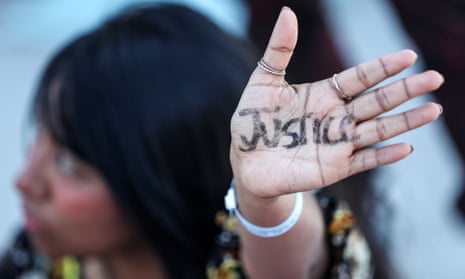
An Amazon Indigenous protester stages a demonstration
Judgments across public and private sector expected to throw light on worst perpetrators and force action
Over the past 12 months, courts from Indonesia to Australia have made groundbreaking rulings that blocked polluting power plants and denounced the human rights violations of the climate crisis. But 2023 could be even more important, with hearings and judgments across the world poised to throw light on the worst perpetrators, give victims a voice and force recalcitrant governments and companies into action.
Although the bulk of climate lawsuits have been filed in the US, most have been thrown out of court or bogged down in procedural arguments. This year will, however, finally see a case go to trial when a group of children and young people between the ages of five and 21 square off against the state of Montana.
Over two weeks in June, they will argue that the US state is failing to protect their constitutional rights, including the right to a healthy and clean environment, by supporting an energy system driven by fossil fuels. They will also say climate breakdown is degrading vital resources such as rivers, lakes, fish and wildlife which are held in trust for the public.
“Never before has a climate change trial of this magnitude happened,” says Andrea Rodgers, senior litigation attorney with Our Children’s Trust, which is behind the case. “The court will be deciding the constitutionality of an energy policy that promotes fossil fuels, as well as a state law that allows agencies to ignore the impacts of climate change in their decision-making.”
She said the trial would be watched around the world and “is set to influence the trajectory of climate change litigation going forward”.
Other cases against US states could also be given permission to go to trial.
In Canada, a ruling is expected this year in the country’s first climate lawsuit to have had its day in court. Seven young people, fronted by now-15-year-old Sophia Mathur, made history last autumn when they challenged the Ontario government’s rollback of its 2030 greenhouse gas emissions reduction target.
And in Mexico, young people have led several important court cases challenging the slow pace of the country’s clean energy system. The supreme court is due to decide whether they are allowed to seek justice in at least one case.
The COP28 Climate Change Conference in Dubai this year is a unique opportunity for the oil and gas industry to show it’s serious about tackling climate change.
At a time when the impacts of climate change are increasingly being felt worldwide, oil and gas producers need to secure a new social license to operate. The world needs to see meaningful changes in the operations of both international and national oil companies, with clear and responsible strategies for bringing down their emissions rapidly.
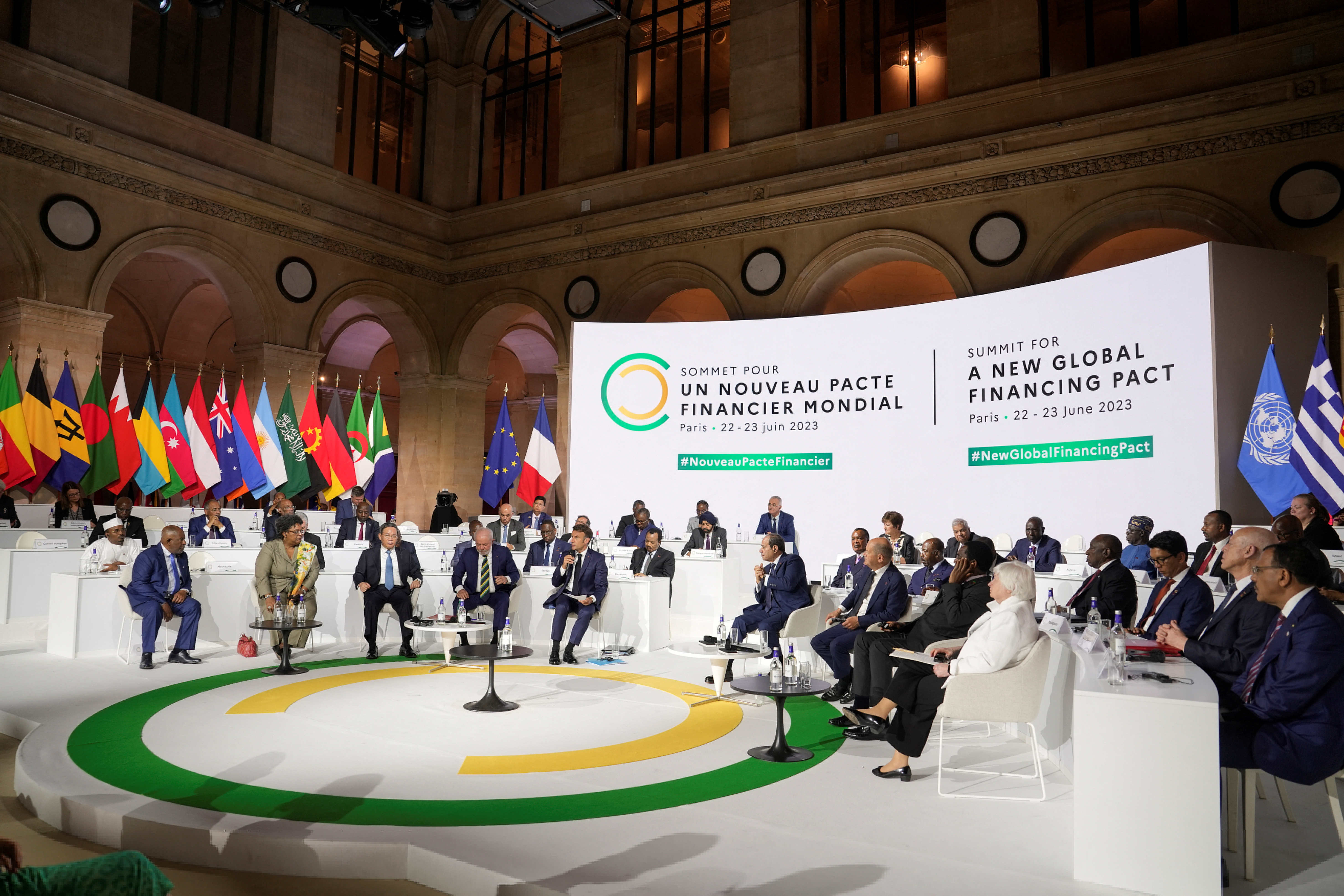
World leaders and finance bosses attend the closing session of the New Global Financial Pact Summit, Friday, June 23, 2023 in Paris, France. The aim of the two-day climate and finance summit was to set up concrete measures to help poor and developing countries whose predicaments have been worsened by the devastating effects of the COVID-19 pandemic and the war in Ukraine better tackle poverty and climate change. Lewis Joly/Pool via REUTERS
Summary
Roadmap for genuine change’ -Barbados’ Persaud
Eyes on IMO meet as shipping tax idea gathers steam
Critics say summit fell short of world’s needs
PARIS, June 23 (Reuters) – A Paris summit to discuss reforming the world’s financial system scored some notable wins that should tee up greater action before climate talks later this year, though some participants were disappointed with progress to address poorer states’ debt.
The Summit for a New Global Financing Pact saw French President Macron host around 40 leaders, many from the Global South, to debate changes to multilateral finance institutions in the face of climate change and other development challenges.
Much of the discussion centred on the key requests of developing nations, framed through the “Bridgetown Initiative” led by Barbados leader Mia Mottley, and her adviser Avinash Persaud said he was pleased with the outcome of the talks.
“It’s a roadmap for genuine change,” he told Reuters on the sidelines of the talks. “What’s emerged here is a real … understanding of the scale and pace of what is required.”
Among the highlights were confirmation that the richer world will likely hit a long-overdue target of providing $100 billion annually in climate finance to poorer countries, a long-delayed debt deal for Zambia, and a package to boost Senegal’s renewable energy capacity.
The World Bank and others also said they would start adding clauses to lending terms that allow vulnerable states to suspend debt repayments when natural disaster strikes.
Yet it was the wording of the final statement from attendees and subtle changes in the tone of discussions behind the scenes that gave hope to Persaud that even greater change was coming.
Specifically, for the first time, the document acknowledged the potential need for richer countries to provide fresh money to multilateral development institutions like the World Bank. This came alongside a plan to draw on more of their current assets, to the tune of $200 billion over 10 years.
Another first was in the explicit target for multilateral development banks to leverage “at least” $100 billion a year in private sector capital when they lend.
A reference was also made to finding “new avenues for international taxation”, as well as other Bridgetown Initiative requests including offering investors foreign exchange guarantees.
“That was widely discussed here and (there’s) lots of support behind an initiative that’s happening outside of Paris, at the International Maritime Organisation in a couple weeks time, on a levy on shipping emissions,” Persaud added.
Still, the summit was not without its critics.
“Unfortunately, the Paris Summit has not provided the breakthrough needed to find the funding for our planet’s survival,” Teresa Anderson, Global Lead on Climate Justice for ActionAid International, said, pointing to new funding pledges being loans or temporary debt relief instead of grants.
All eyes now turn to more traditional events later in the year, including the International Monetary Fund and World Bank annual meetings, a G20 meeting in September and the COP28 climate talks in Dubai.
Persaud said his focus would be on making sure the plan to scale up multilateral development bank lending was in place by the time of annual meetings in October, and that pilot work began on reducing the cost of capital for developing countries.
The summit, held against a backdrop of criticism that the world is moving far too slowly to address climate change, was a success in that it delivered a roadmap requiring specific actions by specific dates, some observers said.
“They’ve got a clear timetable of what they want to see happen and it’s that timeline that puts the pressure on and means that it’s harder to just kick things into the long grass,” said Sonia Dunlop from think tank E3G.
Reporting by Simon Jessop, Leigh Thomas and Tommy Reggiori Wilkes, editing by Mark Heinrich




 CVD
CVD 