Những dòng sông vĩnh viễn đổi thay

Tia sáng – 24-5-2024

Có một kịch bản chung không thể đảo ngược ở tất cả các con sông, dù chúng có mặt ở bất cứ nơi nào, đó là nếu đã xây đập thủy điện và khai thác cát quá mức, tất yếu sẽ cạn kiệt phù sa dẫn tới biến dạng sông, xói lở hạ du, hạ thấp lòng dẫn, rút chân đồng bằng, …

Không ai mường tượng hết những gì sẽ xảy ra, bởi mọi chuyện giờ mới chỉ bắt đầu.

“Hồi tôi mới về công tác thì các bãi này còn rất rộng, có những điểm chiều rộng cả km, nhưng giờ đã mất sạch”, ông Vũ Thanh Thuận, Hạt phó Hạt Đê điều Hải Hậu, nhìn ra dải bờ biển kể trong tiếng sóng vỗ dưới chân kè nhà thờ đổ Trái tim Chúa của giáo xứ Xương Điền, xã Hải Lý, điểm được kè để giữ lại chứng tích của những trận xói lở. “Sóng đánh vào làm nứt chân đê, đất cát dần trôi ra, đê bị hở hàm ếch, xong bị sập dần từng đoạn”.

“Trước năm 1995, lở dần bãi ngoài đê, đê có dấu hiệu bị dọa vỡ ở nhiều điểm, chính quyền đã vận động dân di dời vào phía trong và bắt đầu đắp tuyến đê số hai ở sâu bên trong để dự phòng”, ông Thuận nhớ lại. Cuộc di chuyển kéo dài trong chục năm theo tốc độ ăn vào của biển, một số hộ chuyển sâu vào phía trong đê số hai, một số hộ không còn đất để chuyển vào đã bỏ đi miền Nam.

Tiếp tục đọc “Những dòng sông vĩnh viễn đổi thay”

France provides loan for Hoi An anti-erosion project

VNE – By Gia Chinh   March 17, 2024 | 08:00 am GMT+7

Erosion along the coast of Hoi An City, 2022. Photo by VnExpress/ Dac Thanh

The French Development Agency will provide 42 million euros (US$45.7 million) between now and 2028 to fund works to prevent coastal erosion in Hoi An City.

The Ministry of Finance and the European Union (EU) on Friday signed an agreement for the Hoi An Erosion Prevention and Sustainable Coastal Protection project.

Of the 42 million euros, 35 million euros are a loan from the AFD, two million euros are in the form of non-refundable aid from the EU, and five million euros are Vietnam’s counterpart fund.

The work comprises building seven concrete embankments and pouring sand to create a beach along a five-kilometer stretch of coast along Cua Dai Beach.

Tiếp tục đọc “France provides loan for Hoi An anti-erosion project”

Sixty years of climate change warnings: the signs that were missed (and ignored)

theguardian.com

The effects of ‘weird weather’ were already being felt in the 1960s, but scientists linking fossil fuels with climate change were dismissed as prophets of doomby Alice BellMon 5 Jul 2021 06.00 BST

In August 1974, the CIA produced a study on “climatological research as it pertains to intelligence problems”. The diagnosis was dramatic. It warned of the emergence of a new era of weird weather, leading to political unrest and mass migration (which, in turn, would cause more unrest). The new era the agency imagined wasn’t necessarily one of hotter temperatures; the CIA had heard from scientists warning of global cooling as well as warming. But the direction in which the thermometer was travelling wasn’t their immediate concern; it was the political impact. They knew that the so-called “little ice age”, a series of cold snaps between, roughly, 1350 and 1850, had brought not only drought and famine, but also war – and so could these new climatic changes.

“The climate change began in 1960,” the report’s first page informs us, “but no one, including the climatologists, recognised it.” Crop failures in the Soviet Union and India in the early 1960s had been attributed to standard unlucky weather. The US shipped grain to India and the Soviets killed off livestock to eat, “and premier Nikita Khrushchev was quietly deposed”.

But, the report argued, the world ignored this warning, as the global population continued to grow and states made massive investments in energy, technology and medicine.

Tiếp tục đọc “Sixty years of climate change warnings: the signs that were missed (and ignored)”

How Vietnam came to embrace a new vision of the Mekong Delta’s future

Resilient Shores: Vietnam’s Coastal Development Between Opportunity and Disaster Risk

 OCTOBER 21, 2020 World Bank

0:00 / 3:25

In a country that is among the most exposed to natural hazards, Vietnam’s coastline often bears the brunt. Resilient Shores lays out a resilience strategy that can guide Vietnam through the decisive actions it must take to safeguard the prosperity of future generations from climate change and disaster risks.

Tiếp tục đọc “Resilient Shores: Vietnam’s Coastal Development Between Opportunity and Disaster Risk”

Mekong Delta province declares state of emergency as waves erode embankment

By Trung Dung   August 28, 2020 | 03:37 pm GMT+7

Mekong Delta province declares state of emergency as waves erode embankment

An embankment section in Tran Van Thoi District of Ca Mau Province in early August, 2020. Photo by VnExpress/Trung Dung.

With its coastal embankment threatened by collapse, Ca Mau Province is seeking urgent solutions to save residential areas and farmland.

The province entered a state of emergency Thursday to respond to any damage occurring as a three kilometer (1.86 miles) coastal embankment along its western coast nears the point of collapse due to wave impact.

Authorities have identified four sections as “especially threatened,” measuring 610 and 315 m each in U Minh District, and 1,900 m and 500 m each in Tran Van Thoi District.

“Those sections receive no forest protection. During extreme weather spells, waves would break directly against the embankment, putting it at great risk,” To Quoc Nam, deputy director of the province’s Department of Agriculture and Rural Development, said.

He confirmed the department is looking into investment projects to help counter the situation.

Tiếp tục đọc “Mekong Delta province declares state of emergency as waves erode embankment”

Cà Mau needs $27m to resettle people living in erosion-hit areas

November, 22/2019 – 07:53 VNS

Embankment to prevent erosion are under construction on Cà Mau Province’s west coast. — VNA/VNS Photo Kim Há

CÀ MAU — Cà Mau Province authorities has asked the Government for more than VNĐ622 billion (US$27 million) to finance 12 projects for relocating people from areas eroded by the sea and rivers.

At a meeting with Deputy Prime Minister Trương Hoà Bình on Tuesday, they also sought VNĐ648 billion in emergency assistance to strengthen and upgrade the 23.5km sea dyke section between the Đốc River and Cái Đôi Vàm Town. Tiếp tục đọc “Cà Mau needs $27m to resettle people living in erosion-hit areas”

DÒNG SÔNG KHÔNG QUAY ĐẦU: MEKONG ĐỐI MẶT VỚI TƯƠNG LAI U ÁM

mekong-cuulong.blogspot.com

(River of no return: Mekong faces grim future)

Luke Hunt – Bình Yên Đông lược dịch

UCANews – August 21, 2019

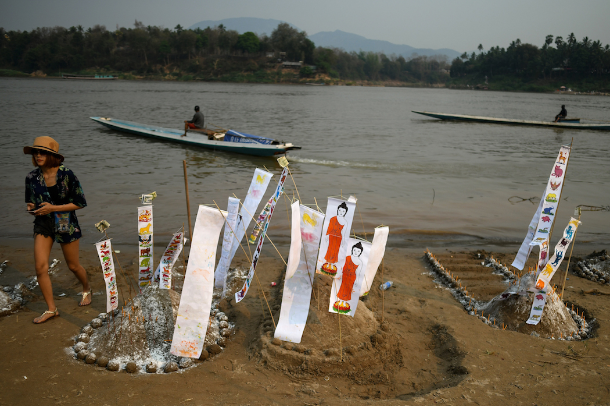
Hình chụp ngày 14 tháng 4 cho thấy một du khách đi ngang đụn cát hay “Toppathatsay” trên bờ sông Mekong đánh dấu năm mới ở Lào hay “Pi Mai” tổ chức ở Luang Prabang. [Ảnh: Manan Vatsyayana/AFP]

Một lần nữa, sông Mekong xuống thấp đến mức kỷ lục, đe dọa việc sản xuất hoa màu, ngư nghiệp và sinh kế của 70 triệu người giữa việc phát triển thái quá và những báo động tàn khốc.  Nhưng hạn hán năm nay, lần thứ hai trong vòng 3 năm, có thể đánh dấu một bước ngoặt và một tương lai đen tối.

Tiếp tục đọc “DÒNG SÔNG KHÔNG QUAY ĐẦU: MEKONG ĐỐI MẶT VỚI TƯƠNG LAI U ÁM”

Cà Mau: Mực nước biển Tây dâng cao kỷ lục, đe dọa cuộc sống hàng ngàn hộ dân

Chuyện gì đang xảy ra ở bãi biển Đà Nẵng?

23/01/2018 08:54 GMT+7

TTOBãi biển Mỹ Khê, Đà Nẵng – một trong sáu bãi biển quyến rũ nhất hành tinh theo bình chọn của tạp chí Forbes – đang bị lún, lở xâm thực nghiêm trọng. Hoạt động xây dựng và khai thác nước ngầm ồ ạt các khu vực ven biển đã phải trả giá.

Chuyện gì đang xảy ra ở bãi biển Đà Nẵng? - Ảnh 1.

Mất bờ cát, sóng đánh sập bờ kè một cơ sở lưu trú ở biển Mỹ Khê, Đà Nẵng. Đây là hiện tượng chưa từng xảy ra – Ảnh: TRƯỜNG TRUNG

Nước biển ào vô càng mạnh, đánh sập luôn kiôt bán hàng được xây dựng kiên cố. Trước đây vệt kinh doanh có thể để dù, bạt dài cả trăm mét thì nay chỉ còn một nửa. Tui buôn bán ở đây chưa bao giờ thấy biển như vậy nên rất lo

Bà LÊ HÀ, một hộ kinh doanh

Lún, lở xâm thực nghiêm trọng. Sóng biển táp vào bờ, gặm nham nhở các khu vực nhà hàng ven biển với tốc độ đáng quan ngại, có nơi lấn sâu đến 15m so với trước đó. Tiếp tục đọc “Chuyện gì đang xảy ra ở bãi biển Đà Nẵng?”

Quảng Nam seeks to save Cửa Đại Beach from erosion

VNN – Update: April, 13/2019 – 09:25

A beach resort on Cửa Đại beach is damaged by erosion. The most beautiful beach in Hội An has been eroded on an 8km section since 2004. VNS Photo Công Thành

HỘI AN — The appearance of a 15ha sandbank, 1.8km off the Cửa Đại Beach since early this year offers a chance to research changing riverhead flows and sand sedimentation at lower lands, according to experts.

The emergence of the sandbank could lead to solutions to help save Cửa Đại Beach, 5km from UNESCO-recognised world heritage site Hội An City, from serious erosion over past decades. Tiếp tục đọc “Quảng Nam seeks to save Cửa Đại Beach from erosion”

Cà Mau: Mỗi năm mất từ 400-500ha rừng phòng hộ, do đâu?

Dân Việt Thứ Bảy, ngày 27/10/2018, 19:20

Hằng năm tỉnh Cà Mau mất khoảng 400 – 500ha rừng phòng hộ do sạt lở. Cá biệt, trong vòng khoảng 1 năm, điểm sạt lở tại cửa biển Hố Gùi (huyện Năm Căn) bị sóng biển đánh mất đến 200m đất, ăn sâu vào đất liền.

Ngày 12.10, đoàn công tác do ông Cao Đức Phát – Phó Trưởng Ban Kinh tế T.Ư làm Trưởng đoàn có buổi làm việc với Tỉnh ủy Cà Mau về việc sơ kết 5 năm thực hiện Nghị quyết số 24 của Ban Chấp hành T.Ư Đảng về chủ động ứng phó biến đổi khí hậu (BĐKH), tăng cường quản lý tài nguyên và bảo vệ môi trường trên địa bàn tỉnh này. Tiếp tục đọc “Cà Mau: Mỗi năm mất từ 400-500ha rừng phòng hộ, do đâu?”

Hoài niệm buồn về những rừng dương đã mất ở ven biển Đà Nẵng

Từng là nơi cắm trại hè lý tưởng cho thanh thiếu nhi, những rừng dương Thọ Quang, Mân Thái, Mỹ Khê, Sao Biển, Non Nước, Xuân Thiều… trải ngút ngàn dọc ven biển Đà Nẵng giờ chỉ còn là hoài niệm!

Chuyện xưa kể rằng…

Có dịp đến bãi biển Đại Lãnh (Khánh Hòa) cách đây ít hôm, càng ấn tượng với rừng dương ở đây bao nhiêu, chúng tôi càng tiếc quay, tiếc quắt những rừng dương Thọ Quang, Mân Thái, Mỹ Khê, Sao Biển, Non Nước, Xuân Thiều… trải ngút ngàn trên bãi biển Đà Nẵng. Nếu còn đến bây giờ, chắc cũng cổ thụ không kém gì rừng dương Đại Lãnh. Cách đây hơn 10 năm về trước, những rừng dương ấy là nơi thanh thiếu nhi Đà Nẵng mở hết đợt trại này đến đợt trại khác, nhất là vào dịp hè.

Hoài niệm buồn về những rừng dương đã mất ở ven biển Đà Nẵng - ảnh 1
Càng ấn tượng với rừng dương ven biển Đại Lãnh (Khánh Hòa) hiện nay bao nhiêu… (Ảnh: HC)

Tiếp tục đọc “Hoài niệm buồn về những rừng dương đã mất ở ven biển Đà Nẵng”

Landslides in Mekong Delta get more severe

thesaigontimes.com
Van Huynh Tuesday,  May 29,2018,00:00 (GMT+7)
Zoom in

Zoom out

Add to Favorites

Print

Send to a friend

Five houses collapse after a landslide along the O Mon River’s in Can Tho City on May 21 – PHOTO: LE HOANG VU

CAN THO – Landslides across the Mekong Delta region are getting more unpredictable and increasing in terms of location and speed, according to the Southern Institute of Water Resources Research.

After two landslides along the O Mon River in Can Tho City this month, 12 houses sank into the river, 28 houses collapsed, 35 others were on the brink of sliding, and a long stretch of roads and riverside crops were destroyed.

According to the city’s committee for natural disaster prevention-control and search-rescue, the two landslides caused damages of some VND30 billion. The city has provided nearly VND600 million to support affected households.

Vung Liem District of Vinh Long Province nearby has also witnessed a serious landslide recently, resulting in several houses falling into the river. Following this, the provincial government has decided to ban sand exploitation at 19 sites along the rivers of Tien, Co Chien, Hau and Pang Tra with combined areas of over 1,200 hectares. Tiếp tục đọc “Landslides in Mekong Delta get more severe”