Japan and Australia seek to align on defence as China’s regional influence grows

Japanese PM Suga speaks to the media during a press conference in Jakarta

FILE PHOTO: Japanese Prime Minister Yoshihide Suga speaks to the media during a press conference in Jakarta, Indonesia, Oct 21, 2020. (Photo: Dita Alangkara/Pool via REUTERS)

16 Nov 2020 03:31PM CNA

TOKYO: Japanese Prime Minister Yoshihide Suga and his Australian counterpart, Scott Morrison, may agree a historic defence pact on Tuesday (Nov 17) that will closely align two key US allies in Asia as a counter to China’s growing influence in the region.

Tiếp tục đọc “Japan and Australia seek to align on defence as China’s regional influence grows”

15th East Asia summit on Saturday to push for free, open, inclusive & rules-based Indo-Pacific region

SECTIONS ..

The 15th East Asia Summit on Saturday hopes to give a big push to a free, open, inclusive, transparent, rules-based, peaceful and prosperous Indo-Pacific region.

The Summit Meeting will also discuss ways and means to strengthen the EAS platform and to make it more responsive to emerging challenges on its 15th anniversary. The Leaders will also exchange views on issues of international and regional interest including the COVID-19 pandemic and the cooperation among EAS participating count ..

Read more at:
https://economictimes.indiatimes.com/news/politics-and-nation/15th-east-asia-summit-on-saturday-to-push-for-free-open-inclusive-rules-based-indo-pacific-region/articleshow/79211661.cms?utm_source=contentofinterest&utm_medium=text&utm_campaign=cppst

Powers, Norms, and Institutions: The Future of the Indo-Pacific from a Southeast Asia Perspective

Results of a CSIS Survey of Strategic Elites

June 9, 2020

DOWNLOAD THE REPORT

Situated at the heart of the Indo-Pacific, Southeast Asia has, in recent years, become the bellwether for the region, including the future of democratic governance. External powers, including the United States and China, have ramped up engagement with Southeast Asia and now compete for influence in the region. Amid these geopolitical shifts, Southeast Asian perspectives on dynamics that will shape the future of the region more than ever before.

In late 2019, the Center for Strategic and International Studies (CSIS) conducted a survey of strategic elites in Indonesia, Malaysia, the Philippines, Singapore, Thailand as well as Fiji to understand how the region views trends related to power, norms, and institutions. In early 2020, CSIS conducted extensive analysis of the survey data and convened a workshop in Sydney, Australia, to further examine the results with leading experts from the countries surveyed, as well as Australia and the United States. This report presents key findings from the survey and workshop on the strategic landscape in Southeast Asia and the future of power and influence and challenges faced by the region.

This report is made possible by the generous support from the Australian Department of Defence and the Australian Embassy, Washington, D.C.

Chinese Investment in the Maldives: Appraising the String of Pearls

September 4, 2020  |  AMTI Brief

Chinese investment in the Maldives is a frequent subject of concern. The archipelagic nation is strategically located along major Indian Ocean shipping routes. Its former president has very publicly speculated that China is being allowed to buy up whole islands and extend loans that the government cannot afford.

And media articles in India, long the most important external partner for the Maldives, often assume that prominent Chinese investments are a stalking horse for military access. The most frequently cited example of late is a resort development on Feydhoo Finolhu island. But the available data suggests these fears, and those surrounding other Chinese projects in the Maldives, are overblown. Tiếp tục đọc “Chinese Investment in the Maldives: Appraising the String of Pearls”

Họp với ASEAN, quan chức quốc phòng Mỹ quan ngại Trung Quốc tập trận ở Hoàng Sa

Đại diện Bộ Quốc phòng Mỹ tham dự hội nghị quan chức Quốc phòng ASEAN mở rộng đã phát biểu bày tỏ quan ngại về các cuộc diễn tập của Trung Quốc tại quần đảo Hoàng Sa.

Sáng nay (7/7), tại Hà Nội, Bộ Quốc phòng tổ chức hội nghị trực tuyến Quan chức Quốc phòng cấp cao các nước ASEAN mở rộng (ADSOM+).

Với sự tham dự của Trưởng ADSOM+ 9 nước ASEAN và 8 nước (Nga, Trung Quốc, Hoa Kỳ, Nhật Bản, Hàn Quốc, Australia, New Zealand, Ấn Độ), Phó tổng Thư ký ASEAN.

Phát biểu từ điểm cầu Mỹ, ông Chris Johnstone, Trưởng phòng Nam – Đông Nam Á thuộc Văn phòng Bộ Quốc phòng Mỹ, đánh giá cao những nỗ lực chống bệnh dịch đang diễn ra hằng ngày, lực lượng vũ trang của Mỹ đang thực hiện nghĩa vụ của mình ở bất cứ nơi nào luật pháp quốc tế cho phép.

Họp với ASEAN, quan chức quốc phòng Mỹ quan ngại Trung Quốc tập trận ở Hoàng Sa
Điểm cầu với sự tham gia của quan chức quốc phòng các nước

“Chúng tôi cũng đang thực hiện nhiệm vụ đi lại tự do trên vùng biển quốc tế với ASEAN và các quốc gia đối tác, để có thể thúc đẩy hòa bình, an ninh và tự do hàng hải, hàng không tại Biển Đông. Chúng tôi cũng hoan nghênh tuyên bố của các lãnh đạo ASEAN về việc giải quyết các vấn đề bằng biện pháp hòa bình, phù hợp với luật pháp quốc tế”, ông Chris Johnstone cho hay.

Mỹ cùng với Việt Nam và Singapore quan ngại về các cuộc diễn tập gần đây của Trung Quốc tại quần đảo Hoàng Sa và coi hoạt động này là phản tác dụng, vi phạm Tuyên bố ứng xử của các bên ở Biển Đông (DOC) và làm căng thẳng tình hình khu vực.

“Chúng tôi kêu gọi các bên giải quyết tranh chấp phù hợp với luật pháp quốc tế và chúng tôi mong muốn thúc đẩy quan hệ đối tác và hợp tác chặt chẽ để thúc đẩy an ninh, an toàn với các đối tác và đồng minh để thúc đẩy một trật tự dựa trên luật lệ. Chúng tôi sẽ tiếp tục hợp tác với quý vị trong thời gian sắp tới” ông Chris Johnstone nhấn mạnh.

Cục Hải sự tỉnh Hải Nam hôm 29/6 thông báo quân đội Trung Quốc sẽ tiến hành cuộc tập trận từ ngày 30/6 đến 5/7 gần quần đảo Hoàng Sa của Việt Nam và yêu cầu tàu thuyền tránh xa khu vực này.

Việt Nam đã trao công hàm phản đối Trung Quốc tập trận tại Hoàng Sa, yêu cầu không tái diễn hành động tập trận trái phép ở Hoàng Sa.

Trong cuộc họp báo gần đây, người phát ngôn bộ Ngoại giao Lê Thị Thu Hằng cho biết việc Trung Quốc tập trận tại khu vực quần đảo Hoàng Sa của Việt Nam đã vi phạm chủ quyền của Việt Nam, đi ngược tinh thần Tuyên bố ứng xử của các bên ở Biển Đông (DOC), gây phức tạp tình hình, không có lợi cho quá trình đàm phán giữa Trung Quốc và ASEAN về Bộ Quy tắc ứng xử giữa các bên ở Biển Đông (COC), cũng như duy trì hòa bình, ổn định và hợp tác ở Biển Đông.

Người phát ngôn khẳng định Việt Nam có đầy đủ bằng chứng lịch sử và căn cứ pháp lý để khẳng định chủ quyền với Trường Sa và Hoàng Sa, phù hợp với luật pháp quốc tế. Mọi hoạt động của các bên tại Trường Sa và Hoàng Sa mà không có sự cho phép của Việt Nam đều vô giá trị.

Thành Nam

Việt Nam trao công hàm phản đối Trung Quốc tập trận ở Hoàng Sa

Việt Nam trao công hàm phản đối Trung Quốc tập trận ở Hoàng Sa

Việt Nam đã trao công hàm phản đối, yêu cầu Trung Quốc không lặp lại hành động tập trận ở Hoàng Sa trong ….

Southeast Asia is the world’s bilge dumping hotspot—what can be done to stop ships discharging waste oil?

eco-business.com

Satellite images have revealed the illegal discharge of waste oil and sludge from ships to be a daily occurrence in Indonesia, while Southeast Asia’s biodiverse waters suffer more from the problem than anywhere. What can be done to stop the destructive practice of bilge dumping?

Piracy. Illegal fishing. Slavery. The issues facing the shipping trade are increasingly well known and a highly traditional industry has at last started to confront them. But one important issue, which is as old as the trade itself, has been largely overlooked: bilge dumping.
Tiếp tục đọc “Southeast Asia is the world’s bilge dumping hotspot—what can be done to stop ships discharging waste oil?”

Indonesian environment ministry ends WWF partnership amid public spat

Southeast Asia in 2020: Issues to Watch, Part 1

CSIS.org

January 14, 2020

In this two-part series, Dr. Amy Searight, senior adviser and director of the CSIS Southeast Asia Program, previews five key issues to watch in Southeast Asia in 2020. This installment addresses U.S.-ASEAN relations, climate change and the imperiled Mekong, and domestic politics. The next installment will cover economic trends and developments in the digital space.

Can Trump Reset U.S.-ASEAN Relations?

Disappointingly, 2019 was a pretty bad year for U.S.-ASEAN relations. Trump had a promising start in his first year in office, hosting four Southeast Asian leaders in the White House, traveling to Vietnam and the Philippines to unveil his “Free and Open Indo-Pacific” vision, and holding a U.S.-ASEAN summit. But Trump’s interest in Southeast Asia has since appeared to wane considerably. Although Trump traveled to Vietnam in February for a second summit with North Korean leader Kim Jong-un, he later called Vietnam the “single worst abuser” in trade relations with the United States. In November, President Trump skipped the East Asian Summit (EAS) for the third straight year, sending National Security Advisor Robert O’Brien instead. Trump’s absence in Bangkok and the historically low level of diplomatic representation at the summit ruffled a lot of feathers within ASEAN and led most of the Southeast Asian leaders to snub the U.S.-ASEAN summit held on the sidelines of the EAS (only Thailand, Vietnam, and Laos attended at the leader level). ASEAN’s disenchantment with the level of U.S. engagement came just as China was gaining new traction in the region, with a revamped Belt and Road Initiative that appeared to address regional concerns and progress toward launching the Regional Comprehensive Economic Partnership (RCEP), a trade agreement between ASEAN, China, and four other regional trade partners.
Tiếp tục đọc “Southeast Asia in 2020: Issues to Watch, Part 1”

ASEAN Outlook on the Indo-Pacific

ASEAN

The AsiaPacific and Indian Ocean regions are amongst the most dynamic in the world as well as centers of economic growth for decadesAs a result, these regions continue to experience geopolitical and geostrategic shiftsThese shifts present opportunities as well as challengesOn the one hand, the economic growth of the region opens up possibilities of cooperation to alleviate poverty and elevate living standards of millions of peopleOn the other hand, the rise of material powers, i.eeconomic and military, requires avoiding the deepening of mistrust, miscalculation, and patterns of behavior based on a zerosum game.

Download the full statement here.

Châu Á vẫn mê than

nhipcaudautu – Thứ Hai | 02/09/2019 08:00


Ảnh: tinkinhte.com

Chính phủ các nước, đặc biệt tại châu Á, vẫn tiếp tục đổ tiền vào than đá, tác nhân lớn nhất gây biến đổi khí hậu.

Trước hệ lụy khó lường của biến đổi khí hậu, những thông tin về vị thế ngày càng suy giảm của than đá đã làm dấy lên tia hy vọng về một tương lai bớt u ám hơn của thế giới. Ngày càng nhiều quốc gia muốn giảm dần việc sử dụng than đá và tiến tới xóa bỏ hoàn toàn, một phần nhờ khí đốt giá rẻ và chi phí năng lượng gió và mặt trời giảm mạnh.

Tiếp tục đọc “Châu Á vẫn mê than”

Maritime Claims of the Indo-Pacific

September 3, 2019  |  AMTI Interactive

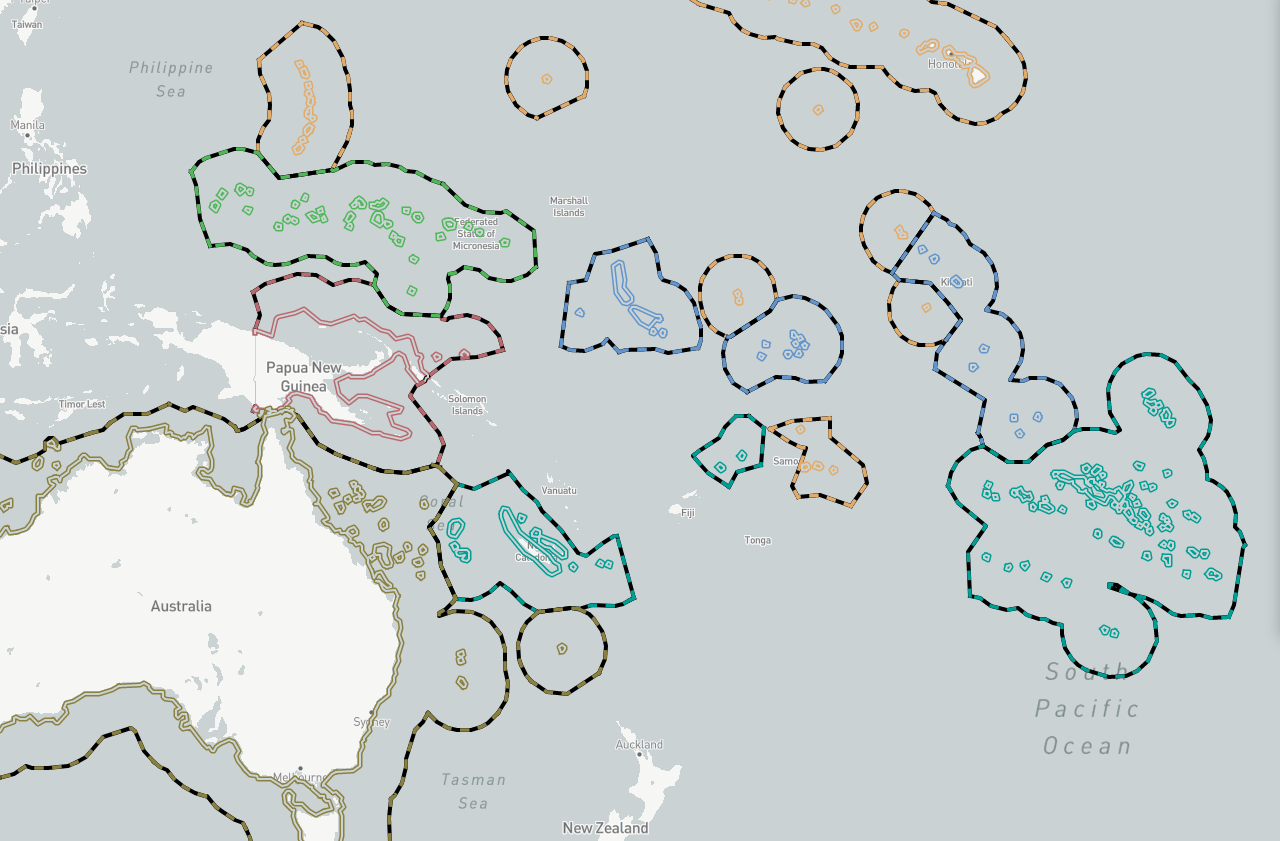
Maritime Claims of the Indo-Pacific

AMTI has expanded and improved its interactive Maritime Claims of the Indo-Pacific map to include all the Pacific Islands and more. The database of nearly 40 countries in South Asia, East Asia, and the Pacific is the most comprehensive and accurate resource on maritime claims available to the public. Users can search claimants by name or select up to six from a list of available countries. Claim types can be toggled on or off, including territorial baselines, territorial seas, exclusive economic zones, continental shelves, and the nine-dash/U-shaped line.

All claims are shown based on states’ domestic legislation, treaties, and submissions to international bodies. The map is an unbiased depiction of claims; it does not judge their legality or guess at future delimitations. Users can click on any claim line for its source, including links to original documents where available. Details on methodology are available below the map.

Recent Analysis

Stop the Bully in the South China Sea by Greg Poling and Murray Hiebert

Duterte’s Game in Beijing by Richard Heydarian

Balancing Law and Realpolitik in the South China Sea by Lucio Blanco Pitlo III

Vietnam’s Uphill Battle in the South China Sea: A Need for More International Actors by Nguyen Thanh Trung

China’s Incursion into Vietnam’s EEZ and Lessons from the Past by Huong Le Thu

###

The Center for Strategic and International Studies (CSIS) is a bipartisan, nonprofit organization founded in 1962 and headquartered in Washington, D.C. It seeks to advance global security and prosperity by providing strategic insights and policy solutions to decisionmakers.

China could overwhelm US military in Asia in hours, Australian report says

The study by the United States Study Center, at the University of Sydney, in Australia, warned that America’s defense strategy in the Indo-Pacific region “is in the throes of an unprecedented crisis” and could struggle to defend its allies against China.

Tiếp tục đọc “China could overwhelm US military in Asia in hours, Australian report says”

The Asian Century Is Over

Beset by conflicts, stagnating economies, and political troubles, the region no longer looks set to rule the world.

Chinese flags are displayed in Chaoyang Park in Beijing on Sept. 30, 2006.

The air forces of four of Asia’s leading powers nearly came to blows in the skies over the Sea of Japan, or East Sea, last week. As Russia and China conducted their first joint aerial patrol, South Korean fighters fired more than 300 warning shots at a Russian command and control aircraft that crossed into South Korea’s air defense identification zone. Meanwhile, Japanese fighters scrambled in case Japanese territory came under fire. Tiếp tục đọc “The Asian Century Is Over”

A Rising China Is Driving the U.S. Army’s New Game Plan in the Pacific

New missiles and large-scale exercises part of long-term strategy to deter Beijing.

Idaho Army National Guard and Montana Army National Guard Soldiers from the 116th Cavalry Brigade Combat Team conduct a live-fire exercise with Royal Thai Army Soldiers at the Cavalry Center in Thailand’s Saraburi province on Aug. 28, 2018. (Department of Defense Photo)

Idaho Army National Guard and Montana Army National Guard Soldiers from the 116th Cavalry Brigade Combat Team conduct a live-fire exercise with Royal Thai Army Soldiers at the Cavalry Center in Thailand’s Saraburi province on Aug. 28, 2018. (Department of Defense Photo)

FORT SHAFTER, Hawaii—As an organization based solidly on dry land, the U.S. Army’s increasing focus on the Pacific might seem puzzling to some.

But with China continuing to expand its military, building islands in the South China Sea, and spreading fear among neighbors, the Army wants to up its game in the region with more firepower and additional rotations of U.S. troops—not only to reassure key U.S. allies such as Japan, South Korea, and Thailand that the United States has their back, but also to prevent a potential war.

“China is the priority,” said Gen. Robert Brown, U.S. Army Pacific commander, during a March 19 roundtable with a handful of reporters at Fort Shafter in Hawaii. Tiếp tục đọc “A Rising China Is Driving the U.S. Army’s New Game Plan in the Pacific”