Image: Australian Strategic Policy Institute / NASA
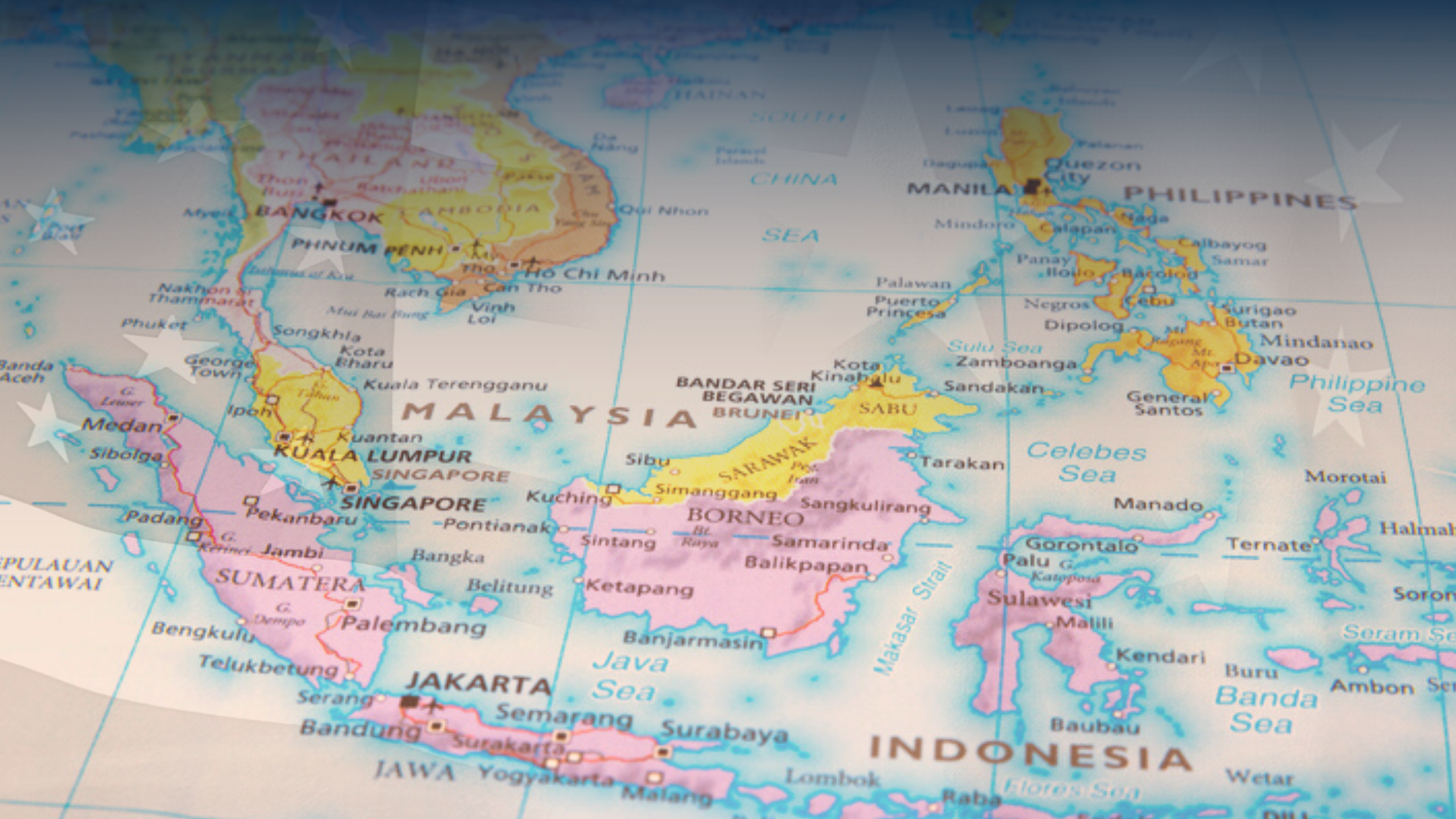
The Indo-Pacific is increasingly defined by strategic competition between the United States and China. But this dynamic is further complicated by the presence of a class of diverse but consequential second-tier states.
Their middling economic and military capabilities are often combined with valuable geographic positioning around the flashpoints of potential conflict, or elevated social status in elite global clubs such as the G20 or OECD – making them important regional players whose roles and preferences cannot be ignored.
It is indeed great to be back here for another Shangri-La Dialogue.
Let me thank John and everyone at IISS for their efforts to deepen our dialogue on the Indo-Pacific. You know, this is my third time speaking in Singapore at an IISS event. And so this is starting to be—it’s becoming a habit there, John.
I also want to thank our national host, Singapore, for your tremendous hospitality.
And it’s great to see Senior Minister Teo, and Minister Ng, and other distinguished guests from our host here today.
And I’m glad that we’re joined by so many defense ministers and leaders from around the Indo-Pacific and around the world.
One minister of defense made a special effort to be here today: my good friend Oleksii Reznikov of Ukraine. Oleksii’s seat is currently empty. I’m sure he’s working the room somewhere around here, but Oleskii, if you can hear me, I’d remind you that, I’d just tell you that your presence here reminds us that we can never take our peace and security for granted.
I’m also delighted to be here with Director Haines and many of our U.S. military leaders.
So thanks to everyone for being here today.
This dialogue is always a great opportunity to exchange views. And the only thing more wide-ranging than the conference agenda is the breakfast buffet.
Negotiators from 14 Indo-Pacific nations concluded negotiations in substance on a new Indo-Pacific Economic Framework for Prosperity (IPEF) Supply Chain Agreement. At a ministerial-level meeting on the margins of an Asia-Pacific Economic Cooperation (APEC) forum gathering in Detroit, Michigan, IPEF parties released a statement outlining major contours of the agreement. The first of four potential agreements that the United States aims to conclude under IPEF, the supply chains agreement represents a positive step toward further economic integration in the Indo-Pacific. However, questions remain about how binding or impactful the supply chains agreement will be and which additional agreements will come to fruition under the framework this year.
Q1: What did IPEF partners agree to under the new Supply Chains Agreement?
Today, we — Prime Minister Anthony Albanese of Australia, Prime Minister Narendra Modi of India, Prime Minister Kishida Fumio of Japan, and President Joseph R. Biden, Jr. of the United States — met for the third in-person Quad Leaders’ Summit, hosted by Prime Minister Albanese.
Together, we reaffirm our steadfast commitment to a free and open Indo-Pacific that is inclusive and resilient. The global strategic and economic environment is changing rapidly – with direct impacts on countries in the region. We believe we should navigate this time of uncertainty and opportunity together, working closely with our Indo-Pacific partners. We believe all countries have a role in contributing to regional peace, stability, and prosperity, as well as upholding international law, including the principles of sovereignty and territorial integrity, and the rules-based international order. We seek a region where no country dominates and no country is dominated – one where all countries are free from coercion, and can exercise their agency to determine their futures. Our four countries are united by this shared vision. Tiếp tục đọc “Quad Leaders’ Joint Statement”→
Issues & Insights Vol. 23, SR3 – Strategic Competition and Security Cooperation in the Indo-Pacific
Introduction
There is a growing acceptance among countries in the Indo-Pacific region that strategic competition between the United States and China is changing perceptions about security and the adequacy of the existing security architecture. While some have characterized the competition between the two as a new Cold War, it is clear that what is happening in the region is far more complex than the competition that characterized the original Cold War between the United States and the Soviet Union. First, the economic integration that has taken place since the early 1990s makes it much more difficult to draw bright ideological lines between the two sides. Further, the Asian context of the emerging competition is one where the two competitors have grown to share power. As the dominant military power, the United States has been the primary security guarantor in Asia and beyond. China, on the other hand, has emerged over the past decades as the primary economic catalyst in Asia and beyond. Currently, each side seems increasingly unwilling to accept that arrangement.
China’s challenges United States in top position India’s patchy contribution Japan’s waning influence Post-Covid resilience and recovery Southeast Asia’s diplomatic dynamism Russia’s declining relevance
Anthony Albanese, Joe Biden and Rishi Sunak announce the Aukus nuclear-powered submarine deal in San Diego. Photograph: Stefan Rousseau/AP
In a tripartite deal with the US and the UK, Australia has unveiled a plan to acquire a fleet of up to eight nuclear-powered submarines, forecast to cost up to $368bn between now and the mid-2050s. Australia will spend $9bn over the next four years.
From this year Australian military and civilian personnel will embed with US and UK navies, including within both countries’ submarine industrial bases. From 2027 the UK and the US plan to rotate their nuclear-powered submarines through HMAS Stirling near Perth as part of a push to step up training of Australians.
There is a growing acceptance among countries in the Indo-Pacific region that strategic competition between the United States and China is changing perceptions about security and the adequacy of the existing security architecture. While some have characterized the competition between the two as a new Cold War, it is clear that what is happening in the region is far more complex than the competition that characterized the original Cold War between the United States and the Soviet Union. First, the economic integration that has taken place since the early 1990s makes it much more difficult to draw bright ideological lines between the two sides. Further, the Asian context of the emerging competition is one where the two competitors have grown to share power. As the dominant military power, the United States has been the primary security guarantor in Asia and beyond. China, on the other hand, has emerged over the past decades as the primary economic catalyst in Asia and beyond. Currently, each side seems increasingly unwilling to accept that arrangement.
2022 ended with South Korea adopting specific Indo-Pacific terminology with the Dec. 28 release of its Strategy for a Free, Peaceful, and Prosperous Indo-Pacific Region (SFPPIP). The key takeaway: The SFPPIP, and President Yoon Suk Yeol, signal an end to South Korea’s “strategic ambiguity” under the previous president, Moon Jae-in. Seoul pivoting away from Beijing and toward Washington—delicately, but clearly. Tiếp tục đọc “South Korea’s Indo-Pacific pivot strategy”→
Proponents describe regional power grids as a way to promote economic growth, energy security and renewables in Southeast Asia, but this might come at a heavy cost
Lat Tha Hae temple in Luang Prabang province, Laos, half submerged by the Nam Ou 1 hydropower dam (Image: Ton Ka/China Dialogue)
On 23 June 2022, the import of 100 megawatts (MW) of hydropower from Laos to Singapore through Thailand and Malaysia was hailed as a historic milestone. Part of a pilot project known as the Lao PDR-Thailand-Malaysia-Singapore Power Integration Project (LTMS-PIP), this event represented Singapore’s first ever import of renewable energy, and also the first instance of cross-border electricity trade involving four countries from the Association of Southeast Asian Nations (ASEAN).
However, this development takes place amid rising concerns for the ecological future of the transboundary Mekong River and the millions of people who depend on it. A 2018 study by the Mekong River Commission concluded that further hydropower development on the river would negatively affect ecosystems, and would reduce soil fertility, rice production, fish yields and food security, while increasing poverty in the river basin.
The Indo-Pacific region is of significant importance to Canada. Home to more than two thirds of the global population, it is the fastest-growing economic region in the world.
As a Pacific nation, Canada recognizes that the Indo-Pacific region is critically important for the long-term prosperity, health and security of Canadians. Beyond our 25,000 km of Pacific Ocean coastline, Canadians share history, culture, and long-standing trade and development ties with the people of the Indo-Pacific.
Aljazeera – Soviet-era nostalgia and anti-Western sentiment fuel online support for Russia’s Vladimir Putin and his war on Ukraine.
Russian President Vladimir Putin looks through a scope as he shoots a Chukavin sniper rifle (SVCh-380) during a visit to the military Patriot Park in Kubinka, outside Moscow, in September 2018 [File: Alexey Nilkolsky/Sputnik/ AFP]
By Al Jazeera Staff
Published On 18 Nov 202218 Nov 2022
While the West has united in condemnation of Russia’s invasion of Ukraine, opinions differ markedly in parts of the developing world where Russia is not reviled but revered for what some see as its stance against the West and its hypocrisies.
In Southeast Asia, a region dominated for decades by “strongman” political leaders and where nostalgia for the Soviet Union persists in some quarters, Russian President Vladimir Putin has a strong following among social media users who are sympathetic to his invasion of Ukraine and find his macho self-image appealing.
We need only call to mind the first half of 2022 for an array of the extreme, energy-related global challenges we all face. Around the world, local versions of climate change effects—the temperatures, wildfires, droughts, storms, flooding—underscore how important it is for us to transition away from our overdependence on fossil fuels. And our energy sources don’t just have environmental implications but security ones as well. The Russian invasion of Ukraine is the latest rendition of the resource curse. At the heart of it all, fossil fuels are what enabled and amplified the murderous narcissism we see in Vladimir Putin and created a country with an unbalanced and unhealthy domestic economy able to profoundly destabilize energy flows and prices around the world.
The South China Sea (SCS) brings together its own assortment of these complex challenges and factors. Competing security concerns, resource needs, and nationalisms shape the motivations of the claimants. Much of the attention and conflict has centred on the oil and gas in the seabed. Estimates of SCS hydrocarbon volumes vary; only some of these resources are proven reserves that have been confirmed and measured, and are actually recoverable. But even in more generous assessments, the SCS only provides us with a small percentage of the global total of oil and gas reserves, and even less of the overall energy mix if we include non-fossil-fuel energy sources.
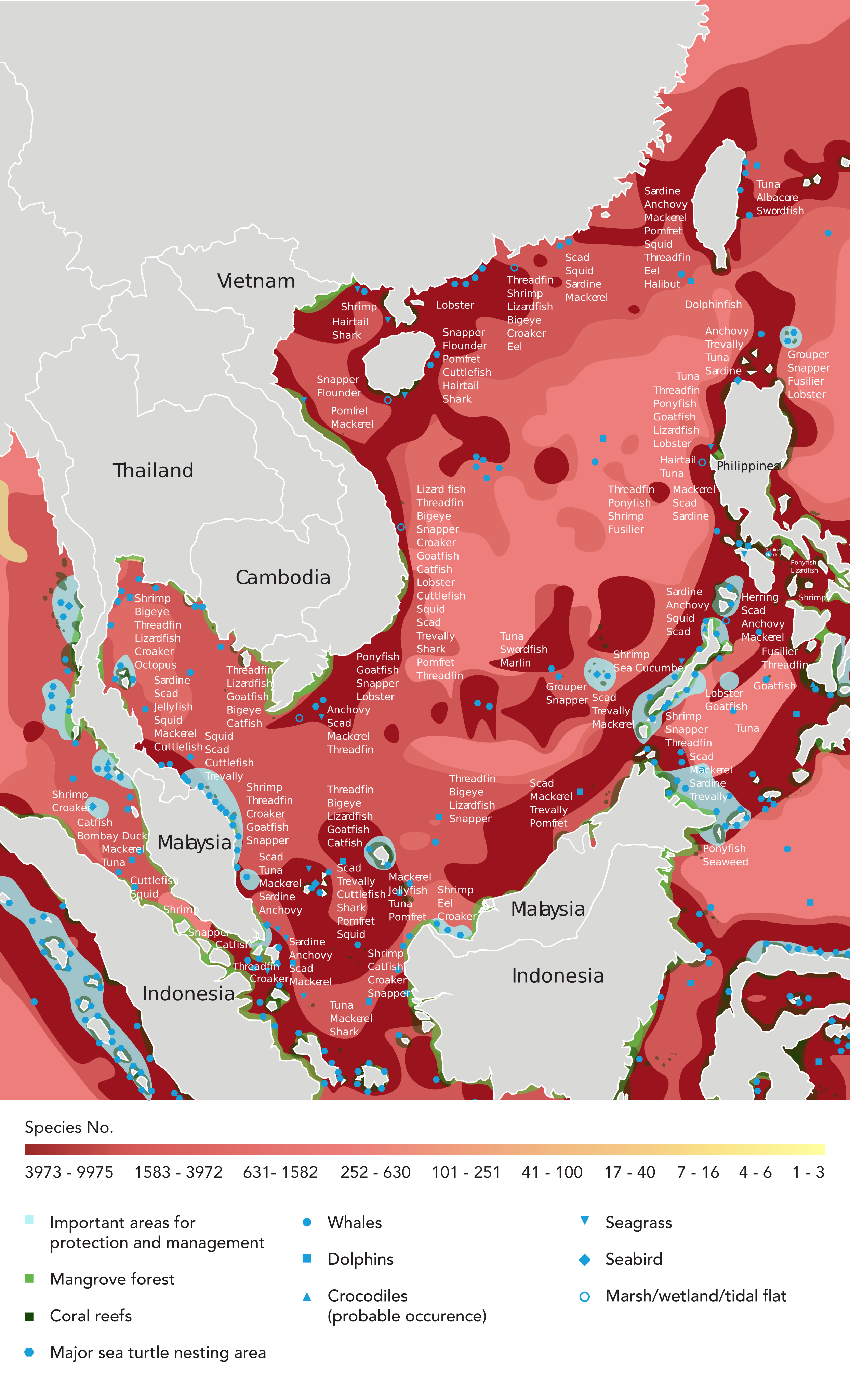
Beyond hydrocarbons, in a two-way tie with the adjacent Coral Triangle, the SCS has the highest level of marine biodiversity in the world. SCS fisheries feed and employ millions of people in the region. It’s true that conflict over these living marine resources also drives the territorial disputes in the region, and a wide variety of human activity degrades the SCS ecosystem. Yet drilling for hydrocarbons in the SCS threatens this vulnerable marine habitat even more, while also clearly contributing to geopolitical and security tensions in the region—and to climate change.
Given how destabilizing oil and gas pursuits have been for the SCS since the 1970s, we might ask ourselves whether we want to keep drilling for fossil fuels there. Do the costs and risks outweigh the benefits?
Download this 21-page report (button above) from Dr. Tabitha Grace Mallory, an inaugural John H. McArthur Research Fellow, an initiative of the Asia Pacific Foundation of Canada, and the Founder of China Ocean Institute and Affiliate Professor, Jackson School of International Studies, University of Washington.
Below, explore the rich marine biodiversity of the South China Sea, one of the most hotly-contested maritime jurisdictions on the planet, in this original map created by the author and APF Canada graphic designer Chloe Fenemore, based on historical and contemporary maps cited in the full report.
Tabitha Grace Mallory is the Founder of China Ocean Institute and Affiliate Professor, Jackson School of International Studies, University of Washington. Dr. Mallory specializes in Chinese foreign and environmental policy. She conducts research on China and global ocean governance and has published work on China’s fisheries and oceans policy.
Dr. Mallory is an inaugural John H. McArthur Research Fellow, an initiative of the Asia Pacific Foundation of Canada launched in 2021 to provide research opportunities for exceptional, mid-career scholars who are working on programs and research areas with direct relevance to Canada and Canada’s interests in Asia.
While countries in Asia Pacific have made great strides in controlling bribery for public services, an average score of 45 out of 100 on the 2021 Corruption Perceptions Index (CPI) shows much more needs to be done to solve the region’s corruption problems.
Some higher-scoring countries are even experiencing a decline as governments fail to address grand corruption, uphold rights and consult citizens.
The top performers in Asia Pacific are New Zealand (CPI score: 88), Singapore (85) and Hong Kong (76). However, most countries sit firmly below the global average of 43. This includes three countries with some of the lowest scores in the world: Cambodia (23), Afghanistan (16) and North Korea (16).
Among those with weak scores are some of the world’s most populous countries, such as China (45) and India (40), and other large economies such as Indonesia (38), Pakistan (28) and Bangladesh (26). A concerning trend across some of these nations is a weakening of anti-corruption institutions or, in some cases, absence of an agency to coordinate action against corruption.






![Russian President Vladimir Putin looks through the scope as he shoots a Chukavin sniper rifle (SVC-380) during a visit to the military Patriot Park in Kubinka, outside Moscow, in September 2018 [File: Alexey Nilkolsky/Sputnik/ AFP]](https://www.aljazeera.com/wp-content/uploads/2022/11/000_1995N2.jpg?resize=770%2C513)


 CVD
CVD 