Europe’s inflation crisis is different from America’s

October 19, 2022, By German Lopez. The New York Times – Good Morning

Oxford Circus in London this year.Alice Zoo for The New York Times
Global costs
Political and economic crises typically have multiple causes. But many right now are driven by one main factor: the rising cost of living.
In Britain, Prime Minister Liz Truss is facing calls to resign after just six weeks in office over a now-abandoned tax cut plan that experts warned would worsen inflation, if not wreak economic havoc. Europe is bracing for skyrocketing energy costs this winter. In the U.S., the Federal Reserve is considering more aggressive steps to bring down price increases, but its moves could also cause a recession, as The Times reported yesterday.
Tiếp tục đọc “Europe’s inflation crisis is different from America’s”

Addressing Putin’s Nuclear Threat: Thinking Like the Cold War KGB Officer That He Was

by Douglas London October 18, 2022 justsecurity.org

The powerful explosion that crippled Vladimir Putin’s showcase bridge over the Kerch Strait linking Russia and Crimea increased pressure on the cornered Kremlin potentate to do something shocking, as he loses control on the battlefield and inside his royal court. But will he stop at the intensified missile bombardments that are hitting apartments and playgrounds in Kyiv and other civilian infrastructure across Ukraine?

Tiếp tục đọc “Addressing Putin’s Nuclear Threat: Thinking Like the Cold War KGB Officer That He Was”

US Energy Association’s Virtual Press Briefing: A New Day For Nuclear Power

Four major factors are coinciding that will affect the future of nuclear power: a recognition that achieving net-zero by 2050 requires nuclear in the energy mix; an availability of federal money due to the infrastructure bill and Inflation Reduction Act; an urgent need to increase base load for utilities; and a plethora of new, safer, easier-to-build small modular reactors coming to market. There is a quickening of the pace throughout the nuclear establishment as product and mechanism appear to be aligned. But, there have been false starts in the past for nuclear. Is this the start of a nuclear revival, and will it be characterized by modified reactors of the past utilizing advanced fuel and safety – or radical new designs? Will utilities buy reactors from new companies or from the usual players?

The Tennessee Valley Authority has signed up for two BWRX-300 reactors from GE Hitachi, and Dow Chemical is partnering with X-Energy for process heat and generation technology. Is this the start of a pattern, or will Wall Street seek out private investment opportunities in nuclear generation? These critical questions and more will be addressed in this briefing, which will consist of a panel of experts taking questions from knowledgeable journalists.

USEA Acting Executive Director Sheila Hollis will give opening remarks. Llewellyn King, nationally syndicated newspaper columnist and broadcaster, organized this briefing and will moderate. The general audience can submit questions using the Zoom Q&A function, but members of the media will be given preference. A recording will be made available after the briefing.

Panelists: Jon Ball, Executive VP, Market Development, GE Hitachi Nuclear Energy Scott Strawn, VP, Burns & McDonnell Bud Albright, President & CEO, U.S. Nuclear Industry Council Doug True, VP & Chief Nuclear Officer, Nuclear Energy Institute

Journalists: Ken Silverstein, Forbes Jennifer Hiller, The Wall Street Journal Markham Hislop, Energi Media Rod Kuckro, Freelance

Marjorie Taylor Greene’s success demonstrates Trumpism’s hold over the Republican Party

October 17, 2022 New York Times newsletter
By German Lopez

Marjorie Taylor Greene in Michigan this month.Brittany Greeson for The New York Times
A political revival
In February 2021, Representative Marjorie Taylor Greene of Georgia was dealt what would typically be considered a knockout blow in Washington politics: She lost her seats on House committees, where Congress does much of its work, because she had supported the QAnon conspiracy theory and spread other dangerous misinformation on social media.
Tiếp tục đọc “Marjorie Taylor Greene’s success demonstrates Trumpism’s hold over the Republican Party”

‘Walled-in’ China under Xi Jinping poses long-term global challenges

Steven Jiang, Beijing Bureau Chief   ‘Walled-in’ China under Xi Jinping poses long-term global challenges     ----------
Analysis by Steven Jiang, Beijing Bureau Chief, CNN
Updated 4:54 AM EDT, Mon October 17, 2022

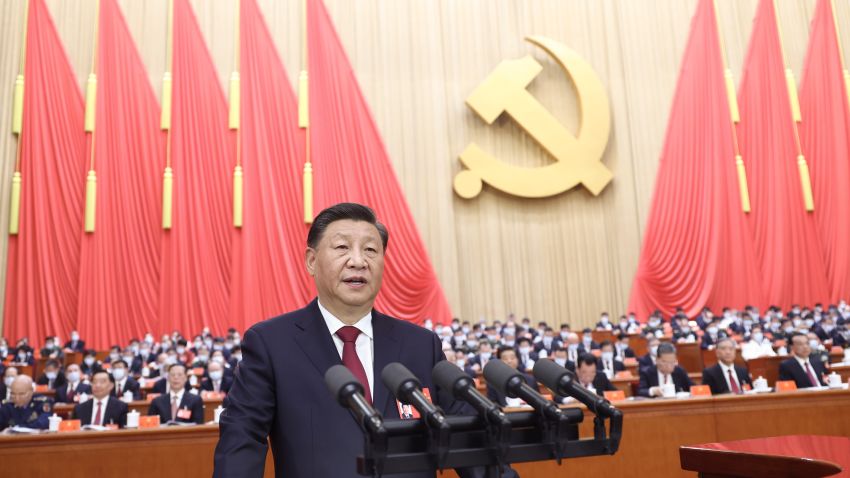
Xi Jinping delivers a report to the 20th National Congress of the Communist Party of China (CPC) on behalf of the 19th CPC Central Committee at the Great Hall of the People in Beijing, capital of China, Oct. 16, 2022. The 20th CPC National Congress opened on Sunday.

Editor’s Note: A version of this story appeared in CNN’s Meanwhile in China newsletter, a three-times-a-week update exploring what you need to know about the country’s rise and how it impacts the world. Sign up here.

BeijingCNN — 

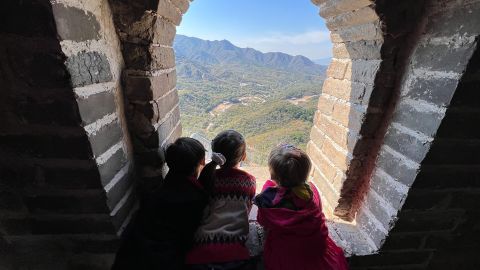
During China’s National Day holiday in early October, several expatriate friends and I took our young children – who are of mixed races and tend to stand out in a Chinese crowd – to the Great Wall on the outskirts of Beijing.

As we climbed a restored but almost deserted section of the ancient landmark, a few local families on their way down walked past us. Noticing our kids, one of their children exclaimed: “Wow foreigners! With Covid? Let’s get away from them…” The adults remained quiet as the group quickened their paces.

That moment has lingered on my mind. It feels like a snapshot that illustrates how China has changed since its strongman leader Xi Jinping took power a decade ago – it’s become an increasingly walled-in nation physically and psychologically – and such transformation will have long-term global implications.

Understanding the big picture is timely as Xi is poised to break convention to assume a third term as the head of the Chinese Communist Party – the real source of his power instead of the ceremonial presidency – at the ruling party’s twice-a-decade national congress, which opened in Beijing on Sunday.


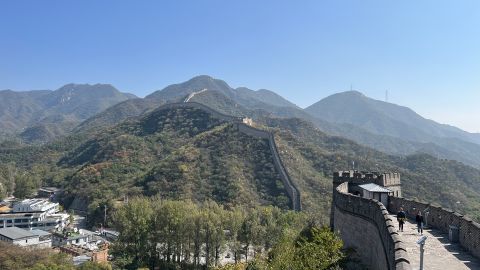
The view of the Great Wall of China on October 7, 2022.
Steven Jiang/CNN

The Great Wall, a top tourist attraction that normally draws throngs of visitors during holidays, stood nearly empty when we went thanks to Xi’s insistence – three years into the global pandemic – on a policy of zero tolerance for Covid infections while the rest of the world has mostly moved on and reopened.

China’s borders have remained shut for most international travelers since March 2020, while many foreigners who once called the country home have chosen to leave.
With the highly contagious Omicron variant raging through parts of the country, authorities had discouraged domestic travel ahead of National Day holiday. They are also sticking to a playbook of strict quarantine, incessant mass testing and invasive contact tracing – often locking down entire cities of millions over a handful of cases.
Unsurprisingly, holiday travel plummeted during the so-called “Golden Week” along with tourism spending, which fell to less than half of that in 2019, the last “normal” year.

And it’s not just one industry: Pessimism blankets other sectors, from automobile to real estate, as the world’s second-largest economy falters.


Children visit the Great Wall of China on October 6, 2022.
Steven Jiang/CNN

Xi’s biggest challenge

The Chinese economic slowdown poses a massive political challenge for Xi, whose party’s legitimacy in the past few decades has relied on rapid growth and rising incomes for 1.4 billion people. It’s also a harsh reality check for the international community: the world’s longtime growth engine is sputtering, just as the prospect of a global recession emerges.

But Xi’s costly “zero-Covid” intransigence is a natural outcome of the unprecedented amount of power he has amassed. For many Chinese officials, this policy is less about science and more about political loyalty to the country’s most powerful leader in decades.

Online videos abound of local health workers swabbing fruits, animals and even shoes for Covid testing despite the absence of sound scientific basis. China’s only Covid-related deaths in September were 27 people who were killed when their bus crashed on its way to a quarantine facility. Still, officials nationwide have doubled down on enforcing draconian rules, especially ahead of the party congress, helped by the world’s most sophisticated surveillance technologies.

China had boasted more security cameras than any other country even before Covid. Now, in the age of smartphones, mandatory apps allow the government to check people’s Covid status and track their movement in real time. Authorities can easily confine someone to their home by remotely switching the health app to code red – and they did just that on several occasions to stop potential protesters from taking to the streets.

Whether physical lockdowns or digital manipulation, these measures born out of “zero-Covid” have proven such effective means of control in a system obsessed with social stability that many worry Xi and his underlings will never ditch the policy.
A series of recent articles published by the party’s mouthpieces had reinforced such concern by stressing the policy’s “correctness” and “sustainability,” even before Xi hailed “zero-Covid” as a resounding success story in his two-hour speech Sunday. And state media fills its coverage with depictions of the “grim reality” in foreign countries where leaders supposedly turn a blind eye to mass fatalities and suffering caused by Covid – in contrast to China’s apparent triumph in saving lives with “minimal overall cost.”

For years, Xi’s cyber police have been fortifying the country’s so-called “Great Firewall” – perhaps the world’s most extensive internet filtering and censorship system that blocks and deletes anything deemed “harmful” by the party. Now supported by artificial intelligence, censors quickly scrub clean any posts seen as contradicting the party line – including on Covid.

This potent mix of propaganda and control under Xi appears to have had its desired effect on a large segment of Chinese society, creating a buffer for the leadership by convincing enough people of the superiority of China’s system even as millions of their fellow countrymen grow resentful of “zero-Covid.” But this approach, combined with prolonged border closure and escalating geopolitical tensions, also provides fertile ground for xenophobia.

The local child’s remarks on the Great Wall reflected that. But the true danger of the “blame the foreigners” sentiment comes when adults in powerful positions take advantage of it in the face of mounting pressure on the domestic front.
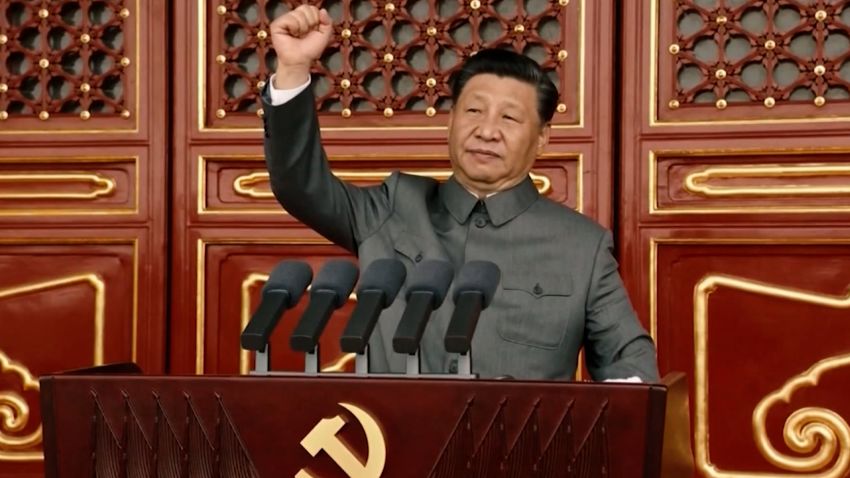
screengrab xi speech 2021

Here’s Xi Jinping’s vision to make China great again
03:04 – Source: CNN

Make China great again?

Since his ascent to the top in 2012, Xi’s ruling philosophy has become increasingly clear: Only he can make China great again by restoring the party’s – thus his – omnipresence and dominance, as well as the country’s rightful place on the global stage.

With China’s increasing economic and military might, coexistence with the West has given way to confrontation with the United States and its allies. Gone are the days of “hiding your strength and biding your time” – Chinese diplomats under Xi are proud warriors training fire on anyone who dares to question their government.

Underpinned by rising nationalism, China has started flexing military muscle beyond its shores. Tensions over Taiwan poses a real threat of war in Asia, as few doubt that “reunification” with the self-governed democratic island – long claimed by the Communist leadership despite having never ruled it – would be seen as the crown jewel of Xi’s legacy.

That outward power projection goes hand in hand with China’s sense of besiegement in a US-led world order, which Xi has made no secret of trying to reshape along with other autocrats like Russian President Vladimir Putin. Until that happens, though, the Chinese strongman’s instinct and demand for total control at home seem to have meant the erection of ever-higher barriers – in the real world and cyberspace – to keep out pesky outsiders, the perceived source of dangerous viruses and ideas.

A history paper released recently by a government-run research institute has gone viral as it, like Xi, upended a long-held consensus. Instead of denouncing the isolationist policy adopted by China’s last two imperial dynasties as a cause of their backward turn and eventual collapse, the authors defended its necessity to protect national sovereignty and security when faced with Western invaders.

The emperors of those dynasties, who also rebuilt parts of the Great Wall, failed to reverse their country’s decline back then. But the tools at their disposal were no match to the high-tech ones in the hands of China’s current ruler. Xi seems confident that his “walls” – among other things – will help him realize his oft-cited ultimate goal: the great rejuvenation of the Chinese nation.

Whether or not he succeeds, the world will feel the impact for years to come.

Around the Halls: Assessing the 2022 National Security Strategy

Brookings Institute

Shadi HamidDaniel S. HamiltonRyan HassBruce JonesPatricia M. KimSuzanne MaloneyAmy J. NelsonMichael E. O’HanlonNatan SachsBruce RiedelMelanie W. SissonMireya SolísConstanze Stelzenmüller, and Andrew Yeo Friday, October 14, 2022

ORDER FROM CHAOS

On October 12, 2022, U.S. President Joe Biden’s administration released the 2022 National Security Strategy (NSS). Brookings experts reflect on the document and what it reveals about the United States’ security trajectory.

SHADI HAMID (@shadihamid)
Senior Fellow, Center for Middle East Policy


In the past, I have been critical of the administration’s tendency to instrumentalize democracy by suggesting that its strength and value hinges on its ability to produce “good” outcomes. As I argue in “The Problem of Democracy“, this way of thinking about the democratic idea can easily lead to incoherence. Policymakers have little choice but to be incoherent, some of the time; the world is complicated. Still, identifying these tensions is worthwhile, in anticipation of when they might cause problems for U.S. foreign policy. In this case, they almost certainly will, because they already have.

Tiếp tục đọc “Around the Halls: Assessing the 2022 National Security Strategy”

The Massive Gas Field That Europe Can’t Use

Earthquake risks in the Netherlands have locals unwilling to plug the Russia-related energy shortfall.

The gas Megafield Europe Can’t use

By Cagan Koc and Diederik Baazil

11:01 GMT+7 6 tháng 10, 2022, Bloomberg

Beneath the windmill-dotted marshlands of the Netherlands lies Europe’s largest natural gas reserve. The sprawling Groningen field has enough untapped capacity to replace, as soon as this winter, much of the fuel Germany once imported from Russia.

Instead the field is in the process of shutting down, and the Netherlands is rebuffing calls to pump more, even as Europe braces for perhaps its toughest winter since World War II. The reason: Drilling has led to repeated earthquakes, and Dutch officials are loath to risk a backlash from residents by breaking promises.

Tiếp tục đọc “The Massive Gas Field That Europe Can’t Use”

As the US-Saudi oil spat intensifies, what are Biden’s options?

Analysis by Nadeen Ebrahim and Abbas Al Lawati, CNN

Updated 11:20 AM EDT, Fri October 14, 2022

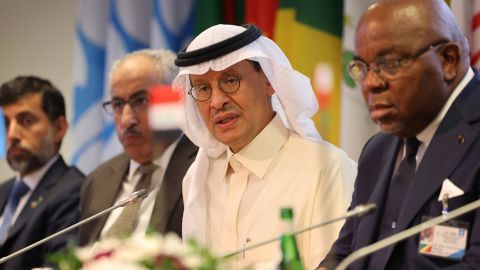
Abdulaziz bin Salman, Saudi Arabia's energy minister, center, speaks during a news conference following a meeting of OPEC+ countries in Vienna, Austria, on October 5.

Abdulaziz bin Salman, Saudi Arabia’s energy minister, center, speaks during a news conference following a meeting of OPEC+ countries in Vienna, Austria, on October 5.Akos Stiller/Bloomberg/Getty Images

Editor’s Note: A version of this story first appeared in CNN’s Meanwhile in the Middle East newsletter, a three-times-a-week look inside the region’s biggest stories. Sign up here.Abu DhabiCNN — 

The Saudi-American relationship appears to have hit rock bottom.

After a move by the Saudi-led OPEC+ oil cartel to cut oil production, which could see inflation in the United States soaring just weeks ahead of the midterm elections, President Joe Biden told CNN’s Jake Tapper that it’s time for the US to rethink its relationship with Saudi Arabia.

Tiếp tục đọc “As the US-Saudi oil spat intensifies, what are Biden’s options?”

China’s economy is ‘in deep trouble’ as Xi heads for next decade in power

Laura He

Analysis by Laura He, CNN Business

Published 7:52 PM EDT, Fri October 14, 2022

Video Ad Feedback

‘Are the best days behind China now?’ Disillusioned Chinese ponder future

14:05 – Source: CNNHong KongCNN Business — 

When Xi Jinping came to power a decade ago, China had just overtaken Japan to become the world’s second largest economy.

It has grown at a phenomenal pace since then. With an average annual growth rate of 6.7% since 2012, China has seen one of the fastest sustained expansions for a major economy in history. In 2021, its GDP hit nearly $18 trillion, constituting 18.4% of the global economy, according to the World Bank.

Tiếp tục đọc “China’s economy is ‘in deep trouble’ as Xi heads for next decade in power”

US scrambles to avoid supply chain chaos after China export curbs

South Korea’s SK Hynix and Taiwan Semiconductor Manufacturing granted authorisation to supply operations in China.

Men wearing masks stand in front of large wall image of computer chip
The US is reportedly scrambling to avoid disruptions to the semiconductor supply chain after announcing new export curbs on China’s chip industry [File: Aly Song/Reuters]

Published On 13 Oct 202213 Oct 2022 Al Jareeza

The United States is scrambling to tackle the unintended consequences of its new set of export curbs on China’s chip industry that could inadvertently harm the semiconductor supply chain, people familiar with the matter have said.

Hours before the new restrictions took effect, South Korean memory chipmaker SK Hynix said the US had granted it authorisation to receive goods for its chip production facilities in China without additional licensing imposed by the new rules.

Tiếp tục đọc “US scrambles to avoid supply chain chaos after China export curbs”

The Biden-⁠Harris Administration’s National Security Strategy

OCTOBER 12, 2022

FACT SHEET: The Biden-⁠Harris Administration’s National Security Strategy

  1. HOME
  2. BRIEFING ROOM
  3. STATEMENTS AND RELEASES

Read the full strategy here

President Biden’s National Security Strategy outlines how the United States will advance our vital interests and pursue a free, open, prosperous, and secure world. We will leverage all elements of our national power to outcompete our strategic competitors; tackle shared challenges; and shape the rules of the road.

The Strategy is rooted in our national interests: to protect the security of the American people, to expand economic opportunity, and to realize and defend the democratic values at the heart of the American way of life. In pursuit of these objectives, we will:

  • Invest in the underlying sources and tools of American power and influence;
  • Build the strongest possible coalition of nations to enhance our collective influence to shape the global strategic environment and to solve shared challenges; and
  • Modernize and strengthen our military so it is equipped for the era of strategic competition.

COOPERATION IN THE AGE OF COMPETITION
In the early years of this decisive decade, the terms of geopolitical competition will be set while the window of opportunity to deal with shared challenges will narrow. We cannot compete successfully to shape the international order unless we have an affirmative plan to tackle shared challenges, and we cannot do that unless we recognize how heightened competition affects cooperation and act accordingly.

Strategic Competition. The most pressing strategic challenge we face as we pursue a free, open, prosperous, and secure world are from powers that layer authoritarian governance with a revisionist foreign policy.

  • We will effectively compete with the People’s Republic of China, which is the only competitor with both the intent and, increasingly, the capability to reshape the international order, while constraining a dangerous Russia.
  • Strategic competition is global, but we will avoid the temptation to view the world solely through a competitive lens, and engage countries on their own terms.

Shared Challenges. While this competition is underway, people all over the world are struggling to cope with the effects of shared challenges that cross borders—whether it is climate change, food insecurity, communicable diseases, or inflation. These shared challenges are not marginal issues that are secondary to geopolitics. They are at the very core of national and international security and must be treated as such.

  • We are building the strongest and broadest coalition of nations to enhance our collective capacity to solve these challenges and deliver for the American people and those around the world.
  • To preserve and increase international cooperation in an age of competition, we will pursue a dual-track approach. On one track, we will work with any country, including our competitors, willing to constructively address shared challenges within the rules-based international order and while working to strengthen international institutions. On the other track, we will deepen cooperation with democracies at the core of our coalition, creating a latticework of strong, resilient, and mutually reinforcing relationships that prove democracies can deliver for their people and the world.

INVESTING AT HOME
The Biden-Harris Administration has broken down the dividing line between domestic and foreign policy because our strength at home and abroad are inextricably linked. The challenges of our age, from strategic competition to climate change, require us to make investments that sharpen our competitive edge and bolster our resilience.

  • Our democracy is at the core of who we are and is a continuous work in progress. Our system of government enshrines the rule of law and strives to protect the equality and dignity of all individuals. As we strive to live up to our ideals, to reckon with and remedy our shortcomings, we will inspire others around the world to do the same.
  • We are complementing the innovative power of the private sector with a modern industrial strategy that makes strategic public investments in our workforce, strategic sectors, and supply chains, especially in critical and emerging technologies.
  • A powerful U.S. military helps advance and safeguard vital U.S. national interests by backstopping diplomacy, confronting aggression, deterring conflict, projecting strength, and protecting the American people and their economic interests. We are modernizing our military, pursuing advanced technologies, and investing in our defense workforce to best position America to defend our homeland, our allies, partners, and interests overseas, and our values across the globe.

OUR ENDURING LEADERSHIP
The United States will continue to lead with strength and purpose, leveraging our national advantages and the power of our alliances and partnerships. We have a tradition of transforming both domestic and foreign challenges into opportunities to spur reform and rejuvenation at home. The idea that we should compete with major autocratic powers to shape the international order enjoys broad support that is bipartisan at home and deepening abroad.

  • Our alliances and partnerships around the world are our most important strategic asset that we will deepen and modernize for the benefit of our national security.
  • We place a premium on growing the connective tissue on technology, trade and security between our democratic allies and partners in the Indo-Pacific and Europe because we recognize that they are mutually reinforcing and the fates of the two regions are intertwined.
  • We are charting new economic arrangements to deepen economic engagements with our partners and shaping the rules of the road to level the playing field and enable American workers and businesses—and those of partners and allies around the world—to thrive.
  • As we deepen our partnerships around the world, we will look for more democracy, not less, to shape the future. We recognize that while autocracy is at its core brittle, democracy’s inherent capacity to transparently course-correct enables resilience and progress.

AFFIRMATIVE ENGAGEMENT
The United States is a global power with global interests; we are stronger in each region because of our engagement in the others. We are pursuing an affirmative agenda to advance peace and security and to promote prosperity in every region.

  • As an Indo-Pacific power, the United States has a vital interest in realizing a region that is open, interconnected, prosperous, secure, and resilient. We are ambitious because we know that we and our allies and partners hold a common vision for the region’s future.
  • With a relationship rooted in shared democratic values, common interests, and historic ties, the transatlantic relationship is a vital platform on which many other elements of our foreign policy are built. To effectively pursue a common global agenda, we are broadening and deepening the transatlantic bond.
  • The Western Hemisphere directly impacts the United States more than any other region so we will continue to revive and deepen those partnerships to advance economic resilience, democratic stability, and citizen security.
  • A more integrated Middle East that empowers our allies and partners will advance regional peace and prosperity, while reducing the resource demands the region makes on the United States over the long term.
  • In Africa, the dynamism, innovation, and demographic growth of the region render it central to addressing complex global problems.

###

Council on Foreign Relations – Daily news brief Oct. 10, 2022

Top of the Agenda

Russian Missiles Strike Across Ukraine Following Bridge Attack

Russia launched (FT) its most extensive air strikes on Ukraine in months after a Russian bridge was bombed over the weekend. At least ten people were killed across Ukraine, including at least five people in the capital, Kyiv. Russian President Vladimir Putin called the strikes a retaliation for Ukraine’s “terrorist attack” on a bridge linking Russia to Crimea, the Ukrainian peninsula Moscow annexed in 2014. Ukraine has not claimed responsibility for the bridge attack.  The Russian strikes hit at least ten Ukrainian cities, targeting infrastructure and civilian areas. North Atlantic Treaty Organization (NATO) Secretary-General Jens Stoltenberg called the attacks (Reuters) “horrific and indiscriminate.” Meanwhile, Belarusian President Alexander Lukashenko said he ordered troops to deploy (Reuters) alongside Russian fighters near Ukraine.
Tiếp tục đọc “Council on Foreign Relations – Daily news brief Oct. 10, 2022”

How Russian timber bypasses U.S. sanctions by way of Vietnam

A new report says Russian birch wood is routed through Asia before being shipped to American stores

By Michael Tatarski

October 1, 2022 at 2:00 a.m. EDT Ư=WashingtonPost

HO CHI MINH CITY, Vietnam — Russian birch wood has continued to flow to American consumers, disguised as Asian products, despite U.S. economic sanctions imposed on Russia over its invasion of Ukraine, a new report says.

Are you on Telegram? Subscribe to our channel for the latest updates on Russia’s war in Ukraine.

The Environmental Investigation Agency (EIA), a nonprofit watchdog group based in Britain, has found that most birch products currently being exported from Vietnam to the United States originate in Russia. According to Vietnam customs data, roughly 40,000 cubic meters of birch wood is transported every month from Russia andChina into Vietnam, where it’s assembled into furniture and plywood.

Tiếp tục đọc “How Russian timber bypasses U.S. sanctions by way of Vietnam”

Council on Foreign Relations – Daily news brief Oct. 7, 2022

Top of the Agenda

Human Rights Advocates From Belarus, Russia, and Ukraine Win Nobel Peace Prize

This year’s Nobel Peace Prize was awarded (AP) to jailed Belarusian rights activist Ales Bialiatski, the Russian rights group Memorial, and the Ukrainian rights group Center for Civil Liberties. Norwegian Nobel Committee Chair Berit Reiss-Andersen celebrated their work toward anti-militarism, the rule of law, and “peace and fraternity between nations.” Bialiatski founded the human rights organization Viasna and was jailed without trial following his participation in the 2020 protests against the reelection of Belarusian President Alexander Lukashenko. A Russian court shut down Memorial in December, and the Center for Civil Liberties has worked to document Russian war crimes against Ukrainian civilians. While Reiss-Andersen said the prize is not intended to send a message to Russian President Vladimir Putin, it is seen as an implicit rebuke of Russia’s continued onslaught on Ukraine (Reuters)
Tiếp tục đọc “Council on Foreign Relations – Daily news brief Oct. 7, 2022”