I am an attorney in the Washington DC area, with a Doctor of Law in the US, attended the master program at the National School of Administration of Việt Nam, and graduated from Sài Gòn University Law School. I aso studied philosophy at the School of Letters in Sài Gòn.
.
I have worked as an anti-trust attorney for Federal Trade Commission and a litigator for a fortune-100 telecom company in Washington DC.
I have taught law courses for legal professionals in Việt Nam and still counsel VN government agencies on legal matters.
I have founded and managed businesses for me and my family, both law and non-law.
I have published many articles on national newspapers and radio stations in Việt Nam.
In 1989 I was one of the founding members of US-VN Trade Council, working to re-establish US-VN relationship.
Since the early 90's, I have established and managed VNFORUM and VNBIZ forum on VN-related matters; these forums are the subject of a PhD thesis by Dr. Caroline Valverde at UC-Berkeley and her book Transnationalizing Viet Nam.
I translate poetry and my translation of "A Request at Đồng Lộc Cemetery" is now engraved on a stone memorial at Đồng Lộc National Shrine in VN.
I study and teach the Bible and Buddhism. In 2009 I founded and still manage dotchuoinon.com on positive thinking and two other blogs on Buddhism.
In 2015 a group of friends and I founded website CVD - Conversations on Vietnam Development (cvdvn.net).
I study the art of leadership with many friends who are religious, business and government leaders from many countries.
I have written these books, published by Phu Nu Publishing House in Hanoi:
"Positive Thinking to Change Your Life", in Vietnamese (TƯ DUY TÍCH CỰC Thay Đổi Cuộc Sống) (Oct. 2011)
"10 Core Values for Success" (10 Giá trị cốt lõi của thành công) (Dec. 2013)
"Live a Life Worth Living" (Sống Một Cuộc Đời Đáng Sống) (Oct. 2023)
I practice Jiu Jitsu and Tai Chi for health, and play guitar as a hobby, usually accompanying my wife Trần Lê Túy Phượng, aka singer Linh Phượng.
The Biden administration pre-emptively halted any penalties from the case in June, prompting critics to say the administration had shortcut its own trade rules
WASHINGTON — U.S. officials have determined that four of eight major Chinese solar companies under investigation in recent months tried to evade tariffs by funneling products into the United States through Southeast Asian countries, in a trade case that has pitted clean energy advocates against domestic solar panel manufacturers.
The decision applies to the Thailand operations of Canadian Solar and Trina Solar, as well as BYD Cambodia and Vina Solar Vietnam, according to documents published by the Department of Commerce Friday morning.
All the versions of this article: [English] [Español] [français]
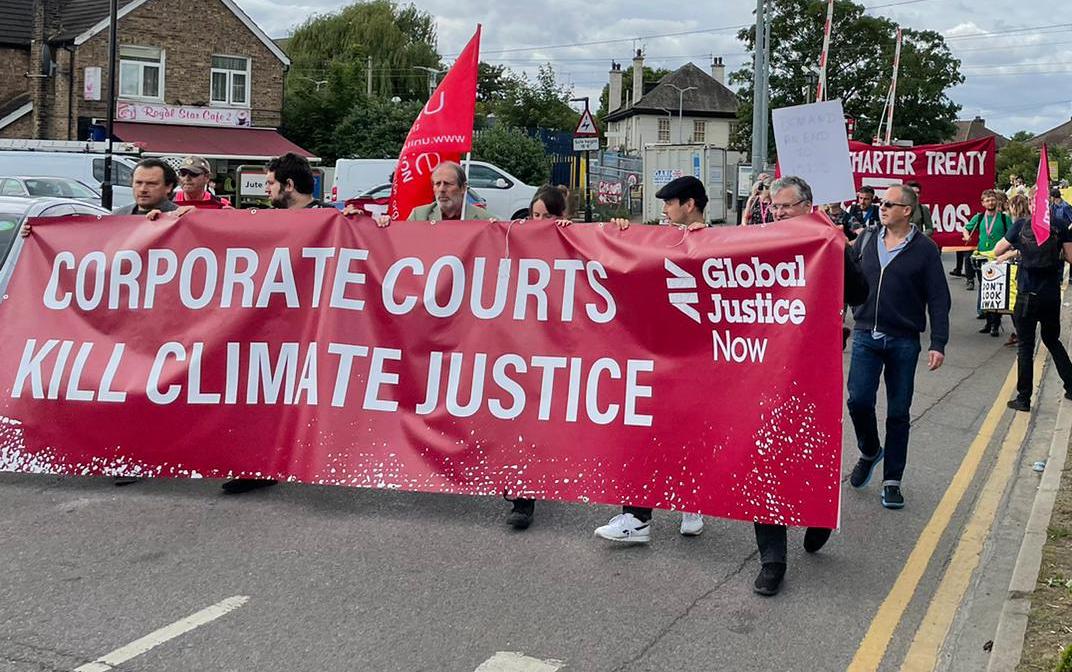
Photo: Global Justice Now
14 November 2022
Statement on ISDS and climate
Civil society organisations are calling on governments to remove the threat that ISDS (investor state dispute settlement) poses to the climate. The following statement outlines our primary concerns and demands. We seek to put pressure on our governments as they meet at COP 27 in November 2022.
Please read it and consider signing on using the form at the bottom
Outrage Over COVID-19 Restrictions Prompts Rare Protests in China
Tens of thousands of people joined demonstrations (FT) in at least ten cities across China over the weekend, at times clashing with security forces. In addition to objecting to harsh restrictions under the country’s zero-COVID policy, many protesters denounced limitations on freedom of speech and some called for Chinese President Xi Jinping to step down (NYT). The protests were sparked by a deadly fire in a locked-down area of the Xinjiang region on Friday. Demonstrators marched in urban centers and at universities, and today police patrolled areas of Beijing and Shanghai (Reuters) where the demonstrations occurred. Authorities eased some pandemic restrictions (AP) in Beijing and Guangzhou today, but did not mention the demonstrations.
Kinhtedothi – Văn phòng đại diện Hà Nội là văn phòng thứ năm của PCA được thành lập ngoài trụ sở chính tại Cung điện Hòa Bình, thủ đô La Hay của Hà Lan.
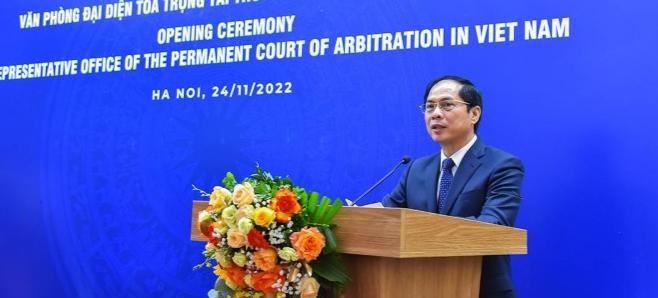
Sáng 24/11, Bộ trưởng Ngoại giao Bùi Thanh Sơn cùng Tổng Thư ký Tòa trọng tài thường trực (PCA) Marcin Czepelak đã chính thức khánh thành Văn phòng đại diện của PCA tại Hà Nội với biển tên “Ngôi nhà Hòa bình” tại 48A Trần Phú, Hà Nội.
“Ngôi nhà Hòa bình”
Bộ trưởng Ngoại giao Bùi Thanh Sơn tại buổi lễ sáng 24/11.
Tại buổi lễ, Bộ trưởng Bùi Thanh Sơn chúc mừng Văn phòng PCA chính thức đi vào hoạt động, hiện thực hóa cam kết của hai bên tại Nghị định thư năm 2021. “Việt Nam đánh giá cao vai trò của PCA là cơ quan giải quyết tranh chấp quốc tế, đã đóng góp hiệu quả và tích cực vào giải quyết tranh chấp giữa các quốc gia và giữa quốc gia với các tổ chức, bảo đảm tuân thủ luật pháp quốc tế, góp phần duy trì hòa bình và an ninh quốc tế,” Bộ trưởng Bùi Thanh Sơn khẳng định.
Unabridged original pdf scans – volume 1 (I-II) 671 pages; volume 2 (III-IV) 717 pages; volume 3 (V-VII) 579 pages.
The Gulag Archipelago is Solzhenitsyn’s masterwork, a vast canvas of camps, prisons, transit centres and secret police, of informers and spies and interrogators and also of heroism, a Stalinist anti-world at the heart of the Soviet Union where the key to survival lay not in hope but in despair. The work is based on the testimony of some two hundred survivors, and on the recollection of Solzhenitsyn’s own eleven years in labour camps and exile. It is both a thoroughly researched document and a feat of literary and imaginative power.
By Raphael S. Cohen, the director of the Strategy and Doctrine Program at the Rand Corporation’s Project Air Force, and Gian Gentile, the deputy director of the Rand Corporation’s Army Research Division.
Russian President Vladimir Putin chairs a commission on military-technical cooperation with foreign states in 2017.
NOVEMBER 22, 2022, 1:36 PM
“Give diplomacy a chance.” This phrase gets repeated in almost every conflict, and the war in Ukraine is no exception. A chorus of commentators, experts, and former policymakers have pushed for a negotiated peace at every turn on the battlefield: after the successful defense of Kyiv, once Russia withdrew to the east, during the summer of Russia’s ploddingprogress in the Donbas, after Russia’s rout in Kharkiv oblast, and now, in the aftermath of Russia’s retreat from Kherson. The better the Ukrainian military has done, the louder the calls for Ukraine to negotiate have become.
And today, it’s no longer just pundits pushing for a negotiated settlement. The U.S. House of Representatives’ progressive caucus penned a letter to President Joe Biden calling for a diplomatic solution, only to retract it a short time later. Republican House leader Kevin McCarthy has promised to scrutinize military aid to Ukraine and push for an end to the war. Even Joint Chiefs of Staff Chairman Mark Milley has reportedly pushed for Ukraine to negotiate, although he subsequently made clear that the decision should be Kyiv’s alone.
And why not negotiate? Isn’t a diplomatic solution the best—indeed, the only—option for any kind of long-term settlement between Russia and Ukraine? And if so, what could possibly be the harm in exploring those options? Quite a lot, actually: Despite the way it is commonly portrayed, diplomacy is not intrinsically and always good, nor is it cost-free. In the Ukraine conflict, the problems with a push for diplomacy are especially apparent. The likely benefits of negotiations are minimal, and the prospective costs could be significant.
First, the argument that most wars end with diplomacy and so, therefore, will the war in Ukraine is misleading at best. Some wars—such as the U.S. Civil War and World War II—were fought to the bitter end. Others—like the American Revolution, the Spanish-American War, World War I, or the First Gulf War—were won on the battlefield before the sides headed to the negotiating table. Still others—like the Korean War—ended in an armistice, but only after the sides had fought to a standstill. By contrast, attempts at a diplomatic settlement while the military situation remained fluid—as the United States tried during the Vietnam War and, more recently, in Afghanistan—have ended in disaster. Even if most wars ultimately end in diplomatic settlements, that’s not in lieu of victory.
Pushing Ukraine to negotiate now sends a series of signals, none of them good.
At this particular moment, diplomacy cannot end the war in Ukraine, simply because Russian and Ukrainian interests do not yet overlap. The Ukrainians, understandably, want their country back. They wantreparations for the damage Russia has done and accountability for Russian war crimes. Russia, by contrast, has made it clear that it still intends to bend Ukraine to its will. It has officially annexed several regions in eastern and southern Ukraine, so withdrawing would now be tantamount, for them, to ceding parts of Russia. Russia’s economy is in ruins, so it cannot pay reparations. And full accountability for Russian war crimes may lead to Russian President Vladimir Putin and other top officials getting led to the dock. As much as Western observers might wish otherwise, such contrasts offer no viable diplomatic way forward right now.
Nor is diplomacy likely to forestall future escalation. One of the more common refrains as to why the United States should give diplomacy a chance is to avert Russia making good on its threats to use nuclear weapons. But what is causing Russia to threaten nuclear use in the first place? Presumably, it is because Russia is losing on the battlefield and lacks other options. Assuming that “diplomatic solution” is not a euphemism for Ukrainian capitulation, as its proponents insist, Russia’s calculations about whether and how to escalate would not change. Russia would still be losing the war and looking for a way to reverse its fortunes.
Diplomacy can moderate human suffering, but only on the margins. Throughout the conflict, Ukraine and Russia have negotiated prisoner swaps and a deal to allow grain exports. This kind of tactical diplomacy on a narrow issue was certainly welcome news for the captured troops and those parts of the world that depend on Ukrainian food exports. But it’s not at all clear how to ramp up from these relatively small diplomatic victories. Russia, for example, won’t abandon its attacks on Ukrainian infrastructure heading into the winter as it attempts to freeze Ukraine into submission, because that’s one of the few tactics Russia has left.
At the same time, more expansive diplomacy comes at a cost. Pushing Ukraine to negotiate now sends a series of signals, none of them good: It signals to the Russians that they can simply wait out Ukraine’s Western supporters, thereby protracting the conflict; it signals to the Ukrainians—not to mention other allies and partners around the world—that the United States might put up a good fight for a while but will, in the end, abandon them; and it tells the U.S. public that its leaders are not invested in seeing this war through, which in turn could increase domestic impatience with it.
Starting negotiations prematurely carries other costs. As Biden remarked in June: “Every negotiation reflects the facts on the ground.” Biden is right. Ukraine now is in a stronger negotiating position because it fought rather than talked. The question today is whether Ukraine will ultimately regain control over Donbas and Crimea, not Kharkiv and Kherson. This would not have been the case had anyone listened to the “give diplomacy a chance” crowd back in the spring or summer.
READ MORE
Joe Biden and Vladimir Putin meet during the U.S.-Russia summit at Villa La Grange on June 16, 2021 in Geneva, Switzerland.
There are plenty of reasons to believe that Kyiv will be in an even stronger bargaining position as time passes. The Ukrainians are coming off a string of successes—most recently retaking Kherson—so they have operational momentum. While Ukraine has suffered losses, Western military aid continues to flow in. Despite Russia’s missile strikes on civilian infrastructure, Ukrainian morale remains strong. By contrast, Russia is on the back foot. Its military inventories have been decimated, and it is struggling to acquire alternative supplies. Its mobilization effort prompted as many Russian men to flee the country as were eventually mobilized to fight in Ukraine. Moreover, as the Institute for the Study of War has assessed, “Russian mobilized servicemen have shown themselves to be inadequately trained, poorly equipped, and very reluctant to fight.”
By contrast, a negotiated settlement—even if it successfully freezes a conflict—comes with a host of moral, operational, and strategic risks. It leaves millions of Ukrainians to suffer under Russian occupation. It gives the Russian military a chance to rebuild, retrain, and restart the war at a later date. Above all, a pause gives time for the diverse international coalition supporting Ukraine to fracture, either on its own accord or because of Russian efforts to drive a wedge into the coalition.
Eventually, there will come a time for negotiations. That will be when Russia admits it has lost and wants to end the war. Or it will come when Ukraine says that the restoration of its territory isn’t worth the continued pain of the Russian bombardment. So far, neither scenario has come to pass. Indeed, the only softening of Russia’s position was Putin’s statement last month seemingly ruling out nuclear use—at least for the time being. Apart from that, the Kremlin seems intent on doubling down, even as its military continues to be slowly pushed out of Ukraine. That’s hardly an invitation to negotiate.
Might these arguments against the reflexive call for negotiations mean that war continues for months and possibly even years? Perhaps. But it’s not yet clear that there is a viable diplomatic alternative. And even if there was, it should be Ukraine’s choice whether or not to pursue it. Ukraine and its people, after all, are paying the price in blood. If the United States and its allies are sending tens of billions of dollars in military and economic aid to Ukraine, this is only a tiny fraction of what Washington has recently spent on defense and otherwars. Thanks to the Ukrainians’ excellent use of this aid, the military threat from the United States’ second-most importantadversary has been dealt a serious blow. The cold, if cruel, reality is that the West’s return on its investment in Ukraine seems high.
The harshness of these realities, however, does not make current calls for a negotiated settlement intrinsically moral. If diplomacy means ramming through a settlement when the battlefield circumstances dictate otherwise, it is not necessarily the morally more justifiable or strategically wiser approach. Sometimes fighting—not talking—is indeed the better option.
“To everything there is a season,” Ecclesiastes says, including “a time of war, and a time of peace.” There will come a time for diplomacy in Ukraine. Hopefully, it will come soon. But it doesn’t seem to be today.
Raphael S. Cohen is the director of the Strategy and Doctrine Program at the Rand Corporation’s Project Air Force.
Gian Gentile is the deputy director of the Rand Corporation’s Army Research Division.
Join the Conversation
Commenting on this and other recent articles is just one benefit of a Foreign Policy subscription.
The final deal of this year’s UN climate conference, COP27, included two historic firsts (Bloomberg): an agreement to establish a fund to help poor countries cope with climate damages, and a call for multilateral lenders such as the World Bank and International Monetary Fund to implement reforms ensuring that more of their funding addresses the climate crisis. The details of the loss and damage fund were left for future talks. Meanwhile, the communiqué left out proposed text on phasing down use of all fossil fuels, mentioning only coal. Negotiators were given an unusually short period of time to review the draft text on several major aspects of the communiqué, the Financial Times reported. After some delegates criticized the lack of transparency in negotiations, UN climate chief Simon Steill said he would review the summit process before next year’s conference to make it “as effective as possible.”
Analysis “The loss and damage deal agreed is a positive step, but it risks becoming a ‘fund for the end of the world’ if countries don’t move faster to slash emissions,” the World Wide Fund for Nature’s Manuel Pulgar Vidal tells the New York Times. “[The loss and damage agreement] tees up a big fight for next year’s Cop28 over who pays into and who benefits from the fund. Rich countries are pushing for China to chip in and finance to be targeted at ‘vulnerable’ countries,” Climate Home News’ Megan Darby, Joe Lo, and Chloé Farand write. This Backgrounder looks at the successes and failures of global climate agreements.
Republish our articles for free, online or in print, under Creative Commons licence.
Republish this article
EPA/SEDAT SUNA EPA-EFE/SEDAT SUNA
For 30 years, developing nations have fought to establish an international fund to pay for the “loss and damage” they suffer as a result of climate change. As the COP27 climate summit in Egypt wrapped up over the weekend, they finally succeeded.
While it’s a historic moment, the agreement of loss and damage financing left many details yet to be sorted out. What’s more, many critics have lamented the overall outcome of COP27, saying it falls well short of a sufficient response to the climate crisis. As Alok Sharma, president of COP26 in Glasgow, noted:
Friends, I said in Glasgow that the pulse of 1.5 degrees was weak. Unfortunately it remains on life support.
But annual conferences aren’t the only way to pursue meaningful action on climate change. Mobilisation from activists, market forces and other sources of momentum mean hope isn’t lost.
The World This Week will not be sent next week due to the holiday.
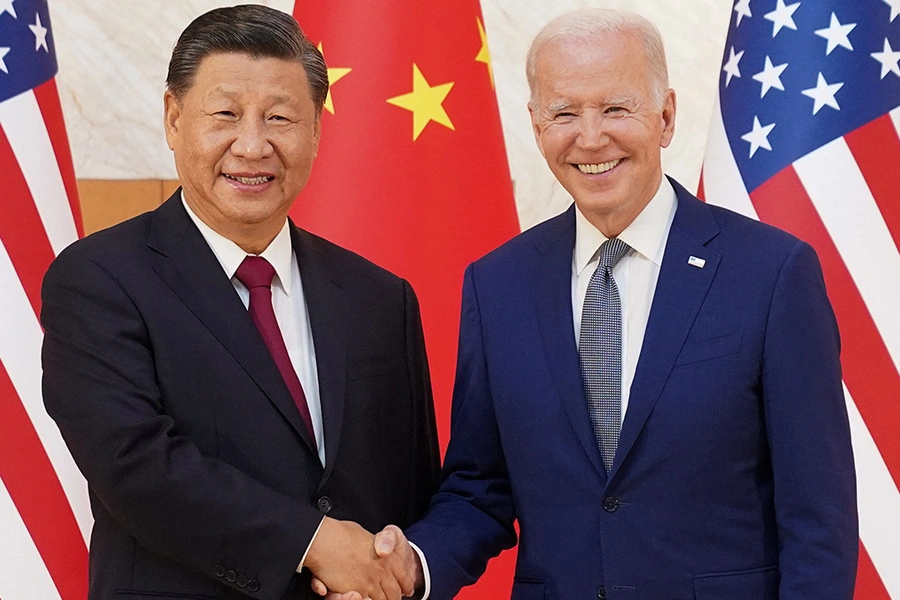
Explore the Biden-Xi Meeting David Sacks U.S. President Joe Biden and Chinese leader Xi Jinping meet on the sidelines of the Group of Twenty summit in Bali, Indonesia. Kevin Lamarque/ReutersThe meeting between U.S. President Joe Biden and Chinese leader Xi Jinping did not resolve major disagreements, but it could start the process of building guardrails to prevent competition from turning into conflict. Read more on Asia Unbound
The meeting between U.S. President Joe Biden and Chinese leader Xi Jinping did not resolve major disagreements, but it could start the process of building guardrails to prevent competition from turning into conflict.
U.S. President Joe Biden and Chinese leader Xi Jinping meet on the sidelines of the Group of Twenty summit in Bali, Indonesia. Kevin Lamarque/Reuters
On the margins of the Group of Twenty (G20) gathering in Bali, Indonesia, U.S. President Joe Biden and Chinese leader Xi Jinping met for the first time in person as leaders of their respective nations. Their three-and-a-half-hour meeting came against the backdrop of heightened tensions over Taiwan, unprecedented U.S. export controls on advanced technologies levied against China, ramped up North Korean missile tests, and the ongoing war in Ukraine.
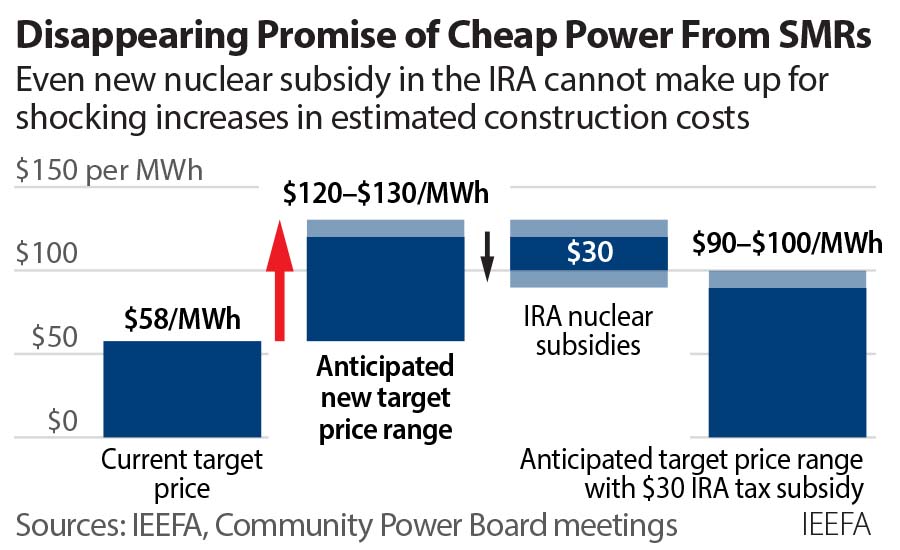
The original target power price for a planned 12-module SMR by UAMPS (Utah Associated Municipal Power Systems) and NuScale Power Corporation was $55 per megawatt-hour (MWh).
When UAMPS reduced the size of the carbon-free power plant (CFPP) to six modules in the summer of 2021, it raised the target power price to $58 per MWh.
Recent presentations to the power boards of Washington City and Hurricane, two of the Utah communities that have signed agreements to buy power from the CFPP, suggest that project power prices are now likely to end up in the range of $90-$100 per MWh.
The prices include an anticipated $1.4 billion subsidy from the U.S. Department of Energy and a new subsidy from the Inflation Reduction Act (IRA) on the order of $30 per MWh. The unsubsidized price of the power from the CFPP would be substantially higher than $100 per MWh, perhaps even double the current $58 target price.
The estimated target price of the power from the CFPP has gone up because projected building costs have increased. According to minutes of the October 2022 meeting of the Idaho Falls Power Board, the increased costs in the new Class 3 cost estimate currently being finalized for the CFPP have been shocking, even to NuScale and Fluor, the company responsible for overall management of the project.
Even if the new target price is only in the range of $90 to $100 per MWh, there is no guarantee that this will be the actual price that communities will pay for the power from the CFPP. The power sales contract for the project binds communities to pay the actual costs and expenses of the project—no matter how much.
An official at the Hurricane, Utah, power board’s October meeting said the anticipated new cost estimate increase is a “big red flag in our face.”
If the new estimated target price for the power from the CFPP is higher than the current price of $58 per MWh, which the power department director for Washington City, Utah, has said he believes will happen, communities will be able to terminate their power purchase agreements with UAMPS for the power from CFPP without any financial penalties. UAMPS also would have the option of cancelling the project.
The CFPP Can Be Expected to Experience Additional Cost Increases
UAMPS currently projects that the CFPP will be completed in 2030. That leaves eight years left in the project schedule to complete the project’s design, licensing, construction and pre-operational and startup testing.
NuScale has told the Nuclear Regulatory Commission that the project design work won’t be completed until an application for a combined operating license is submitted, which is not expected until early 2024. Nuclear-related construction is not expected to begin before late 2025.
Nuclear industry experience over the past four decades points to the likelihood of future cost increases and schedule delays during all phases of the project—design, construction, licensing, and testing. For example, the estimated all-in cost of the two new reactors at Georgia Power’s Vogtle project, the only new reactors currently being built in the U.S., has increased by 140% since nuclear construction began in 2011. Vogtle’s construction also has taken far longer than originally estimated; both reactors are currently more than six years behind schedule.
Few New Utilities Have Signed Up to Buy Power From the CFPP
When IEEFA released its report on the NuScale SMR in February 2022, communities had signed up to buy only 101 megawatts (MW) of the 462MW CFPP. According to the presentations to the Washington City and Hurricane power boards, the situation appears not to have changed. For example, the Washington City power department director told the city’s power board on Nov. 1 that the biggest challenge to the CFPP is the number of MWs subscribed. Parties seem interested in the CFPP but are wary about potential cost overruns.
It is reasonable to expect that if communities were reluctant to sign on to the CFPP at a target price of $58 per MWh, they’re likely to be much more wary if the project’s target price of power goes to $90 to $100 per MWh or higher.
The general manager of the Idaho Falls Power Board believes it would be difficult to secure financing for the CFPP without a fully subscribed project.
Higher CFPP Power Prices Will Make It Even Less Competitive
A February 2022 IEEFA report on NuScale showed that renewable resources and battery storage will provide reliable electricity at lower cost than the UAMPS CFPP—even if price for the power from the project is just $58 per MWh.
David Schlissel is IEEFA’s Director of Resource Planning Analysis. His work focuses primarily on the technical and economic viability of resources being used or being proposed for use in the electric power sector.
Officials at Yale’s and Harvard’s law schools said Wednesday the institutions will no longer participate in U.S. News & World Report’s annual rankings of the top law schools. An official at Yale Law School called the methodology behind the influential listing “profoundly flawed.”
Yale Law School Dean Heather K. Gerken, who made the announcement in a blog post, said the rankings discourage universities from admitting low-income students and supporting those who wish to pursue careers in public service. Tuition and housing at Yale Law School — whose alumni include former President Bill Clinton and four of the current Supreme Court justices — run nearly $97,000 per year. Tuition and living expenses for Harvard Law School are more than $107,000 annually.





 We believe in the free flow of information

 CVD
CVD 