I am an attorney in the Washington DC area, with a Doctor of Law in the US, attended the master program at the National School of Administration of Việt Nam, and graduated from Sài Gòn University Law School. I aso studied philosophy at the School of Letters in Sài Gòn.
.
I have worked as an anti-trust attorney for Federal Trade Commission and a litigator for a fortune-100 telecom company in Washington DC.
I have taught law courses for legal professionals in Việt Nam and still counsel VN government agencies on legal matters.
I have founded and managed businesses for me and my family, both law and non-law.
I have published many articles on national newspapers and radio stations in Việt Nam.
In 1989 I was one of the founding members of US-VN Trade Council, working to re-establish US-VN relationship.
Since the early 90's, I have established and managed VNFORUM and VNBIZ forum on VN-related matters; these forums are the subject of a PhD thesis by Dr. Caroline Valverde at UC-Berkeley and her book Transnationalizing Viet Nam.
I translate poetry and my translation of "A Request at Đồng Lộc Cemetery" is now engraved on a stone memorial at Đồng Lộc National Shrine in VN.
I study and teach the Bible and Buddhism. In 2009 I founded and still manage dotchuoinon.com on positive thinking and two other blogs on Buddhism.
In 2015 a group of friends and I founded website CVD - Conversations on Vietnam Development (cvdvn.net).
I study the art of leadership with many friends who are religious, business and government leaders from many countries.
I have written these books, published by Phu Nu Publishing House in Hanoi:
"Positive Thinking to Change Your Life", in Vietnamese (TƯ DUY TÍCH CỰC Thay Đổi Cuộc Sống) (Oct. 2011)
"10 Core Values for Success" (10 Giá trị cốt lõi của thành công) (Dec. 2013)
"Live a Life Worth Living" (Sống Một Cuộc Đời Đáng Sống) (Oct. 2023)
I practice Jiu Jitsu and Tai Chi for health, and play guitar as a hobby, usually accompanying my wife Trần Lê Túy Phượng, aka singer Linh Phượng.
When Antony Blinken makes an expected trip to Beijing in the coming days for what would bethe first visit to China by a US secretary of state since 2018, he will be cutting a stark contrast to the scene in the Chinese capital one year earlier.
Then, Chinese leader Xi Jinping welcomed Russian President Vladimir Putin for the opening of the Beijing Olympics – meeting for talks and dinner in Putin’s honor, and declaring a “no limits” partnership between the two neighbors. Weeks later, as Russian tanks rolled across the border into Ukraine starting an invasion that would devastate the country and cause a humanitarian crisis, Chinese leaders did not shrink from that declaration.
Though Beijing claimed impartiality in the conflict and no advance knowledge of Russia’s intent, it also refused to condemn Moscow. Instead, it parroted Kremlin lines blaming NATO for provoking the conflict – further fracturing relationships with both Europe and the US.
Tiếp tục đọc “Putin and Xi are as close as ever, and that’s a problem for the US “→
China’s coast guard presence in the South China Sea is more robust than ever. An analysis of automatic identification system (AIS) data from commercial provider MarineTraffic shows that the China Coast Guard (CCG) maintained near-daily patrols at key features across the South China Sea in 2022. Together with the ubiquitous presence of its maritime militia, China’s constant coast guard patrols show Beijing’s determination to assert control over the vast maritime zone within its claimed nine-dash line.
China Coast Guard Patrols in the South China Sea 2022
AMTI analyzed AIS data from the year 2022 across the five features most frequented by Chinese patrols: Second Thomas Shoal, Luconia Shoals, Scarborough Shoal, Vanguard Bank, and Thitu Island. Comparison with data from 2020 shows that the number of calendar days that a CCG vessel patrolled near these features increased across the board.
The number of days the CCG patrolled at Vanguard Bank, a major site of Vietnamese oil and gas development that has seen standoffs between Chinese and Vietnamese law enforcement in years past, more than doubled, increasing from 142 days in 2020 to 310 days in 2022. Days patrolled at Second Thomas Shoal, where the Philippines maintains a precarious garrison aboard the BRP Sierra Madre, increased from 232 days to 279; those at Luconia Shoals, near important Malaysian oil and gas operations, from 279 to 316; and at Scarborough Shoal, traditionally fished and administered by the Philippines, from 287 to 344. Data on the reefs surrounding Philippine-held Thitu Island was not collected in previous analyses, but CCG vessels were on site 208 days over the past year. At some features, especially Scarborough Shoal, multiple CCG vessels were present simultaneously. Observed patrols across all five features amounted to 1,703 ship-days in total.
[TĐH: This is a very good economic lesson on monopoly. In this case, the monopoly in selling tickets of entertainment shows, and how the monopoly was formed.]
Good morning. One company controls a wide swath of the concert industry, and lawmakers say music fans are paying the price.
Protesters outside the Senate this past week.Kenny Holston/The New York Times
Ticketmaster has come under intense scrutiny since it botched the rollout of tickets to Taylor Swift’s tour late last year. Though the company has long been accused of anti-consumer practices, the backlash to the Swift debacle brought a new level of public attention. This week, the Senate held a hearing that explored whether Ticketmaster and its parent company, Live Nation Entertainment, have an unfair monopoly over the live music industry.
I spoke with Ben Sisario, who covers the music industry for The Times, about how Ticketmaster become so dominant.
A voter arrives at a polling place on March 3, 2020 in Minneapolis, Minnesota. Stephen Maturen/Getty Images
For more than three-quarters of a century, the United States has played an outsized, constructive role in the world. To be sure, there have been major errors, including the Vietnam War and the 2003 Iraq War, but the US got it right far more often than not.
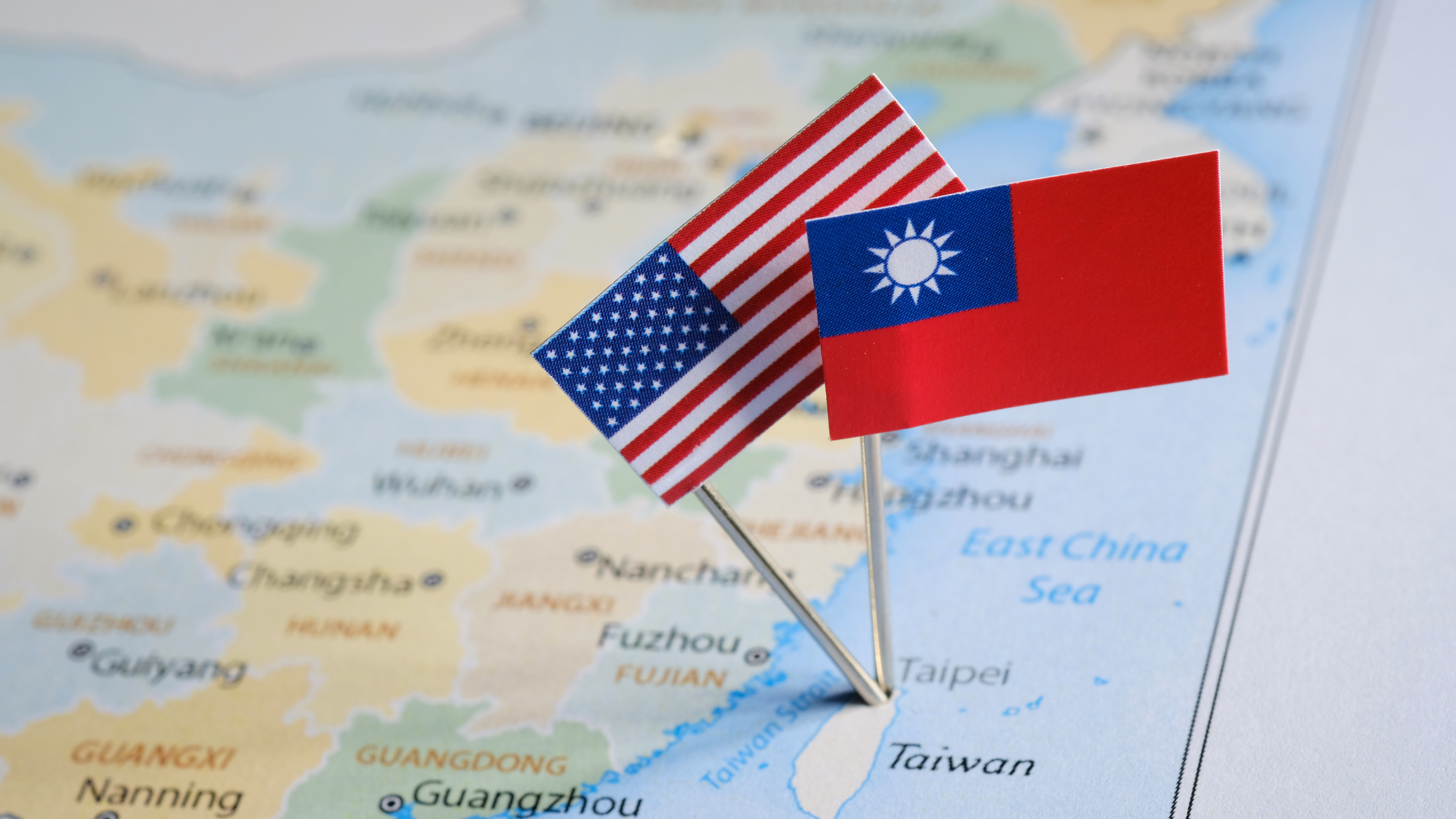
PacNet #7 – Dealing with Increased Chinese Aggressiveness – PART ONE
The following are some of the key findings and recommendations from the August 2022 US-Taiwan Deterrence and Defense Dialogue. PacNet 7 provides a summary of the dialogue. The full report, with expanded key findings and recommendations can be found here.
Taiwan is under attack by the People’s Republic of China (PRC) politically, economically, psychologically, and militarily—the latter through more aggressive Chinese People’s Liberation Army (PLA) gray zone military operations short of actual direct conflict. This multidimensional threat requires a multidimensional response in ways that complement and enhance military deterrence. PRC behavior represents a global—and not just a Taiwan or US—problem which demands a global response.
China now is attempting to expand its control to the southernmost extent of its nine-dash-line claim in the South China Sea, in waters ever closer to Indonesian and Malaysian shores. This area of the South China Sea, spanning from Indonesia’s Natuna Islands to the South Luconia Shoals, has greater strategic importance than the Spratly or Paracel Island chains farther to the north. Whereas the Spratlys have for centuries been regarded as “dangerous ground” and commercial mariners have avoided them, the vital sea lines of communication (SLOCs) connecting the Pacific and Indian Oceans flow through this part of the southern South China Sea. Therefore, these areas are far more vital to international commerce and navigation than the dangerous grounds closer to China’s Spratly Islands outposts.
ISBN
978-1-935352-80-8
Publication Date
2023
Publisher
Naval War College Press
City
Newport, Rhode Island
Keywords
China Maritime Studies, China, South China Sea, Indonesia, Malaysia, Expansion
Recommended Citation
Bentley, Scott, “The Maritime Fulcrum of the Indo-Pacific: Indonesia and Malaysia Respond to China’s Creeping Expansion in the South China Sea” (2023). CMSI Red Books, Study No. 17.
Biden wasn’t initially sold on sending the tanks, despite pressure to do so to give cover to Germany to send Ukraine some Leopard 2 tanks, the officials said. He warmed to the idea after Secretary of State Antony Blinken presented him with potential solutions to an issue that was very publicly exposing divisions within the U.S.-European alliance, the officials said.
Good morning. The drumbeat of layoffs in Silicon Valley is partly a result of how the pandemic upended the economy.
Amazon’s lobby in Midtown Manhattan last year.Karsten Moran for The New York Times
Future barometer
The layoff announcements dropped one after another, accelerating throughout the second half of 2022. Amazon began laying off what will be 18,000 employees. Lyft, the ride-share company, said it would dismiss 700 of its workers, or 13 percent of its staff. The technology giants Meta and Twitter announced that they were cutting thousands of employees.
With alternative sources in place, Putin’s attempt at blackmailing Europe on energy has failed.
By Jeffrey Sonnenfeld, the Lester Crown professor in management practice and a senior associate dean at the Yale School of Management, and Steven Tian, the director of research at the Yale Chief Executive Leadership Institute.
Vladimir Putin meets with workers at a missile manufacturing plant in St. Petersburg.
For much of the past year, and since his invasion of Ukraine last February, Russian President Vladimir Putin has been riding high on his supposed energy omnipotence, holding the global economy hostage to his whims. Since last summer, Putin has choked off natural gas supplies to Europe, hoping that Europeans, shivering and without heat during the winter, would turn on their leaders and make it politically infeasible to continue support for Ukraine.
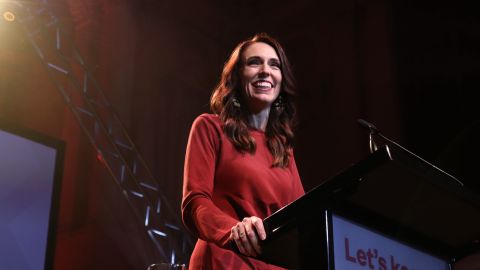
New Zealand Prime Minister Jacinda Ardern delivers her victory speech after being re-elected in a historic landslide win on October 17, 2020.Lynn Grieveson/Newsroom/Getty ImagesCNN —
Burnout is real – and it’s nothing to be ashamed of. That’s the conclusion trailblazing New Zealand leader Jacinda Ardern seems to have reached after almost six brutal years in office.
As the war in Ukraine dominates the international headlines, dozens of other humanitarian crises need our urgent attention. Most of them are driven by conflict and climate shocks, compounded by pre-existing vulnerability and inadequate access to services. This year sets a new record, with UN agencies and humanitarian partners requiring US$51.5 billion to help 230 million people who need emergency assistance in 68 countries.
In addition to Ukraine, here are 11 crises on our radar.
Esha Mohammed, a herder and mother in Eli Dar, in Ethiopia’s Afar Region, July 2022. Credit: UNOCHA/Liz Loh-Taylor
The Horn of Africa
When it comes to the deadly impact of the climate crisis, the Horn of Africa is now in unprecedented territory. It has endured five consecutive failed rains, and a sixth is now predicted in March.
Continued drought will bring prolonged catastrophe to people in Ethiopia, Kenya and Somalia, with at least 36.4 million people needing emergency assistance to survive, up to 26 million of them acutely food insecure. Famine risk will remain for people in two districts of Somalia. More than 9.5 million livestock have already died, and more deaths are anticipated, destroying herders’ and farmers’ livelihoods.
Vietnam President Nguyen Xuan Phuc might be removed from his position. If online speculation is true, Phuc will become the first Vietnamese president to be ousted while still in office.
On the evening of 13 January 2023, Vietnamese President Nguyen Xuan Phuc was seen present at My Dinh Stadium in Hanoi cheering the Vietnamese national football team in the first leg of the Asean Football Federation Championship final against Thailand. Despite his cheerful appearance, Phuc is facing a critical turnaround in his political career. During a secret meeting on the same day, the Politburo of the Communist Party of Vietnam (CPV) quietly voted to oust him from his position as president.
Contrary to Russia’s plans, Europe has secured enough energy to be safe this winter. Thanks to the efforts of Europeans, we have cut our gas use by 20%, well above our target of 15% set in July. More about the #REPowerEU plan → http://europa.eu/!wbD6NW
Editor’s note: There will be no Daily Brief on Monday, January 16, for Martin Luther King Jr. Day.
Top of the Agenda
Japan’s Kishida Visits White House Amid Historic Military Buildup at Home
Japanese Prime Minister Kishida Fumio and U.S. President Joe Biden will meet today (WaPo) in Washington, with Biden expected to praise Japan’s plans to dramatically boost its defense spending. Their meeting is expected to focus on the war in Ukraine, Chinese military aggression, the North Korean nuclear threat, and boosting security cooperation. Ahead of the visit, U.S. National Security Council spokesperson John Kirby told Nikkei that Washington is willing to help Tokyo gain the ability to launch missile attacks on enemy territory. The two leaders are also expected to discuss U.S. export controls (Reuters) targeting China’s semiconductor sector. Tokyo supports the controls but has not matched them. Kishida’s visit caps off a weeklong tour of Western partner countries ahead of the Group of Seven (G7) summit that Japan will host in May.
Putin Replaces Russia’s Top General in Ukraine After Battlefield Setbacks
Russia’s highest-ranking military officer, General Valery Gerasimov, was promoted to lead the country’s forces (FT) in Ukraine, replacing General Sergey Surovikin. Since Surovikin was appointed three months ago (CBS), Russia has lost control of the southern town of Kherson and struggled to provide basic equipment to the hundreds of thousands of troops it started conscripting in September. Surovikin has also faced criticism for housing hundreds of troops in a building that was bombed by Ukraine. He will now serve as one of Gerasimov’s deputies. Meanwhile, tensions have reportedly flared between Russia’s military and its Wagner Group of mercenaries over which forces deserve credit for alleged territorial gains in the town of Soledar. An unnamed source told the Financial Times that Surovikin’s demotion could be linked to the Wagner Group’s apparent successes.

 Simone McCarthy, CNN











.jpg?auto=webp)

 CVD
CVD 