Phương án phát triển lưới điện quốc gia thời kỳ 2021 – 2030

Tham vấn bởi Luật sư Phạm Thanh Hữu Chuyên viên pháp lý 

Quỳnh Như Báo điện tử chính phủ

Phương án phát triển lưới điện quốc gia thời kỳ 2021 – 2030, tầm nhìn đến năm 2050 được định hướng như thế nào? – Thùy Trâm (TPHCM)

Mục lục bài viếtMục lục bài viết

Phương án phát triển lưới điện quốc gia thời kỳ 2021 – 2030

Phương án phát triển lưới điện quốc gia thời kỳ 2021 – 2030 (Hình từ internet)

Ngày 15/5/2023, Thủ tướng Chính phủ ban hành Quyết định 500/QĐ-TTg phê duyệt Quy hoạch phát triển điện lực quốc gia thời kỳ 2021 – 2030, tầm nhìn đến năm 2050 (Quy hoạch điện VIII).

1. Phương án phát triển lưới điện quốc gia thời kỳ 2021 – 2030

Về định hướng phát triển

– Phát triển hệ thống truyền tải điện đồng bộ với tiến độ các nguồn điện, nhu cầu phát triển phụ tải của các địa phương, sử dụng công nghệ hiện đại, đảm bảo tiêu chuẩn quốc tế, sẵn sàng kết nối khu vực. Phát triển lưới điện thông minh để tích hợp các nguồn năng lượng tái tạo ở quy mô lớn, đáp ứng yêu cầu vận hành hệ thống điện an toàn, ổn định và kinh tế.

– Phát triển lưới điện truyền tải 500 kV và 220 kV bảo đảm khả năng giải tỏa công suất các nhà máy điện, nâng cao độ tin cậy cung cấp điện, giảm tổn thất điện năng, đáp ứng tiêu chí N-1 đối với vùng phụ tải quan trọng và N-2 đối với vùng phụ tải đặc biệt quan trọng.

Phát triển lưới điện truyền tải điện có dự phòng lâu dài, tăng cường sử dụng cột nhiều mạch, nhiều cấp điện áp đi chung để giảm diện tích chiếm đất. Khuyến khích xây dựng các trạm biến áp truyền tải kết hợp cung cấp điện cho phụ tải lân cận.

– Lưới điện truyền tải 500 kV giữ vai trò xương sống trong liên kết các hệ thống điện vùng miền và trao đổi điện năng với các nước trong khu vực. Giới hạn truyền tải liên miền ở mức hợp lý, giảm truyền tải điện đi xa, hạn chế tối đa xây dựng mới các đường dây truyền tải liên miền trước năm 2030.

– Xây dựng lưới điện 220 kV bảo đảm độ tin cậy, các trạm biến áp trong khu vực có mật độ phụ tải cao thiết kế theo sơ đồ đảm bảo vận hành linh hoạt. Xây dựng các trạm biến áp 220 kV đủ điều kiện vận hành tự động không người trực. Đẩy mạnh xây dựng các trạm biến áp GIS, trạm biến áp 220/22 kV, trạm ngầm tại các trung tâm phụ tải.

– Nghiên cứu ứng dụng hệ thống Back-to-Back, thiết bị truyền tải điện linh hoạt để nâng cao khả năng truyền tải, giảm thiểu diện tích chiếm đất. Tổ chức nghiên cứu công nghệ truyền tải điện xoay chiều và một chiều điện áp trên 500 kV.

– Định hướng sau năm 2030 sẽ phát triển các đường dây truyền tải siêu cao áp một chiều kết nối khu vực Trung Trung Bộ, Nam Trung Bộ và Bắc Bộ để khai thác mạnh tiềm năng điện gió ngoài khơi. Nghiên cứu các kết nối xuyên châu Á – Thái Bình Dương.

Các dự án lưới điện truyền tải trong Quy hoạch điện VII điều chỉnh chưa đưa vào vận hành được điều chỉnh trong Quy hoạch này.

Về khối lượng xây dựng lưới truyền tải

– Giai đoạn 2021 – 2030: Xây dựng mới 49.350 MVA và cải tạo 38.168 MVA trạm biến áp 500 kV; xây dựng mới 12.300 km và cải tạo 1.324 km đường dây 500 kV; xây dựng mới 78.525 MVA và cải tạo 34.997 MVA trạm biến áp 220 kV; xây dựng mới 16.285 km và cải tạo 6.484 km đường dây 220 kV.

– Định hướng giai đoạn 2031 – 2050: Xây dựng mới 40.000 – 60.000 MW dung lượng trạm HVDC và 5.200 – 8.300 km đường dây HVDC; xây dựng mới 90.900 – 105.400 MVA và cải tạo 117.900 -120.150 MVA trạm biến áp 500 kV; xây dựng mới 9.400 – 11.152 km và cải tạo 801 km đường dây 500 kV; xây dựng mới 124.875 – 134.125 MVA và cải tạo 105.375 – 106.750 MVA trạm biến áp 220 kV; xây dựng mới 11.395 – 11.703 km, cải tạo 504 – 654 km đường dây 220 kV. Khối lượng lưới điện giai đoạn 2031 – 2050 sẽ chuẩn xác trong các quy hoạch điện thời kỳ tiếp theo.

2. Liên kết lưới điện với các nước trong khu vực
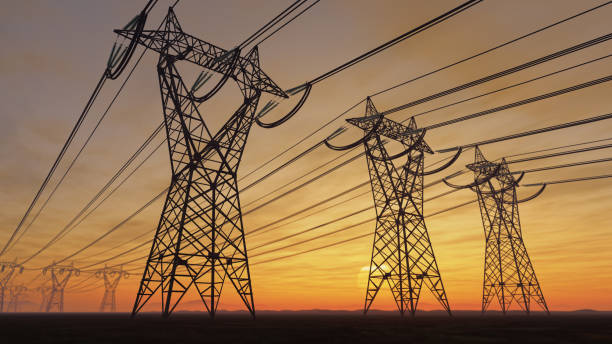
– Tiếp tục nghiên cứu hợp tác, liên kết lưới điện với các nước tiểu vùng sông Mê Kông và các nước ASEAN ở các cấp điện áp 500 kV và 220 kV để tăng cường khả năng liên kết hệ thống, trao đổi điện năng, tận dụng thế mạnh tài nguyên của các quốc gia.

– Thực hiện liên kết lưới điện với Lào bằng các tuyến đường dây 500 kV, 220 kV để nhập khẩu điện từ các nhà máy điện tại Lào theo biên bản ghi nhớ hợp tác đã ký kết giữa hai Chính phủ.

– Duy trì liên kết lưới điện với các nước láng giềng qua các cấp điện áp 220 kV, 110 kV, trung thế hiện có; nghiên cứu thực hiện giải pháp hòa không đồng bộ giữa các hệ thống điện bằng trạm chuyển đổi một chiều – xoay chiều ở cấp điện áp 220-500 kV.

– Xây dựng các công trình đấu nối các dự án xuất khẩu điện có hiệu quả kinh tế cao trên cơ sở đảm bảo an ninh năng lượng và an ninh quốc phòng.

Xem thêm Quyết định 500/QĐ-TTg có hiệu lực từ ngày 15/5/2023.
Quy hoạch Phát triển Điện lực Quốc gia VIII

QUYẾT ĐỊNH 500/QĐ-TTG NGÀY 15/05/2023 PHÊ DUYỆT QUY HOẠCH PHÁT TRIỂN ĐIỆN LỰC QUỐC GIA THỜI KỲ 2021-2030, TẦM NHÌN ĐẾN NĂM 2050 DO THỦ TƯỚNG CHÍNH PHỦ BAN HÀNH download >>

THỦ TƯỚNG CHÍNH PHỦ
——-

CỘNG HÒA XÃ HỘI CHỦ NGHĨA VIỆT NAM
Độc lập – Tự do – Hạnh phúc
—————

Số: 500/QĐ-TTg

Hà Nội, ngày 15 tháng 5 năm 2023

QUYẾT ĐỊNH

PHÊ DUYỆT QUY HOẠCH PHÁT TRIỂN ĐIỆN LỰC QUỐC GIA THỜI KỲ 2021 – 2030, TẦM NHÌN ĐẾN NĂM 2050

THỦ TƯỚNG CHÍNH PHỦ

Căn cứ Luật Tổ chức Chính phủ ngày 19 tháng 6 năm 2015; Luật sửa đổi, bổ sung một số điều của Luật Tổ chức Chính phủ và Luật Tổ chức chính quyền địa phương ngày 22 tháng 11 năm 2019;

Căn cứ Luật Quy hoạch ngày 24 tháng 11 năm 2017;

Căn cứ Luật Điện lực ngày 03 tháng 12 năm 2004; Luật sửa đổi, bổ sung một số điều của Luật Điện lực ngày 20 tháng 11 năm 2012;

Căn cứ Nghị quyết 61/2022/QH15 ngày 16 tháng 6 năm 2022 của Quốc hội về tiếp tục tăng cường hiệu lực, hiệu quả thực hiện chính sách, pháp luật về quy hoạch và một số giải pháp tháo gỡ khó khăn, vướng mắc, đẩy nhanh tiến độ lập và nâng cao chất lượng quy hoạch thời kỳ 2021 – 2030;

Căn cứ Nghị quyết số 81/2023/QH15 ngày 09 tháng 01 năm 2023 của Quốc hội về Quy hoạch tổng thể quốc gia thời kỳ 2021 – 2030, tầm nhìn đến năm 2050;

Căn cứ Nghị định số 37/2019/NĐ-CP ngày 07 tháng 5 năm 2019 của Chính phủ quy định chi tiết thi hành một số điều của Luật Quy hoạch;

Căn cứ Nghị định số 137/2013/NĐ-CP ngày 21 tháng 10 năm 2013 của Chính phủ quy định chi tiết thi hành một số điều của Luật Điện lực và Luật sửa đổi, bổ sung một số điều của Luật Điện lực;

Theo đề nghị của Bộ Công Thương tại Tờ trình số 2842/TTr-BCT ngày 14 tháng 5 năm 2023 và Công văn số 2851/BCT-ĐL ngày 15 tháng 5 năm 2023; Báo cáo thẩm định số 62/BC-HĐTĐQHĐ ngày 13 tháng 5 năm 2023 của Hội đồng thẩm định Quy hoạch phát triển điện lực quốc gia thời kỳ 2021 – 2030, tầm nhìn đến năm 2050.

QUYẾT ĐỊNH:

Điều 1. Phê duyệt Quy hoạch phát triển điện lực quốc gia thời kỳ 2021 – 2030, tầm nhìn đến năm 2050 (gọi tắt là Quy hoạch điện VIII) với những nội dung chủ yếu sau: Tiếp tục đọc “Quy hoạch Phát triển Điện lực Quốc gia VIII”

Vietnam’s Power Development Plan 8: A bold step towards a net-zero future

By Minh Ha-Duong

29 May 2023 at 10:27

The long-awaited power development plan shows Vietnam is determined to make a green transition, but much needs to be done.

Wind farm

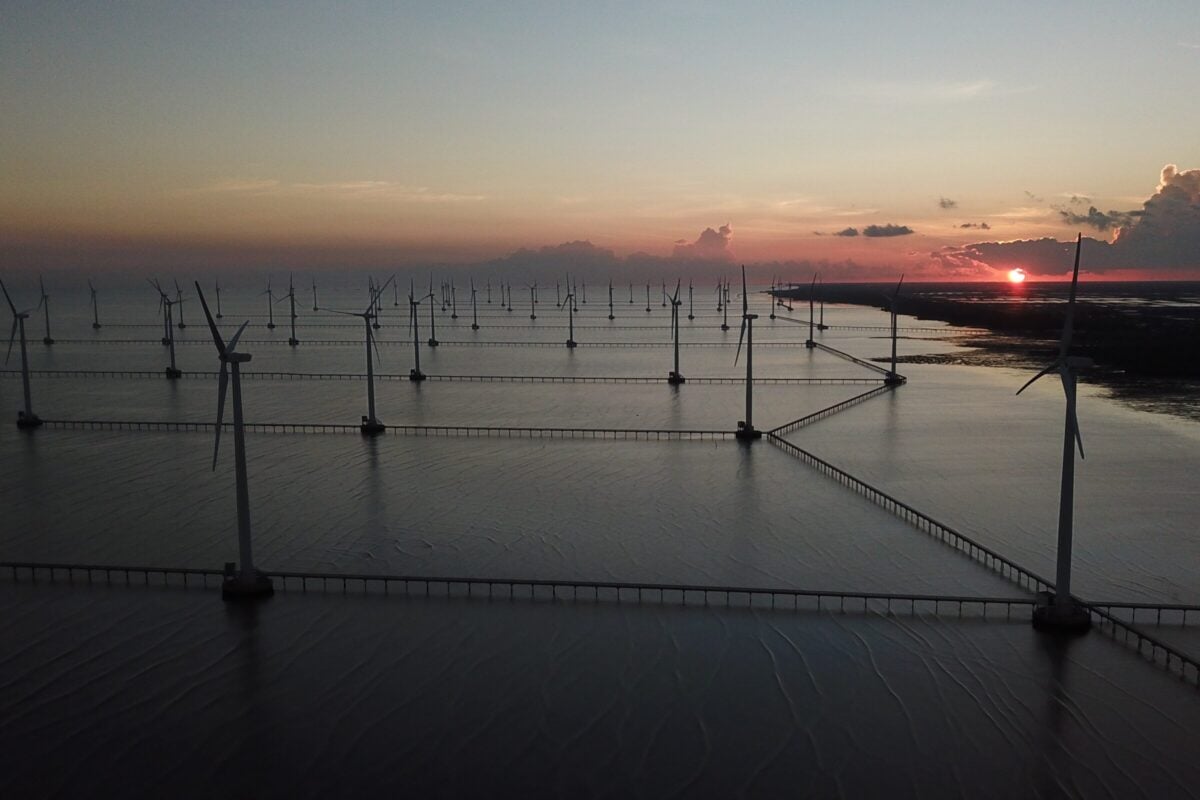
The Bac Lieu wind farm’s phase 1 and phase 2 projects in Bac Lieu city have been in operation for 10 years. PHOTO: Chi Quoc

After years of anticipation, Vietnam’s Prime Minister Pham Minh Chinh recently approved Power Development Plan 8 (PDP8).

This plan determines how to invest US$13.5 billion per year during the next 10 years and put the country’s electricity system on the way to a net-zero future.

Tiếp tục đọc “Vietnam’s Power Development Plan 8: A bold step towards a net-zero future”

Winning without fighting? Why China is exploring ‘cognitive warfare.’

Visitors stand in front of a giant screen displaying Chinese leader Xi Jinping next to a flag of the Communist Party of China, at the Military Museum of the Chinese People’s Revolution in Beijing last October. | REUTERS

With the U.S. and its allies rapidly bolstering military capabilities around Taiwan, a successful Chinese invasion, let alone an occupation, of the self-ruled island is becoming an increasingly difficult proposition.

But with the Chinese People’s Liberation Army (PLA) increasingly focused on “intelligent warfare” — a reference to artificial intelligence-enabled military systems and operational concepts — experts warn that Beijing could eventually have a new card up its sleeve: “cognitive warfare.”

Tiếp tục đọc “Winning without fighting? Why China is exploring ‘cognitive warfare.’”

Vietnam’s human rights record is being scrutinized ahead of $15 billion climate deal

May 26, 20235:06 AM ET

By Michael Copley NPR

Wealthy countries and investors are planning to give Vietnam billions of dollars to help it transition from coal to renewable energy. But the climate deal has come under fire because of Vietnam’s record on human rights.

STR/AFP via Getty Images

Vietnam is set to get billions of dollars from wealthy countries and investors over the next few years to help it move from coal to renewable energy. The goal is to fight climate change while boosting the country’s economic development.

The money — at least $15.5 billion — was promised after climate activists in Vietnam pushed the government to commit to eliminating or offsetting the country’s carbon dioxide emissions by midcentury. The United States and other backers of the funding plan, known as the Just Energy Transition Partnership (JETP), say that kind of advocacy is critical for making sure the benefits of the climate deal are widely shared in Vietnam.

Tiếp tục đọc “Vietnam’s human rights record is being scrutinized ahead of $15 billion climate deal”

Philippines-Vietnam teaming up on China in South China Sea

Marcos Jr-Chinh reviving dormant de facto alliance to check, balance and challenge China in disputed and militarized waters

By RICHARD JAVAD HEYDARIAN MAY 25, 2023 Asia Times

Philippine President Ferdinand Marcos Jr and Vietnamese Prime Minister Pham Minh Chinh are in a strategic embrace. Image: Facebook

MANILA – Philippine President Ferdinand Marcos Jr has not only revitalized defense ties with traditional Western allies but has also doubled down on strategic cooperation with like-minded regional states pushing back against China’s South China Sea assertiveness.

In particular, Vietnam has emerged as a pivotal player in the Philippines’ emerging regional strategy to constrain and roll back China’s ambitions in the hotly contested and geostrategically crucial maritime area.

Tiếp tục đọc “Philippines-Vietnam teaming up on China in South China Sea”

Berkeley’s $220M Mistake Exposed in Massive Deal With China

OOPS!

U.C. Berkeley repeatedly neglected to disclose its deal with China to the U.S. government.

Yuichiro Kakutani

Updated May. 22, 2023 7:18AM ET / Published May. 22, 2023 4:59AM ET 

U.C. Berkeley has failed to disclose to the U.S. government massive Chinese state funding for a highly sensitive $240 million joint tech venture in China that has been running for the last eight years.

The Californian university has not registered with the U.S. government that it received huge financial support from the city of Shenzhen for a tech project inside China, which also included partnerships with Chinese companies that have since been sanctioned by the U.S. or accused of complicity in human rights abuses.

The university has failed to declare a $220 million investment from the municipal government of Shenzhen to build a research campus in China. A Berkeley spokesperson told The Daily Beast that the university had yet to declare the investment—announced in 2018—because the campus is still under construction. However, a former Department of Education official who used to help manage the department’s foreign gifts and contracts disclosure program said that investment agreements must be disclosed within six months of signing, not when they are fully executed.

Tiếp tục đọc “Berkeley’s $220M Mistake Exposed in Massive Deal With China”

Vietnam: Assessing Freedom ofthe Press

May 9, 2023
Thayer Consultancy
ABN # 65 648 097 123

We request your assessment about the state of freedom of the press in Vietnam.

Q1. Have you ever witnessed some extent of freedom of the press in Vietnam?

ANSWER: I first visited reunified Vietnam in August 1981 and have returned regularly since then. I have given numerous interviews to the Vietnamese print and online media, radio and television. As a result, I have come to know certain journalists quite well. I also appreciate the practical constraints they work under. For example, on sensitive matters like relations with China and disputes in the South China Sea, I am aware that they can quote me as a foreigner when they are not permitted to comment on the same issue. Tiếp tục đọc “Vietnam: Assessing Freedom ofthe Press”

Quad Leaders’ Joint Statement

MAY 20, 2023 Source: The White House

20 May 2023, Hiroshima

Today, we — Prime Minister Anthony Albanese of Australia, Prime Minister Narendra Modi of India, Prime Minister Kishida Fumio of Japan, and President Joseph R. Biden, Jr. of the United States — met for the third in-person Quad Leaders’ Summit, hosted by Prime Minister Albanese.

Together, we reaffirm our steadfast commitment to a free and open Indo-Pacific that is inclusive and resilient. The global strategic and economic environment is changing rapidly – with direct impacts on countries in the region. We believe we should navigate this time of uncertainty and opportunity together, working closely with our Indo-Pacific partners. We believe all countries have a role in contributing to regional peace, stability, and prosperity, as well as upholding international law, including the principles of sovereignty and territorial integrity, and the rules-based international order. We seek a region where no country dominates and no country is dominated – one where all countries are free from coercion, and can exercise their agency to determine their futures. Our four countries are united by this shared vision.
Tiếp tục đọc “Quad Leaders’ Joint Statement”

Taiwan President on Taiwan

蔡英文 Tsai Ing-wen @iingwen

Today I begin my eighth year as president of the Republic of China (Taiwan). Seven years ago, we embraced our cause of transforming our country, and one step after the other, embarked on reform. From then to now, we have walked a long path. We have markedly changed the face of Taiwan from that of seven years ago. Going forward, we must demonstrate our determination to create an economy and industries that are even more resilient, so that we can cement Taiwan’s key position in global supply chains.

G7 Hiroshima Leaders’ Communiqué

MAY 20, 2023

Source: The White House

Preamble

  1. We, the Leaders of the Group of Seven (G7), met in Hiroshima for our annual Summit on May 19-21, 2023, more united than ever in our determination to meet the global challenges of this moment and set the course for a better future. Our work is rooted in respect for the Charter of the United Nations (UN) and international partnership.

We are taking concrete steps to:

  • support Ukraine for as long as it takes in the face of Russia’s illegal war of aggression;
  • strengthen disarmament and non-proliferation efforts, towards the ultimate goal of a world without nuclear weapons with undiminished security for all;
  • coordinate our approach to economic resilience and economic security that is based on diversifying and deepening partnerships and de-risking, not de-coupling;
  • drive the transition to clean energy economies of the future through cooperation within and beyond the G7;
  • launch the Hiroshima Action Statement for Resilient Global Food Security with partner countries to address needs today and into the future; and
  • deliver our goal of mobilizing $600 billion in financing for quality infrastructure through the Partnership for Global Infrastructure Investment (PGII)

as outlined in the reference documents of this Communique.

We are determined to work together and with others to:

Tiếp tục đọc “G7 Hiroshima Leaders’ Communiqué”

Biden Hopes for Vietnam Breakthrough

COMMENTARY

(Foreign Policy) RAND Corporation U.S. Secretary of State Antony Blinken, left, meets with Vietnam's Communist Party General Secretary Nguyen Phu Trong in Hanoi, Vietnam, April 15, 2023, photo by Andrew Harnik/Pool via Reuters

U.S. Secretary of State Antony Blinken meets with Vietnam’s Communist Party General Secretary Nguyen Phu Trong in Hanoi, Vietnam, April 15, 2023

Photo by Andrew Harnik/Pool via REUTERS

by Derek Grossman

May 12, 2023

During a ceremony held in Washington to commemorate the Lunar New Year in 2011, then–Vietnamese Ambassador to the United States Le Cong Phung surprised the audience by announcing that the two countries would raise their ties to the level of “strategic partnership.” Phrases describing partnerships can be nebulous, of course. But from what we know about Vietnamese diplomacy, Hanoi’s definition of strategic partnership is not just boilerplate, but signifies concrete, mutual, long-term strategic interests.

Vietnamese officials, however, never followed up on Phung’s newsworthy announcement. Instead, Washington and Hanoi announced a comprehensive partnership in 2013—a relationship that implies a less-serious geopolitical alignment for Vietnam. The United States has been left wondering why.

Tiếp tục đọc “Biden Hopes for Vietnam Breakthrough”

Is this sport? Chaos descends as Thailand, Indonesia brawl at SEA Games football final

By Lam Thoa, Hieu Luong   May 17, 2023 | 12:05 am GMT+7 vnexpress

Brawls break out in the SEA Games 32 final between Indonesia and Thailand at the Olympic Stadium, Cambodia, May 16, 2023.

Coaches and players from Thailand and Indonesia tore into each other as disputes during the SEA Games men’s football final erupted into at least two full-scale brawls on Tuesday.

Chaos descends as Thailand, Indonesia brawl at SEA Games football final

Indonesia was leading Thailand 2-1 in the second half of the match when the referee blew the whistle to allow a direct penalty for Thailand.

Tiếp tục đọc “Is this sport? Chaos descends as Thailand, Indonesia brawl at SEA Games football final”

Global warming to bring record hot year by 2028 – probably our first above 1.5°C limit

Academic rigour, journalistic flair, The Conversation

Lindsey Wasson/AP/AAP

Published: May 17, 2023 11.01am BST

Author

  1. Andrew KingSenior Lecturer in Climate Science, The University of Melbourne

Disclosure statement

Andrew King receives funding from the National Environmental Science Program.

Partners

University of Melbourne provides funding as a founding partner of The Conversation AU.

View all partners

CC BY NDWe believe in the free flow of information

One year in the next five will almost certainly be the hottest on record and there’s a two-in-three chance a single year will cross the crucial 1.5℃ global warming threshold, an alarming new report by the World Meteorological Organization predicts.

The report, known as the Global Annual to Decadal Climate Update, warns if humanity fails to reduce greenhouse gas emissions to net zero, increasingly worse heat records will tumble beyond this decade.

So what is driving the bleak outlook for the next five years? An expected El Niño, on top of the overall global warming trend, will likely push the global temperature to record levels.

Has the Paris Agreement already failed if the global average temperature exceeds the 1.5℃ threshold in one of the next five years? No, but it will be a stark warning of what’s in store if we don’t quickly reduce emissions to net zero.

boy plays in fountain during heatwave
One year in the next five will almost certainly be the hottest on record, bringing more heatwaves like this boy experienced in Britain around the time the last record was set. Andy Rain/EPA

Read more: Two trillion tonnes of greenhouse gases, 25 billion nukes of heat: are we pushing Earth out of the Goldilocks zone?


Warming makes record heat inevitable

The World Meteorological Organization update says there is a 98% chance at least one of the next five years will be the hottest on record. And there’s a 66% chance of at least one year over the 1.5℃ threshold.

Tiếp tục đọc “Global warming to bring record hot year by 2028 – probably our first above 1.5°C limit”