I am an attorney in the Washington DC area, with a Doctor of Law in the US, attended the master program at the National School of Administration of Việt Nam, and graduated from Sài Gòn University Law School. I aso studied philosophy at the School of Letters in Sài Gòn.
.
I have worked as an anti-trust attorney for Federal Trade Commission and a litigator for a fortune-100 telecom company in Washington DC.
I have taught law courses for legal professionals in Việt Nam and still counsel VN government agencies on legal matters.
I have founded and managed businesses for me and my family, both law and non-law.
I have published many articles on national newspapers and radio stations in Việt Nam.
In 1989 I was one of the founding members of US-VN Trade Council, working to re-establish US-VN relationship.
Since the early 90's, I have established and managed VNFORUM and VNBIZ forum on VN-related matters; these forums are the subject of a PhD thesis by Dr. Caroline Valverde at UC-Berkeley and her book Transnationalizing Viet Nam.
I translate poetry and my translation of "A Request at Đồng Lộc Cemetery" is now engraved on a stone memorial at Đồng Lộc National Shrine in VN.
I study and teach the Bible and Buddhism. In 2009 I founded and still manage dotchuoinon.com on positive thinking and two other blogs on Buddhism.
In 2015 a group of friends and I founded website CVD - Conversations on Vietnam Development (cvdvn.net).
I study the art of leadership with many friends who are religious, business and government leaders from many countries.
I have written these books, published by Phu Nu Publishing House in Hanoi:
"Positive Thinking to Change Your Life", in Vietnamese (TƯ DUY TÍCH CỰC Thay Đổi Cuộc Sống) (Oct. 2011)
"10 Core Values for Success" (10 Giá trị cốt lõi của thành công) (Dec. 2013)
"Live a Life Worth Living" (Sống Một Cuộc Đời Đáng Sống) (Oct. 2023)
I practice Jiu Jitsu and Tai Chi for health, and play guitar as a hobby, usually accompanying my wife Trần Lê Túy Phượng, aka singer Linh Phượng.
China’s predatory fishing fleets are denuding fish stocks and marine ecosystems on an unprecedented industrial scale. International collective action is urgently needed.
The desecration of maritime habitats and life-sustaining coral reefs is a clear and present threat at the hands of China’s massive fishing fleet. The maritime equivalent to poisoning a sovereign nation’s local farms, this threat has already had multi-generational impacts to the economy, climate and food supplies. Collaborative and bold solutions are imperative.
Admiral Linda Fagan, Commandant of the U.S. Coast Guard, identified China as one of the prime culprits in illegal, unregulated and unreported fishing, committing “theft of a nation’s natural resources.” Chinese fishing vessels steal coral for jewelry, giant clams for the ivory industry, and fish stocks to feed its own population. This is theft on a grand scale, unrestricted warfare on natural resources. The pilfering is happening across Asia, throughout the Pacific as far west as the Galapagos Islands, and off the West African coast, even within exclusive economic zones (EEZ) to which countries have a sovereign right to all natural resources.
Do not clam up on this issue just because it is only coral, clams and fish. Coral and giant clams are the life source of the ocean, easing the impacts of climate change, providing a protective breeding ground for fish, and serving as water filters. Giant clams increase the biodiversity of the coral which supports vital fisheries in the South China Sea. These fisheries account for 12% of the world’s catch and 28% of the protein to sustain human life in the region. The ongoing destruction at the hands of Chinese fishermen guarantees a loss of environmental and food security for future generations across the region.
Caretaker Lebanese Prime Minister Najib Mikati speaks on the phone ahead of an interview.
NOVEMBER 9, 2023, 4:30 PM
Lebanese Prime Minister Najib Mikati has a plan for peace in Gaza and Israel. If it has any hope of becoming reality, he’ll need Western backers. Thus far, he doesn’t have any.
It’s time for Western leaders to step up.
As the death toll in Gaza grows, now over 10,000, Lebanon’s caretaker prime minister has been trying to win allies for his three-step peace plan. First, Mikati proposes, would come a five-day pause in hostilities, during which Hamas would release some of its Israeli hostages and Israel would open its border crossings to more humanitarian aid. If the peace can hold for those 120 hours, negotiations would begin for the release of the remaining hostages in exchange for prisoners held by Israel. As that happens, work on an international summit for a permanent two-state solution would begin.
If it can get off the ground, Mikati’s proposal would channel the worst violence Israelis and Palestinians have seen in decades into the most serious peace effort since the collapse of the Oslo Accords.
12 Nov 2023 06:00AM(Updated: 12 Nov 2023 09:04AM), channelnewsasia
SINGAPORE: When the latest iPhone 15 series was released, many people eagerly submitted their pre-orders, hoping to receive it within a week. As a tech writer and enthusiast, I too succumbed to this temptation.
I vividly remember setting my alarm during my evening run to ensure I didn’t miss the 8pm pre-order launch of the iPhone 15 Pro on Sep 15. I frantically refreshed the page for the next 30 minutes, but the site crashed. Frustrated, I set my phone aside and went to take a shower. This was my first attempt at pre-ordering an iPhone.
Washington has influence and, with its allies, could shape an endgame that serves long-term U.S. interests.
By Emma Ashford, a columnist at Foreign Policy and a senior fellow with the Reimagining U.S. Grand Strategy program at the Stimson Center, and Matthew Kroenig, a columnist at Foreign Policy and vice president and senior director of the Atlantic Council’s Scowcroft Center for Strategy and Security.
Blinken in Israel
My FP: Follow topics and authors to get straight to what you like. Exclusively for FP subscribers. Subscribe Now | Log In
NOVEMBER 10, 2023, 11:16 AM
Emma Ashford: Good morning, Matt. Are you back from Norway yet? I just spent the week in Finland, learning about our newest NATO ally. It would be nice if every NATO ally were as self-sufficient and prepared to fight without U.S. troops as the Finns clearly are. Tiếp tục đọc “Is the U.S. Using All Its Leverage in Gaza?”→
Khát vọng phát triển huyện Cần Giờ – vùng đất giáp biển, “lá phổi xanh” của TPHCM, đã thôi thúc từ nhiều thập niên qua; và nay với những dự án lớn chuẩn bị đầu tư, đang kỳ vọng sẽ mang lại cơ hội lớn để Cần Giờ cất cánh. Tuy nhiên, cùng với đó là làm sao vẫn bảo vệ được “lá phổi xanh” này.
A Palestinian man reacts as others check the rubble of a building in Khan Younis, Gaza, on November 6. Mahmud Hams/AFP/Getty Images
In pictures: Israel at war with Hamas
Updated 1:39 AM EST, Tue November 7, 2023
One month ago, the Palestinian militant group Hamas launched a brutal assault on Israel, killing more than 1,400 people and kidnapping more than 240, according to Israeli authorities. It was the deadliest terror attack in the country’s history.
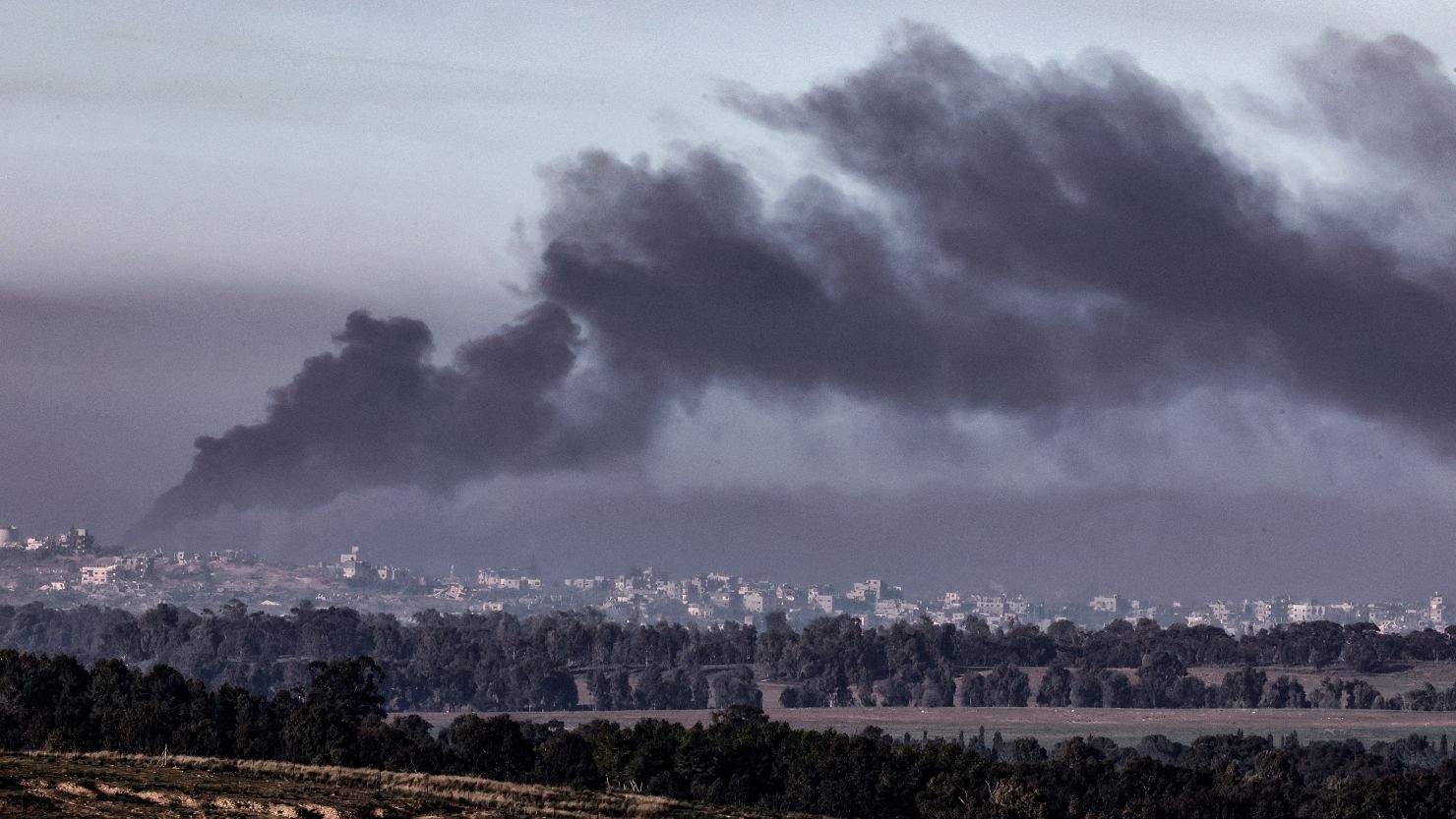
Israel’s retaliation has been lethal, with an air and ground campaign on the densely populated enclave of Gaza, which Hamas has controlled since 2007. Israeli Prime Minister Benjamin Netanyahu said his country would take “mighty vengeance” and was readying for “a long and difficult war.”
The siege of Gaza has killed more than 10,000 people, according to the Hamas-controlled health ministry there. Gaza’s population is also gripped by humanitarian crisis after Israel cut off access to food, water and electricity. Only a “trickle” of aid has been allowed to enter the isolated territory, according to the United Nations. Residents are grappling with severe shortages, and power is running out as fuel dwindles.
Editor’s note: This gallery contains graphic images. Viewer discretion is advised.
FILE – Thousands of Moroccans take part in a protest in solidarity with Palestinians in Gaza and against normalisation with Israel, in Casablanca, Morocco, Sunday, Oct. 29, 2023. Countries in the Middle East that have normalized or are considering normalizing relations with Israel are coming under growing public pressure to cut those ties because of Israel’s war with Hamas. The protesters’ demands present an uncomfortable dilemma for governments that have enjoyed the benefits of closer military and economic ties with Israel in recent years. (AP Photo/Mosa’ab Elshamy, File)Read More
2 of 4 |
FILE – Thousands of Moroccans take part in a protest in solidarity with Palestinians in Gaza and against normalisation with Israel, in Casablanca, Morocco, Sunday, Oct. 29, 2023. Countries in the Middle East that have normalized or are considering normalizing relations with Israel are coming under growing public pressure to cut those ties because of Israel’s war with Hamas. The protesters’ demands present an uncomfortable dilemma for governments that have enjoyed the benefits of closer military and economic ties with Israel in recent years. (AP Photo/Mosa’ab Elshamy)Read More
3 of 4 |
FILE – Protesters shout anti-Israel slogans during a rally to show solidarity with the people of Gaza after Friday prayers at Azhar mosque, the Sunni Muslim world’s premier Islamic institution, in Cairo, Egypt, Friday, Oct. 20, 2023. Countries in the Middle East that have normalized or are considering normalizing relations with Israel are coming under growing public pressure to cut those ties because of Israel’s war with Hamas. The protesters’ demands present an uncomfortable dilemma for governments that have enjoyed the benefits of closer military and economic ties with Israel in recent years. (AP Photo/Amr Nabil, File)Read More
4 of 4 |
FILE – Protesters shout anti-Israel slogans during a rally to show solidarity with the people of Gaza after Friday prayers at Azhar mosque, the Sunni Muslim world’s premier Islamic institution, in Cairo, Egypt, Friday, Oct. 20, 2023. Countries in the Middle East that have normalized or are considering normalizing relations with Israel are coming under growing public pressure to cut those ties because of Israel’s war with Hamas. The protesters’ demands present an uncomfortable dilemma for governments that have enjoyed the benefits of closer military and economic ties with Israel in recent years. (AP Photo/Amr Nabil, File)Read More
BY SAM METZUpdated 4:49 AM GMT+7, November 2, 2023 AP
RABAT, Morocco (AP) — Arab nations that have normalized or are considering improving relations with Israel are coming under growing public pressure to cut those ties because of Israel’s war with Hamas.
Tens of thousands of people have taken to the streets of Rabat and other Moroccan cities in support of the Palestinians. In Bahrain — a country that almost never allows protest — police stood by as hundreds of people marched last month, waving flags and gathering in front of the Israeli Embassy in Manama.
The demonstrations, which mirror protests across the Middle East, present an uncomfortable dilemma for governments that have enjoyed the benefits of closer military and economic ties with Israel in recent years.
European and Asian allies of the United States increasingly doubt Washington’s ability to simultaneously help Israel and Ukraine – Bloomberg writes, citing sources.
The United States was confident in the normalization of relations between Israel and the Arab countries, so it moved resources from the Middle East to direct them to fight Russia or China, and is now forced to ask Tel Aviv to postpone the operation in the Gaza Strip in order to increase its forces in the region, the agency writes .
At the same time, Ukraine has exhausted its reserves of artillery shells from the United States and its allies, and attempts to increase ammunition production are facing various obstacles.
President Erdogan’s recent troubles with the United States have prevented Turkey from playing a potentially constructive role in the early phases of the Israel-Hamas war.
President Recep Tayyip Erdogan delivers remarks at a youth organization’s convention in Ankara, Turkey. Murat Kula/Anadolu/Getty Images
The timing and scope of the war between Israel and Hamas have put Turkey and its president, Recep Tayyip Erdogan, in a challenging situation.
At first, shocked by the violence perpetrated by Hamas, Erdogan reached out to his Israeli counterpart, Isaac Herzog. However, the strength of public support for Hamas in Turkey, the mobilization of the Israeli military, and the start of the Israeli aerial offensive in the Gaza Strip almost immediately made him shift his position. The tone of his criticism of Israel for its campaign in the Gaza Strip has progressively become more strident.
This has not prevented Erdogan from seeking to play a mediation role; he initiated several phone calls to regional leaders, UN Secretary-General António Guterres, and Russian President Vladimir Putin. Missing was U.S. President Joe Biden. Meanwhile, U.S. Secretary of State Antony Blinken launched a whirlwind tour of regional capitals as soon as the crisis erupted, seeking ways to prevent further deterioration. He appears to have deliberately sidestepped a visit to Ankara, preferring to confer with the Turkish foreign minister, Hakan Fidan, by telephone. The Biden-Erdogan relationship has been strained for some time; Biden, too, has limited his contacts with Erdogan and been unwilling to invite him, for instance, for a state visit to Washington.
A major ground campaign in the Gaza Strip will display Israel’s overwhelming military force, but the country faces a steep challenge in its goal of eradicating Hamas, as well as in finding a workable post-combat plan for the territory.
What does Israel intend to achieve with a ground war in the Gaza Strip?
Israeli officials have repeatedly said their goal is to eliminate Hamas. By crushing the terrorist organization, Prime Minister Benjamin Netanyahu hopes to reassert Israeli deterrence and show Israel’s enemies the high costs of attacking it. Israel has already launched a massive bombing campaign of the Gaza Strip and, more recently, raids on the ground, while signaling that it will soon launch a major ground offensive.
We, President Biden and Prime Minister Albanese, inaugurated a new era of U.S.-Australia strategic cooperation during the Prime Minister’s Official Visit and State Dinner in Washington, D.C., today.
Our nations are inseparably linked by our common democratic values and the three pillars of our alliance: defense, economic, and climate and clean energy cooperation. As our alliance cooperation reaches new heights, we are expanding our partnership into new domains to reflect the evolution of our relationship and the growing complexity of global and regional challenges. At the core of our cooperation is a shared commitment to a peaceful, open, stable, and prosperous Indo-Pacific. We reaffirm our commitment to work with Indo-Pacific partners and institutions to respond to shared challenges and ensure a region that is thriving, connected, resilient, and secure. These commitments are based on respect for international law, including as it pertains to the protection and promotion of human rights, and the sovereignty and territorial integrity of states.
Today we announce the pursuit of new areas of cooperation on science and critical and emerging technologies so that we can build an “Innovation Alliance.” These initiatives will augment and complement our robust economic cooperation and trade; our foundational security and defense ties; our newly inaugurated cooperation on climate, critical minerals, and clean energy; and our enduring people-to-people connections.
Steadfast in these values, we condemn in the strongest possible terms Hamas’ heinous terrorist attack on Israel. The terrorist actions of Hamas can have no justification, no legitimacy, and must be universally condemned. We call for the immediate and unconditional release of all hostages. Hamas offers nothing but terror and bloodshed. It does not represent the Palestinian people, nor their legitimate needs and aspirations.
Our countries will support Israel as it defends itself and its people against such atrocities. We affirm Israel’s inherent right to defend itself. In doing so, in line with the values we share as democracies, we call on all parties to act consistent with the principles of international law and to protect civilians as an utmost priority. We are concerned at the humanitarian situation in Gaza and call on all actors to ensure the provision of humanitarian supplies to populations in need.
Our two countries support equal measures of dignity, freedom, and self-determination for Israelis and Palestinians alike and we mourn every civilian life lost in this conflict. We continue to support Palestinian aspirations for a state of their own and consider a two-state solution as the best avenue towards a lasting peace.
Promoting Advanced Technology and Space Cooperation
We welcome the announcement of a $3 billion investment in Australia by Microsoft, which will expand the company’s data center and Artificial Intelligence (AI) infrastructure in Australia over the next two years, train more than 300,000 Australians with the skills required for a cloud and AI-enabled economy, and create the Microsoft-Australian Signals Directorate Cyber Shield to harden Australia from cyber-threats to individuals, businesses, and governments. We also welcome the close partnership between the U.S. National Science Foundation (NSF) and Australia’s Commonwealth Scientific and Industrial Research Organisation (CSIRO), including bilateral cooperation through the NSF’s Global Centers initiative with up to $16.3 million for climate and clean energy research, and an AI partnership supported by a combined $6.2 million in grants to drive ground-breaking research. Additionally, the development of a Memorandum of Understanding between Los Alamos National Laboratory and the Australian National University intends to strengthen cooperation in research and education between the United States and Australia.
Our focus on innovation also extends to space, where we look forward to tomorrow’s signing of a space Technology Safeguards Agreement that creates the potential for new space-related commercial opportunities while providing the legal and technical framework to protect sensitive U.S. space launch technology and data in Australia consistent with our shared non-proliferation goals. We also welcome progress in negotiations of a bilateral space framework agreement, and encourage further joint commercial investment across all sectors, including space situational awareness and commercial space stations.
Building Clean Energy Supply Chains and Addressing the Climate Crisis
In May, we launched the historic Australia-United States Climate, Critical Minerals, and Clean Energy Transformation Compact (the Compact), which affirmed our shared determination to make climate and clean energy cooperation the third pillar of our alliance and counter the threat to global security and prosperity posed by climate change. We recognize that achieving the goals of the Paris Agreement will require rapid deployment of clean energy and decarbonization technologies, and increased electrification in our countries this decade, alongside the phasedown of unabated coal power.
Under the Compact, we convened the ministerial-level United States-Australia Clean Energy Dialogue between the U.S. Department of Energy (DOE) and Australia’s Department of Climate Change, Energy, the Environment and Water. As part of our enhanced cooperation, we plan to collaborate on clean energy supply chains with the intent to leverage our comparative advantages and sovereign capabilities, beginning with a battery supply chain working group to explore the deepening of both countries’ manufacturing capability and work on battery technology research and development. We also announced our intention for a Memorandum of Understanding between the U.S. DOE Office of Clean Energy Demonstrations and Australian entities. Australia and the U.S. DOE intend to establish the Australia-United States Clean Energy Industry Council, which will draw on the expertise of business and public finance leaders to advise our governments on clean energy industry development and cooperation.
Recognizing that climate change poses the single greatest threat to the livelihoods, security, and wellbeing of people and ecosystems in the Indo-Pacific, we announce today that the United States and Australia are working to jointly develop an Indo-Pacific Net-Zero Transition bond series to mobilize funding for small-medium sized enterprises with a focus on clean energy transition.
The United States and Australia intend to work to enhance access to the resources of the Green Climate Fund, and other relevant multilateral funds, especially for those most vulnerable to the adverse effects of climate change, including least developed countries (LDCs) and small island developing states (SIDS). This effort will be advanced, including through targeted bilateral technical assistance from USAID to LDCs and SIDS, and in coordination with DFAT’s program of support to Pacific Island countries
President Joe Biden visited Hanoi in September and announced that the United States and Vietnam had upgraded relations from a “comprehensive partnership” to a “comprehensive strategic partnership.” Washington and Hanoi agreed to deepen cooperation in areas of diplomacy, trade, investment, and collaboration in the areas of artificial intelligence, R&D, governance, health and medical science, climate science, biotechnology, and conservation. Yet despite the pledges of cooperation and partnership, economic, security, and political factors limit full expression of the enhanced partnership.
·It’s been 17 days since Hamas launched its horrific attack against Israel, killing over 1,400 Israeli citizens, including defenseless women, children and the elderly. In the aftermath of such unspeakable brutality, the U.S. government and the American people have shared in the grief of families, prayed for the return of loved ones, and rightly declared solidarity with the Israeli people. Tiếp tục đọc “Barack Obama: Thoughts on Israel and Gaza”→